About Joe Moore

#1 Amazon and international bestselling author. Co-president emeritus, International Thriller Writers.

The Fourth and Celebration

By Kathleen Pickering


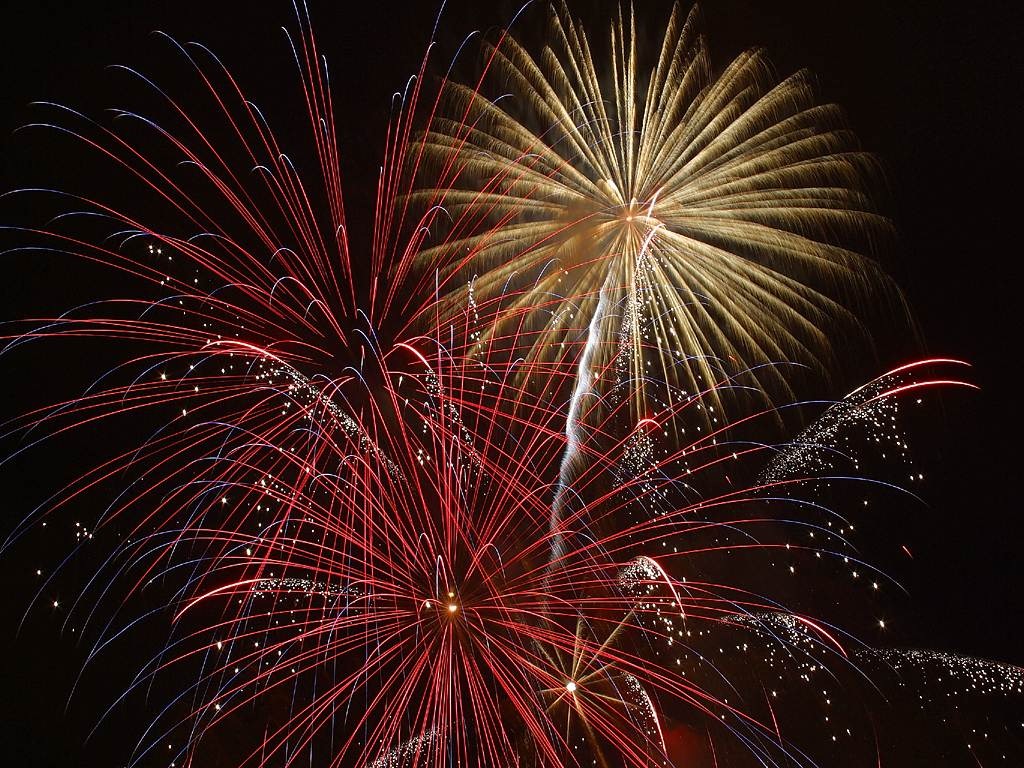
http://www.public-domain-image.com (public domain image)

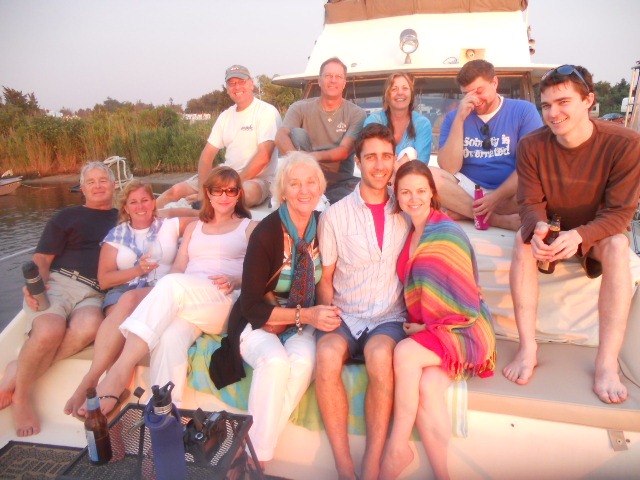
I could think of no better way to celebrate finishing a week in Manhattan attending the annual RWA conference than to sit on the Great South Bay with loved ones, applaud the spectacular sunset and watch fireworks.

For those of you unfamiliar to Long Island’s south shore (except for the recent disturbing news of serial killings along these marshes), let me assure you, these beaches are some of the best watering holes in the country.

As a child, I remember charging home from school on the last day before summer break to pile in the boat with my parents and motor to the town beach where I and my seven siblings lived for two, glorious months. Oh, the lost hours running barefoot along the dunes, fishing and clamming, bird-watching and shell hunting, tumbling in the Atlantic—because those waves certainly tossed small beings without effort, and camp fires at night—because back then, we could!

My parents were no fools taking us to the beach for the summer. It was like camp with no rules. My folks had just as much fun as we did. They taught us boating safety, and gave us freedom they’d never allow at home.

Can you imagine ten people living in close quarters, and loving every minute of it? To the surprise of many observers, we never had an accident. Not even a stitch. I honor my parents for giving us free reign to be kids while ensuring we understood and respected our surroundings.

You can imagine my delight in continuing my parent’s summer tradition when my husband and I bought our own sailboat and introduced our sons to beach living. Some of my siblings bought boats as well, so the beach became a second-generation family affair. Our sons grew up dockside with their cousins like brothers and sisters, forging bonds that will last their lifetime.

So, yesterday, coming “home” (since I now live in Fort Lauderdale) to spend the Fourth of July on my sister’s boat with her family, my family and dear friends, made me so very grateful for this wonderful event that is my life!

July 4th I sat with my sons, my new daughter in law, completely satisfied with the people they’ve become.  Pop! Pop! Ahhhhhh! Fireworks!

I caught up with friends I haven’t seen in months and shared news, like for me, RWA turned out to be another wonderful networking opportunity and and chance to hammer out three new proposals with my editor.  Sizzle! Pop! Oooooh! More fireworks!

I also heard of some hardships loved ones are facing, that really, no one should face. Yet, watching them forget their troubles while fireworks lit the sky cemented gratitude in me for this time together. Swiiiishhhh! Pop! Boom! Even more fireworks!

So, for those of us with troubled times crowding our thoughts, I suggest taking a moment to let the kid in you enjoy the fireworks and celebration July Fourth offers. Heck, let the fireworks last all year long! After all, The Fourth celebrates our great nation overcoming oppression in pursuit of freedom to follow our dreams. For that I feel gratitude, right down to my toes. The child in me wants to ooooh, and ahhhh and remember never to forget how lucky we truly are!

Won’t you join me in celebrating? How did you spend The Fourth of July?

Rejection Remedies

by Clare Langley-Hawthorne

An article in this Saturday’s Melbourne newspaper The Age on ‘the upside of being turned down‘ brought a smile to my face. It reminded me (as if I needed a reminder) of the universal truth in publishing that nothing is ever as dreadful (or as inevitable) as the ‘R’ word – Rejection. For authors it is a fact of life. What drew a smile was one of the ‘rejection remedies’ the article proposed, namely submission to the Journal of Universal Rejection, where your work is guaranteed to be rejected, thereby bringing some sanity to the whole crazy publishing process.

I looked up the Journal of Universal Rejection online (http://www.universalrejection.org/) and here are some of benefits of submitting to them:
  • You can send your manuscript there without suffering waves of anxiety regarding the eventual fate of your submission. You know with 100% certainty that it will not be accepted for publication.
  • There are no page fees.
  • You may claim to have submitted to the most prestigious journal (judged by acceptance rate)
  • The JofUR is a one-of-a-kind. Merely submitting work to it may be considered a badge of honor.
  • Decision are often (though not always) rendered within hours of submission.
The instructions for authors also made me chuckle. I particularly liked the statement that: “Rejection will follow as swiftly as a bird dropping from a great height after being struck by a stone. At other times rejection may languish like your email buried in the Editor-in-Chief’s inbox. But it will come, swift or slow, as surely as death. Rejection.

They also reprint some of their rejection letters on their blog🙂

For any writer, rejection is par for the course, but also the path to ultimate success. The only way to avoid rejection is take no risks and make no attempt to get published. But if you want to pursue your dream of being a published writer, rejection is inevitable (so why not enjoy submitting to a place where it is guaranteed!) What I liked was the fact that there are some out there willing to see an upside to rejection – who embrace it – and make us laugh.

So what remedies do you have for rejection?

For Mom and Dad on the Fourth

Fourth of July weekend. Time to think about America, hot dogs, burgers with everything, pie, fireworks and a day off to chill (even in L.A. where it’s going to be trip digits). We’ve already had some reflections on the 4th of July here at TKZ. I wanted to add another. 
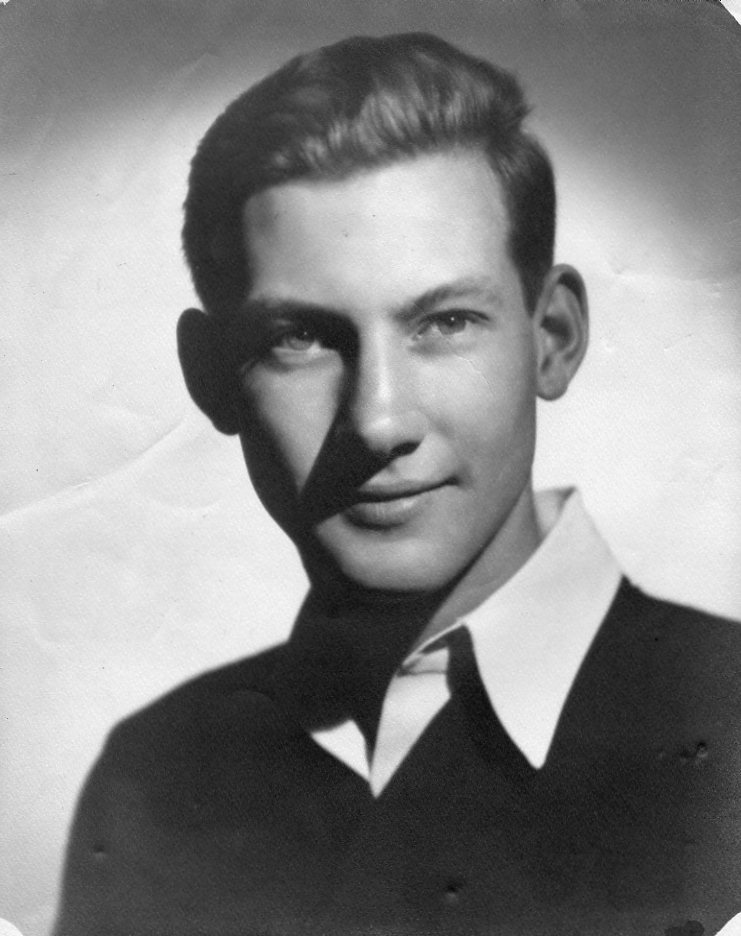
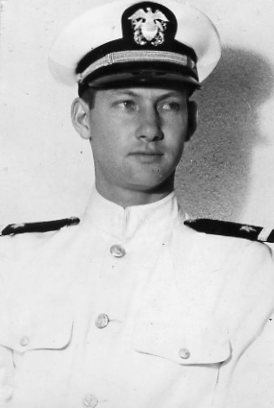
On the Fourth of July, above all else, I think about my parents. Mom and Dad were part of that Greatest Generation. They gave me and my brothers the best possible start in life. And for that I will be eternally grateful. 
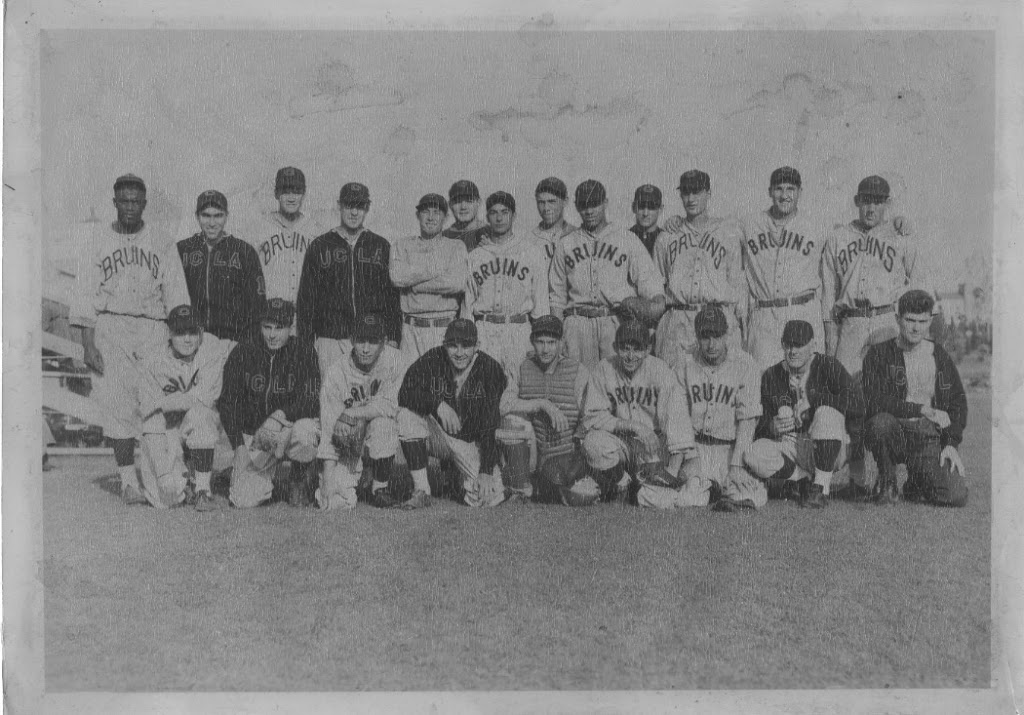
Arthur S. Bell, Jr., grew up in Hollywood, next door to Joel McCrea and around the corner from Alan Hale (whose son was about my Dad’s age and would grow up to play the Skipper on Gilligan’s Island). He went to Hollywood High School and UCLA, where he was catcher on the baseball team. Oh yeah, and he had a teammate there by the name of Jackie Robinson. (Dad’s in the middle of the first row, Robinson far left)

During summers, Dad was an extra in the movies, making numerous appearances, one of which was as a wounded Confederate soldier in the Atlanta train station scene in Gone With the Wind. We’ve never been able to spot him, though.
But here is the thing that really blows me away. At the age of twenty-three, Dad was an officer in the United States Navy aboard a Patrol Craft, hunting subs around the Solomon Islands during World War II.
Twenty-three.


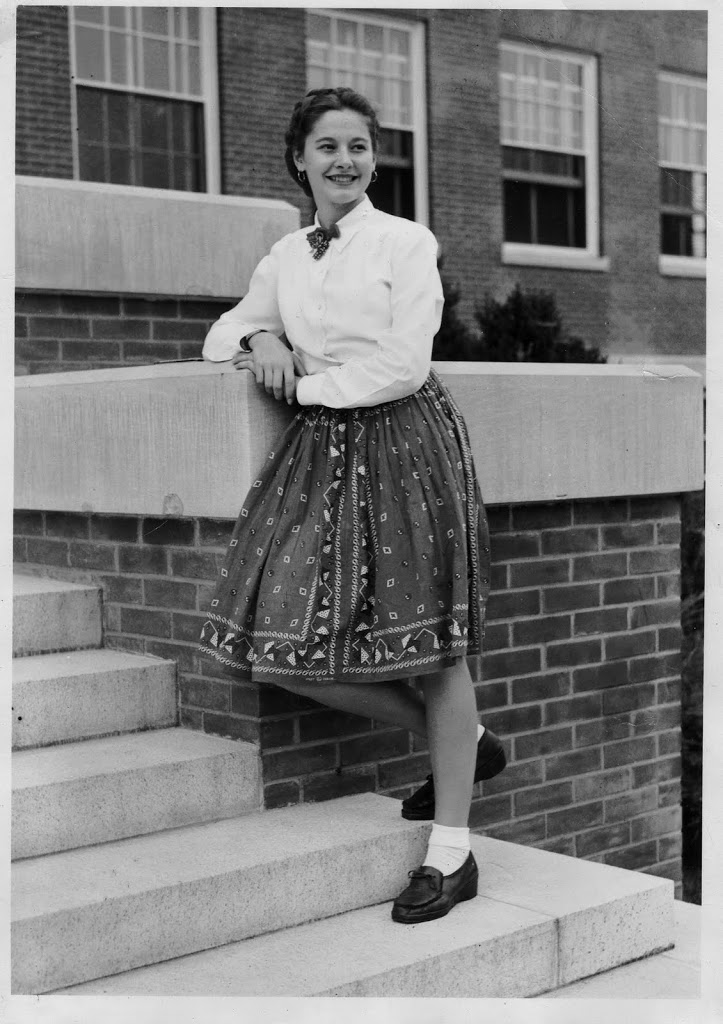
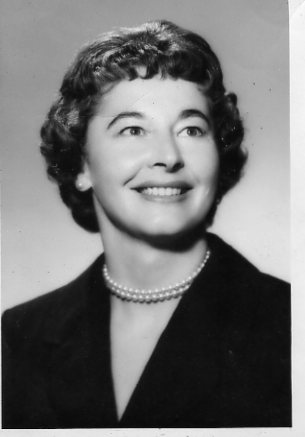
My mom, Rosemary, was born in Maryland. Her father was with the Roosevelt administration and went down to oversee projects in Puerto Rico. That’s where Mom grew up. She graduated from Syracuse University in 1944.
While living in New York she met a dashing young Naval officer and the rest is Bell family history.
Dad and Mom settled in Woodland Hills, part of the booming, post war San Fernando Valley. Dad went to USC law school and Mom was active in the community. She helped start the Women’s Club and worked on a local newspaper. She served on the Chamber of Commerce and as honorary mayor of Woodland Hills. Mom was the writer in the family and I first learned about stories from her.
From Dad I learned about hard work. He was one of the most respected lawyers in Los Angeles and a devoted champion of the Bill of Rights. He helped start the federal indigent defense panel in the city, so the poor facing major raps would have access to competent criminal defense counsel.

This explains, I think, why my books all have a quest for justice in them. I learned to respect that quest from Dad.

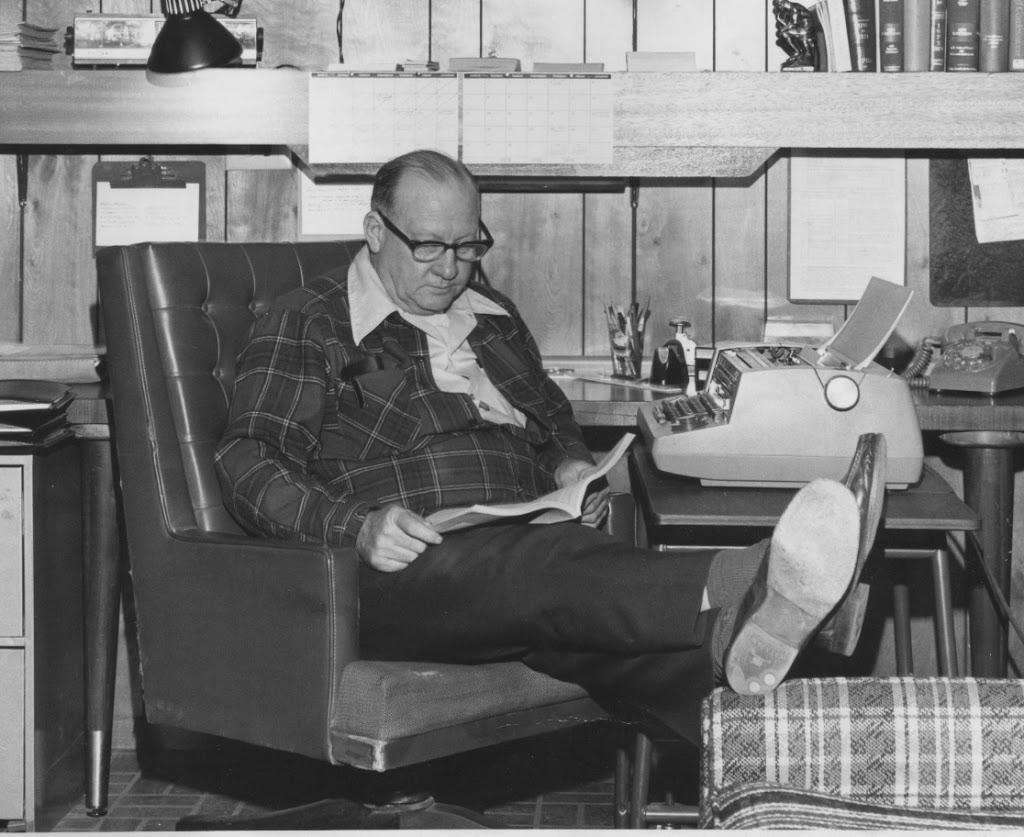
Here’s the way I remember him best––sitting in his home office reading advance sheets with the latest case law. He was the leading search and seizure expert in California. Judges, prosecutors, defense lawyers, police and more than a few prisoners all sought his advice over the years.

Fourth of July was always big time fun when I was a kid. Mom would host a potluck for the neighborhood. All the baby boom progeny would be running around or swimming or eating or playing games. Then we’d sit on the front lawn and watch a local fireworks display.
Dad would sometimes take that occasion to recite a poem or two. With his ever present cigar, he would orate in the same voice with which he argued to many a jury.
One of his favorites he learned from his father, as I learned it from Dad. To me, it sums up what my American father was trying to instill in my brothers and me. I think he succeeded. It’s called The Victor:
A toast to the man who dares
No matter how dead his trade;
Who can win his luck
By his own good pluck
When the rest of the world is afraid.
Another to him who fights
When the trade is a whirlwind lure,
And who jumps right in
With a will to win,
Though rivals are plenty and sure.
So here’s to the man who dares,
Though fortune blow low, blow high,
And who always knows
That the conquest goes
To the man who is ready to try.
Happy 4th of July, everybody!

Is Your Discomfort Zone Expanding With The Universe?

John Ramsey Miller

I suppose it’s no surprise that young people still don’t want to hear what the older people have to say. There is an ancient saying that goes: “Young men think old men are fools. Old men know young men are.” I’ve been thinking lately that maybe this is one time when the young know more about certain things than we do and we might look to them for assistance. I figure I know a lot more about some things than the youngsters know, but it’s possible that what I don’t know, that they do, is more important right now to survival in the “new” world.

A couple of weeks back, my brother left his new iPad on the coffee table. He back came into the room to find my six-year-old granddaughter playing a game on it. She had never seen an iPad, but she turned it on, and was playing a game on it. Kids are not intimidated by technology the way most of us (guys and gals of a certain age) are. I have to admit that I am feeling sort of lost in the technology department, and am not yet seizing the “new” opportunities everybody is talking about. Well, I don’t have a book ready yet. I’m thinking about it and measuring myself for the new world, but I have more questions than answers. My kids get it and they see what is invisible to me.

The problem I have in this new exciting world is one of visualization. Back when I was in advertising [If memory serves correctly after thirty years] I remember a story that David Rubinstein told me. Rubenstein Bros. is one of the finest men’s clothing stores in New Orleans and has been in business for half a million years. David told me that when he and his brother, Andre, took over the store, they decided to change the advertising mix, from a system of ads in the newspaper, to adding radio spots. They recorded a commercial and when they played it for their father, he asked them what it cost to make. When they told him he was flabbergasted. “It lasted no time, I don’t remember what it said, and it cost more money than I have in my pocket!” With an newspaper ad, it was there in your hand. You could read it as many times as you liked, admire the art, and act on it or not. With radio, it was words in the air, and they were gone as soon as the ad stopped. If you heard part of it, you could not replay it.

I used to laugh at that story, but from a different angle than I see it now. Back then, I thought the old man was pathetically outdated, which perhaps he was. But something in the air was …in the air and didn’t actually exist. And it was advertising money he thought should be used on something proven, something he understood and was tried and true. The times were changing, the old model was dying, and his sons saw that they needed more and different in a changing market. The people they wanted to bring into the store, were young people who listened to music. The sons grew the business by leaps and bounds because they went with the new ways, going after the up and comers. But as we get older don’t feel comfortable with change we can’t see how to use in the old way. Now I understand that we are all locked in our habits, wanting the things that worked when, to work forever. My problem is that it’s all about comfort zones. None of us want to be left behind gnawing on a dinosaur bone while others are feasting on some kind of new-fangled, ding-dong tofu burgers with sprouts.

The old model for any enterprise is going to become crippled, but still working for a while before it fails entirely, but probably not for long. Our world is changing, and it calls for new eyes and open minds.

I am having trouble embracing what seems to me no more substantial than air. I’ll be okay. I know that. I have always trusted my instincts. I can write stories, and I can get the kids to make sure they are put in the air where they need to be so people can find and read them.

I know it really doesn’t matter to people whether I jump on the tech wagon, or watch it go by with others riding on it. I figure I’ll just bring in the kids.

The Most Wonderful Time of the Year

By John Gilstrap

It’s Launch Day! This is the day when Threat Warning hits the stands (actually, it’s been on the stands for a week or so, but July 1 is the official launch date). This is my eighth time at bat, and it never gets ho-hum. Far from it, in fact. Each time a new book comes out is another pinch-me moment.

There was a point in my life—the first thirty-eight years—when the thought of publishing a single book seemed ridiculously unachievable. Then, along around 2003, the smart money said that my fourth book would be my last. Now, thanks to a hard-wired resistance to listening to people who tell me what I cannot do—and the good fortune to be introduced to Kurt Muse, who introduced me to the world of Special Forces—I’m basking in the glow of the release of my eighth book while I pound away on my ninth (Damage Control, to be released in July of 2012).

I don’t mean to get all sappy, but honest to God, sometimes I have to step back and wonder what good deeds I did in my past lives to justify the ride I’m getting in this one. Next week, I’ll be in New York City for ThrillerFest, hanging out with some of the best writers and smartest people on the planet, trying my best to be more friend than fan, though I confess that the difference is separated by a hair-thin line.


If you’re planning to be there for CraftFest—the writing program that begins on Wednesday—please consider dropping in on my session, “Who’s Story Are You Telling?”, a workshop on effective use of POV. Alternatively, please pop in on Saturday to the panel I’ll be leading on the future of the military thriller.


ThrillerFest is one of two indispensable meetings for writers of suspense fiction. Whereas Bouchercon—the other indispensable meeting—is mostly about meeting fans and gaining new ones, ThrillerFest is about professional development. Yes, T-Fest is expensive, but New York is an expensive city, and it is the heart and soul of the publishing industry. At the receptions and the bar and the banquet, you’ll find dozens of editors, agents, publishers, sales reps and publicists. It’s not the place to pitch your book (unless asked), but it’s the place to hang out with the power brokers and learn the industry.


Enough about that. This is Launch Day! In Threat Warning, Jonathan Grave and is team confront homegrown terrorists who are much more dangerous than they appear. Quoting the cover copy:


“The first victims are random. Ordinary citizens, fired upon at rush hour by unseen assassins. Caught in the crossfire of one of the attacks, rescue specialist Jonathan Grave spies a gunman getting away—with a mother and her teenage son as hostages. To free them, Grave and his team must enter the dark heart of a nationwide conspiracy. But their search goes beyond the schemes of a madman’s deadly ambitions. This time, it reaches all the way to the highest levels of power…”


I hope you give it a try. Even more, I hope you enjoy the story. One way or another, please let me know what you think.

Rockin’ the 4th

My life’s experiences as an author often wind up in my books. While I’m writing, I let my mind wander wherever it goes to come up with settings, emotions, and dialogue. I free my mind and don’t censor myself. Chances are, if what I’ve written makes it through my own edits, it will stay. Being a writer has added to the quality of my life because I’ve become more of an observer and a listener and everything interests me.

So with the July 4th holiday coming up, I’ve been reflecting on my favorite memories of this celebration. It’s a federal holiday—typically a long weekend for most—which is reason enough to celebrate. Independence Day (commemorating our freedom from Great Britain and the adoption of our Declaration of Independence on July 4, 1776) is typically celebrated with fireworks displays, parades, picnics, BBQs, baseball games, and gatherings of families.

I’ve had many fond memories of this holiday. My brothers and sisters used to wage war in the neighborhood with bottle rockets. I mean serious war, folks. We had bunkers and booby traps and body armor in the form of hooded winter jackets in the middle of the Texas summer heat. My oldest brother, Ed, once donned a hooded winter coat to protect himself from the onslaught of direct hits. He launched bottle rockets from a Coke bottle pointed wherever he aimed—like a young Rambo—but one blasted out of the bottle and turned on him. A self-inflicted wound. It spun back into his hood and sent sparks flying around his head. He looked like a human torch (except for the weird dance he performed) trying to smother the live round. He could have lost an eye, instead of the singe circle of hair that got burned off his head. This wasn’t exactly one of his stellar moments. Now that he’s a father, giving sage advice to his boys on fireworks, he has real credibility (even though it’s a story he’s never told them). Sometimes I’m amazed he’s still alive.

The memory of my brother setting his head on fire ranks near the top of my list of childhood memories for reason only a kid would understand, probably because Ed survived to laugh about it. But my favorite memory of this holiday came when I was in my 30s and vacationing in Hawaii. I lived in Alaska at the time, so spending weeks on a beach was as close to heaven as I could imagine. My husband and I didn’t know what to expect, but we’d been invited by friends to join them in an annual event they participated in on July 4th. A boat picked us up on the beach near our hotel. I’m not talking about a pier landing. We had to walk into the ocean and clamor—as gracefully as possible—from the cresting waves and into a raft. I should have taken note that arriving at the party onboard the boat, soaking wet, was a hint of things to come.

Every year, a group of close friends launches an all out war on the water between two boats. They make huge slingshots with surgical tubing and launch large water balloons, trying to score hits. Better than the old game, Battleship. The two boats run a parallel course and bombard the partygoers with mega-water-balloons. The battle was a lot of fun, but I will never forget being adrift on the ocean at sunset in paradise with warm water everywhere and the sounds of laughter filling my soul with a contentment I will always remember.

But after it grew dark, the boats anchored near shore. We had the best seats in the house as we watched the fireworks on the beach from the boats rocking on the waves. The dazzling lights reflected on the water and I couldn’t drink enough of that memory in, surrounded by friends and my husband beside me.

My favorite memory of the July 4th holiday was a little unconventional, but most good memories are. With the holiday coming up, how will you spend it? Do you have a favorite July 4th memory to share? Tell me a story.

Thriller Must-haves

By Joe Moore

Next week I head to NYC for ThrillerFest — what many consider summer camp for thriller writers. ThrillerFest is really 3 events bundled into one general heading: CraftFest, AgentFest and ThrillerFest. This year, in addition to the 27 bestselling CraftFest instructors including Doug Preston, Michael Palmer, David Morrell, and our own TKZ blogmate John Gilstrap, the great Ken Follett will be teaching a course called “How Thrillers Work”. Taking a class from a guy who has 130 million copies of his thrillers in print ain’t too shabby.

AgentFest has grown to over 60 top New York agents and editors waiting to hear book pitches and look for that next big seller.

And ThrillerFest boasts two days of panels and interviews by some of the biggest names in the genre. As an added bonus, representatives of the CIA will be on hand to answer all those spy novel questions. And the conference ends with the naming of the 2011 Thriller Awards winners and the celebration of R.L. Stine as this year’s ThrillerMaster. There’s still time to register if you can make it.

On Saturday (July 9), I’ll be on a panel called “Are there must-haves in Thrillers?” My fellow panelists include Karen Dionne, Mike Cooper, William Reed, Larry Thompson, Norb Vonnegut, and F. Paul Wilson. It should be a great discussion.

I believe, as I’ve discussed on this blog before, that there are a number of elements commonly found in most thrillers. So to get in the spirit of my ThrillerFest panel next week, here are 6 general must-haves that I think can and should be found in most contemporary thrillers.

First, let’s define a thriller and how it differs from a mystery?

Although thrillers are usually considered a sub-genre of mysteries, I believe there are some interesting differences. I look at a thriller as being a mystery in reverse. By that I mean that the typical murder mystery usually starts with the discovery of a crime. The rest of the book is an attempt to figure out who committed the crime.

I see a thriller as being just the opposite; the book often begins with a threat of some kind, and the rest of the story is trying to figure out how to prevent it from happening. And unlike the typical mystery where the antagonist may not be known until the end, with a thriller we pretty much know who the bad guy is right from the get-go.

So with that basic distinction in mind, let’s list a few of the most common elements found in thrillers.

1. The Ticking Clock. Without the ticking clock such as the doomsday deadline, suspense would be hard if not impossible to create. Even with a thriller like HUNT FOR RED OCTOBER which dealt with slow-moving submarines, Tom Clancy built in the ticking clock of the Soviets trying to find and destroy the Red October before it could make it to the safety of U.S. waters. He masterfully created tension and suspense with an ever-looming ticking clock.

2. High Concept. In Hollywood, the term high concept is the ability to describe a script in one or two sentences usually by comparing it to two previously known motion pictures. For instance, let’s say I’ve got a great idea for a movie. It’s a wacky, zany look at the lighter side of Middle Earth, sort of a ONE FLEW OVER THE CUCKOO’S NEST meets LORD OF THE RINGS. If you’ve seen both of those movies, you’ll get an immediate visual idea of what my movie is about. High concept Hollywood style.

But with thrillers, high concept is a bit different. A book with a high concept theme is one that contains a radical or somewhat outlandish premise. For example, what if Jesus actually married, had children, and his bloodline survived down to present day? And what if the Church knew it and kept it a secret? You can’t get more outlandish than the high concept of THE DA VINCI CODE.

What if a great white shark took on a maniacal persona and seemed to systematically terrorized a small New England resort island? That’s the outlandish concept of Benchley’s thriller JAWS.

What if someone managed to clone dinosaurs from the DNA found in fossilized mosquitoes and built a theme park that went terribly wrong? You get the idea.

3. High Stakes. Unlike the typical murder mystery, the stakes in a thriller are usually very high. Using Dan Brown’s example again, if the premise were proven to be true, it would undermine the very foundation of Christianity and shake the belief system of over a billion faithful. Those are high stakes by anyone’s standards.

4. Larger-Than-Life Characters. In most mysteries, the protagonist may play a huge role in the story, but that doesn’t make them larger than life. By contrast, Dirk Pitt, Jason Bourne, Jack Ryan, Jack Bauer, James Bond, Laura Craft, Indiana Jones, Dr. Hannibal Lecter, and one that’s closest to my heart, Cotten Stone, are all larger-than-life characters in their respective worlds.

5. Multiple POV. In mysteries, it’s common to have the story told through the eyes of a limited number of characters, sometimes only one. All that can change in a thriller. Most are made up of a large cast of characters, each telling a portion of the story through different angles. Some thrillers are so complex in their POVs that you really need a scorecard. But even with multiple POVs, it’s vital to never let the reader lose sight of whose story it is. There should be only one protagonist.

6. Exotic Settings. Again, in most murder mysteries, the location is usually limited to a particular city, town or locale. But a thriller can and usually is a globetrotting event. In my latest thriller, THE PHOENIX APOSTES, co-written with Lynn Sholes, the story takes place in, amount other locations, the tomb of an Aztec emperor, Sao Paulo, Brazil, the sub-basement burial vaults of Westminster Abbey, Red Square, the Bahamas, a small island off the coast of Panama, and the Paris catacombs. Exotic locations are a mainstay of the thriller genre.

Like any generic list, there will always be exceptions and limitations. But in general, these are the elements you’ll usually find in mainstream commercial thrillers. But the biggest and most important element of all is that a thriller should thrill you. If it doesn’t increase your pulse rate, keep you up late, and leave you wanting more, it probably isn’t a thriller.

Are there any characteristics of a thriller not on my list? What do you look for in a good thriller?

———————-

THE PHOENIX APOSTLES is “awesome.” – Library Journal. Visit the Sholes & Moore Amazon Bookstore.

The dark side of digital

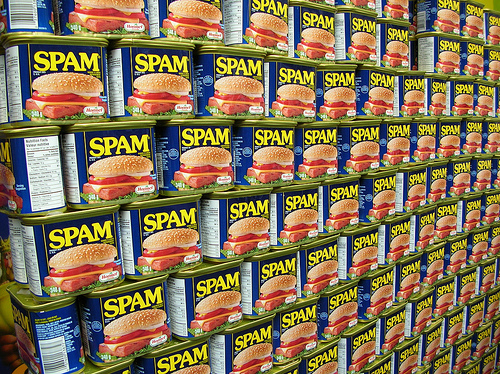
After reading Clare’s post yesterday about e-publishing’s Radiohead moment, I read an LA times article that noted a disturbing new trend in the world of Kindle books: spam.

It seems that everyone and his brother is now uploading e-books to Amazon. Many of those books are e-wrapped versions of books that are no longer under copyright–others are pirated versions of original works, with new covers.  The article cited one author who discovered that one of her books had been copied and sold on Kindle

I suppose it was only a matter of time before the spammers who flood our email in-boxes with Viagra ads and solicitations to collect inheritances in Nigeria would figure out a way to inundate the Kindle world with literary dreck. Amazon will have to find a way to filter out the spammers. There are a number of ways to do it: They could create a “verified publisher or author” seal, a la Twitter. They could develop better filters. They might have to–gasp!–act like a publisher and wade through the e-slush pile before unleashing it on the world. Any way you look at it, Amazon will have to spend some time and money figuring it out–which will probably raise the price of Kindle books fdown the line. (I hear the dead-tree book contingent laughing in triumph).

As a reader, so far I haven’t yet encountered much spam on Kindle, probably because I use filters when I browse. The only time I’ve been had was when I thought I was downloading a novel, only to discover that my “book” was only a few chapters, which had been bundled and sold as a bait.

Have you encountered spam on Amazon?  Have you ever paid for a Kindle book and then discovered that it wasn’t what you thought it was?

Pottermore or Less?

by Clare Langley-Hawthorne


Last week bestselling author JK Rowling unveiled plans for a new e-bookstore and fan focused website called Pottermore. The Guardian book blog called the move pure ‘marketing genius‘ while others expressed disappointment that the webpage didn’t live up to all the anticipation and hype (so far you can only register interest, full details aren’t available on the website as yet).

The current description is that Pottermore will provide a ‘free website that builds an exciting online experience around the reading of the Harry Potter books’. Exactly what that will entail isn’t certain – although what is certain is that JK Rowling was very savvy when it came to withholding digital rights to the Harry Potter books until now. With the Pottermore website, Rowling has sidestepped all the middlemen to maintain control over content, pricing and distribution for all her Harry Potter e-books. Pretty impressive.

Wired Magazine hailed the move as book publishing’s ‘Radiohead moment’ (in reference to their self-released album) pointing out that JK Rowling is the most significant author yet to turn her back on the established publishing houses when it comes to digital books (although she is maintaining links to her traditional publishers Scholastic or Boomsbury). She has even come up with a digital watermarking system that links the identity of the purchaser to the copy of the e-book, and as her books are apparently going to be available in a compatible form for all e-reader platforms, the books aren’t tied to any particular e-reader device.

Although Rowling called her move a ‘way to give back to the fans’ clearly she stands to make a great deal more money going it alone that she would if she were merely receiving royalties for e-books from her publisher. I also think she will be able to cleverly direct fans to additional interactive content that will no doubt expand her readership as well as entice those who already own her books to purchase e-book copies as well.

All in all, I feel this may well be a watershed moment – one that a number of bestselling authors (and lesser mortals) will be watching carefully. What do you think? Could this be the final ‘aha’ moment for the publishing world?

Pottermore or Less?

by Clare Langley-Hawthorne


Last week bestselling author JK Rowling unveiled plans for a new e-bookstore and fan focused website called Pottermore. The Guardian book blog called the move pure ‘marketing genius‘ while others expressed disappointment that the webpage didn’t live up to all the anticipation and hype (so far you can only register interest, full details aren’t available on the website as yet).

The current description is that Pottermore will provide a ‘free website that builds an exciting online experience around the reading of the Harry Potter books’. Exactly what that will entail isn’t certain – although what is certain is that JK Rowling was very savvy when it came to withholding digital rights to the Harry Potter books until now. With the Pottermore website, Rowling has sidestepped all the middlemen to maintain control over content, pricing and distribution for all her Harry Potter e-books. Pretty impressive.

Wired Magazine hailed the move as book publishing’s ‘Radiohead moment’ (in reference to their self-released album) pointing out that JK Rowling is the most significant author yet to turn her back on the established publishing houses when it comes to digital books (although she is maintaining links to her traditional publishers Scholastic or Boomsbury). She has even come up with a digital watermarking system that links the identity of the purchaser to the copy of the e-book, and as her books are apparently going to be available in a compatible form for all e-reader platforms, the books aren’t tied to any particular e-reader device.

Although Rowling called her move a ‘way to give back to the fans’ clearly she stands to make a great deal more money going it alone that she would if she were merely receiving royalties for e-books from her publisher. I also think she will be able to cleverly direct fans to additional interactive content that will no doubt expand her readership as well as entice those who already own her books to purchase e-book copies as well.

All in all, I feel this may well be a watershed moment – one that a number of bestselling authors (and lesser mortals) will be watching carefully. What do you think? Could this be the final ‘aha’ moment for the publishing world?