About Joe Moore

#1 Amazon and international bestselling author. Co-president emeritus, International Thriller Writers.

The World Runs On Fear. How Much longer Will We Be Necessary?

John Ramsey Miller

I was thinking about how much of the morning, noon, and nightly news is geared toward frightening people by cherry picking the worst examples of inhumanity from the stacks. I watch very little news these days because I feel better when I don’t. I’m not sure a boat filled with people turning over on the Volga does more than make me not want to go on loaded boats on the Volga or even the Yazoo River.

The numbers of people killed here and there don’t mean much because we are inundated with 100 killed by bombs here and thirty there. It makes most people not want to travel at all. And it makes you wonder why anyone in the rest of the world would want to come here. Certainly the other news gatherers around the world portray America as the wild west, which it isn’t. I mean every place has dangers. I guess it’s all about perspective. I kill a Copperhead on the porch, I don’t stay indoors or move to the city. I am just more careful about watching where I walk and put my hands.

Since Caylee Anthony was killed by her mother, are we to be suspicious of mothers in general? I see they will be a spate of laws to prevent another mother from killing her daughter so she can party. I suppose having a law that makes it a crime to not report you missing daughter will go a long way toward preventing insane women from killing their children and not calling the police immediately. Everybody knows that murderers plan their activities according to what legislators will or won’t allow.

I read that in remote African villages people often burn witches, or people who are shape-shifters. We have the same thing here, but not so much witches or shape shifters, as, say, Muslems or Moonies. Are there still Moonies running around?

Large numbers of people can be manipulated by a very few people fanning the flames of fear. Fear overrules intelligent discourse. You can’t use rationale against fear because most fear isn’t rational. Leaders often gain power and rule using fear and suspicion to galvanize and keep people from feeling safe. The truth is I feel manipulated by politicians on both sides of the aisle and I think more and more people feel that way. How are people to know the truths of any matter unless they are involved in them. If you manage a checkbook, you know the country is on shaky financial ground. And you wonder how the government can agree on anything that can fix things. You know what they say about having to hit rock bottom before you can face reality and make changes.

I think people who live normal lives like being afraid, but they like maintaining a safe distance from the actual threats. People like thrillers because they are at a safe distance from the bad thing in the book. I suspect that people living with constant real fear don’t read thrillers. What would be the point? I don’t know if the world is actually more dangerous than it always has been, or if its just that it is so in our faces.

We may become obsolete. I mean, in the face of our reality, what can we possibly make up or add to the mix that is more bizarre or frightening than real?

Catching Up

By John Gilstrap

I forgot, okay?  Last week, I was immersed in ThrillerFest, reconnecting with the stunning brain trust that is a conference of thriller writers, and I completely forgot to post a blog.  Sorry about that.

But this is a new week, and it’s marked by both great news and terrible news; elation and frustration.

First, the good: A few weeks ago, I posted a blog that I called Serendipity, in which I recounted a customer service triumph involving the Hilton Garden Inn.  At the time, I hinted at a coda to the story, and now I can report that Hilton Garden Inn placed an order for 700 copies of my new book Threat Warning, to be distributed to their managers around the globe.  We’ll be holding a ceremonial signing at the HGI property in Fairfax, Virginia (near my home) on July 28, and with any luck at all, we’ll attract some media interest.  I think it is so cool when random encounters end up in such great results.  (I’ve actually never signed that many books at a sitting, so I’ll be interested to see how my hand holds out.)

Now for the bad news: Last week, Microsoft sent me a “service pack” update that turned out to be “corrupted” and contained a “fatal error” that required me to return my computer to “factory settings.”  In layman’s terms, I believe that means they poisoned my computer and destroyed 17.6 gigabytes of data.  Gone.  Poof.  Not so much as a “sorry, John.”

In an interesting bit of irony, the only way to access Microsoft’s technical support is through their website, to which I didn’t have access because they, you know, poisoned my computer.

What keeps this from being a total disaster is my new cyber-hero, Carbonite.com.  It’s a service that’s nearly free of charge (a few bucks a month) that backs up all your data every day to their system.  After this catastrophic loss of data, all I had to do was tap into http://www.carbonite.com/ and sign into my account.  Click a few bottons, and a few days later (that’s how long it takes to restore 17.6 gigabytes), I’ll be good as new.  I hope.  (I’m knocking wood.)

So, here’s my question for the Killzone techies: Next time one of these service pack upgrades pops up in my system, am I supposed to ignore it?  Or do I just make sure that Carbonite and I remain friends?

I hate computers.

Will Casey Anthony Get a Book Deal?

There’s been speculation in the publishing industry and in the news whether or not Casey Anthony will get a book deal. Bestselling thriller writer, Jason Pinter, (former editor at Grand Central Publishing and St. Martin’s Press) posted his opinion on HuffPost Books on July 6th – Why Casey Anthony Will Not Get A Book Deal. (See his post HERE.) He compares her differing situation to O. J. Simpson and Amy Fisher and makes a compelling argument, but the media is still speculating that there is a deal to be had, even suggesting rumors of an advance of $750,000-$1,000,000.
Whether or not people believe she is innocent or guilty, I can’t imagine a mother who has lost a child seeking financial benefit from the ordeal to rehash the details of such a tragedy. If she is innocent and wants to convey her outrage at being falsely accused, that’s one thing. But if that were the case, why isn’t she crying for justice for her murdered daughter? And why did she not report little Caylee missing for a whole month?
The outcome of this case has angered me on so many levels from the botched prosecution, to the unprofessional behavior in the courtroom (the laughing prosecutor and the finger-shooting defense attorney, Cheney Mason), to the miscarriage of justice when a parent can lie to investigators and only be charged with a misdemeanor. (Not reporting your child missing for a month should fall into a different category of wrong.) And if you’ve been following this case recently, you would hear that her family has been selling family videos to the news media for significant dollars so the news can lace coverage with personal family images.
All I can see is the sweet face of a little girl who died a horrible, frightening death.
Jason Pinter thinks that no publishing house will touch her story. I want to believe he’s right—that the publishing industry has a moral line in the sand they will not cross—but being a cynic, I can’t be sure. (I thought that after the O. J. Simpson trial too.) Maybe it’s not a question of morality, but a business bottom line using the equation of MegaBucksAdvance + BookBoycott = LoserDeal. The editors that I’ve been blessed to work with would be appalled at making money off this tragedy. And I’m sure there have been and will continue to be controversial book deals done where a publisher struggles between their personal feelings and a business decision, but pushes ahead to make the deal anyway.
Casey Anthony’s family has already gained financially and it’s being reported that significant offers are being made for her appearance. Before this case, if I had written this kind of scenario into a fiction book—a mother lying to police, getting away with it with a virtual hand slap, and becoming a millionaire after she’s acquitted—readers might have called it outlandishly contrived. Reality is indeed stranger than fiction.
Now before anyone brings this up, there is a book deal coming. (I’m sure more than one.) Reported by the New York Times (see post HERE), St. Martin’s is pushing to release a book this year—“Inside the Mind of Casey Anthony,” written by forensic psychiatrist and television pundit, Keith Ablow. To clarify for Jason Pinter’s sake, this is a book ABOUT Casey Anthony—NOT a book she has written or benefits from financially. The book’s focus will be on why Caylee Anthony is dead and will be presented as a true crime story.
What do you think? Will Casey Anthony get her own book deal?

PCS

By Joe Moore

I’m suffering from PCS–Post Conference Syndrome. Just about all writers including myself live a self-imposed life sentence served in solitary confinement. Sure I can leave anytime I want. After all, it’s a minimum security prison. There are no walls, barbed wire or guards—well I do have a watch-cat who keeps a suspicious eye on me in between catnaps. But in general, writers don’t get out much. As Nancy Cohen remarked in her post last week, she works in a “writer’s cave”.

So it’s a special treat to receive a temporary furlough and head to a writers’ conference. In my TFVI-logo1case, it was ThrillerFest, held each year at the Grand Hyatt in NYC. What an amazing feeling to be awash in a sea of creative minds surrounded by hundreds of writers and fans. And at ThrillerFest, everyone is accessible. Having a casual chat with Ken Follett, Lisa Gardner, James Rollins and Jeffery Deaver is commonplace. But the thing that gets my blood flowing faster is the electric atmosphere created by so many amazing writers all breathing the same air, enjoying the same camaraderie, and sitting side by side in panels sharing so much wisdom and advice.

Running into fellow TKZ blogmate, John Gilstrap is always a pleasure. And there was a rumor that TKZ’s Kathy Pickering was in attendance, but I could never track her down.

A couple of tidbits from the industry panels included some agents predicting that the ratio of ebooks to print books will eventually stabilize at 70 percent ebooks and 30 percent printed books. Someone also pointed out that because of the hundreds of thousands of self-published ebooks now flooding the market, it could result in the eventual end to what many consider a novelty for would-be authors publishing their own manuscripts.

Literary agent Simon Lipskar (Writers House) gave an interesting comment in which he compared the ebook/digital revolution to the industrial revolution. He predicted one possibility that because of the rapid changes in publishing, we might see digital and audio books being released as one. A reader could be listening to a book in her car, pause and enter her house, and resume the book on her e-reader.

The conference wound up with the Thriller Awards going to John Sandford (hardcover), J.T. Ellison (paperback), Chevy Stevens (first novel), and Richard Helms (short story). R.L. Stine was named 2011 ThrillerMaster, and Joe McGinniss received the True Thriller award. The Silver Bullet for her Save The Libraries program went to Karin Slaughter.

ThrillerFest-VII-logo-smallNext year’s ThrillerMaster is the legendary Jack Higgins.

Overall, a good time was had by all. Now I’m back in solitary confinement trying to jumpstart my current WIP, still light-headed from all that creative air and looking forward to next year’s conference.

How about you? Do you like to attend conferences? Which one is your favorite? And do you suffer from PCS?

Writing lessons from the road

For the last three weeks I’ve been on the road with my sister Debbie, visiting family up and down the East Cost. It’s been a blast.

We bought an audio book for our trip, a thriller by an author we both love. This particular story, however, did not live up to our expectations. (I won’t name the author or title, because I’d hate to meet him at a conference and have a drink flung in my face). 🙂  

As we listened to the story, I was reminded about a few key writing lessons:

* Don’t let the reader out-think the narrator.  

After listening to the first story CD for five minutes, Debbie and I knew that the thing that was buried under the sea floor was A Very Bad Thing. However, it took the main character five more discs to figure this out for himself.  By then, Debbie and I were throwing imaginary popcorn at the CD player.

* Keep raising the stakes and the suspense.

In this story, the suspense question was raised at the outset: “Is the Buried Thing good or evil?” But after that, the author didn’t raise the stakes or suspense. The reader merely encountered a succession of  characters who repeatedly raised the same question.

* Provide a satisfying payoff for the suspense.

After the long tease of discovering what was buried, we never got to see the Bad Thing do anything. It merely shot a warning round over humanity’s bow, and the good humans got away. (The bad humans didn’t make it to the escape pod.)

When it comes to creating bad guys in a thriller, you’ve got to have some real action. Imagine watching The Thing and having it end when they first unfroze the monster. To have an enjoyable movie, you’ve got to see the monster tear apart a laboratory or two. Then you can kill it off.

* Don’t repeat phrases.

This is a Writing 101 point, but when you’re listening to an audio book, you really notice repetition. I started counting the number of times a character “stared thoughtfully down the hallway.” It was in the double digits.

* Don’t start a secondary story thread, only to drop it.

There was actually an interesting secondary story line that got started, only to be dropped mid-way through the book. It was as if the author had started an entirely different book concept, couldn’t pull it off, and wove in the leftovers as a subplot.

* Provide enough motivation for your characters’ actions.

None of the characters in the story, not even the protagonist, were written in a way that explained their actions. One secondary character became a hero, another a villain, and we never understood why. It was as if the writer spun a wheel and let the character actions go wherever the ball landed. Not a good thing.

* Have a competent voice narrator.

This book was voiced by a male. Whenever he had to read dialogue by a female character, he would make his voice go all quavery and soft. Ick.

After listening to the entire book, Debbie and I decided that the author had never clarified his story objective. He never figured out how to pull the story components together in a way that made sense. 
I’m going to read the printed version of the book, just to see if it comes off better on the page.

Have you listened to many audio books, and found them to be a different experience than reading? Is anyone aware of any special requirements for crafting an audio book that “reads” well?

Inspiring Self-Confidence

by Clare Langley-Hawthorne


Following on from Jim’s terrific post yesterday, I was thinking about the methods I use to try and push aside my doubts and foster self-confidence. I can’t say that these methods work on the truly dark days, when writer angst can almost paralyzes me, but they do help me get back on track and (as Jim so wisely advises) write through it.

As Samuel Johnson wrote: “self-confidence is the first requisite to great undertakings.” It is certainly critical to being a published writer these days. You need it to project a professional image to your agent and editor. You need it to get out there and promote the hell out of your book. And you most certainly need it to help pull yourself out of any writer pot-holes you might fall into such as rejection, writer’s block, panic and doubt. Another great writer, Anthony Trollope,once wrote: “Never think that you’re not good enough yourself. A man should never think that. My belief is that in life people will take you at your own reckoning.”

In publishing, editors and agents will, likewise, take you at your own reckoning, but this doesn’t mean you should be either cocky or arrogant. No, I believe self-confidence requires a balance between ambition and humility. You can believe in your work without forgetting the need to continually learn and strive for excellence. So how to I try and maintain my self-confidence?

  • Well, first off I make sure I draw upon the support of peers and mentors. Despite being ‘Down Under’, I continue to keep in contact via email and Skype with authors whose work I respect and whose support continues to be invaluable. When I am plagued by self-doubt I turn to them for validation. They help remind me that writing is my profession and that I can, and will, succeed as long as I continue to explore and hone my craft.
  • I focus on the process – whether it be drafting or editing or promotion. I focus on the satisfaction that comes from achieving ever a minor milestone – the first page, that first chapter, the first completed draft etc. Often rereading material I have written actually inspires hope too:)
  • I surround myself with inspiration – from copies of my published books, to goal charts that I can aim for – or brainstorm ideas that keep my imagination chugging along. Rather than dwelling on what isn’t working in my writing, these things can help remind me on the things that have succeeded and help fuel the excitement that comes from pursuing my dream with passion and ambition. Nothing is too cheesy for me either so I’ll be looking up the top leadership quotes to read every morning to get my day started in a positive way.
  • Finally, I continue to seek a reality check. A lack of self-confidence is a feeble excuse for not writing. So when I start feeling sorry for myself I know it’s time to pull my socks up and get hard at work. I think the great athlete Jesse Owens, sums this up nicely when he said: “The battles that count aren’t the ones for gold medals. The struggles within yourself – the invisible, inevitable battles inside us all – that’s where it’s at.”
So do you struggle with finding sufficient self-confidence to pursue your dreams? If so, what do you do to keep (or get yourself back) on track?

Writers and Doubt

James Scott Bell


“Don’t look back. Something may be gaining on you.” – Satchel Paige 


You want to be a writer? You are a writer? Welcome to the world of doubt.
Dick Simon (of Simon & Schuster) once said, “All writers are scared to death. Some simply hide it better than others.”
Why should that be? Even after one has reached the hallowed halls of publication? Even while in the midst of what might termed a career?
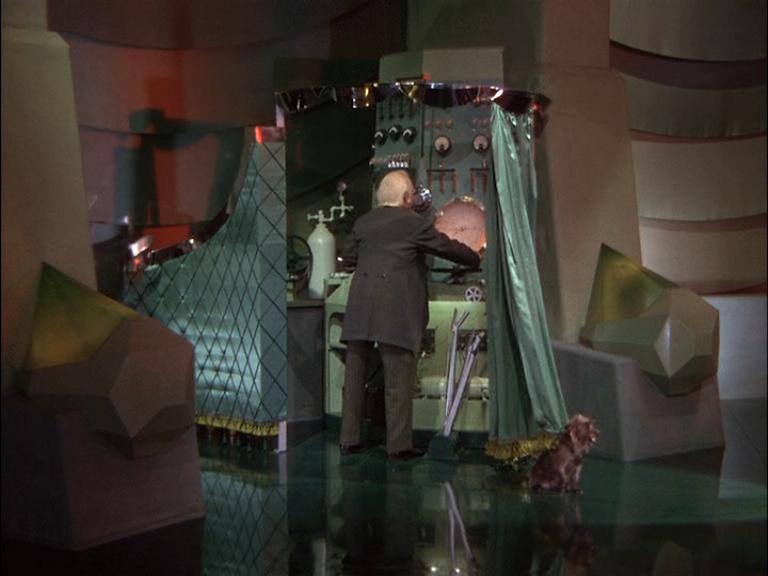
Because there is always lurking the idea that the rug may be snatched away. That some little dog will pull aside the curtain and reveal you there, a fraud after all. Even the top writers in the game get this feeling. No less a luminary than Stephen King cops to it.

Another reason excellent writers experience doubt is, ironically, excellence itself. Because these authors keep setting their standards higher, book after book, and know more about what they do each time out. That has them wondering if they can make it over the bar they have set. Many famous writers, unable to deal with this pressure, have gone into the bar itself, and stayed late.
Jack Bickham, a novelist who was even better known for his books on the craft, put it this way:
“All of us are scared: of looking dumb, of running out of ideas, of never selling our copy, of not getting noticed. We fiction writers make a business of being scared, and not just of looking dumb. Some of these fears may never go away, and we may just have to learn to live with them.”
Yes, you learn to live with them, but how? The most important way is simply to pound away at the keyboard.
You write.

As Dennis Palumbo, author of Writing from the Inside Out, put it, “Every hour you spend writing is an hour not spent fretting about your writing.”
If a writer were to tell me he never has doubts, that he’s just cocksure he’s the Cheez-Wiz of literature, I know I will not want to read his work. That’s why I think doubts are a good sign. They show that you care about your writing and that you’re not trying to skate along with an overinflated view of yourself.
The trick is not to let them keep you from producing the words.
Don’t ever let the waves of doubt stop you. Body surf them back to shore, let the energy of them flow through your fingertips. That’s the only real “secret” to this game.
What about you? Ever feel doubts? What’s your preferred method of handling it?

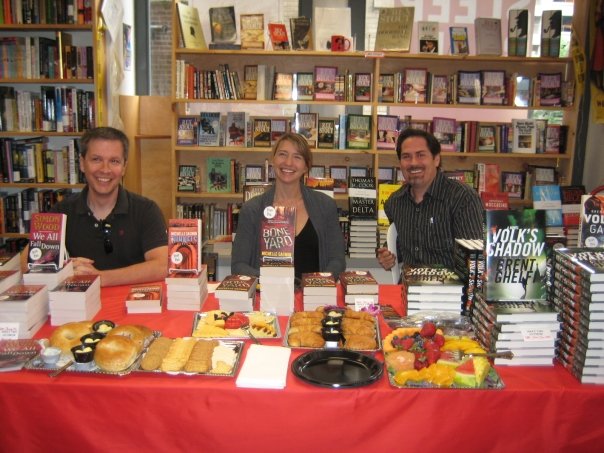
So this guy walks into a booksigning, and…

I’m going to take up from Michelle Gagnon’s terrific post on planning a book signing and pose a question: what is the funniest thing that has ever happened to you at a book signing? Either as the guest of honor or as an attendee? John Gilstrap tells HILARIOUS stories about doing a booksigning at Costco,involving the bay doors and a de facto wind tunnel. Sandra Brown also tells a great story about the first signing she ever did. What’s yours?

I don’t really have one. Well, yes I do. I did a signing at a local store and was all set up by the entranceway, showered, shaved and tap-dancing, and actually had people who weren’t related to me or in my circle of friends buying books. A guy — a big guy — walks through the door, sees me sitting there signing a book for a very nice lady, and rudely interrupts, asking “Where’s the music department?” I immediately responded, “Second floor. Turn right at the top of the escalator and go all the way back.” Of course, that was where the restrooms were located. For all I know, he’s still looking.

Your turn.

Giving Good Book Tour

by Michelle Gagnon

In my last post, I mentioned that I was offering a seminar on book events at a writing conference. A few people requested that I post excerpts from what was, if I do say so myself, a brilliant PowerPoint presentation (At least no one fell asleep. Well, the one guy who did wasn’t actually snoring until the very end).

So here are my tips, in a somewhat random order:

The Basics:

Timing is everything, in life and especially in book tours. When planning yours, a few things to bear in mind…

3-6 months before your release date:

  • Contact stores and libraries to set up your tour. There’s a strikingly long lead time for events at some venues, and it’s important to get on their calendar early
  • Partner up (more on this later)
  • Pitch a “theme” event (also, please see below)
  • Convince the booksellers that you’ll be able to draw a crowd, then do your best to fill those seats. Get in touch with the local MWA and SinC chapters of whatever region you’re visiting, and ask nicely if they’d mind posting an announcement about your event. Work those social networks to make sure your followers know that you’ll be coming to their hometown. Call long lost relatives and demand that they show up and buy ten books to make up for that incident in 1992. Whatever it takes.

The week before your book hits shelves:

  • Call a week before to check details. I learned this one the hard way, when my publicist gave me the wrong date for one event, and the wrong time for another. Hell hath no wrath like a bookseller who promoted an event that an author showed up to an hour late. Trust me, checking the details personally in advance can save everyone a lot of tears.
  • Arrive at the venue at least fifteen minutes early to doublecheck the set-up, and (more importantly), to introduce yourself to every bookseller in the store
  • ALWAYS bring extra books. The only times I haven’t also coincided with the times when I packed the place, the bookseller had only stocked a handful of copies, and they rapidly sold out. Times like that, most sellers are happy to buy the books from you on consignment.
  • Remember to bring promotional materials (bookmarks, magnets, pens, etc.) I always tend to remember this one as I’m sitting on a plane, picturing the stack of bookmarks still sitting in a bag by my front door.

Partnering:

I loathe doing a book event by myself, I truly do. Whenever possible, I prefer to share the burden with at least one other author, which has led to some fascinating experiences with a cast of characters ranging from teddy bear aficionados to reformed bank robbers.
Offering an event with one or more other authors has some key benefits:

  • You can interview each other, do a Q & A, or just talk up each others’ books, which tends to be much easier than lauding your own
  • It’s easier to secure a book signing, since booksellers believe (rightly) that two authors are a better draw than one
  • Cross-promotion; your fellow author’s fans learn about your books, and vice versa (and hopefully, they buy copies of both)
  • Worst case scenario, if no one shows up, you have someone to play cards with

Another option to consider: set up an event with more “unconventional” partners. To date, one of my most successful events in terms of sales was at a cocktail party hosted by a friend. She invited me to sell books, a jewelry designer to sell jewelry, and a rep from a kid’s educational toy company to sell toys. And all of us sold out–people came prepared to spend money, and after a few glasses of wine they shopped like mad.

Theme Events:

Booksellers and readers both love novel experiences (no pun intended). If the subject matter of your book naturally lends itself to a theme, fantastic. If not, get creative. Here are some examples:

  • Rhys Bowen hosted “Royal Tea Parties” at bookstores for the release of “Her Royal Spyness.”
  • Kelli Stanley held the release party for her 1930’s era novel “City of Dragons” at a modern day Speakeasy.
  • Heather Graham hosted a séance for “The Séance” release in Salem, Massachusetts.

So if your book involves classic cars, I’d recommend hitting at least as many car shows as bookstores. Same with any craft-related novels–get thee to quilting bees, scrapbooking parties, the works. The teddy bear guy (and no, I’m not making this up, there is a teddy bear guy, and he’s lovely), told me about teddy bear conferences where he’ll set up a table and sell a few thousand books in a single day.

My books don’t tend to have themes, outside of dirty bombs, kidnappings, and terrorists (and those terms don’t naturally lend themselves to mass attendance). At Thrillerfest one year, a group of us were discussing how tough it can be to land events in New York City bookstores.
The following year, we found a way around it– during Tfest, we organized a mass reading at a local Borders with the theme, “Quick Thrills from Out-of-Towners,” asked the extraordinarily gracious Lee Child to serve as our MC, and we managed to pack the place. Creativity can pay off.

In a nutshell, those are my top recommendations. But I’d be curious to hear from both authors and readers: what’s the best book event you ever attended, and what made it so great?

The Parade of Life

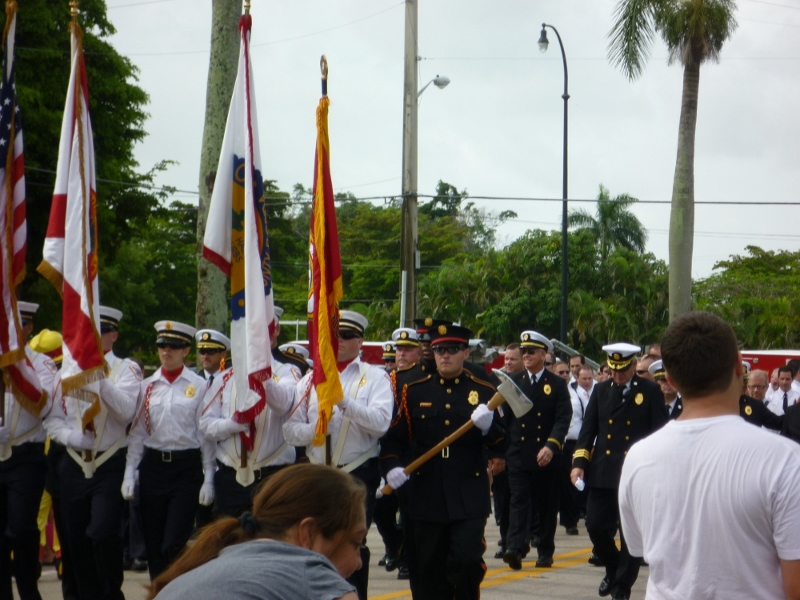
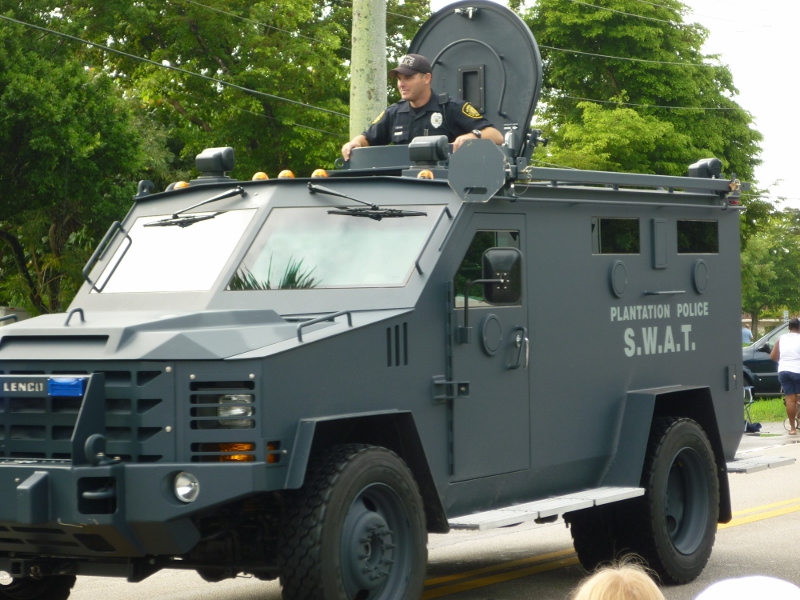
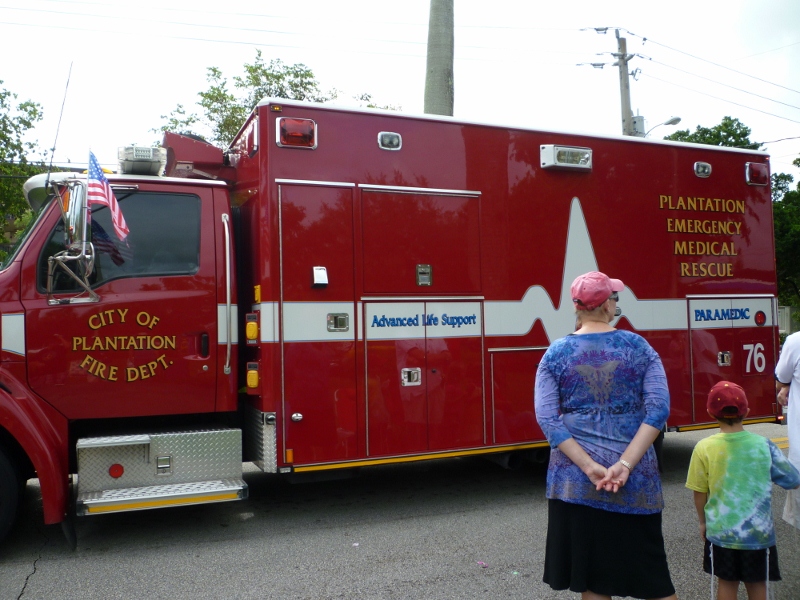
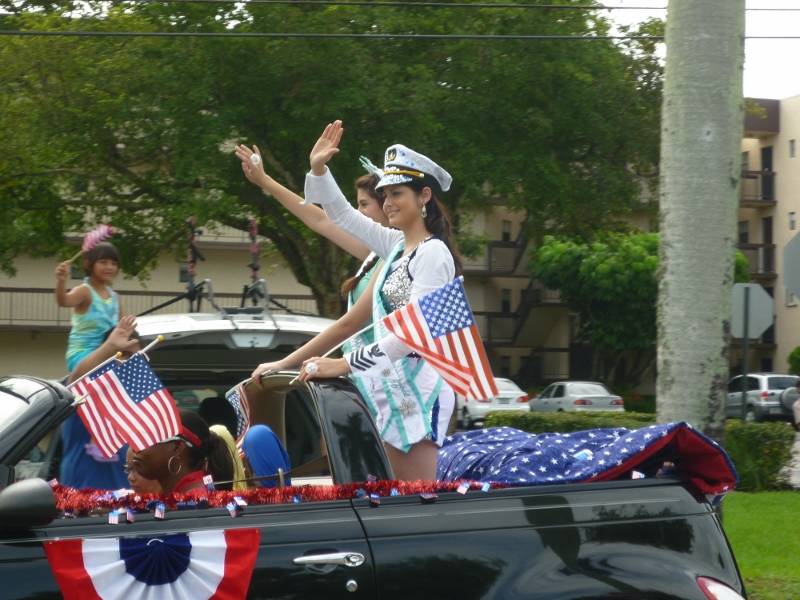
On Monday, July 4th, I came out of my writer’s cave to join the crowd lining the town streets and to watch our Independence Day Parade. My husband and I are at the stage where we look for new things to do. We have little to shop for and have been to most of the tourist sites around, so fairs and festivals often are a free and fun excuse to leave the house. Otherwise, it’s difficult to get me to emerge from my writing cave.

It’s easy to forget about the outside world when we’re immersed in our story, thinking up blog topics, or working on promo for the next release. Time can slip by. We have to remind ourselves to step out and smell the flowers, to watch the clouds scud by, and to cherish that moment as it will never come again. Imagining people and places in our minds is no substitute for the real thing, but it’s natural for writers to become isolated when we’re more at home with our characters than the outside world. But once these hours at our desks crawl past, we can never experience them again.

Good friends will call and coax us out of our caves to meet them for lunch or a coffee break. Otherwise, we have to force ourselves to get out of the house, to make a play date, to emerge into society. Usually, this short break recharges our creative batteries and we return to the computer refreshed. At the parade, I remembered how exhilarating it can be watching the motorcycle police zoom around on their vehicles, the firemen cruising past in their monstrous red trucks with sirens blaring, the legions of veterans with their funny hats drive by. Children scrambled for candy tossed onto the swales by parade drivers while families held tailgate parties, watching the parade from the back ends of their vans and SUVs. The steamy humidity made us all sweat and our skin itch, but we didn’t notice the discomfort. It was a joyous moment of feeling alive, of being united in our human experience.

Really, we full-time writers should get out more often. What do you do to push yourself out the door?