About Joe Moore

#1 Amazon and international bestselling author. Co-president emeritus, International Thriller Writers.

Spotify for Books

I’ve been immersed for the last several days in something called Spotify. It’s a music listening service. You sign up (if you just want the free service, you ask to sign up, and then they send you an email giving you the chance to do so; it’s kind of like standing in line to get a wristband to come back and stand in line to buy a ticket to a concert), download the software, and it gives you streaming access to as much music as you can possibly listen to. Cubed. Everything from new music like Lady Gaga and to musicians like Robert Johnson (not the delta blues singer; the white one) who are so obscure they haven’t heard of themselves. It’s like a giant music listening library on your computer. If you just want to sit and listen to music on a computer — any computer — it’s free, other than for sitting through an occasional commercial. If you want more bells and whistles, there are two subscription platforms which are fairly modest (five dollars and ten dollars per month, respectively) and that let you access Spotify from your Smartphone or whatever and to listen without the occasional commercial.

So I’m curious…is there a market for a subscription service this in the book world, with, of course, some fine tuning? Would you pay five or ten dollars a month for electronic access to three to six books for a limited time (say twenty-eight days)? I’m talking about a selection of books which would be basically unlimited, everything from that long lost volume of The Motor Boat Boys’ Mississippi Cruise published in 1912 to The Woodcutter by Reginald Hill, which dropped this week. You wouldn’t be owning, but renting. The advantage over the library, besides selection, is that you would no longer have to wait for that new soon-to-be bestseller to be returned by the gaggle of unwashed ahead of you in the reserve queue. The advantage over buying the book outright, at least as far as the more popular books are concerned, is that you no longer are in a position of paying more for the e-book than for the physical copy.

I am well aware of the difficulties involved in such an enterprise — rights, the fixing of a subscription price, and, most importantly, how do we divide up the subscription fees among the writers? — but we’ll play with those crayons down the road. For now, I’d like to know if readers find this idea at all appealing. Do you?

Nathan Is Running Again

By John Gilstrap
As part of our larger plan to carpet bomb the planet with Gilstrap fiction, NATHAN’S RUN, my first novel, originally published in 1996, is once again available–first as an eBook, and then next year as a mass market paperback.

My publisher, Kensington, is trying a few cool marketing gimmicks for this release. Most notable is the fact that it will be exclusive to Barnes and Noble’s Nook for the first five months–through the end of 2011. Then, in January, it will be available on all eBook formats.  I guess this is a way to gain favor with the world’s only remaining behemoth bookstore.

When the Kensington team and I were discussing the plans for the rerelease, we came up with another idea that I thought was exceptionally cool: the alternative ending. My original ending for NATHAN’S RUN was significantly different than the ending in the published book.  Readers of the new version will be directed to a site where they can read my original version. It will be interesting to see what kind of response I get.

Truth be told, I’m not one hundred percent comfortable doing this.  A printed book lives forever locked in the version that was printed and distributed. There is no alternative version, and part of me thinks that’s the way it should be, with the artist’s vision locked down and reflecting his or her world view at the time.

On the other hand, I’ve always been fascinated with the process that produces art. I love, for example, reading the line edited works of the masters to see how their thoughts evolved over time.

What do you think?  Is it intriguing to see what “might have been” in a work of fiction, or would you prefer that the original version stand alone forever?

It was a dark and stormy metaphor…

by Michelle Gagnon

So I was inspired this week by the recent Bulwer-Lytton prize for bad writing, which went to the brutally mangled metaphor, “Cheryl’s mind turned like the vanes of a wind-powered turbine, chopping her sparrow-like thoughts into bloody pieces that fell onto a growing pile of forgotten memories.”

Wow. Tough to beat. But here’s my challenge: let’s try. American academic Sue Fondrie’s disturbing description of thoughts like mutilated sparrows has been declared the worst sentence of the year.
I think we can top it. This was the shortest sentence to ever win the prize, so extra points will be conferred for brevity.

I’ve certainly had some humdingers in my day, most of which were thankfully edited out of the finished product. But imagine what would transpire if you really let loose?

Some other examples, presented for your enjoyment:

Her face was a perfect oval, like a circle that had its two other sides gently compressed by a Thigh Master.

His thoughts tumbled in his head, making and breaking alliances like underpants in a dryer without Cling Free.

She caught your eye like one of those pointy hook latches that used to dangle from screen doors and would fly up whenever you banged the door open again.

The little boat gently drifted across the pond exactly the way a bowling ball wouldn’t.

Her hair glistened in the rain like nose hair after a sneeze.

Her eyes were like two brown circles with big black dots in the center.

He was as tall as a six-foot-three-inch tree.


And here’s my submission:

“He wept, and the tears fell like a thousand tiny lemmings leaping from the precipice into a black void.”

Do you have a truly awful metaphor lurking in the depths of your cranial cavity like a really bad thing hiding in a very dark place, yearning for the light of day? Have at it…similes are also welcome.

Show Me The Body

This question came up on one of my writer loops: how long do you wait for the body to appear in a mystery? Assume we’re talking about a traditional whodunit. Does it make a difference to you as a reader when the murder occurs? How about when plotting your own books?

Based on my experience, if you’re a new author, it’s best to get the body up front and center. Once you’re established, you have a bit more leeway with the characters. But even if your setting is quaint and the story is more of a crime novel than a whodunit, action engages the reader.

6275719_m

I’ve had several rejections over the years to mystery proposals wherein the criticism essentially said to move up the dead body. In my latest project, the initial first chapter had the heroine enter the scene, play mah jong with her friends, go to lunch, and then the person dies. I’ve changed it so that she meets her friends for lunch first, and in the midst of their meal, the murder occurs. Later, they gather to talk about it and automatically play out the motions of their mah jong game. As this is the first book in a proposed new series, I have to get the action moving as quickly as possible.
I should have seen this when writing the first draft, but often we need some distance from our work before we can see it clearly. Or we need someone else to point out what is blind to us in our closeness to the material. Also keep in mind that readers can download the beginning of your book nowadays and so you want it to be an attention grabber.

Yes, there are books I read where the characters and setting are so appealing that I just read on for pleasure, and it may be 100 pages or so before someone is killed. But I do find myself saying, “All right, where’s the dead body already? This is supposed to be a mystery.” So genre conventions come into play as well.
What’s your take on the subject: murder them now, or introduce your characters gradually and slide into the crime after the story is in motion?
HAPPY ANNIVERSARY to The Kill Zone Blog! I am proud to be part of this illustrious group!

Reading, Writing and Radio: Can you hear me now?

By: Kathleen Pickering http://www.kathleenpickering.com/

radio_announcerMy marketing plan has taken me to interesting places. Conferences. Book signings. Post Offices. Restaurants. Bars. Beaches. Office supply stores. Publishers. Printers. YouTube, Facebook and all paths deep into the Internet.

That last one, friends, is my favorite. And, as of last week, I discovered my most favorite place on the Internet is radio talk shows.

I’m hooked.

Looking for another outlet for MYTHOLOGICAL SAM-THE CALL, I submitted a request for an interview to SPIRITUALLY RAW, a radio show where no topic on religion or spirituality is taboo. It’s a fascinating site. You have to be pretty open minded. You’d like to know that I found a forensic investigator, and a few mystery writers there. My biggest surprise was to find movie producer, James Cameron (AVATAR) and actor, Timothy Dalton, among the friends list.

Since MythSam contains strong spiritual undertones, my request was accepted, but I had to go through a process. First, I was slotted for a 15 minute interview where I presented myself, Mythological Sam-The Call and my thoughts. That Friday I was invited to return to see if I would be voted back. Once again, I had the chance to chat with the radio hosts on the air.

It was a close call (I’m sure it’s because my story sounds well . . . unbelievable), but to my delight, I was voted back. And, guess what? I can completely confirm that I am a sucker for a microphone! Holy guacamole. I loved being on the airwaves.

I’m convinced it’s because I’m one of eight kids and I never really got the proper attention I needed as a child. Not only that. For someone who has a hankering to know as many people on this planet as she can possibly meet, nothing beats sending your story out into the ether. Who knows who might call me back! (I just hope they speak English or Spanish.)

I’d love to share last Thursday’s interview. Just let me warn you. I don’t come on until 13 minutes into the broadcast.Speaking before me is an interesting woman who wrote a book on orgasms as spiritual experiences. (Really. Makes sense. Don’t you think? I’ll have to buy a copy. My husband will be thrilled.) Unfortunately, that woman was not invited back. You can listen to her as well, or move the line on the radio dashboard into the 13 minute mark. Here’s the link to the first podcast. Be sure to click on the return arrow in the top left to get back to this page when you are finished.

http://spirituallyraw.podomatic.com/entry/2011-07-28T08_40_09-07_00
.

April and Ajay MattaAjay and April Matta have invited me back to talk more about my strange religious experience and how it relates to the Mythological Sam trilogy. The show will air on August 18th at 10 a.m. Mark you calendars. If you are available, I would love to have you listened in. Here’s the link for the information:

http://www.spirituallyraw.com/forum/topics/mythological-sam-the-call

The Spiritually Raw website has a fun chat room while listening and a phone number so you can call in to heckle me. Wouldn’t that be fun?! If you do call, be sure to tell me you’re from The Kill Zone. I want them to know about everyone here, too!

So, I ask you. If someone offered you a microphone as a marketing tool, would you take it? And if you have already, how did it work for you?


Characters as Movie Stars

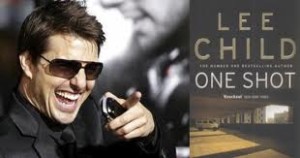
A few weeks ago the news broke that Tom Cruise had signed on to play Jack Reacher in the movie version of Lee Child’s 9th Reacher novel, One Shot. The furor that followed demonstrated just how wedded readers had become to their own image of Jack Reacher (and their belief that Tom Cruise, who is a ‘tad’ shorter that Jack Reacher, couldn’t possibly play the character they knew and loved so well). Not since Katherine Heigl was announced to play Janet Evanovich’s Stephanie Plum has there been such reader angst over casting of a beloved mystery character.

The business of movie making requires ‘star power’ and I think it’s safe to say that Tom Cruise will certainly bring that to any Jack Reacher movie. Though we could all spend many an hour speculating and debating over casting of our favourite book, none of us can help but feel a sense of ownership over the particular image we have formed in our own heads (which may, or may not, bear any resemblance to the image inside the writer’s head when he/she created the character).

As writers I wonder how many of us have pinned up photographs of people who inspire or look like our characters? I know I have copies of historical photos that I used when creating Ursula Marlow (even though many readers, having seen the paperback cover, have asked me if I posed as the model for Ursula!). I also love nothing better than indulging in the fantasy of casting movies of my own books (note to Richard Armitage, you can play any one of my leading men!).

Still it is inevitable that when a book character is developed into a movie, fans are up in arms over the choice. So, here are my questions to you: Do you think the physical attributes are really that important when casting? Have you been disappointed with the casting choice of one of your favourite book characters? Have you ever found the movie (or TV) version to be much better, because the actors chosen to play the parts bring new meaning and depth to the written characters? And finally – are fans ever really satisfied with movie casting for their beloved books?

A Legal Thriller to Die For

James Scott Bell
Twitter.com/jamesscottbell


Last week I explained why my next book will bear a pseudonym. It’s really about brand distinction. Man, is it about brand distinction! Here’s why:

About a year and a half ago my agent, Donald Maass, and I are discussing ideas, and I say, “The whole zombie thing is hot now, but it’s all the same, zombies as slobbering, mindless monsters. What if the zombie was the hero? In fact, what if it was a lawyer practicing law in L.A.?”
Don laughed. I went with it. “I mean, how can you tell the difference between zombies and defense attorneys anyway? Most people think there IS no difference. And what if this lawyer specialized in defending outcasts like vampires, who never get a break?”
Don told me to write up a proposal. As with all my ideas for fiction, I had to see if I could get into the characters and the heart of the story. I can’t just write to a market. I know some can. But even with short stories, I have to connect to the material in some essential and emotional way.
So I started doing my pre-writing. I knew I wanted to write in the hard boiled tradition I love. I wanted it to be an actual legal thriller, where I would use my experiences in court (with a paranormal twist. Let me tell you, I’ve been in front of a few judges who I thought came from other planets). I wanted a first person narrator, and then I decided I wanted it to be a woman with a strong voice and attitude and wit.
All that started to emerge. Finally, I came up this concept:
TAGLINE:
In L.A., practicing law can be hell. Especially if you’re dead.
PITCH:
In an increasingly hellacious L.A., zombie lawyer Mallory Caine defends a vampire hooker accused of the crime Mallory herself committed, even as a zombie-killer closes in and the love of her former life comes back as the Deputy DA she must oppose. And as Lucifer himself begins setting up L.A. as his headquarters for a new attack on heaven and earth, Mallory slowly discovers she may be the one who has to stop him.
Well, doggone if Don didn’t go out and sell it to Kensington, in a deal that was everything I hoped it would be. I wanted the books to come out in mass market, with great cover art and the know-how of a terrific company behind it. I also wanted it priced right for you, the reader, both print and e-book.
It is all these things.
And as far as I know, this is the first zombie legal thriller series on the market. It’s not everyday you get to start a genre. Which, to my mind, makes it imperative that you jump on the bandwagon while it’s hot!
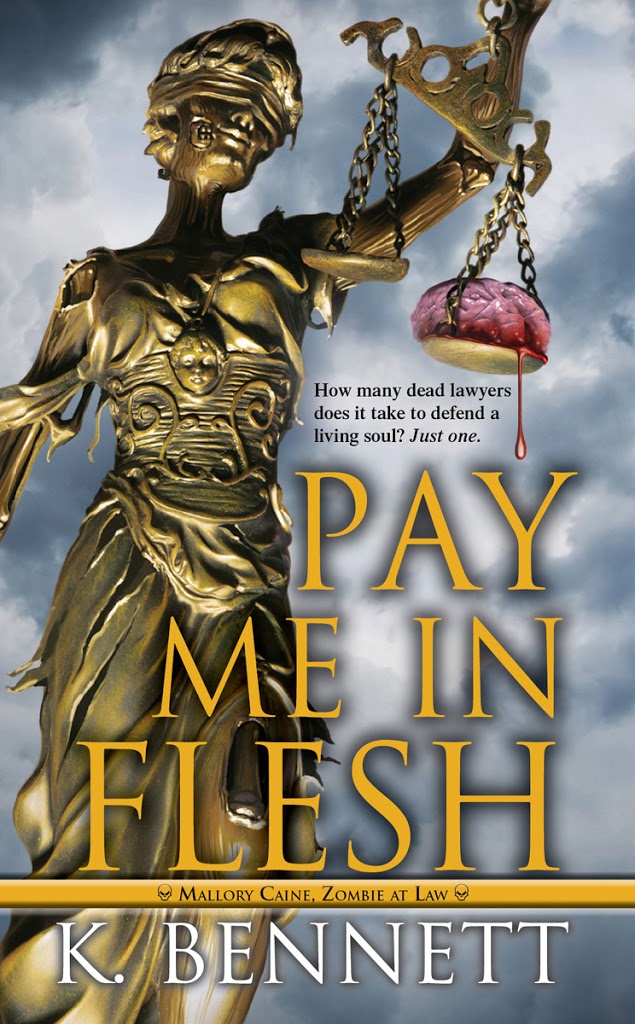
And so here it is, the first in the Mallory Caine, Zombie-at-Law series, PAY ME IN FLESH by the mysterious yet roguishly handsome K. Bennett.
Find it at your local bookstore or online. Official pub date is on Tuesday . . . just in time to deal with the debt ceiling blues!
You can also check with:
K. Bennett has a dedicated website that will post things from time to time. But right now, it’s all about the launch.
So there is really nothing left to say but Bon Appetit!


The Best Moments In My Career …So Far

John Ramsey Miller


Recently someone asked me what the highlight of my career (to date) was. I said it was when I sold my first novel. I’ve thought about that and the truth is there have been scores of “best” moments. Seeing my first book in a store. Writing with tears in my eyes. Seeing three of my books in one rack in an airport. And there was being nominated for peer awards on a couple of occasions. Didn’t win, didn’t much matter, still doesn’t. One of the best was having my wife toss me a line that “made” the scene and the book a lot better. The problem was why one character would allow himself to trust another after he felt betrayed by her. It was something that had perplexed the editor and my agent and myself. Finally I told my wife what the problem was and she gave me the line that made it all make sense. None of us could figure out what that needed to be, but Susan knew. Had I asked her weeks earlier, it would have never been a sleep loser. How had I assumed my wife wouldn’t know the power of love and trust, and how to put into a short sentence that was in perfect pitch for both of the characters.


One of my favorites happened when my first book was making some noise. I was invited to Denver to speak about my process, etc… to between 1000 and 2000 people at a National Kidney Foundation fundraiser, which was one of those formalish deals. I was to speak just ahead of Clive Cussler. At the opening hob-nob I had three scotches. Clive Cussler reminded me that we were at 5,000 feet. Not to worry, I hadn’t made any notes on what I was going to say so I didn’t have to fret flubbing my lines. I have never planned out what I intend to say before I stand at the podium. I talked about my childhood, early influences, and (as I recall it) I had the crowd eating out of my hand. My opening line was about being a Native Son of Mississippi and about the tradition of porch sitting and storytelling. You told a story on my porch and there had better have been interesting descriptions, setting, character development, a build up, and a punch line to entertain or amaze. I said that my uncle was a Supreme Court justice and my aunt a hopeless hypochondriac who made up stories to keep me from going outside where I could be killed or carried away. I said, “Guess which one I spent my time with.” Somehow, everything I said brought the house down. I was well oiled and the stories just appeared to me. The best part of the story (I mean how hard is it to have too many drinks and say the right things to people who are also having drinks?) was when Mr. Cussler started his talk with the words, “I’ll never follow John Ramsey Miller again.” To have him say that made me feel very important indeed, and that is a great feeling.


My favorite part of my career has always been the time I have shared with other authors and their families followed by the time I’ve spent writing.

Writers Tackle the Future – Agents as Publishers?

Writers Tackle the FutureJust as publishing houses are trying to capitalize on the “new frontier” of ebook publishing and redefine their business models, so too are agents. Most recently, Bookends announced its intention to offer ebook services, following suit with Dystel & Goderich Literary Management. Undoubtedly more literary agencies will follow.
Can a literary agent who represents the author (in theory) also be that author’s publisher? Is there a conflict of interest in this arrangement? If you read Bookends and DGLM’s announcements (see links above), they present their case as simply a value added service their agency would offer. Existing clients who wish to navigate the new frontier (without doing it themselves) can delegate the details to their agency for their backlists, short stories to promote upcoming releases or epub works that might not be as marketable. They offer their expertise in editing, marketing, and packaging for their usual 15% fee.
Yes, that’s 15% of all book/unit sales. And since there is no “print run” on a digital novel, this could mean 15% forever if that’s not defined by contract. Authors who have looked into self-publishing know that an author can hire one or more contractors to coordinate the effort of packaging their book with formatting, editing, cover art, and uploading said book into the retail outlets who will offer the work online. They don’t have to do it themselves. (I’ve heard cost figures of $1000 – 2000 per book, but since some of you have gone through this process, please weigh in and share your experiences on costs, level of difficulty, and what you “farmed out.”) If advertising is involved, that’s something an author always has the ability to pay for and do on their own.
If that’s one alternative, that an author hires the work done by third parties, what specifically does the agent bring new to the table in this regard? Arguably, an author can hope their agency brings years of industry experience to package the best product, but beyond their opinion (which they would bring if they represented the author as agent anyway), what value can they add to improve sales without the promo dollars of a publisher’s budget (traditionally only offered to a select few authors or book projects)? What kind of promo is required for ebook sales outside what’s already made available through Amazon, Barnes & Noble, Smashwords, etc.? Yes, it would be nice to have the promo budget of James Patterson, but how realistic is that for the average author?
On top of the question of value derived for an agent’s 15% fee, who retains the rights for the work? Yes, typically the publisher would retain rights for a specified time, but if the agent is the publisher, who would be the advocate for the author if the agent representing their interest is now the publisher? And with no print run to determine when an author can ask for their rights back, how will the author ever reclaim their work? Who is protecting the rights of a new author who may not be aware of the pitfalls? Normally that might be the agent, but if they are now the publisher, who then?
Anyone can have an opinion about this. Realtor’s have laws regarding their representation conduct, for example. I worked in the energy industry where third party energy marketing arms had to be totally separate on paper and physically housed apart from its affiliate, the regulated utility. Operating practices had to be auditable and employees had to sign ethics agreements annually that could be grounds for termination if this code of conduct was violated. Enron became the prime example of conflict of interest that defined many of the laws that are in place today.
If this trend continues where agents become publishers, I see much harder issues ahead on contract terms, sub-rights negotiations, fiduciary obligations, and better conflict of interest policies where ebooks are concerned—and AAR must weigh in with specifics since it’s obviously not clear. In the ever evolving world of ebooks, agents becoming publishers is another strange twist. Is this the shape of things to come—another nail in the coffin of traditional publishers—or merely literary agencies struggling to be relevant in a new age?
I’ve had talks with my agent and we’ve addressed strategies going forward. We both see ebooks as a new opportunity for authors, but we recognize that the way deals are negotiated now, that will most likely change. New questions must be explored open-mindedly—for example:

1.) What’s a fair ebook royalty rate? Is 50% a more acceptable industry standard or should it be subject to negotiation deal to deal?

2.) Can a book deal be done where an author retains ebook rights to be leveraged by an agent? Would 15% agent fee be warranted then?

3.) When can an author get rights back in a digital world—from a publisher or an agent?

4.) Should any publisher get only a limited time period to said rights? If so, what royalty value would that have and is the term of the arrangement variable and negotiable?

With the future changing as fast as it is, agents can still add value and provide a real service with regard to foreign sales, audio, film and negotiating print rights on ebooks. I’ve never been much of an advocate for an agent editing a book before an editor gets their input. I hire an agent to be my advocate and negotiator. I don’t want their attention focused on a multitude of revisions with their clients that dilutes their effectiveness in the marketplace, which should be their primary concern. Some agents give editing advice as part of their representation deal, without charging a fee. Below is article 8 of the Association of Author’s Representatives (AAR) Canon of Ethics.

“The AAR believes that the practice of literary agents charging clients or potential clients for reading and evaluating literary works (including outlines, proposals, and partial or complete manuscripts) is subject to serious abuse that reflects adversely on our profession. For that reason, members may not charge clients or potential clients for reading and evaluating literary works and may not benefit, directly or indirectly, from the charging for such services by any other person or entity. The term ‘charge’ in the previous sentence includes any request for payment other than to cover the actual cost of returning materials.”

According to their announcement, Bookends explains that their 15% fee provides their editing expertise as a part of the package. “For the work we are doing with them we are getting paid a 15% commission… we also provide revisions and edits for those books that might not have been published before.” How is this different than a vanity press? And how is this in keeping with AAR’s Canon of Ethics as stated above?

Bookends and DGLM’s announcements justify their 15% agent fee with a list of services that can easily be obtained elsewhere by third parties who aren’t also charged with advocacy on the author’s behalf. In an effort to sound forward thinking, these agencies are ignoring the potential for conflict of interest and undermining the relationships they already have with publishers by competing with them.
Another concern I have are the people querying agent/publishers who are desperate to be represented. If Bookends, DGLM or other agents, find a marginal book that would be a tough sale to a traditional house, they can “offer their services” and take money from people who don’t know better. The countless folks in a slush pile become a gold mine, the gift that keeps on giving. And if there is no a delineation in who offers these services—with a definitive separation of companies—an agent’s existing author clients could get ignored because an agent is too busy cashing in on people bent on being “represented” by a real agent.
On the subject of conflict of interest, agent Jessica Faust in a comment to her Bookends blog post stated, “My feeling is that whether or not it truly is a conflict of interest comes down to how a situation is handled by the agent, and in many ways, that’s for the agent and the agent’s clients to determine.”
What do you think? Should a conflict of interest be done by consensus between an agent and client? Or should more definitive guidelines be established by more objective parties, without a personal stake in the answer?

Your First Mystery

How did you get started writing mysteries or thrillers? Assuming you were an avid reader of the genre, did you outline the plots of your favorite stories? Study structure and pacing? Attend writing workshops by seasoned authors? Or did you use a how-to book?
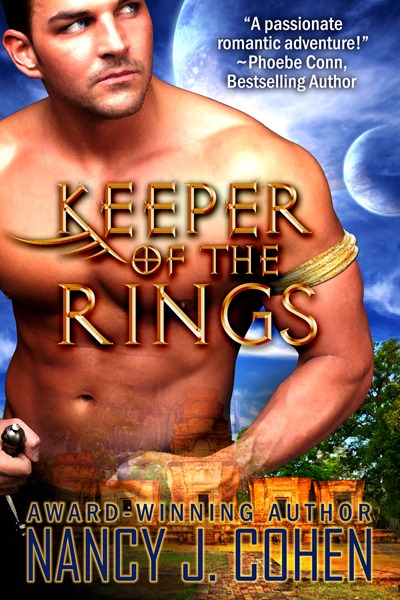
Keeper of the Rings, my fourth sci fi romance now available in digital format, is the story wherein I learned how to plot a murder mystery. It has all the elements for a cozy: a limited number of suspects, most of whom know each other and who have a motive for the crime, a confined setting, and an amateur sleuth.
Here’s the story blurb:

Taurin is shrouded in black when Leena first meets him, his face shaded like the night. At first she believes him to be a simple farmer, but the man exhibits skills worthy of a warrior. With his commanding presence, he’s an obvious choice to be the lovely archaeologist’s protector on her quest for a stolen sacred artifact. Curious about his mysterious background, and increasingly tempted by his tantalizing touch, Leena prays their perilous journey will be a success. She must find the missing relic, or dangerous secrets will be revealed that may forever change her world.

KeeperoftheRings_400px

Who stole the sacred horn that must be blown to reset the annual cycles of Lothar, the god worshipped by the people of Xan? Only the members of the ruling priesthood, the Synod, had access to the holy artifact. Was it Zeroun, the ambitious Minister of Religion? Perhaps Karayan, a friend of Leena’s family and the Minister of Justice, is involved. Or maybe Sirvat is guilty. As Minister of Finance, she has something to hide. So does everyone on this twelve person council, including the Arch Nome himself.

While Leena’s brother is assigned the task of investigating the Synod members, her mission is to retrieve the artifact. Here the story becomes Indiana Jones meets Star Wars. Leena and Taurin survive one peril after another on a desperate quest that takes them around the globe and deep underground beneath the ruins of a holy temple. Do they find the horn before disaster ensues? Is the thief unmasked? Was he responsible for the accident that killed Leena’s mother?

Here’s an excerpt where Leena and Taurin discuss the suspects with her brother, Bendyk, and his assistant, Swill.

Swill tugged at the long sleeves of her burgundy blouse, tucked into a black skirt that hugged her hips. “Magar makes regular unexplained entries in his receipts, which Sirvat deposits into the Treasury. Magar refuses to elaborate on the source. Sirvat’s financial records are impeccable, but the odd thing about her is these trips she takes every so often, returning with a new piece of jewelry each time. The items are created with rare gemstones. Usually, she’s not one to adorn herself.”

“I’ll bet I know where she gets them.” Taurin related what he and Leena had learned about Grotus and Sirvat’s relationship.

“I don’t believe it.” Bendyk shook his head. “She seems so strait-laced.”

Leena gave a small smile. “Perhaps she hides a passionate nature. She certainly has a peculiar bent to fall for a man like Grotus.” Her face grimaced in disgust at the memory of the smuggler. “You know, some of those items I saw in Grotus’s mansion are similar to pieces in Karayan’s house.” She pursed her lips in thought. “Karayan has quite an extensive art collection.”

“Are you implying that he buys his art works from Grotus?” Bendyk asked with a horrified expression.

“Not really. They just share the same kind of artistic taste, although Karayan is a much better dresser.”

Beside her, Taurin snorted. “We’re not here to discuss anyone’s preference in art or clothes. Did you investigate Zeroun? As Minister of Religion, his department is responsible for administering the Black Lands. Someone there has granted the Chocola Company illegal rights.”

“We’ll check into it,” Swill assured him. “We’ve cleared most of the other Synod members but weren’t sure about Sirvat’s trips and Magar’s secretive dealings in his trade commissions. I still feel he’s withholding information from us.”

“You’re wasting your time with Magar,” Taurin snapped. “I suggest you check out Zeroun. The Minister of Religion would also be responsible for—” He held his tongue; he’d nearly said for excising any records of the Temple of Light. “—for the Black Lands,” he finished.

*****
They could easily be discussing suspects in a murder. This was the last romance I wrote before switching to mysteries, but it taught me everything I need to know about plotting a whodunit. How did you learn the craft?