
Some of us have alter egos lurking deep within. If you were to invent the ultimate pen name for your hidden self, what would it be?
Yearly Archives: 2013
TV Shows I’m Addicted To
I have my DVR set up with countless shows I record. My husband also knows my interest in the strange and peculiar NOVA Science shows or historical documentaries. As a writer, anything can stir your imagination and you never know what small tidbit can fuel a book or series. I once did a whole proposal after seeing a science show on venomous snakes.
Here are a couple of my fav TV shows adapted from books:
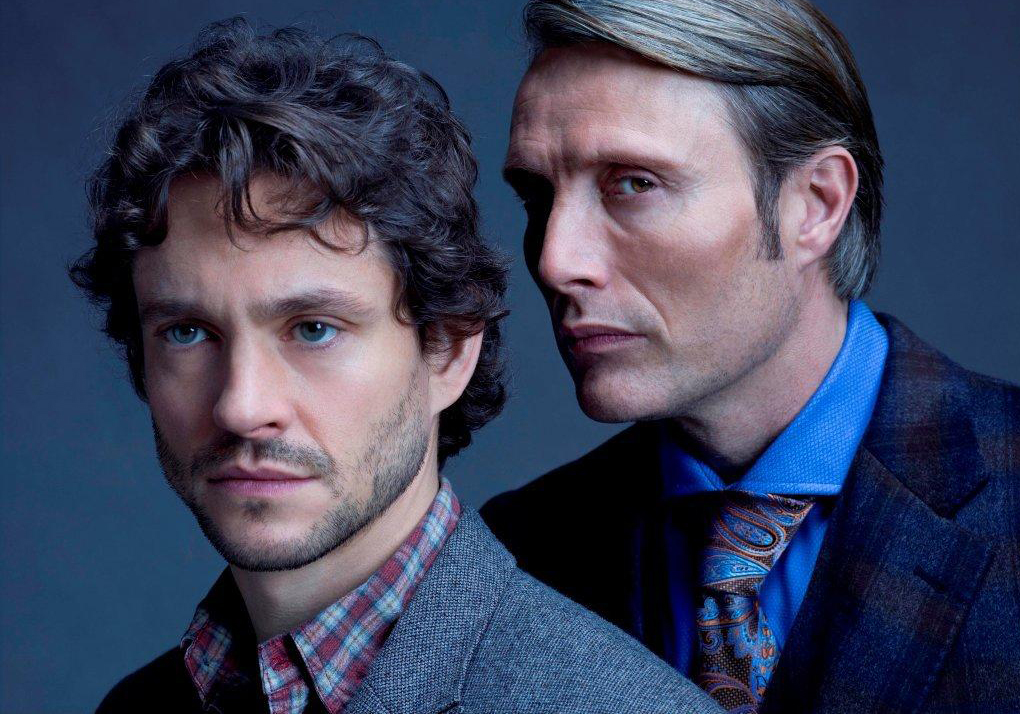
Hannibal – OMG! I am giddy for Thursday nights now because of this show. This is an adaptation of Red Dragon by Thomas Harris, but it is a prequel where FBI BAU profiler, Agent Will Graham, is brought in to consult with his old boss, Jack Crawford, and hunt serial killers. We meet the infamous Hannibal Lecter in the wild, before he gets caught. Will is good at his job, depicted as closer to Asperger’s & sociopaths, and can visualize himself as the killer. This puts him in need of therapy, as you can imagine, but his boss picks Hannibal Lecter as his psychiatrist. This is graphic stuff, but the tongue in cheek dark humor is over the top and the psychological trauma worsens in Will, as we see him falling apart and under the care of Lecter. It’s mesmerizing to watch. Hugh Dancy is yummy as Will Graham and Mads Mikkelson as Hannibal redefines the role, big shoes to fill after Anthony Hopkins.
This show is beautifully shot and the acting is amazing, but the reinvention of the Red Dragon book, in such a creative way, has me coming back every week. I went back to read the book and got even more out of the show.
Justified – This show’s season has ended, but it gets better each year. Writer Elmore Leonard is the guy behind this show and the writing is superb. The characterizations and the dialogue are worth every minute of your time to watch this show. One of my favorite things to do is tweet my fav lines as the show is one. Many of my writer friends do this. Marshal Raylan Givens and criminal childhood friend Boyd Crowder are two characters to watch. The season that just ended was my favorite (and that’s saying something). Pure Rayland and Boyd.

Cable Shows I Have Recently Become Addicted to:
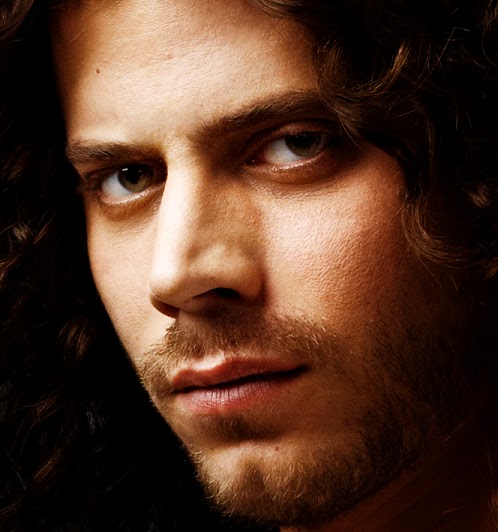
The Borgias – Jeremy Irons is damned sexy as a Pope. And his son, Cesare Borgia, has me spellbound…especially when he’s naked. Family scandal and treachery in enticing scenes.
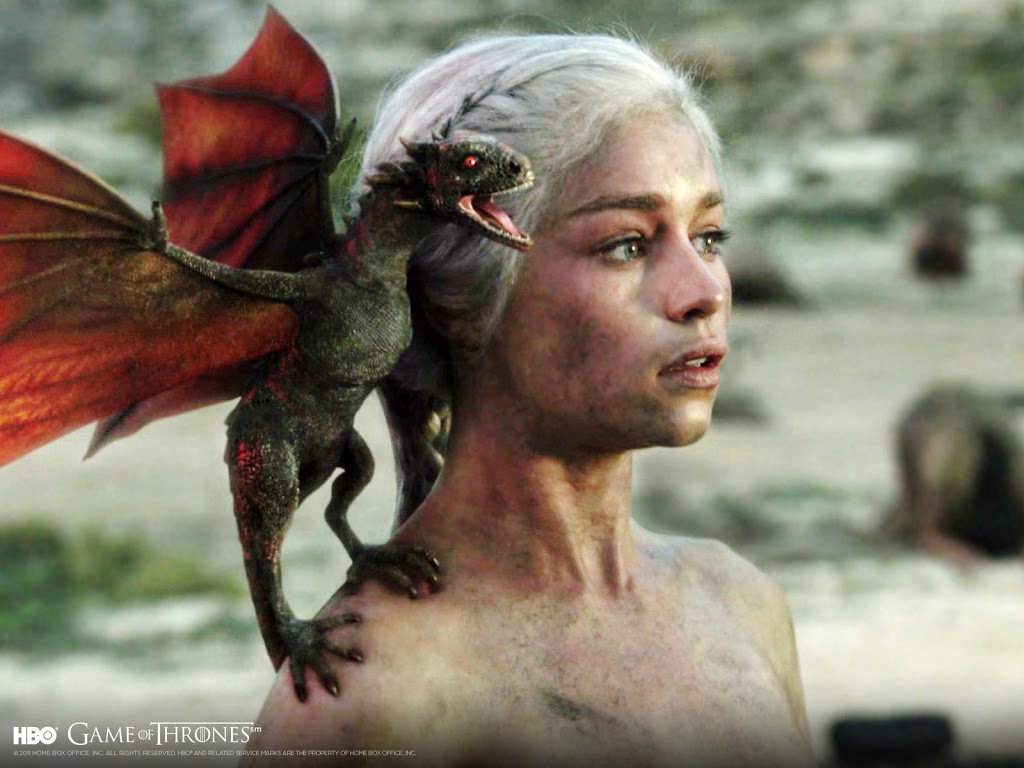
Game of Thrones –I hadn’t watched this show until I recently caught up in a marathon of recordings, but I got totally hooked. Some of the recent storylines left me so sad though and it reminded me how emotional our stories have to be to grip readers.
What are some of your favorite guilty pleasure TV shows…and why do you like them? Do you get something from them that helps your writing? Are you addicted to any of the shows I watch?
CHECKLIST FOR ADDING SUSPENSE & INTRIGUE
Today I welcome back to TKZ my friend and editor, Jodie Renner, to share her checklist on adding suspense and intrigue to your story. Enjoy!
Jodie Renner, editor, writer, speaker
We all know that thrillers and other fast-paced popular fiction need lots of tension, suspense, and intrigue. But so does any other compelling story that’ll create a buzz and take off in sales. No matter what genre you write, it’s all about hooking your readers in, engaging them emotionally, and ensuring they keep eagerly turning the pages.
Here’s a handy checklist for ratcheting up the tension and suspense of your novel or short story. Use as many of these elements and devices as possible to increase the “wow” factor of your fiction.
Plan and set up a riveting story:
__ Give readers a sympathetic, charismatic, but flawed protagonist they’ll identify with and start worrying about.
__ Create a nasty, cunning, believable villain (or other antagonist) to instill fear and anxiety.
__ Devise a significant, meaningful story problem, a serious dilemma for your hero, preferably a threat with far-reaching consequences.
__ Make it personal to your protagonist. She and/or her loved ones are personally threatened.
Bring your protagonist and story to life on the page.
__ Use close point of view (deep POV) and stay in the head of your protagonist most of the time, for maximum reader engagement.
__ Show your main character’s reactions to people and events around him.
__ Evoke all five senses – what is she seeing, hearing, smelling, touching, and tasting?
__ Show his inner fears, anxieties, anger and frustrations.
__ Use occasional brief flashbacks in real time to reveal her secrets and fears, deepen characterization, and strengthen reader involvement.
__ Use alternating viewpoints – put us in the head of your protagonist and antagonist (or, in a romantic suspense, the female and male leads).Give them each their own scenes or chapters, so readers find out what the antagonist is thinking and planning, too. But stay mostly in your protagonist’s POV, to keep us bonded with her.
Pile on the problems:
__ Keep raising the stakes for your protagonist. Just as he solves one problem, he’s confronted with an even worse obstacle or dilemma.
__ Hamper your hero or heroine at every turn – the gun is jammed or falls into the river, the door is locked, the cell phone battery is dead, the car runs out of gas, there’s a roadblock ahead, …
__ Give her tough choices and moral dilemmas. The right decision is the most difficult one; the morally wrong choice is the easy way out.
Set the tone with style, mood, and pacing:
__ Show, don’t tell. Don’t intrude as the author, and minimize explanations and backstory.
__ Write tight. Make every word count.
__ Vary your sentence structure to suit the situation and mood.
__ Use distinctive, vivid verbs and nouns rather than overused, generic ones, like “walked” or “ran.”
__ Use strong imagery and just the right word choices to set the mood.
__ Vary the pacing and tension level. Nonstop action can be exhausting.
Pay attention to chapter and scene structure:
__ Don’t spend a lot of time on lead-up or wind-down. Start chapters late and end them early.
__ Make sure every scene has some conflict and a change.
__ Use cliffhangers frequently at the end of chapters – but not always.
__ Employ some jump cuts – end a chapter suddenly, without resolving the issue, then start the next chapter with different characters in a different scene.
__ Show all critical scenes in real time, with tension, action, reactions, and dialogue.
__ Skip past or quickly summarize transitions and unimportant scenes.
Experiment with these devices to increase suspense and intrigue:
__ Sprinkle in some foreshadowing – drop subtle advance hints and innuendos about critical plot points or events.
__ Withhold information – use delay tactics, interruptions at critical points.
__ Stretch out critical scenes – milk them for all they’re worth.
Surprise or shock your readers:
__ Add in a few unexpected twists. Put a big one in the middle and another big one at the end.
__ Use surprise revelations from time to time – reveal character secrets and other critical information the reader has been dying to know.
__ Have your main character experience at least one epiphany – a sudden significant realization that changes everything for them. Try putting one in the middle and one near the end.
__ Write in some reversals of feelings, attitudes, expectations, and outcomes.
Keep adding more tension. Increase the troubles of your protagonist by using these plot devices:
__ Ticking clocks – every second counts.
__ Obstacles, hindrances – keep challenging your hero or heroine.
__ Chases – your protagonist is chasing or being chased.
__ Threats or hints of more possible danger ahead.
__ Traps and restrictions – your character becomes somehow trapped and must use all their resources to get out of the situation.
Create a memorable, satisfying ending.
 __ Design a big showdown scene, an extremely close battle between the hero/heroine and the villain.
__ Write in a surprise twist at the end.
__ Leave your readers satisfied – the hero wins by a hair, the main story question/conflict is resolved.
Jodie Renner is a freelance fiction editor and the award-winning author of three craft-of-writing guides in her series An Editor’s Guide to Writing Compelling Fiction: Captivate Your Readers, Fire up Your Fiction, and Writing a Killer Thriller. She has also published two clickable time-saving e-resources to date: Quick Clicks: Spelling List and Quick Clicks: Word Usage. You can find Jodie at www.JodieRenner.com, www.JodieRennerEditing.com, http://jodierennerediting.blogspot.com/ and on Facebook, Twitter, and Google+.
Lessons Learned
After four months of living in Los Angeles, taking acting classes and learning about the business side of Hollywood, I head back to Seattle today full of new energy and knowledge. What’s surprising to me is how much of what I learned about acting can be applied both to writing and to life in general.
I’d like to share some of the best words of wisdom I heard while I was in LA. Many of them come either directly or indirectly from my instructor Howard Fine at the Howard Fine Acting Studio. I wish I could take every single class the studio offers, but the foundation I got will serve me for years to come.
I thought about explaining these quotes’ origins and meanings, but I’d rather let them speak for themselves. I hope you find a few that make you look at your life or your writing in a different way.
“I have time.” (Said to yourself before taking on a new endeavor)
“The way you do one thing is the way you do everything.”
“If you can’t change one thing, you can’t change anything.”
“We judge ourselves by our intentions, but we judge others by their actions.”
“Control is a false god; do not pray to it.”
“Creativity does not live in the thinking mind.”
“It’s not who you know; it’s who knows you.”
“The tell of a lie is that the body has no muscle memory.”
“If a relationship is unimportant, the scene is unimportant.”
“Scenes are not about our emotions, but what we can do about our emotions.”
“Desire trumps everything.”
“Characters are in crisis at crossroads in moments of critical decision.”
“Comedy comes from one-hundred-percent investment in a silly issue.”
“Most people ask a question and want an immediate answer; an artist is willing to discover it.”
“You don’t need to be other than who you are, but all of who you are.”
“How we speak is conditioned by how we think we’ll be listened to.”
“You can’t make a mistake by caring too much. You can only make a mistake by not caring.”
“We care about the character in direct proportion to how much the character cares about anything.”
“Nobody wants less investment. The more you invest in the scene, the more the observer will be drawn in.”
“When you are interested, you become interesting.”
“You become self-conscious when your attention is on yourself, not on the other person in the scene.”
“If mistakes humiliate you, you will never create.”
“Those who are the most present and have the most charisma are the ones who are most alive in their senses.”
“What becomes our truth is a story we tell ourselves over and over.”
How Important is Research and Authenticity in Fiction?
Our own Clare Langley-Hawthorne recently posted about getting professional (especially military) details right. She wrote a seemingly self-evident bit of wisdom:
In mysteries and thrillers we often have protagonists with a military or law enforcement background and, given that many of our readers will have similar backgrounds, we need to get the details right. As writers we have an obligation to do our research and try and paint as accurate a picture as possible.
And yet . . .
One of my favorite shows of all time is Law & Order, especially when Michael Moriarty was on it. As pure storytelling, it was an amazing achievement week after week. Using the same structural template, it managed to create compelling characterizations and unique plot details so that each episode seemed fresh.
But there is one thing about the show that drives me nuts. Well, two.
The first is when the detectives slap cuffs on a suspect. It may be on the street or in the workplace, but immediately they begin with their Miranda warnings: “You have the right to remain silent . . .anything you say can and will be used against you in a court of law . . .you have the right to an attorney . . .” etc.
The only problem is that no detective (at least, no detective who knows what he’s doing) Mirandizes a suspect at the point of arrest. That’s because he wants the suspect to talk, to babble, to make statements, which they often do. And yes, those statements are admissible evidence, so long as they have not come as a result of accusatoryquestioning.
Yet it is now a virtual cliché on cop shows and in fiction that at the moment of arrest the cops give the rights admonition. And because of that, the public largely believes that’s the way it should be done every time.
So you have the ironic situation that a reader could write to tell you your cop forgot to Mirandize a suspect, and why don’t you do simple research, fella?
Another item from Law & Order. They usually sit the suspect down in an interview room, separated by a table. Now thatis when you’d Mirandize, and have the suspect sign a written waiver.
Anyway, the questioning begins and it isn’t long before one of the cops (usually Chris Noth) loses his temper and starts screaming at or threatening the suspect.
But as my friend, interrogation expert and fellow author Paul Bishop, says, being aggressive like that only gets a suspect to clam up. Paul, a 35-year LAPD vet (30 of them in sex crimes) now teaches interrogation nationwide to law enforcement agencies. He says he raised his voice during an interrogation maybe five times in his career.
Another thing: Paul doesn’t want a table separating him and the suspect. The table cuts off his view of half the body language. Recently Paul gave a talk to some local SoCal writers on interrogation. He showed the way he did it, by putting his chair directly in front of the suspect, sitting so close their knees touched. He speaks calmly, asking strategic questions in order to get the suspect’s body to betray signs of anxiety.
I tell you, I was sitting in the audience as Paul demonstrated with the moderator, and I was ready to jump out of my seat and confess to something. It was awesome.
But is this ever shown in cop shows or fiction? More dramatic to have a cop throw a chair.
Which is why many writers, even longtime and bestselling veterans, choose the more dramatic alternative, even when it flouts real life. It is also well known that certain A-list writers don’t care much at all about research and flatly make up as much of it as they can.
Is anyone going to arrest them for it? Read them their rights?
So there may be a continuum here. For example, if you’re going to write about weapons, it’s my experience you better get that right, because there are too many gun aficionados out there who will rake you over the coals if you get a detail wrong.
But on the other side of the range, perhaps it’s not as crucial. I recall Lee Child talking about one of his books where Reacher is going through Georgia, a place Child has never himself been. He received a detailed rejoinder about the impossibility of Reacher’s itinerary from someone who knew the particular roads in that part of the state. But as this error did not seem to impact sales, Child was more sanguine than disturbed by it.
Harlan Coben has also said he is of the “make it up” school of research. Doesn’t seem to have slowed down his sales, either.
Personally, I like to get things right. I’ll do on-site research here in LA, take pictures, walk the streets I’m writing about, feel the vibe of the neighborhood. When it comes to procedures and professional details, I also want to be accurate.
But I also recall something Lawrence Block wrote in the first book I ever read on the craft: Writing the Novel: From Plot to Print. Discussing research in general, and his Evan Tanner books (which take place in settings all over the world) in particular, Larry wrote, “Equipped with a decent atlas and a library of travel guides, it’s not all that difficult to do an acceptable job of faking a location. A few details and deft touches in the right places can do more to make your book appear authentic then you might manage via months of expensive and painstaking on-the-spot research.”
That’s really the point in fiction, isn’t it? We are all faking it, so the appearanceof authenticity is what we’re after. If a made-up detail can suffice for effect, why not?
Just don’t have your cops give Miranda warnings to your arrestees on the street, or I’ll send you an email.
So what’s your take on research in fiction? Are you a stickler? How important is it to you that bestselling writers get all the details right? (Note: I’m flying home today from Denver, so won’t be able to comment for a bit. Meanwhile, have at it!)
How Things Have Changed
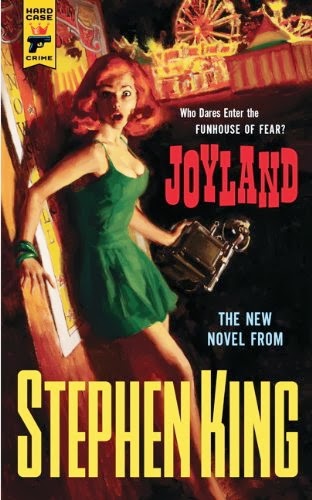
A new Stephen King book hit the bookstores this week. It’s titled JOYLAND, and it’s much more like THE GIRL WHO LOVED TOM GORDON than THE STAND or MISERY or DESPERATION or the Tower series or any of a couple dozen books that I could name. It’s published under the wonderful, indispensable, and at this point venerable Hard Case Crime imprint. The book’s appearance made some major news in those places where books are still news because if you want to buy the book, you’re going to have to buy The Book. There will not be an e-book version of JOYLAND for the foreseeable future; yes, you’ll be able to obtain an audiobook, but something for your Kindle or Nook or other e-reader isn’t going to happen for awhile, unless you want to buy a copy of the book, tear out each page, paste it on Your Precious and…of course, you are not going to do that.
There is a bit of irony here, given that one of the first e-books by a mainstream writer to be published solely as an ebook — not as we know them now, but it was an ebook nonetheless — was a novella entitled “Riding the Bullet,” a chilling little ten-finger exercise that was written by, uh, Stephen King. You had to download some (free) software called “SoftLock” in order to read it. This occurred way back in 2000. There were other ebooks published, including a pay-as-you-go serial by King titled “The Plant,” but the format never really caught on until some smart folks at Amazon came up with what they came up with. King, however, was there at the beginning. There accordingly have been some who have now taken King to task over what they perceive to be his apparent one-eighty, somehow finding him to blame for the popularity of the electronic format since he was one of the first to embrace it with the same fervor that Jack Torrance embraced that rotting corpse in THE SHINING. I would disagree. King has made quite clear that his reason for limiting the format of JOYLAND to physical form isn’t to disown the child he midwifed at the turn of the century; he is doing it to help physical booksellers. This is not something new for King; those of us of some age will recall that King did an unapologetic tour of indy stores in 1994 to promote INSOMNIA, riding his motorcycle from city to city and making appearances to yes, mobs of people. There’s also a more recent model for this. A growing number of musicians are occasionally releasing some new songs only on vinyl, to support independent record stores. Is he taking a risk financially, by limiting the format to physical books, and cutting out the impulse buyer? Possibly. Is Hard Case Crime? Almost certainly. JOYLAND won’t be available at the press of a button; it’s going to take some effort, and yes, some waiting to get it, maybe even some inconvenience. Some folks may feel it’s not worth the hassle.
But can I tell you something, as someone who loves his Kindle? JOYLAND is worth whatever it takes for you to get it. Let me go further than that: this is a book that should only see the light of day as an actual book. It’s a coming of age novel, with some mystery and romance and a bit of the supernatural thrown in, and it works as a physical book. JOYLAND is set in 1973, at a downheel amusement park on the coast of North Carolina, and I swear that as I turned the pages I could smell — very faintly — popcorn and taffy and ocean water and hear ferris wheel music rising up from between the pages. Am I given to imagining things? Maybe. But isn’t that what reading is all about? I don’t think it would be quite the same on an e-reader.
Let me now ask you: what was the last physical book (and we’ll count audio books in the mix) that you purchased? How long ago was it? And what do you think of what King and Hard Case Crime are doing with JOYLAND? Do you think that limiting its format to a physical product is a good idea or a huge mistake?
TKZ Spotlight: Basil Sands
Note: We’re starting an occasional feature on Fridays called TKZ Spotlight, where we profile various members of the TKZ community. We’re kicking things off today by profiling Basil Sands, a thriller author and long-time TKZer. We love the way Basil keeps things lively around here with his creative observations in the Comments!
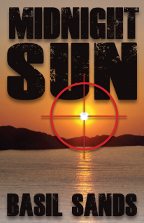
You can link to Basil’s books here.
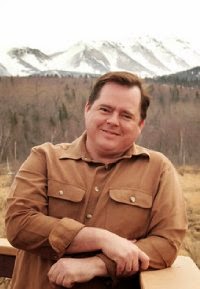
BIO: Basil started out writing thrillers for podcast-audio serials that gradually developed into four novels, a novella, more than a dozen shorts, and many more to come . He’s also an audiobook narrator and has recorded for several best selling authors including many right here on The Kill Zone Blog, where he’s been a regular commenter since near the beginning in 2008.
Born in rural Alaska and raised among the Ohio cornfields, he longed for excitement. After injuries ended a stint in the Marines he worked as a restaurant manager culminating in a three year contract at the National Security Agency (Chef to the Spies). He’s also owned a computer shop, was a carpenter, farmer, actor, lumberjack, voice actor, Wilderness Rescue EMT, computer network admin, hotel maid, tire change mechanic, IT guy, Scoutmaster, college instructor, dynamite packer, talk show host, and youth minister. After 9/11 he spent three years as a sergeant in the Alaska State Defense Force Coastal Scouts and was recognized as Alaska Soldier of the Year in 2003.
Until a ski injury he’d been an avid weight lifter benching 420 lbs at age 40. Now he’s limited to a bit on the bike and a long walk each day…that and curling the occasional pint of Guinness…to work out the arthritic kinks.
He lives in Anchorage Alaska with his wife and sons.
Where do you live, and how does that setting (or another one you use) inform your writing?
As an adult I’ve lived in Alaska for nearly twenty years; three of my books, including my WIP, take place here. Describing something as majestic as Alaska sounds a lot different when you’re in it as opposed to interpreting it via Google Earth. There are many wild experiences in the Arctic that most people can’t fathom. For instance, at -40 F boiling water tossed into the air makes an audible“zziiip” as it freezes into perfectly round BBs before it hits the ground.
How does your background influence your writing?
As a child I spent more time in my imagination than any other place. I escaped the drudgery of life into my own world, one that I could shape. I read encyclopedias for fun then I’d recreate the drama of history with my little green army men, or run with my dog through the woods. We were Daniel Boone and his pet wolf, or secret agents searching for Nazi spies amongst farms and secret hay fields.
From the bio above you can glean that I’m sort of a ‘Jack of All Trades’ as the saying goes or maybe more like a ‘Basil of A Lot of Jobs’. Those various experiences, jobs, and locations have given me a general hands on perspective to a lot of topics.
How old were you when you first felt the urge to write, and what inspired you to get serious about honing the craft?
Creating stories has been a part of my life for as long as I can remember. By the time I reached my teens I was performing in theater and choir, and dabbled in stand-up comedy. In my twenties I started writing my own one man plays about historical and biblical characters to perform before church youth audiences.
In 2006, at thirty eight years old, I found myself in an incomprehensibly boring IT job that involved lots of staring out the window like a Techno-Maytag-Repairman. Within weeks I was ready to staple my lips shut to stop me from babbling. Then one day a story popped into my mind while I sat there watching stuff not break. It developed into a script for a podcast audio-serial, then into a full fledged novel. Since that first one, I’ve known that I have to write these stories, and do it well.
What are some main themes you return to when writing?
“Wolves vs. Sheepdogs” and “Making hard choices”.
Your goals in life?
My life goals are simple. Love my wife and kids, and serve my God.
My writing goal is not so simple. There’s a story I’ve been brewing for 25 years, but know that I cannot put it onto paper until I really know how to write well. The stories I’m writing now are merely practice for that life’s work.
Which authors have most influenced your writing?
Louis L’Amour, Ken Follet, Fred Forsyth, Bernard Cornwell and Jack Higgins are the ones I’d list as most influential. But before I knew them, the initial fire was lit by George Remi (Herge) author of the Tintin comics.
Do you have a “day job”? Tell us about that. Does it inform your writing?
I am a Senior IT Specialist for the Dept of Veterans Affairs. It is the same one that I once described as “excruciatingly boring”, but I learned a few years back that when the government tacks ‘Senior’in front of your title and gives you 3 or 4 grade increases the boredom decreases exponentially.
My knowledge of what can and cannot be done with technology is very useful stuff. Additionally I sometimes overhear conversations or read the records of veteran’s experiences that have blown my mind, from Medal of Honor winners to some real life Jason Bourne types.
What are you working on now?
My current WIP is a somewhat ambitious novel for me, the first of what I expect to be a three book series about an invasion of America, seen through the eyes of a family separated in the initial attack. The teen sons are at boy scout camp, the father is driving home anticipating a romantic night with his wife when their world is ripped apart. The husband has to make a choice, rescue his kids or his wife. The kids know how to survive in the woods, and have adults leading them, many of whom are combat veterans. He chooses to find his wife first, only to discover her bullet riddled car containing what he believes is her mangled body. Unknown to him, she has been taken prisoner by the invader’s commanding general. While her husband and sons become guerrillas in separate ventures, the wife witnesses behind the scenes the efforts the general makes to capture and kill them. She will do anything to protect them.
The story is full of action, violence, romance and of course the scenery of Alaska.
First page critique: A BOTHER OF BODIES
Here is a first-page submission titled A BOTHER OF BODIES, followed by my comments. Then we’d like everyone to jump in.
Note: I’m posting from Tokyo using my iPad, which isn’t Blogger-friendly under the best of circumstances. So please forgive any formatting errors!
* * *
I stepped on the bathroom scale, gun in hand, and waited for a number to register. The screen seemed reluctant to settle, hovering between a couple of digits, neither of which made me happy. I aimed the Glock between my feet, closed one eye and was a twitch away from firing when my cell phone buzzed. I refocused. Put the phone in my sights and squeezed the trigger. The empty chamber clicked, the phone continued its annoying buzz, and the scale finally settled on my least favourite number.
This was going to be a bad day. Kicking the scale under the bed, I scooped the phone off the night stand and checked the screen. It was my brother, Dean—or half-brother. We’re not entirely sure which.
“Hey…”
“Mabel, you better come out to the barn. Fast.”
Barn?
“Mabel? It’s important. It’s beyond important, you’ve got to get out here.”
I was heading to the back door as soon as he called me Mabel. He rarely calls me by name. Uses Maybe instead, as in “maybe I’ll keep it, maybe I won’t”, a popular phrase our mother, Della, used during the seven months she carried me. Dean was three at the time.
“I’m on my way. What’s happened?” I stopped on the porch long enough to stick my feet into an old pair of Dean’s rubber boots.
“A corpse happened.”
That stopped me cold. “You’ve killed someone.” I knew this day would come. It’s always the quiet ones.
Silence. Okay, it was a stupid thing to say. If anyone was going to guess who put a corpse in a barn, they’d pick me. Dean was a big believer in turning cheeks. I was big on smacking them.
“Don’t touch him. Or her. Or anything else,” I told him. “Have you called the cops?”
I heard him sigh. Of course he hadn’t. People whose mothers are convicted con-artists never do.
I manoeuvred the dew-slick stairs, one hand on the railing, the other still clutching the phone. “Never mind, I’m on my way.”
Stuffing the phone into my bathrobe pocket, I clomped down the porch stairs, then stopped to survey the scenery. Not a barn in sight.
Dean bought this forty acre farm three months ago while I was in Toronto doing some fieldwork for the small, semi-legitimate security system outfit that employs me.
This was going to be a bad day. Kicking the scale under the bed, I scooped the phone off the night stand and checked the screen. It was my brother, Dean—or half-brother. We’re not entirely sure which.
“Hey…”
“Mabel, you better come out to the barn. Fast.”
Barn?
“Mabel? It’s important. It’s beyond important, you’ve got to get out here.”
I was heading to the back door as soon as he called me Mabel. He rarely calls me by name. Uses Maybe instead, as in “maybe I’ll keep it, maybe I won’t”, a popular phrase our mother, Della, used during the seven months she carried me. Dean was three at the time.
“I’m on my way. What’s happened?” I stopped on the porch long enough to stick my feet into an old pair of Dean’s rubber boots.
“A corpse happened.”
That stopped me cold. “You’ve killed someone.” I knew this day would come. It’s always the quiet ones.
Silence. Okay, it was a stupid thing to say. If anyone was going to guess who put a corpse in a barn, they’d pick me. Dean was a big believer in turning cheeks. I was big on smacking them.
“Don’t touch him. Or her. Or anything else,” I told him. “Have you called the cops?”
I heard him sigh. Of course he hadn’t. People whose mothers are convicted con-artists never do.
I manoeuvred the dew-slick stairs, one hand on the railing, the other still clutching the phone. “Never mind, I’m on my way.”
Stuffing the phone into my bathrobe pocket, I clomped down the porch stairs, then stopped to survey the scenery. Not a barn in sight.
Dean bought this forty acre farm three months ago while I was in Toronto doing some fieldwork for the small, semi-legitimate security system outfit that employs me.
My comments:
I really enjoyed this page! The narrator has a fun, snappy voice, very Janet Evanovich-ish. My own series features a heroine who battles her weight, so I appreciate the shooting-the-scale opener.
My only suggestions are nits, really, easily addressed.
I got confused and had to reread the line, “Uses Maybe instead, as in…” It’s a clever line, though. As a possible fix I would use repetition from the previous line and revise as follows:
He calls me “Maybe,” as in “Maybe I’ll keep it, maybe I won’t,” a phrase popularized by our mother, Della, during the seven months she carried me.
The sentence, “If anyone was going to guess who put a corpse in a barn…” might be stronger if written as
If anyone was going to put a corpse in the barn, it’d be me.
The sentence “Dean bought this forty-acre farm…” should read
Dean had bought this 40-acre farm…
The phrase, “security system outfit” sounds weak in comparison to the rest of the language for some reason to me. Could something snappier be found, perhaps? Also, it sounds like an alarm company as currently written, while I have the feeling it’s something darker than that.
But that’s it! I think this is a very promising first page. It’s rare that I read a manuscript that immediately strikes me as having a likable, appealing voice, and this one definitely does. Well done!
TKZ’ers, your thoughts?
Putting A Book Down
Do you ever put a book down if you’ve read a few chapters and can’t go farther? This rarely happens with me, but I can recall a couple of instances where I gave up. Normally, I’ll slog through and scan pages until the end, if the story holds any appeal at all. But sometimes it’s too tedious to continue and a waste of precious time. What are some of the reasons why we might stop reading?
Too Many Characters
The book I’m reading now is one I really want to like. It’s science fiction with a strong female lead and starts off on a spaceship. I know her mission is about to go terribly wrong. The woman’s lover is an alien, and I can understand his race’s characteristics. But then we meet other crew members and a diplomatic contingent from another world. Numerous other races are introduced, and the author segues into multiple viewpoints. Now I’m getting lost. I can’t keep track of all the aliens with weird sounding names. If the story doesn’t focus on the protagonist and her human emotions, I may put this book aside.
My own first published novel employed multiple viewpoints and alien races. But since the story stayed mostly inside the heads of my hero/heroine and focused on their romance, the world building seemed to work. I won the HOLT Medallion Award with Circle of Light, so I wasn’t alone in my assessment.
Yet the current book I’m reading is just too confusing. I’m losing interest in the story because it’s too hard to keep the alien characters straight.
A mystery can have similar problems when too many suspects are introduced at the same time. I’ve been guilty of this myself, whether it is a dinner party or cocktail event or other affair which all of the suspects attend together. One chapter might contain a blast of characters, whereas the sleuth’s subsequent investigation focuses on one at a time. It’s hard to avoid this dilemma when all of the important characters appear together in a scene toward the book’s beginning.
Book Doesn’t Stand Alone
I picked up a book mid-series by a popular author whose work I wanted to read. The opening scenes left me totally lost. If you hadn’t read the previous books, you were clueless. A writer should never assume readers have followed along with her series. Each book should stand alone with enough explanations to cover previous subplots. On the other hand, this requires a delicate balance. You don’t want to bore your fans with repetitious material. Nor do you want to repeat what happened in previous installments unless it’s relevant to the current story.
Genre Lacks Appeal
I’ve judged contests where I have to read entries in a genre other than ones I prefer. I do my best to be fair, but if the story is peppered every paragraph with naughty words, for example, that’s going to turn me off. At that point, I’ll skim through the book. That’s why in my leisure reading choices, I stick to genres I know and love.
Story Meanders
Too many boring scenes where conversation acts as filler or the plot fails to advance will make me lose interest. Here I might skip ahead to get to the scenes where something happens.
Incomprehensible Language
If I am reading science fiction or fantasy and the world building includes too many made up words, I might get lost and lose interest. Every other noun doesn’t have to sound futuristic. Ditto for historical novels where the dialects are so strong as to be annoying.
Unlikeable Characters
I’ll rarely give up on a book because I don’t like the characters. These stories I might skim through to see if there’s a redeeming factor. But if I really don’t like the people, that might be cause to put the book down.
As a writer, keep these points in mind so you don’t make the same mistakes in your work. No doubt we’re all guilty to some extent, but try to avoid these pitfalls whenever possible.
So what are some reasons why you might not continue reading a story?
Pardon me, but aren’t you…?
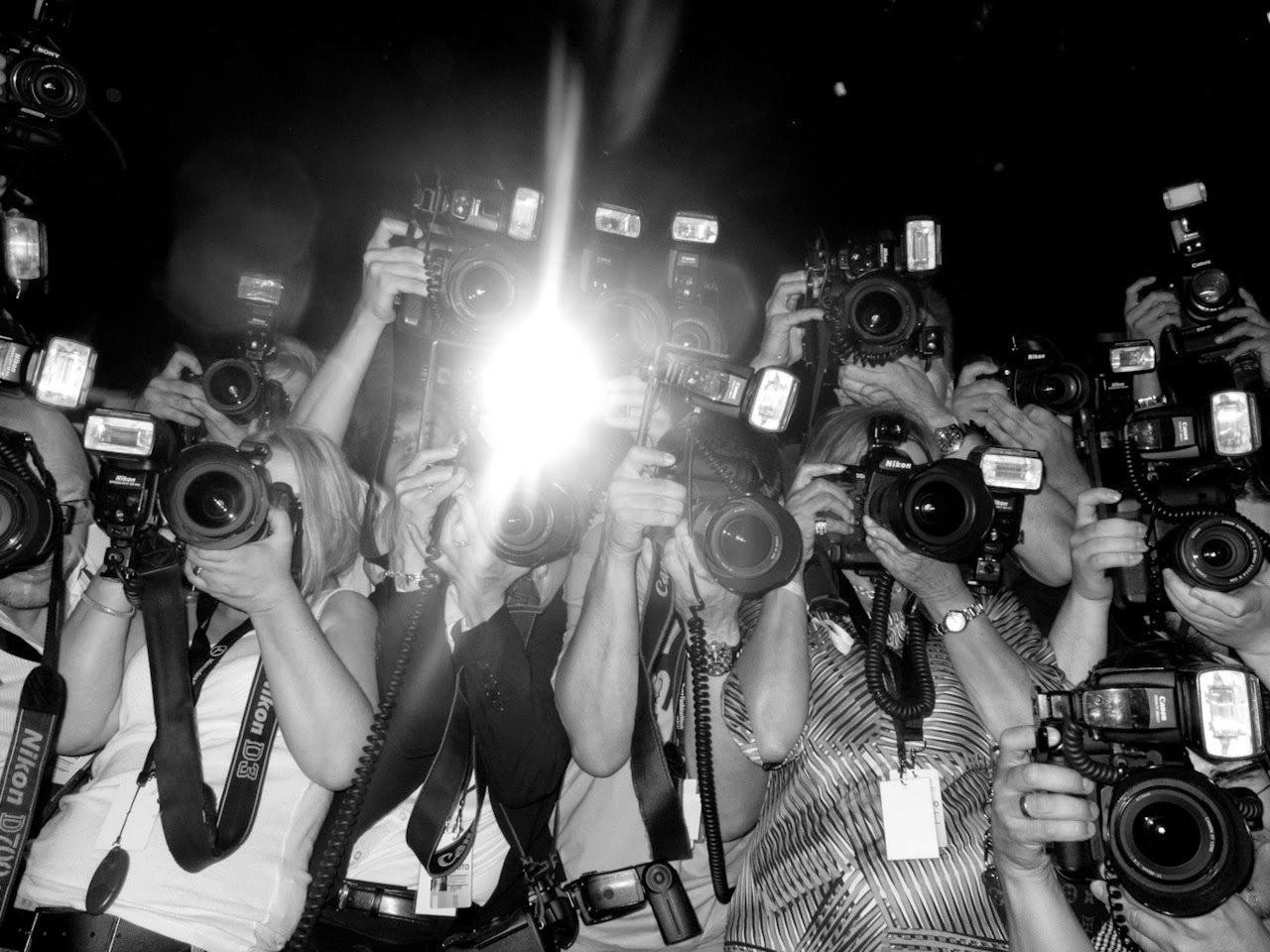
I’m in Japan this week! Thanks to a twist of fate, I had 4 hours notice to pack and get on a flight. Here’s where things got strange: As soon as I stepped off the plane in Tokyo, I was approached by a group of Japanese ladies. They shook my hand and smiled at me, while repeating something which sounded like “Ba-ba.” So of course I smiled and nodded back at them, which made the ladies beam twice as enthusiastically.

Confusion set in. It eventually became clear that the Japanese women thought I was an American celebrity–some blondish middle-aged celebrity, I guess, whose name sounds like “Ba-ba”. Later my friends and I tried to figure out the name of my mystery-celeb doppelgänger. Someone suggested Julianne Moore, which was flattering, but doesn’t sound remotely like “Ba-ba.”
I just hope they didn’t think I was Barbara Eden. Even though Babs can still rock her “I Dream of Jeannie” harem outfit better than most gals her age, the septuagenarian is at least a couple of decades too old for my ego to be stoked.

Writers can have creative doppelgängers–not in how they look, but how they write. Have you ever been told, “You write just like Famous Writer Name“? If you’re not sure, try the tool I Write Like . And tell us, who do you write like?