How to write a bestseller

By Kathryn Lilley

“There are three rules for writing the novel. Unfortunately, no one knows what they are.”

– W. Somerset Maugham
Bestseller. That’s why we’re all in the blogosphere, isn’t it? We all want to write (or read) a bestseller, we writer-reader-bloggers.

This blog is gifted with multiple bestselling (and modest) authors. Clare, for example, recently hit the IMBA Bestseller list with two of her books at the same time.

But I think everyone wants to learn the secret for vaulting onto the New York Times or USA Today bestseller’s list, and then stick there like Krazy Glue.

So today I set off on a hunt for the magic formula for writing a best seller. Is there one? What exactly does it take to write a breakout novel?

In his excellent book, Writing the Breakout Novel, agent Donald Maass says to write a “breakout” book, you have to open up your story. Make it bigger. Give it higher stakes, a larger theme, one that impacts many more people than you’d find in, say, the population of Cabot Cove. So, I’m assuming that with a few exceptions, most cozy mysteries are not going to be bestsellers. If you do have a “small,” domestic family drama in your story, Maass says, you must find a way to amp up the stakes. Think Grapes of Wrath. It’s a family drama, but man, talk about major stakes.

I ran across an interesting article about how not to write a best seller in the New York Sun, which stated that positive reviews in major review outlets don’t guarantee best sellerdom. The author said that catchy titles do seem to be a plus, however.

Interestingly, I found one reviewer in a British newspaper, The Guardian, who advised would-be best seller writers to avoid putting too much originality and sex into their work. That doesn’t sound right to me, but I don’t know. Is that a British thing? Here’s the article.

As I continued my web browsing, I found an article by Cliff Pickover called How to create an instant bestselling novel. It’s worth reading for the “Bestseller Plan” (You have to scroll down to see it). Pickover’s Bestseller plan refers to a NYT article called How to Manufacture a Best Seller by Michael Maxen. I couldn’t find Maxen’s original article at the NYT site (although I did find some crabby Letters to the Editor from authors who resented the article. Maxen must have skewered their books.). I did follow the link that claims to summarize the major points of Maxen’s article. That article offers up an actual 10-step formula for how to write a best-seller, by God. Generally, it seems to involve creating a hero-expert, a villain-expert, and a team of experts. When the action flags, you’re supposed to kill someone. See what you think.

I also read “Lester Dent’s magical recipe for writing a best seller.” It’s sort of interesting. It seems oriented more toward selling than best selling, though, and calls writers “pulpateers.” I loved his tip about how to fake local color and fool editors about murder weapons, though. That’s the kind of thing that most writers will never confess they do.

So I wish I could tell you I found the absolute formula for writing a best seller. Actually I’d like to hear from you. What do you think makes a book leap to the top of the NYT list? Is there a formula, or a secret? Do you think that to become a best seller, you simply write an excellent story, and accept the rest as a crapshoot? Or do you think that it is all a big fix–that publishers mostly decide who will become the Next Big Thing, by promoting certain books?


~~~~~~~~~~~~~~
Coming up on our Kill Zone Guest Sundays, watch for blogs from Sandra Brown, Steve Berry, Robert Liparulo, Paul Kemprecos, Linda Fairstein, Oline Cogdill, James Scott Bell, and more.

How Technology Will Change The Way We Read And Write

by Clare Langley-Hawthorne
http://www.clarelangleyhawthorne.com/

Last week my husband forwarded me an excellent article in the Wall Street Journal (http://online.wsj.com/article_email/SB123980920727621353-lMyQjAxMDI5MzI5MTgyMDE5Wj.html) on how e-books will change the way we read and write and it sparked a great deal of enthusiastic debate between us. The author of the article, Steven Johnson, basically had his ‘Aha’ moment when he bought, on sheer impulse, a copy of Zadie Smith’s book ‘On Beauty’ on his Kindle. His ideas about how technology can revolutionize not only the book publishing industry but the act of reading itself are, I think, intriguing as well as exciting.

There were three aspects of his article that immediately caught my attention:

The way that technology will transform the essentially solitary, linear act of reading into a community, interactive activity;

The possibilities that technology open up for the e-book-world from hypertextual, searchable books to global book groups;

The revolutionary way e-books will alter the way people buy books from pay per chapter options to the reemergence of ‘forgotten’ books that are now being rediscovered.

Imagine your home library transformed into a virtual, searchable repository of knowledge…

Imagine being able to drill down into the backstory of a book just by clicking on hypertext links embedded in the e-book (as a writer of historical fiction this opens up all manner of possibilities to help inform and deepen the reading experience for my books)…

Imagine being able to highlight a paragraph in the book you’re reading and make comments that will be accessible to both the author as well as the community of readers who are looking at the same e-book…

After reading this article, I was like, wow, the possibilities are endless…and when I look at my four year old boys I can’t help but wonder – what will the world of ideas and books be like for them in the future?

So what do you think about Steven Johnson’s take on the future of e-book technology? What do you imagine that future will be like? What excites you the most about the way technology can revolutionize both the way you read and/or the way you write?

Looking Backwards

by Tim Maleenytims author

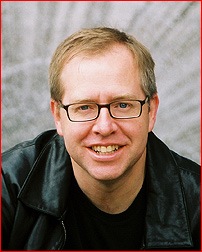
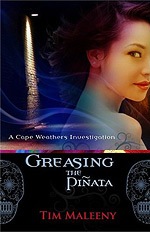
Today TKZ is pleased to host author Tim Maleeny, whose Cape Weathers series not only has some of the coolest covers on the market, but also displays some of the best, funniest writing out there (think Chinatown meets Elmore Leonard). And for a feel of the real San Francisco, his books can’t be beat.

In the novel Downtown, a classic comedic thriller by Ed McBain, the hapless protagonist involved in the twisted storyline says glumly that it’s “a drug plot for sure.” It turns out to be much more than that, but the reference was an inside joke on the publishing industry, because at the time that novel was released, drugs were at the heart of every popular crime novel.

For the past few years vampires have been the drug of choice. The conventional wisdom has been, if you want to break into publishing, put a vampire in your book. Bookstore shelves are now crowded with romantic teen vampires, rural vampires, vampire detectives, gay vampires, bipolar vampires, vampire dentists, you name it.

Some of these books are great, others are pale imitations of the novels that paved the way. They got bought by publishers who believe that in our marketing-driven world, the nature of the subject is more important than the quality of the story.

Now there’s been a lot of buzz about Dan Brown’s forthcoming follow-up to The Da Vinci Code, which is understandable given the wager the publishing industry is placing on the success of this book. And it will be a success because “the machine” will make it one — the hype has already begun, and the marketing expenditures behind the launch will dwarf the promotional budgets of nearly a hundred other top sellers combined. So whether it’s the best book of the year or not, it certainly will be the biggest.

greasing And much like Michelle, I fall into the camp of writers who enjoyed The Da Vinci Code a lot, despite its flaws. The story worked, the subject matter was fascinating, and it cooked along. (And because I’m a blood relative to the Merovingians and have seen nude photos of John the Baptist on the internet, the story had a particularly deep resonance for me.)

But after all the code-copycats —in books and film — all the variations on a theme, the coming of the new book does feel a bit like the return of the vampires.

Which is funny, because before The Da Vinci Code, I understand it was damn near impossible to sell a mystery featuring art history, because the subject matter was perceived as too academic and boring. After The Da Vinci Code hit, countless authors were told by their publishers they had to work a conspiracy involving ancient art into their books. (A novel with a professor of art history who happens to be a Southern vampire would certainly have started a bidding war.)

The machine has become its own self-fulfilling prophecy. Rather than invest in new authors, the pressure from the chains has become so severe, and the margins so thin, that the plan is to bet on a sure thing. The marketing guys look for safe bets and proven brands. But as a marketing guy from way back, I can tell you there are no safe bets, and if you solve for the short-term, it often costs you big-time in the long run.

Sure, you can keep selling an existing franchise for a long time, no doubt about it. But at the end of that push, when the books start to feel predictable, the cost of that approach is reader fatigue, and beyond that, a slippery slope indeed.

This is what happened to the music industry before Napster and then iTunes came onto the scene and opened the floodgates, allowinapsterng us to rediscover our love of music instead of listening to only the Top 40 being pushed by the big labels. The industry almost collapsed under its own weight because it threw all its money at artists who already had a fan base waiting for their next record, or even worse, over-invested in artists who had clearly jumped the shark and weren’t putting out anything fresh.

The same thing happened in Hollywood before independent film put some control back into the hands of directors. Check out some of the bombs from the eighties and imagine them getting funded today, to the tune of hundreds of millions of dollars. Movies with plots so thin that any movie-goer in the country could have told the studios they were going to suck before a single scene was filmed.whos that

If you talk to voracious readers, let alone other writers, they can tell which books to bet on, and if you listen carefully, you can tell which books have broad appeal and the potential to break out, if only the machine would get behind them. But with so much money at stake, in an industry of taste makers, are you really going to trust the readers, or, heaven forbid, the writers, when you can just sell the same thing you sold before.

the wire Same thing happened with TV, before cable tore down the walls protecting laugh-track sitcoms, canned plots and formulaic dramas. HBO broke all the rules and, to no one’s surprise except the big networks, it became a magnet for viewers starved for original programming.

For some reason, all these so-called “entertainment” industries forgot that for something to be truly entertaining it has to be unexpected, fresh, something new.

Push the boundaries, twist a familiar story into a new shape, take me somewhere I’ve never been before. Only then will I come back, instead of putting down the book and turning to cable, powering up my computer, or playing a video game. There are too many options on my entertainment menu for me to just sit there and eat the same thing you’ve been serving again and again, because frankly it’s getting stale.

I am told by friends in publishing that zombies are the next vampires. I kid you not, one very talented writer I know was told to rewrite her book to include the walking dead, because “zombies are the next big thing.” Maybe so, but why can’t the next big thing be a great story, one I haven’t heard before. Maybe it features a zombie, but maybe the big thing after that doesn’t. Mix it up a little and see what happens.

Which is why I ask myself, whenever I walk into one of the big chains, does the next big thing have to come in waves? Because personally, I’m getting a little seasick.

Tim Maleeny is the bestselling author of Greasing The Piñata, which recently won The Lefty Award for best humorous mystery of 2008, and the forthcoming standalone novel Jump that Publishers Weekly called “a perfectly blended cocktail of escapism, with or without the beach towel.”

~~~~~~~~~~~~~~

Coming up on our Kill Zone Guest Sundays, watch for blogs from Sandra Brown, Steve Berry, Robert Liparulo, Paul Kemprecos, Linda Fairstein, Oline Cogdill, Alexandra Sokoloff, James Scott Bell, and more.

Location, Location, Location…

By John Ramsey Miller

http://www.johnramseymiller.com

Eudora Welty once said, “Every story would be another story, and unrecognizable if it took up its characters and plot and happened somewhere else… Fiction depends for its life on place. Place is the crossroads of circumstance, the proving ground of, What happened? Who’s here? Who’s coming?…”

A great story and solid characters mean nothing if they are walking around in a territory unknown to a reader. Successful authors know that setting is as important to a story as any of the characters. We have the characters, their conflicts and dilemmas, and all else is setting. Setting adds texture and our readers should feel as though they are right there with our characters. What are the characters seeing? What are they smelling? How does their environment feel? What are the characters hearing? Is the sun shining? Is it hot or cold, wet or muggy? Is the sun out, the light failing, or is it as dark out as six inches up a bull’s butt? Are the tall weeds these characters are running through infested with chiggers or poison ivy?

In James Lee Burke’s Dave Robicheaux novels his bait shop is so real you can almost hear the air pump and smell the minnow tank. You can feel the thick heat in the Louisiana air and see the ceiling fan as it stirs it. When he is sitting in a bar, you can smell the bourbon and see the condensation on the glass in front of old Dave.

Settings influence action. Nothing gets a reader’s blood flowing like a chase in a place where there’s no chance of outside interference. When the pursuer knows the territory and the victim doesn’t it adds suspense.

Writers should know enough about a place to describe it accurately, even if it’s made up from whole cloth. A made-up location should be taken from a real one the writer knows intimately and can convey. If you can see it, and you had better have it in your mind so it is real to you, you have to make your reader see it as well. You should take the time to describe the book’s settings in enough detail for the readers to have a clear idea of where the characters are and what is going on. Many authors, depending on style, leave a lot of details up to the reader’s imagination, while others define the setting so there is no guessing or imagining.

Your settings should be of interest to the readers. I have set books in cities and in swamps and in each I bring the setting in so the reader will see how the setting affects the characters and the plot. I think of locations as characters, and the feel of them as texture. In the way the choice of a hat can say more about a character than two paragraphs of description, something a character says or feels about the environment can set a scene adequately in very few words.

I stick to locations I am familiar enough with to make them seem real. I do occasionally set a chapter in a place I’ve never been, like a jungle in South America, or most recently Route Irish in Baghdad, but those are isolated instances where I need an action to take place that impacts my story. A jungle is easy since I lived in Miami. Iraq was also easy since I’ve all seen it on my TV screen over and over for the past few years. That is okay for the way the place looks, but not good enough. Since my son was in Iraq with the Marine Corps, I talked to him to get his impressions––about how the country felt and smelled to him, especially at night when my scene took place.

The best writers place us right next to the characters. There are authors who can do a great job with the other elements necessary to a successful work of fiction, but fail to bring in the setting to their advantage. In order for a story to involve a reader effectively and to satisfy them, setting has to become one of the major characters.

Who among your favorite authors uses setting most effectively?

A Dialogue About Dialogue

By John Gilstrap
http://www.johngilstrap.com

Miller looked up from the pistol he was cleaning and nodded to the chair on the opposite side of the table. “Just shoo the chickens away and have a seat,” he said. Pistol parts lay strewn on a greasy towel.

I’d known him for years, and sometimes it was hard to tell if he was angry. “Am I in trouble?” I asked.

“Nah, I just wanted to talk to you about something.” In his baritone drawl, “nah” and “I” rhymed.

I nudged the weird looking brown bird with the back of my hand and she landed on her feet on the floor. Careful to insult neither man nor bird, I sat without checking for bird shit. I crossed my legs and waited for him to say his piece.

“This blog thing,” he said. “They never talk about dialogue. What do you think about that?”

I shrugged. “I think ‘never’ overstates it.”

“Rarely, then.” He pulled a rag through the barrel tube and looked through it with one eye, like a first mate searching for shore. He scowled and stuffed the rag through again. “I just think it’s an important component of writing.”

“Of course it is,” I said.

“Let’s talk about it, then.”

“What, here?”

“You got someplace better to be?”

“Chicken shit and gun oil. How could I possibly want better?”

Finally, a laugh. “I’ve got some Maker’s Mark on the shelf over there.”

Maker’s Mark puts a happy edge on everything. “So talk,” I said. The chicken squawked as I stood and brushed it with my foot. “You want one?”

“The Pope’s still Catholic, right?” He finally saw the gleam he’d been looking for, I guess, because he placed the barrel tube on the towel and emptied his hands of tools. “I think a lot of writers get dialogue wrong.”

“Get it wrong?” I challenged. “You mean there’s a right way and a wrong way? I don’t remember seeing a rule book.” I found two glasses in the cabinet and put them to work. I’m very generous with other people’s booze.

“Take dialogue tags, for example: he said, he asked, he interjected, he postulated. Hell, in the last paragraph, you challenged. Why won’t a simple ‘said’ do it all the time?”

I handed him his drink and again dislodged the chicken from my chair. “I suppose it could,” I said. “Elmore Leonard made that one of his ten rules, right? I just happen to think that ‘challenged’ better clarified the purpose of my words up there. ‘Said’ would have been fine, but ‘challenged’ was better.”

“I disagree.”

“Good for you. It’s one of those—”

“Let’s talk about interruptions. You used an em dash right there. If you’d used ellipses . . .”

“It would have conveyed the wrong context. To me, ellipses indicate that my words just trailed off. But the em dash—”

“Is a hard abrupt interruption. Yeah, okay, I can see that. I still don’t agree about the tags, though.”

“They sure come in handy, though.”

“In what way?”

“Well, after long strings of dialogue, it’s easy for the reader to lose track of who’s talking.”

He weighed that. “You could always reestablish ownership of the speech by inserting a little action. For example, if you wrote—”

“ ‘He weighed that,’” I said. “Yeah, I did. Try to keep up.”

He took a long pull on his bourbon. “What do you think about exclamation points?”

“Hate ’em,” I said. “I used to overuse them like crazy. Now, if I use an exclamation point, it’s to communicate some loud friggin’ shouting.”

“You just said ‘friggin’.”

“Yeah, well, this is a family-friendly blog.”

He rolled his eyes. “I’m not talking about profanity,” he said. “I’m talking about the dialect stuff. Why not write frigging, complete with the ing?”

“I don’t have answer for you on that,” I confessed. (Yes, confessed. Get over it. In this context, it implies more than merely said.) “A little dialect goes a long way, though. After a while, I think it annoys the reader.”

“As annoying as a long blog post?” he asked.

“Even more, I think.” Point taken. I stood. “Can I take my drink with me?”

Miller laughed again. “I don’t think I can assemble the gun fast enough to stop you. But don’t you think you should ask them what they think?”

Them? Ah, the readers. The man might sound like Foghorn Leghorn, but he’s got a good head on his shoulders.

So, what do y’all think? What are tricks, triumphs and annoyances of writing or reading dialogue?

Yeah, I hear you in the back. “Trite little blog posts, har, har har.”

Seriously, let’s talk . . .

~~~~~~
Coming up on our Kill Zone Guest Sundays, watch for blogs from Sandra Brown, Steve Berry, Robert Liparulo, Paul Kemprecos, Linda Fairstein, Tim Maleeny, Oline Cogdill, Alexandra Sokoloff, James Scott Bell, and more.

How do you top the “Bestselling Novel of All Time?”

by Michelle Gagnon

A few days ago, I saw this announcement on Shelf Awareness:dan brown

The Lost Symbol, Dan Brown’s long-anticipated follow-up to The Da Vinci Code, will be published September 15 by Knopf Doubleday. A first printing of five million copies is planned for the book. The New York Times noted that “fans and the publisher have been waiting a long time for Mr. Brown to finish the new book. It was originally scheduled for a 2005 delivery. The Lost Symbol will again feature Robert Langdon, the protagonist of The Da Vinci Code.”

At long last, a little more than six years after the publication of The Da Vinci Code, Brown is back. “Waiting a long time” is understating it a bit, don’t you think?

I remember first hearing about the next installment in the series shortly after DVC sales rocketed into the stratosphere. The story (last I heard) was to be set in Washington DC, involving the founding fathers and the Freemasons (can you just imagine the expression on Brown’s face when the film National Treasure came out?)

DVCAnd then the years passed…and as they did, to be honest, I started to feel for the guy.

Granted, he’s insanely wealthy and successful, one of those few among us who became a household name. He managed to write a thriller that captured the public imagination so completely, there are actually plaques mounted on famous Parisian landmarks rebutting some of the claims in the book (it’s fiction, people. Fiction). And sure, without ever penning another sentence he could still probably buy an island in Fiji every year without worrying about eating dog food in his dotage.

But just for a second, put all that aside. Imagine the pressure. Brown could not possibly have known how successful his book would become (sure, he probably hoped–let’s be honest, we all hope. In my dreams I’ve whiled away many an hour on Oprah’s couch). And when it became the bestselling novel of all time, spawning a torrent not just of similar thrillers but tie-in products and books, charter tours, specials on the History Channel, a film with a horribly miscast Tom Hanks wearing what appears to be an otter on his head…wow. Sure, he’s no longer under the same deadline pressure as the rest of us, his editor isn’t sending nasty emails asking where the draft is (although I’m guessing some fairly pleading/begging missives have passed between them). tom hands

But how do you follow up on that level of success? You know the critics are out there, sharpening their knives. The fans have huge expectations, and a significant number of them are bound to be disappointed. And with every passing year, those knives have just gotten sharper.

For the past few years I’ve envisioned Dan Brown holed up somewhere, naked and filthy à la Howard Hughes, pacing and muttering to himself while a laptop blinks relentlessly from a dark corner. Typing a chapter, erasing it the next day. Worrying over every plot twist, every word choice. After all, deep down nearly every writer is a bundle of insecurity; it’s impossible to have distance from your own work, and I’m guessing we’ve all had that, “this is the worst crap ever written” moment as we review our latest manuscript.

Would the stress be worth it?

Hell, yeah.

But come September 15th, I figure Brown will be sitting alone somewhere, drink in his hand, heart pounding, stomach churning, waiting for the verdict. And I’ll most likely be sitting somewhere else, responding to a chiding email about a missed deadline. And I’ll feel a little sorry for him. Then I’ll pick up a copy of The Lost Symbol, snort, and say, “Not nearly as good as his last book.”

On principle. You know.

~~~~~~~~~~~~~~~~

Coming up on our Kill Zone Guest Sundays, watch for blogs from Sandra Brown, Steve Berry, Robert Liparulo, Paul Kemprecos, Linda Fairstein, Tim Maleeny, Oline Cogdill, Alexandra Sokoloff, James Scott Bell, and more.

Slice and Dice your work

by Joe Moore

The writing process is made up of many layers including outlining, research, first drafts, rewriting, copy editing, proofing, more editing and more proofing. One of the functions that sometimes gets the least amount of attention in discussions on writing techniques is editing.

There are a number of stages in the  editing process. Starting with the completion of your first draft, they involve reading and re-reading the entire manuscript many times over and making numerous changes during the process. It’s in this phase that you need to make sure your plot is seamless, your story is on track, your character development is consistent, and you didn’t leave out some major point of importance that could confuse the reader. Pay close attention to content. Does the story have a beginning, middle and end? Does it make sense? Is the flow of the story smooth and liquid? Do your scene and chapter transitions work? Is everything resolved at the end?

Check for clarity. This is where beta readers come in handy. If it’s not clear to them, it won’t be clear to others. Don’t assume that everyone knows what you know or understands what you understand. Make it clear what’s going on in your story. Suspense cannot be created by confusing the reader.

Once you’ve finished this first pass searching for global plotting problems, it’s time to move on to the nuts and bolts of editing. Here you must tighten up your work by deleting all the extra words that don’t add to the reading experience or contribute to the story. Remember that every word counts. If a word doesn’t move the plot forward or help develop the characters, it should be considered for the slicer-dicer.

Some of the words that can be edited out are superfluous qualifiers such as “very” and “really.” This is always an area where less is more. For instance, you might describe a woman as being beautiful or being very beautiful. But when you think about it, what’s the difference? If she’s already beautiful, a word that is considered a definitive description, how can she exceed beautiful to become very beautiful? She can’t. So I suggest you search for and delete instances of “very” or “really”. They add nothing to the writing.

Next, scrutinize any word that ends in “ly”. Chances are, most adverbs can be deleted without changing the meaning of the sentence or your thought. In most cases, cutting them clarifies and makes your writing crisper.

Next, go hunting for clichés and overused phrases. There’s an old saying that if it comes easy, it’s probably a cliché. Avoiding clichés makes for fresher writing. There’s another saying that the only person allowed to use a cliché is the first one to use it.

Overused phrases are often found at the beginning of a sentence with words like “suddenly,” “so” and “now”. I find myself guilty of doing this, but they don’t add anything of value to my writing or yours. Slice and dice them.

The next type of editing is called line or copy editing. This covers making sure you used the right word. Relying on your word processor’s spell checker can be dangerous since it won’t alert you to wrong words when they are spelled correctly. It takes a sharp eye to catch these types of mistakes. Once you’ve gone through your manuscript and performed a line edit, have someone else check it behind you. A fresh set of eyes never hurts.

On-the-fly cut and paste editing while you were working on your first draft can get you into trouble if you weren’t paying attention. Leftover words and phrases from a previous edit or version can still be lurking around, and because all the words might be spelled correctly or the punctuation might be correct, you’ll only catch the mistake by paying close attention during the copy edit phase.

Line editing also covers grammar and punctuation. Watch for incorrect use of the apostrophe, hyphen, dash and semicolon. Did you end all your character’s dialogs with a closed quote? Did you forget to use a question mark at the end of a question?

The many stages of editing are a vital part of the writing process. Editing your manuscript should not be rushed or taken for granted. Familiarity breeds mistakes—you’ve read that page or chapter so many times that your eyes skim over it. And yet, there could be a mistake that you’ve missed every time because you’re bored with the old stuff and anxious to review the new.

Spend the time needed to tighten and clarify your writing until there is not one ounce of fat or bloat. And once you’ve finished the entire editing process, put the manuscript away for awhile. Let it rest for a week or even a month if your schedule permits while you work on something else. Then bring it back out into the light of day and make one more pass. You’ll be surprised at what you missed.

One more piece of advice. Edit on hardcopy, not on your monitor. There’s something about dots of ink on the printed page that is much less forgiving than the glow of pixels.

Any other editing tips or techniques out there? How do you approach editing; on the fly or after the first draft is complete?

~~~~~~~~~~~~~~~~

Coming up on our Kill Zone Guest Sundays, watch for blogs from Sandra Brown, Steve Berry, Robert Liparulo, Paul Kemprecos, Linda Fairstein, Tim Maleeny, Oline Cogdill, Alexandra Sokoloff, James Scott Bell, and more.

Developing a theme through characters

Before there was story structure–before there were even novels—there was theme. A story’s theme is the fundamental and universal idea behind its plot. In King Lear, for example, one of its themes is authority versus chaos.

But to me, a novel’s theme is not merely the abstract principle behind the plot; I believe that you have to bring a story’s theme to life through its characters. Ideally, several of the major characters should portray a variation on the underlying ideas that inform the story. Those characters will reflect the light and depths of your theme, the way the facets of a diamond show off its hidden fire.

In A Killer Workout, the second installment in the Fat City Mysteries, I created a “Mean Girls” theme. I wrote several different characters to illustrate that underlying idea. One character had been victimized by bullies in her youth–another was herself a bully. Still another character had grown up to become a protector of abused young women. Through each of these women’s stories and backgrounds, I explored the ideas of bullying, emotional abuse, and “mean girls” in various ways.

I use my characters to do a “360” exploration of the theme of each of my novels. The secondary characters’ experiences in terms of the theme are usually more intense and extreme than my protagonist’s. They act as “theme foils,” and they also propel her journey through the plot.

What about you? How do you develop the theme for your stories? Do you create your theme at the beginning of your writing, or does it emerge slowly as you write? And how do you illustrate your theme?
~~~~~~~~~~~~~~~~~~~~~~~
Coming up on our Kill Zone Guest Sundays, watch for blogs from Tim Maleeny, Oline Cogdill, James Scott Bell, Steve Berry, and more.

Dinner Party for Six

by Clare Langley-Hawthorne

So after battling two bizarre bouts of benign positional vertigo (who knew there even was such a thing?!) and a case of Laryngitis I have to say inspiration is a bit thin on the ground at the Langley-Hawthorne house, so I thought ‘who would I want over for dinner to help liven things up?’ To limit myself I went for ‘dead writers’ only – much more fun (and, hey, I am the historical author after all). Although the choices are vast, I also wanted to focus on those who would inspire me the most as I try (once the world stops spinning) to finish the third Ursula Marlow book.

Voila! Here’s my list for my ‘dinner-party-for-six’ (my husband gets to go out and eat with the boys while I entertain the spirits of writers past):

  • D.H. Lawrence – so I could get the low down on use of flowers as sexual imagery:) and ask how to really write a good sex scene
  • Daphne Du Maurier – to feed off her Gothic vibe
  • Jane Austen – so I could ask her (a) is she a vampire? and (b) how does she feel about Pride & Prejudice becoming a new bestseller as a ‘monster mash’ with the living dead? I could also do with her as a muse for some really good one-liners
  • Nancy Mitford – because she must have been such a savage wit and I need more of that in my life
  • Ted Hughes – tragic, hunky, talented poet – I can always use that kind of help (really, need I say more? – though I spent my adolescence despising and blaming him for Sylvia Plath’s death)
  • And me…of course!
There are many other ghosts-of-writers past whom I would dearly love to entertain, but this is the list of those I feel I need the most right now…

When you lack for inspiration who would be your ‘dinner-party-for-six’ picks and what would ask them?

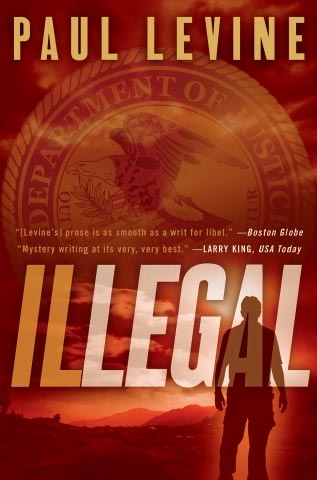
WHY I DEDICATED “ILLEGAL” TO A TOTAL STRANGER

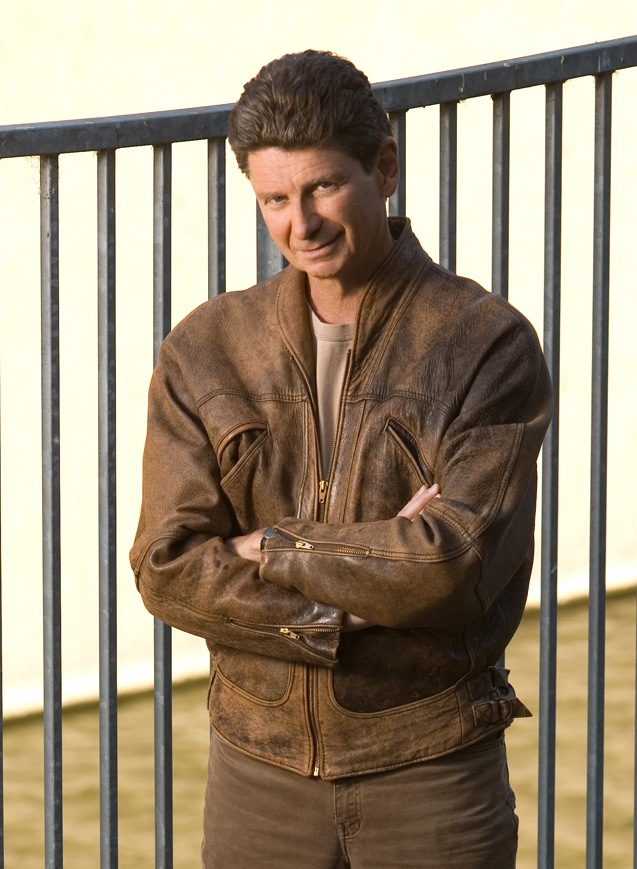
By Paul Levine Paul Water shot 2009 (small)

Today TKZ is thrilled to welcome author Paul Levine, who has been nominated for the Edgar, Macavity, International Thriller Writers, and James Thurber awards. Today he discusses a subject near and dear to my heart, illegal immigration (although I confess to being green with envy over his earlier release date, considering the fact that my next opus treads similar ground). Read on for a true immigration story…

“Let me get this straight,” the Hollywood producer said. “You dedicated your book to an illegal alien.”

“A Mexican woman,” I said. “She floated up the New River on an inner tube with her little boy.”

“I didn’t know rivers ran north.”

An odd statement, I thought. Focusing on the flow of water rather than the flow of people. “Some rivers do,” I told him. “The Nile. The Monongahela. The New River between Mexicali and the Salton Sea.”

The producer licked his thumb and turned to the dedication page. We were sitting in his bungalow on the Warner lot. Outside the window, I had a fine view of the water tower.

He read aloud: “‘To the woman carrying a rucksack, clutching her child’s hand, and kicking up dust as she scrambled along a desert trail near Calexico, California.’”

He looked puzzled. That happens to people who don’t know rivers can run north. “I still don’t get it.”

“The boy and his mother. They’re the heart and soul of ‘Illegal.’”
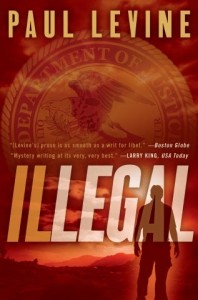
ILLEGAL COVER FINAL MEDIUM Then I told him the story behind the story.

Three years ago, the news was filled with horror tales of border crossings gone bad. Families heading north were attacked by Mexican bandits or robbed by their own coyotes. People locked inside truck trailers literally baked to death. Women were beaten, kidnapped, and forced into sexual slavery. The hellish desert took its own toll, leaving the Border Patrol to rescue illegals as well as arrest them.

I wanted to write a novel set against the backdrop of illegal immigration and human trafficking, but what story would I tell? With me, the characters come first. When their lives are etched in my mind like petroglyphs on a cave wall, they tell me the story. I already had the protagonist. Jimmy (Royal) Payne, a down-and-out Los Angeles lawyer, would cross borders of his own while encountering immigrants, coyotes, corrupt cops, and human traffickers. But what was the spine of the story? I didn’t know.

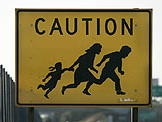
On a day of blast furnace heat, I drove south through the desert, roadkill armadillos roasting on the pavement. To the east was the polluted Salton Sea. To the west, the Borrego Badlands. As I neared Calexico, the yellow “Caution” signs started popping up. Silhouettes of a father, mother, and daughter scampering across the road. The message: Be on the lookout for “pollos.” Cooked chickens in border slang. Coyotes are “polleros,” or chicken wranglers. Many of the signs were peppered were gunshots.

Bienvenidos a los Estados Unidos. Yes, welcome indeed.vallen_illegal
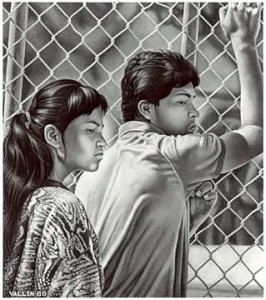
I thought of Freddy Fender singing Across the Borderline, an achingly sad tale about the “broken promised land.”

“And when it’s time to take your turn
Here’s one lesson that you must learn
You could lose more than you’ll ever hope to find.”

Near the border, I took a wrong turn onto a side road that dead-ended at the New River, a steaming current of raw sewage and toxic runoff that carries hepatitis, typhoid, polio, and cholera. Tree limbs bleached the color of skeletons floated in the water, which bubbled with a poisonous foam. Knowing of the Border Patrol’s reluctance to dive in, some hardy – or foolhardy – illegals swim with the current, white garbage bags over their heads to blend in with the noxious foam.

Getting out of the car, I saw no swimmers this day. But a large inner tube was grounded in the shallows. A striking, dark-haired woman in her early 30’s and a boy of 10 or so were picking their way across the rocks to shore. Backpacks, sneakers, and a gallon jug of water. Judging from the ease with which the woman hefted the jug, it was nearly empty.

I shouted out a friendly “Hola.” The mother froze. The boy stepped in front of her, a gesture of protection, the child on the verge of becoming a man. I ducked into my car, came out with a Thermos filled with iced tea. I held it up, a universal offer of friendship to travelers. They stood motionless. I walked toward them, but they started backing up…toward the river. I stopped short, placed the Thermos on the ground, dug into my wallet and placed several twenties under the Thermos. A puny gesture, given the enormity of their task.
Border Sign I returned to my air-conditioned car and headed for the main highway. Through my rear view mirror, I saw mother and son walking north along the dusty road. The boy carried the Thermos.

I didn’t know their names, so I gave them new ones. Marisol and Tino Perez. I imagined them wrenched apart in a border crossing gone-to-hell. They completed my trio of main characters. A shady lawyer. A missing woman. A lost boy. Their antagonist would be a wealthy California mega-farmer with a twisted vision of his own power.

“Illegal” is about choices. Will Jimmy Payne risk his life for two strangers or retreat into his own solitary world? The book is also about greed and corruption, revenge and redemption, all set in the dark world of human trafficking.

When I was finished, the producer said, “Why’d you help those illegals instead of calling the Border Patrol?”

“The Bible says, ‘Do not neglect to show hospitality to strangers, for by this, some have entertained angels.’”

“Don’t go biblical on me. Biblical doesn’t sell, except for Mel Gibson, and he’s so yesterday, he’s last year.”

The producer looked out the window where a motorized cart was hauling two-by-fours to a set under construction.

“This book got some blood and guts? Like ‘No Country for Old Men.’” no country
“The hero gets horsewhipped.”

“That’s good. Like Marlon Brando in ‘One-Eyed Jacks.’”

“But it’s more like ‘Chinatown,’” I said, figuring movie analogies kept the producer in his comfort zone. “The abuse of power. Corruption of the flesh.”

He seemed to think it over a moment. “Can we lose that polluted river?”

“Why? Because it flows north?”

“Because no one will believe those illegals would risk it. Just why the hell would someone do that?”

“You nailed it,” I said. “The reason for the book. The reason for the dedication. It makes you ask, ‘Why the hell would someone do that?’”

You can read an excerpt of “Illegal,” sign up for Paul’s newsletter, and win cool prizes at http://www.paul-levine.com

Paul Levine’s new novel, ILLEGAL, has been praised as “the most original, offbeat and wholly entertaining novel of the year so far,” by the Providence (R.I.) Journal. Levine also wrote four novels featuring squabbling Miami trial lawyers Steve Solomon and Victoria Lord. SOLOMON vs. LORD was nominated for the Macavity Award and for the Thurber Prize for American Humor. THE DEEP BLUE ALIBI was nominated for an Edgar, and KILL ALL THE LAWYERS was a finalist for the International Thriller Writers Award. He was awarded the John D. MacDonald award for Florida fiction for his “Jake Lassiter” novels.A screenwriter, Paul wrote 21 episodes of the CBS military series “JAG” and co-created and co-executive produced “First Monday,” a drama set at the Supreme Court, starring James Garner and Joe Mantegna.