Confessions of an Editor

We’re thrilled to welcome editor Kristen Weber as our guest-blogger today. Kristen has worked as an in-house editor for her entire book publishing career (except for a brief stint as a subsidiary rights assistant) before relocating to Los Angeles for her husband’s job. She’s currently freelance editing in between relearning to drive and hanging out with her pug. You can learn more about her services here:
Tackling my first freelance editorial project, I learned something quickly. You can get a lot more done as a book editor when you’re not actually working as one.
I hardly ever edited or even read a submission at my desk when I was working in-house. I was attending meetings, answering emails (you could lose a whole day right there), checking cover copy, catalog copy, and cover proofs, reviewing contracts, chatting with authors and agents, and just basically making sure every aspect of every book I worked on was perfect and making sure my authors were happy and agents remembered me for every good submission that they had.
I had lunch with a film person here in Los Angeles, and he said, “I picture you editors sitting in dark rooms with only one light on buried under papers and having no human contact.”
That just isn’t the case. The majority of my actual editing and reading (and I know this was true for almost all of my colleagues as well) happened at home in my “free” time. Otherwise we all had to be very personable and present in the office as we worked on many different projects at once.
But my favorite part of the job was always the editor / writer interactions. I’ve heard a lot of people say editors just don’t edit anymore, but I never found that to be the case. My authors will all attest to my carefully worded 6-10 page single spaced editorial letters and my colleagues were always working on letters like those as well.
As an editor, I feel like my job is to help authors push their own words and ideas out even further. They already have the spark of something great…editors are just trying to help them make it explode. And I’m rediscovering my joy for this now, in the quiet of my home or by the pool.
I think the most important thing you can do as a writer is collaborate with your editor. Even if you don’t agree with their suggestions, take time to think about them. Walk around the block. Because you just might be too close to see that there’s a problem…and even if you don’t like whatever solution your editor is suggesting.
I’m also a big fan of writing groups. But I often see projects that have been workshopped essentially to death. The writer received too many different opinions and tried to incorporate all of them into their manuscript, losing their own voice and vision in the process. My feeling on that is writing groups are great for friendship and support. They also can give you great help with revisions – but you need to make sure any changes you make based on their suggestions are true heart. You’re the writer. You don’t have to change anything you don’t want to…although you should probably revisit that if you’re getting multiple agent or editor rejections and they all focus on the same plot point that your writer’s group couldn’t get behind either.
So far I am having a great time freelance editing. I love seeing how a writer runs with my comments on their book. And I can’t wait to see what shape these projects I am working on end up taking as many don’t even have agent representation yet. I am coming in way earlier on the process than I ever did before. And I guess I kind of am now editing alone (although it isn’t dark – coming from a tiny New York City apartment, there is more light than I know what to do with) surrounded by papers…but I certainly don’t miss all of the meetings!

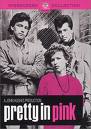
Anthem for Angst-Ridden Youth (RIP John Hughes)

By Clare Langley-Hawthorne

It’s hard to believe he’s gone – John Hughes, the director of my teenage years – but looking back I have to confess the angst and confusion of that time have never really left me (probably why writing a YA book doesn’t seem a stretch) and so today I pay homage to the great teen films of the 1980s…OMG, I can’t believe I’m actually looking back on those years with nostalgia…So bring out the Tears for Fears and New Order albums, put on those pointy black shoes (Yes, I still have them) and the neon orange socks (sadly worn through) – brush that hair mascara on for it’s time for my top five 80’s teen movies (in ascending order and only the first two I confess are actually John Hughes’ movies).

Number 5: The Breakfast Club – Oh, to have been my namesake at that school. Miss Popular eating her sushi in detention and falling for the bad, bad boy…wait that was me at school…NOT!…I was actually on exchange in Canada the year this movie came out and as far as I was concerned ‘Don’t you Forget About Me’ was the anthem for my time there.

Number 4: Pretty in Pink – ditto on my desire to BE Molly Ringwald. Hell, in Australia I went to the all-girl Methodist Ladies College – we only had the Catholic Xavier schoolboys for our angst fix…
Number 3: Say Anything – This was a little before my time but when I saw it I was hooked…What’s not to love about John Cusack with a boom box above his head belting out Peter Gabriel to the girl of his dreams? I still love the line “I gave her my heart and she gave me a pen…”

Number 2: Valley Girl – Okay, I admit this was WAY before I really hit my teen angst stride but Nicholas Cage (before he became the loser conspiracist-action-hero dude) was the boyfriend I always wanted. I also wanted to speak like a valley girl but that’s a whole other (sad) story…

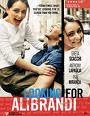
Number 1: Looking for Alibrandi – Finally an Aussie movie and at number 1 no less (I am cheating a wee bit though as this didn’t come out in the 1980s though I think the original book did)!
This one came out well, well after I was a teenager but when I saw it on a Qantas flight back to Australia I confess I teared up. I’m not Italian and had no Nonna spy ring but the story of a precocious teen trying desperately to get into law school, stymied by the confines of her private school upbringing, and falling (of course) for the wrong, bad boy…how could I resist?

I let my husband read this post – he’s had to put up with my addiction to 80’s teen movies long enough. I met him, after all, the first week of university (in 1987!). I was just seventeen and yes, New Order was the soundtrack to our dating. I was also in law school (idiot that I was). I’m still with him today – but when I see these movies I can easily be transported back to the 80’s…and I wonder what happened to all the bad, bad boys (and for that matter Molly Ringwald!)

So what film was the anthem for your angst-ridden youth?

Stay Thirsty

I love a good ad campaign.

When I started running a small legal publishing business years ago, I had to teach myself advertising and marketing. I read some classics on the subject, such as How to Write a Good Advertisement by Victor O. Schwab and Tested Advertising Methods by John Caples.

My favorite, though, was Ogilvy on Advertising by the legendary ad man David Ogilvy. This volume made me appreciate what goes into successful ads, and just how hard they are to pull off.

So when I see a great ad campaign, I nod in approval. One of the best of all time has to be the “I’m a Mac, I’m a PC” series. It’s no accident that Mac’s market share has shot up in tandem with these ads. Smart, funny, short, well acted, superb.

But my current favorite is “The most interesting man in the world” campaign for Dos Equis. You’ve all seen it (and if you haven’t, you need to become more interesting by looking it up. You can start here).

A typical spot will feature “vintage film” of the man in various pursuits, while a narrator recites a few facts about him. Then we see him sitting in a bar surrounded by beautiful people. He looks into the camera and, in a slight Spanish accent, says, “I don’t always drink beer, but when I do I prefer Dos Equis.”

A few of my favorite “facts” about this man are:

• He lives vicariously through himself.

• He once had an awkward moment, just to see how it feels.

• The police often question him, just because they find him interesting.

He once taught a German shepherd to bark in Spanish.

And then, at the end of each ad, comes the man’s signature sign off: “Stay thirsty, my friends.”

What’s so good about this campaign?

It’s risky. Having a graying, middle aged man as the lead character is, as they say, counter programming.

It’s funny without trying too hard. The understated way the deep-voiced narrator extols the man’s legend is pitch perfect.

It has a complete backstory, revealed a little at a time in the mock film clips.

These are qualities of a good novel, too. Risky, in that it doesn’t repeat the same old; a bit of unforced humor is always welcome; and a backstory that renders characters real and complex without slowing down the narrative. All that we can learn from “the most interesting man in the world” campaign.

And from the man himself we can learn, as writers, to live life expansively and not just lollygag through our existence. Not waiting for inspiration but going after it, as Jack London once said, “with a club.” Believing, with Kerouac, in the “holy contour of life.”

We ought to be seekers as well as storytellers, a little mad sometimes, risking the pity and scorn of our fellows as we pursue the artistic vision. Then we park ourselves at the keyboard and strive to get it down on the page. Why go through it all? Because the world needs dreams rendered in words.

Writer, keep after it and someday this may be said of you as well: “His charisma can be seen from space. Even his enemies list him as their emergency contact number.”

Stay thirsty, my friends.

Who knows what evil lurks…

John Ramsey Miller

With this one in the can, I will have written 52 blogs. I think some of them were worth reading. At least, and as of this writing, I have received no death threats over them. I have received death threats, and I suppose I earned them.

I wanted to clarify the thing in the anniversary blog about me setting up a portrait studio at racist gatherings. I did it to capture images of Klansmen, Skinheads, and Identity Christians, not because I was attracted to their speeches. I was a portrait photographer and I was interested in intense groups of people for series. I started with artists. I did death row inmates. I met the leader of a group of skinhead thugs who had broken Heraldo’s nose on TV and I photographed him and a few of his friends in New Orleans in the late 80s. That led to a letter of an introduction letter (on SS lightning bolt letterhead) to other groups of like-minded racists around the country. I don’t know what I did with the damned thing. I’m sure it used to be in the drawer with the collected letters from death row inmates in Angola.

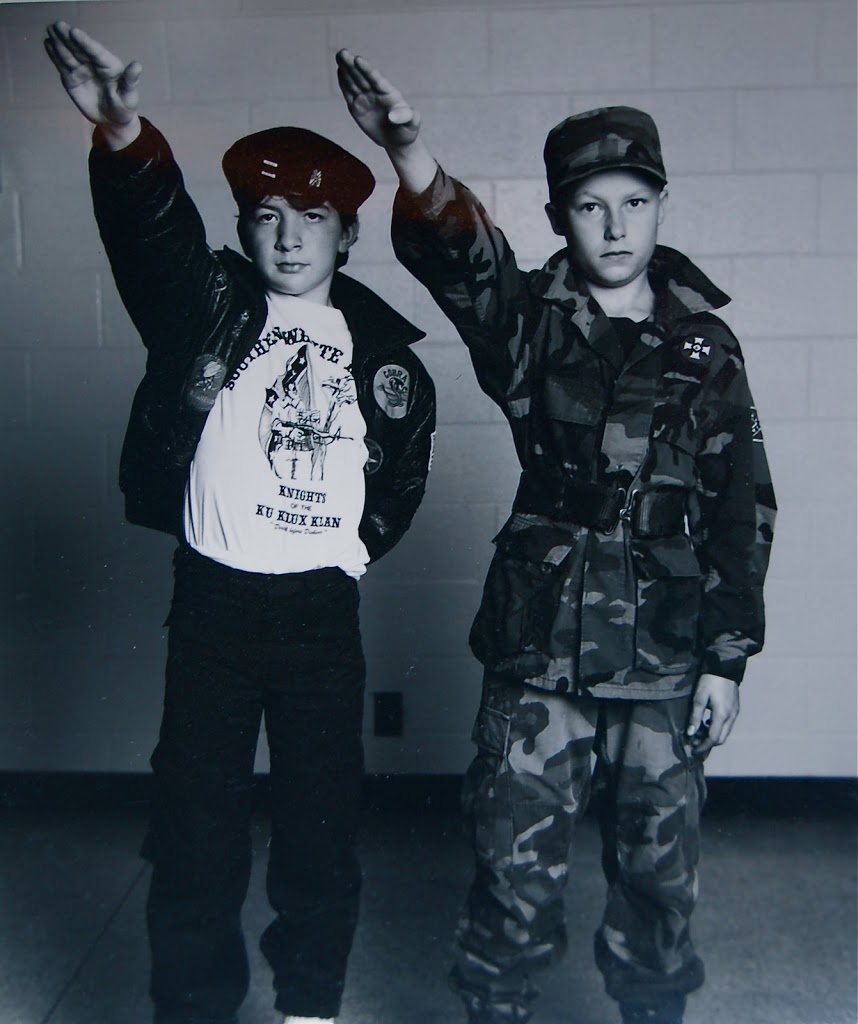
Children of Hate Pulaski, TN 1989

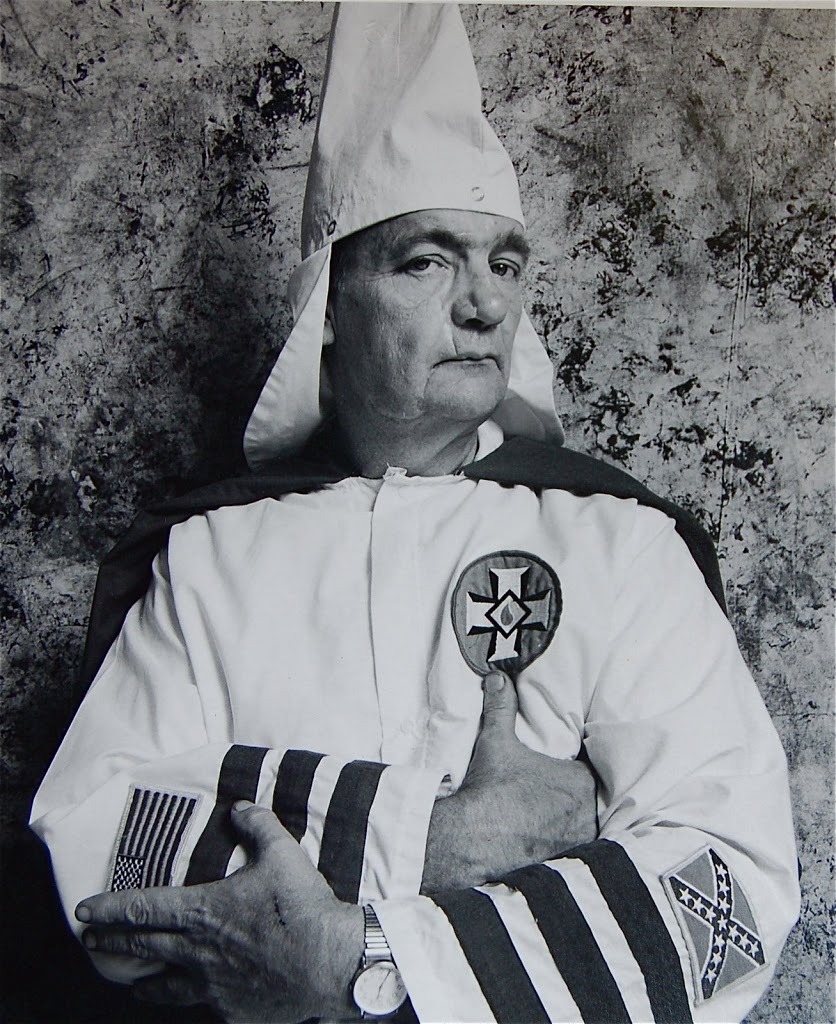
Here’s how I did it: I used a Polaroid back on a large format (4X5”) camera. I’d ask for the subjects to sign a release and I’d give them the B&W portraits, which I put fixative on. What I didn’t bother to tell them was that after the picture was pulled, there was a high-quality negative left over, which I could print later in a darkroom. I suppose the subjects, most of which were hardly rocket scientists, believed they had the only prints, although I never said as much.

From my childhood these people were my enemies and when I was younger they terrified me because they focused their hatred on my father. I could say that I despised them for their beliefs, which are narrow and frightening. But the truth is, I just felt sorry for them because their philosophy is based on their fear of being further marginalized in society than they already are. They are dangerous on several levels, but are inherently only slightly more suspicious of outsiders than they are each other. According to FBI sources, about one in twenty is an informant. In short they are paranoid and deluded as to their importance and potency. I found their gatherings sad affairs filled with a sort of beer hall bonding over a cold glass of hate and ignorance. I felt sorry for the children of hate, because they never have a chance (until much later) to form their own idea of self and of the value of others who are different than themselves.

Grand Dragon of the Florida KKK 1990

When the story and pictures I’d done hit the presses, the subjects went wild. I had death threats. Several while I was being interviewed on radio in Miami. The Miami Beach police watched over me without my asking. I lived in a predominantly Jewish neighborhood and I had made a number of friends in the ADL (Anti-defamation League) while I was doing the series who made sure I was watched over. I had spent hours of time on the telephone with investigators with The Southern Poverty Law Center trading information as I learned who these people were and their relationships to each other. I guess I had much better pictures of certain subjects of interest than they did, and I had names and addresses. The racists felt betrayed when the not-so-flattering story was published, but I never told them I agreed with anything they said. I just listened and absorbed and ultimately regurgitated my experiences for a piece for Miami Herald’s Tropic Magazine entitled, MY FRIEND THE NAZI.

Grand Secret Cyclops Pulaski, TN 1989

None of the Nazis, Skinheads, Klansmen, or Christian Identity members were ever my friends. Friends don’t make your skin crawl. I wish I had been able to show them how wasteful and self-destructive their philosophies were, but that’s not usually in the realm of being remotely possible. Hate is all they have.

Knowing When To Quit

By John Gilstrap

You’ve been working on the story for the better part of a year. The plot is all you think it should be, and you love the characters you’ve created. Finally, you reach the day when you get to type every author’s favorite phrase: The End. You do your little happy-dance around the office and maybe celebrate with the family.

Then you read what you’ve written. Uh-oh. That big twist in Chapter Seventeen wasn’t as well set-up as you wanted it to be. And jeeze-oh-peeze that dialogue seems flat in Chapter Seven. And the spelling errors! Oh, my God! You hunker down and make those changes, plus dozens more. Woo-hoo! You’re done.

Then you read what you’ve written. Damn. Now that you’ve changed Chapters Four, Eight and Eleven, that Chapter Seventeen twist is so obvious that people will see it coming from ten miles away. And your protagonist’s hair color has somehow miraculously changed in Chapter Twenty-Four. Besides, you know what? This whole story might just suck. Maybe treating the story as a mystery is a mistake from the beginning. Maybe it needs to be romantic suspense. Maybe you need to start over from page one.

Maybe it was better before you started diddling with it. Maybe . . . blah, blah, blah.

A friend of mine who is a landscape painter told me once that good artists and great artists are separated by the ability to know when the trees in the painting have exactly the right number of leaves. You can have too few, and you can have too many, and a great artist knows when to quit. A successful writer knows when his story is finished and it’s time to let it go.

I struggle with this on every book I write. Hell, I struggle with it on every one of these blog posts. I’m an obsessive re-writer, but I can’t stand the notion of something being “out there” that is not exactly the way I want it to be. And more times than not, when I look at it one more time, there’s something else I feel compelled to change.

How do you all determine when it’s time to move on? How do you gather the courage to quit?

The Liar’s Club

by Michelle Gagnon

Pinocchio_3ak

No really, you shouldn’t have. I mean, sure, it is our…

ONE YEAR ANNIVERSARY!

What do you mean, you forgot? Yes, it was just a year ago today that I wrote the inaugural post for The Kill Zone. And to celebrate a year of rants, raves, and other miscellany, my fellow bloggers and I decided to do what we do best- make stuff up. Below is a series of questions. One of the answers to each question is an outright, baldfaced lie. Your job is to guess who’s fibbing.

For each correct guess, your name will be entered in a drawing for signed editions of each of our latest releases (including my coffee table book on macrame. It’s not just about macrame, it’s MADE of macrame. Patent pending).

Because after all, what anniversary would be complete without fabulous gifts?

Note: despite the outrageous nature of some of these responses, there is only one liar per question. Hard to believe, but true. The winner will be announced in my post next Thursday.

So good luck, and thanks for making this an amazing year!

1. What’s the most “outrageous truth” about yourself, one few people would ever guess?shootist

Kathryn: I once hid in the bushes outside Ted Kennedy’s home, spying on him for a Boston TV station.

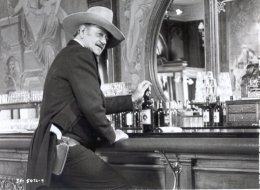
John Gilstrap: I was featured in John Wayne’s last filmed performance.

Clare: I was runner up in the 1989 “Miss Melbourne” beauty pageant.

James: I’m a descendant of the Duke of Wellington

Michelle: I was a featured guest on the Maury Pauvich show.


2. What’s the strangest interaction you’ve ever had with a fan or reader?

James: A man approached me at a conference and said God told him I was chosen to write his story. I told him I didn’t get the memo.

Clare: During an radio interview for Consequences of Sin, the host claimed he had predicted 9/11.

Michelle: At a conference, a Ted Kaczynski look-alike handed me a manila envelope filled with xeroxed diary pages outlining ominous apocalyptic predictions.

John Gilstrap: After giving 20 minutes of advice to a young writer at a signing, he walked away saying, “Huh. Well, I don’t read shit like you write.”

John Ramsey Miller: In 1997 I had a stalker who followed me on a book tour to 5 cities out of 11. She changed her appearance each time and asked me to sign a book to whatever name she was disguised as.

Kathryn: During a radio interview for DYING TO BE THIN, one caller claimed there is a conspiracy to keep America fat. I said thank goodness for that, otherwise I’d have to blame my sweet tooth.


3. What’s the craziest/most dangerous thing you’ve ever done in the name of research?


John Gilstrap: I intentionally leaned against a prison fence and walked around the perimeter to see how long it would take for a guard to respond.

John Ramsey Miller: In the mid to late eighties I set up a formal portrait studio at a series of KKK rallies across the south and at the Annual Celebration of the Founding of the Ku Klux Klan in Pulaski Tennessee.

chuck norrisKathryn: I logged onto wild and wooly web sites that gave my computer a nasty virus.

Michelle: I volunteered to be tased to see what it felt like.

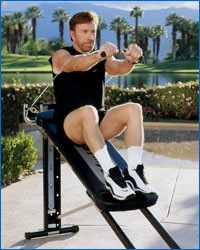
James: I asked Chuck Norris to show me his Total Gym workout

Clare: I navigated piranha infested waters in a dugout canoe.

4. What’s the worst line you’ve ever read in a review or rejection of your work?

John Gilstrap: An agent offered to represent NATHAN’S RUN if I would change the protagonist from a 12-year-old boy to a divorced woman.

Joe Moore: “Weak and simple plot, unbelievable and boring characters, and poor writing make this book difficult to finish.”

James: Dear Mr. Bell: Enclosed are two rejection letters; one for this book, and one for your next book.

Kathryn: Agent rejection: “I really wanted to like your story. But I just didn’t like the voice. Or the main character. I just didn’t like anything about it at all.”

Clare: “It’s painful to read more than one or two pages at a time.”

I have to say, I was impressed with my fellow bloggers’ ability to lie with aplomb. Since I could only choose one lie per question, I was forced to omit some real humdingers. Next week I’ll include outtakes/elaborations in the post.

On a side note, Clare just officially became a US citizen (and that’s the truth). Welcome and congratulations!

The secret to writing a thriller

By Joe Moore

In a recent writer’s forum, the question was asked: What is the most important element in a story? Plot, character development, pacing, voice, etc. Of course, they’re all important. But in my opinion, there’s one element that will always get an agent or editor’s attention in a query letter. It’s the one thing that that must be in your book to make the story work? I think it’s the secret to writing a page-turning thriller.

Conflict.

Conflict deals with how your characters must act and react to reach their goals.

It’s the key ingredient that turns a stranger into a fan or causes an agent to request your full manuscript or an editor to drop everything and read your submission: a clear understanding and statement of conflict.

Is your hero in a race against the clock to solve the puzzle and find the treasure before all hell breaks loose? Is your heroine on the run to prove her innocence before the police track her down? That’s the plot. But what makes it interesting and compelling is what stands in their way. What’s tripping them up, causing them to falter or doubt or take a detour?

Conflict.

Conflict makes a thriller more thrilling. It’s the single element that keeps readers up at night. It forces the reader to continue to ask, “How is he going to get out of this one?”

There are two kinds of conflict—external and internal.

External Conflict is the struggle between a character and an outside force. The external conflict can be from another character or even a force of nature such as battling the elements—a hurricane or the extreme cold of the Arctic. External conflict usually takes place between the hero and another person or nature, or both.

Internal conflict is a struggle taking place in the hero’s mind. Mental conflict can be much more devastating that external because your character usually has to decide between right and wrong or between life and death. Internal conflict is the hero battling against himself.

Conflict causes the excitement to build to a climax, and the climax is the turning point of the story leading to a resolution. Without conflict, a story lacks life, energy and drive.

How do you approach conflict? Do you insert it into each scene? Do you use internal or external, or a combination of both? Have you ever read a story that didn’t have conflict? Was it worth reading?

Hooking your readers with red herrings

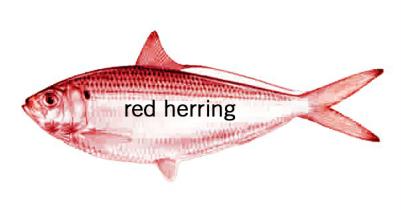
Red herring

  1. a smoked herring.
  2. something intended to divert attention from the real problem or matter at hand; a misleading clue.

A reviewer once said of one of my books, “Lilley has cornered the market in red herrings.”

I’m not sure whether that’s a slam or a compliment, but I do love planting a good red herring in my mysteries. One of the best red herrings of all time was The Red-Headed League. In this fun Sherlock Holmes story, the “league” is a falsehood to cover a bank robbery.

What makes some red herrings good, and others stink like yesterday’s…well, red herring?

Camouflage

Red herrings shouldn’t scream, “Hey, I’m a clue!” from the rooftops. Readers are smart, and they’ll be working to solve the mystery as they go. They don’t need you to stomp on ’em. The subtlety rule applies to all clues, not just to red herrings.

A fish before dying

You can plant a red herring before your victim turns up dead, right at the beginning of your story. At that point, your reader doesn’t even know who is going to get killed, much less whodunnit.

Dead fish need not apply

All clues, including red herrings, must serve to move your story forward. Don’t use your red herrings only as a way to throw the reader off. Make them integral to your plot or character-building.

Two-faced fish

In some of my books, I wasn’t sure who the villain was until very near the end of the writing process. I write all the clues so that any of them can be red herrings or valid clues, depending on the ending.

Are there any other rules that you follow when writing red herrings? What are some of your favorite red herrings in crime fiction?

When is it time to get a new agent?

By Clare Langley-Hawthorne

In recent weeks I’ve had a few friends of mine mention that they were seriously considering changing agents and this got me thinking – not about changing agents (if you’re reading this Brian, don’t worry!) but about how authors should approach this issue. How do you know when it’s time for a change and how, once you’ve made the decision, do you act on it?

First things first, how do you know when the agent you have isn’t really working out? This posed a quandary for me, for there could be many reasons:

  1. Your agent ceases to return calls or emails (the most egregious “my agent seems to have fallen off the planet” reason) – this one is a no-brainer, but I’m amazed at how many horror stories there are from authors who agents literally disappeared for months or who retired without even informing them!
  2. Your agent doesn’t like your latest manuscript or project – This is a tricky one…because a good agent may have legitimate concerns…or their lack of enthusiasm may be indicative of a poor fit and a justification for a parting of the ways.
  3. Your agent has failed to sell your work/get what you consider to be the best deal with a publisher – I’m sure if an agent fails to sell your work one option is to find another agent who thinks they can (a strategy that may or may not lead to an actual publishing deal) but I think it’s a trickier proposition when an author feels that their agent isn’t landing them the big deals with major publishers (because that just may be the way things are going to turn out regardless of the agent you have)…but I’m wondering how long should you wait to see if a deal emerges? How much time should you give an agent before you decide on a change?
  4. Your agent doesn’t appear to care about your career – I’ve heard this quite often: where an agent doesn’t seem that interested in discussing career strategies or discussing an author’s interest in branching out beyond their genre. I’ve heard from cozy mystery writers whose agents have no interest in their ideas for non-mystery books, and from authors who complain that their agents simply don’t seem interested enough in their work to care about the next career step.
  5. Your agent represents many, many authors and you’re at the bottom of the totem pole. This is a frequent lament, especially from authors with high profile agents who represent many more successful authors. I think there are pros and cons to having a high profile agent but if you aint feeling the love then…

It’s time for a change…

But how do you go about changing agents?

Although it’s not the done thing to actively seek representation when you already have an agent, obviously you should scope out other options before you take the plunge and call it quits with your current agent. I’m not sure what the etiquette is regarding this – perhaps my other bloggers can help me here – but I think first and foremost you should be professional and straight up with both parties. I don’t think any kind of underhand games should be played and, like in any business relationship, appropriate courtesies should be maintained. If there are any manuscripts currently out on submission then you should discuss how these will be handled – typically if these lead to publication then it is your former agent (who sent the manuscript out) who gets his or her commission. No doubt there are always grey areas but the lawyer in me tells me to steer clear of those!

I would be interested in hearing from my fellow bloggers and other agented (or agentless) authors on their views. When do you think it’s time to consider getting a new agent? How should you (or have you) gone about getting new representation? Do you have any stories from the trenches that could help others facing this (often) thorny issue?

Driving Dangerously

James Scott Bell

Among the stranger headlines of last week was the following:

Man Driving with Snakes in His Pants Causes Multi-car Accident

According to one online source:

A man in Hartford, Connecticut caused a multi-car crash after he claimed two pet baby snakes escaped from his pants pockets . . .

Angel Rolon, 20, told police he lost control of his SUV when the snakes slithered near the gas and brake pedals. Rolon said as he and his passenger tried to catch them, the SUV veered into some parked cars and overturned. If he had a dash cam, like the ones that BlackBoxMyCar offer, he would have been able to capture this incident!

Animal control officers at the scene were unable to locate the snakes, and police have not confirmed Rolon’s story.

Rolon was treated at a hospital for unknown injuries. Police say they gave him a summons for reckless driving and other charges. One can only assume a criminal defense lawyer is going to be faintly amused if this case lands on their desk.

Now as I recall, my dad told me never to drive with alcohol in my blood or snakes in my pants. He was very emphatic about that. Doesn’t every kid learn this valuable lesson before taking the family car out for a spin?

“Remember, son, no drag racing and no legless reptiles in your Levis. Have you got that?”

“Yes, sir.”

“If you have any ectothermic squamate in your jeans while you’re behind the wheel, you’re grounded.”

“I understand, sir.”

In all candor, though, I must admit there is an application for fiction writers here. You see, writing a full length novel is very much like driving a car with snakes in your pants–you just never know what’s going to happen. You may start out with great intentions, but somewhere along the way some major slithering will take place. You may feel prepared to handle any eventuality, but when reptiles are loose around the gas pedal you could end up in a major collision or even needing to face the lawyer of someone you hit.

We all set off on our “drive” to write with some trepidation, knowing there will be inevitable setbacks, disappointments, even book-ending accidents. But that doesn’t stop us, if we really have the chops, the desire. You want to write, you write, snakes or no.

Is that true for you? Taking a cue from the hapless Hartford driver, what metaphor do you come up with for describing the crazy journey of writing a novel? Have at it.