Treasure Hunt

By Joe Moore

Over the last two days, my blogmates Clare and Kathryn have discussed researching. Since this is one of my favorite topics and the part of the writing process I thoroughly enjoy, I want to continue the thread.

For treasure-Islandme, researching is a lot like digging for buried treasure. It’s the excitement of uncovering those tidbits and morsels of fact that add seasoning and spice to the story. Over the years, I’ve accumulated a list of tricks and techniques I use in doing my research. And I’ve posted the info so anyone can use it. But before I reveal the secret location where I buried Joe’s Treasure Trove, here’s a sampling of what you’ll find.
Creating Names
How do you come up with names for your characters, especially the minor and walk-on characters? Pop in a DVD of any movie and skip to the credit roll. There’s hundreds of mix and match names to choose from. And if you need foreign names, just pick a movie that was shot in a particular country. Even the major Hollywood studies use local crews when they’re on location and list their names in the credits.

Don’t want to watch a movie? There are even fake name generators online, some for specific genres like SF and fantasy.

Character Bios
How about background info on your characters? Easy. Just check the obituaries in a local or national paper. You’re sure to find biographies you can modify for your needs. There’s even a national obituary website where you can find thousands of bios to review. And don’t forget searching the faculty bios at hundreds of colleges and universities for background info.

Location, location, location
What about creating a sense of place? This one is really fun. Let’s say you need to describe a house where your character lives in a particular town. Start with one of the many real estate websites. A quick search will show you what the houses look like in a particular neighborhood or area, many with virtual tours. Google maps gives you the names of the surrounding streets, highways and landmarks. And Google Earth shows you the surrounding territory in detail including the names of hotels, restaurants and other landmarks that can make your story more realistic. And the hotels and restaurants almost always have a website so you can choose what your character had for dinner or what the view is from his hotel room.

I’ve also found that there are many detailed accounts of personal vacations, walking tours and excursions, many with photos, that give great descriptions of cities, towns, parks, monuments, and other unique locations that can add a touch of realism.

As an example of what to look for, a number of scenes in my current WIP take place in the underground Paris Catacombs. What’s it like down in the tunnels? Click here for a personal tour.

Loads of Links
Your hero is in Mexico City reading the morning news. What’s the name of the leading Mexican newspaper? There are websites that list and monitor thousands of newspapers from around the world.

You need statistics? Visit the CIA World Factbook or the Bureau of Justice Statistics websites. Need info on the global terrorists attacks that happed this morning? How about military terms and technology? Or how stuff works? What about access to over 39,000 public record databases? Or finding out what time it is right now in Nigeria or Singapore? There are websites for these and so many more for writer’s research resources.

And the most intriguing treasure of all: The Hidden Web. It’s over 500 times larger than the Internet and hardly anyone knows about it or how to access it. Now you will when you visit my research page.

As promised, here’s the location of my treasure trove, no digging needed. It’s my present to all my writer friends. New links are added from time to time, so check back often. Enjoy!

http://www.joe-moore.com/research

~~~~~~~~~~~~~~~~~~~~~~~
Coming up on our Kill Zone Guest Sundays, watch for blogs from Paul Levine, Tim Maleeny, Oline Cogdill, James Scott Bell, and more.

Bookmarked for murder and mayhem


Clare’s post yesterday about historical research got me thinking about the topic of research in general.

Last week, I was interviewed by the delightful Megan Willingham ofAdvice.com Radio, and she asked me how I researched the topic of women’s shelters for a scene in A Killer Workout. For that particular scene, I created a composite from my experience as a reporter. In my former professional life, I’ve visited a men’s prison, attended county fairs, even chased down stray dogs to get a story.

Nowadays, my research is mostly relegated to the Internet and phone. And nothing makes me happier than finding new places to discover new sources of useful information about murder and mayhem.

Here are a few of my current bookmarks:

Cold cases

LA Times Homicides

The Murder Book – NYC homicides

Crime scene investigation articles

Update October, 2015: http://justicedegrees.com/


How about you? What are your go-to Internet sources for updates and information about crime?

~~~~~~~~~~~~~~~~~~~~~~~
Coming up on our Kill Zone Guest Sundays, watch for blogs from Paul Levine, Tim Maleeny, Oline Cogdill, James Scott Bell, and more.

What If?….

By Clare Langley-Hawthorne
http://www.clarelangleyhawthorne.com/

I confess to being a total research junkie when it comes to my historical mysteries and I get excited by the smallest things – the surprise dedication and signature in the used book I just bought on the Ulster Crisis of 1912-1914 of the Reverend Ian Paisley (who, no matter what your politics, was a towering unionist figure throughout the 1970s and 1980s); the amazing trove of Kali books I discovered in a second hand bookstore in Omaha, Nebraska; the thrill of reading an original Baedeker guide to Palestine in the British Library….the list goes on.
I confess I get a buzz from delving into history – but I also love playing the ‘what if?’ game. Fiction is, of course, all about the ‘what if’ game but with history you can have even more fun. I don’t usually go in for the major things like what if Germany won the First World War – that’s certainly interesting but a little too much like fantasy for my sake – no, I like to play the ‘what if’ game at a personal, character driven level about more minor historical events. In my current WIP (the third Ursula Marlow book) I am playing it out on a major character and using the Irish Home Rule crisis of the 1910s as my backdrop. For many months I’ve been poring over the history books looking for minor references to activities that ultimately led to the hanging of Roger Casement in 1916 for trying to secure an alliance with Germany (and a supply of armaments) for an Irish uprising. I can’t say any more (and besides I don’t want to bore you senseless on a Monday morning!) lest I spoil the plot – but the key is the thrill of the ‘what if’ game.
I was asked by an audience member at one of my panels at Left Coast Crime whether there were other periods of history I would like to explore, to uncover ‘the hidden history’ or perhaps even the ‘alternate’ history…I found this question a great challenge. I mean where to start?! At the time, however, I think I answered something particularly lame but for me, apart from the Edwardian period, I would love to explore and play the ‘what if’ game across the centuries.
I’d love to explore the stories of the women spitfire pilots in World War II, the spiritualist movements of the early 19th century England, the phrenology and mesmerism movements in Europe, and encounters between the British and the aboriginal people in Australia in the early days of colonialization (just to name a few ideas!). I have about four proposals already whizzing around my head with some ‘what if” scenarios for my characters against these backdrops… but I’d be spoiling all the fun if I divulged anything further – so I’m going to pass on the challenge to you – is there something in history (recent or ancient) that you would like to explore, ‘rewrite’ or play the ‘what if’ game? If you could go back and be a fly on the wall – when would you chose?

The Sound of One Hand Reading

The Killers are delighted to welcome bestselling suspense author
Eric Stone to the blog today. Eric writes the Ray Sharp series of detective thrillers, which are set in Asia and based on true stories.

There are 36 Spenser novels by Robert Parker. (I just counted them on his website.) I know a whole lot about what Spenser and his girlfriend (or maybe she’s his wife by now, I haven’t read one in quite some time) Susan Silverman eat. I know pretty much about what they wear. Or at least what they used to wear; fashions change, maybe even for them. I know they have sex, because often as not, after they’ve whipped up some pasta and a salad or grilled something and opened a bottle of reputable wine, they pad off to bed, closing the door discreetly behind them.

Now it could well be, it likely is, that after all those books together Spenser and Susan have pretty dull sex. Sure, in those earlier books, behind those closed doors, they probably took turns tying each other up, they got out some toys, indulged in some role playing. Maybe Spenser liked to try and squeeze into her panties or had a thing for leather or latex or a bit of the old bite and punch and tickle. But they’ve been together for quite some time and if their relationship is like most people’s, well, you know, they’ve probably got other things on their minds.

But we’ll never know.

I want to know.

Maybe not so much about Spense and Sue anymore, but you know what I mean. Call my interest prurient if you will, but I think the details of what people do in the sack with each other are at least as interesting and important to understanding what makes them tick as the fact that they’ve just consumed a spring garden salad, pasta primavera and an insouciant early harvest Bordeaux.

Sex is important. Biologically speaking, it’s the only reason we bother to survive at all. It’s the deep down dark dirty driving force behind a whole lot of plots and schemes and actions.

When and where and what and how someone feels and what they do when they – and yes, I’m about to be crass about this – want to get laid, pursue getting laid, get laid and have got laid – tells you something about them. It can tell you a lot. I think it tells you more about them than what they had for dinner does.

But it’s mostly off limits. Many of the books that are considered quite sexy, are really rather tame, not very explicit. It’s okay to tease, tantalize or titillate your reader, but apparently not to fully turn them on.

Why not? I’ve read more than a few reviews that refer favorably to mouth-watering descriptions of meals that sent the reader straight to their refrigerator. I have yet to read a review in which the reviewer owns up to having happily read the book one handed. (There, wasn’t that discreet of me?)

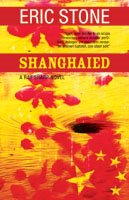
There’s a lesbian sex scene in SHANGHAIED, my new book that is coming out at the end of June. It’s the first one I’ve ever written. I think the details (the very basic mechanics) of it tell you a lot about the characters involved. But then, not being a lesbian, or even a woman, I was nervous about my qualifications for writing the scene.

So I sent it to a lesbian friend of mine for her critique; technical and otherwise. The next day she told me that she and her girlfriend both read it, then ended up in a nice, long, hot, steamy, soapy shower together. Maybe I should ask her for a blurb.

~~~~~~~~~~~~~~~~~~~~~~~

Coming up on our Kill Zone Guest Sundays, watch for blogs from Paul Levine, Tim Maleeny, Oline Cogdill, James Scott Bell, and more.

Seeking The Zone

By John Ramsey Miller

I am a writer, but sometimes I fantasize about other occupations. This happens usually when I’m having a hard time with an idea for a book, or when I’m sure the books aren’t doing what the publisher or seller expected them to do. What else would I do? I’m a decent carpenter. I can paint a wall. I can run pipes and put in a bathroom from scratch. I can wire outlets. With a few hours of instruction I could probably do brain surgery. What I can’t be is a salesman. When I was in high school, I sold books to parents in rural West Virginia for their children. I’d be in people’s living rooms where the parents were worried about getting enough food for their kids to fill their stomachs and there I was trying to sell them books for kids to read while their bellies growled. I had learned to close wives before their husbands came home and freaked out that they’d given me the twenty-dollar deposit. It broke my heart and made me feel like I had the social conscience of Darth Vader. I decided it was a bad thing to take advantage of people with a prepared pitch cleverly designed so they couldn’t refuse without feeling like they were the worst parents since Ma Barker. I lasted two weeks.

I know I could probably make more money painting walls, and certainly if I performed a few brain surgeries if I could understand the instruction. But here’s the thing. The other day I wrote from eight AM until after five PM without taking more than 30 minutes away from the computer. I was outlining three chapters ahead as I wrote. It is days like that that keep me at this trade or craft or folly or whatever the hell it is. When I can walk into my book and feel the characters and the story I forget about the real world. It’s better than being on a vacation at the beach and it more than makes up for all those days when I can’t decide where I should go next or what I’ll do when I get there.

We authors talk a lot about being in the Zone, but getting there is illusive, and the bitch is that you can spend a day zooming and wake up the next day and fight to get back in again, and not be able to do it. It can’t be taught, it just happens. Or maybe all craftsmen can find that zone. Today I know I can’t get back into it because I have to go to the dentist, then meet a friend who’s coming by and I know it will be tomorrow before I can be alone to attempt to climb into the story again, find hopefully find the sweet spot and enter the Zone. We all know it’s better than any drug. How often are you writing and find yourself getting emotional, choking up, as the words hit the screen? How much higher than that can you get? What can be more rewarding? Okay, your wedding day, maybe watching a child come into the world, take their first steps, coming out of gibberish and calling you Daddy for the first time, or seeing your first book on a shelf in a store, or having a doctor tell you your spouse is cancer free is a better high. Yes, but short of that life-altering experience, …nothing.

So how often do you find yourself in the Zone? Can you make it happen by force of will, or does it just happen?

The Amazon Obligation

By
John Gilstrap
http://www.johngilstrap.com

A couple of weeks ago, I received a box of 15 really beautiful Advance Readers Copies (ARCS—bound uncorrected page proofs) for the upcoming No Mercy (July 7, 2009). The question is what to do with them?

I have a couple for the local B&N and Borders stores to stir up a buzz among the sales staff. It’s truly a sad state of affairs that no independent bookstores that I know of continue to live in the Washington, DC metropolitan area. (I don’t count Politics and Prose or Olsson’s because they don’t as a rule stock genre fiction.) So, what to do with these extra books?

Sure, there’s always family and friends, but to tell you the truth, I’ve always looked at them more as guaranteed buyers than give-away recipients. Call them the most reliable of reliable customers. Then I thought: I can put them to work.

Here’s my new rule. If I give you an ARC, you are a) still obligated to buy at least one copy of the actual book; and b) additionally obligated to post a review on amazon.com. I don’t even mandate that it be a positive review (though who could think negative thoughts about my masterpiece?). They just have to post something. So far, everyone has agreed.

This brings up a larger question. As consumers of books ourselves, don’t we have an obligation to post reviews on the books we read? Don’t we sort of owe that to our fellow trench fighters? It seems to me that we do.

I confess that I rarely post reviews under my own name. I’m just not comfortable doing that, particularly in the case of books I don’t care for. Okay, I don’t usually post a review at all if I don’t like a book. As the old saying goes, if you can’t say something nice . . . Well, you know.

So, what are your thoughts? As book review pages continue to disappear, and paper gets edged out by electrons, do we book fans owe populist reviews to our most admired (or most loathed) authors?

Politics is all about timing

by Michelle Gagnon

gitmo Copyeditor’s note: Guantanamo Bay prison has been ordered closed under Obama. Should this reference on p. 279 be changed?

Ah yes, Gitmo. The copyeditor is referring to a passage in The Gatekeeper where one of my characters wonders if they’re incarcerating Americans there now too. When I wrote it eight months ago, this was a timely reference. But if the copyeditor hadn’t been on her game, my book would have looked dated when it came out in November.

Which brings me to today’s topic: how do you keep a political thriller timely? The Gatekeeper was my first real foray into politics, at least literarily speaking. And now I’m sitting here gnawing my nails to the nub, watching immigration issues rise and fall in the nation’s consciousness, and wondering if by November something dramatic will have happened that will either make my book appear incredibly timely, or terribly passé.

Therein lies the pitfall of writing something politically based. I was on a panel at Left Coast Crime a few weeks ago where this question came up. The pat answer is to stick to something tried and true, a conflict or issue that is ongoing and seemingly intractable. One of the other authors joked that if peace arrived in the Middle East before his next release, he was screwed (he added quickly that of course, it would be great to have peace in the Middle East. Just not by October if possible). A significant portion of the television show 24’s success can be attributed to the fact that it hit the airwaves shortly after 9/11, jack bauer feeding upon the sudden collective consciousness of fear and paranoia. Which is why now, the show feels a little tired–in the aftermath of the last election, the Jack Bauer model just doesn’t seem as relevant as before. Not that we don’t still have enemies outside our borders, but we’re all a bit fatigued of having that fact shoved down our throats.

Of course, every book faces this hazard if it’s written with any sort of current “markers.” Simply by including a fax machine, CD player, or website in your text, you run the risk of sounding outdated when it hits the shelves months later. When I wrote for magazines, we aimed for “evergreen” stories, articles that would be timely if they came out next week or next year (that way a piece could be resold ad-infinitum once the rights reverted). That’s a bit trickier with fiction, when you’re dealing with 100,000 words instead of 1,000.

Getting back to my Gitmo reference…I changed the text slightly. The character in question is above all else distrustful of the American government, so I inserted a line saying, “The feds claimed to have closed it, but that was probably a lie like everything else they said.” Problem solved. I got to keep the reference I had grown attached to (I know, I know- kill your darlings. But that line served to illuminate this character and his mindset). And The Gatekeeper will still feel timely and relevant when it comes out. Hopefully. Fingers crossed. Barring any unforeseen circumstances.

ITW Thriller Awards

Posted by Joe Moore

Recently, my fellow Kill Zone blogmates John Gilstrap and Michelle Gagnon posted blogs that addressed the announcement of the 2009 ITW Thriller Awards nominees and the judging procedure. Both blogs raised questions and concerns, and generated a large number of comments. To address those issues, I asked ITW Vice President of Awards Vicki Hinze to comment on how the current judging was conducted and what the future holds for the Thriller Awards process.

I’ve been out of town and just returned and saw the threads, so I thought I’d add a little insight, though I think the subject’s been pretty well covered. Still, a little more insight into this might put some minds at ease, and I’m all for that. Also, please note that I’m speaking for myself and not as a member of the ITW Board.

hinze1 Last year, I chaired the ITW Awards, and we did have separate categories for Best Hard Cover, Best Paperback Original and Best First Novel. All three awards named Finalists and Winners.

In response to members’ comments, wishes and desires, we studied the market and discovered (no doubt many knew already, but we did study this) and determined that the format of a book is determined by readership and that varies publishing house to publishing house. In short, format is largely a marketing decision. The bottom line was that two categories, Best Novel and Best Paperback Original were combined for this year’s contest.

This year, when the scores came in, more analysis took place on the results. I’m serving as Awards VP, and I informed the Board that I would be asking that the awards again be separated. This will be on the agenda at the board meeting in July. If that vote goes as I hope it will, then the categories will be Best Hard Cover Novel, Best Paperback Original Novel, Best First Novel (which combines all debut novels–hard cover and paperback [mass and trade]). This year, we added an award for thriller Short Stories (which includes novellas) and next year we will continue it and we hope to add one for nonfiction.

One of ITW’s strengths, I believe–and it is this belief that got me to join and then to volunteer to judge and then to act as award’s chair and ultimately acted as a catalyst for me when it came to Board service–is that ITW remains open and flexible and seeks what is in the best interests of its members. That’s its top priority–and I say that as one who’s witnessed its workings and its methods of weighing potential programs and retaining or adjusting existing ones. (i.e. eliminating author membership dues)

ITW is a young organization and yet look at all it has accomplished for thriller writers. Has it been perfect since inception? No. No more so than any of us as individuals have been perfect. But ITW does strive to elevate potential for all involved, seeking win/win situations and solutions. I love that about the organization.

One reason, I think, for ITW’s success is its willingness to try different things and atypical approaches. Some have been enormously successful. Combining the categories for Best Novel and Best Paperback Original was not. I have no problem with saying an attempt made in good faith for logical reason on anything failed. Where I would have a problem would be in knowing it failed, in feeling confident it would continue to fail, and not doing anything to change it. That situation would be doing a disservice to members. Making changes that could benefit our members is a worthy goal.

So please understand that action is being taken on this matter. Can I say we won’t have future attempts that end up with results we find lacking? No, I can’t. I can tell you that we’ll continue to make every reasonable effort to create win/win situations for members. When a challenge is spotted, it’ll be addressed and hopefully resolved in a manner that best serves the majority of members.

Remember that we’re a progressive organization. We dare to try different things in different ways, seeking to do all we can to bring added benefits. Personally, I don’t see that as a flaw but as an asset. Change spurs growth; growth, productive change. It negates stagnation, and that’s a wonderful thing, in my opinion, because stagnant things die.

I do hope that this post eases minds. I’m not idealistic enough to believe that everyone will be satisfied with any program. But I do want you to know that we are trying to incorporate the desires and requests of members and to devise a program that satisfies the majority of members.

I don’t recall saying that the experiment of combining the two categories failed. But frankly, I am not satisfied with the outcome. It wasn’t good enough and I think we can do better. So that’s the goal. To do better.

This year, the structure of the program is behind us. Its benefits and drawbacks have been reviewed and we have a plan for a path with more benefits and fewer drawbacks to pursue–and we’re pursuing them. Please feel free to leave any comments on how to make the program better and stronger. I promise I’ll reply to all constructive suggestions.

Blessings,
Vicki Hinze
Vice President, Awards
International Thriller Writers
www.vickihinze.com

Vicki Hinze is the author of 21 novels. She holds a Master of Arts in Creative Writing and a Doctorate in Philosophy, Theocentric Business & Ethics. She actively lectures on writing craft and technique and philosophy.

Her articles have appeared many respected publications and e-zines (Novelists, Inc., Romantic Times, Romance Writers’ Report, The Outreacher, The Rock and others) and have been extensively reprinted in as many as sixty-three foreign markets. She has coordinated and/or judged national and international writing competitions, served on various writers’ association committees, has been honored by Romance Writers of America with their National Service Award and in 2004 was named PRO Mentor of the Year.

Vicki is a charter sponsor of International Thriller Writers and serves on its Board of Directors. She’s a member of The Authors Guild, American Christian Fiction Writers, Novelists Inc., Romance Writers of America, Mystery Writers of America, Published Authors Network, Emerald Coast Writers, ACRA, Deep South Christian Writers and other writing organizations.

Thriller writers: Are we scary?

I had to chuckle while reading Sunday’s post by PD Martin.

In the comments section, a reader confessed, “I do have to say that thriller writers scare me a little.”

She’s not alone in that sentiment.

At an MWA meeting a couple of months ago, a fellow mystery writer approached me. With a glimmer in his eyes, he asked me whether I’d read the books by one of our Kill Zone authors (And no, I won’t say which Killer he was asking about, or even if it was one of our guys or gals. Hah! You have to guess).

“Have you read (his) books?” Mystery Writer wanted to know. “(He’s) sick.”

Sick. To a thriller writer, there’s no higher compliment.

By trade, we thriller authors write scary, gory tales. Our books are peopled with weird, unbalanced, downright messed-up characters. Twisted stuff happens. And when we do our jobs right, our readers might even assume that the writer is a tad strange. Suspect, even.

After reading enough of this dark matter, a reader might feel compelled to eventually ask: How do you think this warped sh*t up? And why do you?


As a writer, you have to be able to unleash your imagination to the extent that you give that kind of a chill. But in reality, all the thriller writers I know are gentle, kind souls. It’s only our writing that’s dark and strange.

Writers, have you ever gotten the vibe that someone thinks there’s something perhaps a bit off about you because you write about death, murder and mayhem?
And I’d be interested in knowing from readers: Is there anything you’ve ever read where you’ve thought, “Oh my God, there’s something scary about that writer”?
Oh and before I forget, I thought I’d add a postscript to PD’s post about body-dumping grounds.

PD had posited the question about what makes a good dumping ground.

Here are some of the tidbits it reveals about the art of body-dumping:

  • Most dumping grounds will be found near road networks (proximity to covered vehicle required).
  • Most people can drag a body only about 50 feet. About 200 feet, max.
  • Bodies are normally found off the right passenger
    side of the road, heading outbound from a city or town.
Oops. Did that sound scary?
~~~~~~~~~~~~~
Coming up on our Kill Zone Guest Sundays, watch for blogs from Eric Stone, Tim Maleeny, Oline Cogdill, James Scott Bell, and more.
So much for the Glory Days

by Clare Langley-Hawthorne

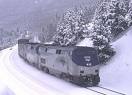
Just a short blog today as I’m on the road – the railroad that is. My family and I are riding the California Zephyr from Emeryville to Denver for Spring Break (who knew preschools had Spring Break?!) While jostling along enjoying the magnificent scenery I couldn’t help but reflect that the glory days of the American railroad are well and truly gone. Though I could just about pretend at night in the sleeper (when I closed my eyes) what it must have been like in the 19th century to travel this way (in much more luxurious surroundings – sigh!) the pathetic ‘amenities’ and airline quality food soon dispelled any imaginings I may have had. So this got me wondering – how does a writer successfully evoke the past when so much today has abandoned any notion of respect for it? This then led (as my muse often does) to more immediate issues at hand as I write the third Ursula Marlow book – how does an author balance action and atmosphere when the book must get people turning the pages as well as evoking the past?

It’s a tough balance to achieve – especially when I want to utilize all the senses to help modern readers get a whiff of how Edwardian London must have smelled, sounded and felt. It’s easy when I’m in London where the past shadows every footfall down the streets and alleyways – but here in America? – in some of the towns I passed on the train? – how to make the past accessible to them? How to recreate life as it then was while also telling a thumping good story?

Who do you think achieves this balance successfully?

I can tell you one thing – I won’t be using Amtrak as my guide…