Finding inspiration far from home

My family and I are on vacation in Washington D.C. this week, tromping through all the major museums and monuments. Despite 95-degree heat and 100-percent humidity, I’m having fun seeing everything with my art-major daughter. The two of us–she with her sketch book, I with my notebook–have been recording our observations of the city. Most of my notes have little to do with the impressive sights all around us. They have more to do with the rhythm and flow of the city: The jazz quartets that seem to be playing on every street corner, the surprising curtness of the service people who work in this tourism-oriented town, the scary speed of a subway train as it rushes through a long, black tunnel. In the Natural History Museum, I spent an inordinate amount of time in an exhibit about forensic anthropology, taking notes about every aspect of how scientists can determine information about a person’s life from his bones, even hundreds of years after his death. Someday I’m sure, that information will come in handy in a story.

I love they way leaving home helps me jar loose a little creative inspiration. It seems so easy to see foreign locales with fresh eyes. How about you? Have you been anywhere this summer that has served as an inspiration for your writing? Have you ever gotten a story idea from a trip you’ve taken?

Quick, Catch That Voice!

by Clare Langley-Hawthorne


My current WIP uses a first person perspective which is new for me. New, not only because I usually write in third person (a close third person voice I grant you), but also because this time the first person narrator is a seventeen year old. Oh and living in 1914. So last week I just rewrote the first chapter for a third time – not because I’m anal (well…) but because I hadn’t nailed the voice yet.

For any novel I think voice is important but when dealing with a first person narration it’s critical – as far as I’m concerned a reader has to fall in love, has to inhabit the ‘body and soul’ of the narrator, right from the first page or (I fear) the novel is doomed to fail.


Why did I chose the first person POV for this book? Well, almost all YA novels adopt this perspective and I think wisely so. The journey normally taken in a YA novel is, after all, a journey of self discovery, one we want the reader to identify with as closely as possible . However, once I adopted the first person it was much harder than I had anticipated to get the voice just right. I’ve had a ‘challenging’ few weeks…and the process I went through to try and establish the ‘voice’ of my protagonist Maggie Quinn was far from perfect, but here’s what I did…

  1. I reserved and read as many YA historical/paranormal books I could. I took note of how the authors approached the issue of voice and how they appeared to achieve making that voice as authenticate and compelling as possible. The best YA book I read so far was The Hunger Games by Suzanne Collins (an awesome book which is also illustrative of the fact that great YA books are really just great adult books with strong YA characters and themes).
  2. I started compiling a backgrounder for Maggie and brainstormed ideas about her inner self – delving even deeper perhaps than I have done for other characters in previous books (but then again that may also be because my husband is convinced Ursula Marlow is actually me!).
  3. I then walked around for a week or so with Maggie in my head, ruminating on how she would act and react to things.
  4. I drafted a prologue and first chapter.
  5. Read it. Realized the voice was not there.
  6. Got despondent. Decided perhaps I should focus on research for a day or so…
  7. Tossed the prologue – don’t need one!!!
  8. Rewrote chapter one. Wrote snippets of key parts for chapters two, three and four (as an outliner I already had these place marked:))
  9. Read second draft…realize I have no talent for writing whatsoever (shit!). Got even more despondent.
  10. Watched teen movies. (John Hughes, come back!)
  11. Did more historical research….
  12. Walked around a bit more with Maggie in my head. Still despondent.
  13. Rewrote chapter one again…and then a glimmer of light at the end of the tunnel. Maggie is finally taking form. (hmm…is that ‘lucky’ number 13??)

So how do you approach the issue of voice? How do you know when you ‘have it’ or you don’t? What challenges do you see for someone attempting a first person POV – any advice on the do’s and don’ts? I’m already realizing it’s limitations but believe it or not, I think I’m starting to finally enjoy it…until next week when I reread chapter one and decide Maggie’s voice (and my writing) sucks once more.

Shake, Rattle and Write

by James Scott Bell

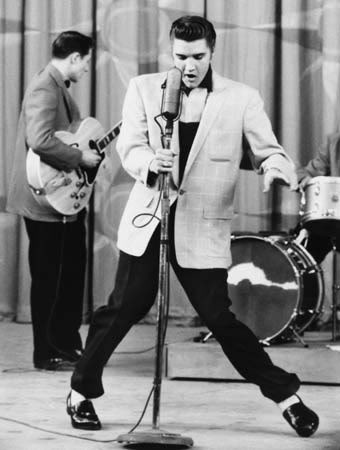
On this date in 1977, Elvis left the building for good.

He was found face down in his bathroom at Graceland. The official cause of death was heart failure. He was forty-two years old.

Elvis immediately took up residence in the pantheon of pop culture icons. The Soviet newspaper Pravda announced that America could be thanked for three things: Mickey Mouse, Coca-Cola and Elvis Presley. A new industry – Elvis imitation – sprang up, bringing employment to thousands. In fact, everyone started doing Elvis, even around the office. How many times have you heard a fellow worker give the Thank you. Thank you very much line over some trivial favor?

Last month I went to a Dodger game with a friend. I thought it was just going to be baseball. But it was “Elvis night.” Elvis songs were featured between innings, and numerous fans were decked out in Elvis regalia—fake sideburns and sunglasses and big black wigs.

And every time the JumboTron showed one of these ersatz Elvises, the crowd would go wild.

Thirty-two years after his death.

A true American original, Elvis. Yeah, you kind of have to overlook the years he made such masterpieces as Harum Scarum and Change of Habit. And we all know his last years were not happy ones, on the concert stage or in his personal life.

But early on, moving and shaking, all that energy and appeal and singing ability, that was true Elvis. The Elvis who amazed Sam Phillips and blew away Roy Orbison, not to mention sixty million viewers of the Ed Sullivan Show. The Elvis poignantly recaptured in his 1968 “comeback” special.

There are no guarantees in the arts. But the ones who make it big usually do so by finding that spark of originality within them—that certain passion that ignites their creativity—and wedding it to a practical look at the commercial marketplace.

You want to sell? You have to do both. When you write, you should feel a little like 50’s Elvis. Shake it, go for broke. Give freedom to your voice and vision, the twins that make up the definition of originality. As Elvis put it in a 1956 interview, “Some people tap their feet, some people snap their fingers, and some people sway back and forth. I just sorta do ’em all together, I guess.”

To break through, you have to find out what it is you do well “together,” and do it for all it’s worth.

But you also need a little “Colonel” Tom Parker in you, understanding that publishing is indeed a business, and you are offering a product for consumers.

It’s an ongoing balancing act. You must never let your desire to be published drain you of your spirit and singularity (your inner Elvis). But if you want to be published by someone other than Kinko’s, you need market sense, too.

So how do you find the right mix in your own writing? Do you think about both sides of the equation early and often? Or does doing so get you all shook up?

Don’t be cruel. It’s now or never. Discuss.

Dispatch From The Shallow South

by John Ramsey Miller

I live in the “rural” South. She nurtures me in those big warm arms, and she shares her stories with me, and it’s because of her that I speak with that pleasing twang we southerners share like a genetically induced cowlick. I’d rather set a book in a small southern community than in New York City, and I find a character who goes shirtless and eats instant coffee from a jar with a spoon infinitely more page worthy than a slumming detective who’s secretly a multi-millionaire playboy. I am known as much for my oddball characters as for anything else in my novels. My oddballs aren’t a stretch for me. I actually saw a man eat Sanka because there was no hot water. It was not a pretty sight, but one that stuck in my mind in the way piping-hot mozzarella cheese clings to the roof of my mouth. I don’t hang out much with multi-millionaire detectives so I have little idea as to how they behave.

Here in the sticks I see a lot of mullets and other accoutrements of Out-Of-Touch-With-High-Fashion-and-I-Don’t-Give-A-Hoot disease. Last night in a local restaurant I saw a middle age man with a Prince Valiant hairdo, a work shirt, jeans and hunting boots. Here in the outer regions I am often among people in 12 step programs due to a WALMART shopping habit. I have heard music dance mix tapes have both country and hard rock music on them. I spend time with people whose social filters were due for a change 100,000 interactions ago. Out here you can wear a NASCAR t-shirts and jeans and sport coat to church and be overdressed. Women may have a closet full of camouflage fashion accessories, consume their alcoholic beverages from cans, have a distinct fascination with mud and four wheelers, and spit at the ground to accent a point they’ve just made. Their men are a lot rougher around the edges than the gals.

The other afternoon my wife had to stop because a 40 lb alligator snapping turtle was sunning in our driveway and wouldn’t give her right of way. I took the turtle by its tail (at some peril since I have seen these reptiles snap a broomstick in half) put it in the back of my SUV and drove to a large pond between here and the town nearest my house. And the whole time I was lugging this prehistoric monster down the bank, and I was trying to hold it out to keep from losing a chunk of right leg, I was thinking about the turtle soup from Commanders Palace. For a few seconds that shelled critter came close to a cooking pot. I seriously considered looking on the Internet for instructions on dressing out a snapping turtle and searching for a recipe for that soup I do love so. Only a reluctance on my part to do the necessary research saved it. Well, that and my desire to save a creature so stupid he’d wandered from his pond and into the woods. It’s possible that it was on its way somewhere and I interrupted turtley vacation plans. God, I love the sticks.

This weekend I am going to be digging post holes in the earth to sink 4x6s for a new chicken coop that I’m building and for setting fence posts. I have 50 chickens arriving next week and I’ve waited until the last moment to shelter them. So, I’ll be sweating and smiling and thinking about the healing power of hard work. And next week I’ll be writing again, which (as we all know) is far harder than digging holes or building structures for Henny Penny.

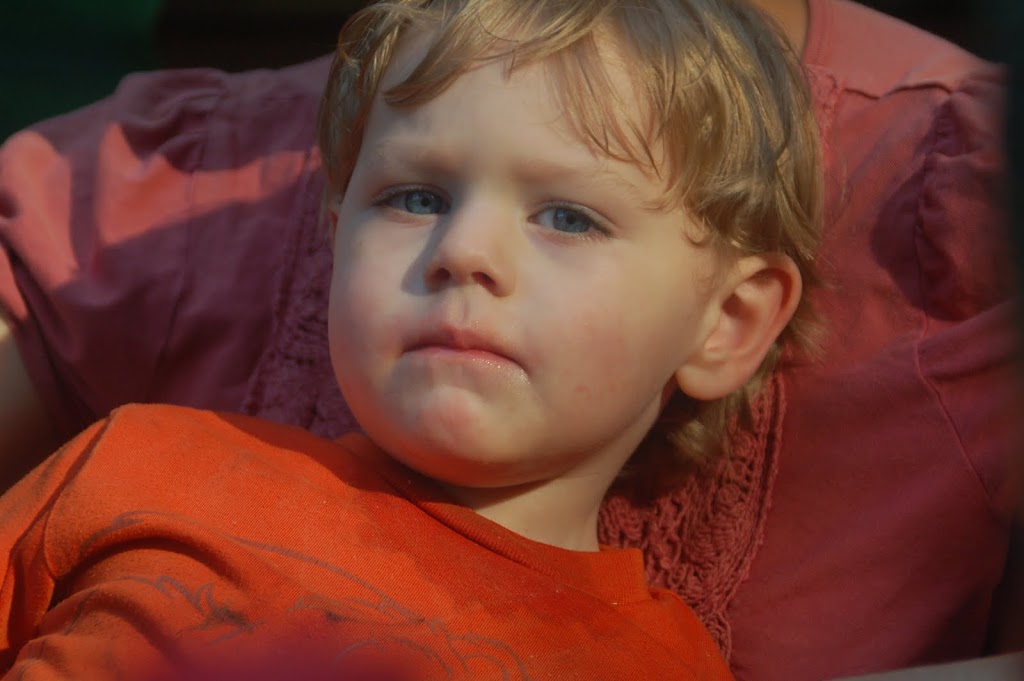
To end on a high note, here’s a picture of my youngest grandson sitting in my wife’s lap that I took this afternoon. He is quite a character, and this is what life is all about.

An Open Letter to Booksellers

By John Gilstrap
www.johngilstrap.com

Dear Bookseller,

Thank you for inviting me to your store to sign copies of No Mercy. And thank you for the work you do. You are the lynchpin in the machinery that keeps the book world on its axis despite a culture that seems to value the written word less and less. It’s important that we work together to do whatever we can to pull people into stores to buy books. That’s why you invite me, and that’s why I show up. We’re a team.

It’s a shame we didn’t sell more copies, but it was great getting to know you and your staff. I’ve been thinking about the event since we last saw each other, and I believe I might have found some areas for improvement in the future:

Perhaps you should consider putting me inside your store. Yes, I know that things are a little cramped, but customers aren’t seeing me out there in the mall. They’re just seeing a guy at a table with a bunch of books, and judging from the looks on their faces, I think they’re a little creeped out by it. It’s the way they pull their children a little closer as they pass. Let’s share retail space as well as love.

The signage was a great idea; thanks for that. There’s actually only one L in Gilstrap, but hey, these things happen sometimes. Next time, though, along with the big picture of the book cover on the sign, could you display the picture of me that my publicist sent? If people can match a face to a poster it might take some of the creepiness out of the whole guy-sitting-at-a-table thing.

Please don’t think me ungrateful or overly pushy, but for the brief time I’m taking up space in your store, what say we all sell my book? That’s right, mine—the current Gilstrap; not the next Grisham or Baldacci or Miller. Sure, they’re fine authors, but they’re not here right now. Remember that lady who came to the desk while I was there and asked where she could find the new Jack Reacher book? That would have been the perfect time to say, “Oh, if you like that kind of thriller, you might want to meet John Gilstrap. He happens to be sitting right there.”

Perhaps I’m not the best judge on this particular form of etiquette, but it seems reasonable to inform every customer that there’s an author in the house. Perhaps it seems obvious what with the table and all, but believe me it’s not. People get tunnel vision when they shop. They need a little nudging. Ask around. Many of the independent stores and the more experienced chain stores do it that way. Hand selling really moves books.

While we’re on this topic, let’s talk about all those books you stacked around me at the table. It made for a great display, but I think half of them or even more should displayed inside the store away from me. I think it’s intimidating for people to evaluate the merit of a book while the author is watching. Just ask my wife. (I’m a hoverer as she reads my manuscripts, but that’s not important right now.) I think copies should even be stacked at the register so that the salespeople can hand each customer a book while they inform them that there’s an author in the house.

Thank you for your time and attention. As I close, I’d love to hear how I and my fellow authors can make your bookselling job easier. Should I have made up bookmarks and handed you a stack, or would you just see that as more clutter for your desk? I know I end up doing little but sitting at that table, but would you prefer that I walk around and chat up your customers? Truthfully, because of the aforementioned creepiness factor, I hesitate to approach readers on the prowl.

Finally, please know that I’m grateful for all of this. How else can we make the book signing thing more beneficial to everyone?

Warmest regards,
John Gilstrap

The Results Are In…

by Michelle Gagnon

Thanks so much to everyone for helping The Kill Zone celebrate our one year anniversary with such enthusiasm! We’re looking forward to many more…

…And I won’t keep you waiting any longer. Here are the answers to last week’s “Liar’s Club” quiz:

1: What’s the most “outrageous truth” about yourself, one few people would ever guess?
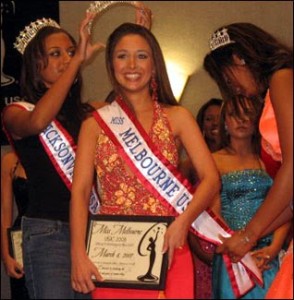
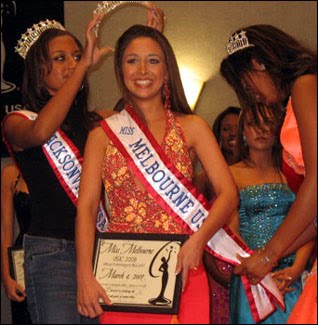
Clare was lying. Although she was clearly a shoe-in for Miss Melbourne, she refused to take part in such a competition, mainly because of her extreme aversion to self-tanner.

2: What’s the most “outrageous truth” about yourself, one few people would ever guess?

John Ramsey Miller. Yes, this question was a bit flubbed with an erroneous date stamp. For the record, John does have a stalker, but she only pursued him to four cities out of eleven.

3: What’s the craziest/most dangerous thing you’ve ever done in the name of research?

I was lying. I mean, really, people- have you so little faith in me? Volunteering to be tasered? That requires a neglect for self-preservation that is truly rare to behold. Unless, of course, you happen to be Rick Sanchez.

4: What’s the worst line you’ve ever read in a review or rejection of your work?

James was lying. I recommend going back and reading all of those other brutal reviews if you ever receive a bad one yourself. We’ve all been there, clearly. There were even more that I didn’t use…

AND the winner is…drum roll puh-lease….

J.J.COOPER!!!!!

J.J. was the only reader to guess three out of four correctly, so bravo! Send me your mailing address off list, and I’ll make sure all of our latest releases make their way to your mailbox.

Because the truths piqued some interest, we’ve decided to elaborate a bit on the things that really have happened to us…

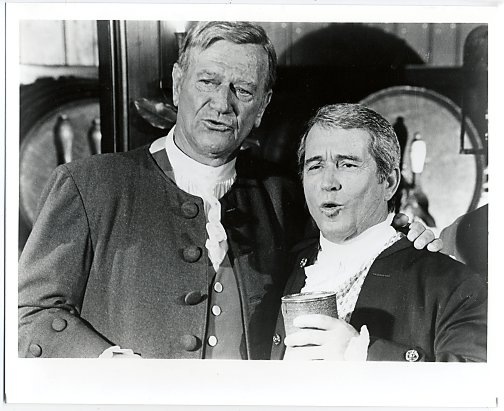
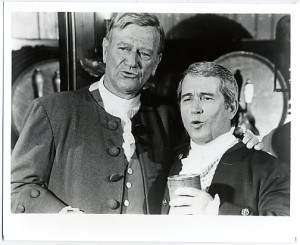
John Gilstrap and John Wayne: “Contrary to what you might read on IMDB, John Wayne’s last recorded performance was as guest star on como Perry Como’s 1978 Christmas special, “An Early American Christmas,” which was shot in Williamsburg, Virginia. I was a junior at the College of William and Mary at the time, and a member of the William and Mary Choir as well as the Botetourt Chamber Singers. To my knowledge, it’s one of only two performances in which Duke sings (part of a verse of “We Wish You A Merry Christmas”). Anyway, the William and Mary Choir is featured throughout the show, but there’s one scene in particular, shot in Chowning’s Tavern, where I’m on screen a lot. I’m the fit, good-looking guy with the luxurious long hair and beard (I haven’t changed a bit) wearing the white poofy shirt and red vest. For what it’s worth, Perry Como insisted that all the flagons be filled with real ale, so by the end of 8 or 10 takes, starting at six in the morning, we were all pretty looped.”
James, our very own nobleman: “My grandfather did a big family tree for us that takes us back through the first Duke of Wellington. I therefore have never suffered from a Napoleonic complex.”

Me and Maury: “I was invited to participate in a Maury Pauvich show focusing on the best bartenders in Manhattan. I didn’t realize until I arrived on set that they wanted me to lie down and have someone from the audience do jello shots off my stomach. I politely declined, and was promptly replaced. My fifteen minutes, therefore, turned out to be more like two.”

Kathryn stalks Ted Kennedy: “When I was a senior at Wellesley College, I worked as an intern for a very demanding Political Editor of a Boston TV station. My job was to maintain his schedule, attend meetings, and keep track of politicians. At one point he sent me off to Ted Kennedy’s house to see if he was there. The editor told me to make sure he was there, and so of course, I started creeping up the driveway, trying to see something. I think I heard a dog bark at one point, or maybe a cop car came by, so I dove into the bushes.”

Clare and the piranha-infested waters: “My husband and I traveled down the Orinoco River a few years ago – and our experiences there formed at least part of the idea for my first book, Consequences of Sin. After hours in a tiny boat in lashing rain we came to our ‘hotel’ perched on the banks of the Orinoco opposite the mission San Francisco. It was close to the delta and all around were hundreds of tributaries canoesnaking their way through the dense jungle. One day we went out in the dugout canoes the local Indians (called Warao) use. At one point our lunatic guide grabbed a piranha from the water and opened its jaws with a pocket knife just to impress us. He then warned us not to trail our hands in the water or (for the guys I assume) pee in the river as there were also electric eels whose charge can apparently traveled quickly back up a stream of urine…(who knew?!)…When we visited shore we also managed to disturb some horrible waspy insect nest which caused even the local Warao guide to go running and when we returned to the canoes we were warned to watch out for jaguars…Not a bad adventure in the name of ‘research’ for a wuss like me. It inspired me to wonder about the early British explorers to the region who (undoubtedly) would have gone mad…”

John Gilstrap and the Big House: “When I was writing NATHAN’S RUN, I lived only a few miles from the now-defunct Lorton Reformatory in Lorton, Virginia. During the author photo shoot, the photographer thought it would be a good idea to use the prison as a backdrop. The place was surrounded by multiple ranks of razor wire-topped chain link fence. Just for grins, I thought I’d pose as if climbing the outermost fence, telling the photographer that it will be interesting to see how long it takes for guards to respond. Answer: Not long at all, and when they arrive, they’re not happy.”nazi youth
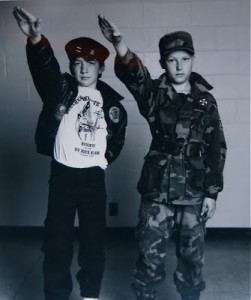
John Ramsey Miller and the KKK: If you missed John’s excellent post last week on his hate group photo exhibit, “What Evil Lurks,” check it out here.

James and Chuck pump iron: “A couple years ago I was hired to write a script for Chuck Norris’s company and worked on it at his California home, where he has a room of Total Gyms. I have one, so I asked him to show me his workout. He did. The man uses what he sells and is in absolutely amazing shape. Don’t ever doubt that. You would be wise to remember that there is no theory of evolution–only a list of creatures Chuck Norris has allowed to live.”

Kathryn and the best revenge: “That patronizing rejection came from an agent who’d insisted on an exclusive. I quickly got a much better agent, plus a publishing contract. Success is the best revenge!”

Every word counts

By Joe Moore

One topic that seems to show up often with beginning writers is word count. Questions like: Are there rules for counting words? Is my fantasy too long at 600k? How long should a novella be? A short story? How do you get an accurate word count?

Word count can vary depending on genre. And in some cases, genre dictates word count. Readers tend to expect a certain word count in the genre they enjoy and will shy away from books that are longer or even shorter than what they’re used to.

Before we had computers and word processing programs with built-in word count features, the general rule used to be 250 words to a double-spaced manuscript page. Obviously, this was always going to result in an estimate, but a fairly good one. Today, it’s easy to determine your word count. For example, MS Word 2007 displays a running total at the bottom of the screen. So getting an accurate word count is no longer an issue.

How about what’s expected of a contemporary novel? I think the magic number to always aim for is 80k words. Eighty thousand is a good, safe number, especially if you’re a first-time author.

The thing that new writers sometimes forget is that more words mean more pages. More pages mean more printing costs. Does the publisher want to invest additional money into a new author just because he or she won’t give up a single word?

So if you’re writing a mystery or thriller or romance, you’ll be safe if your book is at least 80k words.

What about short stories? The answer is that in almost all cases, the word count on short stories is specified by the publisher. Check the submission requirements of the magazine or anthology to make sure you’re within the guidelines.

I think it’s important to remember that there’s always going to be some wiggle room with word count. No agent or publisher is going to reject your book if you missed the count by 1k or 5k or even 10k, especially if the story blows them away. But try to be accurate. There’s no excuse not to.

As a general rule of thumb, here’s a basic guideline to work count:

  • Epic: A work of 200,000 words or more.
  • Novel: A work of 60,000 words or more.
  • Novella: A work of at least 17,500 words but under 60,000 words.
  • Short story: A work of at least 2,000 words but under 7,500 words.
  • Flash fiction: A work of less than 2,000 words.

Does your contract specify word count? Have you ever had to trim because the publisher felt the book was too long for your genre? Or add because it was coming in too short? Do you think about word count as you write?

Confessions of an Editor

We’re thrilled to welcome editor Kristen Weber as our guest-blogger today. Kristen has worked as an in-house editor for her entire book publishing career (except for a brief stint as a subsidiary rights assistant) before relocating to Los Angeles for her husband’s job. She’s currently freelance editing in between relearning to drive and hanging out with her pug. You can learn more about her services here:
Tackling my first freelance editorial project, I learned something quickly. You can get a lot more done as a book editor when you’re not actually working as one.
I hardly ever edited or even read a submission at my desk when I was working in-house. I was attending meetings, answering emails (you could lose a whole day right there), checking cover copy, catalog copy, and cover proofs, reviewing contracts, chatting with authors and agents, and just basically making sure every aspect of every book I worked on was perfect and making sure my authors were happy and agents remembered me for every good submission that they had.
I had lunch with a film person here in Los Angeles, and he said, “I picture you editors sitting in dark rooms with only one light on buried under papers and having no human contact.”
That just isn’t the case. The majority of my actual editing and reading (and I know this was true for almost all of my colleagues as well) happened at home in my “free” time. Otherwise we all had to be very personable and present in the office as we worked on many different projects at once.
But my favorite part of the job was always the editor / writer interactions. I’ve heard a lot of people say editors just don’t edit anymore, but I never found that to be the case. My authors will all attest to my carefully worded 6-10 page single spaced editorial letters and my colleagues were always working on letters like those as well.
As an editor, I feel like my job is to help authors push their own words and ideas out even further. They already have the spark of something great…editors are just trying to help them make it explode. And I’m rediscovering my joy for this now, in the quiet of my home or by the pool.
I think the most important thing you can do as a writer is collaborate with your editor. Even if you don’t agree with their suggestions, take time to think about them. Walk around the block. Because you just might be too close to see that there’s a problem…and even if you don’t like whatever solution your editor is suggesting.
I’m also a big fan of writing groups. But I often see projects that have been workshopped essentially to death. The writer received too many different opinions and tried to incorporate all of them into their manuscript, losing their own voice and vision in the process. My feeling on that is writing groups are great for friendship and support. They also can give you great help with revisions – but you need to make sure any changes you make based on their suggestions are true heart. You’re the writer. You don’t have to change anything you don’t want to…although you should probably revisit that if you’re getting multiple agent or editor rejections and they all focus on the same plot point that your writer’s group couldn’t get behind either.
So far I am having a great time freelance editing. I love seeing how a writer runs with my comments on their book. And I can’t wait to see what shape these projects I am working on end up taking as many don’t even have agent representation yet. I am coming in way earlier on the process than I ever did before. And I guess I kind of am now editing alone (although it isn’t dark – coming from a tiny New York City apartment, there is more light than I know what to do with) surrounded by papers…but I certainly don’t miss all of the meetings!

Anthem for Angst-Ridden Youth (RIP John Hughes)

By Clare Langley-Hawthorne

It’s hard to believe he’s gone – John Hughes, the director of my teenage years – but looking back I have to confess the angst and confusion of that time have never really left me (probably why writing a YA book doesn’t seem a stretch) and so today I pay homage to the great teen films of the 1980s…OMG, I can’t believe I’m actually looking back on those years with nostalgia…So bring out the Tears for Fears and New Order albums, put on those pointy black shoes (Yes, I still have them) and the neon orange socks (sadly worn through) – brush that hair mascara on for it’s time for my top five 80’s teen movies (in ascending order and only the first two I confess are actually John Hughes’ movies).

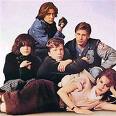
Number 5: The Breakfast Club – Oh, to have been my namesake at that school. Miss Popular eating her sushi in detention and falling for the bad, bad boy…wait that was me at school…NOT!…I was actually on exchange in Canada the year this movie came out and as far as I was concerned ‘Don’t you Forget About Me’ was the anthem for my time there.

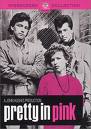
Number 4: Pretty in Pink – ditto on my desire to BE Molly Ringwald. Hell, in Australia I went to the all-girl Methodist Ladies College – we only had the Catholic Xavier schoolboys for our angst fix…
Number 3: Say Anything – This was a little before my time but when I saw it I was hooked…What’s not to love about John Cusack with a boom box above his head belting out Peter Gabriel to the girl of his dreams? I still love the line “I gave her my heart and she gave me a pen…”

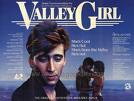
Number 2: Valley Girl – Okay, I admit this was WAY before I really hit my teen angst stride but Nicholas Cage (before he became the loser conspiracist-action-hero dude) was the boyfriend I always wanted. I also wanted to speak like a valley girl but that’s a whole other (sad) story…

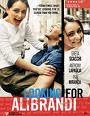
Number 1: Looking for Alibrandi – Finally an Aussie movie and at number 1 no less (I am cheating a wee bit though as this didn’t come out in the 1980s though I think the original book did)!
This one came out well, well after I was a teenager but when I saw it on a Qantas flight back to Australia I confess I teared up. I’m not Italian and had no Nonna spy ring but the story of a precocious teen trying desperately to get into law school, stymied by the confines of her private school upbringing, and falling (of course) for the wrong, bad boy…how could I resist?

I let my husband read this post – he’s had to put up with my addiction to 80’s teen movies long enough. I met him, after all, the first week of university (in 1987!). I was just seventeen and yes, New Order was the soundtrack to our dating. I was also in law school (idiot that I was). I’m still with him today – but when I see these movies I can easily be transported back to the 80’s…and I wonder what happened to all the bad, bad boys (and for that matter Molly Ringwald!)

So what film was the anthem for your angst-ridden youth?

Stay Thirsty

I love a good ad campaign.

When I started running a small legal publishing business years ago, I had to teach myself advertising and marketing. I read some classics on the subject, such as How to Write a Good Advertisement by Victor O. Schwab and Tested Advertising Methods by John Caples.

My favorite, though, was Ogilvy on Advertising by the legendary ad man David Ogilvy. This volume made me appreciate what goes into successful ads, and just how hard they are to pull off.

So when I see a great ad campaign, I nod in approval. One of the best of all time has to be the “I’m a Mac, I’m a PC” series. It’s no accident that Mac’s market share has shot up in tandem with these ads. Smart, funny, short, well acted, superb.

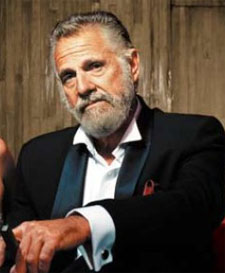
But my current favorite is “The most interesting man in the world” campaign for Dos Equis. You’ve all seen it (and if you haven’t, you need to become more interesting by looking it up. You can start here).

A typical spot will feature “vintage film” of the man in various pursuits, while a narrator recites a few facts about him. Then we see him sitting in a bar surrounded by beautiful people. He looks into the camera and, in a slight Spanish accent, says, “I don’t always drink beer, but when I do I prefer Dos Equis.”

A few of my favorite “facts” about this man are:

• He lives vicariously through himself.

• He once had an awkward moment, just to see how it feels.

• The police often question him, just because they find him interesting.

He once taught a German shepherd to bark in Spanish.

And then, at the end of each ad, comes the man’s signature sign off: “Stay thirsty, my friends.”

What’s so good about this campaign?

It’s risky. Having a graying, middle aged man as the lead character is, as they say, counter programming.

It’s funny without trying too hard. The understated way the deep-voiced narrator extols the man’s legend is pitch perfect.

It has a complete backstory, revealed a little at a time in the mock film clips.

These are qualities of a good novel, too. Risky, in that it doesn’t repeat the same old; a bit of unforced humor is always welcome; and a backstory that renders characters real and complex without slowing down the narrative. All that we can learn from “the most interesting man in the world” campaign.

And from the man himself we can learn, as writers, to live life expansively and not just lollygag through our existence. Not waiting for inspiration but going after it, as Jack London once said, “with a club.” Believing, with Kerouac, in the “holy contour of life.”

We ought to be seekers as well as storytellers, a little mad sometimes, risking the pity and scorn of our fellows as we pursue the artistic vision. Then we park ourselves at the keyboard and strive to get it down on the page. Why go through it all? Because the world needs dreams rendered in words.

Writer, keep after it and someday this may be said of you as well: “His charisma can be seen from space. Even his enemies list him as their emergency contact number.”

Stay thirsty, my friends.