Time for a Checkup?

by James Scott Bell

I have a new doctor.

My old doctor was brilliant. He could tell me what was wrong just by examining my wallet.

My new doctor is young and aggressive. I met him the first time a couple of months ago and he said he wanted to put me through a battery of tests, including a look at my ticker.

I said, “But Doc, I’m the picture of health!”

He did not care what I thought of my own pictures. He went on looking at my records, telling me I needed an updated this and a new that, then ordered that I get probed, scanned, tested, stuck and bled.

And so I was.

Some time later I got a message to call his office.

Now, when you get such a message you have a moment of panic. You start hearing those movie lines, you know, where the doctor says, “You have six months, maybe a year.”

Or you wonder if he’s going to want you in for full on heart surgery, today. (My response is that, in lieu of surgery, I’d prefer he just touch up the X-Rays).

Well, the news was all good. A clean bill of health.

But it got me to thinking. There are times in a writer’s life when the pallor of impending doom falls over a manuscript. You think, Man, this thing is having heart problems. It’s struggling for breath. I hope it isn’t going to be DOA when it’s finished!

I suggest in that instance you run some of your own tests. Like these:

THE HEAD

Step back and analyze: Is the Lead’s objective strong enough? Readers want to care about a character’s quest. Unless it is of absolutely vital importance to her well being, the objective is not going to grab the reader as it should. And by vital importance I mean that death is on the line—physical, psychological or professional. It can even be all three. (I have a section on the importance of “Death Overhanging” in Revision & Self-Editing).

THE LUNGS

The living, breathing center of your novel is the Lead character. Is he original, complex and in some very real way, compelling? Readers want a character who is not just some retread out of previous movies and books. You have to personalize and truly fall in love with the Lead. Here are two questions to ask: Do you find yourself thinking about the Lead even when you’re away from the manuscript? Can you imagine your Lead living a life outside the book? If your answers are no, you need to do some deepening.

THE HEART

What is the “passionate center” of this novel for you? Have you lost it? Is your daily writing a dry exercise? Stop and write yourself a letter. Pour out all your emotions. Be honest with yourself about the book. Here’s the thing: you need to find out if you’re writing only to sell. If so, you’re more market driven than story driven. You’re not being true to the tale trying to break out. And it will show. Manuscripts without heart are piled high in countless offices in New York.

Yes, selling is the goal and market considerations are wise. But they are not enough in today’s competitive environment. What matters even more are the passion and individual voice you bring to the pages.

So give your story a check up in these areas and get your manuscript back to the health it so richly deserves.

Have you ever had to resuscitate a manuscript? How’d you manage it?
It’s All About You

By John Ramsey Miller

No matter how subtly, we authors we can’t help but bring ourselves, or world view, our personalities, our loves and biases into our work, and open ourselves up to our readers. If someone criticizes our work, they might as well slap one of our children. But we wince, wonder what the hell’s wrong with the critic, and go on to do it one more time. It’s as much “write what you are” as what you know. You can learn subjects, research facts, imagine yourself into a scene, but as you write––just like trace evidence––you put some of yourself on the page.

Someone said to me recently that hunting was obsolete because of the availability of grocery stores. I bring this love of hunting and gathering by age-old means, rather than by gathering money so I can pay others to hunt and gather for me. The killing I, and most other hunters do, is humane. I take animals where they live, and up until they are felled as if by a bolt of lightning, they are content living a life they were designed to live. Game animals are not raised in pens, fed by machines or paid workers, and driven into slaughter rooms that reek of bleach. I don’t have to justify my gathering to anybody except myself. But it comes through in my writing. I do not enjoy killing, and I understand how it feels to do so. I write that into my characters and I like to think that the difference between doing and researching is there on the page. We can imagine what something is like, but unless we’ve been there, we can only go by what those who have been through it tell us, or what we can imagine. Some things we can’t do, and those we will have to imagine. Other things we will write more accurately or with feeling than can those who have never experienced that thing. Me, I’ll never write about having a baby from a mother’s perspective the way a mother can, but I can write what being the father who’s watching a birth is seeing and feeling. As I write that I will be drawing on what I saw and felt so I would infuse the story with a shot of me. There’s really no way around it.

When we write a scene, we put ourselves in it, and, no matter what we have the characters do, we’re consciously (or unconsciously) writing what we would or wouldn’t do, think, or feel. If we are identifying personally with the character, we do one thing, if not we do another, perhaps the opposite, and maybe what we wish we could do in the same situation, but couldn’t.

Most of the authors I know who write violence, are not at all violent people themselves. Jeffery Deaver is one of the most gentle men I know, but nobody writes pure evil like Jeffery. I think he writes it so well because it is the precise opposite of what he is, and therefore easy to imagine.

I may be wrong, but I don’t think a sociopath writes sociopaths as effectively because they don’t see or admit what they are to themselves, and they don’t feel empathy, so they can’t really write it convincingly. Of all of the writings of psychopaths that I’ve read, it was all about the acts of violence and the characters are cardboard, just moving around performing some heinous act in one dimension. Perhaps I’m not explaining it well, but if you read the fictional fantasies of psychopaths, you’ll see a definite lack of engagement, or understanding character. It shows a lack of self-reflection, just self-gratification and delusion. There’s nothing scientific about this, just my impression. Perhaps psychos can write in great emotional depth. So how many psychopathic authors do you know? I can think of several.

Perfect Lines

By Johngilstrap
http://www.johngilstrap.com/

My bachelor’s degree comes from the College of William and Mary in Virginia. As most graduates from prestigious schools, I am capable of being an academic snob when the occasion arises. It happens far less frequently now that I’ve become a gentleman of a certain age, but back in the day, my loyalty to the alma mater was pretty fierce.

In the late ’70s, when I was in college, Virginia Tech (then known as VPI-Virginia Polytechnic Institute) had nothing of the reputation that it enjoys today. It was every good student’s “safety school,” the one you knew you could get into if W&M and UVA let you down. In the good spirit of interschool rivalry, I held it in low esteem. Thus, as a young safety engineer investigating an explosion at the explosives processing plant where I worked, I made multiple references to “Techie engineering” as the primary cause of the accident. It was my throw-away phrase to describe anything that was well-meaning yet substandard.

Remember that I was all of 28 years old at the time. Many minutes into my presentation to the seniormost members of management, after I had committed to this good-humored course of bashing my academic rival, Paul Lumbye, the vice president of all things that paid my salary, raised his hand and said, “John, I think it’s appropriate for me to tell you that I am a graduate of VPI.” Something seized inside my gut. Then he went on to point to a good thirty percent of my senior-executive audience, all of whom were likewise graduates of Virginia Polytechnic Institute, and at least twice my age.

When Paul-the-VP was done, the room was silent, and I found myself facing a dozen smug smiles, all of them rejoicing that I had been so thoroughly put in my place. It was my moment to cower and apologize.

Alternatively, it was my moment to show the true depth of my loyalty. With all those eyes staring, I made a point to look Paul in the eye when I asked, “Does this mean I need to start over again and use smaller words?”

To this day, I look at that comment as a pivotal moment in my professional career. I learned that all reasonable people appreciate a great line well-delivered. I wish I could say that I continue to be that glib and fleet of tongue, but forever and ever, I will know that at least once, I delivered a killer rebuttal. It’s a great feeling.

Which brings me to the actual point of this week’s blog entry: great lines. More specifically, great movie lines—the ones that perfectly capture the emotion of the scene and stick with you long into the future.

A few that come to my mind:

“Fill your hands you son-of-a-bitch!” – Rooster Cogburn, True Grit.

“I won’t be wronged, I won’t be insulted and I won’t be laid a hand on. I don’t do those things to other people and I require the same of them.” — J.B. Books, The Shootist

“Are you going to do something, or just stand there and bleed?” — Wyatt Earp, Tombstone

“Dyin’ ain’t much of a livin’, boy.” – Josie Wales, The Outlaw Josie Wales

“I’m thirty years older than you are. I had my back broke once, and my hip twice. And on my worst day I could beat the hell out of you.” – Wil Andersen, The Cowboys

“The Germans wore gray, you wore blue.” – Rick, Casablanca

“You’re gonna need a bigger boat.” Chief Brody, Jaws

Each of these lines, at the moment they were delivered, slyed their respective audiences. Certainly, they slayed me. What about you? What are your favorite lines from the real world or the world of fiction? C’mon. You know you have one. Or five. Share.

Perfect Lines

By Johngilstrap
http://www.johngilstrap.com/

My bachelor’s degree comes from the College of William and Mary in Virginia. As most graduates from prestigious schools, I am capable of being an academic snob when the occasion arises. It happens far less frequently now that I’ve become a gentleman of a certain age, but back in the day, my loyalty to the alma mater was pretty fierce.

In the late ’70s, when I was in college, Virginia Tech (then known as VPI-Virginia Polytechnic Institute) had nothing of the reputation that it enjoys today. It was every good student’s “safety school,” the one you knew you could get into if W&M and UVA let you down. In the good spirit of interschool rivalry, I held it in low esteem. Thus, as a young safety engineer investigating an explosion at the explosives processing plant where I worked, I made multiple references to “Techie engineering” as the primary cause of the accident. It was my throw-away phrase to describe anything that was well-meaning yet substandard.

Remember that I was all of 28 years old at the time. Many minutes into my presentation to the seniormost members of management, after I had committed to this good-humored course of bashing my academic rival, Paul Lumbye, the vice president of all things that paid my salary, raised his hand and said, “John, I think it’s appropriate for me to tell you that I am a graduate of VPI.” Something seized inside my gut. Then he went on to point to a good thirty percent of my senior-executive audience, all of whom were likewise graduates of Virginia Polytechnic Institute, and at least twice my age.

When Paul-the-VP was done, the room was silent, and I found myself facing a dozen smug smiles, all of them rejoicing that I had been so thoroughly put in my place. It was my moment to cower and apologize.

Alternatively, it was my moment to show the true depth of my loyalty. With all those eyes staring, I made a point to look Paul in the eye when I asked, “Does this mean I need to start over again and use smaller words?”

To this day, I look at that comment as a pivotal moment in my professional career. I learned that all reasonable people appreciate a great line well-delivered. I wish I could say that I continue to be that glib and fleet of tongue, but forever and ever, I will know that at least once, I delivered a killer rebuttal. It’s a great feeling.

Which brings me to the actual point of this week’s blog entry: great lines. More specifically, great movie lines—the ones that perfectly capture the emotion of the scene and stick with you long into the future.

A few that come to my mind:

“Fill your hands you son-of-a-bitch!” – Rooster Cogburn, True Grit.

“I won’t be wronged, I won’t be insulted and I won’t be laid a hand on. I don’t do those things to other people and I require the same of them.” — J.B. Books, The Shootist

“Are you going to do something, or just stand there and bleed?” — Wyatt Earp, Tombstone

“Dyin’ ain’t much of a livin’, boy.” – Josie Wales, The Outlaw Josie Wales

“I’m thirty years older than you are. I had my back broke once, and my hip twice. And on my worst day I could beat the hell out of you.” – Wil Andersen, The Cowboys

“The Germans wore gray, you wore blue.” – Rick, Casablanca

“You’re gonna need a bigger boat.” Chief Brody, Jaws

Each of these lines, at the moment they were delivered, slyed their respective audiences. Certainly, they slayed me. What about you? What are your favorite lines from the real world or the world of fiction? C’mon. You know you have one. Or five. Share.

Who needs to hang it up?

by Michelle Gagnon

This is an ongoing discussion on one of the message boards I frequent, and I thought it was an interesting one. How long can a series continue before it sinks under its own weight?

When readers have latched on to a character or series, and whatever book follows in the progression is guaranteed to make the bestsellers’ lists, both publishers and authors are loathe to say Sayonara. But there are popular series out there that are starting to look a bit long in the tooth. And would those writers be better served by branching out into new territory? After all, if their name is established, wouldn’t most of their fan base follow them on whatever new venture they chose?

I’ll preface this by saying that I’m playing devil’s advocate here. I’m a huge
John Sandford fan, and if he were to suddenly announce that Lucas Davenport was vanishing into the ether, I would be disappointed. Same with Jack Reacher, but for different reasons. What I like about Sandford’s books is that he has managed to keep them freash and interesting by varying the plots: some are more like spy novels, other focus on heists or serial killers. Plus, Lucas Davenport is one of the rare series characters who has actually evolved. I liked him at the beginning, but by allowing him to age and learn from life experience, I’m far more invested in him than I would be otherwise.

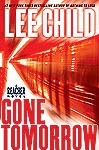
Paradoxically, the opposite holds true for Jack Reacher. He never changes. Thirteen books in, he still travels with nothing but the clothing on his back and a fold up toothbrush. And apparently he’s discovered that mythical fountain of youth, since he can still destroy pretty much anyone in a fight regardless of the fact that he must be approaching fifty by now. And yet, I don’t care. (I will say, however, that I secretly hope Lee Child someday branches off into a side series featuring Frances Neagley. Particularly after Bad Luck and Trouble, I want to know more about her and that company she runs). It’s the reason the Law and Order franchise is so consistently successful: you know what to expect, and Child always delivers it. He has the added liberty of being able to take Reacher anywhere in the world, from small towns to metropolises, and there’s no reason for him not to be there since he’s not locked into a job, tied to anyone or anything.

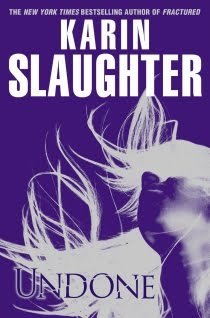
Others, however, have not been as fortunate. There are series whose books I devoured for five, ten, even fifteen books. But they gradually devolved into something that was either implausible or just plain silly. How long can you maintain a love triangle that never gets resolved? And for series set in small towns, how are we supposed to swallow the fact that their homicide rate rivals Detroit’s? I loved Karin Slaughter’s Grant County series, but after six books it was starting to suffer from Cabot Cove Syndrome: how could so many terrible things happen in a rural Georgia county? Who would ever move there with that level of crime? Property values must have been in the basement after the third serial killer in as many years passed through. Moving the series to Atlanta and combining it with her other series revitalized it for me.

So let’s hear it: who needs to hang it up? And what series have defied the odds and held your interest?

It’s got that new season smell

by Joe Moore

It’s premiere season on TV and I’m excited. There’s a couple of returning shows that I really got into last year, and a few new ones that sound quite enticing. xfilesFirst, let me say that my tastes run toward drama. But not just any drama. I like stuff that’s outside the box. As an example, I was one of the original X-Files fans. I remember that Friday night in September 1993 when the show first appeared. I loved everything about it from the creepy music to the mysterious logo to the amazing anti-relationship between Fox Mulder and Dana Scully. Their characters were strong from the start and stayed true to the end. I was also a big fan of Millennium, another of X-Files producer Chris Carter’s shows. Not as famous and successful as X-Files, but just as captivating.

So what do I look forward to this year? Fringe. It’s X-Files all over again, only in HD. Last week was the first show of the new season, and it had plenty of surprises and twists. There’s also a new show called Flash Forward. Here’s the premise: Suddenly, the entire world stands still for 2 minutes, 17 seconds. Chaos ensues. Cars crash, medical procedures are brought to a halt, and millions of other events are disrupted. A couple of FBI agents are assigned to investigate what happened and why. Advance reviews say the concept is fascinating and the story addictive.

Then there’s the return of Doll House on Friday nights. This one pulled me in last season and I’m looking forward to see if it can sustain imagemy interest a second time around. It involves a girl code-named “Echo” who is a member of an illegal underground group who have had their personalities wiped clean so they can be imprinted with any number of new personas. They not only perform unusual and controversial roles, but they literally become whoever their clients want them to be. It’s hard to look away.

And when I do need a laugh or two, the Big Bang Theory and Two and a Half Men are hard to beat.

So how about you? Are there any shows you’re looking forward to? How about ones you intend to avoid? Is this the year you break the ties to 24 or American Idol?

You might never upload a photo to Facebook again

I’m a heavy Internet user, so I jumped at a chance last week to attend a Webinar (that’s a Web seminar, for you non-heavy users). Its purpose was to teach investigators how to use online techniques to research suspects, gang members, deadbeat parents, etc.

I learned that it’s possible to use online techniques to find out information about almost anyone. Here are a few of the tips we heard:

Look at pictures that are posted by your suspect on social media sites (such as Facebook), and study the backgrounds of the pictures. Team logos, landmarks, or other things in the pictures can indicate where your subject is living. You might see drugs in the background, worth noting if you’re trying to establish drug-related connections.

Note any other people in your subject’s photos. That’s one way to discover gang associations or other criminal connections. Even if your subject keeps most of his uploaded information private, you might be able to find out information from his friends’ postings.

We were advised to always capture information as soon as we find it (Snagit was a recommended tool for screen captures), because the Internet constantly changes.

We learned how to refine Google searches on the web to focus and narrow down results. Using boolean operators to do searches, trying different spellings and search engines, and using cache to get archived information were some of the suggestions.

Some of the techniques will come in handy for my writing. One thing is certain–going forward, I’ll be much more selective when I upload personal information and photos. And I’m also happy that I use a pen name for my writing–there’s less surfacing of personal data that way.

Do you have any favorite search tricks or online research techniques? Are there any rules that you follow for uploading personal information online?

You’re Perfect. I’m Doomed!

I was listening to a radio interview with James Wood, literary critic for The New Yorker, discussing his book How Fiction Works when the topic of the role of the critic came around and I was struck by one of the quotes (to paraphrase) that the critic should be interested in identifying how the writer failed to meet an ‘ideal’.

Now I’m sure all of us (as either readers or writers) have our list of top authors as well as books that we feel epitomize the ‘perfect’ novel – but the thought of constantly being measured against such an ideal is daunting. I started musing (and agonizing I have to confess) over how the concept of the ‘ideal’ affects how I write as well as how I read. My experience with book groups and writing groups has led me to suspect that while the concept of seeking perfection in the writing craft can be noble it can also be devastating. How many of us haven’t been stymied by the inner critic while writing – the one that says ‘this stuff is crap, it’ll never be as good as [insert appropriate esteemed author name here]’ or who hasn’t, as a reader, felt a novel pale in comparison to another to the point where all possible merits of the first book disappear completely?

It’s taken me a while to overcome that fear of failure and commit a first draft to the page but there’s no way I could complete a manuscript if I thought about the critics – especially not if they have some mythical ideal in mind (which no doubt no author could ever meet all the time!).

So – do you have an ‘ideal’ author or book that you think sets the standard? Do you ever feel intimidated by that in your writing? Who do you use as your ‘ideal’ when you think about honing and (dare I say it) perfecting your craft?

Hanging Upside Down and Other Creative Moves

by James Scott Bell

Well, it is indeed Dan Brown week in the world of publishing, as our own Joe Moore and John Ramsey Miller have attested. And that’s a good thing. The business needs a shot in the arm. We need to see hardcovers flying off the shelves again. We need people sitting around Starbucks talking fiction, getting caught up in a story world.

There’s been a lot of chatter about the phenomenon of The Lost Symbol, as there was for The Da Vinci Code. But today I’d like to focus on another aspect of this event: the author himself.

This latest book was not easy for Mr. Brown. I mean, how do you follow a once-in-a-lifetime hit like TDVC? That book’s particular mix of vast religious conspiracy, symbology and fast paced action went spinning around on the wheel of fortune and hit the jackpot.

Brown cops to the pressure of following up. Regarding the long lag time between TDVC and The Lost Symbol, Dan Brown was quoted in the L.A. Times as follows:

“The thing that happened to me and must happen to any writer who’s had success is that I temporarily became very self-aware. Instead of writing and saying, ‘This is what the character does,’ you say, ‘Wait, millions of people are going to read this.’ … You’re temporarily crippled….[later] The furor died down, and I realized that none of it had any relevance to what I was doing. I’m just a guy who tells a story.”

Writers, attend to this. What happened to Dan Brown on a mega level happens to most writers who publish more than one book. A lot of unpublished writers think things will be just swell once they’re published, and they can produce book after book with nary a worry.

The truth is, writing fiction gets harder because we continue to raise the bar on ourselves. We do, that is, if we truly care about the craft. We know more about what we do with each book, and where we fall short. We hope we have a growing readership, and want to keep pleasing them, surprising them, delighting them with plot twists, great characters and a bit of stylistic flair.

But we can’t stroll down the aisle of “Plots R Us” and choose something fresh, right out of the box. (Although Erle Stanley Gardner was known to use a complex “plot wheel.” I guess he did okay. And, FWIW, Slate came up with its own plot generator for those truly desperate to cash in on the Dan Brown phenomenon). We are on a never ending quest for concepts, characters and plot. No matter how many books we’ve done, we keep aspiring to the next level.

Dan Brown reportedly deals with all this by using gravity shoes. He hangs upside down, letting the blood rush to his head. Bats use the same method. But there are other options.

Whenever you are wondering if you’ve got the stuff to be published (or, if published, to stay that way), let me offer a few helps.

1. Write. This is the most important thing of all. Get “black on white,” as Maupassant used to say. Even if you feel like pond scum as an artist, just start writing. If you can’t possibly face a page of your project, write a free form journal about something in your past. Begin with “I remember . . .” Pretty soon, you’ll feel like getting back to your novel.

2. Re-read. Pull out a favorite novel, one that really moved you. Read parts of it at random, or even the whole thing. Don’t worry about feeling even worse because you think you can’t write like that author. You’re not supposed to. You never can. But guess what? He can’t write like you, either.

3. Incubate. For half an hour think hard about your project, writing notes to yourself, asking questions. Back yourself into tight corners. Then put all that away for a day and do something else. Walk. Swim. Work your day job. Stuff will be bubbling in your “writer’s brain.” The next day, write.

4. Turn off your Internet browser for a whole day. By which I mean, of course, first read The Kill Zone, then turn off the Net and write. Forget emails, Twitter, Facebook, MySpace, or anybody else’s space. A bit of downtime from all the noise is good for focus.

Mental landmines abound for writers. The key is not to let any of them stop you from writing, even if you have to hang upside down to do it.

So how do you get yourself going when the going gets tough?

Does Dan Brown Impress You?

John Ramsey Miller

I am happy for Dan Brown, I’m happy for his publisher, Random House, and I’m happy for his broker. I think he deserves his success, even if I do not fully understand it. None of us knows what readers will hit on, but I do know that chasing a wildly successful book by taking the elements you feel are what struck the chord with the audience is usually a waste of good keystrokes. I don’t think most people can write what they don’t feel and hit home runs with an audience. You know what sells? Entertainment. I can break that down. Readers want to feel good, to know their dreams can be realized, that they can escape reality by getting involved, that good kicks evil’s wide ass, and that hope exists despite a great deal of evidence to the contrary.

Look at the how the lowly Vampire of a few years ago has suddenly been lifted to the heavens. We have vampires drinking synthetic blood, walking about in the daytime, flying like superman, fangs that open like switchblades, feeling emotions, being all sensitive, falling in love, and next we’ll have them procreating like the living, roasting garlic to sprinkle on their popcorn, and ordering scotch and Holy water on the rocks. And now werewolves, ghouls, witches, ghosts, zombies, voodoo priests, magical beasts of every description, are all lining up in the wings waiting their turn to elbow their way into the middle of the stream. Because readers want to feel fear from the safety of their armchairs, and triumph over it without breaking a sweat. They want to believe that there are things they don’t see in their own lives. They (we) want to imagine they can live forever, only if it’s just at night, and they want to believe in monsters, but want even their worst monsters to have a smidgen of goodness buried in there somewhere. And most people believe that animals in jeopardy are more important than people in the same fix. Seriously you can have a monster kill a child that toddles too close, but one that kills curious cats or protective dogs is beyond redemption.

Successful authors gravitate toward subjects, characters, and stories that attract them. I suppose I could write a convincing vampire novel, if I were interested in vampires it might even be interesting, but I’d rather write about gangsters. I’d love to write about the wild West. I’d like to back off to a time when there were no cell phones, few if any telephones, no TV sets and maybe just a radio here and there and newspapers instead of CNN.

The thing about Dan Brown is that his work isn’t a fluke. About anytime a writer is successful, critics pick at his style, impugn his accuracy, and generally rain poo-poo on his ability. Dan Brown is into his story, cares about his characters, and likes slaying giants. Brown is a great writer, and his financial rewards are well deserved because it is a gift to Mr. Brown for what he is offering them in exchange. Maybe Dan Brown won’t win an Edgar, or the ITW for best novel, or any other rewards his contemporaries can bestow. Like so many great commercially successful artists jealousy keeps those prizes away. But authors like Dan Brown, Tom Clancy, JK Rowling, John Grisham, James Patterson, Stephen King, Stephanie Meyer, and Dan Brown, the people are voting, and they are voting yes, yes, yes. When millions of people think you are a great writer, the Nobel, Pulitzer committee, and the critics are irrelevant and should be. Would you rather have a line of awards on your bookshelves, or some producer from the Today show begging you for the fifteenth time to make an appearance, or a Gulfstream V taking you and your family to Europe so you can watch your book being filmed. For most authors I know, it isn’t even close. Of course, all of the above would be heaven.