Point of Who?

By John Gilstrap
www.johngilstrap.com

Those of us who choose to write in the third person limited point of view face a critical challenge after every space break: Who’s going to own the next scene? That choice affects virtually every sentence that follows it. It affects the action, the voice, the word choice . . . everything. Point of view selections even inform the direction that the plot is going to take.

Let’s say that we’re going to write a fictional account of the Battle of Gettysburg during the Civil War. For the uninitiated, that engagement, fought in July of 1863, is widely considered the turning point in the war—the defeat from which the Confederate Army never fully recovered. More than 160,000 troops descended on a town of 2,400 residents, and at the end of three days of fighting, over 60,000 lay dead or dying, with many thousands more left wounded on the battlefield.

In our fictional account of the story, who will our POV characters be? If we choose to tell a story set among the commanders (George Meade for the Union, Robert E. Lee for the Confederates), it seems to me that it would be too limiting to assume the role of either commander, if only because their lives and decisions are so well documented. Instead, I would probably create a fictional aide de camp whose thoughts and observations I would record. I would imagine that this choice would have us writing battle scenes from a big-picture, strategic world view.

Maybe we’d want to tell the story of the battle from the POV of a rank-and-file soldier, in which case our story would be less about momentous command decisions than it would be about the everyday soldier’s life of unending boredom punctuated by blind terror. Our character’s view of the battle would not concern itself with troop movements on the grand scale, but rather from the very limited perspective of a man under fire choking on the stench of smoke and blood. If he could see anything, it would likely be the shoulders of the soldier in front of him.

Another option might be to tell the story of a Gettysburg resident, a civilian facing the horrors of war and its aftermath. Shall we choose a young woman who fears for the safety of her children? A middle aged man who feels guilt for not being part of the battle? Maybe the town doctor who is facing an unending stream of catastrophic traumatic injuries.

Whichever choice we make, the story will report on the same event, but the perspectives taken on that event will be wildly disparate depending upon our choice of POV.

Take the historical nature of the event out of play and the same challenges continue to exist. If we’re writing a divorce drama from the POVs of both husband and wife, we need to choose which perspective delivers the most drama for the scene where the lawyer reveals the investigator’s tapes of the wife cheating on hubby. If we’re writing a story about a kidnapping, we need to decide whether the actual snatching is best revealed to the reader through the point of view of the victim or the mother who sees him being spirited away.

These are really important decisions. How do you make them? Do you have to go back and rewrite your choices like I have had to do more times than I like to think about? For you first-person writers, do you face any kind of the same choices in your writing, or does the narrow window insulate you from them?

Reason to kill?


By P.D. Martin

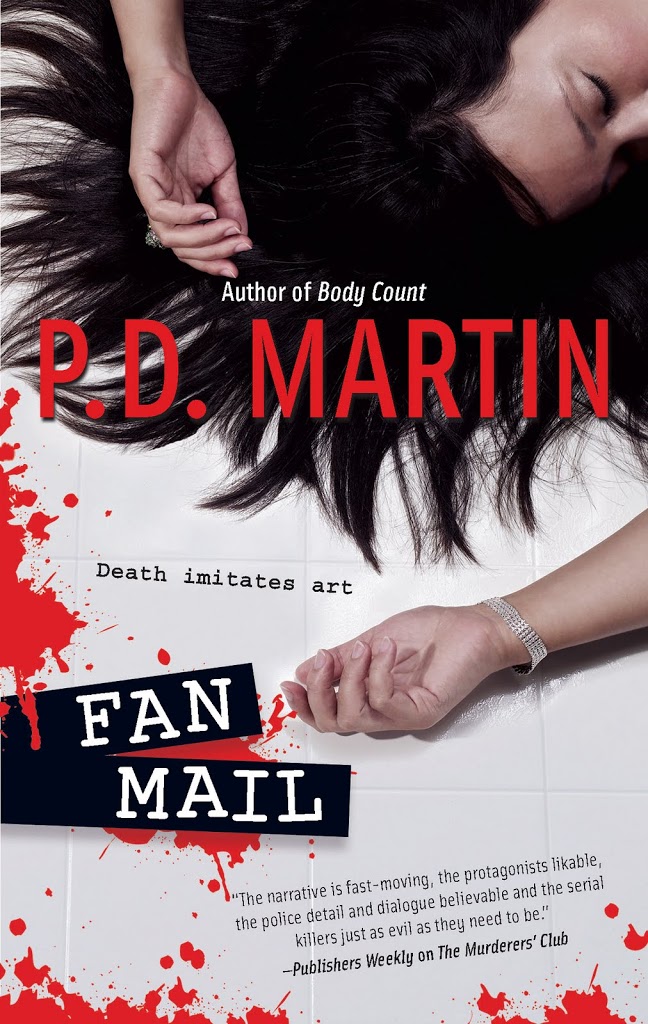
Today TKZ is thrilled to have a tremendous writer from the land down under join us, author PD Martin. In her latest release, Fan Mail, Aussie FBI profiler Sophie Anderson is working a case where fiction has become fatal. A popular crime writer is murdered and posed just like the crime scene in the dead author’s last book.

Could crime fiction incite someone to kill? This is a question I’m often asked, and it’s one of the themes I explore in my third book, Fan Mail.

Having done lots of research on murder and criminal psychology, my belief is that if someone is going to take another human being’s life, reading fictional accounts of murder is not going to push them over the edge. Having said that, we do live in a world where we’re increasingly exposed to violence and graphic crime-scene depictions.

Take the many successful (and entertaining) shows on TV: CSI, Bones, Law & Order: SVU…and then, of course, there’s Dexter. But have we really been desensitized?

A few years ago, after lots of meticulous research into horrific and violent crimes, I honestly believed I was desensitized, almost in a similar way to a cop. I’d imagined some horrible situations and written about them in detail. I was tough!

Or so I thought, until I met Victoria Police’s profiler, who gave me a list of law-enforcement text books to help with my research. I ordered them online and was so excited when they arrived; and the timing couldn’t have been better because I was packing for a week-long writing retreat. I threw the books in my luggage and headed down to the beach.

The first thing I did when I arrived was to unpack the books and start flipping through one…and then I saw it. The first page the book opened to was a photo from a crime-scene in which a woman had been raped then murdered. The killer had tied her down and posed her in a disturbingly revealing way. Next photo: a dead woman with both of her breasts cut off. Next photo: a decomposing body. Next photo…I think you get the picture. In that instant I realised my so-called desensitization wasn’t real. They say a picture tells a thousand words and in the case of crime-scene photographs, it’s certainly true. The new set of books disturbed me, but they also made me understand my character, Aussie FBI profiler Sophie Anderson, so much more intensely – to be faced with these photos every day and go on….it’s definitely one of the hardest jobs in the world.

I’m thankful that I write fiction because I can make stuff up and no matter how graphic and horrific, I know it’s not real. And this is also a large part of why I don’t think crime fiction can, or would, incite someone to kill. It is fiction, and no matter how descriptive or well written we know it’s not real. Law-enforcement text books on the other hand…they could be very scary in the wrong hands.
So I’m curious: what do you think? Could reading crime fiction serve as the catalyst for actual crimes?

PD Martin – Phillipa Deanne Martin – is an Australian author with a background in psychology. She has written four novels featuring Aussie FBI profiler Sophie Anderson, of which the first three are currently available in North America – Body Count, The Murderers’ Club and Fan Mail. See www.pdmartin.com.au for more information.

The Dan Brown flagship

By Joe Moore

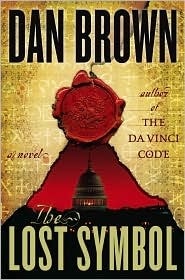
tls-brown The waiting is over. THE LOST SYMBOL by Dan Brown hit the store shelves yesterday. Love him or hate him, this is a big deal in the world of publishing.

First there was the long 6-year delay. Then the street talk that Brown would never write another book. Then the possible title: THE SOLOMON KEY. Then the revealing of the anticipated cover. And now the day has come. It’s here—all 5 million, first-print-run copies. Now the big questions are: Will it sell as many copies as THE DA VINCI CODE(80 million)? How long will it sit in the number one slot of every bestselling list on the planet? And is it as good as TDC and ANGELS AND DEMONS? Here are two advance reviews:

The Los Angeles Times calls it “. . . like any roller coaster – thrilling, entertaining and then it’s over.”

The New York Times calls it “sexy” and “impossible to put down.”

So what does this publication mean for us thriller authors? The way I see it, if all of us are ships in a naval battle group, THE LOST SYMBOL is the admiral’s flagship aircraft carrier pulling us in its wake, setting the course, and identifying the potential destination. When TDC came along, it created a whole new cottage industry of thrillers that contained secret societies, lost treasures, relics, scientific and religious conflicts, and other like-minded themes. I know that for me, it helped build interest in four of my novels. But in the bigger picture, it created a hunger. Just like Indiana Jones movies renewed an interest in the dark side of the 1930s-1950s, the Nazi, religious antiquity, and archaeology, Dan Brown and his books have continued to feed that hunger. A hunger that will potentially spill over to other books and writers. Because, once readers finish THE LOST SYMBOL, hopefully they’ll be hungry for more. The void must be filled.

Here’s an example from Library Journal where one of my books is mentioned.

I’m excited not only for Dan Brown, but for all thriller authors. This guy is shooting full-court 3-pointers, but the thriller team is ultimately the winner.

Do you plan on reading THE LOST SYMBOL? Do you consider it a thriller genre-boosting event or just another high profile novel by a famous writer?

Contagion

This week’s post will be brief because I woke up this morning with flu-like symptoms that have been making me feel achy-breaky most of the day. Authorities tell us that any flu this season can be assumed to be H1N1, formerly known as swine. The good news is that most cases are going to be relatively mild. But don’t take that for granted–the husband of a close friend of mine (who suffers from asthma), spent three weeks in St. James Hospital here, and it was touch and go for a while after it it settled into his lungs as pneumonia. If you have any type of lung or pulmonary issues, and you come down with flu, don’t wait before getting treatment. Do it right away.

The flu has fallen out of the media spotlight, but it has spread to just about everywhere by now. Here’s the CDC flu map, in case you haven’t been following the story lately.

Muscle aches aside, I do want to pull the topic back to writing, so I’ll list some of my favorite stories involving viruses: The Andromeda Strain, The Hot Zone (nonfiction and not well written, but it did scare the hell out of me). And now I’m putting Robin Cook’s Contagion on my TBR list. I saw Mr. Cook speak at Thrillerfest, and it’s amazing how brilliant and prolific as an author he is.

What are your favorite medical thrillers? Did any scare the bejeezus out of you?

Are You Ready for Your Close-Up?

by Clare Langley-Hawthorne

First – forgive me but after nearly 7 hours in the car driving back from Oregon my brain is incapable of functioning…hence a short (possibly garbled) blog post for Monday.

I have been MIA this last week – camping near Crater Lake in Oregon (I know – unbelievable for me!) and then going on to Ashland where I had the great pleasure of being invited by the Ashland Mystery Readers Group to participate in a number of events. The highlight for me was meeting a group of excited readers that made me feel, albeit briefly, like I was a superstar:)
I also had my first TV experience (on RVTV noir) which was terrific and not as nerve wracking as I feared…until…they asked me to take a look at the raw footage. I soon discovered that I cannot bear to watch or listen to myself on camera. Pathetic really – but from the snippets I did see (between my fingers) I gained some useful insights in case one day I get that call from Oprah…

Here they are (for what they are worth):

1. Do wear the bright red jacket. I was thankful that I had chosen something vibrant as (being the pale Celt that I am) it looked terrific on camera. I tastefully also avoided any kind of pattern that might either flare on screen or make me look fat (I am so vain!)

2. Ignore the cameras – insofar as you want to look as natural as possible…but also make sure you engage the imaginary audience out there so there is some eye contact. As I couldn’t bear to watch myself I’m not sure how successful I was on this front…but the kind camera crew said it looked good.

3. Record yourself to hear how you actually sound reading from your work. This is not something I did but when I heard myself on the footage I realized that this would have been a great tool to use – perhaps then I wouldn’t have cringed when I heard my accent:)

4. Relax. I did this and the interview went by so fast I hardly knew I’d had one. I think this helped make the show feel like a natural extension of a one-on-one conversation rather than a stilted ‘in front of the camera’ interview.

I’m now excited about the possibility of using video/TV for marketing…though I guess I have to get over my embarrassment of watching myself first. I also have to give a huge thank you to everyone who came to my events in Ashland and Klamath Falls and to Maureen who organized it all:)

If you go to the Ashland Mystery Readers Group website and click on RVTV noir you’ll also be able to see some of the other RVTV noir readings (mine will be up once it’s edited – have no fear, I’ll warn you when it’s there:)).

So have any of you have experience with TV? Any belated advice or feedback on what works/doesn’t work? Have any of you used the video/TV option in your marketing and, if so, what was your experience like?

Now I know I’m starting to ramble…It’s late and I need my beauty sleep (badly!) just in case I get the call this week for you know…my network TV debut:)

How to Write Action Scenes

by James Scott Bell

Recently I participated in a panel discussion with some fellow thriller writers. During the Q & A we got this question from the floor: How can I learn to write a good action scene?

I answered first. I told the questioner to take advantage of all the elements of fiction writing ­­–- dialogue, internal thoughts, description and action — and use them to show us what’s happening inside and outside the viewpoint character.

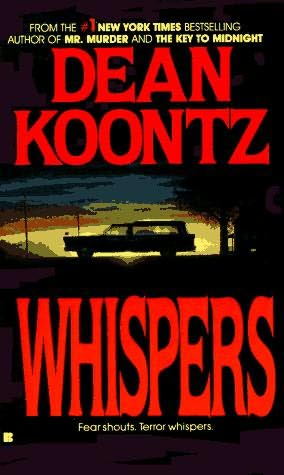
I recommended he read how Dean Koontz does it, especially in what is considered his breakout bestseller, Whispers (1980). There Koontz has an action scene (an attempted rape) that lasts 17 pages (that’s right, 17 pages!) all taking place within the close confines of a house.

Another panelist protested (in a good natured and professional manner). He said action needs to be “realistic.” For instance, when a gunshot is fired nobody has time to think. It all happens too fast. If they’re shot, the pain comes, and they will not be reflecting on anything. They’ll just be in pain.

This was grist for a great discussion. I licked my chops but, unfortunately, we were at the end of the panel and time was called. I never got a chance to respond. Now I do.

I would have said, first, that a gunshot does not cover the wide spectrum of action. In the Koontz scene from Whispers we have someone stalking the Lead. No guns. So that example is of limited value.

But further, and even more important: fiction is not reality! Fiction is the stylized rendition of reality for an emotional effect.

That’s so important I’ll say it again: Fiction is the stylized rendition of reality for an emotional effect.

Reality is boring. Reality is not drama. Reality is to be avoided at all costs (“We must stay drunk on writing,” Ray Bradbury once said, “so reality does not destroy us.”)

Hitchcock’s Axiom holds that a great story is life with the dull parts taken out. Reality has dull parts. Lots of them. Fiction, if it works, does not.

A thriller writer wants the reader to believe he or she is vicariously experiencing the story. We use techniques to engage the reader’s emotions all along the way. If there is no emotional hook, there is no thrill, no matter how “real” the writing seems.

Let’s have a look at a couple of clips from Whispers. Hilary Thomas, a successful screenwriter, comes home to discover that Bruno Frye, someone she’d met once, is waiting for her, and not for a game of cribbage.

She cleared her throat nervously. “What are you doing here?”

“Came to see you.”

“Why?”

“Just had to see you again.”

“About what?”

He was still grinning. He had a tense, predatory look. His was the smile of the wolf just before it closed its hungry jaws on the cornered rabbit.

Koontz breaks into the dialogue exchange for some description. The effect is like slow motion, which is another key to a good action scene. In essence, you slow down “real time” to create the feeling and tone you desire.

He took a step toward her.

She knew then, beyond doubt, what he wanted. But it was crazy, unthinkable. Why would a wealthy man of his high social position travel hundreds of miles to risk his fortune, reputation, and freedom for one brief violent moment of forced sex?

Now Koontz inserts a thought. In real time, when a rapist takes a step toward a victim, there would probably be no reflection, no pondering. But fiction enhances moments like this. Koontz is stretching the tension. He wants the reader taut while furiously flipping pages.

But 17 of them? Is Koontz insane? Or is he one of the best selling writers in history for a reason?

In fact, Koontz is a consummate pro who knows exactly what he’s doing. He even names it a couple of pages in:

Abruptly, the world was a slow-motion movie. Each second seemed like a minute. She watched him approach as if he were a creature in a nightmare, as if the atmosphere had suddenly become thick as syrup.

That, my friends, is stylization for emotional effect. If you’d like to grumble about that –– complain that it isn’t “like reality” –– you may send your objections directly to Dean Koontz, who gives his address in the back of his books.

Let me know what he says.

Meanwhile, if you’re looking to sell your fiction, learn to use the tools. Especially in actions scenes.

So what about you? Any writers you think do action particularly well? What makes an action scene work for you?

Let’s Leave JD Sleeping…

John Ramsey Miller

This week I was reading about a famous photographer with serious financial problems and I was thinking about how her dilemma is really nobody’s business but hers and the people she owes the money to. She collateralized a loan with the copyrights of every photograph she’s ever taken or will take. Other than the fact that it’s a cautionary tale of reversal, it’s just another story about someone who got in over their head. Why do we thrive on other people’s problems and especially their failures? There’s a German word for it that I can never remember how to spell and have to look up. It’s Schadenfreude. I don’t know why we don’t have a word in English for it. We watch fascinated like we’re getting paid for every Icarus that flies too close the media’s headlights. This incident with the photographer got me thinking about copyrights. It’s something authors should think about, become familiar with. I checked on the Net.

How long does a copyright last?
The term of copyright for a particular work depends on several factors, including whether it has been published, and, if so, the date of first publication. As a general rule, for works created after January 1, 1978, copyright protection lasts for the life of the author plus an additional 70 years. For an anonymous work, a pseudonymous work, or a work made for hire, the copyright endures for a term of 95 years from the year of its first publication or a term of 120 years from the year of its creation, whichever expires first. For works first published prior to 1978, the term will vary depending on several factors. Of course it’s complicated, and I don’t really know much about it. I guess we might all do to know where we stand legally speaking.

How familiar are we with the laws that protect us. And do you understand the Google Settlement? How pissed are we to get if our copyright is violated?

I started a new work this week and I’m excited about it because I’ve been doing a mental dance with the protagonist for a couple of months getting to know him, his cadence, his backstory. It’s not a thriller, it’s a story and I want to tell a story that isn’t a chase against the ticking clock. I don’t want my characters wearing their shoes out twice from the front cover to the back. I just want to once be able to peel an onion layer by layer and build suspense differently. I wonder how I would feel if somebody took this character after I am dead or have wandered off into the woods or am living with my chickens and dogs and put him in a book they wrote. I think I’d be weirded out.

A question comes to mind from a recent lawsuit. If I want to write a book that includes characters from Salinger’s book, CATCHER IN THE RYE, can I do it? Say you want to write a book that takes Holden Caufield thirty or forty years beyond where Salinger left him, can you do it? Why pick up something Salinger dropped? Can you do it if you get Salinger’s permission? Why would anybody write a book, spending a couple of years laboring at it using someone else’s character or characters?

We Have To Remember

By John Gilstrap
www.johngilstrap.com

I know that people read blogs for entertainment, and that as a writer, it’s my professional obligation to put fans’ needs ahead of my own. This week, though, I beg your forgiveness, because that’s not going to happen. This blog entry comes from a dark, dark place.

Eight years ago today, 2,980 people were murdered on a beautiful morning. According to WikiAnswers.com, 247 passengers were killed on hijacked airplanes, 2,595 workers were killed in the World Trade Centers, and 125 civilians and military personnel were murdered in the Pentagon. Officials estimate that 1,609 people lost their spouse or partner, and over 3,000 children lost parents. Nearly 6,000 mothers and fathers lost sons and daughters.

Ever stop to think about how horrible it must have been for the victims who’d been sentenced to death that day? Well, here’s a peek (be warned that it’s tough to listen to): http://tinyurl.com/yqdmjw

Does the video make you as angry as it makes me? Good God, those bastards bitch-slapped the most powerful nation on the planet. We should be acrimonious–shouldn’t we?

Well, apparently not. It seems that anger’s no longer cool. I recently heard a late night talk show host use 9/11 as a punch line in his monologue. Not this week, of course, because this is too near the anniversary, and that would be in bad taste. He didn’t mean to make light of the murders, I’m sure, but merely to score a cheap laugh by sticking a rhetorical finger in the eye of a politician. Sorry, some things will never be funny.

But humor eases pain, right?

I understand from educators and psychologists that the images of September 11 are too traumatic to be shown on television anymore. It’s not healthy to think about so much suffering, they say. I’ll defer to their expertise, but I don’t understand how we’re supposed to remember the dead if we don’t think about the plot and the people who murdered them.

And if we don’t remember the victims, how can we possibly remain vigilant? It depresses me that today’s seventh-graders likely have no concept of the trauma that the world endured on September 11, and it angers me that the world seems comfortable with that. Our children are not taught in school that bad people continue to lurk in terrorist cells planning their deaths, and yours, and mine. We teach them to fear garden-variety strangers, but not terrorists.

Is it possible that we’re just lazy? Anger is exhausting, after all, and fear is even more exhausting, so maybe it’s just human nature that we move on and try our best to forget; to let time do its thing to heal wounds. We can always remind ourselves of what it feels like if another attack comes, and then we can be angry again. We can even wave a few flags for a while.

You know, until it’s okay again to turn the tragedy into a punch line on late night television.

The Elusive Fifty Percent

by Michelle Gagnon

There’s an old adage in marketing: fifty percent of your advertising will work. The kicker is that you’ll probably never know which fifty percent.

Large companies spend a lot of time and money trying to figure out which of their campaigns succeeded through surveys. But the little people (myself included) don’t have access to that option.

Which leads me to this week’s conundrum: trying to figure out how to divide my marketing money for The Gatekeeper. I would hate to eliminate an effort that made a difference last time- the trouble is, I have no idea which aspect of my marketing campaign impacted sales.

In an effort to narrow it down, I asked for help from the MIRA marketing team. Was there anywhere in particular where Boneyard posted more sales? In the Northeast, perhaps, or even in specific stores and chains?

Nope, they said. At least, not as far as they could determine- the best information they had to go on (which, as we’ve discussed in earlier posts, is limited at best) came from Bookscan, and the numbers appeared to be divided equally nationwide.

For other products, there are more options. You could try online ads one month, then print ads the next: if your sales showed more of a bump in the first month, the next time around you could focus more energy online.

Unfortunately, authors don’t have that luxury. Our books have a very limited shelf life. At least with my publisher, the first six weeks count most. Just one month after The Gatekeeper’s release date, many of the copies will already have been taken off the shelves. Hardcovers and trade paperbacks hang in there a bit longer, but for all of us, the next wave of releases knock us off the front racks and back to the stacks (or, worse yet, to the remaindering pile).

Which means that all of my marketing efforts are focused on that six week window. Which results in a madcap book tour, and thousands of dollars scattered in a dozen different directions. Let’s call it the “buckshot” approach to book marketing – throw out everything you can afford in every direction imaginable, and keep your fingers crossed.

I know what didn’t work with my first book. A mass mailing to over a hundred bookstores, which cost a third of my budget and hours of time, most likely ended up in the trash/recycling bin at most of them. Elaine Petrocelli of Book Passage illustrated this at a conference by holding up an enormous trash can filled to the brim with promotional materials from authors and publishers. All collected in ONE WEEK.
Obviously, the next time around I skipped that option.
Even ARCs end up in stacks in the booksellers’ backrooms, most never touched by a single staff member.

Advertising online has some advantages. On sites like Facebook, you pay per click – but whether or not those clicks actually turn into sales remains a big question mark. Some people even run strange programs to make fake clicks for these, meaning that it’s super important to invest in something like click guardian to keep your finances sound. It’s a bit of a minefield otherwise, and without the backing of a big agency individual authors can really risk a sizable amount of revenue just on making sure no one abuses those adverts on the platform. This is why some people choose to use some other method to utilize this system, with places like KlientBoost and other pay per click advertising agencies that could assist your business with pay per click marketing services.

The blog tour I did last time around had an added advantage in that it cost nothing but time- a lot of it, however. By the end of the thirty stop tour, I’d written more than 33,000 words, a full third of a book. And did that help sales? Impossible to know.

I doubt I’m alone in wondering if there might not be a better way. Now that the full burden of marketing has fallen on most authors’ shoulders, couldn’t publishers help by providing more feedback on where they see sales happening? Wouldn’t it behoove them to come up with a more accurate measure than Bookscan? If I knew, for example, that a significant chink of my sales were happening in Kroger’s stores in Arkansas, I’d make a personal effort to connect with those retailers.

Anyway, that’s my rant for the day. I’ve decided to create bookmarks, chapbooks, and magnets per usual- they don’t cost much, and are easy to pass out. I’ll probably do a more limited book tour this time around, and will focus my actual tour on visiting some stores I was forced to skip last year. Aside from that, I’m still at a loss, staring at my Boneyard marketing spreadsheet, wondering what else to include and what to cut. Any and all suggestions are welcome- what’s worked for you in the past? Has anything in particular compelled you to buy a book you might not have known about otherwise?

Forensic Files

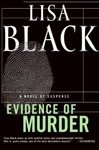
I’m proud to welcome my friend and fellow ITW thriller author Lisa Black to TKZ today. Lisa claims to have spent the happiest five years of her life in a morgue. Strange, perhaps, but true. In her job as a forensic scientist she analyzed gunshot residue on hands and clothing, hairs, fibers, paint, glass, DNA, blood and many other forms of trace evidence, as well as crime scenes. Now she works as a latent print examiner and crime scene analyst for a police department in Florida. EVIDENCE OF MURDER is her fourth published thriller.

evidence-murder I do not make a habit of taking my plots from real-live cases—it always sounded like a good way to get sued to me—but the germ of an idea for Evidence of Murder did come from a case I worked with the coroner’s office in Cleveland, Ohio. A woman who worked as an escort—quite legitimately, through an agency that could be looked up in the phone book—disappeared from the face of the earth after one final date.  She had a steady live-in boyfriend and an eight year old daughter. The story stuck in my mind for two reasons.

black-lisa

One, escorting (if that’s what it’s called) seemed like an odd way to make a living—at least to me, having been married long enough that spending every night with a different man sounds like an agonizing amount of work. Certain readers may be disappointed, but very little of the book refers to the victim’s job. For the most part it is mentioned only to point out that every person she encountered wrote her off as a brainless bimbo, including—at first—my main character, Theresa MacLean.

Two, it was one of those cases where the cops were positive they knew whodunit, but could not prove it. One huge disservice that the television shows do to the field of forensics is to insist that you can always find more evidence if you just look harder. Yeah, right. That’s like saying doctors could cure cancer if they really tried and obese people would be thin if they’d only eat less. Sometimes a clue (or a cure, or a solution) simply isn’t there. Sometimes cool things are there but may not be clues. I have a mental list of my real-life cool clues that never went anywhere. In one high-profile case where a mother of three was abducted from the parking lot of the local mall and later found assaulted and shot to death in her own van, I kept finding rabbit hairs dyed a brilliant cherry red. The family had only just bought the van and gave me every set of hairs, every coat, every piece of clothing they thought might have been in it. I asked the detectives to keep an eye out for some fun fur trim or a lucky rabbit’s foot (though those had fallen out of style by 1996). It never turned up. By the time we caught the killers, a year had passed. No red rabbit fur. Another time I was examining the raincoat of a murdered prostitute under ultraviolet light, looking for semen or fluorescing fibers. At one spot on this plastic raincoat a pattern leapt up—a crystal-clear design of stylized daisies, something that would have been popular during my childhood in the late 60’s or early 70’s. Obviously the raincoat had been up against something with fluorescent properties and, for some obscure chemical reasons I couldn’t begin to guess, transferred to the vinyl. In regular light, the pattern became invisible. I described it to the detectives but again, no bells rung. In forensics, contrary to what you see on TV, you have to make your peace with not knowing everything.

Sometimes clues are there but can’t tell you enough. Finding the hair of the victim in, say, the trunk of the suspect’s car might be very incriminating—if he says he never met the woman, it might be enough to convict him. If he happens to live with the woman, it means exactly nothing, since her hair is likely to be all over the apartment and easily transferred to items he might put in the trunk. Or she might have dropped it there while leaning over to take out the groceries. Or it might have fallen out when he transported her body to the dump site. There’s no way to tell. So I wanted to explore what happens when every physical clue Theresa finds simply leads her to a brick wall instead of some helpful revelation.

Do you use problems in your character’s workplace to further the plot, and how? After all, when your character’s profession relates to their process of detection, it’s more interesting when the day job doesn’t go as planned.

Visit Lisa Black on the web at http://www.lisa-black.com/