The eRights Grab
So to end the year, I thought I’d close with yet another issue confronting the publishing industry: eBook rights. Ten years ago, these were rarely included in contracts, since the prospect of reading books in this format was still fairly far off on the horizon.
But we’re about to enter a whole new decade, by the end of which I suspect at least half of all books will be enjoyed on some form of eReader (and that’s a conservative estimate). Which makes the move by Random House last week pertinent to all of us, especially authors who have backlist books where eRights weren’t spelled out.
Here’s what happened, as detailed by the Author’s Guild:
“On Friday, Random House CEO Markus Dohle sent a two-page letter to many literary agents regarding e-books. Much of the letter is devoted to Random House’s efforts and investments to market traditional and electronic books.
On the second page, Mr. Dohle gets to the point. After noting that most of Random House’s backlist titles grant the publisher electronic book rights (we agree, since most backlist titles are from the past ten years, a period in which authors have generally licensed electronic rights in tandem with their print rights), he writes that “there have been some misunderstandings concerning ebook rights in older backlist titles.” He then proceeds to argue that older contracts granting rights to publish “in book form” or “in all editions” grant electronic rights to Random House.
The misunderstandings reside entirely with Random House. Random House quite famously changed its standard contract to include e-book rights in 1994. (We remember it well — Random House tried to secure these rights for royalties of 5% of net proceeds, a pittance. We called it a “Land Grab on the Electronic Frontier” in our press release headline.) Random House felt the need to change its contract, quite plainly, because its authors did not grant those rights to it under Random House’s standard contracts prior to 1994.
A fundamental principle of book contracts is that the grant of rights is limited. Publishers acquire only the rights that they bargain for; authors retain rights they have not expressly granted to publishers. E-book rights, under older book contracts, were retained by the authors.
There’s no need to take our word for this, however. A federal court in 2001 examined this precise matter in Random House v. Rosetta Books. Judge Stein of the Southern District of New York was unequivocal in his 10-page decision: authors did not grant publishers the e-book rights in the old book contracts at issue. Judge Stein specifically dismissed notions, raised by Mr. Dohle in his letter to agents, that the non-compete clauses of these old contracts in some manner acted to grant Random House electronic rights to the works, saying that this “reasoning turns the analysis on its head.” The court pointed out that the license of rights comes solely from the contract’s grant language, not from the non-compete clause, and that non-competition clauses, to be enforceable, have to be narrowly construed. Using the non-compete clause to secure future rights is unsustainable. An appellate court affirmed Judge Stein’s decision.
We are sympathetic with the difficult position the publishing industry is in at the moment. The recession has been tough on book publishing, as it has been on many industries. And everyone with knowledge of the dynamics of the industry properly fears that Amazon’s dominance of the online markets for traditional and especially e-books will give it a chokehold on industry profits. Difficult times, however, do not justify this attempt at a retroactive rights grab.
It’s regrettable and unhelpful that Random House has chosen to try to intimidate authors and agents over these old book contracts. With such a weak legal hand, it would be well advised to stick to its strength — the advantages that its marketing muscle can provide owners of e-book rights. It should also start offering a fair royalty for those rights. Authors and publishers have traditionally split the proceeds from book sales. Most sublicenses, for example, provide for a 50/50 split of proceeds, and the standard trade book royalty of 15% of the hardcover retail price, back in the days that industry standard was established, represented about 50% of the net proceeds of the sale of the book. We’re confident that the current practice of paying 25% of net on e-books will not, in the long run, prevail. Savvy agents are well aware of this. The only reason e-book royalty rates are so low right now is that so little attention has been paid to them: sales were simply too low to scrap over. That’s beginning to change.
If you have an old book contract in which you haven’t granted e-book rights, patience is likely to pay off. The e-book industry is still young — there’s no need to jump in. And we strongly suspect e-royalty rates are at a low-water mark.”
I feel the same way- can a publisher really justify a 75/25 split when the costs involved with bringing an eBook to market are dramatically less than those incurred by a mass market paperback? The fact that initially 5% was offered is almost laughable- clearly someone saw the writing on the wall. The question is, with the entire market beginning to shift in this direction, how can authors protect themselves? How do you prevent your backlist from being exploited? Since eBooks tend to retail for $5-$15, a more equitable distribution of the royalties means that even with this seismic shift, writers could still manage to earn a living from their work.
It’ll be interesting to see how this issue in particular shakes out. No matter what, I think that despite all the doom and gloom, this is an exciting time to be involved in the publishing industry. The world is changing rapidly, and the publishing industry is now being dragged into the modern millenium. It’s impossible to foresee exactly what the future will bring, but no matter what, the times they are a changin’.
Happy holidays to all of you. Thanks for taking time out of your lives this year to rant, discuss, and debate with us. I’m looking forward to more of the same in 2010.
Best,
Michelle
All I Want For Christmas . . .
By Joe Moore
Last week I posted a blog about listening to music while writing, particularly motion picture scores. It works for me, and judging by the comments, many others like to use music when they write, too. Music is an amazingly powerful force in the world and can add to your memories of special times—there’s that tune from your first date, or the one you danced to as a newlywed on your wedding day. And so many countless other occasions.
One of the times of year I look forward to most is the Christmas season. And a big reason is, I love Christmas music. It must be playing throughout our house while we put up our decorations. And on Christmas day, it is nonstop in every room. There are so many great Holiday tunes to choose from; whether your tastes lean toward the traditional religious songs or the commercial pop hits, they all paint a warm and happy time of year.
My favorite has always been I’ll Be Home For Christmas, a poignant, emotional tune that never fails to bring back memories of a Christmas past with (hopefully) fond memories. It’s a short story with a surprise ending perfectly written for maximum impact.
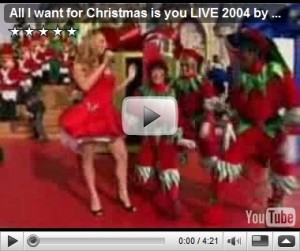
From the Rock era, there are hundreds of great tunes, but few can get you smiling and moving like All I Want For Christmas Is You. And there’s no one that can belt it out better than the grand diva herself, Mariah Carey. So take a short break from what you’re doing, sit back and let Ms. C entertain you. If you’re not smiling by the time it’s over, check your pulse for vital signs.
Since TKZ will be on vacation from December 21 through January 3, let me take this opportunity to wish everyone a Merry Christmas and a Happy New Year. See you next year.
A Christmas Carol
Santa List

Ah, the holiday season…time of looniness and mayhem… Today, being my last blog post for 2009, I’m going to channel the holiday spirit and write about conspicuous consumption (of books of course!) and my family’s current wish list for Santa.
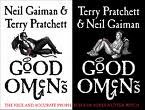
ey have few books still on their list so I’m going for the audio book approach: I figure I can’t go wrong with Good Omens by Neil Gaimon and Terry Pratchett (my father is a huge fan of both) or The Screwtape Letters by C.S Lewis…only problem, not sure Santa’s up on the whole ‘bureaucracy of hell’ or ‘the end is nigh’ stuff – might dampen the ho, ho, ho…but, bah humbug, that’s what they’re getting.
ules and my boys are already obsessed by the Secret Seven mystery series (seven kids, a dog named Scamper and lots of English village mysteries to solve) and are about to discover the Adventure series (four kids, a talking parrot and mysteries in exotic locations). Santa is fully up to speed on their book requirements though (sigh), Lego is still number one on their Santa list.My husband is always a trickier proposition, book-wise. He barely has enough
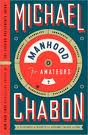
time to start a book let alone finish it, but I recently introduced him to a terrific Australian thriller writer, Michael Rowbotham, so I know he’ll be trying to read him over the holidays. As for his list, well I’m going for non-fiction instead with Michael Chabon’s latest, Manhood for Amateurs. I wasn’t quite ready to put his wife’s book, Bad Mother, on my Santa list (my fragile ego couldn’t cope with unwrapping it on Christmas Day…) but I’d love to read it all the same.
I have a veritable library of titles on my list for Santa…and certainly not enough time to read them all…but my top three are: AS Byatt’s Edwardian saga, The Children’s Book; Cormac McCarthy’s post apocalyptic, The Road, and Juliet Nicholson’s non-fiction account of collective mourning in the aftermath of WW1, The Great Silence.
10 Things I Think You Need to Know About Agents
1. Before you approach an agent, make sure your concept is killer. That means a) not shopworn (“We’ve seen this before”); or b) not so far off the map that anyone with a profit motive will run screaming from the room. It has to be fresh but not too weird. The characters have to jump off the page. There has to be enough at stake. Your opening pages have too move. Easy, right? Of course not, because if it was your Aunt Sally would be writing New York Times bestsellers. But here’s where you have to dig in if you want to interest an agent.
2. You are better off having no agent than having a bad agent. Anyone can print up business cards and call themselves “agent.” But what do they know about the business? Find out. A reputable agent should have a website with a list of their clients. Start there. What’s their background in the publishing biz? How long have they been agenting? There are some “watchdog” sites that issue warnings about certain names, so use your old pal Google.
3. You need to be businesslike about the relationship. Don’t jump at the first bite. Talk to the agent by phone. Ask some questions, see how you click personally. Be objective about this. From the agent’s side it’s business; it should be from your side, too.
4. You are probably unrealistic about what an agent can do for you. Having an agent doesn’t guarantee a contract. And just because an agent doesn’t get you a sale doesn’t mean he or she is the problem. It might be your writing, or your timing. A good agent will suggest ways to overcome market weaknesses, but ultimately you have to take charge of improving as a writer. And you’d better do it, because there are a bunch of other writers out there who are.
5. Your agent has many clients; you have only one agent. Don’t expect all the attention. Don’t expect immediate return of phone calls, unless it’s a publishing emergency. Don’t expect immediate return of emails unless it is an issue affecting your professional life, like, right now.
6. But agents aren’t mind readers, either. If you have a question or issue, contact them. Don’t let your frustrations build to the point where it affects your writing.
7. Agents are human beings. “Thank You” notes (real ones, made out of paper, sent with a stamp) do mean something. So do Starbucks cards and chocolate.
8. Agent Rachelle Gardner has a great post with her take on some “bad advice” she’s read regarding agents. Read it.
9. Read blogs by agents, but don’t let the plethora of information freak you out. Ultimately the most important thing is your writing, the thing you have most control over. Keep coming up with ideas and keep growing as a writer.
10. Fred Allen, the famous radio comedian, once said, “You can take all the sincerity in Hollywood and put it into a gnat’s navel, and still have room for two caraway seeds and an agent’s heart.” I get to tell that joke because I’m a former lawyer and had to put up with lawyer jokes all the time. But now the truth. The overwhelming majority of agents I’ve met at conferences love books and authors and want the best for both. So approach agents professionally. They want to like you. Show them what you’ve got. Don’t be dull and don’t be desperate. It’s a tough business out there right now and it’s not just writers feeling it, it’s agents, too. Everybody in this profession has to keep slugging.
I Try To Not Complain
John Ramsey Miller
I have been so very fortunate in my careers and my personal life that when I realize I’m complaining, I feel like crap. I have been lucky, and my hard work has paid off in spades. True I’m not a Dan Brown, but I’ve made a very good living from my writing, and in fact I have not had to work at a non-writing job since the middle eighties. That may no longer be the case, but I’ve got few complaints about that. I’m pretty grateful for this great resume template I’ve always followed, as I have a feeling it’s been the reason behind a lot of my success, and it will be even more so now as I’m seriously considering looking for a day job again, after two decades of writing. I shudder to think about jobs that I would be qualified for and businesses that would have me. Every time I’ve been to Walmart, I see they have the same greeter, and standing at the doorway and the thought of saying, “Welcome to Walmart” thousands of times a day makes my feet and my throat hurt.
Realistically speaking I’m a dead man when it comes to a job application. And can you imagine how “Contemplative Storyteller or Professional Fiction Author from 1994-2009” will read to the HR people at the local Piggly Wiggly? Even bagboys need better creds than that.
I never finished college. I suck at math. I can’t dance. I couldn’t sell ice water in the Mojave. Most of my clothes as of late are Levis, T-shirts and flannel shirts and I’m shy unless I’ve had a couple of shots. Even if sixty is the new fifty, I’m middle aged.
I’m good with guns, so I could be a night watchman, except that I am usually asleep by eight-thirty. I have some other ideas, but I’m still writing books thinking if I don’t write, I might have to actually get a real job. If I did spend my days saying, “Welcome to Walmart” I might could steer shoppers to my books in the paperback section of the Literary department.
God, I need a vacation.
Go Ahead: Muster the Courage to Sing Along
By John Gilstrap
I understand that all too often, my hard-earned cynicism shows through, and that I can seem somewhat . . . harsh to people who don’t know me very well. Come to think of it, I might come off as harsh to people who do know me well, also, but I like to think that they grant me the benefit of doubt.
Come Christmastime, though, I become all sappy and tingly. Cynicism makes way for childish optimism.
Our decorations go up the weekend after Thanksgiving, and they stay up through the New Year. The Gilstraps are not competitive decorators, but we’re thorough decorators. In my world, there’s never enough garland or lights. Our Christmas tree is adorned with ornaments from every family vacation, plus two generations of arts and crafts products. My parents’ first treetop ornament has grown too fragile to actually serve atop the tree anymore, but it nonetheless has a prominent place on the kitchen mantle. My son’s favorite Teddy bear from back in the day drives a sleigh that also transports our departed black Labrador retriever’s favorite chew toy.
Are you getting the picture here? Christmas for me is a time for unabashed sentimentality. It’s about loving the people who are in my life, and remembering those who have passed beyond my life. It’s a time when I believe people are nicer to each other. It’s the time of year when Disney-style happy endings always seem possible, if not particularly probable.
It’s with this lightness of heart that I make my daily commute into Washington, DC from my outpost town of Fairfax, Virginia via the Orange Line of the Metro system. I’ve only been a day-job commuter for a little more than four years, but for each of those, I’ve witnessed a Christmas phenomenon that I’ve never seen reported in any of the local news: A nicely-dressed Asian man boards the train at one of the suburban stops, excuses himself, and then sings a Christmas carol to the commuters.
Maybe you need to understand the commuting rules of engagement in Washington, but no one–no one–speaks during the morning commute. We’re very important people in DC, and interruptions are unheard of. Thus, when someone not only sings, but sings of Christmas–the most un-PC of holidays in DC–folks actually get a little nervous. If he had a gun, we’d know what to do; but when he brings a message of cheer, we get flummoxed.
I’ve done a fair amount of singing in my lifetime–both in the shower and out of it–and I know just about every Christmas carol by heart, but even though I’d love to sing along, deep down inside, I’m a coward. Many of my seat mates and aisle mates roll their eyes when they see this unnamed guy. A few giggle. In my gut, I want to go for the Disney Christmas scene where everyone lives inside a musical and no one is embarrassed to belt out the words, but I’ve never grown a big enough pair to give it a shot.
Until this morning.
The mysterious Asian man entered the subway car and started with one of my favorites, “O Little Town of Bethlehem”, and I am proud to announce that I sang along with him. I didn’t mumble, either. I sang full-voice, drawing an annoyed glance from the commuters sitting in front of me. I wish I could report that the entire car was united in song by the time we were finished, but alas, that was not the case. A few people were humming, though, and more than a few gave my guy a hearty “Merry Christmas” as he got off at the next stop.
I admire my mystery man. I appreciate his efforts to bring joy to the hearts of grumpy commuters. If only more people would sing, think how much better their days would become.
What do you think? Could you muster the courage to sing along?
The Point of it All
The last few weeks have easily been among the most challenging of my writing career. I’ve been on tour, which sounds like great fun until you actually have to spend the greater part of a month away from your family, surviving on granola bars and coffee since events invariably take place at dinnertime and I haven’t yet figured out how to work meals around that.
Plus for the first time I had an event where no one-not one person- showed. I realize that happens to most authors at one point or another, and I’m not claiming to generally draw crowds. But still-it was disheartening.
My publisher announced a new vanity-publishing imprint that caused quite a bit of furor (more on that here). And the ensuing back and forth consumed time and energy that I really couldn’t spare.
Especially since I’ve been juggling the marketing of THE GATEKEEPER while rushing to meet an extremely tight deadline for my next book.
And, for the first time in my writing career, I stalled out.
One of my main characters was trapped in a very dark, hopeless place. And I couldn’t for the life of me figure out how to extricate her from such a desperate situation. Not outlining had suddenly come back to haunt me for the first time. I was fairly certain I’d written myself into a corner.
As I dragged myself out of bed to catch a 6AM flight, it struck me as an apt metaphor. I’d spent years of my living striving to get to this point in my career, and for the first time since signing a writing contract, I wasn’t enjoying it. I know that before I was published, listening to writers whine about their hardships always induced a snort- but there are occasional drawbacks to getting what you want. And as I shuffled through security yet again, it all seemed pointless. I felt trapped by deadlines, tour dates, and all of the ancillary nonsense that sometimes goes on in this industry. I was mired in the same place as my character.
Funny how life works sometimes. I opened my inbox to find this email:
My husband was a fan of yours. He entered one of your contests a year or so ago and won the book “Tunnels”. You autographed the book and it meant a lot to him. He was reading the second book “Boneyard” when he was placed in hospice. He was very sick and he so desperately wanted to finish the book. I tried to read to him but he wanted to read it himself. He never got the chance to finish your book but I just wanted you to know how much he enjoyed them. Thank you for sending the autographed book. I, too, am reading your books and looking forward to next one’s debut, Thank you for making the last months of his life just a bit happier.
I really can’t express how much this email meant to me. It’s easily the nicest thing anyone has ever said about my work-and it’s absolutely more than it deserves. So the next time I find myself descending into that dark place, I have this lovely note to serve as my reminder. I am so very fortunate to be healthy and whole, doing what I’m doing.
The Big Score
By Joe Moore
Over at Murderati, my friend Brett Battles recently blogged about writing while listening to music. Since I’m a big believer in doing it, I thought I’d add my two cents to the topic.
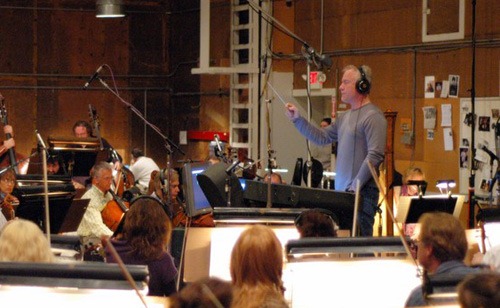
Lets start by looking at the cinema. Arguably, a movie would lose its impact without music. Even in the days of silent movies, there was a live piano player in the theater whose job was to add drama to each scene. You can have the greatest photography, acting, direction, set design and script, but without music, the movie would probably fall flat. Not to be confused with what some call movie soundtracks–usually a collection contemporary tunes–movie scores are written and orchestrated pieces of original music specifically
designed for a particular scene. They enhance and support the visual images. If you listen to a movie score isolated from the visuals, it can verge on being classical in nature. As a matter of fact, I consider names like Trevor Jones, Randy Edelman, Hans Zimmer, Ennio Morricone, James Horner, John Williams, Howard Shore, and many others to be our modern day classical composers.
I discovered many years ago that I could also use the element of music to help me write. Someone gave me the CD score to THE MISSION with Robert De Niro. It happened to be playing on my stereo as I started a new chapter, and I realized that the music set exactly the same mood as the scene on which I was working. So from then on, as I watched movies I would pay particular attention to the scores. If they evoked the type of mood I sought in my WIP, or just set a very cool, dramatic, romantic or spooky mood, I would order the CD and rip it to MP3.
I now have a huge collection of scores on my computer and rarely sit down to write without my MP3 player on “shuffle”. I don’t use any music with lyrics since I find that other people’s words distract me. That’s why scores work so well—in most cases they are instrumental.
So if you’d like to try writing dramatic scenes to music, here’s a short list of my favorite CDs that seem to have it all when it comes to creating a mood found in most mysteries and thrillers.
A Beautiful Mind, James Horner
The Bone Collector, Craig Armstrong
Burn After Reading, Carter Burwell
A Very Long Engagement, Angelo Badalamenti
House of Sand and Fog, James Horner
The Human Stain, Rachel Portman
The Lives of Others, Gabriel Yared
March of the Penguins, Alex Wurman
Runaway Jury, Christopher Young
Amazon lets you sample the tracks before you purchase, so enjoy listening then find the one that fits your WIP.
Do you write to music? Lyrics or instrumental. What are your top five CDs for background music while you write?