by John Gilstrap
www.johngilstrap.com
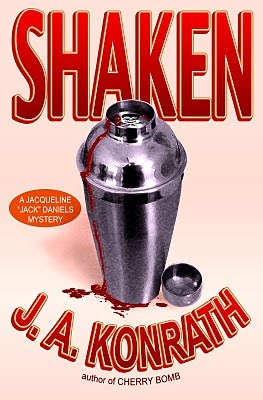
Last week, Michelle Gagnon reported on Joe Konrath’s presumably groundbreaking deal with AmazonEncore. In essence, his next book will be published first as a Kindle-only edition, and then as a traditional book, with Joe pocketing more attractive royalties than are offered by any mainstream publishers. It was presented as a really big deal. Maybe even a game changer.
Earlier this week, Publishers Weekly posted a story on its website that refuted most of the claims made in Konrath’s press release. The tone of the PW piece was snarky at best, and maybe even a little bit mean. Konrath posted a retaliatory blog encouraging his legions of fans to let PW know that the magazine’s reporter got a lot of facts “wrong.” I put “wrong” in quotation marks here because I’ve got no dog in this fight, and I don’t know any of the facts. I’m certainly not in a position to take sides, and deep down inside, I don’t much care.
What I find startling about the whole thing is the level of anger out there focused on the publishing industry. Publishers, you’ll learn, wouldn’t know quality writing if it kissed them on the nose, and agents are evil incarnate, allegedly in cahoots with the evil publishers to make sure that the world’s most talented writers are never allowed to have a voice in print.
It’s like stepping through some twisted version of Alice’s looking glass. The publishing world alleged by some of the most spun-up of these sites and others represent the exact opposite of my own experience. In the publishing world I know, every agent is desperately hungry for the next great voice in authordom, and every publisher is betting the corporate treasury every day on new talent. They might now be doing it millions of dollars at a time as they were in the 1990s, but they’re certainly doing it tens of thousands of dollars at a time. New careers are being launched every day.
According to many of the posters on the screaming websites, the publishing industry as we know it is locked in denial of the fact that they are dinosaurs that refuse to accept that they’re dying. In their death throes, they refuse to admit that the future lies in self-published novels and ebooks.
It’s hard for me to imagine a more foul-smelling steaming crock of bull poop. Alternative publishing will certainly change the business model—who knows, it might derail it completely—but if that happens, it won’t happen because publishers are evil; it will happen because readers change their habits.
Which leaves us with the anger. Where is this coming from? Isn’t it remotely possible that the preponderance of the rejected manuscripts out there are in fact rejected because they aren’t very good? Or if they’re good, they’re not marketable? Doesn’t the traditional publishing model exist at least in large part because the model provides quality control?
Is it possible that Joe Konrath’s success—which I do not dispute—actually provides false hope to authors who aren’t very good at what they do? As an author who has had at least some measure of commercial success, is it possible that Joe’s success at independent publishing is not relevant to the average aspiring writer?
 s provided in its best moments. Since the debut it was an emotional ride, focused on the characters and the journey they’ve undertaken together. It provided enough answers to give some satisfaction, while still leaving quite a bit open to debate. I suspect that if the writers had known from the outset how many episodes total they’d have to play with, it would have been a much tighter story arc. But alas, that’s not how the world of TV works. Going in, they never could have guessed what a hit the show would become, and how many slavering fans would dissect every scene. That being said, I think they did a great job. In the end the series shone a light on the true meaning of love and friendship, redemption, and mortality. Some people complained that it was mawkish and maudlin. For me, the sentimentality worked. After all, I’d spent years with these characters. I cared about what happened to them. I wanted things to work out for them- and based on my interpretation of the finale, it did.
 because every character possessed the capacity for both good and evil acts (even Dutch: remember him strangling that cat?) And the conclusion here was grim. In the end, Vic Mackey ended up losing his family and friends, stuck in a day job that was for him a living hell, with all of his crimes brought to light. Things didn’t really end well for most of the characters we cared about: they were either dead, in jail, or alone and isolated. It was the furthest thing from a happy ending, yet it was satisfying, because there was a sense that justice had been done, and everyone ended up paying the price for it.
 n Jimmy Kimmel, see them