Improving the Kindle and some other things
I am having one of those rare days where I am actually feeling my age and as a result I am somewhat (uncharacteristically) cranky. After chasing the neighborhood urchins off of the driveway and kicking the cat I was playing with my Kindle and instead of 1) being thankful for the technological marvel that it is and 2) still being alive to see it I instead started grousing to myself about what it isn’t, and what it doesn’t have. Just for the record, I love the Kindle. I really do. I don’t love it as much as the flash drive (for which, I confess, I have acquired feelings a couple steps down from a fetish) but it’s close. It’s not quite where I want it, however. Herewith, some suggestions. Some of these items are within the control of Kindle’s makers, and I have shared with them, receiving in return the electronic equivalent of a pat, tickle and rub on the head. Other of these suggestions would require some modification from elsewhere. Without further ado:
— A built-in backlight would be wonderful. I have trouble sleeping and night and a page or two of Pilgrim‘s Progress would be just the berries as a cure for insomnia. If I get up to go into another room I usually awaken my wife, which I don’t like to do. It would be easy to reach for the Kindle, and fall back asleep within minutes, if not seconds. I know that one can buy a light to attach to The Precious but if you’re paying over one hundred dollars for something like this to begin with, you really shouldn’t have in order to read it at night. I mean, I can read an iPad at night.
—A carrying/storage case that comes with your purchase. When you pay over one hundred bucks for something you ought to have something that provides you at least minimal protection for it. Maybe Jeff Bezos could farm that one out to the folks at Church & Dwight, who have made a fortune manufacturing and selling cases that provide at least minimal protection from all sorts of things at a very low cost.
— Free books with a purchase of a Kindle. I’m not talking about things in the public domain, either. I’m talking about books people want. You buy a Kindle, you get three books (for example), each of which retail on the site for fifteen or less, for free, as an incentive to buy a Kindle. It’s a wonderful instrument, but we’re being asked to shell out a lot of money for an object that won’t work unless you shell out more money. And by the way, I’m talking free to the consumer. Amazon takes the hit on the payment to the publisher (if any) and the author, both of whom get paid as if the book was purchased. And while we’re wishing and the beggars are riding, what about a points arrangement? The Kindle owner buys books, and accumulates points, which they can turn in for a book. The consumer gets one point per dollar spent, and then can turn in (for example) three hundred points for a three dollar book. People love getting things that they think are free. Get people buying and reading more.
— Access to Pandora from your Kindle. Wouldn’t that be fun? If you have no idea what Pandora is check out www.pandora.com and become your own disc jockey.
That’s a few of the things that Amazon could do on its own. Here are some other things that would make the Kindle more interesting.
— More books. I am amazed what is available on Kindle but am more amazed by what I cannot buy. The Alexandria Quartet by Laurence Durrell. A lack of golden age science fiction by such luminaries as Robert H. Heinlein (a lot of his books are missing) Theodore Sturgeon (what?! No More Than Human?!). None of Ross MacDonald’s classic novels. This is a complicated issue having to due with rights and estates and lawyers, oh my, that it is probably going to get worse and not better. I am a capitalist and proud of it, ladies and gentlemen, so please believe me when I tell you that t there is money to be made here for everybody if we all play nice and divide the pie up equitably. Pretend its Christmas, there’s one candy left in the dish, and the person you want to seduce most is looking at it. Share.
— Don’t let the publishers set the prices, at least all by themselves. I am not one of those guys who believe that publishers are inherently evil or even evil at all, by accident or design. It is simply that setting the prices for books in this new format is virgin territory for them. Significant mistakes are being made. The sweet spot for the price of a novel appears to be around $2.99 per book. The attitude of some publishers towards this, in some cases, seems to be that of Captain Picard: “$19.99. Make it so.” Won’t happen. iTunes started screwing around with the price of single music tracks — raising them — and guess what? Sales dropped. As a talking point, start at a price of around $8.99 for best sellers and $2.99 for mid-list or new authors to generate some interest in new blood and to encourage readers to try someone new. Let the author and Amazon (or B & N, or Apple, or whatever vendor) make the final decision, and let the publisher explain how that price will affect what happens to the book in physical form. It’s a different business model, true. But we’re not all sitting on the dock at Boston Harbor, waiting for the ship to bring in the next installment of Charles Dickens’ new book. It’s time to rewrite at least some of the business manual.
* * *
What I’m reading: I finished Crooked Letter, Crooked Letter by Tom Franklin a few days ago and have re-read it twice since then. It is a classic, pure and simple, of many genres but possessed fully by none. If I could afford to I would pass it out (or load it onto Kindles) door-to-door. The last few pages continue to bring tears to my eyes. But don’t tell anyone.
Opinions, Please
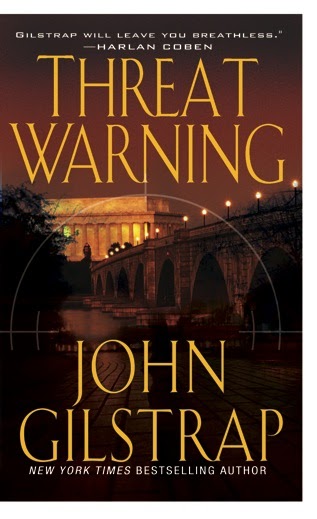
This week, I heard the words that every author lives to hear from his editor: “I love it!” This in response to reading my new entry in the Jonathan Grave series, to be published next July. The title is Threat Warning, and the opening scene features two young people opening fire on gridlocked traffic on the Woodrow Wilson Bridge, one of only two Beltway Bridges over the Potomac River. When the shooting is over and the panic is building, one of the shooters carjacks a mother and her son, launching a series of events that prompt Jonathan Grave to implement his very special skills.Thinking about Theme
We often discuss the different elements of writing fiction here at TKZ. Topics such as plot, narration, characterization, dialog, and point of view are just a few that come up now and then. But a topic that’s not touched on as often is theme. Theme is usually a global statement on what a book is about. Theme goes beyond plot by conveying the message that supports the structure of the story. In many instances, it expresses a lofty idea usually revolving around human emotions or life in general.
A good starting point in determining a book’s theme is to first establish its subject or topic. This is normally expressed in a one-word description such as love, revenge, jealousy, fear, deceit, betrayal, etc. The theme can then be found by turning the subject or topic into a short, focused statement.
So for instance, if the subject of a novel is fear, the theme could be fear exposes the true nature of an individual. If the subject is revenge, the theme could be by taking revenge, you become just like your enemy. If the topic is betrayal, the theme might be that betrayal only hurts the ones you love.
A book’s theme can teach or preach. The former is preferred. No one wants to be preached to. But we all desire to build upon or confirm our beliefs. The theme can address “big” issues such as the meaning of life. Or something more manageable like crime doesn’t pay.
Whatever the theme, all stories have them. How well they come across without being “in your face” relies on the skill of the author.
What is the subject or topic of your favorite book(s)? And what was the theme? Did you feel the writer was teaching or preaching? How about your own work? Do you knowingly have a theme before you start writing?
Writing rituals
Most writers have rituals, little warm-up routines that we must complete before daily writing commences. Our personal writing rituals, which can sometimes be elaborate, are considered sacred to the creative process.
When I was working a day job, my ritual was similar to Grisham’s. I would rise by 5 a.m., get the coffee going, then sit down at the dining room table and work until I had at least one page done. Then on to my day job.
Now that my day job has been offshored to China (thank you, globalization), and I find myself with much more free time, my writing ritual has inflated like a CEO’s salary. In addition to coffee I now do some Internet surfing before settling down to writing. Depending on my level of motivation, surf’s up anywhere from 20 minutes to 2 hours. I also feel a strange compulsion to sharpen every pencil in the house before I hit the keyboard. I think it’s a leftover ritual from high school, when I would rise at 4 a.m. to do my homework. I never did any work at night, and still don’t. My pencil-sharpening compulsion isn’t nearly as time-consuming as the ritual of a friend of mine, who is a successful writer. A major procrastinator, she cleans her entire house before settling down to work. If the house is already clean, she’ll organize her drawers.
Here’s a little ode to ritual by MsWriteNow. And then tell us–what is your writing ritual, and how important is it to you in terms of getting your work done?
The Fame Game

AND…

AND…
AND…

AND…

is to make it into Vanity Fair magazine – it doesn’t have to be the cover (though how cool would that be!), it doesn’t even have to be a big article (just a side column, snippet or photo would be fine) but for me it is something akin to a rock band’s lust for making the cover of Rolling Stone. I don’t know what it is about Vanity Fair, but if I could make it into one magazine that would be it.So what ‘rich and famous’ daydreams do you indulge in? If you could be written about in just one magazine what would it be? The New Yorker? Fortune? Sports Illustrated:) ?
The Stress Free Query
Bookstores: An Endangered Species
John Ramsey Miller
About a year ago a couple opened a bookstore in Locust, NC, a picturesque small town a few miles from here. They were personable, energetic and did most everything the right way. They had an accessible and central location in the downtown, put out word to area readers, contacted authors and advertised signings, kept up by newsletter with their readers and customers, hosted a book club, had author events by the score, and generally gave it their all. I had asked them to sell my books at a fund-raising event for the supporters and alumni at a local University, and they readily agreed. Yesterday I received an e-mail that, since they were closing immediately and selling out their stock the next day, so they would not be able to sell my books at the event. They apologized for any inconvenience and I sent a note of understanding and condolence. The only thing they did wrong was to open a bookstore in a disastrous environment.
We write here often about the troubles and the demise of small independent bookstores. Every author has seen their favorite booksellers fail as the mega sellers rose and ate them one by one. When the ARC for my first book, THE LAST FAMILY, was sent out, John Barringer owned The Little Professor in Charlotte. He liked it enough that he sent out a personal letter to all of the Independent Booksellers on his list. At that time he was the president of the League of Independent Booksellers of the Planet Earth, or something like that, and he sent hundreds of letters of recommendation to booksellers on his list. Nobody asked him to or paid him to do it, and at that time he didn’t know I wrote that book while I was living around the corner from his store and was a customer at that time. I’d never spoken to him, but I used our common zip code in the book, which he caught. He tracked me down through the publisher and called me to praise my work and to set up a signing. He and his staff hand sold a good three hundred of my books in his store and God knows how many through his recommendation letter. A few years back John sold the store and retired due to health issues. The store is still going strong and changed its name to Park Road Books (still a Little Professor franchise). They remain in business because they have a history of excellence, a great atmosphere, the staff works hard, they hand sell, and they have a fairly loyal customer base (that in itself is a rarity). I have never done a signing in an independent book store without buying books from them to show my appreciation in a meaningful way. And I’ve never asked for a discount.
Now the e-book is an additional (and serious) threat to booksellers––even the big chains. I suppose they will have to find a way to get in on that market or more will fail. I’m not sure how that would work since the publishers can do that themselves without any second party being necessary for distribution. I love my Kindle, and although I love browsing in book stores, I am now ordering books in electronic streams. I will say that there are some books that will never work as ebooks on Kindles––most notably books for children (Golden Books) and art books. Of course I may well be proved wrong
Big box stores are sterile and I get the feeling that the younger staff members are working for the money and I doubt most of them are even readers, much less book lovers. Forget hand selling. The majority of staff at some stores are just clerks standing at registers and would be equally at home there, in supermarkets or in bait shops. A real shame. Independents would never put up with that.
Most of us authors (especially the older ones) have had great experiences signing in amazing stores. We all have our favorite bookstores. Aside from the Little Professor in Charlotte, my best signing experiences were at Square Books in Oxford, MS and Lemuria in Jackson, MS.
Bad Guy Boot Camp
By John Gilstrap
Good morning, everyone. Welcome to Bad Guy Boot Camp. Please take your seats so we can get started. Yes, it’s good to see you, too, Dr. Lecter. What’s that? Oh, no thanks. While your snack looks delicious, I’m still full from breakfast.
Um, Mr. Morgan? Dexter? Please don’t sit so close to Dr. Lecter. Okay, I’m pleased that you’d like to get to know him better, but you can do that after the session. The lounge downstairs has a very nice wine list. I recommend the Chianti.
Let’s get right to it, shall we? I think I speak for all of us when I say that I’m sick and tired of the good guys getting all the credit in fiction. Without us, all those stories would be pretty darned boring and I think that . . .
Um, Mr. Dolarhyde, please turn off the camera. We don’t allow filming of these sessions, and I believe you know why. Thank you.
As I was saying, I think it’s about time that we started taking more pride in our work. For me, it’s about craftsmanship and respect. For example—and please take no offense—several of you were taken down by a quadriplegic detective. I mean, really. That’s embarrassing. Yes, we all know that it’s the hot chick doing all the leg work (no pun intended), but the quad is the headline, and that makes us all look bad.
Let’s start at the beginning. If you’re going to be a bad guy, be a freaking bad guy. Do your crimes, get them over with, and quit making it so easy for the good guys. If we frustrate those detectives enough, they’ll quit being so glib.
Let’s start with you serial killers. I know you’re crazy and all, but try to stay focused on the goal here: sexual gratification through unspeakable mutilation. Everything else is secondary. You’ve got to quit it with the notes and clues. I know that for some of you, the creative process requires spewing DNA, and I suppose you gotta do what you gotta do, but how about leaving that as your only direct pathway to arrest? It’s about risk management. In a perfect world, you should keep all your body juices to yourself, but for heaven’s sake, do without the notes and the videos.
And here’s a suggestion for everyone: Stay out of Miami, Vegas and New York. They’ve got CSI teams there that are unlike any I’ve ever seen. As some of you know all too well, they’ve got a hundred percent catch ratio, and the average time from incident to arrest is only an hour. Really, an hour. I recommend keeping to the heartland, where all the local police are incompetent and depend exclusively on the FBI or on passing private investigators to get anything done.
Any questions? Okay, great.
Let’s move on to marksmanship and gunplay. Folks, as a group, we really need to sign up for some NRA courses to learn how to shoot. I notice a trend developing in which you’re very accurate at the beginning of your crime spree, but then something happens once the star sleuths get involved. Folks, you’ve got to settle down and shoot straight. When you whiff the shot and hit within inches of your target—and we do that a lot—we end up alerting the good guys to our presence, and we lose our advantage.
Look, the odds are already stacked against us as it is. The good guys are on the opposite talent trajectory from us. They tend to whiff their shots the first time we run into them, but then get better toward the end of our relationship. Many of them have weapons that never need reloading, cell phones that operate everywhere, all the time, and an uncanny ability to fight on even while critically wounded. We need to close the deal on these folks the first time we see them.
Here’s the key: When in doubt, shoot. If the moment comes when you’re muzzle to muzzle with the good guy, don’t negotiate, shoot. Why do you care if he drops his gun? You’re a bad guy. Act like one. Just pop him. Same goes when you have the good guy captured and immobilized. Why are you tying him up to begin with?
Sorry, Dexter, that doesn’t apply to you, but unlike most of the others in the room, though, you put the ropes and knots to good use. The rest of you use that opportunity to chat. For crying out loud, quit doing that! Let the SOB go to his grave wondering why you’re doing what you’re doing. That can all be part of the torture.
Yes, Dr. Moriarty, you have a question?
Actually, I’m not sure I agree that murders have become less civilized over the years. You should bring that up with Lizzie Borden during her lunchtime keynote this afternoon . . .
Translating bestsellers to the screen
I stumbled across this piece the other day in the LA Times, which dovetailed perfectly with a conversation a friend and I had recently about the pros and cons of getting your novel optioned. Several current NY Times bestselling writers were virtually undiscovered until their book was made into a film (Douglas Preston and Lincoln Child with THE RELIC come to mind. On a side note: great book, terrible movie).
For many authors the possibility of having their work made into a film, whether the end result is a masterpiece or not, is the dream goal. Because if nothing else, the amount of free advertising garnered by a film release exponentially outpaces what most of us receive from our publisher’s marketing departments.
Yet paradoxically, all too frequently a book that was a runaway bestseller on its own flops at the box office.
Why?
I can give a few examples. Let’s start with THE LOVELY BONES, hands down one of
my favorite reads of the past several years. I thought the adroit manner with which Alice Sebold handled such a difficult storyline was absolutely astonishing. Having a murdered young girl watch her family deal with what happened from the vantage point of heaven could have been unbelievably trite, cliched, and painful to witness. Yet she was so skilled and deft with the story that it worked. It remains one of the only books I’ve ever read that moved me to tears.
When I heard that it was being made into a film, I recoiled. Even though the director was someone whose other work I loved. Because for me, this was a story that I’d experienced so viscerally on the page, nothing onscreen could match it. And so much of what Sebold accomplished had little to do with the actual story, and everything to do with the way in which she wrote it.
THE TIME TRAVELER’S WIFE is another example. Constructing a linear narrative via a plot that jumped back and forth through time, frequently showcasing different decades on the same page–that was simply astonishing. I became invested in the characters despite the fact that from the opening pages, I knew something terrible was going to happen. But did I want to see Eric Bana and Rachel McAdams as those characters? Not really. Again, they’re two actors whose work I generally enjoy. But it felt as though watching someone else’s interpretation of the book would taint a reading experience that was extremely cathartic for me.
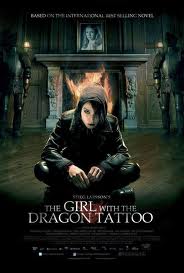
The flip side of the coin is books that actually worked better onscreen. As I wrote in an earlier post, I was underwhelmed by THE GIRL WITH THE DRAGON TATTO
O. Interesting characters and one interesting plotline (out of two), but any positives for me were lost in what appeared to be an unedited manuscript.
The screenwriter did the smart thing by focusing on the main storyline, eliminating unnecessary details, characters, and red herrings, and condensing it all into something that I thoroughly enjoyed.
Granted, it’s rare, but those few times that a filmmaker manages to improve upon a book, the end result is remarkable (I still think that the cinematic ending of ABOUT A BOY was superior to Hornby’s original). One of the listservs I frequent is currently engaged in a heated debate about the casting for the film version of Evanovich’s ONE FOR THE MONEY. Is Katherine Heigl the right actor to portray Stephanie Plum? She’s not what I imagined for that character, but given her comedic flair, she might surprise me. And how about Angelina Jolie as Kay Scarpetta? Apparently so far Cromwell’s fans are voting 10-1 against the casting. But is the issue that they think she’s wrong for the role, or that they just can’t imagine any actor matching what their imagination conjured up for that character?
So which books would you never want to see on the big screen? And conversely, which movies do you think in the end produced a superior experience?