
By John Gilstrap
If you’ve been visiting my little corner of The Killzone for any time at all, you probably know that my rules for writing are limited to only one: There are no rules. There are really good suggestions, but at the end of the day, if you can make something work on the page, it doesn’t matter if there’s a widely accepted “rule” against it. This game is all about originality.
But a little clarification is in order. When I say no rules, I really mean no universal rules. I have rules for my own writing because they work for me. I would never presume to suggest that the same rules would work for any other writer.
Every now and then, though—usually in the context of a writers’ conference involving manuscript evaluations—other writers’ rules collide with mine, and then things can get awkward.
Over the years, then, I have developed a list of Gilstrap’s Ten Rules for Manuscript Evaluation:
1. Number your pages and put your name or project title on every page. The reality is that I will lose your paper clip and I will drop your papers on the floor at least once. I don’t do this on purpose; it just always happens. Sometimes the pages get separated in my briefcase. However it happens, jumbled papers are jumbled papers. It helps to know which ones belong to whom, and in what order.
2. Have confidence in Times New Roman 12-point type. Reducing the font size to sneak in more story does not slip past unnoticed. I recently participated in a conference where someone actually gave me 15 pages of double-spaced 8-point type. Ignoring the fact that it pissed me off, I literally could not read the text. While I like to think of myself as young, my eyes are marching toward old age.
3. For me to believe that your story has any hope of success, something must happen in the first two hundred words. That’s the length of my interest fuse. Billowing clouds, pouring rain and beautiful flowers are not action. Characters interacting with each other or with their environment is action.
4. If you insist on walking into the whirling propeller that is a prologue, check first to make sure that your prologue is in fact not your first chapter in disguise. Next check to verify that your prologue is truly for the benefit of the reader, and not a crutch for the writer who needs to dump a bunch of backstory so that the first chapter will make sense.
5. Ten pages are plenty. Actually, five pages are plenty, but I understand that conference organizers can tout the larger number more easily. In my experience, unless dealing with a journeyman writer, the sins committed in the first few pages are replicated throughout. It’s rare that I discover a new issue on page thirteen or fifteen that hasn’t been noted several times previously.
6. Understand that I write thrillers. That’s really the only genre I understand—and at that, my understanding is tenuous. If you submit a romance or historical fiction manuscript to me, understand that it will be evaluated through the lens of a thriller writer. I’m not being obstinate here; I’m just not that intellectually nimble.
7. I write manuscripts, I don’t buy them. I am a terrible resource for determining what is and is not marketable. If I knew what the public was going to be clamoring for in two years, I would write those stories myself and sit atop the bestseller lists year after year.
8. Since you asked my opinion, I owe you honesty—as filtered through the prejudices and preferences of a self-taught writer of commercial fiction. I don’t demand that you agree with my opinion, but please don’t try to talk me out of it. Right or wrong, mine is the only opinion I have, and I can’t do much about it.
9. Understand that I do the evaluation exercise to be helpful. I can tell you what works and doesn’t work for me, and I can explain why. At the end of the day, though, your story is yours, and you are the only one who can fix it.
10. Unless you submit your best effort for evaluation—fully vetted, fact-checked and spell-checked—you’re wasting everybody’s time.
Joy and Insomnia, or How to Bring a Novel to Life, Kicking and Screaming
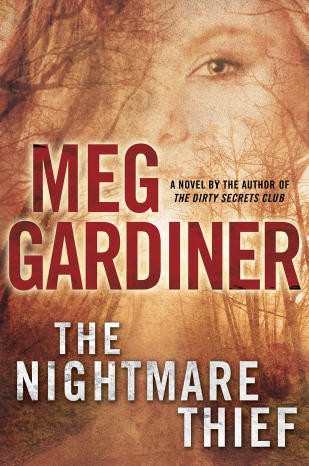
TKZ is thrilled to welcome Edgar Award-winning author Meg Gardiner, whose latest thriller The Nightmare Thief was just released today!
Some writers love first drafts. To them, starting a novel feels like hitting the highway for a summer road trip. They toss the map out the window, crank up the tunes, let their characters take the wheel, and sit back to see where the story goes. To them a first draft means freedom: blue skies, unlimited potential.
I’m not one of those writers.
I love the part before the first draft. Brainstorming is terrific. Brainstorming means flinging ideas at the wall like spaghetti, to see what sticks. And when an idea gets under my skin—stings like a hornet, itches, keeps me up nights—I know I’m on track. I have the fuel that will drive a thriller.
That’s how I felt with The Nightmare Thief. An “urban reality game” goes wrong and traps a group of college
kids in the Sierra Nevada wilderness, fighting for survival along with series heroine Jo Beckett. That idea did it. Yep, brainstorming, and then sketching a synopsis—Jo and the kids are trapped, bad people are closing in on them, and my other series heroine, Evan Delaney, has only hours to find them—that’s fun.
But then I have to actually write the thing. And for me, writing a first draft is like pulling my own teeth with pliers: slow, painful, and messy.
The plot takes form, and it’s fat. The characters sit around a lot, thinking. When they do speak, the dialogue needs spice. Worse, everybody on the page sounds exactly the same and, worst of all, exactly like me. And all those plot twists that were so exciting to sketch (“Evan discovers a deadly betrayal”) stare back at me from the synopsis, going: Well, how?
I cringe. I couldn’t show this stinking mess to my dog, much less my editor, and oh, sweet Lord, I still have three hundred pages to write.
And I need to write them at a rate of 2,000 words a day, because I have a deadline.
That’s when I remind myself:
- My critique group has a rule for reading out loud: We all think our rough drafts are crap. It’s stipulated. So don’t waste time quailing that your piece sucks. Just read. Well, the same goes for actually drafting the crap. Just write.
- My job does not involve cleaning a deep fryer. I should stop being an ungrateful moaner. Just write.
- If I spew all these wondrously awful first-draft words onto the page, they will at least exist. And words that exist can be fixed. Words in my head cannot. Just write.
So I keep going, for months, until I reach the end. Then I run through the house with my fists overhead like Rocky, while the stereo blasts the Foo Fighters’ DOA. “I’m finished, I’m getting you off my chest…”
In the five-stage writing cycle (excitement, delusions of grandeur, panic, compulsive eating, delivery) this is known as the False Ending. Because now it’s time to rewrite.
Joy.
I can hear some of you shouting, Rewrite? Don’t make me. Stab me with a fondue fork instead. Repeatedly. Please. B
ut I mean it: Joy. As I recently heard Ken Follett explain, revising means making a book better—and who wouldn’t want the chance to make something better?
And, to be serious, I have a method. Tackle the big issues first.
This is a technique I picked up from Sol Stein’s Stein on Writing, and it has turned my editing inside out. It’s saved me months of wasted work. Stein calls it triage: Fix the life-and-death issues in a manuscript first.
-
Is the conflict stark enough?
-
Is the protagonist strong enough?
-
Does he or she face a worthy antagonist?
In other words, when rewriting, don’t simply start at page one and go through the manuscript fixing every problem as you spot it. It’s counterproductive to spend a morning fussing over sentence structure if the entire scene needs to be cut.
So I identify all the triage issues and outline a plan to address them. Then I return to my miserable first draft. I attack those fat, introspective scenes. I build in unexpected twists. I obstruct the protagonist’s path. Throw down impediments that are by turns physical and psychological, accidental and deliberate. Breakdowns. A monkeywrench. A landslide—literal or emotional. I cut endless swaths of verbiage, like so much kudzu. It’s gratifying.
Admittedly, revision isn’t all fun. I’ll wake up worrying that I’ve done insufficient research. Maybe some howlers have slipped through. (Anybody seen Lord of War? An Interpol agent strafes Nicolas Cage from a fighter jet. That kind of howler.) So I hit the reference books, and contact some experts, and revise again. And I have a fail-safe plan: write a rip-roaring story, so that if all else fails readers will miss any mistakes. Put the pedal down and nobody can see the errors as they blast through the novel.
Meanwhile the deadline continues to loom. Eventually I reach the stage known as Revise! Or! Die! It comes down to a cage fight between me and my story. With major revisions on The Nightmare Thief, I’m happy to say I won—which is to say, the story won. The lumpen first draft was flick-knifed into a sharp revision. Or sledgehammered, where necessary.
When I finished, I sent it to my editor and pitched face down on my desk. Then I sprang back up like a jack-in-the-box, thinking of all the changes I still wanted to make. Then I pitched forward on my desk again.
Eventually I sat up, picked off all the paperclips that had stuck to my face, and staggered to bed, where visions of Jo Beckett and Evan Delaney danced in my head. Well, they didn’t dance—they opened a couple of beers, clinked bottles, and put their feet up, waiting to see what I would do to them next.
I love this job.
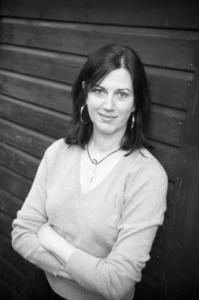
Meg Gardiner was born in Oklahoma and raised in Santa Barbara, California. She graduated from Stanford University and Stanford law school. She practiced law in Los Angeles and taught writing at the University of California, Santa Barbara. She lives with her family near London. The Nightmare Thief is her ninth novel.
They paved paradise and put up a parking lot!
By Joe Moore
It was announced on Monday that Borders abandoned its attempt to find a buyer and proceeded to declare bankruptcy. They’ll be closing 399 stores and letting 10,700 employees go. The national bookstore chain was the victim to overwhelming debt, losses and changing consumer tastes.
That last one, changing consumer tastes, to me is the real giant killer.
 Changing consumer tastes translates to print sales tanking while ebook sales skyrocketing. Why? Features and benefits. Ebooks and the devices on which they can be read (including smartphones and tablets) contain more features and benefits than printed books. We’ve discuss that dead horse topic so much on this blog that the smell just won’t go away. But it’s true. Things aren’t just changing, they’ve already changed. The way we buy and read books will never revert to the olden days of just a year or two ago.
I liked Borders. I had a big, beautiful store a couple of miles from my house. I had to drive past a big, beautiful Barnes & Noble to get to Borders. My co-writer and I launched 4 novels from that store. The staff loved us and we loved them. They made us feel great. We sold a lot of books for them. As a matter of fact, we always sold out of their stock and had to give them cartons of books to finish the signing events. Saturday afternoon book launches at our local Borders were always fun.
So what happened to our big, beautiful Borders? They recently tore it down and put up a CVS Drugs. You can buy paperbacks inside if you want. They paved paradise and put up a parking lot.
Borders, RIP.
REAL LIFE AND FICTION: On-Site Research at Its Best
By Kathleen Pickering – http://www.kathleenpickering.com/
For this author, conducting on-site research on a work of fiction to hone the story into a living, breathing event is one of the most exciting aspects of writing.
Now, I know this isn’t always possible for a writer, but when it is, oh, I don’t know, can you say, tax write-off? It is a lucky day when one can take a trip for his/her profession and find business is a pleasure.
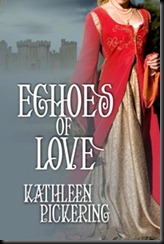 For example, when I wrote ECHOES OF LOVE, a paranormal romance hopping from Manhattan to London, I just had to fly to England. After all, the last thing I wanted was for a local Brit to let me know my facts were wrong. Major story killer!
I wrote a pick-pocket scene when my character, Melissa, stepped off the curb in Hastings. Now, you or I would have thought stepping from a curb would be a normal, every day event. However, the curbs on the main street in Hastings are a foot high! Melissa would have fallen, not stepped. Had I not been there to discover this little fact, I could have hurt my character and my credibility!
Also, how was I to sneak Melissa past the closed oak doors and rock walls of Battle Abbey to crash a concert in the dead of night, if I had not done so myself? (Oops! Did I say that?) Truth be told, I did sneak in! I and a cohort (Jane had no idea I was getting her into mischief!) found a path leading through the woods to the high cliff behind the Abbey. This cliff overlooked the valley where the Battle of Hastings was fought. And to my surprise, not only did I discover a real-life gypsy wagon camped in the valley (which I promptly used in the story) but, I found the rear of the Abbey un-walled and easily penetrable. All of this worked beautifully into Melissa’s adventure.
On another occasion, my husband, some friends and I took a trip to the Bahamas which resulted in the contemporary romance I just sold to Harlequin (WHERE IT BEGAN – Jan. 2012).  Sailing the waters, snorkeling the reefs and meeting a strange and unsavory local resident helped craft the book. The story ideas just kept coming!
My craving for facts sent me to San Francisco for MYTHOLOGICAL SAM-THE CALL, then brought me to New York City last September and just recently under the guise of attending Thriller Fest—oh, wait, I did attend for a day! Cruising The Big Apple, I found places, artifacts and images such as these to weave into the second book in progress in the Mythological Sam series, THE SHIFT. I’m not even going to tell you (yet) how I’m using these photos!


![102.86crowds[1]](http://lh3.ggpht.com/-Hp9YcHjVMQ8/TiSjk4v3NJI/AAAAAAAAA4E/eTDz6Wdnd54/s1600-h/102.86crowds%25255B1%25255D%25255B3%25255D.jpg "102.86crowds[1]")

Ahh. The joy of writing and research all wrapped up in real life. So, tell me. I know you can’t go kill someone, really. (Murderer-celebrities excluded.) What works best for you when researching your novels?
The End is Nigh – Read all About it!
We’ve blogged a lot about the challenges and changes in the publishing industry but this week I came to the sad realization that I am going to have to put a stop to an institution I have enjoyed since high school – the daily newspaper delivery. Call it another casualty of the digital age, but I have finally succumbed to grim reality: I don’t read the newspaper like I used to…Not that I don’t read the newspaper, I just don’t physically turn the paper pages anymore.
Since moving to Australia I tried to hold on to the past joys of paper, I really did, but then events conspired to finally make me realize that, yes, even for this home delivery stalwart…the end was nigh.
It came in increments – first was the cling wrap they use to entomb the newspapers here (it requires a Ph.D and more patience than I own to unwrap), then it was the endless rain that still managed to make said entombed paper soggy as mush. Then it was the fact that the newspaper was never delivered until 7:30am, sometimes even 8am, which rendered it utterly useless (I had already read the news online, had breakfast and got the kids ready for school
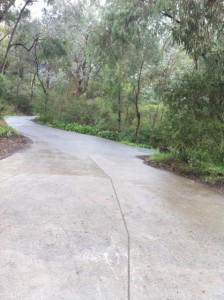
by then). We also have one of the steepest, longest driveways in the world (see photo – mailbox it over the rise in the upper right hand corner!) – not something you want to trek up in the wee hours of the morning only to discover the newspaper hasn’t come.
Finally there was the content…now, I know many of my Melbournian friends will be in up in arms, but truly, the local newspapers here are pathetic. Filled with tawdry details of scandals involving local footballers and schoolgirls, it was hard to find any decent international news or any opinion that doesn’t sound like it was written by an elementary school kid. We tried changing papers but to no avail. I had to accept the fact that I found Australian news boring.
And so the guillotine fell…
Of course the real reason for the demise of the physical newspaper in our house has been the rise of the digital newspaper equivalent. I subscribe to the New York Times on my iPad and its crossword (one of my obsessions). I can read all the local newspapers online as well as the San Francisco Chronicle (for what that’s worth). I can even indulge my love of low-brow gossip by reading London’s Daily Mail on the web. I also have apps on my iPad for the local ABC and SBS news services, the BBC, CNN, and PBS. Every morning I open the NPR app and listen to the hourly news. I follow that up by opening the BBC app and listening to the BBC world service. So, as you can see, the digital age we live in can cater for all my news-hungry ways!
So why would I keep having the newspaper delivered?Sadly, for many years I have been one of the last holdouts as newspaper circulation has dropped precipitously. Although I love sitting down and thumbing through a fresh newspaper every morning, even I have admitted defeat. Though I cannot forget that there was something visceral about the reading experience that I loved. Unlike reading a newspaper online, there was a sense of a slow, leisurely absorption of the news of the day, rather than the frenetic click and skim approach I now have to many news items. I loved how I used to stumble upon articles that I would have otherwise ignored. That doesn’t happen nearly as often online.
So this week marks the end of an era for me. I just can’t hang on to my newspaper anymore. What about you? Have you cast off the shackles of paper delivered news? Do you have any regrets? Any longings for the old days when you could sit down on a Sunday with a cup of coffee and take your time lifting and turning page after page?
The Comparison Trap
Last week I talked about doubt and the writer. It’s one of those mental obstacles we have to overcome if we’re going to get anywhere in this game.
Here’s another one: the comparison trap.
It’s almost automatic that we writers look at who is on the rungs above us and, in doing so, stay constantly anxious about our own position. Noxious things start popping into the mind: Hey, I’m a better writer than he is. How come he’s selling so much better than me? And what about that guy? He was nothing a few years ago when I taught at a conference. Where does he get off getting that advance? And then, of course, there’s THAT one, the legend, the guy I admire most, the guy I wanted to be like, and it’s pretty clear I’ll never reach his level . . .
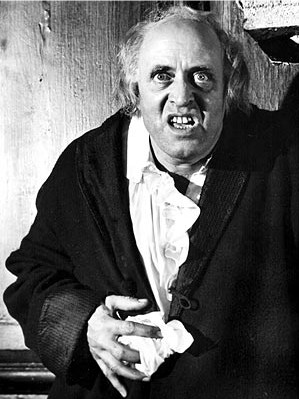
And so it goes. A certain amount of this you might chalk up to the competitive urge, which is not, per se, unhealthy. We need a little of that warrior in us. But if you let it fester you’ll be cooked. You’ll start looking and acting like Ebenezer Scrooge in the first act of A Christmas Carol.
I thought of the comparison trap the other day when I read a story about American tennis star Andy Roddick. Ten years ago, this teenage phenom shot to #1 in the world after winning the U.S. Open. Here, it was assumed, was the next great superstar in the game, the new Connors, McEnroe, Agassi or Sampras.
There was just one problem, and his name was Roger Federer. The Swiss superstar came out of nowhere and proceeded to own Andy Roddick. They’ve met 22 times. Federer has won 20 of those matches. Federer has gone on to win a record 16 Grand Slam titles. Roddick is still looking for his second.
Now 28, Roddick’s best tennis may be behind him (aren’t you glad your writing prime isn’t based on athleticism?) He could look back and think that Federer’s record might have been his.
But he’s also accomplished more than most tennis players ever will. He’s won several non-Slam titles, made it to #1 in the world, has a great Davis Cup record, he’s rich and famous, married a model, and has a lifetime ahead as an ambassador for tennis. That doesn’t exactly suck.
Here’s something I tweeted that drew a lot of comments:
Comparison is death to a writer. Don’t look up or down. Look at the page in front of you and nail it.
Every day I can look at another writer’s career or recent success and get bent. Or I can be grateful for the career I have and keep doing what I do, which is write and try to do it better every time out.
There’s something tremendously satisfying about that. I refuse to compare myself to others. Twenty years ago, unpublished, if I’d been shown my present career in a crystal ball I would have said Yes! Let me have that!
Gratitude is the great secret to happiness. Be content with what you have. You’re unpublished? Be grateful you have the ability to learn the craft. Be grateful for new opportunities in the e-world. Your critique group getting you down? Be grateful for the people in your life who love you. Dogs and cats count, too.
And take a tip from Andy Roddick. “You keep moving forward until you decide to stop,” he said recently. “At this point I’ve not decided to stop, so I’ll keep moving forward.”
So what about you? Do you find yourself prone to the comparison trap?
The World Runs On Fear. How Much longer Will We Be Necessary?
John Ramsey Miller
I was thinking about how much of the morning, noon, and nightly news is geared toward frightening people by cherry picking the worst examples of inhumanity from the stacks. I watch very little news these days because I feel better when I don’t. I’m not sure a boat filled with people turning over on the Volga does more than make me not want to go on loaded boats on the Volga or even the Yazoo River.
The numbers of people killed here and there don’t mean much because we are inundated with 100 killed by bombs here and thirty there. It makes most people not want to travel at all. And it makes you wonder why anyone in the rest of the world would want to come here. Certainly the other news gatherers around the world portray America as the wild west, which it isn’t. I mean every place has dangers. I guess it’s all about perspective. I kill a Copperhead on the porch, I don’t stay indoors or move to the city. I am just more careful about watching where I walk and put my hands.
Since Caylee Anthony was killed by her mother, are we to be suspicious of mothers in general? I see they will be a spate of laws to prevent another mother from killing her daughter so she can party. I suppose having a law that makes it a crime to not report you missing daughter will go a long way toward preventing insane women from killing their children and not calling the police immediately. Everybody knows that murderers plan their activities according to what legislators will or won’t allow.
I read that in remote African villages people often burn witches, or people who are shape-shifters. We have the same thing here, but not so much witches or shape shifters, as, say, Muslems or Moonies. Are there still Moonies running around?
Large numbers of people can be manipulated by a very few people fanning the flames of fear. Fear overrules intelligent discourse. You can’t use rationale against fear because most fear isn’t rational. Leaders often gain power and rule using fear and suspicion to galvanize and keep people from feeling safe. The truth is I feel manipulated by politicians on both sides of the aisle and I think more and more people feel that way. How are people to know the truths of any matter unless they are involved in them. If you manage a checkbook, you know the country is on shaky financial ground. And you wonder how the government can agree on anything that can fix things. You know what they say about having to hit rock bottom before you can face reality and make changes.
I think people who live normal lives like being afraid, but they like maintaining a safe distance from the actual threats. People like thrillers because they are at a safe distance from the bad thing in the book. I suspect that people living with constant real fear don’t read thrillers. What would be the point? I don’t know if the world is actually more dangerous than it always has been, or if its just that it is so in our faces.
We may become obsolete. I mean, in the face of our reality, what can we possibly make up or add to the mix that is more bizarre or frightening than real?
Catching Up
I forgot, okay? Last week, I was immersed in ThrillerFest, reconnecting with the stunning brain trust that is a conference of thriller writers, and I completely forgot to post a blog. Sorry about that.
But this is a new week, and it’s marked by both great news and terrible news; elation and frustration.
First, the good: A few weeks ago, I posted a blog that I called Serendipity, in which I recounted a customer service triumph involving the Hilton Garden Inn. At the time, I hinted at a coda to the story, and now I can report that Hilton Garden Inn placed an order for 700 copies of my new book Threat Warning, to be distributed to their managers around the globe. We’ll be holding a ceremonial signing at the HGI property in Fairfax, Virginia (near my home) on July 28, and with any luck at all, we’ll attract some media interest. I think it is so cool when random encounters end up in such great results. (I’ve actually never signed that many books at a sitting, so I’ll be interested to see how my hand holds out.)
Now for the bad news: Last week, Microsoft sent me a “service pack” update that turned out to be “corrupted” and contained a “fatal error” that required me to return my computer to “factory settings.” In layman’s terms, I believe that means they poisoned my computer and destroyed 17.6 gigabytes of data. Gone. Poof. Not so much as a “sorry, John.”
In an interesting bit of irony, the only way to access Microsoft’s technical support is through their website, to which I didn’t have access because they, you know, poisoned my computer.
What keeps this from being a total disaster is my new cyber-hero, Carbonite.com. It’s a service that’s nearly free of charge (a few bucks a month) that backs up all your data every day to their system. After this catastrophic loss of data, all I had to do was tap into http://www.carbonite.com/ and sign into my account. Click a few bottons, and a few days later (that’s how long it takes to restore 17.6 gigabytes), I’ll be good as new. I hope. (I’m knocking wood.)
So, here’s my question for the Killzone techies: Next time one of these service pack upgrades pops up in my system, am I supposed to ignore it? Or do I just make sure that Carbonite and I remain friends?
I hate computers.
Will Casey Anthony Get a Book Deal?
There’s been speculation in the publishing industry and in the news whether or not Casey Anthony will get a book deal. Bestselling thriller writer, Jason Pinter, (former editor at Grand Central Publishing and St. Martin’s Press) posted his opinion on HuffPost Books on July 6th – Why Casey Anthony Will Not Get A Book Deal. (See his post HERE.) He compares her differing situation to O. J. Simpson and Amy Fisher and makes a compelling argument, but the media is still speculating that there is a deal to be had, even suggesting rumors of an advance of $750,000-$1,000,000.
Whether or not people believe she is innocent or guilty, I can’t imagine a mother who has lost a child seeking financial benefit from the ordeal to rehash the details of such a tragedy. If she is innocent and wants to convey her outrage at being falsely accused, that’s one thing. But if that were the case, why isn’t she crying for justice for her murdered daughter? And why did she not report little Caylee missing for a whole month?
The outcome of this case has angered me on so many levels from the botched prosecution, to the unprofessional behavior in the courtroom (the laughing prosecutor and the finger-shooting defense attorney, Cheney Mason), to the miscarriage of justice when a parent can lie to investigators and only be charged with a misdemeanor. (Not reporting your child missing for a month should fall into a different category of wrong.) And if you’ve been following this case recently, you would hear that her family has been selling family videos to the news media for significant dollars so the news can lace coverage with personal family images.
All I can see is the sweet face of a little girl who died a horrible, frightening death.

Jason Pinter thinks that no publishing house will touch her story. I want to believe he’s right—that the publishing industry has a moral line in the sand they will not cross—but being a cynic, I can’t be sure. (I thought that after the O. J. Simpson trial too.) Maybe it’s not a question of morality, but a business bottom line using the equation of MegaBucksAdvance + BookBoycott = LoserDeal. The editors that I’ve been blessed to work with would be appalled at making money off this tragedy. And I’m sure there have been and will continue to be controversial book deals done where a publisher struggles between their personal feelings and a business decision, but pushes ahead to make the deal anyway.
Casey Anthony’s family has already gained financially and it’s being reported that significant offers are being made for her appearance. Before this case, if I had written this kind of scenario into a fiction book—a mother lying to police, getting away with it with a virtual hand slap, and becoming a millionaire after she’s acquitted—readers might have called it outlandishly contrived. Reality is indeed stranger than fiction.
Now before anyone brings this up, there is a book deal coming. (I’m sure more than one.) Reported by the New York Times (see post HERE), St. Martin’s is pushing to release a book this year—“Inside the Mind of Casey Anthony,” written by forensic psychiatrist and television pundit, Keith Ablow. To clarify for Jason Pinter’s sake, this is a book ABOUT Casey Anthony—NOT a book she has written or benefits from financially. The book’s focus will be on why Caylee Anthony is dead and will be presented as a true crime story.
What do you think? Will Casey Anthony get her own book deal?
PCS
By Joe Moore
I’m suffering from PCS–Post Conference Syndrome. Just about all writers including myself live a self-imposed life sentence served in solitary confinement. Sure I can leave anytime I want. After all, it’s a minimum security prison. There are no walls, barbed wire or guards—well I do have a watch-cat who keeps a suspicious eye on me in between catnaps. But in general, writers don’t get out much. As Nancy Cohen remarked in her post last week, she works in a “writer’s cave”.
So it’s a special treat to receive a temporary furlough and head to a writers’ conference. In my  case, it was ThrillerFest, held each year at the Grand Hyatt in NYC. What an amazing feeling to be awash in a sea of creative minds surrounded by hundreds of writers and fans. And at ThrillerFest, everyone is accessible. Having a casual chat with Ken Follett, Lisa Gardner, James Rollins and Jeffery Deaver is commonplace. But the thing that gets my blood flowing faster is the electric atmosphere created by so many amazing writers all breathing the same air, enjoying the same camaraderie, and sitting side by side in panels sharing so much wisdom and advice.
Running into fellow TKZ blogmate, John Gilstrap is always a pleasure. And there was a rumor that TKZ’s Kathy Pickering was in attendance, but I could never track her down.
A couple of tidbits from the industry panels included some agents predicting that the ratio of ebooks to print books will eventually stabilize at 70 percent ebooks and 30 percent printed books. Someone also pointed out that because of the hundreds of thousands of self-published ebooks now flooding the market, it could result in the eventual end to what many consider a novelty for would-be authors publishing their own manuscripts.
Literary agent Simon Lipskar (Writers House) gave an interesting comment in which he compared the ebook/digital revolution to the industrial revolution. He predicted one possibility that because of the rapid changes in publishing, we might see digital and audio books being released as one. A reader could be listening to a book in her car, pause and enter her house, and resume the book on her e-reader.
The conference wound up with the Thriller Awards going to John Sandford (hardcover), J.T. Ellison (paperback), Chevy Stevens (first novel), and Richard Helms (short story). R.L. Stine was named 2011 ThrillerMaster, and Joe McGinniss received the True Thriller award. The Silver Bullet for her Save The Libraries program went to Karin Slaughter.
 Next year’s ThrillerMaster is the legendary Jack Higgins.
Overall, a good time was had by all. Now I’m back in solitary confinement trying to jumpstart my current WIP, still light-headed from all that creative air and looking forward to next year’s conference.
How about you? Do you like to attend conferences? Which one is your favorite? And do you suffer from PCS?