Damned with faint praise. Or something like it.

Damned with faint praise

I was stuck on what to write for this week’s offering but as usual something came up, and it wasn’t that quesadilla I had for lunch. It is a wondrous age we live in, and it seems that for good or for ill, something new is developed every day. So it is that there is a new development that the authors in our audience — particularly the mid-list folks who, imho, provide the solid backbone of the publishing industry — might want to be made aware of. Amazon is slowly adding a feature, or element, or whatever you might want to call it, on their book title pages titled “What Do Customers Ultimately Buy After Viewing This Item?” and which consists of a list of four or five titles, accompanied by the percentages of buyers who bought another book to the exclusion of the one they were originally looking up. This is to be distinguished from the “Customers who bought this book also bought” (emphasis added) feature. No, the “ultimately buy” feature tells the world what percentage of the audience looked at your book, found it wanting, and bought another book by someone else instead! It’s kind of like sitting in the autograph room at Bouchercon and hoping that someone will come up to your table, and just as someone does, their friend says, “oh, let’s go meet ______ ____________ instead.” It’s not being done with every book by every author, and, at least as far as I can tell, it’s only being utilized by amazon.co.uk. Maybe the Brits have thicker skins, though I don’t think so: I learned of this feature from a British author, whose novel had received the implicitly rough treatment, and the author was, uh, not happy.

I don’t think that this new feature is going to be welcomed with open arms by authors on either side of the Atlantic. Am I wrong, here? What I sense is a suggestion to the effect that if you’re looking for something to read, you might find something you like better elsewhere, and we have a jury of your peers to tell you so. As for the authors themselves, I could see this busting up some friendships. I mean, if you have ten books published, and Amazon is noting with each one that a certain percentage of people would rather buy a book by, say, Author A, that might create a problem. I really don’t see how it helps anything, either. It’s might be intended as a sort of “Recommended If You Like” referral, but it isn‘t, and they have one of those already with their “ People Who Bought this book also bought“ feature. It strikes me as more of a “Why would you want to read this when you could read that?” Or to put it another way, it’s almost like an article in your neighborhood newspaper which states that while your wife might still love you, she would rather be tupped by your next door neighbor, as would seventy per cent of the women on the street. Oh, and your Kindle books aren’t safe from this thing, either.

So what do you think of this? I would include a link to an example of this, but I don’t want to embarrass anyone, even indirectly. But have you seen this? Have you been a — I hate to use this term, but there is no other — victim of it? And should Amazon, UK or US or otherwise, get some feedback about it? What say you?
For the Love of the Game

By John Gilstrap
I hate what professional sports has become.


I blame free agency. Yes, I understand that from the players’ point of view free agency is the equivalent of emancipation, but I don’t think of sports from the point of view of the player. I’m a fan—a paying customer—and I miss the days when teams were about, you know, teams. I miss the teaching moment that was built around the pre-free agency notion that the individual was subservient to the team. That’s why we put our kids into sports, right? So that they can learn the lessons of teamwork?


Nowadays, professional sports is all about the money. Okay, it’s always been about the money, but I lament the migration of the prima donna from its former exclusive domain of opera to the gridiron and the baseball diamond.


In a few short weeks, I will once again, for the forty-seventh time, walk into the whirling propeller that defines being a Washington Redskins fan. Yes, Dan Snyder is Satan incarnate, and I won’t recognize eighty percent of the names on the roster, but dammit, this team is the descendant of Sonny Jurgensen and Billy Kilmer (yes, and Joe Thiesmann, but decent Washingtonians don’t speak of The Ego). The Redskins will yet again lure me into their web with early season wins, and they will yet again fall apart in mid-October. I’m not a sports stats fan, but I’ll bet bucks to buttons that no team on the planet has given up more fourth-quarter leads than the Redskins.


The disparity that separates real sports from their professional cousins is most widely illustrated this time of year during the Little League World Series, currently being televised on ESPN. It’s refreshing to watch 12-year-old athletes giving their all to win a game simply for the right to proclaim themselves winners. If you haven’t watched any of these six-inning games yet, you really ought to take the opportunity to do so.


First of all, it’s great baseball, complete with breathtaking offense and defense, but also littered with the occasional egregious error. I cannot imagine the thrill these kids must feel when they watch the recordings of themselves, complete with sportscaster commentary and instant replay.


And here’s the heart-wrenching part: Often as not, the losing team cries. These boys have put everything into the game, and while their athletic prowess might have matured, their emotions have not. They’re kids, and they’re all heart. Someday, the best among them will probably join the ranks of free agents, but for this brief slice of time, they’re just athletes, pure and simple.

There’s a writing analogy to be made here–those who write for the love of the craft versus those who write because their franchise demands it–but I’ll leave it to you, dear Killzoners, to connect those dots.

My White Whale

by Michelle Gagnon


There was an interesting post on Slate this week entitled, “Overrated: Authors, critics, and editors on ‘great books’ that aren’t all that great.

The article got me thinking about which stories endure, which eventually fall by the wayside, and why. In a world where people now fit their innermost thoughts into 140 characters or less (counting spaces), lengthy descriptive passages such as those found in TESS OF THE D’URBERVILLES probably strike the modern reader as tedious, while back when it was first published, that type of writing was the norm. It’s also interesting to see that some of the people quoted cited both GRAVITY’S RAINBOW and Joyce’s ULYSSES as being overrated, but for very different reasons.

I’ve read a decent number of the canonical ‘great books,’ and enjoyed most of them (including TESS, although I’m not generally a big Hardy fan).

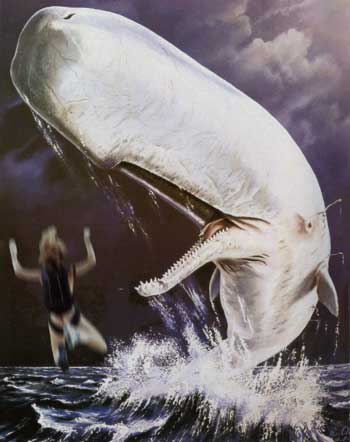
But there’s one that has become my own personal white whale: appropriately enough, MOBY DICK. It’s one of the few books that I’ve never finished, despite gritting my teeth and picking it up a half dozen times. I always enjoy the beginning, and sweep through the first twenty chapters.

Then I hit Chapter 32: Cetology, and my eyes glaze over. I have yet to make it through Ishmael’s attempts to classify whales scientifically. I read a page or so, then set the book down. One thing leads to another, and MD inevitably ends up back at the bottom of my TBR pile. I suppose I could always just skip the chapter, but I’ve never done that with a book before and something inside me balks at the thought.

Plus, I honestly have a fairly limited tolerance for sea shanties.

Yet this is supposed to be one of, if not the, “Great American Novels.” So am I really missing out by not finishing? Or has Melville passed his expiration date? How relevant are the classics to our contemporary lives now? Are some so outmoded they no longer qualify as great literature? More importantly, are certain books lauded as great simply because they’ve managed to survive the tests of time?

In the article, Elif Batuman points out that, “the right book has to reach you at the right time, and no person can be reached by every book.”

I love that observation. Sometimes I wonder if I’d still enjoy Milan Kundera as much if I read him now, or if Gabriel Garcia Marquez’s 100 YEARS OF SOLITUDE would make such an impression. I rarely go back and re-read books- there are simply too many amazing new stories coming out every week.

So today’s question is this: which great book let you down?


Cover Copy

How are you at writing back cover copy for your story? Most fiction writers don’t train for the advertising biz, and yet we’re expected to come up with log lines and blurbs and back cover copy. Recently, I read another author’s blog where she talks about optimizing your bio and cover copy for search engines by using keywords. Huh? And here I thought my profile was pretty good. As for cover copy, I can never come close to the witty style my former publisher used to promote my Bad Hair Day mysteries. I can write the story, but condensing it into a few lines that are entertaining while employing keywords is beyond my scope. Here is one area where I’m glad to get editorial input.

Let’s say we’re writing a mystery about a produce grocer who operates a booth at a weekday morning farmer’s market. When one of the other vendors ends up dead, suspects may include mutual customers, rival vendors, conniving relatives, and snarky suppliers. To make it easy for me, we’ll set it in Florida. So what would our keywords be here?

Amateur sleuth
Cozy mystery
Culinary (especially if vegetarian recipes are included)
Florida

I’m sure you can come up with more keywords. Anyone want to pitch in?

Now let’s have a go at the cover copy:
Before he can take a bite out of his organic Gala apple, green grocer Jimmy Octagon notices a commodity not on the menu at the farmer’s market. Normally a beehive of energy, honey seller Aldreshia Meyers is dead as a turnip over by the onion stand. With the mayor threatening to shut down the market and Jimmy’s vendor license on the line, he’d better find the killer fast or else he might become the next victim of the lethal Green Menace.

Okay, I warned you I’m bad at this, didn’t I? Note that I neglected to use a single keyword. Why don’t you give it a try?

WASTE TIME CONSCIOUSLY

By: Kathleen Pickering  www.kathleenpickering.com

heroin_powderDeadlines are like  heroin for me.

Hold on, now! Don’t get me wrong. I’ve never done heroin. And, I can say with an open heart and clean conscience that heroin is slotted nowhere in my life schedule.

However, I do have an addictive personality. So, I’m thinking that if it is irresistibly alluring to be addicted to something others consider awful, I am irresistibly addicted to deadlines!

I have self-published four books that required no deadlines. I had one other novel released by a publisher years ago. So, I’m pretty much a newbie to the workings from an editor’s desk. 

Well, last Thursday was my first deadline with Harlequin. (I know. Not a mystery, but hey, love can mislead one, kill another, or solve deep mysteries, no?) So, I am pleased to announced that I main-lined that first deadline directly to my editor’s in-box with time to spare.

What a freakin’ rush!!

That defining moment was capped with a lovely, complimentary email from my editor thanking me for meeting the short notice. She then went on to suggest that I should kick back and relax until the line edits came back.

I thought, “Huh? No way!” I NEED another deadline! That felt soooooo good. Having those characters run through my blood, live in my brain and rush into the keyboard to find a happily-eva-afta! I must, must, must do it again. Gotta have it!

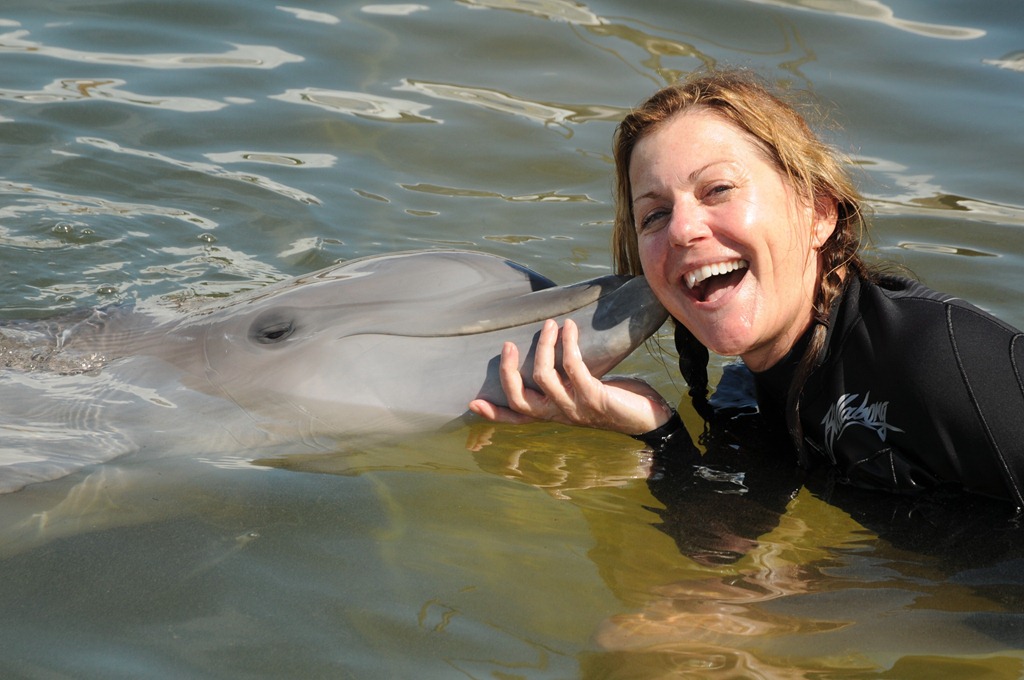
But then, I thought. Hey, that was a lot of work. You don’t want to burn out. So, I took one day. Friday. I consciously wasted time to regroup, detox the adrenaline rush, and just enjoy that I’m a normal kind of gal. Maybe go shopping. Call a friend. Play with dolphins? 025_25

I’ve heard this sage advice from all my seasoned author friends: When you’re not BICHOK (Butt In Chair Hands On Keyboard) be sure to waste your time consciously. Be aware that you have chosen not to write in order to regroup, percolate, smell the roses, drink the coffee and see what’s happening outside that closet in your mind.

Wasting time consciously in itself is healthy, but when you have an addictive personality such as mine, it’s hard to let go of the deadline craving. Without thinking twice, I may think I’m consciously wasting time, but I’m really using these hours to open a vein into which the next story can flow. (I’m sure the sage heads of those who know are nodding.)

The best high about being an author is that everything I do can trigger a story. I could, without trepidation, consciously waste time because the possibilities I might find would simply take me back to my dealer . . . um, I mean, editor.  (Coughing into fist with embarrassment.)It’s pretty clear that if I deliver another good story, she’ll give me what I crave most: a DEADLINE. Ahhh. It doesn’t get better than that.

So, I did it. I consciously wasted a day, with great abandon until the tug came back. The tremors began, and that hunger bit deep. I got on the keyboard to my editor and said, “Thanks for the excellent suggestion, but if you don’t mind, ten hours was enough. I’m hammering out my next proposal, immediately. I need another deadline fix. NOW!!

I should be feeling better soon folks. No worries. Smile

So, tell me, my writer, artist, and business-minded friends. How do you consciously waste time between creative processes in order to rejuvenate?

Publicists in the New Digital Age

by Clare Langley-Hawthorne

As I am still virtually ‘in communicado‘ after my father’s knee replacement surgery (still on ‘duty’ helping my folks out before I fly back to Australia tomorrow), I haven’t got any meaty blog post for today. I do, however, have a question about publicity in the new ‘digital age’ of publishing. I was musing over it just this morning, wondering whether the traditional ‘publicist’ is, in many ways, redundant for authors now. With the ever increasing use of online and social media for book publicity, I have to wonder how much value an independent publicist can offer these days.


So what do you think? Would you bother to hire a publicist if you had a book coming out now and, if so, what would you expect them to do for you?


PS: Thank you all for your good wishes. My Dad is doing great!

Don’t Be Afraid to Fail Aggressively


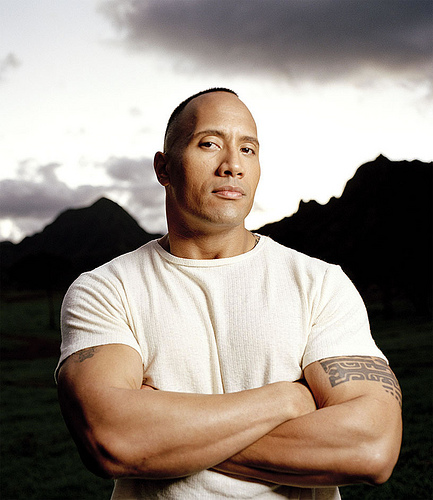
I like Dwayne “The Rock” Johnson.
We all know he made his name as a wrestler, then got screen time as the Scorpion King. Then he kicked it up a notch with The Rundown and Walking Tall.
But Johnson wanted to break out from just being the next action guy. He wanted to expand his range, into comedies. So he started working toward that end. Some folks were skeptical. But in an interview with People magazine just before Get Smart came out, Johnson said, ”I would rather fail being aggressive than being passive.”
I loved that quote. I put it on a card and displayed it in my office. Because at the time I was taking a big risk, too.
After over a decade in the fiction game I had a secure following in the Christian publishing arena. I could count on a solid number of readers every time out. I also liked the people and the companies I worked with.
That market, however, was trending toward a more “romance” feel, with a rather surprising uptick in books depicting Amish life. Now, in our chaotic times, I well understand the appeal of fiction that depicts steadier, simpler ways. I do not at all hold it against thee if thou likes Amish fiction.
But that’s not my particular crevice in the fiction world.
So I had to make a decision. Stay put and play it safe? Or try something new and unproven? Continue as I had where everyone knew me, or put oars into the waters of the vast ocean of mainstream publishing?
Which is when I read the Dwayne Johnson quote. And I thought, If I don’t try this now, I’ll look back and regret it. It could end up being a ten story dive into a glass of water, but Bugs Bunny did that, why can’t I?
The worst that could happen was that I would “fail aggressively.” There’s no shame in that. It’s what’s driven all the innovations and breakthroughs in history. Edison failed more than he succeeded, but would never have succeeded at all if he hadn’t been aggressive. 
So I took the plunge and sold a zombie legal thriller which is, I would say, a bit outside the box of my previous engagements!
Am I glad? Oh yeah. I love Mallory Caine, Zombie-at-Law. And I’ve been getting some lovely email from my readers. If I may be allowed to share one comment in that regard: “If a great story is about someone we can care about who wants something we can identify with and faces odds that are relatable and believable, then it doesn’t matter what Mallory IS. What matters is what Mallory wants and why she wants it. And the best part is, she is sassy, smart and funny.”


When you get a comment like that, one that says you accomplished what you set out to do in a book you’ve poured your heart into, it makes the whole thing worth it. 


Yes, there will be dissenters. We who write professionally know that well. But while there is no sure formula for success, there is one for failure: try to please everybody. 
As writers we have to be willing to fail aggressively. If we don’t, if we play it too safe, if we spend too much time worrying about the market and how to chase it down, we will lose that chance to be what the world prizes most—an original.
Sure, use market sense, but put all that through the prism of your unique voice and vision and heart and desire. Then go for it. Don’t be afraid of failure. You may be on the pathway to a breakthrough.
Listen to The Rock. 

A Friend, A Talent, Lost …


John Ramsey Miller

Today I write with a hole in my heart, and tears clouding my eyes. I am stunned and I am angry. I am sitting here, watching (out the window) two of my grandchildren who are playing in a pool my wife bought at Walmart for five dollars, but I am reflecting on my dear friend for many years, Jay McSorley. He died this morning and I still disbelieve, feeling I am being conned and that he is all right over there in Iceland, so close to where his family started. The older you get the more you lose, and the more it matters.

Charles Jay McSorley was born in New Bern, North Carolina. He left there young, and he never lived anywhere very long, but where he lived, his mark and memories remain with all he met. He was one of the most talented authors, I’ve ever read. He had the smile of Peck. His eyes were beacons of intelligence and warmth. He was one of the most interesting and kindest people God ever created. So this morning he died in a hospital in Iceland, a world away from us, but closest to the one who loved and knew him best. He was fine one moment, then closed his eyes and was gone.

Jay lived in all over the United States and all over the world. He was at home in any country, with any men and women who spoke any language. He had the gift of bowling bowling people over with stories of his life. Tragedy and comedy are related, and he made had them always in the same bed.

Years back, when he was in Ireland, he sought out his family’s roots in the village he understood they had come from. He went to the Catholic Church to look through the records to find his kinsmen. The priest told Jay he was no more Irish that than the Pope because McSorley was the name the Irish gave to those children descended from the rapes of the pillaging Vikings. My God, he was a Viking. Vikings lived on the edge, with their faces in the saltwater wind as they lurched forth to conquer and pillage, never imagining they could find their way back home.

Jay died once before, in Kansas City, Kansas, but he returned that time, got the bypass deal, and we laughed about it. He told me while there might not be a God, there’s something out there waiting for us all. He saw it clearly. An adventure. A perfect equation to join. I believed him. I believed everything he ever told me. He never lied to me.

He could hold any gathering in the palm of his hand. With equal ease and enjoyment, he read advanced math books, poetry, and novels about ner-do-wells. He didn’t just live, he exploded life, and he understood more than just about anybody what makes people and things tick. And he lived every day as Jay McSorley, never making concessions to threat or promise.

His heart was one in a long line of the McSorley hearts that betrayed its owner by going weak in a natural stronghold. A heart so expansive goes at full steam and can’t go on forever. He wasn’t afraid of death, only of being pitied, or becoming frail. He was afraid of subsisting on soft food. He was steak and potatoes, and never tasted sprouts. His father died young of the same betrayal of heart. Jay told me over-and-over that he had no regrets. He had married the perfect woman for him, as she had the perfect man for her. His children were a source of pride and amazement, and he had a grandchild on its way in that he will never hold, and every child wanted to be held in those strong hands, and kissed, and warmed in his smile. Together he and his mate, Lisa, were a unit of the full measure of love and devotion.

As a writer he eclipsed and shamed me and damned near any writer you can name. A natural, he was. Nobody could describe with his flair, or see into and communicate human emotion like he could. He could make you laugh and cry at the same time. He got “it” and he had a gift for sharing it, but he didn’t desire to become famous, or join in any chase that was not of his design. Had he published and become a best-selling author, he would not have been impressed with praise, or accepted accolades without laughing at the absurdity of being praised. Doing was his reward, writing entertained him. I fought to get him to let me shop his manuscripts, but he would not. He wrote for himself and for his wife and sometimes a friend, but not for profit or notoriety.

McSorley listened more than he spoke, but when he spoke there was laughter following along, an accent to his baritone and sense of humor. He grew beards in a matter of hours, and shaving took a long hot shower to accomplish. He was a Viking, after all. When he passed he was working on a short story that would certainly have been published and he was excited about it. He was the greatest writer you may never read. Someday I hope to get my hands on the words he crafted, and share them. If it is possible, I will do that and he will be a name remembered, long after I am vanished.

He was my friend. He was my brother. I loved him deeply. I will miss him as long I live. And I will miss what he could have been, should have been, even beyond what he was, which was more than most of us can hope to be. He would have been a character in one of my books, but I lack the talent to bring him to life on a page. Good-by my dear and gentle friend.


Aging Traditions

By John Gilstrap
I have just hours ago returned from my extended family’s nearly annual weeklong trip to the Outer Banks of North Carolina. My father-in-law, Randy, realized a long time ago that as children become adults, and their attitudes and priorities change, often the only thing that keeps them from evolving away completely is the pressure of a family tradition. Thus, he rented a huge house right on the beach and invited his four kids and their families to a glorious week of sun, fun and a little bit of family angst. When the tradition first started, the youngest cousin wasn’t yet born. This year, she’ll turn eighteen. I guess that means we’ve been doing it for twenty years. God bless Randy and his largesse.

As we all know, families are dynamic things, wrought with disagreements and squabbles that seem so important at the time, but in the end mean nothing. For one reason or another, it’s possible for siblings to go weeks or months without meaningful communication–not because they’re bent out of shape at one another, but simply because ife gets in the way. Once a year, though, there’s a certain forced familiarity at the beach that smooths the rough spots and forces communication. Throw a little alcohol into the mix, along with a game or four of Pictionary, and lo and behold, it turns out that the family really does love each other.
As an in-law, I learned early that marrying the youngest daughter grants only a kind of grudging probation that is continually evaluated. Siring the only male child among the grandchildren gave me a little more stability, but ultimately, it turns out that loving said baby daughter for going on thirty years now has granted me permanent status in the family. As both of my own parents moved on from this ife to the next, those inlaws turned out to be a pretty damned supportive group.

My sojourns to Nag’s Head began when I was in my early thirties, and keeping up with sugar-high little kids was barely a challenge. Back then, I could run up Jockey’s Ridge to keep up. Now, I wager that even a brisk walk might require a stop or two along the way. Back then, the go-carts and putt-putt golf were thrilling because I could see the thril through my son’s eyes. They were special times.

This year, Chris couldn’t even join the vacation until late in the week because of job responsibilities. I missed him when he wasn’t there. A lot. I missed the conversations in the car going to and from. I miss the way things used to be.

Now, as Randy’s health deteriorates at a disturbing rate, I find myself facing some unpleasant realities, and asking questions that seemed unaskable back in the day: Is this tradition about to end? Is it maybe time for the tradition to end, so that we can all live with the polished perfection that defines pleasant memories?

I don’t have any answers, but I know that on at least a few occasions, various members of the family came on these trips merely because Randy called, and when Randy calls, people listen. It turns out that this father knew best. When the day comes that Randy follows my own parents into whatever lays beyond, those of us who are left behind will have some big shoes to fill.

Here’s my fantasy: Five, ten, fifteen years from now, when Chris is married and has kids of his own, I want to rent a house on the beach, knowing full well that when I call, the family will be there. I’ll buy the ice cream and the taffy, and in the cool of the evening, as the breeze tastes like salt, Joy and I will be the old folks on the ground watching their kid run up Jockey’s Ridge again.

10 Things I Believe About Writing

With all the uncertainty in our economy and in the publishing industry, in particular, I thought it might be important to talk about the passion we all share. It’s the basic thing that drives us with such conviction. Whether you read books or create them, novels can lift our spirits, tug at our imaginations, make us believe in the impossible, and take us for a journey into the past. (Talk about a cheap vacation!) They dole out justice when it feels as if there’s none and they transcend international borders, making this a small world after all.
If you’re an aspiring author, I believe it’s harder to get noticed by traditional publishers these days, yet with the digital boom in e-books, I feel there is even greater potential for getting discovered in a whole new way that still feeds our addiction. So take heart. Below are my thoughts about writing and what I’ve learned on my journey.
1.      Tell YOUR story, your way. If you have enough drive, you will discover a unique story that you must tell. If you’re lucky, more stories will follow. Ideas for books can be a contagion worth embracing. Since you use your life’s experiences to filter through your characters, scenes and settings, only YOU can tell this story. How cool is that?!
2.      Develop a tough skin. There will always be negative people telling you that you can’t write or reviewers who think you should quit. Screw ‘em. If it matters to you, you will learn from your mistakes and keep doing what’s important to you. And if anyone thinks a book is easy to write, let them try. In fact, please be our guest.
3.      Be picky about your critique buddies. They can be invaluable if you find the right person or group, but too much of a good thing can dilute your voice. Whatever your story, this is your book. You must have a sense of who you are as a writer in order to push back on any advice that doesn’t fit you and only you can be the judge of that.
4.      Find the time to write regularly. Even if it’s only a few hundred words or a page a day, set attainable goals but don’t beat yourself up if life gets in the way. Write because it matters to you.
5.      Focus on the basics. Writing is the only thing you can control. Selling your project, promoting it, dealing with proposals, these things are not in your hands and can become a mental road block. When things get tough, your writing is the backbone of your passion.
6.      Keep writing. While you have a proposal out, don’t wait by the phone or the mailbox. Get on to that next project and learn from your last one. Push the envelope of your craft, because you can. It’s great to find success in a trend, but why not BE the trend?
7.      Trust your talent. As human beings, we all have self-doubt. Some hide it better than others. We all deal with it, but the voice and talent you have shown with each new project will follow you. Trust your ability to tell a story. Your basic talent will sustain you.
8.      Make the words bleed. If the story is worth telling, it’s usually because of the emotion you have to convey. Write what you fear, what you love, what you hate. Man has been telling stories since drawing on cave walls and within those stories has been the thrill of the hunt, the profound sorrow of death, or the joy of good fortune. Emotion connects us all, regardless of any language barrier.
9.      Support other authors. This is your world. Our world. We’re not in competition with each other. We’re up against people who choose video games or movies over books. Make them see how powerful the written word can be, how it triggers the magic of our imaginations. Books are brain food.
10.  Find a way to deal with rejections. They will come, in one fashion or another, whether you’re published or not. Rejection comes in all forms. Create a ritual to dispel the negativity and move on, but if you don’t risk rejection, you’re not getting yourself out there enough. Find a happy balance and keep writing. Not many feel passion for what they do. Count yourself lucky to be one of us, TKZers.
Since we all share the love of books and writing on TKZ, please share any words of wisdom that gets you through the tough times. What keeps you going?