What should a writer take on the road?


Clare’s post yesterday about her travels reminded me that I need to get ready for some upcoming globe hopping (Hong Kong and Vienna).  I’m beginning to wonder how I should handle my various devices (iPad, smart phone, Kindle, laptop) while overseas. For example, does 3G service by Apple and Amazon extend to Asia and beyond? Will I come home to a mega-roaming bill from Verizon if I so much as turn on my cell phone outside the continental United States? Do hotels nowadays provide the right kind of electrical outlets for Americans, or do we have to tote a converter in the luggage?

My husband recently had a nightmare experience with an iPad he’d purchased overseas (turns out it was sold without the right configuration for the US). He spent the better part of a day during a business trip getting the darned thing up and running.

So I’m looking for advice from any of our travel-savvy Zoners. Is there anything I should be sure to set up before we leave? Any cautionary tales or rules for the e-road?

Avoiding the Pretense

by Clare Langley-Hawthorne

I’m still on the road and by the time this post ‘airs’ I will probably be on a plane somewhere over the Pacific. It’s been a whirlwind week- long visit to Denver and not quite enough time for my body clock to reset (though after a week lazing on the beach in Palm Cove I can hardly complain!). We clocked 31 hours traveling last Sunday coming over here and I sincerely hope it won’t be that bad going back!

One thing traveling always highlights for me is there is no glamor in being a writer – or if there is it is fleeting indeed – and I chuckled over Mark Helprin’s article in the Wall Street Journal yesterday entitled ‘Skip the Paris Cafes, And Get a Good Pen.’ It was a fun reminder that the key to writing a great novel is sitting down and doing it, not posing at a cafe as if you are some kind of latter day Ernest Hemingway. This got me thinking of some of the pretensions would be writers might indulge in – and here are just a few that I’ve noticed over the last few years.

  • T-shirts announcing to the world that you are a ‘writer’ (thereby begging completely strangers to indulge your ego and asking about your novel)
  • The ‘faux-complaints’ about one’s agent, editor or book tour, announced in extra-loud tones in conference hallways or in disingenuous Facebook posts (e.g. I just got in at 3am after my first-class trip to see my UK publisher in London was delayed, ah, woe is me!)
  • And speaking of Facebook posts – you know the ones, the endless ones, that seem to spew forth relentlessly marketing someone’s latest literary offering
  • Posers on planes who heave out their manuscript, look around as if searching for inspiration among the throngs of economy seated passengers, and then wait for the tidal wave of approval (while not actually doing any writing or editing on said manuscript!).

So what kind of literary posing have you witnessed? What makes you sometimes want to just say – skip the cafes and the moleskin notebooks and just write the damn novel!

And in spirit of this post, I shall now apologize for not being able to respond to comments as I shall be in mid-air (though in economy…probably the last row next to the loos…)

How Will Your Book Get Discovered in The Roiling Sea of Digital Publishing?


Ah yes, this is the question of 2012 for authors (and traditional publishers, for that matter). Last year the question was, Should I self-publish? That question has been answered with, Only if you want an additional stream of income and a growing platform.

Of course, we now have self-pubbing authors jumping on board in numbers approaching the population of China. So everyone wants to know how the heck you get anyone to know you’re out there in this massive, churning, ever-expanding bedlam.

Well, that’s why Digital Book World, an arm of F + W Media, put on a big “Discoverability” conference in New York last week. I did not attend but followed it in real time via Twitter hashtag #DBWDM and the amazing, flying fingers of the indefatigable Porter Anderson. Porter’s nice summary of the conference can be found here.

I came away with some strong impressions and later discussed them with a publishing executive who attended the conference. One option that was expressed was starting an effective SEO campaign, which is one of the many WHITE HAT SERVICES that are offered.He confirmed some of my opinions, and they are as follows:

1. There is No Consensus on What Works

Rick Joyce, Chief Marketing Officer with Perseus Books, said there is a sea of conversation out there, and “there’s too much of it.” While people are trying different things, to truly be effective, “we’ll have to build some stuff that doesn’t exist.”

And when that stuff does exist, is there any guarantee it will be any more effective and certain? I’m not sure we will ever be able to say that.

Publishing has changed forever. As Joyce said, it “is no longer a mature industry.”

So it has to try things and keep on trying. “Standing still is not an option,” says Joyce.

Joe Pulizzi of Content Marketing Institute counseled, “Get uncomfortable. If you don’t feel like you’re running off the road, you are not driving fast enough.”

2. Best Advice Re: Social Media

Willo O’Brien, a creativity consultant, said that having a small, dedicated “army” you are engaged with is more important than your number of followers. So don’t just talk atpeople. “Empower people to speak back to you.”


3. Worst Advice Re: Social Media

“Be everywhere, all the time. Find your customer and give them what they want.” (Shall remain nameless, but works for a Big 6 outfit).

Now, to be fair, maybe the speaker was talking mostly about non-fiction writers who are an “information-based brand” and can spend countless hours hawking books consistent with the brand. I hear if you try a top-ranked Los Angeles SEO company they can provide some critical information on the topic that could support your book launch with content campaigns and optimising your website for search engines.

But for fiction writers (entertainment based), this is horrible advice. It will dilute the strength of your writing and the production of new work. And will not make any discernable difference in sales. The ROI (Return on Investment) is terrible. It’s much better to specialize in one or two social media forms, and concentrate on your writing.

4. Business-speak on Parade

Someone from a Big 6 told the audience, “We are working to build and deploy verticals to construct thematically framed communities.”

Ack! I think that translates to: We are trying new things we hope will attract lots of buying customers to our online site, but that hasn’t happened yet.

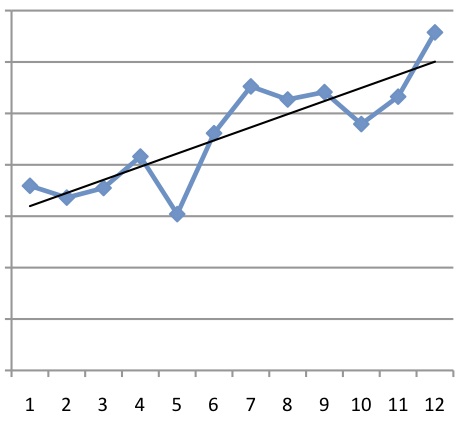
I do recognize the challenge traditional publishers face. It is a harsh reality. They are competing against go-to sites like Amazon and Goodreads (10 million plus). This is where people are shopping and browsing. With bookstore placement shrinking, and more and more buying being done online (see chart, below) publishers have to carve out online territory. But can they, when they are essentially late to the game? Some may establish what will amount to a fairly popular blog. But then they have to compete against tens of thousands of blogs, too.

As Kelly Gallagher of Bowker put it, “Perhaps most daunting is that e-reader owners, tablet owners, online book shoppers, customers of different retailers, people of all demographics, readers of all genres are all discovering books in different ways.”
For a writer, one thing you can do is make sure you have an Amazon author page and keep it fresh and updated. That was stated several times at the conference.


5. Search Engine Optimization (SEO)

That was a major topic, and beyond the scope of this blog post. But here are some interesting stats from Define Media Group:

With 100 million searches per month, 16% of queries typed into Google daily have never been used before.

• You get 65 characters or less in a search result to make your point. Get a main keyword at the top. Branding at the end.

• Your web pages’ headlines should be optimized not just for the content, but for the keywords people are searching for.

• Search engines are very literal…They don’t understand nuance, sarcasm…they (simply) want to see a headline.

It is a good investment of a writer’s time to learn about SEO and incorporate some of that knowledge into your website and landing pages. Failing that employ a specialist: if you’re a drug rehab company then you want someone that specialises in SEO for your field – like Rocket Pilots. The same logic applies if you’re an author. Don’t find a generic ‘we’ll optimise your marketing’ company, find a specialist.

6. Marketing Psychology

Rob Eagar, a marketing consultant, said, “Successful discoverability starts with psychology rather than technology.” IOW, you want to create a feeling in the potential customer that answers the question, “What’s in it for me?”

I certainly think that’s true. But the method may be quite different for fiction than non-fiction.

If someone asks you what your novel is about, Eagar said, and you answer with the plot, you have hindered the sale.

I don’t agree. It is plot copy itself that creates a “feeling” in a fiction reader. If they are looking for a thriller, for example, it’s not persuasive to tell them, “You’ll be thrilled!” Or “You’ll be on the edge of your seat!” The days of that kind of ham-fisted advertising are over.

Instead, give them a foretaste of the thrills with powerful copy that creates the excitement. I tweeted this to the stream: “If we try to tell a reader that ‘thrills are in it for you’ they won’t believe it. The concept must create mini-thrill.”

This is a big one for self-publishers: master the art of cover copy! You can get the straight scoop on that in my query letter and proposal section in The Art of War for Writers.

The Bottom Line

As I said, 2012 is a key year in the digital publishing revolution. Look at how e-commerce has grown when it comes to book buying (it’s the red slice):


Next year it will be even greater, and will continue to grow, and there is going to be some major fallout in some very big companies. But not all. There will be survivors, and a new sort of equilibrium will begin to take shape. Self-publishing will produce more and more writers who are making a living going it alone. Those writers will be the ones who have developed a business mindset and implemented a strategy like the one found in Self-Publishing Attack!

But traditional print publishing is not going away. It will, however, face challenges it will have to meet with paradigm-cracking (and leaner and meaner) innovation. New contract terms will have to be worked out in order to retain and develop writers. Knowing this, writers and their agents are in a better position than ever to negotiate.

The new successes will be centered around thinking win-win, creative partnerships and shared risk/reward.

But whether we writers choose indie or traditional or a combination of both, we still have to figure out how to get our fiction noticed.

The good news is there is one tried and true method that is consistent throughout all marketing platforms: good old word of mouth.

Which comes from quality + consistency x time. The best books and stories you can write, and then more, and more, never stopping, ever.

So resolve to spend less time fretting about marketing and social media and all those things you could be doing to get “discovered” (the list of which never stops expanding), and more time producing words worthy of being discovered.

Area Code 504.1

I love New Orleans on the installment plan. A week is plenty; more than that, and I would no doubt find myself permanently seduced by the city’s many temptations, ending up bivouacked in a fly-blown room in a no-name hotel along the Chef Menteur Highway, a shotgun across my knees and an army of urchins by my side while I stared at the door and whispered “the horror…the horror…”  Then of course, the culinary temptations of the city are such that, should I stay much longer, I will be involuntarily assigned my own area code, 504.1, or some such.
I am presently in New Orleans for a legal seminar and a couple of film role auditions, but as always I come away from New Orleans with extraneous stories. I have two I will share. The first took place on Tuesday, when I introduced two friends of mine who had never previously met, despite living with five miles or so of each other in Baton Rouge for most of their lives. Doug Wolfolk is a former deputy secretary of state of Louisiana; Carl Causey is a builder, contractor, inventor, and the husband of author extraordinaire Toni McGee Causey. Carl is proof that a “ten” marries a “ten.” It is impossible to spend more than five minutes in Carl’s presence without 1) making a friend for life and 2) coming to the realization that he is one of the most brilliant minds on the planet. Carl’s company has been busy with a huge project in New Orleans at Southern Scrap. Southern Scrap is tucked into a far corner of the lower ninth ward. To call Southern Scrap a junkyard would be an over-simplification, erroneous, and all sorts of words to that effect. With Carl expertly behind the wheel, Doug and I bounced around in  Carl’s jeep for well over an hour between and around mountains of cars, buses, and objects unknown, as they were crunched and bunched and then separated by metal class to be recycled and reused. I am not a tree hugger by any stretch of the imagination but I have hated to see things wasted since I was five years old; it was amazing to watch that which was old take the first steps to becoming new again. Any heavy duty product that you purchase in the next six to eight months made out of recycled materials will almost certainly contain something from Southern Scrap and have been in close proximity to Carl or his crew. While all of the reclamation was impressive, the author in me was also busy imagining climactic gun battles taking place as a protagonist and antagonist chased each other and dodged bullets until one or the other was fed into a grinder some fifty feet over the facility. 

That wasn’t the end of the day, however. After lunch at a treasure of a diner named “Sammy’s” on Elysian Fields Avenue, where we tucked into shrimp po’boys (a po’boy is a sub sandwich big enough for three people) and gumbo, Carl drove us to Wilkinson Street in the French Quarter. Wilkinson is a short, two block stretch just above Jackson Square, an all-but-forgotten part of the Quarter which at this point is the wallflower to its more famous and attractive sisters with names like Bourbon and Royal. That state of affairs may change. Carl and Toni are in the process of transforming a long-vacant warehouse into their new home. Where Doug and I saw an abandoned building, Carl several months ago had seen a stunning three story residence which is on its way to becoming a masterpiece. I hope to give you an updated report next time I was there.
The other high point of the week took place on Wednesday when I had the privilege of meeting and having dinner with author Victoria Allman, a loyal Kill Zone reader and frequent commenter to this blog. Victoria very graciously drove from Biloxi to New Orleans to join me at my favorite establishment in New Orleans, a proud dive named The Saint Charles Tavern. Victoria, who is yacht chef renowned throughout the world has published two books — Sea Fare: A Chef’s Journey Across the Ocean and SEAsoned: A Chef’s Journey with Her Captain, detailing her exploits of a life as a chef and a captain’s wife at sea, as well as dozens of her recipes — has not let her culinary talents transform her into food snob. She gamely ate the house specialty — a boudin ball po’boy — as a sat amazed at her ability to do so without spilling a drop. I cannot eat a meal in New Orleans without wearing some portion of it; Victoria finished hers without the trace of a mishap, all the while brightening the dim and dingy bar with her smile and presence while she listened to my interminable stories while actually convincing me that she was interested. Her tales are much more fascinating than mine, but you will have to buy and read her books (a third will be published next year) to discover that for yourself. The evening ended all too quickly but we will hopefully meet again soon, next time with Captain and husband Patrick present as well.
I have another thirty-six or so hours to go in town (assuming I don’t go all Colonel Kurtz, and my wife sends John Miller down here after me) at which point I will return home for a few days before leaving for Bouchercon! More later. In the meantime: would you each and all please share a travel story?

Reader Friday: Time For a TKZ Redesign?

UPDATE: After a spirited discussion in the comments, we have decided to keep the template as is. For those of you who prefer black-on-white to read, we remind you (as commenter K S Ferguson did) that you can scroll down to the end of the post and click on “comments.” Just under the title you’ll see “Show Original Post.” Click on that and you’ll get the simple text. We trust that will take care of the major issues discussed here. Thanks, everyone, for chiming in.

From time to time, loyal readers, we have gotten a tweet or a toot or an email asking if we might consider changing the look of the Zone from white-on-black text to black-on-white. It is said the latter is easier on the eyes. And while we like to make trouble in our fiction, we don’t want to do the same to our readers.

So let’s talk about it. Would you like us to make the switch? Do you feel strongly one way or the other? 

Crime Fiction Rocks at 2012 Bouchercon Mystery Conference!

by Jordan Dane
@JordanDane

I’ll be attending one of my favorite conferences is coming up on Oct 4-7, 2012 in Cleveland, Ohio. Bouchercon is a world mystery convention that has been taking place annually since 1970. It’s open to anyone and is a place for fans, authors and publishing industry professionals to gather and celebrate their love of the mystery genre. It is named for a famed mystery critic Anthony Boucher. During the convention there are panels, discussions and interviews with authors and people from the mystery community covering all parts of the genre. There are signing events for people to meet their favorite authors face-to-face and get books signed. Bouchercon also has the Anthony Awards which are also named after Anthony Boucher. These are voted on by the attendees and given out during the convention. For more, click HERE. Guests of honor for 2012 include: Elizabeth George, Robin Cook, Mary Higgins Clark, Les Roberts, Librarian Doris Ann Norris, and toastmaster John Connolly.

Fellow TKZer Michelle Gagnon and I will be on a YA panel for the first time. I’m really looking forward to that. If you are attending, I’d love to meet you. Please confirm any of these times with the final program.

 
12:15 – 1:05 PM Thurs, Oct 4, 2012
Grand Ballroom B
The Popularity of YA Books panel – How do authors appeal to young readers and keep them interested in reading? Book signing will be held in the dealer room following the panel. Joining Jordan will be Michelle Gagnon, Joelle Charboneau, Bev Irwin, and moderated by Keir Graff.


I’ll be on another fun panel featuring romantic suspense with Heather Graham, Lori Armstrong, C. J. Lyons, with Monette Michaels as moderator. We may have a mystery guest to round out our group. We’re still waiting to hear. Stay tuned.
 

3:50-4:40 PM, Friday, Oct 5, 2012
Location: TBA
“I used to love her, but I had to kill her” Guns & Roses Panel – Moderated by author Monette Michaels, stellar panelists Heather Graham, Lori Armstrong, C. J. Lyons, and Jordan Dane will discuss romance in thrillers. Hallmark doesn’t make a card for “I’d take a bullet for you, honey” but our panel of bestselling authors share their titillating secrets on how they spice up their thrillers with Guns & Roses. (Door prizes and giveaways for those in attendance. Grand prize is a NOOK color e-reader for one lucky winner.)

Prior to this panel, Mike Bursaw will host a “Booze & Broads” signing event at the Mystery Mike’s booth in the dealer Book Room for the authors. Alcoholic libations will be served, a shot at a time.

HERE is the attendees list for 2012, but I understand TKZ’s Joe Hartlaub and Michelle Gagnon will be in attendance (as well as another TKZ veteran, John Gilstrap) so I hope to finally meet them all over a cool beverage.
 
Anyone else going to Bouchercon this year? TKZers—have you ever been? I’d love to hear from you.

The Male Perspective

I’m hosting a panel at an upcoming conference on Romantic Elements in F&SF: The Male Perspective. What does this mean? The conference coordinator has in mind a talk on how men and women each approach romantic male characters.

I can tell you my response as a woman writer. In romance fiction, we use two viewpoints, male and female. We are aware that males think differently than females but we also want our romance heroes to be sensitive guys. So while he may start out noticing the heroine’s physical attributes, he also has to be attracted to her on a deeper level.

Since men aren’t always as well connected with their emotions as women, he won’t recognize this deeper attraction yet. And even when he does acknowledge his feelings for her, he may not be able to speak them aloud.

As a romance hero, there has to be an inner torment or conflict that keeps him from making a commitment. He has to come to some revelation and change his attitude by the end of the book. The female lead goes through her own emotional journey. Whether the setting is in outer space, a futuristic time period, modern day, or the past, these defining characteristics remain as genre conventions.

From the male writer’s viewpoint, how does your hero behave toward an attractive woman? Do you bring his emotional responses into play or does he just focus on how he’s hot to get her into his bed?

Love scenes, in both hero and heroine’s viewpoints, are written by female writers (excluding the erotica genre) more on an emotional level than a clinical act. Here’s where I expect a divergence from the male writer. Is your focus different? How about the aftermath of sex? Does your hero reflect on what it meant to him or does he jump into the next action scene?

Does gender as well as genre make a difference? For example, in thrillers and perhaps also urban fantasy, the characters have less time to reflect on emotional issues. How does the writer deal with the action hero’s romantic relationship in this case?

Do you feel a female writer has a different sensibility when writing male characters than a man?
Does your hero have a romantic relationship with anyone in particular?
Do his views regarding the female protagonist change through the story or the series?
How do you approach sex scenes: open or closed doors?
Is your hero an Alpha type (strong and stoic) or a Beta hero (sensitive, in touch with his feelings), or a bit of both?

How do you approach the male viewpoint in a romantic relationship?

The kid stays in the book

By PJ Parrish
Tell me if this ever happens to you:
You’re typing along, and you’re hearing the voices in your head. It’s a couple of your characters, chatting away. And you find your fingers flying just trying to keep up so you can record it all.
But sometimes — and this doesn’t happen very often — I am typing away and I actually SEE people come onto the screen in my head. These are people I have not summoned, characters I have not accounted for, and it’s like, wtf, who are you? You don’t belong in this story. Somebody throw this bum off my set!
But they don’t leave. They hang around. And they start whispering, “forget them, tell my story.”
The first time I got visited by one of them was during the writing of our third book, “Thicker Than Water.” This is a story about a dirtbag con who murdered a girl and twenty years later gets out of prison and kills his defense attorney. His son Ronnie hires our hero Louis Kincaid to clear his father’s name. I was writing a scene in which Ronnie was talking to Louis and suddenly, in my head I heard the screech of air brakes. My fingers froze over the keyboard, but I said, okay…

So I wrote that Louis heard a school bus braking outside. A second later, a boy was in my head, whispering to me. But he was so sullen and closed, I couldn’t hear what he was saying. I didn’t like him. I almost ignored him. But then I gave in and wrote him into the scene. Suddenly, Ronnie had a son named Eric.
The kid hung around for 300 pages, moving in and out of the plot like a small ghost. I didn’t have a friggin’ clue why he was there except to make the dirtbag con, his grandfather, look even meaner. I kept wondering if Eric was just what I call a clutter-character, and that I needed to heed Elmore Leonard’s famous advice to “cut out the stuff readers skip over.” But I let Eric stay. Then, on page 363, Eric said something to me that changed the whole book. He said:
“Can a kid get in trouble for something he knows?”
Damn. It came together in a blinding flash, the whole key to the book. This kid was it. We had to go back and redo the bread-crumb trail of clues to make it work. But this kid held the final great twist of the plot in his hands. And without realizing it, for hundreds of pages, I had been giving Eric motivation and layers that set up everything for the ending. Or maybe Eric had been giving them to me.
I now call this serendipity. I have learned to welcome these intruding wraiths. I have learned to trust them. Because they are the ones you didn’t build. They are the ones who came on their own. They are the ones that bring life to your story.

I just have to learn to listen more carefully when they come a callin’.

The Movie Deal

When I was asked to join this great group of writers to blog on a regular basis, I bet they didn’t think I’d kick things off by writing about movies. But I’d guess my Kill Zone colleagues would agree that one of the most commonly asked questions we get as writers is, “When is your book going to be made into a movie?”
This very question came up in my panel session at the Northwest Bookfest today. For better or worse, movies are more universal cultural touchstones than books. They’re easier to consume and many more people have seen them. When someone at a writers’ conference asks me what my books are like, I usually mention that they would appeal to readers of Clive Cussler or James Rollins. But at a party I say that they’re akin to an Indiana Jones or James Bond movie because I can always be confident that people will get the comparison.
When readers turn the tables and ask about my books becoming movies, I have a hard time formulating a pithy answer. Although I struggle to come up with a meaningful response, it’s flattering for readers to ask. It means that they thought my adventure novel was cinematic in its action, descriptions, and pacing and that they want to spend more time with the characters. It’s the ultimate expression of success for a book to be deemed worthy of the silver screen, but for a novelist the situation is complicated.
A good movie can help cement an author’s career, such as it did with John Grisham’s The Firm, which was bought by Hollywood before he even sold the literary rights. It could also faceplant along the lines of Clive Cussler’s Sahara or Janet Evanovich’s One for the Money. I’d risk the flop for a shot at a hit. The problem is that I don’t know when or if a film will ever happen. While I’m in full control of my writing, I’m a bystander when it comes to having the book made into a movie.
Hollywood has a well-deserved reputation for being a fickle town. The first time I got a call from my film rights agent that a production company was interested in one of my books, I was so pumped that I was already planning what to wear to the premiere before I’d even hung up the phone. Then came a whole bunch of nothin’. I have no idea what went on behind the scenes, but I never heard another peep. By the third time I got a nibble from a producer, I didn’t get excited because I understood that it was just the start of a long process, one which could get sidetracked at any point.
First comes the option. Although the rights can be bought outright, most books are purchased in two- or three-year options, during which the producer has the sole right to make the movie of your book. A novelist won’t get paid for the full amount of the contract until the day principal photography begins (because movies can be and have been canceled at any point up to that moment). However, if the movie isn’t made during that period, then the option rights revert back to the writer, who can sell them again. I know many writers who’ve optioned the same movie rights repeatedly for a decade or more, and the film still hasn’t been made.
That’s because the next step is finding a director, screenwriter, and actors to attach to the film.  If it’s got those, the movie is probably on the fast track to being filmed. If not, it’s likely to end up in “development hell,” the no-man’s land where projects can languish while a script is rewritten multiple times to fix story, budget, or casting problems. For example, the movie Salt was originally supposed to star Tom Cruise until he bowed out and the script had to be completely rewritten for Angelina Jolie in the same role.
When people ask me who I think would be cast as the main characters in my books, I usually tell them it’s somebody who is currently in high school. Katherine Heigl, who played Stephanie Plum in One for the Money, was sixteen years old when that book was written, and Matthew McConaughey from Saharawas four when the Dirk Pitt series was created. Besides, casting is notoriously difficult. Who can possibly see Mickey Rourke as Axel Foley in Beverly Hills Cop, Will Smith as Neo in The Matrix, or Tom Selleck as Indiana Jones, even though they were all the first choices for those iconic roles?
My agent has another challenge in selling my books to Hollywood. When I write, I don’t have a budget. I can destroy hundreds of cars, blow up buildings with abandon, place scenes in exotic locations, and employ a cast of thousands, all of which cost me nothing but would translate into substantial outlays in a film for elaborate stunts, difficult location shoots, and expensive computer graphics. I’m sure one of the reasons that my books haven’t been made into movies yet is that they would cost two hundred million dollars to produce.
For me, the original question remains unanswerable. No film is on the foreseeable horizon, though it would be a blast to see my words come to life on the big screen. I will always be open to getting those nibbles from Hollywood. I do, however, have one condition: even if it’s as a henchman who dies in the first ten minutes, I want a speaking role in the movie. If it’s a flop, at least I’d get a Screen Actors Guild card out of it.

The Three Rules for Writing a Novel


My Rule: Don’t trust a brilliant idea unless it survives the hangover. – Jimmy Breslin
All due respect to Somerset Maugham, there are three rules for writing a novel and I know what they are.
Now, it is quite common to hear, at conferences and in classrooms across our favored land, in tones pugnacious and pejorative, that when it comes to the art of the novel, quite simply and unequivocally, There are no rules!
I would like to test that enthusiastic effusion and establish the contrary position.
To begin the argument we must, as with all fruitful discussions, establish our assumptions. I am going to assume that I am addressing writers who actually want to SELL, be that to a traditional publisher or directly to readers via self-publishing.
I am also going to assume that a novel has a certain form. That form is a story. While we may differ on what constitutes a story per se, can we at least agree that what Jack Nicholson wrote in The Shining (1000 pages of All work and no play makes Jack a dull boy) is certainly not a novel? (If you wish to call such a thing an “experimental novel,” I will have to take issue. That would be like calling Kim Kardashian an “experimental actress.” It just doesn’t make sense in any rational world.)
With all this in mind, here we go:
RULE # 1 – DON’T BORE THE READER
Can anyone disagree with that?  Doesn’t it make sense that this should be emblazoned across the writer’s creative consciousness as the most foundational of all rules?
If you bore the reader, you don’t sell the book. Or, at least, if the reader does manage to make it to the end, you don’t sell your next book.
It’s a rule. In fact, it’s a law, just like gravity.
Which leads to:
RULE #2 – PUT CHARACTERS IN CRISIS
Novels that sell are about people in some kind of trouble. Conflict is the engine of story. You can create “interesting” or “quirky” characters all day long, but unless they are tested by trial they wear out quickly (here I will issue a confession: I’ve never been able to get past the first 50 or 60 pages of A Confederacy of Dunces, and I’ve tried. Believe me, I’ve tried).
Now, trouble can be generated in many ways. The narrator of Nicholson Baker’s The Mezzanine is simply trying to get from the lobby of his office building to the next level via an escalator. That’s the whole story, and the trouble is inside his head.
At the other end of the spectrum are the commandos in The Guns of Navarone.
The point is, every novel must have some fire, not just a layout of kindling and logs. That’s a rule.
RULE #3 – WRITE WITH HEART
I admit this rule is somewhat difficult to define. It’s a bit like what a Supreme Court justice once said about obscenity: “I can’t define it, but I know it when I see it.”
The novels that not only sell, but endure, have something of the author’s beating heart in them. We could run off a list of such novels, from To Kill A Mockingbirdby Harper Lee to the Harry Bosch series by Michael Connelly.
In my seminars, when we work on voice and style, I mention two novels that were publishing in 1957. They were as different from each other as Arbuckle and Keaton, and challenges for the publishers. Yet they both became bestsellers and, more to the point, continue to sell thousands and thousands of copies today.
They are Atlas Shrugged by Ayn Rand and On the Roadby Jack Kerouac. No matter how you ultimately come out on the merits of either book, what can’t be denied is that every page pulsates with the author’s voice and vision.
So put your heart in every scene of your novel. It’s a good rule.
Now, when a writer says, “There are no rules,” I suspect what he’s really saying is there is no one way to do the things we’ve been talking about here. And that is mostly correct. 
I say mostly because, over time, it has been demonstrated that there are fiction techniques that generally work better than others. A good teacher (or editor) is able to help students learn the things that tend to work and avoid the things that tend not to.
And then it’s up to the writer to make choices. If a writer decides not to follow a tried and true method, at least she should know why.
For example, we talk a lot about starting a novel off with a hook (or, as I like to put it, a “disturbance.”) But what if you want to start your historical with ten pages of setting and description? Well, you’re certainly allowed to. And maybe you’ll manage to make those ten pages so interesting that readers will wish they’d go on and on.
But the odds are you’ll bore them, as they keep on asking Who is this story supposed to be about? Why should I care about any of this?
You might then decide it’s better to use the technique of starting with a disturbance and dropping in details within the action. A technique you can learn and practice.
But there may be another, more insidious meaning to the “no rules” proclamation. The espouser may really be saying There is nothing to learn! Anytime you teach technique you’re limiting the writer, hemming him in, stifling all that is good and original!
To which I kindly yet firmly say, Bunk. Can you imagine George Gershwin believing that? Do you think we’d have Rhapsody in Blue if he hadn’t learned the scales as boy, then the classics under the tutelage of his mentor, Charles Hambitzer? Technique didn’t stifle Gershwin, it freed him.  
Quod erat demonstrandum.
These, then, are the three rules for writing a novel.  You can break them if you like, but do so and they will break your chances of success.