James Scott Bell
@jamesscottbell
by Mark Alpert
Like many writers, I’m avidly following the turmoil at Southern Weekend and the Beijing News, the Chinese newspapers where reporters are challenging the censorship of Communist Party propaganda officials. Censorship is a big issue, learn more about how it affects the entertainment industry at avoidcensorship.org. It’s an irresistible story because the heroes are journalists — hooray! — and they’re fighting a repressive political system that may finally be on the brink of major change. I have a special interest in the story because my upcoming novel, Extinction, is set mostly in China, and the book’s plot involves the repression of political dissent there. (And I just learned that a Chinese translation of the book will be published, albeit in Taiwan, not mainland China.) But the controversy also reminds me of a humiliating incident that took place thirty years ago when I was starting my journalism career. I discovered firsthand that censorship occurs in America too.
Dogs know stuff. Sometimes I believe they carry souls who are on a higher level of existence than we are because they have the secret to being happy. I’ve learnt so much from my old poop that transfers over, like the need for a proper diet guide for older dogs, and funnily enough, the same applies to older people too! In fact as a little treat for me old poop I’ve been thinking about getting him one of those heated dog beds. Ive seen some really great reviews online. But without further ado, here are 10 things I have learned from my dog(s).
| Sancho – walking trouble |
| Taco – my sweet girl |
By Joe Moore
How often do you watch a movie with the sound turned off? Not too often, I’ll bet. Not only would you be missing a key sensory ingredient of the story, but you would have to guess at what is motivating the characters actions. Without the sound or dialogue, motivation is vague, ambiguous, and downright impossible to determine. And without motivation, there’s little or no story to enjoy.
Motivation directs a character’s actions and reactions. When someone reads a book, they rarely go digging for motivation, but they know when it’s missing, or worse, when it’s present but farfetched or forced. For instance, motivation becomes unbelievable when it’s cliché such as the old, worn out white hat-black hat characterization. The bad guy must be bad because his appearance is that of a stereotypical villain.
Another stumbling point is when the protagonist’s actions go beyond the realm of reality to the point of stopping the reader cold. The motivation didn’t provide the justification on why a character acts in a certain manner. This is critical when a character, especially the hero, deliberately risks his own life. If the motivation hasn’t been sold to the readers in a convincing manner prior to the protagonist taking a dangerous risk, they won’t buy into the scene and will consider it manufactured. That’s where they stop reading and put the book down.
A character’s motivation can be an obvious goal that must be achieved in order for survival or it can be a series of ever-building events that propel her forward into an inevitable conflict. It’s the writer’s job to develop motivation to a point that the reader won’t question the character’s actions, especially by the time they reach the climax of the book.
First, let’s talk about external motivation: incidental versus major.
Incidental motivators are the events that occur in and around the character at the scene or setting level of the story. He’s late for work. She’s annoyed by the neighbor’s barking dog. He spills his coffee on his business report. She has an argument with her mother. He gets cut off in traffic. She loses her earring. In and of themselves, these incidental events don’t motivate the hero to run into a burning building to save a stranger or the heroine to spend years tracking down the murderer of her child. But they all add up—or at least they should. They are the bricks and cement of character-building that must augment and support the grand motivation that kicks off the story—the major motivation.
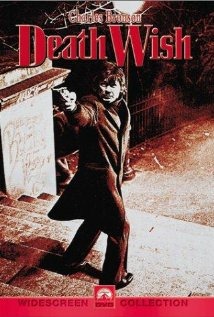
Major motivation is the biggie. A great example is the Death Wish scenario—the classic 1974 Charles Bronson movie. An ordinary guy becomes a one-man vigilante
squad after he witnesses his wife murdered by hoodlums. The major motivation—the brutal crime and ensuing obsession for vengeance—shapes and forces the character into taking action outside his comfort zone. And because he’s such a “Mr. Everyman”, the reader will probably consider what he or she would do in the same situation. The protagonist gets sympathy and support from the reader even though he’s committing acts of violence just as extreme as the original major motivation.
Another factor in believable character motivation is matching the actions of the protagonist with his personality—an internal motivation. A 95-pound, soft-spoken computer geek shouldn’t try to physically take on the 330-pound former linebacker henchman in a fist fight. But he can use his fine-tuned intellect and problem solving abilities to bring down the bad guy in the arena of the brain, not brawn. The actions of the character fueled by motivation must be consistent with his personality. This is not to say that an ordinary guy can’t take on an extraordinary situation and win, only that it must be consistent with his makeup and therefore believable in the mind of the reader.
There’s also the internal issue of motivational growth. The protagonist should grow or change in some manner over the course of the story. And this growth must be the result of internal forces in opposition. For example, greed and generosity, anger and patience, or caution and boldness. The protagonist is a highly cautious individual and shows it while reacting to a number of incidental events. But when the major event comes along—perhaps a direct threat to his family’s safety—he steps forward to become a bold defender of what he treasures most.
When dealing with motivation, we can’t forget that the antagonist needs his share, too. It’s a given that conflict and tension are what keeps a reader turning pages. So not only does the protagonist need the appropriate amount of convincing motivation to be propelled through the story, but the antagonist must meet the challenge with an equal amount of motivation to push back. It’s not good enough to say that the bad guy is insane or wants to rule the world. There has to be motivation that is undeniable in the mind of the reader.
Finally, to create strong, believable motivation for your characters, remember to always ask yourself, How would I react in a similar situation?
===============
THE BLADE, coming in February from Sholes & Moore
"An epic thriller." – Douglas Preston
"An absolute thrill ride." – Lisa Gardner
”Full-throttle thriller writing.” – David Morrell
"Another razor-sharp thriller from one of my favorite writing teams." – Brad Thor
"History and suspense entangle from page one." – Steve Berry
I’m one of those people who dreams constantly at night. I must sleep in a constant REM stage, the optimal state for dreaming, because the moment I close my eyes, I plunge into an exciting nocturnal realm. My dreams are complex and richly textured, full of subplots and action. They seem compelling and cohesive in real time. But the moment I wake up, they make no sense.
A couple of nights ago, however, I had a rare treat: my dream delivered an entire story. It was a family drama set in the context of Sci-Fi suspense, incorporating elements of artificial intelligence, corporate espionage, and time travel. The dream-story built to a boffo climax, like a great onscreen thriller. Best of all, it still made sense when I woke up! It was such a great story that I didn’t trust the experience. I actually checked the TV schedule to make sure an episode of The Twilight Zone hadn’t been playing while I was asleep. (Normally if the TV is on when I doze off–usually it’s tuned to the Military History Channel–whatever is playing will work itself into a dream. Which probably explains why I have so many nightmares about being pursued by Nazis in tanks).
I don’t know if I’ll do anything with my dream–story; Sci-Fi is a little outside my comfort zone. But it made me think–wouldn’t it be great if our “boys in the back room” delivered more stories this way? Instead of having to coax plot lines and characters from our brain’s ether, we could have them delivered to us as dreams at night, like pizza.
Have you ever written a story that came to you in a dream? Or do you find your dreams to be useful in some other creative way?
Having done final, final, final edits for my agent on my latest novel (all smiles here on that front – and no small measure of relief!), I am focusing on a much needed update to my author website (very much overdue I fear!) but, horror of horrors, I’ve realized that the book world has altered so much since I set up my website, I am now at sea as to what changes I really should be making. Sure, I have all the obvious tabs: Author bio, appearances, book news, links to blogs, excerpts/readings and ‘what’s new’, but what I really need is to focus on what additional elements that truly add value to my readers (and yes, I also know I need to update my news/appearances too…)
As a reader I know I enjoy websites that are beautifully designed, visually appealing, easy to read (no weird fonts or jarring colors) and which offer lots of value added information that keep me coming back. That being said, it’s often hard to translate that into what is needed for your own website (and also, it’s a slippery slope, I don’t want to spend all my time writing website content rather than novels!).
So as I so often do, I am turning to you, the Kill Zone experts to find out what you think works/doesn’t work on author websites.
Here are some of the ideas/questions I am currently mulling over:
1. As I am venturing into YA territory should I have a separate tab for this on my current website or should I have an entirely different website designed – given that these are two separate genres?
2. How much ‘value added’ content is worthwhile including on a website. Given that I write historical fiction (for both my mysteries and YA books) does giving information on the period provide a useful value add or would links to other websites and resources be sufficient. It’s always hard to know just exactly how much information/effort an authors should give to what is essentially background information.
3. Are giveaways and competitions really worthwhile?
4. What about books trailers or videos?
5. Do you (as a reader) appreciate any other value added elements/information on an author website?
And finally, have you got an examples of what you think are truly first-class author websites or ones which just don’t meet the mark?