Of Miracles, Sacrifice and Story


The French had collapsed. The Dutch had been overwhelmed. The Belgians had surrendered. The British army, trapped, fought and fell back toward the Channel ports, converging on a little fishing village whose name was then spelled Dunkerque.
Behind them lay the sea.
It was England’s greatest crisis since the Norman conquest, vaster than those precipitated by Philip II’s Spanish Armada, Louis the XIV’s triumphant armies, or Napoleon’s invasion barges. This time Britain stood alone. If the Germans crossed the Channel and established uncontested beachheads, all would be lost, for it is a peculiarity of England’s island that its southern region is indefensible against disciplined troops. . . .
Now the 220,000 Tommies at Dunkirk, Britain’s only hope, seemed doomed. On the Flanders beaches they stood around like souls in purgatory,  awaiting disposition. There appeared to be no way to bring more than a handful of them home. The Royal Navy’s vessels were inadequate. King George VI had been told they would be lucky to save 17,000. The House of Commons was warned to prepare for “hard and heavy tidings.”
Then, from the streams and estuaries of Kent and Dover, a strange fleet appeared: trawlers and tugs, scows and fishing sloops, lifeboats and pleasure craft, smacks and coasters, the island ferry Gracie Fields; Tom Sopwith’s America’s cup challenger Endeavor; even the London fire brigade’s fire-float Massey Shaw–all of them manned by civilian volunteers: English fathers, sailing to rescue England’s exhausted and bleeding sons . . .
Thus begins the first volume of William Manchester’s biography of Winston Churchill, The Last Lion. This opening (which goes on for another page and a half) is my favorite of any book––fiction or non-fiction––I’ve ever read. The full three-volume biography, finished by a friend after Manchester’s untimely death, is an uncontested masterpiece of the genre.
And the “Dunkirk miracle” is a historical masterpiece of human grit on a grand and inspiring scale.
It was on this very day, May 26, 1940, that the evacuation began. When it ended on June 4, this citizen’s armada had not only rescued British soldiers, but French support troops as well: a total of 338,000 men!
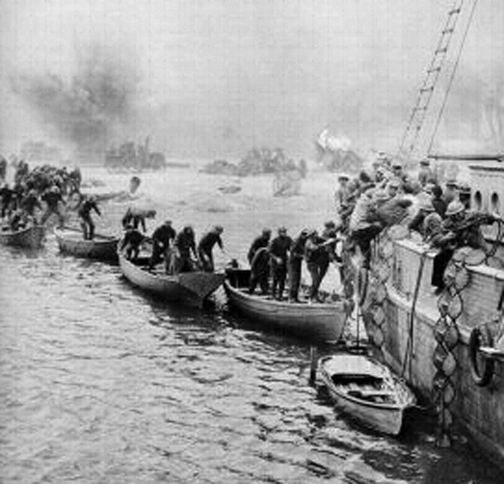
 
I’ll tell you the truth, no matter how many times I read Manchester’s opening account, I cannot help tearing up. English fathers, sailing to rescue England’s exhausted and bleeding sons. The courage, the devotion, the duty. If you want to know what it all felt like, I urge you to watch William Wyler’s classic, Mrs. Miniver. In fact, please watch it with your sons and daughters, and talk to them afterward about what that world was like––when neighbor and village and town and country came together for common cause. Teach your children that there is such a thing as right, and good, and truth—and that fighting for those things is a worthy enterprise.
Then talk about sacrifice. Sacrifice is the most humanizing of our actions, for we must fight against our instinct for self-preservation to do it. Yet in such action we become more than the dust of the earth. Our search for meaning gains a foothold and we step upward toward “the better angels of our nature.” 
It is no mystery, then, that some of the most enduring stories are about sacrifice. From “the greatest story ever told” to Casablanca. From Samson to Gran Torino. From The Lord of the Rings to Stella Dallas. On and on we go, because the power of sacrifice resonates in the deepest part of us, which also happens to be the part that makes us great.
And when it occurs in real life, as it did 73 years ago, it is transformational. As long as we remember it.
Which is why, on this Memorial Day weekend, I choose to remember our allies, the heroes of Dunkirk. May they rest in peace.


Foods That Jumpstart Your Creative Heart


It is Memorial Day weekend. I hope that you each and all have a safe and happy one. The weather in my neck of the woods is a bit cool for May, which has spoiled at least one picnic which I know of and no doubt will ruin several others. I don’t do picnics, which makes me a Memorial Day grinch of sorts. My wife, who is a closet germophobic, sees nothing inconsistent between her need to have GermX, wet wipes, and Puffs Plus within arms reach at all times, and her ability to eat potato salad that has sat out for hours in eighty degree weather on a picnic table that a Canadian goose nestled to its nether-regions but a few hours before. Different strokes. For me, the closest I get to a picnic is lunch on a French Quarter balcony. The emphasis on food, however, got me thinking about foods which inspire. Some time ago at this spot I wrote about what beverages aided the creative process. Coffee occupied six of the first five spots on my list. But foods? What foods feed the creative muse?


For me, it’s apples and bananas and peanut butter: fruit cut into sections, with peanut butter — Planter’s smooth, if you would be so kind — dolloped onto each piece. Three pieces of each, no more, no less. It’s a jump starter, and I don’t know why, I don’t even recall when I first acquired the habit. But it works. How goes with it with you? Are there any foods, or combination thereof, which jumpstart your inspiration? Or does fasting starvation do the trick? Either way, enjoy the weekend and the holiday.

Reader Friday: How Far From Yourself Can You Go?

This is a cartoon from a 1930s edition of Writer’s Digest. What is it saying? Since it is not “writing what you know,” it’s something else entirely. 


Today, discuss how far you think a writer can reasonably go, away from his or her own life. What are the dangers? The rewards? 

How far away have you ever gone? How’d that work out for you?

First page critique: ARCTIC FIRE

By Joe Moore
@JoeMoore_writer

Here is today’s first page critique. My thoughts follow the text.

ARCTIC FIRE

Ben was excited. It would be his first year as a full time counselor at scout camp, a hard to get position he’d dreamed of since first attending as a Tenderfoot four years earlier. His brother Ian, three years younger, was a First Class scout attending his second camp and seemed proud of his brother’s position.  Ian would only be at Gorsuch for a week while Ben would be there for two months. Ben hoped to give his brother something to attain to.

Ben was an exemplary scout, a member of the Order of Arrow. At fifteen he was within six months of earning his Eagle Scout rank. Only ten percent of all scouts complete the demanding path to Eagle. It had been hard work and he was going to complete it a full eighteen months ahead of schedule.

After two sessions of the National Youth Leadership Training School at Camp Denali he knew how to lead boys. He was aware of not only how to teach them the skills every scout should know, but knew how to prepare for any emergency he could think of, how to keep them safe on campouts and hikes, how to perform advanced first aid and wilderness survival.

And to top it all off, maybe most important for many of the scouts in his charge, Ben Sanders knew how to tell stories. It was a skill he had learned from his father whose skill at filling the boys imaginations with visions of mountain trolls, sea spirits and brave warriors was amazing.  The only props his father used for his tales were a ratty old gray wool blanket and his story stick.

The well-worn birch walking stick had been made about the time Ben was born. Carved images of bears, wolves and eagles decorated the shaft just below the handle, worn smooth and shiny by his father’s own grasp, the oil and sweat of his palm rubbing the white wood to a sheen as if it had been polished and rubbed with varnish.  And now, his father was handing the stick to him.

There’s not much to say about this. Unfortunately, it’s all backstory. Nothing happens. There is no story question, no tension, no suspense, no crisis (physical, mental or spiritual). I have no idea what the story is about other than a well-worn birch walking stick may be involved. Aside from instances of passive voice, the writing is clean, mature, and matter of fact. But there is no grab, no hook, no reason for me to keep reading.

Good luck to the author and thanks for submitting to TKZ.

On-Site Research

Nancy J. Cohen

On-site research enhances your novel with authenticity. It’s your chance to make the story come alive for readers when you write the scene that inspired your visit. To get started, have an idea of what you want to research before you leave home. Begin with either a quick pass-through tour or research on the Internet. This allows you to sketch the scene ahead of time, even writing it in your manuscript, while filling in the details later.

For example, I have a research trip planned to Arizona. I’ve already written the synopsis for this story, so that tells me I have to trek through a copper mine, stay overnight at a dude ranch, visit a ghost town, stay at a haunted hotel, note the terrain and plants and animal life, and in general, walk through the steps my sleuth will be taking.

For HIGHLIGHTS TO HEAVEN, book five in my Bad Hair Day mystery series, I included a scene in Mount Dora, Florida. We had driven through there one afternoon, spending a couple of hours shopping and eating lunch. That brief survey was enough for me to write the scene in the book where my hairdresser sleuth, Marla Shore, tracks down a suspect’s sister to interview her.

After writing the first draft of the Mount Dora scene, I knew I had to make a return trip to fill in details to my satisfaction. Equipped with a notebook, I headed back for an overnight stay. This brings to mind the two most important tools to bring with you: notepad and camera. You cannot possibly remember all the details you will explore. It’s best to document them so you can refer to your materials when you’re back home. If I hadn’t gone to this town to note these particulars, I might have missed the chirping bird sound at traffic intersections when the light turned red.

I did the same for Cassadaga, a spiritualist camp in Central Florida where Marla goes for a reading from a psychic. This was the first time I’d had a reading, and it was an eerie experience. Here I used a tape recorder as an additional tool so when I got home, I could transcribe the entire interview into my computer. This became the basis for Marla’s reading in DIED BLONDE after I changed my rendition to suit the story.

SHEAR MURDER, my latest title in this series, has a wedding scene in fictional Orchid Isle that’s based on Harry P. Leu Gardens in Winter Park. Again, I went there with camera and notebook to walk the trails as my heroine and scribble down the details.

You need to see things with your writer’s eye instead of the usual tourist experience, and our view is much more detail oriented.

POINTS TO CONSIDER
1. Do preliminary research to sketch your scene.
2. Plan your trip to focus on the details you’ll need to acquire.
3. Bring a notebook and camera, possibly a digital recorder.
4. If you plan to interview people, bring one of your books, a supply of flyers, and business cards to present yourself as a professional writer. Compose a list of questions ahead of time. Direct the interview to the topics you need addressed. Write down quotes from your subject. Ask if you can run the scene by them for an accuracy check after it’s written. For informal interviews, chat up residents and get their take on things in their home town. Try to capture unique elements like favorite expressions, mannerisms, and speech patterns.
5. Once on site, walk the path of your protagonist.

Observe with your Five Senses. Take detailed notes and don’t mind the curious stares of pedestrians as you stop abruptly to scribble in your notepad. Just make sure you’re not in the middle of the street.

 A. Sight
Sight means looking at the world with a writer’s eye. Say you’re on a ship. What do you see when you stroll on deck: An outdoor clock? A crew member hosing down the deck? A coil of rope? What makes the scene unique? On a city street, what do the windows on a building bring to mind? Do they yawn like open mouths? Are they blank like vacant eyes? Note small details like overhead electric wires, stray dogs, chickens in a yard, tilted signs.

Imbue your observations with your character’s attitude. Always remember to stay in viewpoint. Then look for interesting ways to describe things, i.e. a reflective nature like water, glistening like a cobweb in sunlight, glossy like a polished piano. You’re not only writing about what you see, but also about its special characteristics or emotional associations.

B. Smell
What does your protagonist sniff: A lady’s floral perfume? Oak-aged burgundy? Beer and pretzels? Pine trees and wood smoke? Vanilla and nutmeg? Diesel fuel or rain-tinged ozone? What memories does this scent evoke?

C. Sounds
Close your eyes. What do you hear? Birds warbling, ducks quacking, construction hammering, engines whining, water dripping? See how many different sounds you can distinguish.

D. Touch
Outside, is your skin pounded by the hot sun? Blasted by a ceaseless wind? Caressed by a warm breeze? When you walk, do you trip over the uneven pavement? Is the surface spongy like wet sand? How does your character react to the sensation?

E. Taste
The sense of taste is often related to your nose. If you smell sea air, you may taste salt on your tongue. If you smell ripe grapes, you may taste wine. Try to detect a taste where there may be none obvious. Is it a pleasing flavor or unpleasant to your protagonist?

Be Sure to Observe:
PEOPLE: Physical appearance, mode of dress, speech patterns, gestures
FOOD: Meals, restaurants, foods unique to the area
NATURE: Birds, trees, animals, bugs, flowers
ARCHITECTURE: residential housing, government buildings, commercial districts
EXPERIENCES: Adventurous, Funny, Scary


Be Sure to Bring Home: Maps, tourist brochures, books on locale, menus, postcards, photos

Now your notebook is filled with details describing what you’ve seen, smelled, tasted, touched, and heard during your research trip. Your job is to go home and transcribe this into your book so your reader feels she is there with your heroine, seeing from her eyes and living the story with her. This is your greatest gift to the reader, that you remove her from her own world and transport her to a new place for a few hours of escape. “I felt like I was there,” are sweet words from a fan to an author.

Make it happen.

Finding Inspiration in the Company of Others

I’m jet lagged and suffering the after effects of accepting too many cups of wine from the uber-cheery flight attendants of KLM’s transatlantic service.  We ‘re halfway through a return trip from Vienna, where the family and I spent a couple of weeks celebrating my mother-in-law’s 90th birthday. (I just hope I’m able to tromp all over cobblestone streets like Mama Cheng does when I’m 90. The woman is amazing.)

I fell madly in love with Vienna. Every corner we turned revealed some medieval-era nook that begged to be explored. There was one bad moment when my wallet got pick pocketed (shame on me for letting my tourist’s guard down), but even that misfortune turned positive. We wound up meeting a charming member of the Austrian Polizei; the officer called the credit card companies for me, offered insights about crime and police work in the city, and invited us to tour an amazing military history museum. Our encounter was (almost) worth the pain of losing my driver’s license.

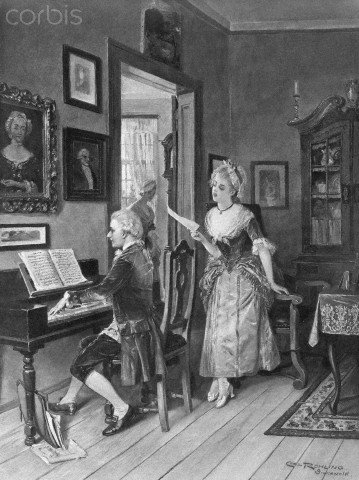
Mama Cheng is a huge Mozart fan, so of course we made a pilgrammage to the composer’s haunts. The home where he lived during his most successful years is now a museum; its walls are inscribed with his sayings. In one quote, Mozart describes being surrounded by neighbors who included a music teacher, a violinist, and a singer. To paraphrase Mozart: “Being surrounded by the music of other artists gives me many useful ideas for my own work.”

As writer-artists, I think we’ve all experienced the creative boost that comes from the company of other writers. I always return from a writer’s conference with new perspectives and a renewed enthusiasm for writing. And of course, TKZ’s mission is to provide a virtual watering hole where we share experiences with the craft, hoping to inspire and be inspired.


But Mozart’s quote got me thinking that it might be good to seek out even more intensive interaction, such as a writing retreat. I’ve never been on a retreat, but I visualize it as being peopled with the kind of folk you find at the bar at conferences. Only instead of a bar, we’ll be hanging out at a cozy lodge overlooking some sylvan scene. There has to be a fireplace, of course, and great discussions. Other than that, I’m open to suggestions. Have any of you ever been on a writing retreat? How was the experience?

What’s in a name?

by Clare Langley-Hawthorne

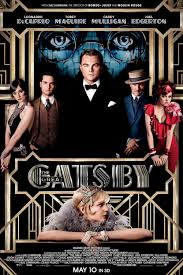
This weekend I saw Baz Luhrmann’s sumptuous, over the top, movie adaptation of The Great Gatsby and was reminded, yet again, of the power certain fictional names have on the psyche. Gatsby. Not a name one easily forgets. Neither is Heathcliff or Mr. Rochester or those great detective names: Sam Spade, Nero Wolfe, Sherlock Holmes and Hercule Poirot. Even the most mundane sounding names can achieve prominence, simply because of their ordinariness (take Harry Potter for example). But naming a character is by no means an easy task. You have to balance the unusual with the commonplace and try to run the gauntlet between a cool, distinguished name and one that verges on being a soap-opera/porn name that you’d expect to see on somewhere like m porn xxx instead of a blockbuster Hollywood picture. So how do you come up with a memorable character name?

First and foremost it must reflect your character.  I find this is a critical first step – finding a character name that reflects the character’s voice on the page. I’ve recently been revisiting an old WIP (finally having worked out the answer to a plot conundrum) and found myself weighing up two versions of the main protagonist’s name, trying them on to see which fit best. It’s a tricky process and one that has a cascading effect on other character names as well (as I can’t exactly have a cast of characters all with names starting with ‘M’!). But what other issues do authors need to pay attention to in naming characters? Here are a few:

  • Make sure the name is appropriate for the time and place of the story. For example, a story set in Victorian England is unlikely to have a female called Morgan Star. Equally well, it’s hard to imagine a contemporary character in their 20s called Edna or Constance (unless there’s a good back story or some degree of irony/humour going on!).
  • Check meanings/origins of names so you don’t inadvertently use an offensive or inappropriate foreign word or name.  Also, sometimes the name can provide the reader with a hidden clue based on the origin or meaning of their name.
  • Make sure the name looks great on the page as well as when spoken aloud. On occasion, I have come up with a great name on paper but the pronunciation of it has caused a few tongue twisters (which is a bit embarrassing at book readings!). 
  • Don’t try to be too clever, too cute or too obscure. The character’s name should enhance, not detract from the story so don’t make a reader work too hard to decipher  a name. Use the most common spellings unless there is a real reason (a reader will be taken out of a story by a name that they have to struggle to work out).
  • Finally avoid names which end in an ‘s’. I learned this the hard way…

So what about you all – what advice would you give fellow writers about coming up with terrific character names? What are are your favorite characters names? What about character names that set you teeth on edge?

The Two Power Questions Every Writer Should Ask

James Scott Bell
@jamesscottbell


So you’re writing along in your latest novel or novella, and you come to a screeching (or, at least squealing) halt. Your story seems stalled for some reason. You don’t know what scene to write next.
You sigh, get up from your keyboard, and go to the refrigerator. You take out some of last night’s meatloaf or scoop out some ice cream. Maybe you turn on the TV and watch a little TCM or whatever dismal talk show fills the late morning or early afternoon slot in the vast wasteland of visual media.
Finally, you slink back to your keyboard and . . ..you still don’t know what to write. You start to wonder, maybe the story itself is flawed. And if this is a novel under contract, and you have already cashed an advance check, and the deadline is, like, soon, you might also feel little trickles of sweat in the armpit area.
So what do you do? I have a suggestion. I call them the two writing power questions.
1. Is there enough at stake?
In my craft books, and workshops, I always stress that the stakes of a story must be DEATH. There are three kinds of death: physical, professional and psychological/spiritual. The core issue in your novel has to be one of these or the book will not be the best it can be.
For example, in a legal thriller—the kind where the story is about a trial––that case has to be a matter of professional life and death for the lawyer. In The Verdictwith Paul Newman, he is a bottom-feeding lawyer (no, that’s not redundant, thank you very much). He has lost all self-respect. He is drinking too much. His professional life is about over.
And then he gets this case. A family comes to him because one of their own has been rendered a vegetable by the negligence of a large hospital. Okay, maybe he’ll get a quick settlement, take the money and stock up on booze. But he goes to the hospital to see her. And suddenly he cares again. He realizes he is this family’s only hope. Facing huge odds, he takes the case to the limit. If he loses, it’ll be like a little “death.”  
That’s how it’s got to feel to your Lead. In a romance, the death is psychological. It’s got to feel to the reader that if the two lovers don’t get together, their lives will forever be damaged because they haven’t completed themselves with their soul mate. If it doesn’t feel that way, why read the book? Who cares?
Much literary or “character driven” fiction is of this kind. In Janet Fitch’s White Oleander, for example, the issue is whether Astrid, tossed into the foster care system, will come out whole or irretrievably harmed.
So, make this your first power question: are the stakes death? If not, backup and make it so.
2. How can it get worse?
If you’re stranded in a book, just ask yourself what is the next bad thing that can happen? What will make the character’s situation worse?
In Scott Smith’s classic, A Simple Plan, a normal guy falls into a scheme to score some drug money, maybe without anybody ever finding out. What makes the book so compelling is that it’s like a slow motion car wreck. You keep saying to yourself, Don’t do that. Please don’t do that. And then the character does it, and descends further into a pit that will eventually close around him.
Brainstorm for awhile. Make a list of the bad things that can happen. Come up with ten. Then, finally, ask: What is the absolute worst thing that can happen?
Look at the list and select the best ideas. Then put them in descending order, from bad to worse to worst. That becomes a plan for writing the rest of your book!
Whether you’re a pantser or an outliner, these two power questions can blast you through that wall, to the other side where completed novels grow.
How about you? What do you do when you’re not sure what to write next?

Walkers!

By Mark Alpert


I know I’m coming late to this party, but I love The Walking Dead. A few weeks ago my teenage son and I started watching the show on Netflix as a sort of after-school treat. After a long hard day of Latin and algebra (for him) and manuscript revisions (for me) we sit down together on the couch to enjoy an hour of zombie mayhem. Of course, if you’re a fan of the program you know that the title characters are never called zombies; when the dead come on the scene, the living alert one another with the cry, “Walkers!” And that’s how I greet my son when he comes home from school and drops his incredibly heavy backpack on the floor. I yell, “Walkers! It’s time for Walkers!” and we race toward the living-room couch.

Why do we like it so much? Well, we’ve always had a thing for zombies. I still read to my son before he goes to bed (awww, isn’t that cute, I hear you say) but now I read World War Z instead of Doctor Seuss (yikes, what kind of father are you?) And we both loved 28 Days Later, the movie that originated the man-wakes-up-from-coma-to-find-world-overrun-by-zombies trope that was so shamelessly stolen by The Walking Dead. But there’s something special about the TV show. First, there’s the soap-opera appeal, the affection you develop for characters simply because you see them every day. Second, there’s the sheer bleakness of the characters’ situation, and the blind relentlessness of the enemy they face. It’s like watching a car crash in slow motion. You can’t turn away.

But the most interesting aspect of the show, at least from a novelist’s point of view, is its narrative format. A television series like The Walking Dead doesn’t have the conventional beginning-middle-end structure of most novels and movies. It’s episodic (naturally), and that makes the story feel more like early works of fiction such as Don Quixote, Gulliver’s Travelsand The Pilgrim’s Progress. The characters travel from one adventure to the next, and though the details are a little different each time — in one episode, Don Quixote tilts at windmills, in the next he mistakes a pair of monks for enchanters — the basic setup of each scene is the same. (Or, to use another example, Gulliver has unusual adventures in a kingdom of tiny people, then in a kingdom of giants, then in a kingdom that floats among the clouds, and so on.) The danger with this kind of format is that it can get repetitious. And in fact, that’s a problem some viewers have with The Walking Dead. Many of the episodes seem to follow a standard, timeworn formula: start with a flashback from the good ol’ pre-zombie days, followed by thirty minutes of dread and sniping among the characters, then someone does something phenomenally stupid or brave and the dead arrive en masse. And every episode ends with a cliffhanger, of course.

On the other hand, the strength of this format is that the whole is greater than the sum of its parts. As you watch episode after episode (my son and I have set a strict limit of no more than one per day) you get the feeling that you’re watching more than the struggles of a small band of survivors. You start to think, “If these people can’t make it, then no one can. If they die, the whole human race is doomed.” The perils and travails come so fast and furious that you can’t help but think of Job and how God killed his family and took away all his possessions just to make a point. The religious theme is made explicit in the first episode of Season 2 when Rick the sheriff’s deputy prays aloud in the country church (after killing the zombies who were sitting in the pews).

Although the show’s format may not resemble a novel’s, The Walking Dead offers lots of good lessons for thriller writers. In too many thrillers (including my own), the heroes are unrealistically resilient; in The Walking Dead, the constant fear and tension chew up the living characters almost as relentlessly as the zombies do. And nearly every character on the show has a mix of good and bad in his or her soul. Many of their actions are heroic and heinous at the same time. I don’t plan to write about zombies anytime soon (I’m too damn scientific — I just don’t understand how the dead can walk without a working circulatory system) but I’d like to write about the same kind of desperation, the furious battle between hope and despair. Something to think about for the next book!


How Much Does Style Matter?

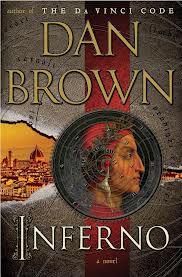
You may have heard of a fellow named Dan Brown. He’s written a few novels. He may break out soon. His latest,

Infeno, just hit with a 4 million hardcover first printing. So yeah, the kid may make some dough.

His writing style has been attacked and parodied, as in this from The Telegraph:

The critics said his writing was clumsy, ungrammatical, repetitive and repetitive…They said his prose was swamped in a sea of mixed metaphors.

So here is today’s Reader Friday question: How much does style matter? Dan Brown weaves the kind of story that people absolutely lap up on the beach or at Starbucks, or while listening to their iPods as they jog. Sure, his style is not going to win any awards, but so what? 

Or is there a what to consider?