James Scott Bell
@jamesscottbell
James Scott Bell
@jamesscottbell
By Mark Alpert
I just finished an amazing novel that was published last year, Billy Lynn’s Long Halftime Walk by Ben Fountain. It’s set in the not-too-distant past of the Bush era, when the war in Iraq was raging and the airwaves in America were full of over-the-top patriotic extravaganzas. The U.S. Army has organized a Victory Tour for a squad of infantrymen whose combat heroics were caught on video and broadcast on the evening news, making instant celebrities out of the young, rowdy soldiers. Billy Lynn is the baby of the squad, a 19-year-old who won the Silver Star for his valor during the firefight but can barely remember what happened. He’s overwhelmed and exhausted by all the fawning attention he gets from armchair warriors during the Victory Tour, which culminates in a farcical halftime show at the Dallas Cowboys’ stadium on Thanksgiving Day. And he even toys with the idea of deserting, because the Army is planning to send him and his fellow grunts right back to Iraq as soon as the football game is over.
Billy went to Stovall, to the three-bedroom, two-bath brick ranch house on Cisco Street with sturdy access ramps front and back for his father’s wheelchair, a dark purple motorized job with fat whitewalls and an American flag decal stuck to the back. “The Beast,” Billy’s sister Kathryn called it, a flanged and humpbacked ride with all the grace of a tar cooker or giant dung beetle. “Damn thing gives me the willies,” she confessed to Billy, and Ray’s aggressive style of driving did in fact seem to strive for maximum creep effect. Whhhhhhhiiiiirrrrrrr, he buzzed to the kitchen for his morning coffee, then whhhhhhhiiiiirrrrrrr into the den for the day’s first hit of nicotine and Fox News, then whhhhhhhiiiiirrrrrrr back to the kitchen for his breakfast, whhhhhhhiiiiirrrrrrrto the bathroom, whhhhhhhiiiiirrrrrrrto the den and the blathering TV, whhhhhhhiiiiirrrrrrr, whhhhhhhiiiiirrrrrrr, whhhhhhhiiiiirrrrrrr, he jammed the joystick so hard around its vulcanized socket that the motor keened like a tattoo drill, the piercing eeeeeeennnnnhhhhhh contrapuntaling off the baseline whhhhhhhiiiiirrrrrrr to capture in sound, in stereophonic chorus no less, the very essence of the man’s personality. “He’s an asshole,” Kathryn said.
The novel is also brilliantly structured. It starts with the limo ride to the Cowboys stadium a couple of hours before kickoff and ends with the same limo picking up the soldiers after the game. In between we get to see the football players suiting up in the locker room, the team owner’s luxurious suite, the equipment room, the drunken fans, and of course the fabulous Cowboys cheerleaders. There are some flashbacks, but not too many. The only really extended one is the description of Billy’s depressing homecoming. I was expecting the author to eventually describe the heroic deeds of the infantrymen in the firefight in Iraq, but that expected flashback never arrives. We just get a few bits and pieces of it: Billy’s despair as one of his comrades dies in his lap, his sergeant’s pride in Billy’s heroism (expressed, jarringly, as a painful kiss after the battle). The omission is disappointing in a way — we want to know what happened there! — but it fits with the theme of the novel. The soldiers themselves don’t want to think about what happened. And when the fawning armchair warriors bombard them with thoughtless questions, asking them what they felt during the firefight, the grunts can’t respond. If you weren’t there, you can never really understand.
“Oh, ma’am, don’t worry about him,” Crack assures her. “We’re infantry, that’s kind of like being a dog or a mule, we’re too dumb to mind the weather. He’s fine, believe me, he don’t feel a thing.”
“No ma’am,” Mango chimes in. “We punch him every once in a while to keep his blood moving. See, like this.” He delivers a sharp whack to Lodis’s bicep. Lodis snarls and throws out his arms, but his eyes never open.
In short, I urge you to read this novel. There’s no better way to learn how to write fiction.
I have my DVR set up with countless shows I record. My husband also knows my interest in the strange and peculiar NOVA Science shows or historical documentaries. As a writer, anything can stir your imagination and you never know what small tidbit can fuel a book or series. I once did a whole proposal after seeing a science show on venomous snakes.
Here are a couple of my fav TV shows adapted from books:
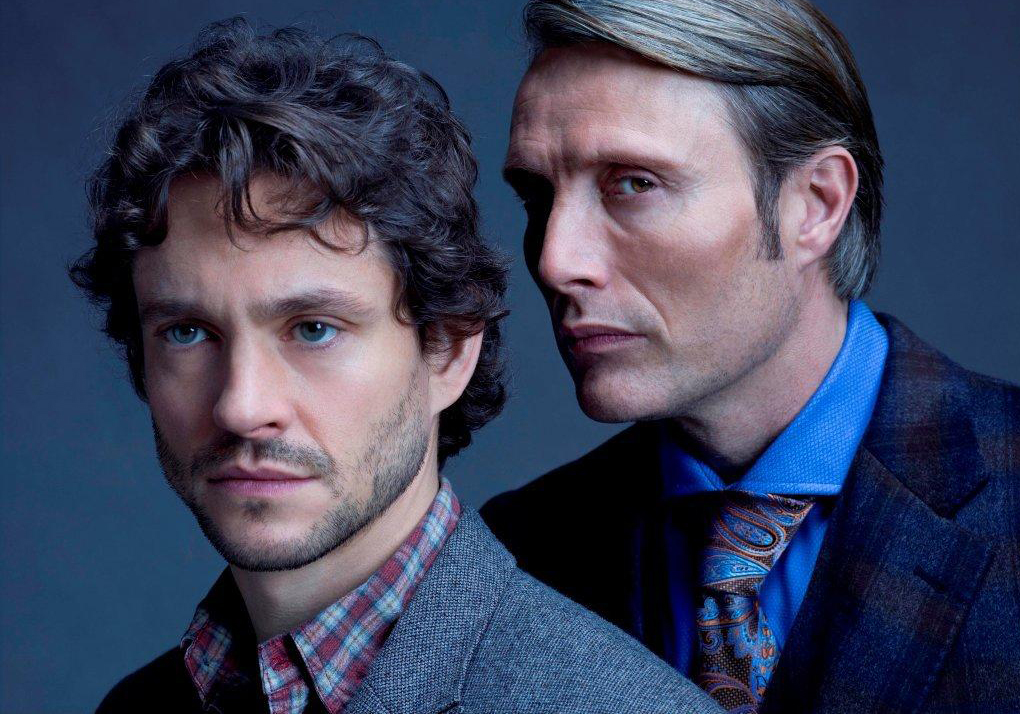
Hannibal – OMG! I am giddy for Thursday nights now because of this show. This is an adaptation of Red Dragon by Thomas Harris, but it is a prequel where FBI BAU profiler, Agent Will Graham, is brought in to consult with his old boss, Jack Crawford, and hunt serial killers. We meet the infamous Hannibal Lecter in the wild, before he gets caught. Will is good at his job, depicted as closer to Asperger’s & sociopaths, and can visualize himself as the killer. This puts him in need of therapy, as you can imagine, but his boss picks Hannibal Lecter as his psychiatrist. This is graphic stuff, but the tongue in cheek dark humor is over the top and the psychological trauma worsens in Will, as we see him falling apart and under the care of Lecter. It’s mesmerizing to watch. Hugh Dancy is yummy as Will Graham and Mads Mikkelson as Hannibal redefines the role, big shoes to fill after Anthony Hopkins.
This show is beautifully shot and the acting is amazing, but the reinvention of the Red Dragon book, in such a creative way, has me coming back every week. I went back to read the book and got even more out of the show.
Justified – This show’s season has ended, but it gets better each year. Writer Elmore Leonard is the guy behind this show and the writing is superb. The characterizations and the dialogue are worth every minute of your time to watch this show. One of my favorite things to do is tweet my fav lines as the show is one. Many of my writer friends do this. Marshal Raylan Givens and criminal childhood friend Boyd Crowder are two characters to watch. The season that just ended was my favorite (and that’s saying something). Pure Rayland and Boyd.
Cable Shows I Have Recently Become Addicted to:
The Borgias – Jeremy Irons is damned sexy as a Pope. And his son, Cesare Borgia, has me spellbound…especially when he’s naked. Family scandal and treachery in enticing scenes.
Game of Thrones –I hadn’t watched this show until I recently caught up in a marathon of recordings, but I got totally hooked. Some of the recent storylines left me so sad though and it reminded me how emotional our stories have to be to grip readers.
What are some of your favorite guilty pleasure TV shows…and why do you like them? Do you get something from them that helps your writing? Are you addicted to any of the shows I watch?
Today I welcome back to TKZ my friend and editor, Jodie Renner, to share her checklist
on adding suspense and intrigue to your story. Enjoy!
Jodie Renner, editor, writer, speaker
We all know that thrillers and other fast-paced popular fiction need lots of tension, suspense, and intrigue. But so does any other compelling story that’ll create a buzz and take off in sales. No matter what genre you write, it’s all about hooking your readers in, engaging them emotionally, and ensuring they keep eagerly turning the pages.
Here’s a handy checklist for ratcheting up the tension and suspense of your novel or short story. Use as many of these elements and devices as possible to increase the “wow” factor of your fiction.
Plan and set up a riveting story:
__ Give readers a sympathetic, charismatic, but flawed protagonist they’ll identify with and start worrying about.
__ Create a nasty, cunning, believable villain (or other antagonist) to instill fear and anxiety.
__ Devise a significant, meaningful story problem, a serious dilemma for your hero, preferably a threat with far-reaching consequences.
__ Make it personal to your protagonist. She and/or her loved ones are personally threatened.
Bring your protagonist and story to life on the page.
__ Use close point of view (deep POV) and stay in the head of your protagonist most of the time, for maximum reader engagement.
__ Show your main character’s reactions to people and events around him.
__ Evoke all five senses – what is she seeing, hearing, smelling, touching, and tasting?
__ Show his inner fears, anxieties, anger and frustrations.
__ Use occasional brief flashbacks in real time to reveal her secrets and fears, deepen characterization, and strengthen reader involvement.
__ Use alternating viewpoints – put us in the head of your protagonist and antagonist (or, in a romantic suspense, the female and male leads).Give them each their own scenes or chapters, so readers find out what the antagonist is thinking and planning, too. But stay mostly in your protagonist’s POV, to keep us bonded with her.
Pile on the problems:
__ Keep raising the stakes for your protagonist. Just as he solves one problem, he’s confronted with an even worse obstacle or dilemma.
__ Hamper your hero or heroine at every turn – the gun is jammed or falls into the river, the door is locked, the cell phone battery is dead, the car runs out of gas, there’s a roadblock ahead, …
__ Give her tough choices and moral dilemmas. The right decision is the most difficult one; the morally wrong choice is the easy way out.
Set the tone with style, mood, and pacing:
__ Show, don’t tell. Don’t intrude as the author, and minimize explanations and backstory.
__ Write tight. Make every word count.
__ Vary your sentence structure to suit the situation and mood.
__ Use distinctive, vivid verbs and nouns rather than overused, generic ones, like “walked” or “ran.”
__ Use strong imagery and just the right word choices to set the mood.
__ Vary the pacing and tension level. Nonstop action can be exhausting.
Pay attention to chapter and scene structure:
__ Don’t spend a lot of time on lead-up or wind-down. Start chapters late and end them early.
__ Make sure every scene has some conflict and a change.
__ Use cliffhangers frequently at the end of chapters – but not always.
__ Employ some jump cuts – end a chapter suddenly, without resolving the issue, then start the next chapter with different characters in a different scene.
__ Show all critical scenes in real time, with tension, action, reactions, and dialogue.
__ Skip past or quickly summarize transitions and unimportant scenes.
Experiment with these devices to increase suspense and intrigue:
__ Sprinkle in some foreshadowing – drop subtle advance hints and innuendos about critical plot points or events.
__ Withhold information – use delay tactics, interruptions at critical points.
__ Stretch out critical scenes – milk them for all they’re worth.
Surprise or shock your readers:
__ Add in a few unexpected twists. Put a big one in the middle and another big one at the end.
__ Use surprise revelations from time to time – reveal character secrets and other critical information the reader has been dying to know.
__ Have your main character experience at least one epiphany – a sudden significant realization that changes everything for them. Try putting one in the middle and one near the end.
__ Write in some reversals of feelings, attitudes, expectations, and outcomes.
Keep adding more tension. Increase the troubles of your protagonist by using these plot devices:
__ Ticking clocks – every second counts.
__ Obstacles, hindrances – keep challenging your hero or heroine.
__ Chases – your protagonist is chasing or being chased.
__ Threats or hints of more possible danger ahead.
__ Traps and restrictions – your character becomes somehow trapped and must use all their resources to get out of the situation.
Create a memorable, satisfying ending.
__ Design a big showdown scene, an extremely close battle between the hero/heroine and the villain.
__ Write in a surprise twist at the end.
__ Leave your readers satisfied – the hero wins by a hair, the main story question/conflict is resolved.
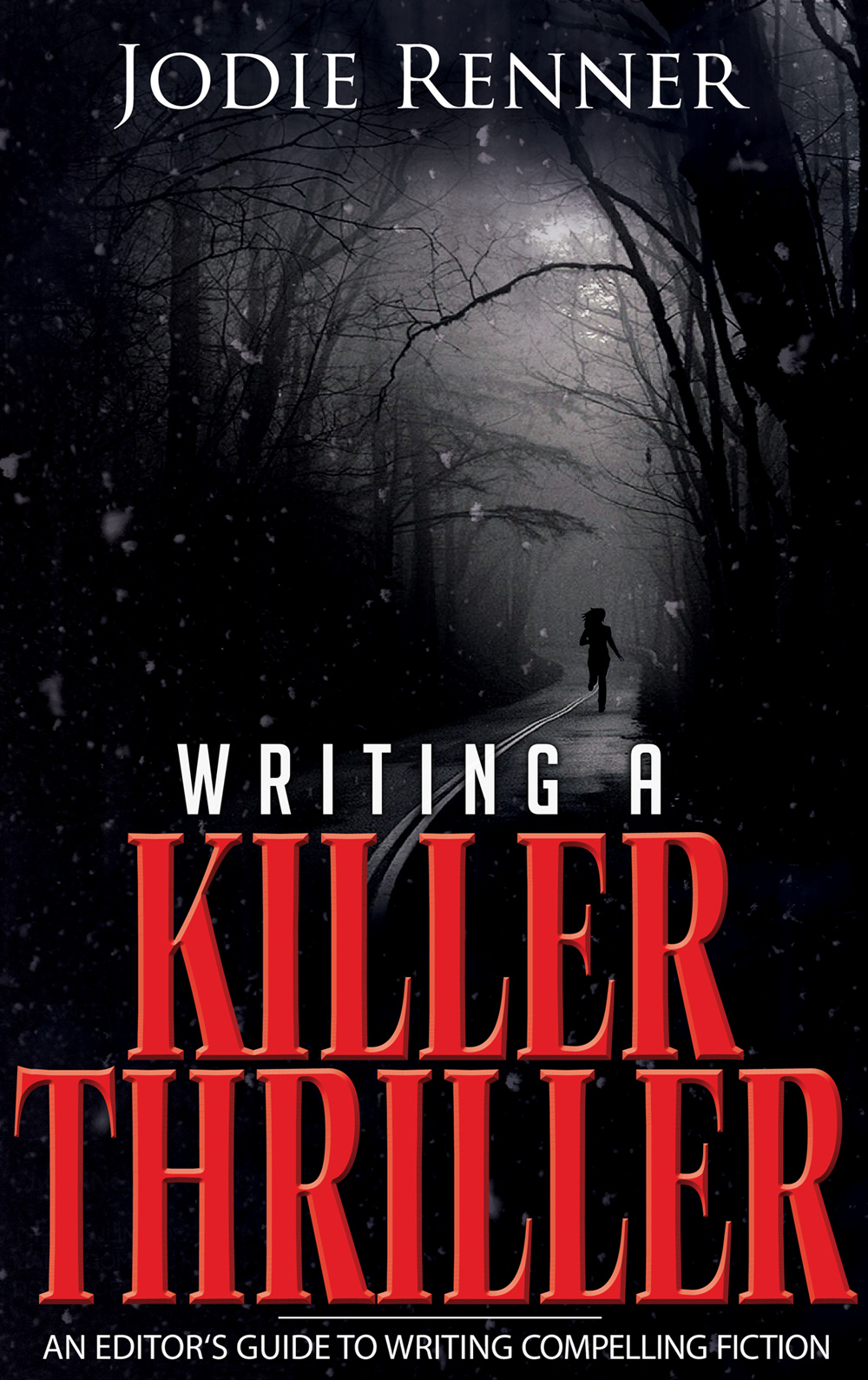
Jodie Renner is a freelance fiction editor and the award-winning author of three craft-of-writing guides in her series An Editor’s Guide to Writing Compelling Fiction: Captivate Your Readers, Fire up Your Fiction, and Writing a Killer Thriller. She has also published two clickable time-saving e-resources to date: Quick Clicks: Spelling List and Quick Clicks: Word Usage. You can find Jodie at www.JodieRenner.com, www.JodieRennerEditing.com, http://jodierennerediting.blogspot.com/ and on Facebook, Twitter, and Google+.
After four months of living in Los Angeles, taking acting classes and learning about the business side of Hollywood, I head back to Seattle today full of new energy and knowledge. What’s surprising to me is how much of what I learned about acting can be applied both to writing and to life in general.
I’d like to share some of the best words of wisdom I heard while I was in LA. Many of them come either directly or indirectly from my instructor Howard Fine at the Howard Fine Acting Studio. I wish I could take every single class the studio offers, but the foundation I got will serve me for years to come.
I thought about explaining these quotes’ origins and meanings, but I’d rather let them speak for themselves. I hope you find a few that make you look at your life or your writing in a different way.
“I have time.” (Said to yourself before taking on a new endeavor)
“The way you do one thing is the way you do everything.”
“If you can’t change one thing, you can’t change anything.”
“We judge ourselves by our intentions, but we judge others by their actions.”
“Control is a false god; do not pray to it.”
“Creativity does not live in the thinking mind.”
“It’s not who you know; it’s who knows you.”
“The tell of a lie is that the body has no muscle memory.”
“If a relationship is unimportant, the scene is unimportant.”
“Scenes are not about our emotions, but what we can do about our emotions.”
“Desire trumps everything.”
“Characters are in crisis at crossroads in moments of critical decision.”
“Comedy comes from one-hundred-percent investment in a silly issue.”
“Most people ask a question and want an immediate answer; an artist is willing to discover it.”
“You don’t need to be other than who you are, but all of who you are.”
“How we speak is conditioned by how we think we’ll be listened to.”
“You can’t make a mistake by caring too much. You can only make a mistake by not caring.”
“We care about the character in direct proportion to how much the character cares about anything.”
“Nobody wants less investment. The more you invest in the scene, the more the observer will be drawn in.”
“When you are interested, you become interesting.”
“You become self-conscious when your attention is on yourself, not on the other person in the scene.”
“If mistakes humiliate you, you will never create.”
“Those who are the most present and have the most charisma are the ones who are most alive in their senses.”
“What becomes our truth is a story we tell ourselves over and over.”
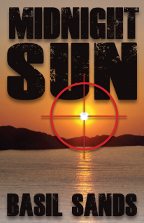
Note: We’re starting an occasional feature on Fridays called TKZ Spotlight, where we profile various members of the TKZ community. We’re kicking things off today by profiling Basil Sands, a thriller author and long-time TKZer. We love the way Basil keeps things lively around here with his creative observations in the Comments!
You can link to Basil’s books here.
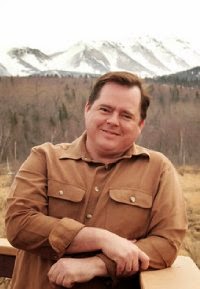
BIO: Basil started out writing thrillers for podcast-audio serials that gradually developed into four novels, a novella, more than a dozen shorts, and many more to come . He’s also an audiobook narrator and has recorded for several best selling authors including many right here on The Kill Zone Blog, where he’s been a regular commenter since near the beginning in 2008.
Born in rural Alaska and raised among the Ohio cornfields, he longed for excitement. After injuries ended a stint in the Marines he worked as a restaurant manager culminating in a three year contract at the National Security Agency (Chef to the Spies). He’s also owned a computer shop, was a carpenter, farmer, actor, lumberjack, voice actor, Wilderness Rescue EMT, computer network admin, hotel maid, tire change mechanic, IT guy, Scoutmaster, college instructor, dynamite packer, talk show host, and youth minister. After 9/11 he spent three years as a sergeant in the Alaska State Defense Force Coastal Scouts and was recognized as Alaska Soldier of the Year in 2003.
Until a ski injury he’d been an avid weight lifter benching 420 lbs at age 40. Now he’s limited to a bit on the bike and a long walk each day…that and curling the occasional pint of Guinness…to work out the arthritic kinks.
He lives in Anchorage Alaska with his wife and sons.
Where do you live, and how does that setting (or another one you use) inform your writing?
As an adult I’ve lived in Alaska for nearly twenty years; three of my books, including my WIP, take place here. Describing something as majestic as Alaska sounds a lot different when you’re in it as opposed to interpreting it via Google Earth. There are many wild experiences in the Arctic that most people can’t fathom. For instance, at -40 F boiling water tossed into the air makes an audible“zziiip” as it freezes into perfectly round BBs before it hits the ground.
How does your background influence your writing?
As a child I spent more time in my imagination than any other place. I escaped the drudgery of life into my own world, one that I could shape. I read encyclopedias for fun then I’d recreate the drama of history with my little green army men, or run with my dog through the woods. We were Daniel Boone and his pet wolf, or secret agents searching for Nazi spies amongst farms and secret hay fields.
From the bio above you can glean that I’m sort of a ‘Jack of All Trades’ as the saying goes or maybe more like a ‘Basil of A Lot of Jobs’. Those various experiences, jobs, and locations have given me a general hands on perspective to a lot of topics.
How old were you when you first felt the urge to write, and what inspired you to get serious about honing the craft?
Creating stories has been a part of my life for as long as I can remember. By the time I reached my teens I was performing in theater and choir, and dabbled in stand-up comedy. In my twenties I started writing my own one man plays about historical and biblical characters to perform before church youth audiences.
In 2006, at thirty eight years old, I found myself in an incomprehensibly boring IT job that involved lots of staring out the window like a Techno-Maytag-Repairman. Within weeks I was ready to staple my lips shut to stop me from babbling. Then one day a story popped into my mind while I sat there watching stuff not break. It developed into a script for a podcast audio-serial, then into a full fledged novel. Since that first one, I’ve known that I have to write these stories, and do it well.
What are some main themes you return to when writing?
“Wolves vs. Sheepdogs” and “Making hard choices”.
Your goals in life?
My life goals are simple. Love my wife and kids, and serve my God.
My writing goal is not so simple. There’s a story I’ve been brewing for 25 years, but know that I cannot put it onto paper until I really know how to write well. The stories I’m writing now are merely practice for that life’s work.
Which authors have most influenced your writing?
Louis L’Amour, Ken Follet, Fred Forsyth, Bernard Cornwell and Jack Higgins are the ones I’d list as most influential. But before I knew them, the initial fire was lit by George Remi (Herge) author of the Tintin comics.
Do you have a “day job”? Tell us about that. Does it inform your writing?
I am a Senior IT Specialist for the Dept of Veterans Affairs. It is the same one that I once described as “excruciatingly boring”, but I learned a few years back that when the government tacks ‘Senior’in front of your title and gives you 3 or 4 grade increases the boredom decreases exponentially.
My knowledge of what can and cannot be done with technology is very useful stuff. Additionally I sometimes overhear conversations or read the records of veteran’s experiences that have blown my mind, from Medal of Honor winners to some real life Jason Bourne types.
What are you working on now?
My current WIP is a somewhat ambitious novel for me, the first of what I expect to be a three book series about an invasion of America, seen through the eyes of a family separated in the initial attack. The teen sons are at boy scout camp, the father is driving home anticipating a romantic night with his wife when their world is ripped apart. The husband has to make a choice, rescue his kids or his wife. The kids know how to survive in the woods, and have adults leading them, many of whom are combat veterans. He chooses to find his wife first, only to discover her bullet riddled car containing what he believes is her mangled body. Unknown to him, she has been taken prisoner by the invader’s commanding general. While her husband and sons become guerrillas in separate ventures, the wife witnesses behind the scenes the efforts the general makes to capture and kill them. She will do anything to protect them.
The story is full of action, violence, romance and of course the scenery of Alaska.
Here is a first-page submission titled A BOTHER OF BODIES, followed by my comments. Then we’d like everyone to jump in.
Note: I’m posting from Tokyo using my iPad, which isn’t Blogger-friendly under the best of circumstances. So please forgive any formatting errors!
* * *