The Trilogy Trick – Guest Spot with Michelle Gagnon

Jordan Dane
@JordanDane

I am very excited to have Michelle Gagnon as my guest, but she is definitely no stranger to TKZ. Many of you know Michelle was a former contributor extraordinaire to our blog and I’m excited to hear her thoughts on trilogies and her latest release. Welcome, Michelle!

Don't Look Now HC C

Hi folks, I’ve missed you! So good to be back on TKZ.

With the success of The Girl with the Dragon Tattoo and The Hunger Games, trilogies are all the rage these days. In fact, when I first pitched an idea for a young adult novel to my publisher, they specifically requested a trilogy. I agreed, because hey, what author wouldn’t want to guarantee the publication of three more books? Besides, I’d written a series before. How much harder could a trilogy be?

The first one, DON’T TURN AROUND, turned out to be the easiest book I’ve ever written. The rough draft flowed out of me in eight weeks; it was one of those magical manuscripts that seemed to write itself.

I sat back down at the computer, confident that the second and third would proceed just as smoothly; even (foolishly) harboring hopes that I’d knock the whole thing out in under six months.

Boy, was I wrong.

Here’s the thing: in a regular series, even though the characters carry through multiple books (and occasionally, plotlines do as well), they’re relatively self-contained. In the end, the villain is (usually) captured or killed; at the very least, his evil plan has been stymied.

Not so in a trilogy. For this series, I needed the bad guy—and the evil plot—to traverse all three books. Yet each installment had to be self-contained enough to satisfy readers. 

Suffice it to say that books 2 and 3 were a grueling enterprise. But along the way, I learned some important lessons on how to structure a satisfying trilogy:

  1. Each book has its own arc. Well, that’s obvious, right? But what this really means is that book 3 can’t feel like a mere continuation of book 2. Even if your villain/evil plot spans all three books, you need to provide resolution at the end of each installment. This is a good place to employ what I’ve dubbed, “The Henchman Rule.” At the end of each book, someone needs to be held accountable; otherwise your hero/heroine won’t seem to be making any headway. And the best solution for this? Get rid of the main baddie’s number 2, his right hand man. My favorite example is the stripping of Saruman’s powers at the end of The Two Towers. Sauron must wait to be dealt with in The Return of the King, but his main wizard is handily dispatched by Gandalf (suffice it to say, I didn’t have much of a social life in junior high school). 
  2. Avoid “Middle Book Syndrome.” What I discussed above is particularly challenging in the second book of any trilogy. This is the bridge book, the one where the characters need to move forward in their quest, but not too far forward. Traditionally, this is also the book that concludes with your main character (or characters) beaten down, exhausted, and uncertain of the possibility of success. Which can be a pretty depressing note to end on, unless you also provide them with a key: something that will help them surmount obstacles in book 3. That key can be any number of things: more information about the evil plan, the villain’s only vulnerability, etc. But the main goal is to set the stage for book 3, while still wrapping up enough threads to keep your readers happy.
  3. Character arcs need to span all three books. In a standalone, the main character faces some sort of incident that jettisons her into extreme circumstances (ie: Katniss’s sister losing the lottery). An escalation of events follows: the character is forced to confront her own weaknesses, and to discover her hidden strengths. At the end of Act 2, the character is usually at a low point, facing potential failure. Then, in the final act, the character rises to the occasion and ends up saving the day. In a trilogy, these same rules apply: but the conclusion of each book corresponds with the act breaks. Example: at the end of The Girl who Played with Fire (#2 in the trilogy), Lisbeth is horribly injured; she needs to overcome that incapacitation in order to finally vanquish her father in book 3.
  4. Avoid information dumps. Always a good rule, but trickier with trilogies. While working on the final installment, I kept butting up against this issue: when characters referred back to earlier events, how much background information was necessary to keep readers from becoming irrevocably lost? In the end, I provided very little. The truth is, it’s rare for people to start with the third book in a trilogy; I’m sure it happens, but it’s the exception, not the rule. So what you’re really doing is giving gentle reminders to people who might have read the last book months earlier. Provide enough information to jog their memory, without inundating them. It’s a tricky balance to strike, but I’d recommend erring on the side of giving less, not more.

So those are my tips, earned the hard way. Today’s question: what trilogies (aside from those I mentioned) did you love, and what about them kept you reading?


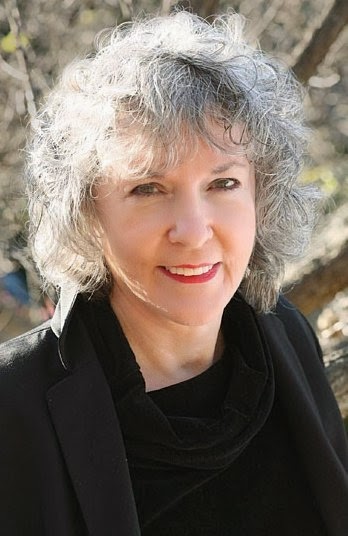
Michelle_Gagnon_color_09_optMichelle Gagnon is the international bestselling author of thrillers for teens and adults. Described as “The Girl with the Dragon Tattoo meets the Bourne Identity,” her YA technothriller DON’T TURN AROUND was nominated for a Thriller Award, and was selected as one of the best teen books of the year by Entertainment Weekly Magazine, Kirkus, Voya, and the Young Adult Library Services Association. The second installment, DON’T LOOK NOW, is on sale now (and hopefully doesn’t suffer from “middle book syndrome.”) She splits her time between San Francisco and Los Angeles.

Blade Of Hearts critique

By Joe Moore
@JoeMoore_writer

Today’s first-page critique submission is called BLADE OF HEARTS. Take a look. My comments follow.

Banda Sea, Indonesian Islands
12 June, 1994

The shot pounded the confined space of the ship’s bridge with an impossibly loud explosion compared to the handgun’s size. The captain slammed into the console and slid to the deck, streaks of bright red blood smearing the panels. A pretty young blonde woman on the deck outside the room screamed and buried her face into the chest of a young man standing next to her. Rough hands reached down and grabbed the ship’s captain. Blood sprayed from between his lips on rapid panting gasps as he was dragged through the hatch and onto the aft deck where the rest of the ship’s passengers waited, trembling. They tossed him against the bulkhead where he crumpled to the painted metal deck slicked by his quickly pooling blood. Mustering his strength he rolled onto his back and forced himself to sit upright looking into the eyes of his assailant. Thirty years in the Marines meant there was no way he was going to die whimpering or squirming, he would face them, he would not cower.

“I am Colonel Galang,” the leader strode smugly before the trembling group of missionaries, his voice an odd high pitched flat tenor that sounded like he was forcing it to sound more masculine than it naturally was, like a fourteen year old boy trying to sound like a grown man. His face was that of a youth who seemed unnaturally aged. Though the skin was smooth and hairless it held the distinct look that belied a life of violence, like a centuries old vampire trapped in a teenaged body. Galang’s lips stretched tight in a frightening imitation of a smile that would’ve made a pitbull tremble with terror, “I am the most feared pirate in this ocean and you are my prisoners.”

“May God have mercy on your soul when you meet him,” said the captain through pale blue lips.

Colonel Galang glanced over to the gray haired man, his smile briefly faded then snapped back with an intense ferocity and he took three quick steps that brought him in front of the captain.

“No,” he leaned down to his face, “may I have mercy on your god when he meets me.”

Galang stood and reached across his body to a scabbard that hung on a belt around his waist and dragged out a heavy looking machete as long as his arm. He placed the blade on the captain’s shoulder and dragged it slowly across the man’s neck, eliciting a trickle of blood. The retired Marine officer stared unflinching into Galang’s eyes showing neither fear nor contempt, his face registering a sense of pity, as if he knew something more than the pirate leader before him. In a blur of motion, Galang spun a graceful ballet-like pirouette and brought the edge of the machette hard against the captain’s neck instantly severing his head with a clean cut. Blood jetted from the stump of the neck as the body remained upright against the bulkhead. The head rolled across the deck halting at the feet of the pretty blonde his lips nearly touching her toes as his mouth stretched in wide, gasping attempts at breath. She swooned into the arms of the young man standing next to her, his face registering every line of terror that the captain’s had not.

1: Omniscient point of view is a method of storytelling in which the narrator knows the thoughts and feelings of all of the characters in the story. The advantage to using it is that the storyteller can convey a great deal of information in a short amount of time and space. The disadvantage is that it virtually eliminates a personal connection between the characters and the reader. There’s nothing wrong with that if it’s the goal of the storyteller. That’s what we have here—third person, omniscient POV. What I came away with was a sense that this is a prolog, especially since it is dated 1994.

2: Whose story is it? Not the captain. He’s already lost his head over this. Colonel Galang? Maybe, if the story takes place in 1994. Also maybe, if the story jumps to a future or present time and he continues his pirating ways. The pretty young blond woman? Maybe, although since she wasn’t graced with a name, probably not. The young man? Side note: what does young mean? Eight years old? Eighteen? I’m 65. You can imagine what young means to me.

3: We’ve all heard Professor Jim Bell’s rule: act first, explain later. My compliments to this writer. He/she did just that.

4. The gun shot sounded bigger than the handgun’s size. Was it a derringer or a Dirty Harry .44 magnum? If this is omniscient POV, go ahead and tell us.

5. There’s a whole lot of trembling going on. The rest of the passengers waited, trembling. The figurative pit bull trembled.

6. The second paragraph had a bunch of comparisons including pre-pubescence, hairless skin that gave away a life of violence, and centuries-old vampires (don’t forget the hyphen). Hard to mentally see all those images.

7. Eliciting a trickle of blood? Eliciting? This word choice and visual doesn’t work for me.

8. Graceful ballet-like pirouette? See previous comment.

9. Machete? Machette? Check your spelling.

10. …his mouth stretched in wide, gasping attempts at breath. Impossible. How about: …his mouth frozen in a final, gasp for breath.

I would probably continue to read just to see if the story was about the pretty, young blonde. Hey, I’m a guy. But right now, I feel nothing for any of these characters. That’s not a tragedy. It’s the downside to omniscient POV. Hopefully, the story involves someone I will grow to care about. At this point, who knows. This appears to be an action/adventure story. My kind of book. But the writer has to know what he/she is getting into. There’s a stronger “hook” here than some of the previous first-page submissions, but there be dragons in them waters. Beware.

My hat’s off to the writer for having the courage to submit this sample. Best of luck with your WIP.

So, dear Zoners, what do you think. Would you keep reading or go watch Disney on Ice?

Dutch Treat: Ten rules of writing

Elmore Leonard is gone. A moment of silence, she intoned gravely.
If you don’t get where I am going with that opening line then you definitely need to read on – at least as far as Nos. 3 and 4 below. The rest of you can go play Spider Solitaire if you’d like, but I’d really like it if you stick around. Because today, I’d like to talk about Elmore Leonard’s Ten Rules of Writing. 
Now I have to admit right off here that I haven’t read a lot of Leonard’s books; he’s one of those titans whose stuff is part of my cram-course in belated crime education. (I just downloaded “Glitz” on my Kindle in fact).  But like all writers, I’ve heard that he’s a master stylist, the Picasso of crime fiction, whose dialogue, in the words of one critic, is “like broken glass, sharp and glittering.”
But do his rules hold up? Well, I think this is a good time to go back and take a look. And I’ll be the first one to admit, I have broken almost all of them. 

1. Never open a book with weather. If it’s only to create atmosphere, and not a character’s reaction to the weather, you don’t want to go on too long. The reader is apt to leaf ahead looking for people. There are exceptions. If you happen to be Barry Lopez, who has more ways to describe ice and snow than an Eskimo, you can do all the weather reporting you want.
I opened my book ISLAND OF BONES with a woman so desperate to escape her killer that she took off in a skiff in the middle of a hurricane. But generally I agree with Leonard here that in too many books, weather is a metaphoric crutch meant to telegraph the hero’s conflict or a mood of foreboding. (Blatant self-promotion alert: We have published the eBook of BONES this week.  Click here to read my “weather” opening — or you can even Click here buy the darn thing for $2.99!.)

2. Avoid prologues. They can be annoying, especially a prologue following an introduction that comes after a foreword. A prologue in a novel is backstory, and you can drop it in anywhere you want.
Sigh. Broke this one, too. In my book A THOUSAND BONES, I am telling the story of Louis Kincaid’s lover, Joe Frye. The entire book is a flashback to Joe’s rookie year but I felt I had to connect it to Louis so I book-ended it with a prologue (wherein she tells Louis about a crime she committed ten years ago) AND an epilogue (wherein Louis accepts what she did). But again, I think prologues are usually unnecessary; they almost always indicate the writer is not in control of back story or the time element of their plot (linear is almost always best). Or the writer tacks on a prologue where he throws out a body to gin up suspense because the early chapters are slooooow.
3.  Never use a verb other than ”said” to carry dialogue.  The line of dialogue belongs to the character; the verb is the writer sticking his nose in. But said is far less intrusive than grumbled, gasped, cautioned, lied. I once noticed Mary McCarthy ending a line of dialogue with ”she asseverated,” and had to stop reading to get the dictionary.
Have broken this one, too. But only with the greatest trepidation. I’ve used “shouted” and “asked.” But I’m convinced that if you feel compelled to use something stronger, that means that what you are putting between the quote marks ain’t up to snuff.

4.  Never use an adverb to modify the verb ”said”… he admonished gravely. To use an adverb this way (or almost any way) is a mortal sin. The writer is now exposing himself in earnest, using a word that distracts and can interrupt the rhythm of the exchange. I have a character in one of my books tell how she used to write historical romances ”full of rape and adverbs.”
Guilty again. I have used “whispered,” “shouted” and “asked.” But I always hate myself in the morning.

5.  Keep your exclamation points under control. You are allowed no more than two or three per 100,000 words of prose. If you have the knack of playing with exclaimers the way Tom Wolfe does, you can throw them in by the handful.
I hate exclamation marks! But yes, I have used them. Mainly when I have someone shouting. And what’s worse, I have probably written, “Get out of here!” he shouted. 
6. Never use the words ”suddenly” or ”all hell broke loose.” This rule doesn’t require an explanation. I have noticed that writers who use ”suddenly” tend to exercise less control in the application of exclamation points.
I have never used “all hell…” That’s really amateur hour, akin to “little did he know that…” But yes, “suddenly” has appeared in my books. I didn’t realized what a stupid tic it was until I re-read Leonard’s rules. Suddenly, “suddenly” looks really bad in my chapters. And I now see that the action feels more immediate without it.

7.  Use regional dialect, patois, sparingly. Once you start spelling words in dialogue phonetically and loading the page with apostrophes, you won’t be able to stop. Notice the way Annie Proulx captures the flavor of Wyoming voices in her book of short stories ”Close Range.”
We did this in our first book “Dark of the Moon.” Set in the deep South, we felt compelled to drop some “g’s” and use some dumb idioms, and at least one reviewer took us to task for it. Here’s the thing: Dialect is hard on the reader’s eye. You can convey the feeling of it by judicious word choice, mannerisms, and sentence rhythm. We are in the process of preparing “Moon” for eBook and this has given us a second chance to go back and rewrite things. So y’all can bet we’re fixin’ to fix our mistakes. 
8.  Avoid detailed descriptions of characters. Which Steinbeck covered. In Ernest Hemingway’s ”Hills Like White Elephants” what do the ”American and the girl with him” look like? ”She had taken off her hat and put it on the table.” That’s the only reference to a physical description in the story, and yet we see the couple and know them by their tones of voice, with not one adverb in sight.

Whew. Finally, one sin I don’t commit. I am a strong believer in less is more when it comes to character descriptions. I think if you tread too heavily in the reader’s imagination, you stomp out some of the magic from your book. Here is how I let readers know what my heroine Joe Frye looked like:

She had a flash of memory, of sitting next to her dad in a gymnasium during her brother’s basketball game, watching the cheerleaders.
I’m ugly, Daddy.
You’re beautiful.
Not like them, I’m not.
No. They’re easy to add up. They’re plain old arithmetic.
So what am I?
Geometry, Joey. Not everyone gets it.

 9.  Don’t go into great detail describing places and things. Unless you’re Margaret Atwood and can paint scenes with language or write landscapes in the style of Jim Harrison. But even if you’re good at it, you don’t want descriptions that bring the action, the flow of the story, to a standstill.
This one is hard for me because I love to write setting descriptions. But I have learned to pull back some. The best advice I ever heard on this comes from Coco Chanel who said you should put on all your accessories and then take almost all of them off before you go out. So yeah, I over-describe but then I go back and pare it down.

10.  Try to leave out the part that readers tend to skip. Think of what you skip reading a novel: thick paragraphs of prose you can see have too many words in them. What the writer is doing, he’s writing, perpetrating hooptedoodle, perhaps taking another shot at the weather, or has gone into the character’s head, and the reader either knows what the guy’s thinking or doesn’t care. I’ll bet you don’t skip dialogue.
Like all writers, I struggle with this one. When we’re deep in the writing zone, we can fall in love with the sound of our own voices. And sometimes, a passage will come so hard that you just can’t bring yourself to delete it. But you must kill your darlings. Lately, my sister tells me I am “underwriting,” so maybe I am pulling back too far. But I still think it’s better to leave ‘em wanting more, not less.

My most important rule is one that sums up the 10. If it sounds like writing, I rewrite it.

I have nothing to add to that last one. It might be the single best piece of writing advice out there. If you’re working too hard, your reader will as well.  Here’s the quote that hangs over my desk: “Easy reading is damn hard writing.”  It was good enough for Nathaniel Hawthorne — and Dutch — so it’s good enough for me.


Don’t We Have Enough Books Already?

By Boyd Morrison

A couple of years ago, as part of Google’s effort to catalog every single book ever written, the company tried to figure out how many books that would encompass. After surveying the list of books in the Library of Congress, Worldcat, and numerous other book databases, they came up with a figure: 129,864,880.

How they could be so exact when new books are released every single day is a puzzle to me, so let’s just round up to 130 million books. And since that was in 2010, the number is now too low. Every year about 2.2 million books are published worldwide. So that’s about 135 million total in the world, with six thousand more published every day. You can even find a real-time counter here.

I don’t know about your reading speed, but I can read about 50 books a year. If I kept that average up for my entire adult life, that’s about three thousand books in an eighty-year lifetime (maybe upping it to four thousand if I have a lot of spare time in retirement).

I think you can see that four thousand books is somewhat less than 135 million. It would take me over three hundred lifetimes just to read one percent of the books in the world. Even the contents of a typical Barnes and Noble would be too much. And that’s not including the more than 88 million additional books that will be written before I die.

Which begs the question: why do we need more books?

I can see why new nonfiction makes sense. The world changes all the time, and nonfiction is a way we try to understand our world. But fiction accounts for about thirty percent of books, or approximately forty million volumes. Isn’t there enough fiction already?

Of course, as a novelist myself I would say no, but why? What new stories could be written that haven’t been told a hundred times before?

It’s been said that there are only seven or twelve or twenty basic plots out there, depending on who you ask. Because a story is much more than just plot, it’s the virtually infinite diversity enabled by a complex language and the passage of time that makes new stories possible. A detective story told in my present will have similarities to ones from Arthur Conan Doyle’s present, but the time elapsed between then and now has made new stories different enough that they provide unique takes on crime solving. In addition contemporary stories help us understand the world we now live in, whereas older stories show us where we’ve come from.

Being a writer, I constantly ask myself if what I’m coming up with is unique. If the answer is no, there’s no point in writing it. However, I haven’t read every book out there, so it may be similar to something that’s been written before, but as long as it’s unique to me, I’ll keep going.

Most new stories are modest variations on tales told previously, maybe told better. But occasionally we’ll find that ground-breaking plot or character or style that’s never been seen before, and we’ll fall in love with the discovery process of reading all over again.

That’s what will keep us writing and reading forever, no matter how many stories have already been told.

Why do you think we need more fiction?

Don’t Let Your Characters Act Like Idiots

by James Scott Bell
@jamesscottbell


The other day I watched a thriller, and was enjoying it. Until the last act.
You know what I’m talking about. You get wrapped up in a neat premise until, like a soap bubble, it pops at the end through a series of missteps. Like these:
The lead character—a smart, good-looking but otherwise normal young woman––suddenly becomes a NASCAR-skilled driver, and plows her car into a bad guy who is shooting at her. Then she slowly gets out of her car and walks over to the splayed body and . . .leaves him alone . . .does not pick up his gun . . .does not make sure he’s dead or completely incapacitated! I mean, wouldn’t you think that a smart, good-looking, normal young woman would have seen a hundred thrillers where the hitman who is supposed to be dead suddenly shows up alive?
But: by not picking up the hitman’s gun, the young woman is left completely vulnerable should the main bad guy suddenly appear. Which, wonder of wonders, he does (complete with suspense-movie bumper music). He has shocked and surprised our smart young woman, and can now kill her instantly. But because over the last fifteen minutes this deadly, perfect-moves-each-time bad guy has for some reason been transformed into a doofus, she gets away. He chases her. He corners her. But he does not finish the job because he spends valuable screen time talking to the young woman about how he is going to finish the job (“Overtalkative Bad Guy Syndrome,” or OBGS).
Allowing, of course, good-looking but otherwise normal young woman to triumph! 
There is, for thriller writers, no more important RULE (yes, I said it, it’s a RULE, and if you violate this rule you get taken to the craft woodshed and flogged with a wet copy of Plot & Structure) than this:
Never allow any of your main characters to act like idiots in order to move or wrap up your plot!
Yes, characters can make mistakes. Characters can make a wrong move. Just don’t let it be an idiot move.
Here’s a simple technique to avoid this issue:
Before you write any scene, pause for a couple of minutes and ask yourself these two questions:
1. What is the best possible move each character in the scene can make?
Every character in every scene must have an agenda. Even if it is only (as Vonnegut once said) to get a glass of water. That’s how you create conflict in a scene, after all. Then, after noting the agendas, determine the best move each character would make in order to get their way.
2. What is the best possible move being made by the characters “off screen”?
Remember, while you are writing a scene there are other characters who are alive and kicking somewhere else. What are they doing? How are they advancing their agendas? This question will provide you with some nice plot twists, turns and red herrings. 

But if you get backed into a corner at the end, and just don’t know what to do, you can always have the main character wake up and realize it was all a dream. Works every time!

Or perhaps that’s an idiotic suggestion. How do you keep your characters in the smart line? What bad moves drive you crazy when you see them? 

Kindle Dementia

Let’s talk about “Kindle Dementia.” I have it. Do you? Kindle Dementia is manifested when the owner of a Kindle finds a book to purchase, often at a reduced price, and utilize Amazon’s “buy now with one click” feature only to be informed that they have purchased the book previously. Amazon — in the event that the purchaser doesn’t already feel foolish enough — also advises the date that the book was previously purchased, said date being a year, or a few months, or even a few days prior to the current effort to purchase the same book twice. There is no doubt in my mind that at some point in the future the software or algorithm or whatever in heck it is called will be able to tell you what you were doing when you first bought the book and what other books you’ve bought and read instead of the one which you want to read so much that you’re trying to buy it again just so you don’t forget. What bothers me is that this has happened to me twice in the last three weeks, with different books. I think. Obviously, this isn’t just happening to me; I say “obviously” because although I have been known to think highly of myself (ask my family) my narcissism hasn’t progressed so far that I think that Amazon devised this feature just for me, or a few other people of my age and station. So I ask: has the heartbreak of Kindle Dementia manifested itself in your world? Have you accidentally tried to purchase a book for your Kindle twice? Have you done it often?      

First Page Critique

by Clare Langley-Hawthorne


Today’s first page critique is for what I think is a sci-fi thriller. It’s called DEALBREAKER. My comments are at the end. Enjoy!


Mackenzie stood upright with his arms folded, concentrating on the sound made by the wheat on the planets surface far below as it gently swayed in the artificial wind. He cleared his mind of the constant flow of information from his implants, willing the augmented reality overlay to dissolve from his vision. Next he closed his eyes, allowing his arms to fall by his sides as he took cognisance of his own breathing. Finally his mind and body could relax.

Opening his eyes he looked into the distance, his view partially obscured by the huge hexagons of the domed superstructure protecting the buildings and land around him. The eastern horizon was dominated by a wall of dark cloud that blocked the view of the stars beyond. Already the very highest altitudes were tinged with crimson, hinting at the vivid reds and oranges that daylight would soon ignite. By the time the storm reached Dunvegan the sky would be a violent tempest of dust that would shred an EVA suit from anyone caught in the open.

Under normal circumstances the effort to secure all personnel and assets from the deadly weather front would be the companies top priority. Dealing with extreme weather was just part of the way of life on Demeter. It enabled junior operators to prove their worth to the company, and more seasoned figures the chance to prove they were still worth retaining. Mackenzie would rather have been coordinating the effort, ensuring the long range operators had taken sanctuary in the nearest survival dome, that those closer to base had made it back to the safety of Dunvegan. But today wasn’t normal. He’d initially queried the decision to delegate all surface operations to a relatively junior team, but Mackenzie had learned to trust Munro’s judgement during a crises, and had spoken no more about it from that point on.

He allowing his implants to interact with his mind and body again as he lowered his gaze from the horizon to the rest of the city. Calling up a tactical overlay, the numerous dome structures now appeared to take on different colours against the dusty reds and oranges of the planets surface. Most were now either white, to indicate no known disturbance, or a deep blue for those where order had been restored. The majority of red areas were dotted around the civic government quarter in the south of the city. He shook his head slowly and allowed himself a smile. When would they ever learn?


MY COMMENTS:


First of all there are numerous grammatical errors/typographical errors that detracted from the story. These include planets instead of planet’s, companies instead of company’s (or companies’ if there are multiple companies involved); crises instead of crisis, allowing instead of allowed. When it comes to an editor, these kind of errors can be fatal. I can’t stress this enough – the occasional typo is forgivable but wholesale grammatical errors are more than likely going to doom your submission. 


That being said, I thought the writer did a great job of providing an atmospheric, intriguing set up to his/her story. My main issue with this as a first page, however, is that it is all set up. There’s only exposition and very little in the way of action to draw the reader in immediately. Now, I am not an avid reader of science-fiction but I expect a writer in this genre needs to balance world-building with action/tension and pacing from the get go. I feel that the book needs to start in a different place – perhaps in the midst of a ‘disturbance’ in one of the domes where order hasn’t been restored and where we (as readers) encounter Mackenzie trying to juggle re-establishing government order while worrying about security and safety given the approaching dust storm.


Although this first page has a definite post-apocalyptic feel I think we need more immediacy to the crisis rather than just background. I also felt that there was too much repetition in terms of color. We have the vivid red which will be ignited once the dust storm arrives and we also have red areas where (I assume) disturbances are occurring within the domes. Though we get the feeling Mackenzie might be in law enforcement we aren’t entirely sure what his role is (does he work for the company? for the government? Who is Munro? Why is today not a normal day?) Most of this can be dealt with later in the first chapter but because this page has so much exposition it feels a little ungrounded without more specificity about Mackenzie and why we should (as readers) care about him as a character. I was also unsure about the significance of the last line or why Mackenzie ‘allowed himself a smile’.


What do you think? 


When is “Dark” too dark?

Nancy J. Cohen

One of the words I’ve been repeating in my works lately has been “dark”. You know, the man swung his dark gaze her way. He wore a dark suit. He had his dark hair brushed back over a wide forehead. Shadows darkened in a corner as he gave her a dark scowl.

Ouch.

This can be considered lazy writing, except I hadn’t even been aware of this fault until I ran one of the self-edit programs described in my personal blog at http://bit.ly/12iU9nZ. I embarked on a search and find mission to replace as many of these weak terms as possible.

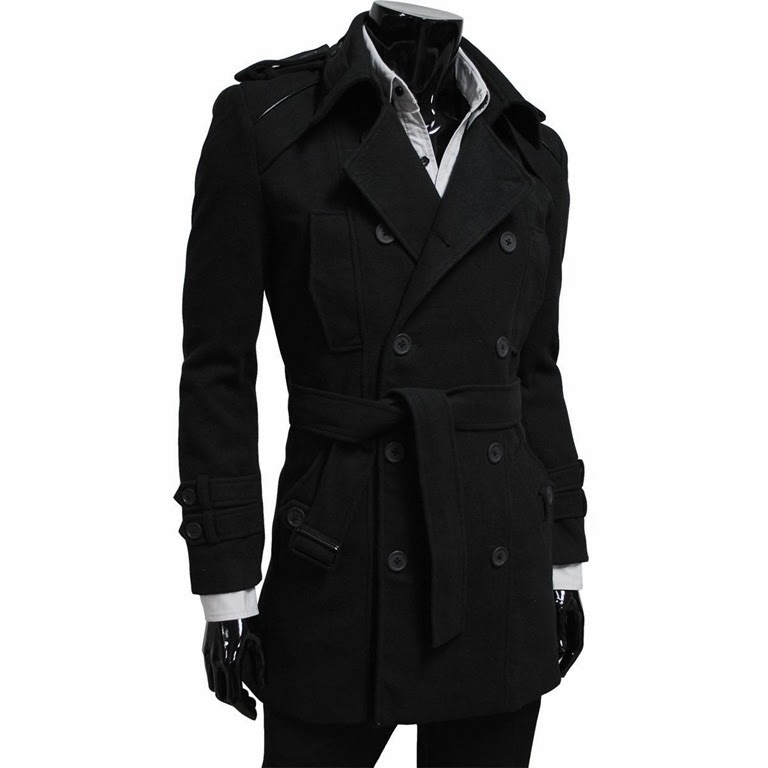
Let’s start with clothes. Face it, men wear dark suits. To get a better idea of colors, I accessed this website: http://lawyerist.com/suit-colors-for-the-clueless/. Ah, now it became clear which colors are popular for men and suited to business. My descriptions of dark suits changed to black, charcoal, slate or navy. That’s a lot better than “dark”, isn’t it?

charcoal blazer

If you want to get even more particular, go online to a department store site like Macys.com and put in the search feature “suits, “blazers”, or “sportcoats” and you’ll get a wide variety of colors.

navy blazer

What about the character who has dark hair? Is it black or dark brown? Check this reference:
http://en.wikipedia.org/wiki/Human_hair_color. Instead of black hair, give your character raven, ebony, or onyx hair. Varying the descriptions adds spice to your story.

Jen4

Also watch out for redundancies like dark shadows & dark scowl. Both of these work well without the “dark” element.

Despite its ambiguity, this word is popular for movies. Witness Batman’s The Dark Knight; Thor: The Dark World; and Star Trek into Darkness.

The filmmakers can get away with it, but as a writer, you cannot. What other ambiguous words like this might you want to change?

Five online mistakes writers should never make

Clare’s post yesterday about social media has inspired me to add my own two cents about social media. Specifically, I’d like to discuss some of the language errors I see online at many sites (Fortunately, I don’t notice these mistakes here at TKZ, which reinforces my already high regard for this community). 

Anyone can make a typo or a mistake when they fat-finger something in haste or after consuming too many Singapore Slings. But there are a few gooflaws which seem to reflect a lack of understanding about the use of language. 

Here, in no particular order, is a list of the five language mistakes that have been driving me absolutely bat poop crazy lately, especially when they’re made by people who claim to be writers:

  1.  Loose/Lose: Perhaps because my series deals with body image issues, I lurk at a few sites where people discuss their need to lose weight. Too often, someone will say she needs to “loose” weight. Whenever I encounter this error, I have to control my itchy typing finger to keep from replying with a snarky correction. Nobody likes snark.
  2. Its/It’s: This is the mistake I see the most. People often use “it’s” when the correct form should be “its”. “It’s” is used as a replacement for “it is”. “Its” is a possessive pronoun, as in, “This post has got its dander up.” When unsure, try replacing the word with “it is”, and see if it makes sense,
  3. Your/You’re: Sigh. I don’t think I even have to explain this one to our readers. This offense seems to be committed mostly by Millennials, including some who claim to be writers. These people make me despair of the current state of English teaching in America. On the other hand, I don’t have to wonder how their literary ambitions will pan out.
  4. Their/There/They’re: These words seem to get misused on news sites a lot, mostly by online bloviators who use anonymous IDs and savagely attack the opinions of other people, no matter how benign those comments are. So, to recap: “Their” is used when you are referring to more than one person and something they possess. “There” is the word that is most often misused in place of the other forms. “They’re” is a contraction for “they are.”
  5. Compliment/Complement: “Compliment” is something nice you say to someone. “Complement” is something that adds to, enhances, or completes something else. It can also be used as a verb with an object.

 So that’s my rant for today. Do you have a pet peeve about language you’d care to add to my list?