The Opening as Part of the Closing … of the Deal

by James Scott Bell
@jamesscottbell

It’s no secret we live in the age of the declining attention span.

How ’bout those Dodgers?

Where was I? Oh yes, attention spans. Declining.

We all know the causes. Phones, tablets, the infinite galaxy known as the internet, 24/7 social media, apps, games, noise, news, and the dopamine effect that comes from escaping reality in the blink of an eye or the texting of the thumbs. These multiform avenues of distraction come in small bites, too, like a bottomless bowl of Skittles. You’ve all been there. You’re chewing a red, it’s not even down the hatch yet, and you’re already reaching for the next one, or a handful of next ones.

Impatience has replaced contemplation. Annoyance erupts the moment the old lady in front of you in the grocery store line mutters, “Let me see, I think I have change in here somewhere.”

We’ve done a number of first page critiques here at TKZ, because everyone knows how important it is. Because of decreasing attention spans and the “need for speed” in everything we do, those first pages are crucial because they are one of the biggest influences on a browser’s buying decision.

I recall hearing about a study years ago of bookstore browsing habits. The typical sequence: a cover captured attention; the browser picks it up and reads the dust-jacket copy, sees who the author is, then opens to the first page. If it captivates them they are within striking distance of a buying decision.

It’s the same today online. A reader on Amazon is shown other thumbnail book covers that an algorithm has determined they might be interested in. A cover attracts, you click on it, get taken to the sales page where you can look at the description (cover copy). The page offers you a “Look inside” peek. You can also download a sample.

And there we are again, at the opening pages.

For years I’ve taught that the opening page and, indeed, the opening paragraph (and even further, if you can do it, the opening line) should be about a disturbance to that character’s ordinary world. Why? Because the reader doesn’t know who the character is yet. So what’s the quickest way to get them interested? Trouble.

We all respond to someone else in trouble. Even a total stranger. It’s our human condition. And most readers are still human.

Now, every so often I’ll read a blog post that takes umbrage (when was the last time you had a good old dose of umbrage?) at the idea of having to “open with a bang” or “some kind of action.” They’ll usually start off with some form of restatement of the sentiment There are no rules! And then go on to describe that this is their story, and they will open it up they way they see fit (which always strikes me as a bit odd, because they are not the ones plunking down the money for the story, so isn’t it also a story for the readers? Just asking.)

What I would say in answer is simply this: do you want people to buy your books or not?

Okay, then let me suggest you alter your opening page so there is something disturbing happening from the jump. After the reader buys your book you can entrance them with your style all you like. But if you don’t engage their attention-challenged sensibilities immediately, you may not get the chance.

Have a look at this opening:

The day was sunny and breezy, if cool––the first semi-decent weather after a long, hard, bitter winter––and Kate didn’t actually mind an excuse to get out in the world. She wouldn’t take the cat, though; she would walk.

She stepped out the front door, shutting it extra hard behind her because it irked her that Bunny was sleeping so late. The ground cover along the front walk had a twiggy, littered look, and she made a mental note to spruce it up after she finished with the hellebores.

Swinging the lunch bag by its twist-tied neck, she passed the Mintzes’ house and the Gordons’ house––stately brick center-hall Colonials like the Battistas’ own, although better maintained––and turned the corner. Mrs. Gordon was kneeling among her azalea bushes, spreading mulch around their roots.

If I were doing the critique here at TKZ, I’d start off by quoting one agent who was asked what she disliked in an opening. “Slow writing with a lot of description will put me off very quickly,” she said. Most readers would agree.

The above clip is actually a slight adaptation of a section from Chapter 1 of Anne Tyler’s novel Vinegar Girl. But it’s a later section, not the actual opening. This is the first page:

Kate Battista was gardening out back when she heard the telephone ring in the kitchen. She straightened up and listened. Her sister was in the house, although she might not be awake yet. But then there was another ring, and two more after that, and when she finally heard her sister’s voice it was only the announcement on the answering machine. “Hi-yee! It’s us? We’re not home, looks like? So leave a––”

By that time Kate was striding toward the back steps, tossing her hair off her shoulders with an exasperated “Tcch!” She wiped her hands on her jeans and yanked the screen door open. “Kate,” her father was saying, “pick up.”

She lifted the receiver. “What,” she said.

“I forgot my lunch.”

Which leads to a short, disturbing conversation and then Kate’s reflection on why it’s disturbing. The other part, walking in the neighborhood, doesn’t come until after. (Note that a disturbance doesn’t have to be “big” like a car chase, ghost, or awakening in a hospital room. Just something that causes at least a ripple of portent in the character’s life.)

My point is that for any genre (including literary), beginning with a disturbance is actually part of a well-rounded marketing strategy––because it helps to close the deal by incentivizing a purchase.

This is not a compromise of your artistic vision! You have a whole novel for your artistic vision.

But if you want the readers to experience it, they have to want to buy the book. Don’t give them a reason to pass.

What about you? Do you read the “Look inside” sample on Amazon before you buy? Are you less patient with books these days?

How about less patient in general?

First Page Critique: REB’S REVENGE, Chapter 1

Let us welcome Anon du jour, who has bravely submitted the first page of Reb’s Revenge to TKZ’s First Page Critique. Without further ado, let us proceed:

Reb’s Revenge

CHAPTER ONE

Farnook Province

Afghanistan

February 14, 2009

The early morning sky was overcast and there was a chill in the air as the school bus traveled down the rural dirt road that connected the village of Kwajha to the nearby town of Bagshir. The bus was carrying sixteen young Afghani girls from the village of Kwajha to the local school for girls in Bagshir. Recent threats by the Taliban had the bus driver on edge.

Farzana, a young Afghani woman who taught at the girl’s school, was driving the bus. Martha Rawlings, a young American woman who also taught at the school, was leading the children, ages eight to fourteen, in the song “Old MacDonald Had a Farm.” The children were taking great delight in singing the song at the top of their voices.

When the Taliban had controlled Afghanistan, they outlawed the education of all girls. Since girls would no longer receive formal educations, there was no need for schools for girls and the Taliban destroyed the girl’s school that had been in the town of Bagshir.

After the Americans defeated Al Qaeda in Afghanistan and drove the Taliban underground, the girl’s school in Bagshir was rebuilt. At the Afghanistan government’s urging, families from the surrounding area started sending their daughters back to school again.

Then the Americans elected a new President who promptly announced that he was going to start withdrawing troops from Iraq and Afghanistan. He went so far as to tell the world the dates by which he planned to pull the American troops from Iraq and Afghanistan.

The Taliban leaders—who had gone underground and were fighting an insurgency in Afghanistan—were overjoyed when they heard the news about the new American President’s military plans for Afghanistan. They knew that, if they bided their time, the Taliban would once again rule Afghanistan.

The school bus rounded a curve and the driver saw that there were two Toyota pickup trucks up ahead blocking the road. Several Afghan men armed with AK-47s were standing in the road signaling for the driver to stop.

As soon as the bus driver realized that the men were Taliban, she slammed on the brakes causing the bus to swerve out of control. The children stopped their singing and started screaming in fear. When the driver turned the steering wheel to try to get out of the swerve, she over-corrected and the bus flipped over onto the driver’s side and slid to a stop not thirty feet from the Taliban roadblock.

Hmm. Okay. Anon, you set up an interesting situation here. The execution of it is not without flaws, but it has possibilities.

Let’s start with a generality. Your narrative point of view ping pongs into and out of that bus several times within the first page.  Let’s keep it in the bus. You actually start to create an interesting mood here before things go slipping away faster than that poor bus and all of its passengers do. Let’s let Farzana drive the narrative and the bus for those first few opening paragraphs. I would hazard a guess that all of us know at least one teacher, so she’s going to be a sympathetic and a somewhat identifiable character. She is also right in the thick of things.  Let’s just focus on the inside of the bus for right now and the terrible danger these teachers and students are in.  I’m not suggesting that you eliminate the political backstory, but put that in later, at the beginning of your next chapter. Instead, let your third person narrative unfold from Farzana’s perspective as to the terrible danger those teachers and students are encountering as follows:

The early morning sky was overcast and there was a chill in the air as Farzana drove the school bus down the rural dirt road connecting the village of Kwajha with the town of Bagshir. She had grown up in this area and knew the twists and turns of the road, but she was still on edge. The Taliban had recently issued threats, and when they threatened, actions always followed.

Farzana noticed that the sixteen girls on the bus didn’t seem to be aware of the danger they were in. Martha Rawlings, the young American woman who had recently joined the school faculty, was leading them in a rousing version of “Old McDonald Had A Farm.” All of the girls, ranging in age from eight to fourteen, seemed to be having a good time, their exuberance for singing making up for what they might have lacked in ability.

Farzana looked at them for just a second in the bus’s rear view mirror. When she brought her attention back to the road…

..and so on and so forth.  Anon, I’d like you to watch the movie Dirty Harry, particularly the last twenty minutes or so where Scorpio hijacks a bus load of school kids and begins leading them in song. The kids at first seem to enjoy the diversion from the usual slog home, but they gradually get the feeling that all is not well. That’s what you want to do. Show that fear radiating off of Farzana, first as she exhibits her own worries as to what is ahead on the road, then how she feels as her worst fears are realized, then further as her inattention/nervousness whatever causes her to lose control of the bus and how she feels as she hears the sounds of the children screaming as the bus tips over and books go flying. Keep that going with whatever happens next, whether the girls are all herded off the bus and massacred — or worse — or a John Rambo type shows up and saves the day.

Also, Anon…you mention Kwajha and Bagshir twice in the first paragraph, and Bagshir as the locale of the school a few more times over the course of the first page. Once for each is sufficient to inform your reader of where the road goes and where the school is located. And once you give the bus driver a name — Farzana — you have personalized her, which is a good thing. Call her “Farzana” thereafter, rather than “the bus driver.”

Anon, you get research points for noting the Taliban’s love of Toyotas (I’d love to see a television commercial where a group of them sing, with rifles raised in the air, “Oh oh oh oh what a feeling! Toyota!” just before a 990 AeroVironment Wasp III vaporizes them all) (but I digress). And while your first page needs some work, what you submitted really makes me wonder what happens next in the world of Reb’s Revenge. One more thing…your first page made me realize that, if I get impatient when I get stuck on the highway behind a school bus, I’m being a jerk. It’s actually a privilege for me to have a school bus in front of me, taking kids to school, without having to worry about a vignette like you describe here. Thank you.

Readers and visitors…it’s your turn to comment. I will remain more or less uncharacteristically silent as you weigh in. Thank you in advance for stopping by and contributing.


First Page Critique

Admin note: Strong language, content advisory.

By Elaine Viets

Another brave writer has sent in this untitled first page for a critique. We’ll start with the page, then my comments.

Chapter One (Monday)
“I hate men.” Faith sat on the bed cross-legged, Indian style, naked, dipping pineapple chunks and strawberries into chocolate fondue.
“Well, you do have valid reasons to feel that way.” Bill stretched out along the side of the bed opposite the fruit and chocolate, naked.
“I only want to hate men that I knew before I was 24, so I can include Troy. But the list keeps growing.“
“I want you.”
“You’re trying to distract me.”
“Obviously, doesn’t change that I want you.”

“Why are you the only man I can stand to be around?”
“Because I want you for who you are. Because I respect the hell out of you. Because I accept all that you are, and all that you aren’t. Because I don’t want to change a single thing. Because I don’t want to control you. Because I don’t need to have power over you to feel like a real man. And some other things that nicely pass the eye-test.”
“Because you are the only man I have ever felt comfortable with.”

“Exactly what I said, just a bit more concisely. Pass me a strawberry. And you keep eating the pineapple.”
“Ha, you and your pineapple. That’s an old wives’ tale.”
“Not at all. I’ll let you taste my tongue next time.”
“I need to get to the office. Lots to do and I’m losing time here.”
“What? No session two? What the hell?”
“Not today. I owe you, rest up for a few days old man.”
“Fuck. OK. Go harass some men, make the world a better place, save some women, be the super-woman that you are. I will patiently await your blessing me with your presence again.” Bill stood up, picked-up the platter of fruit and fondue and turned toward the door. “Stay moist my friend.”
“Oh, you know I will. Someday I’ll understand how you make me wet and every other guy makes me grind my teeth.”

* * * * * * * * *******************************************************************
Monday
“Everyone, in the conference room please. Bring your creative and strategic minds and plenty of coffee. It’s time to change the world.” Faith skipped down the hall of her tiny set of offices and headed straight into their conference room, which was really just the largest of the tiny offices that she rented for her not-for-profit agency. “It’s time to rid the world of domestic violence. Are you WITH ME?”


ELAINE VIETS’S TAKE:
Two naked people are in bed eating chocolate fondue. This is a bold start to a novel. Many writers are shy about writing sex scenes, or in this case, postcoital scenes. Congratulations for a beginning that grabs readers by the (eye) balls.
This first page has so many possibilities, but many are unfulfilled.
Most important, who are these chocolate lovers? They seem lost, ghostly figures adrift on this mattress like shipwreck survivors on a raft.
All we know is they are naked.
What do they look like?
How old are they? What color is their hair? This is the one time we will truly know if characters are natural blonds. Is her hair tousled from sex and sleep? What about his? Does he even have hair, or is he all the way bare? We don’t know.
They’re both wearing birthday suits. What color is their skin: flour white, deep chocolate, caramel? Are they fit and tan? Pale and flabby? Wrinkled? Or well-nourished and well-developed, as the pathologists say?
What about the lovers’ relationship: Is this a long-term romance? Is it a romance at all? Are they married or single? This appears to be a passionless encounter. Is this true? If there’s heat, we need to know it. If love is dying, we need that too.
Where are we? We know it’s Monday, but what month? What’s the weather? Is it a sunny morning? A chilly afternoon? Is the day as hot as the potential scene? And what about the room? Is this a poorly furnished apartment? A luxurious home? Again, that mattress is floating in space.
The scene is supposed to be sexy, but there’s a strong ick factor. Bill says, “I’ll let you taste my tongue next time.” No, thanks.
Why does Faith hate Troy? Give us a hint: did he beat her, abandon her, or betray her? A word or two would ratchet up the tension.
“I want you.” Bill says this twice. Are these three words said with a sensual smile, or simply a demand? Does Bill love Faith, is he obsessed with her, or does he just want more sex? What actions go with those words? Show us what he’s doing. Show us her reactions: Does she love Bill? Is she bored with him?
What’s he doing with that fruit while they’re talking? Is Bill still eating strawberries? Dipping them? Dripping chocolate on her body? Painting it on his? Does she want him to do that? How was the sex for him? Is he exhausted? Exhilarated? Satisfied? Or was it just a routine roll in the hay?
Bill says he wants her, but is there any physical evidence? Is he fully erect? Does he reach for her? In this version, he’s all talk. Is that intentional?
POV: What’s the point of view here? It needs to be stronger.
Fix that misplaced naked. This sentence reads better as: Bill stretched out naked along the side of the bed opposite the fruit and chocolate. Otherwise, it sounds like the fruit and chocolate are naked.
What old wives’ tale about pineapple?
The dialogue starts out interesting, but slips in to self-help cliches. Bill says, “Because I want you for who you are. Because I respect the hell out of you. Because I accept all that you are, and all that you aren’t. Because I don’t want to change a single thing. Because I don’t want to control you. Because I don’t need to have power over you to feel like a real man. And some other things that nicely pass the eye-test.”
Does he mean that? Or is he being ironic? We can’t tell.
The scene at the office is confusing: We don’t know it’s Faith talking until four sentences into the paragraph. Set the scene first, please. Tell us the time of day.
Now that we’re naked – what are we doing? What kind of story is this? What are we reading? Is this a mystery? A thriller? Crime fiction or adult fiction? A line or two, a little foreshadowing, can answer this questions: “Faith wanted rid of domestic abusers, and she knew the best way was to eliminate the men who hurt those women . . .” “Faith knew the best solution for domestic abusers was to stash them six feet under.” You can come up with better examples, but you know what I mean.
You’ve got the start of a fascinating first page here, Anonymous. Now make it live up to that potential.
What do you think, TKZers? Feel free to add your criticism – constructive criticism only, please. We writers have tender feelings.

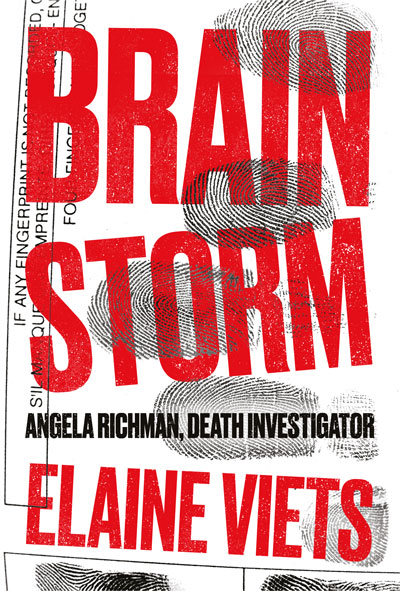
Elaine Viets is the author of the critically acclaimed Brain Storm, an Angela Richman, Death Investigator mystery. “Brain Storm has everything I love in crime fiction – complexity, intelligence, pretzel-plotting, and a touch of dark humor.”– PJ Parrish, New York Times bestselling author of She’s Not There and the award-winning Louis Kincaid series.
Brain Storm is an e-book, a trade paperback and audio book. Buy it here: http://tinyurl.com/hr7b9hn


Are Words Sticks and Stones After All?


(Mostly stones, few sticks. Sorry.)


I’m going to take a big, fat liberty here, so bear with me, okay?

There’s a powerful Annie Dillard quote that has to do with churches that I’ve been thinking a lot about lately:

“On the whole, I do not find Christians, outside of the catacombs, sufficiently sensible of conditions. Does anyone have the foggiest idea what sort of power we so blithely invoke? Or, as I suspect, does no one believe a word of it? The churches are children playing on the floor with their chemistry sets, mixing up a batch of TNT to kill a Sunday morning. It is madness to wear ladies’ straw hats and velvet hats to church; we should all be wearing crash helmets. Ushers should issue life preservers and signal flares; they should lash us to our pews. For the sleeping god may wake someday and take offense, or the waking god may draw us out to where we can never return. ”

While I happen to agree with the above, that’s beside the point for my purpose. Re-read the paragraph, and put the word “writers” in place of “Christians” and “churches.” I’ll wait…

Pretty interesting, yes? Did you ever think of the power that your words and stories might have?

Your words can influence, inspire, anger, irritate, uplift, depress, frighten, amuse, or engender admiration or scorn. Fictional stories have helped change laws and influenced social progress. There are many novels that have even inspired horrific crimes. When we read things in print—particularly if they look official, free of typos, etc.—we take them more seriously than if they’re just hearsay.

We can’t predict what effects our written words will have on the people who read them. That leads to the question: What responsibility do we have for the effects our words have on our readers?

I doubt that any two writers would answer this question the same way because there is no cut and dried answer. Words are ideas, and ideas are infinite and peculiar to every writer/reader/thinker. A scene or a bit of dialogue that seems innocuous to one reader might lead another to take to social media in protest.

As a writer, I see my job as telling the story the very best way I know how. I may want to appeal to a certain audience, but I feel my first responsibility is to the story. I start with a kind of Platonic ideal of the story I see in my head, and do everything I can to be faithful to that ideal as I write. Everything else is secondary.

But once a story is shared—even in a workshop/classroom setting—or published, it becomes something different. It’s no longer just ours. It takes up space in other people’s heads and they will react to it. We have no control over those reactions, but do we have a responsibility to predict them and change our work to accommodate them?

I’m personally familiar with a workshop situation in which a writer submitted a story that contained an abduction and rape. Several people in the workshop didn’t want to participate in the critique of the story because it triggered distressing emotional reactions in them. There were hurt and angry feelings on both sides. There’s also no clear answer here as to how the situation should be resolved. Does the writer have the right to tell the story as she envisions it? Do the other participants have the right to not be hurt or offended?

Announcing that there are potential trigger issues in a piece of work is getting more common on blogs and in academic settings. I haven’t yet seen it in the commercial writing world. Between cover art and jacket blurbs, publishers do a pretty good job of telegraphing what sort of material is contained inside. Occasionally they get it wrong and readers are misled, and the writer pays by suffering angry negative reviews based on unexpected content. There are many voices on the issue on the use of trigger warnings. Here is one pro voice and one con.

More and more publishers (and writers) are becoming proactive in another area of reader reaction anticipation: the hiring and use of sensitivity readers. Sensitivity readers specialize in checking manuscripts for misrepresentation of minorities and marginalized populations. If you’re writing about a population to which you don’t belong, you should anticipate sensitivity scrutiny of your work. Recently Writer Unboxed had a piece on sensitivity readers. It also references a widely shared Chicago Tribune article.

Writers now have access to audiences that most of us could hardly have dreamed of a decade ago. Readers, too, now have larger voices. The world appears to be demanding more from writers: to not simply be entertaining, but thoughtful and, some would say, authentic. But where should that authenticity come from? How concerned should we be with reader reaction issues as we write, and how do those issues affect creativity and storytelling?

I realize I’ve posed a lot of questions here. Let me ask you a few more: (you needn’t answer them all!)

How do you make sure your characters accurately reflect their cultural, societal, or ethnic backgrounds when they’re different from your own?

What is the most unexpected response you’ve had to your work?

Have you ever changed your work or held back because you worried about criticism or questions of authenticity?


Two New Writing Resources from Writers Digest Books


By Larry Brooks

Just what we need… another writing book or two.

No, I’m serious. This may be just what we need.

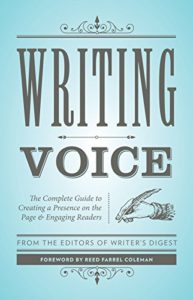
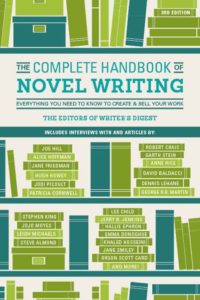
Shown above are the two newest anthologies of writing mentoring, coaching and philosophical dissection and author interviews from Writers Digest Books, culled from their magazine and blog and a few excerpts from the titles they’ve previously published.

You may be interested to know that two of your humble KZ servant bloggers have entries in both of these volumes:

… James Scott Bell has two pieces in Writing Voice, and four in The Complete Handbook of Novel Writing (3rd edition);

…much less impressively, yours truly has one article in each book.

We hope these and the several dozen other entries in these two fine volumes will contribute to your writing journey.

(The links offered are to Amazon.com; both titles are also available through all major online venues and bookstores.)

This is What a Professional Writer Looks Like

by James Scott Bell
@jamesscottbell

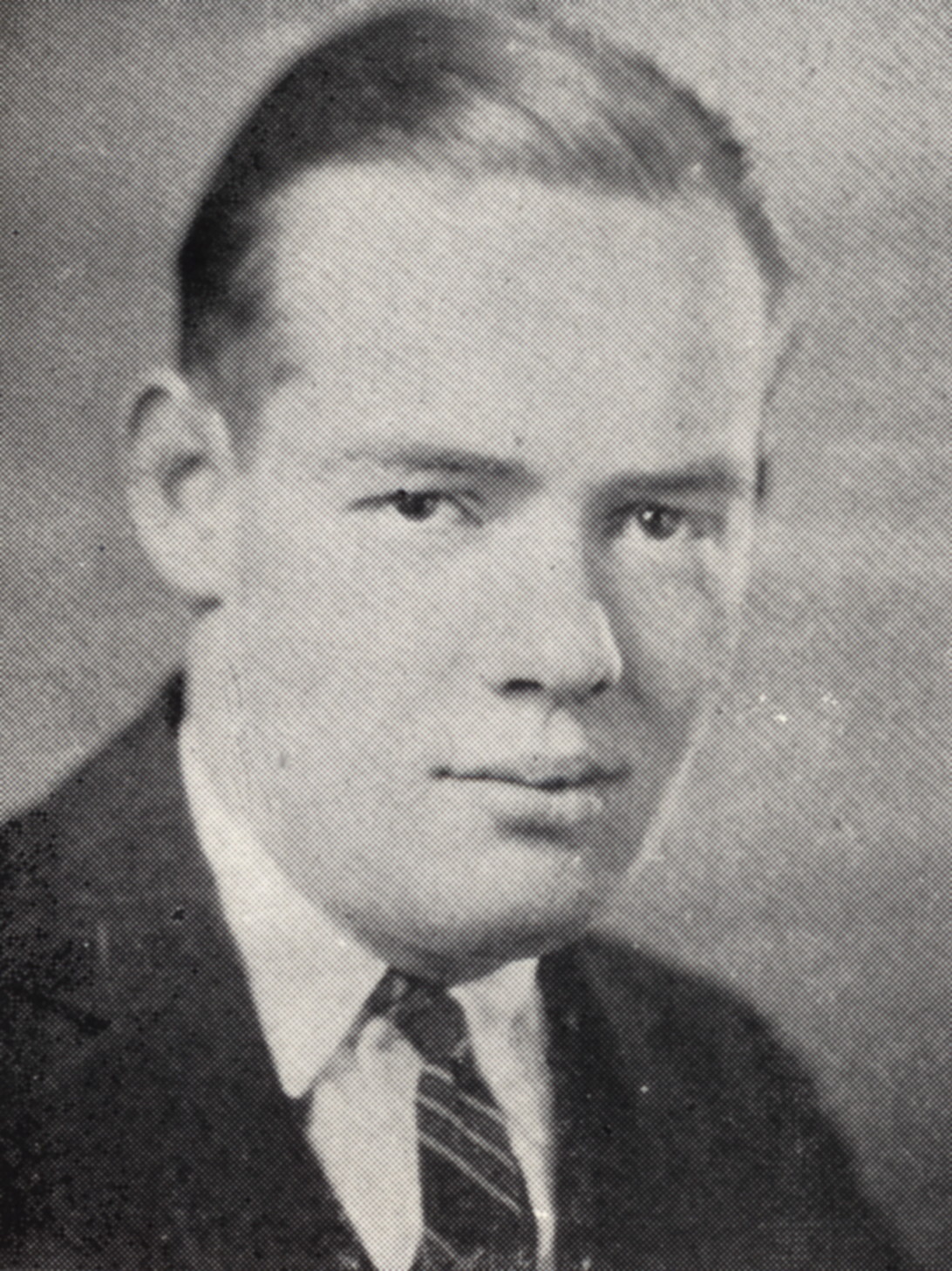
My parents were friends with Todhunter Ballard, a pulp writer from the classic age of Black Mask, Dime Detective and so many others. Later he went on to write paperback Westerns and a number of scripts for TV.

This is called having a career as a professional writer.

Willis Todhunter Ballard was born in Ohio in 1903. By the mid-1920s he’d landed a job with the Brush-Moore chain of Midwestern newspapers. It was not a happy experience. “In eight months I was fired at least eight times,” he told an interviewer. “Besides arguments with the printers, I had them with the old battle-axe who ran the front office. She had been secretary to the Brush boys’ father and considered that she owned the company more than the boys did. It became a routine. She would call me in and fire me, but before I could clear out my desk one or other brother would show up from Europe and rehire me. This went on until one time no one appeared and I stayed fired.”

When the stock market crashed in 1929, Ballard tried to find work in the East, to no avail. So he headed for Hollywood where “at least it was warm for sleeping on park benches.” A chance meeting led to some studio writing work, but the gig didn’t last.

One day Ballard went to the movies and saw The Maltese Falcon. Not the later Bogart version, but the original filmed in 1931. He was blown away by the Hammett dialogue and felt it “sounded the way I thought criminals and detectives should talk. It rang true, the way I wanted mine to do.”

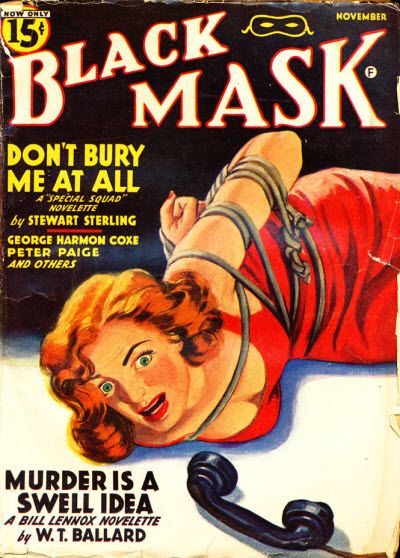
On his way home from the movie, Ballard came up with a series character idea to propose to the famous pulp magazine Black Mask (which had made Hammett famous and would later do the same for Raymond Chandler). Using a friend who worked at Universal as a model, Ballard conceived Bill Lennox, a studio “troubleshooter.” He sat down at a typewriter at midnight and by five in the morning had pounded out ten thousand words. At seven-thirty he put the manuscript in the mail and promptly went to bed.

A week later he got a check from Black Mask, and his career as a pulp writer took off.

In those days, to make any kind of a living (at a penny a word) you had to be good and you had to be fast. Ballard was both. He treated writing, first and foremost, as a job. It was putting eggs and milk on the table. There was no time to lie back on a sofa and sip sherry, waxing poetic about theories of art.

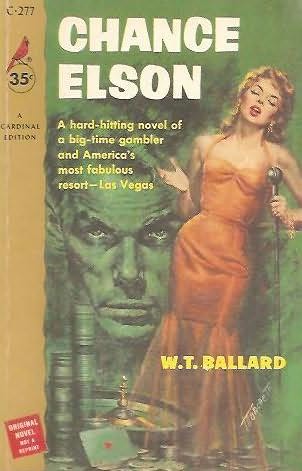
I have a box of Ballard’s books and stories handed down to me by his sister-in-law. In addition to his noir mysteries and paperback originals (as W. T. Ballard), he wrote Westerns (as Todhunter Ballard and under numerous pseudonyms like Jack Slade and Clint Reno).

In this maturing age of digital self-publishing,I often think of Ballard. Back when things were really taking off, 2009 – 2010 or so, I likened it to a new pulp era, meaning that if you are good, fast, and treat it like a job, you have the chance to make some real dough.

Here’s a bit more of the interview referenced above. Take particular note of the last answer:

Would you tell us something about the lifestyle of a pulp writer living in L.A. during the thirties and forties?

We all worked hard, played hard, lived modestly, drank, but only a few to excess, gambled some when we had extra cash. Most of our friends were other writers. In the Depression when any of us got a check he climbed in his jalopy and made the rounds to see who was in worse straits than he and loaned up to half what he had just received.

What was your yearly average word output for the pulps?

My files are at the University of Oregon library, but a shotgun guess would be about or over a million words per year.

Would you tell us something about your work habits both then and now?

I tried to do about ten pages a day after that first Black Mask flush, sometimes more, sometimes less. I tried to work regularly, something every day even if I later threw it away. These days my wife, Phoebe, does the typing since I’m a lousy typist and in so doing edits the copy. I seldom objected to requests for rewrite but sometimes stood my ground. A late example is a western called Sheriff of Tombstone. Both my agent and my Doubleday editor, Harold Kuebler, held their noses at the first submission and Harold only accepted the altered copy grudgingly. Both let me know in no uncertain terms that they considered it a bad work. It has outsold all my more recent books and is rated second from the top of the list in Western Writers of America’s scoring for the last year.

How about the marketing of pulp fiction? I’ve heard that many of the magazines (such as Frank Armer’s) were closed to most freelancers. Was this a widespread practice?

How did we market pulp fiction? Like selling any other commodity. No magazine I remember was tightly closed to submissions, although a couple of them were written entirely by one or two men for long stretches. It was largely governed by how lazy the editors were, how much they were willing to read.

Frank Armer was no worse than others, but his editor’s were crooked. They were pulling old copy out of the files, slapping a current writer’s name on as author, and drawing checks to the new names, cashing them themselves at the bar on the corner. Bob Bellem and I combined to send them to Sing Sing for five years each. We discovered the ploy after I received a notice from the IRS that I had failed to report $35,000 paid me by Armer Publications. Since I had sold them no copy for that year I checked with Bob. He had sold to them but he was being charged with not reporting twice what he had been paid. We contacted Frank, then blew the whistle.

For nearly fifty years you’ve remained popular to a most precarious profession while other careers have come and gone. To what do you attribute this staying power? Would you share some of your views on the writing business with us?

My views on writing as a business? That it is not much different from any other. You have to keep swinging, rolling with the punches, keep alert and attuned to the changes that take place suddenly or gradually, but always constantly.

JSB: And that, friends, is what a professional writer looks like. Keeping productive, taking a business-like approach. I wrote a whole book on this subject, so I know the fundamentals have not changed since Tod Ballard’s days.

The question for today is, do you look like a professional writer yourself? No matter where you are on the charts, being a pro is always the best course for the future.

READER FRIDAY: Share your good news

We can all benefit from sharing your good news here at TKZ. Share something good that’s happened – whether it’s personal or a writing goal achieved or even a line that you’ve written that makes you proud.

Make it rain with good news, people.

Anti-Heroes: Why We Love Them & Keys Ways to Give Them Depth

Jordan Dane
@JordanDane

After John Gilstrap’s post yesterday on The Code, a nostalgic reflection on storytelling in his lifetime, it got me thinking about my favorite type of protagonist – the anti-hero.

One of the first “in your face” anti-heroes I remember came from the small screen – HOUSE. He said things we might secretly wish we could and get away with it, but when TV audiences saw how deeply flawed he was, coupled with his vulnerabilities and quirky sense of right and wrong, he became endearing and very watchable.

Here are a few outstanding anti-heroes for your consideration:
Michael Corleone from the Godfather
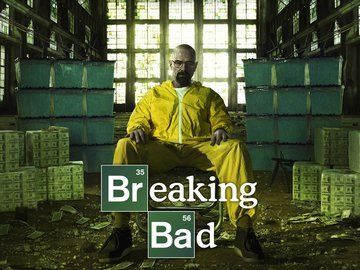
Walter White & Jesse Pinkman from Breaking Bad
John McClane from the Die Hard movies
Don Draper from Mad Men
Tony Soprano from the Sopranos
Ray Donovan from the show by the same name.
Jack Bauer from 24
George Costanza from Seinfeld
Patrick Jane from the Mentalist
Dexter Morgan from Dexter

These amazingly memorable characters have introduced a broader use of gray into classic Hollywood’s black and white world of storytelling where the bad guys literally wore black hats in early films. Anti-heroes aren’t pure heroes in the classic sense. They have flaws and baggage that make them borderline villain, but not quite. It’s up to the author who creates them to infuse something redeemable, even if the author simply gives them a dog, like JOHN WICK.

So why the change toward anti-heroes and why have they become so intriguing?

You’d have to look at how much our world has changed, the complex nature of our lives has shifted our moral compass and made resolutions ambiguous. The simple white hat cowboy may appear weak unless he’s willing to confront dark villains who aren’t hindered by a moral code. Anti-heroes are “over the top” strong in their field and are willing to break conventional rules to save the day once they commit to the fight and cross the point of no return. They right the wrongs that seem insurmountable because they are larger than life and don’t let rules or laws get in the way of justice.

Why are we drawn to anti-heroes?

For me, I see them as flawed. They’re not perfect, like classic heroes in Hollywood or in literature were portrayed. I can relate to them better because it makes me feel as if, given the right circumstances, anyone can rise to the level of hero if they have a cause worth fighting for. We also want to see if they are redeemable. Give your anti-hero a chance to grab at redemption in your book and see if he takes it. Or will he find love from a strong woman? Once we get hooked on an anti-hero, we root for them and feel their pain more when they fall. We want them to get back up, because they’re “every man.” And the fact they are not cookie-cutter, and do surprising things and are unpredictable, they make the storytelling fun.

Who would have rooted for a high school teacher turned drug dealer if we hadn’t learned of his cancer, his concern for his family in the face of his financial meltdown, and his rising medical bills. He’s bucking a broken health care system like David standing before Goliath. He’s more worried over his family than his own recovery. He’s got nothing to lose.

Anti-heroes change our way of thinking about confrontation and empowerment. The right anti-hero can give voice to our frustrations and give us an alternative reality to find justice.

Below are tips to add depth to your anti-hero/heroine & make them sympathetic:

  1. Give Them a Reason—A reader will lose interest if your character is a complete jerk for half the book. Sprinkle in the valid reasons for them being who they are and clue the reader in on these reasons early so they can buy in, even if the other characters don’t know their motivations.
  1. Does Gender Make a Difference? In general, I’ve noticed that readers accept bad boys faster than they embrace a female lead character who isn’t perfect. I don’t know why this is, but it can make crafting your female characters a challenge.
  1. Make them human—Give them a code they live by or loyalties a reader can understand and empathize with. Even a dark anti-hero/heroine has a softer side. In Silence of the Lambs, Hannibal Lecter was Clarice’s protector with his peculiar brand of loyalty.
  1. Give Them a Soft Edge—If you give even the toughest brooding character a pet or a soft spot for a kid, they will be endearing to readers. Write the darkest character and match them up with something soft and you’ve got a winning combination.
  1. Show Respect—Everyone looks up to a good leader. Show that others admire or respect your dark character and the reader will too.
  1. Stick Redemption under Their Nose—Give your anti-hero a shot at redemption. What choice will they make?
  1. Make Them Vulnerable—Pepper in a back-story that makes your anti-hero vulnerable—betrayed by love, lost an important person in their life, or other tragic experience. Make them fearful of something, perhaps even themselves.
  1. Forge Them from Weakness—Alcohol or drugs, adrenaline addict, insurmountable grief, or fear of the dark. Force them to battle with their deepest fears, making them worth someone’s struggle to win them over.
  1. Make Them Corrupted by Life—Have them see life through personal experiences that we can only imagine but they have lived through. Make trust an issue because they have been betrayed. They must be much more vulnerable than they are cynical to deserve the kind of significant other that it takes to open them up to someone else.
  1. Make Them Real—To be real, they must have honest emotions. That means you, as an author, must delve into the murky corners of your own mind to get into their heads. It’s not always an easy thing to do.

DISCUSSION:

1.) Who are some of your favorite anti-heroes and tell us why? (from TV, movies, or books)

2.) Do you have any other anti-hero crafting tips to share?

My anti-hero – Mercer Broderick as Mr. January. Preorder ebook for $2.99 at Amazon.

Zoey Meager risks her life to search for her best friend in a burning warehouse, only to cross the path of Mr. January, a mysterious man with a large black dog completely devoted to its master.