by James Scott Bell
@jamesscottbell
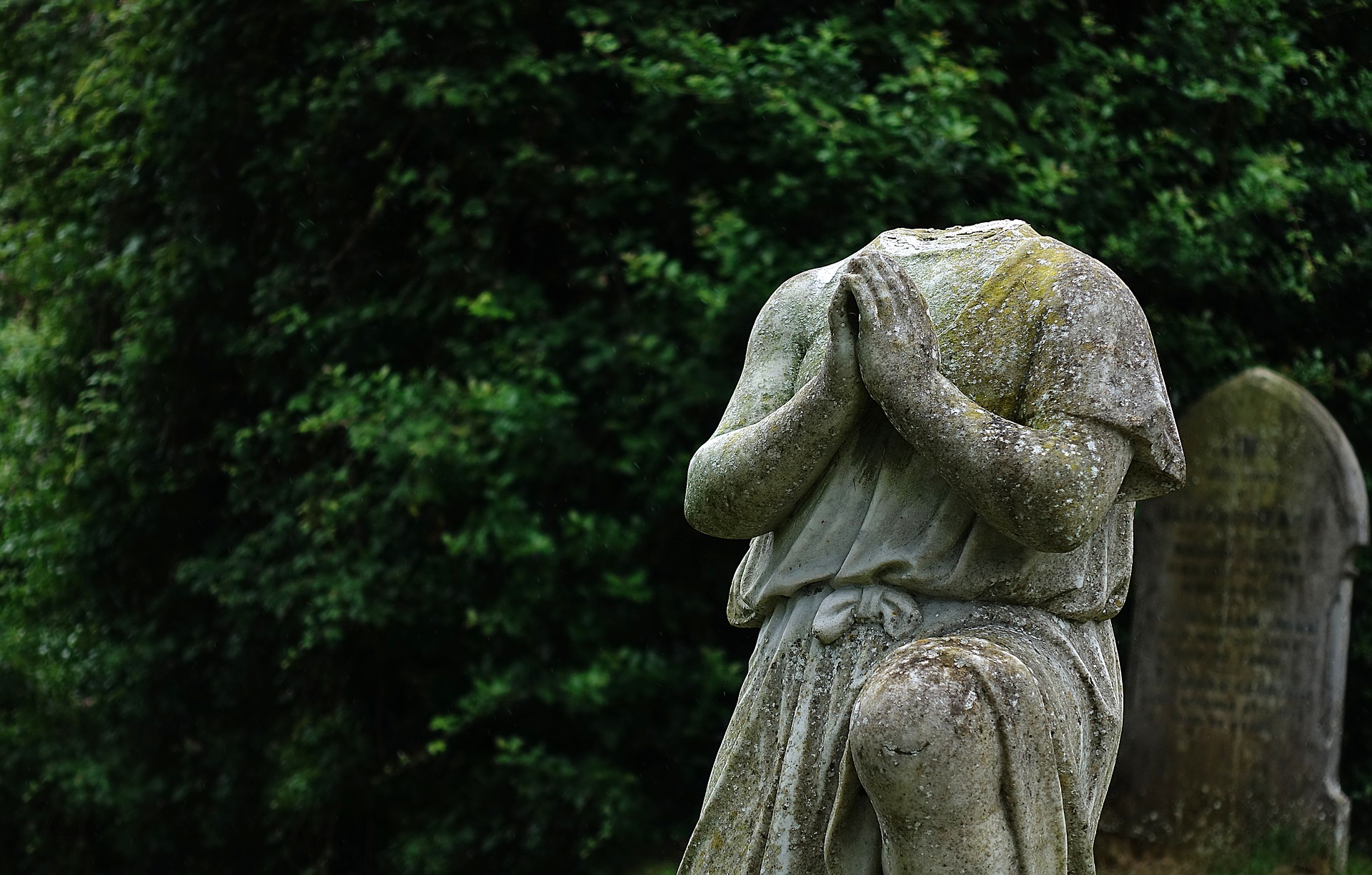 Here is another first-page critique, with an opportunity to discuss some point-of-view issues. See you in a few:
The woods were dark. The thick leaves rustling overhead blazed with color during the day, but now, at dusk, they faded to shades of gray. The October breeze was crisp. The man moved quietly from tree to tree. He trampled a few mushrooms that looked like elongated little brains. He stopped behind a gnarled oak – just steps from the path that wound its way between the park and the tree line. The park was where the neighborhood kids played after school.
As the sun dropped, the man watched the children disburse, heading home for dinner and homework. From his left, voices were lifted in laughter, and three boys topped the rise from the direction of the monkey bars. 11-year-old Josiah and his 8-year-old brother Jacob said goodbye to 10-year-old Brandon, and turned away from the path and the woods toward their house. Brandon shouted a parting insult at one of them, and continued down the same path he travelled every afternoon.
The man tensed with anticipation as he watched and waited for Brandon to cross the small opening in the undergrowth, directly in front of the big oak. Sweat beaded on the man’s forehead as he thought about the delights the next few days would bring. A grim smile stretched his lips. It had been too long.
A stick snapped in the woods behind the man, and the hairs on the back of his neck stood on end. Somebody was behind him. Think!
The man bent down and pulled up a few mushrooms. “Nothing like a fresh Morel,” he said aloud. He pivoted slowly as he stood, and feigned surprise as he came face to face with another man standing uncomfortably close.
Several impressions flashed through his mind in a split second: Tall. Muscular. Piercing blue eyes. Long black hair.
“Brandon is under my protection,” the big man said.
The big man reached out and placed his hand against the man’s chest. The man’s eyes widened in surprise and he let out a gasp. His body dropped to the ground.
Removing a sword from the scabbard on his back, the big man severed the man’s head with one swing, and left it on the ground among the mushrooms.
Seconds later, Brandon passed by on the trail, whistling contentedly as he made his way home.
***
JSB: Well, writer, you’ve obviously got a shocking opening moment here, and it certainly has page-turning potential. Who the heck is the tall guy wielding a sword in this day and age? I want to know.
Now it’s just a matter of getting from your opening line to this ending point in the most efficient way possible.
I’m not enamored of the first paragraph. The woods were dark is generic, and ultimately confusing. For in the next line we learn it’s dusk. So my image of nighttime has to be modified. Which means you’re making the reader do some cleanup work. You don’t want that. You want them on the roller coaster car, gripping the safety bar.
Which is why I like to see a POV established at the top, rather than weather or setting descriptions or a distant narrative voice. Not a hard and fast rule, but unless you have a very good reason not to, give us a character in motion as soon as you can.
Thus, one way to start is:
The man moved quietly from tree to tree.
Now, this is omniscient POV. You’re “outside” describing what’s happening “onscreen.” This has the feel of a prologue, and omni-POV is sometimes used in this fashion.
But things begin to get muddy in the second paragraph. By giving us the ages and names of the three children, we assume that this creep knows them. Was that your intent? If so, we need to have at least one line to indicate why this is so. And why Brandon is the target. I have a feeling you didn’t intend this, that this is a stranger, but we need to know one way or the other.
The third paragraph begins to take us inside the guy’s head. But once in there, I wouldn’t back out with A grim smile stretched his lips. The man is not looking at his own smile and describing it as “grim.”
This is why POV is crucial. I don’t want to get overly technical here, but will tell you that you have four basic modes to choose from, with two choices within each. Ack!
Let’s see if I can make it simple.
1. First Person (I was feeling lousy that morning…)
a. Limited (one character narrates throughout, e.g., The Big Sleep)
b. Open (switching between two or more first-person narrators, e.g., Framed)
2. Third Person (She was feeling lousy that morning…)
a. Limited (one character’s head)
b. Open (switching to another character’s head in another scene)
3. Omniscient, wherein the author can choose the level of intrusion, from participating as a commenter (It was the best of times, it was the worst of times) to keeping the author voice muted while allowing “big picture” descriptions (e.g., Lonesome Dove)
a. Limited (to keep focus on one character, e.g., Gone With the Wind)
b. Open (floats between various characters)
(Note: Some teachers peg omniscient a form of third-person. I don’t think that’s helpful, as the issue with omniscience is intrusion and scope. Third person, on the other hand, should not, in my humble opinion, stray from a character’s head.)
4. Cinematic (a form of omniscience), with a narration from “without,” describing only what can be seen, never going into a character’s thoughts or emotions (e.g., The Maltese Falcon)
a. Limited
b. Open
I did not include the “Hey, look at me!” mode known as Second Person (You walk into the party and see your ex-wife) which is almost never used. I also didn’t mention the option of doing First Person in either past tense (the traditional method) or present tense (which is popular in Young Adult fiction these days). But I should also point out that many thriller authors mix First and Third POV, something James Patterson popularized.
Whew!
Is this stuff really important to know? Um, yeah. Mishandling POV jars readers at the subconscious level, makes them do unnecessary work, disrupts the “fictive dream,” lessens the impact of a scene.
So my advice to new writers is this: get a handle on Third Person, Limited as a default. Move on to Third Person, Open. You can then try First Person, Limited. For many successful authors, that’s all they ever use.
But once you make a POV choice, keep it consistent throughout. (For purposes of this prologue, it seems to me Third Person, Limited is the best bet.)
A stick snapped in the woods behind the man, and the hairs on the back of his neck stood on end. Somebody was behind him. Think!
I’d cut everything after the first comma. the hairs on the back of his neck stood on end is a cliché. And it’s quite obvious someone is behind him. We can infer that he’s thinking when he takes the next action, which is to bend down and pluck a mushroom called a Morel. I gotta tell you, I had no idea what that was. Had to Google it. Is this particular type of mushroom essential to the story? Maybe you can come up with some other excuse for the guy. Lost dog, maybe? (I don’t mind him stepping on the mushrooms, though, because I like where his head ends up. See below.)
Now, the sword guy. I’m confused about what happens. The sword guy touches the man’s chest and the guy drops. Is he dead? Is he stunned? If the former, then why chop off his head? If the latter, what caused it? Some sort of magical jolt?
Either one takes away from the impact of the sword. So I’d just have the big guy dispatch the stalker with one swipe, a la Robert E. Howard’s Conan the Cimmerian.
The last line is jarring to me. I know what you’re going for, but it pulls me out of the moment. It’s just not needed. Leave us with the head in the ’shrooms.
Speaking of which, you know what would be fun? Re-write this piece staying in the stalker’s POV. When he loses his head, stay in his POV, as he ponders for a few seconds his cranium’s fate among the mushrooms.
Another benefit of doing this in close third person is that you could lengthen the scene a bit, which, if this is a prologue, you ought to do. The “prologue issue” has been discussed before, but for our purposes it would make sense to stretch out the tension, keep us wondering what’s going to happen, up until that shocking conclusion.
Style notes:
Never begin a sentence with a numeral. Thus: Eleven-year-old Josiah, etc.
In fiction, the best practice is to spell out ages: He was only eleven … He lived to be eighty-eight. (Unless the age is 100 or more: He died at the ripe old age of 101).
Any further comments for our anonymous writer?