The Writing Buddy

By Mark Alpert

Thirty-one years ago I enrolled in the MFA creative writing program at Columbia University. I don’t have anything useful to say about whether such writing programs are worth the money. I was writing poetry at the time, so the MFA degree didn’t help me launch my career as a novelist (which didn’t start until a quarter-century later). But at least I got one tangible thing in exchange for those two years of tuition fees: a lifelong writing buddy.

I met Neil Davison at the first poetry workshop that September. The professor asked each of us to read one of our poems to the rest of the class. It was excruciating. No one offered any criticism during that first workshop, but the air in the room was thick with intellectual condescension. The only poem I remember from that morning was Neil’s. It was a surrealistic piece about a moose that had the face of Neil’s grandmother. You see, it’s kind of memorable, right?

We went to lunch together after the workshop, and we’ve been friends ever since. We laughed our way through grad school, coining nicknames for all our odd classmates (The Captain of the Thunderbirds, The Second-Story Man, The Spanish-Jewish Girl Who Is Neither Spanish Nor Jewish). After we got our master’s degrees, I became a newspaper reporter while Neil went on to get a Ph.D. and become an English prof at Oregon State University. And over the decades we’ve continued to read and enjoy each other’s writing. Neil’s an expert on James Joyce, and in 2004 he was invited to deliver a paper at a conference in Dublin that commemorated the hundredth anniversary of Bloomsday, the pivotal day of Joyce’s Ulysses. He convinced me to come along, saying the conference was just an excuse for an epic pub-crawl. He was right.

This weekend I’m taking my family to Oregon to attend Neil’s daughter’s bat mitzvah. My kids asked me recently, “If you had to pick just one of your friends to be your companion in a post-apocalyptic zombie world, who would you choose?” (As you can see, the Alperts are mentally preparing themselves for the much-anticipated debut of Walking Dead season four.) The truth is, Neil wouldn’t be the best choice for a zombie-killing wingman. He’s too nice. But he’d feel right at home in a dystopia where the survivors dissect books instead of decapitating the undead.

Writing can be a lonely occupation. So it’s a true gift to have a literary pal, someone who’s eager to share his or her strong opinions about Philip Roth or Susan Sontag. I’m looking forward to seeing Neil again. Perhaps he’ll have another weird poem to show me.

First Page Critique: Love Always, Lola

Our new first-pager is an entry titled “Love Always, Lola. My comments follow and, as always, a big thank you to our brave writer. We welcome your input and insights. — PJ Parrish
I hate kids. I have to.
“Lola? Did you hear my last question?” The disembodied voice over the phone asks.
I blink, feeling for all the world like I’m about to lose my lasagna on the wood floor of my bedroom.  Zoe, my mentor here at Corner House Crisis Pregnancy Home, smiles and waves her hands in the air like she’s trying to keep the tape reel going in my mind.
“Um, yes. I like kids. Enough. They’re great.” I look down at the red and white checkered quilt on my twin-sized bed, rubbing my swollen belly to get rid of the itch.
“Do you have any experience working with them?” Mr. Compton, the voice, wants to know.
“A little, I guess. I used to babysit for my mom’s church and stuff.”
“What about camp? Do you have any experience with camp, maybe family camping trips or summer camp?”
I trace a circle around my stomach with my fingernail.
Zoe plants her hands on her tiny stick hips. “Focus!” she whispers.
“No,” I blurt. “No family camping trips or anything. But I am CPR-certified.”
“Great, that’s a start,” Mr. Compton says. “Can you tell me why you’d like to work at Camp Qavah this summer?”
“Well, I feel like I have a really great connection with kids.” Like I’m carrying one right now, literally connected to her by an umbilical cord. “I’m looking for an opportunity to grow and become my own person this summer.” I’d love to run away from who I am right now. “And I’m not afraid of hard work.” I once used my former roommate’s toothbrush to scrub the suite’s toilet.
“Fantastic.” Mr. Compton seems satisfied with my answers. “One last thing—you’ll be replacing one of our other counselors who’s had to cut her commitment short for the summer. Your first day would be mid-July. Will it still work for your situation?”
He puts it so delicately, but we both know what situation he’s talking about. That situation is currently kicking my ribs like she’s a jiu jitsu master.

“Uh, yeah. I think so. I’m due around the first of June. Mid-July should be fine.”
***
First, a personal bias: I am not a big fan of novels that open with dialogue. (I know, the first line isn’t in quotes but it is what we call “internal dialogue” in that we are in the narrator’s thoughts.) So maybe this goes to a taste thing. But I wasn’t pulled into this opening. To begin with, the first line might sound intriguing but when you think about it, it makes no sense. Why does she HAVE to hate kids? And the moment we find out she’s pregnant, the line becomes almost off-putting. Either way, the question just hangs there, unanswered, provocative for sake of provocation. Second, because the first page is almost all dialogue, there was no way for me to find my footing in the world the writer was trying to conjure up. When a reader first picks up a story, they are like a coma patient—fluttering open their eyes in an unfamiliar world, wondering, where am I, when am I, who am I? The writer has an obligation to quickly and efficiently orient. (that’s how writer and teacher Benjamin Percy put it, not me, alas.) 
Yeah, I know. Some great books open with dialogue. Charlotte’s Web opens with “Where’s Papa going with that axe?” And then there’s Little Women: “‘Christmas won’t be Christmas without any presents,’ grumbled Jo, lying on the rug.”  But it’s a tough act to pull off and in this case, it backfires because the writer has provided me with so llittle context or setting. And what does that do?
Confuse me. And that’s death to a first page. I am confused from the get-go because I think I am overhearing a telephone conversation between Lola and “disembodied voice.” Then suddenly Zoe is there but where is “there?” Is Zoe the voice? Is she in the room with Lola? Is she listening in on an extension? Speed-bump. Okay, call me dense. But the last thing you want your reader to do in your first page is work hard on the little stuff. 
Third thing: There’s not a lot of tension here. Maybe this isn’t a mystery or thriller but still, we need a compelling reason to follow Lola. And although her voice — cocky, cynical and sassy — is interesting in a snarky sort of way, the set-up isn’t enough. Telephone conversations are such a dead way to move your story along. You need them at times to impart info but I don’t think you want to waste your crucial opening with such a static — disembodied — device. Also, this style is pretty bare-bones spare (the only detail we have is that Lola is at a pregnancy crisis center). Sometimes openings give TOO MUCH information (ie backstory) but I think this one gives too little, maybe because the writer believes by holding back, he/she creates a sense of mystery. I forget who said this but it works for me: The only thing you hold back is what happens next.
All this said, there’s some good lines here, sharp observation, and the writer has a good grasp of how to construct dialogue. The writer has a nice touch. I just wish she/he had chosen a more compelling opening scene, something that is worthy of their talent. What Lola and Compton are talking about is pretty banal. This  would work as a later scene, but only after the writer has hooked me into this character’s situation and her voice. I’d suggest the writer find some really good female protag fiction to read. I mention this only because I am re-reading Wally Lamb’s “She’s Come Undone” right now. It’s a really good job of entering a female viewpoint via first-person POV.  Ditto “The Lovely Bones.” Anybody have any other good examples? 
***
I hate kids. I have to. I’m not crazy about kids either but this line was sort of offputting.
“Lola? Did you hear my last question?” The disembodied voice over the phone asks.
I blink, feeling for all the world like I’m about to lose my lasagna on the wood floor of my bedroom.  Zoe, my mentor here at Corner House Crisis Pregnancy Home, smiles and waves her hands in the air like she’s trying to keep the tape reel going in my mind. Not sure I get this image. And Zoe pops out of nowhere.
“Um, yes. I like kids. Enough. They’re great.” I look down at the red and white checkered quilt on my twin-sized bed, rubbing my swollen belly to get rid of the itch.
“Do you have any experience working with them?” Mr. Compton, the voice, wants to know.
“A little, I guess. I used to babysit for my mom’s church and stuff.”
“What about camp? Do you have any experience with camp, maybe family camping trips or summer camp?”
I trace a circle around my stomach with my fingernail.
Zoe plants her hands on her tiny stick hips. “Focus!” she whispers. Hard to whisper when you use exclamation point.
“No,” I blurt. “No family camping trips or anything. But I am CPR-certified.”
“Great, that’s a start,” Mr. Compton says. “Can you tell me why you’d like to work at Camp Qavah this summer?”
“Well, I feel like I have a really great connection with kids.” Like I’m carrying one right now, literally connected to her by an umbilical cord. Nice line but you might want to put these thoughts in italics because they are used in quick succession during dialogue. “I’m looking for an opportunity to grow and become my own person this summer.” I’d love to run away from who I am right now. “And I’m not afraid of hard work.” I once used my former roommate’s toothbrush to scrub the suite’s toilet.
“Fantastic.” Mr. Compton seems satisfied with my answers. “One last thing—you’ll be replacing one of our other counselors who’s had to cut her commitment short for the summer. Your first day would be mid-July. Will it still work for your situation?”
He puts it so delicately, but we both know what situation he’s talking about. That situation is currently kicking my ribs like she’s a jiu jitsu master. Nice image.
“Uh, yeah. I think so. I’m due around the first of June. Mid-July should be fine.”


First Page Critique: A HARD MAN TO KILL

What follows is the first page of a work entitled A HARD MAN TO KILL, with my comments afterward. Hope you enjoy both — Joe Hartlaub

When I heard the front door creak open, I rolled out of bed and snatched up the handgun that sat on my nightstand. My bare feet felt cold against the wood floor, but my body was taut and my aim steady. My wristwatch said it was six-fifty in the morning.
  I waited.
  A steady downpour of rain drummed against my windows, and the street lights slanted through my curtains and projected a small sliver of blurry yellow light.
  Footfalls came from the cramped living room outside the door. There were voices. It sounded like two people. Both of them sounded male, and both sounded as though they were moving around the house.
  Looters.
  They were having a quiet, whispered conversation, but behind the door I couldn’t make much out. I walked over to the closet, opened it quietly, and slid on my tennis shoes. Then I closed it and stopped.
  The footsteps were coming this way.
  I moved to the far end of the wall, behind the door, and waited.
  The door slowly creaked open and the footsteps came in slow and stopped.
  “No one’s here,” the guy said. “I think we’re okay.”
  Another voice replied, “Alright, yeah – sounds good. Just check the room for it, okay?”
  “Sure.”
  There were footsteps that clapped away from the room. The door closed and I could see the shadow of a guy making his way to my bed with his back to me. In the darkness I couldn’t make out much other than his scrawny build, but when he stepped into the watery light of the streetpoles I saw he was light haired and was wearing a dark, wet jacket and sodden jeans that clung to his legs. I also saw the glint of the small, silver handgun in his hand.
  He was glaring down at my bed, the twisted sheets and the comforter. He seemed to be studying it for a long time. You could almost hear the wheels turning in his head. 
  Slowly, I came up behind him.
  It would’ve gone smoother, but one of the floorboards creaked as I put down my right foot and the guy glanced over his shoulder. I kicked him in the back of his knee, grabbed a handful of his hair, and smashed it against the end of the nightstand. The guy fell to the floor.
                     *                                                *                                                    *

Ilike this. I like this very much. The author has been studying their Kill Zone Joe Moore, balancing nicely between suspense and action. The narration tells us quite a bit without slowing down the pace, and gets things rolling without diddle-fuddling around. Show, don’t tell? This piece does it. Our narrator hears a noise and but doesn’t seem particularly surprised; he just gets locked and loaded and ready to rock ‘n’ roll. He is expecting trouble. Why?  He also doesn’t call 911, which means that he either 1)knows that when seconds count, the police are there in minutes or 2)  doesn’t want the police in his house, at least until he has time to clean up. Which is it? Let’s not even mention what’s going to happen when the other burglar checks up on all of that activity in the bedroom. And what are these home invaders looking for? I’d like to see the next couple of pages to find out. If an author can keep that feeling going throughout the book, their job is done.

I have two and one-half minor criticisms before I turn things over to you all for comments: 1) In the first paragraph, our rough and ready protagonist has …”my aim steady.” The narrator is a few paragraphs too early to be aiming at anything. You don’t aim a gun until you have a target. Nobody is even in the room yet. I would submit that “hand steady” would be better; 2) the light comes from the streetpoles, rather than “of”; ½) what’s up with Beany and Cecil doing a burglary at 6:50 in the morning when neighbors are up and maybe walking the dog, leaving for work, going to pick up coffee and donuts, and the like, and thus able to witness a break-in? Roll the time back four hours and it’s a bit more realistic, in my opinion. Those are minor quibles that made me go “umm” but did not detract from my desire to keep reading. I want to see more and I believe at some point that we will all have that opportunity. Author: keep writing and keep up the good work.

Are we ready to hear good advice?

I have a theory about writers and writing advice: “No advice is good until we’re ready to hear it.”

Take me, for example. Years ago, having just read Anne Lamott’s BIRD BY BIRD, I called up a writer friend to rave about it.
 
After burbling on about the book’s awesomeness for about three or four minutes, I heard my friend give an audible sigh.

“I’ve been telling you about that book for years,” she said (a tad ungraciously, I thought).

It was true. I’d heard my friend discuss BIRD BY BIRD before, but I’d never heard it. 

Over the years, different messages and bits of advice have bubbled to the surface of my awareness, depending on where I  was as a writer.

Here are some of the most useful nuggets that have stuck with me over the years.

  • Write every day at the same time.

I can’t remember who was first with this classic piece of advice. The bottom line: You have to develop your brain’s writing muscle the same way you develop other muscles–by repeatedly exercising it.

  • Slice the salami.

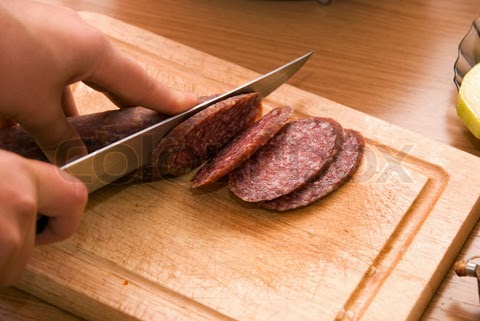
To get unstalled in her writing, Editor and writer Kate White says she had to learn how to break up large projects into small, manageable chunks. She calls it “slicing the salami.” She began by writing for fifteen minutes on Saturday and Sunday. Months later, her first book was finished. This was the single most helpful piece of advice that helped me start writing back when I was a single mom with a high-pressure job.

  • Begin and end each paragraph with a short sentence.

This is a simple technique to build pacing and rhythm into your work. The short initial sentence eases the reader’s entry into the paragraph, and the short line at the end provides a rhythmic “bounce” into the next paragraph. This advice came from Miss Snark, the literary agent; I’ve used the technique to good effect. (And if you haven’t discovered Miss Snark, you should check out her archived blog. It’s filled with tons of great writing advice)

  • Think of your writing as a camera. You’re not successful until the reader “sees” the story that’s filming in your head.

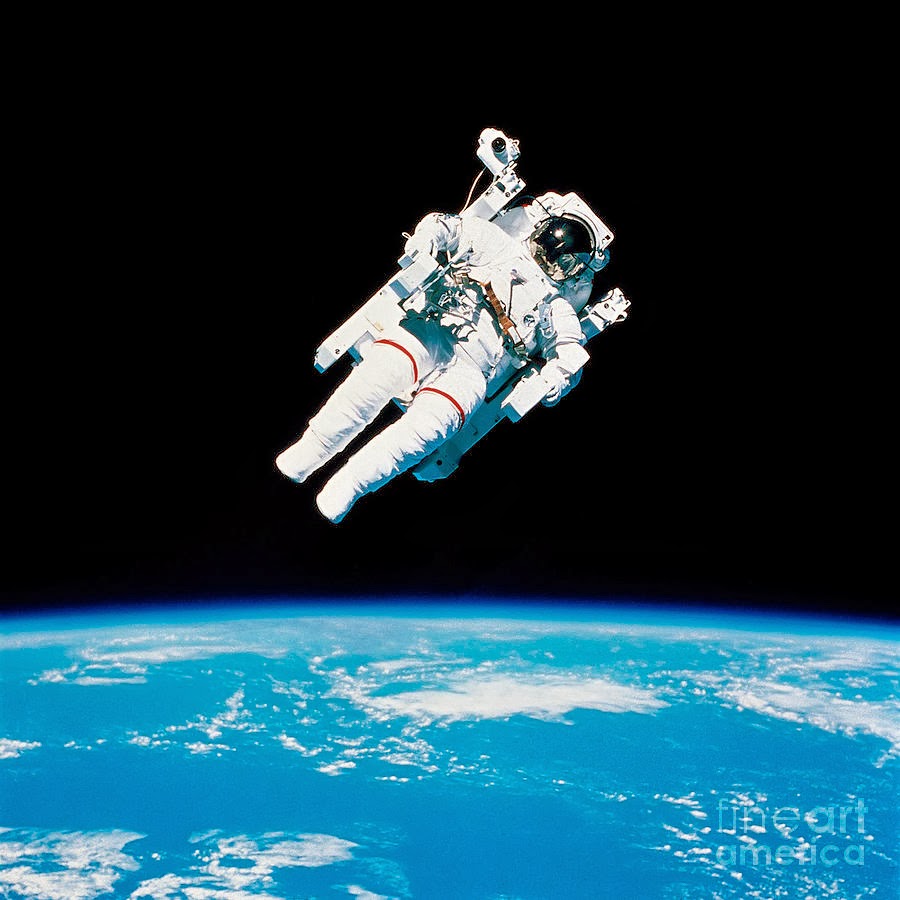
    I’ve noticed that there’s often a disconnect between a scene that is playing in the writer’s mind, and the one that is conveyed on the page. To locate   the reader in your story, you need to add context and positioning details. For example, if a minor character is standing behind the main character, about to do something interesting, you need to establish their positions relative to each other in the reader’s mind. Otherwise, readers can quickly become disoriented and untethered from the story, like an astronaut floating in deep space. (See a related post, The Real Secret of Bestsellers.)


So, what nuggets of writing advice have been the most helpful to you, in your career as a writer? 

The Advance Reading Copy

By Mark Alpert

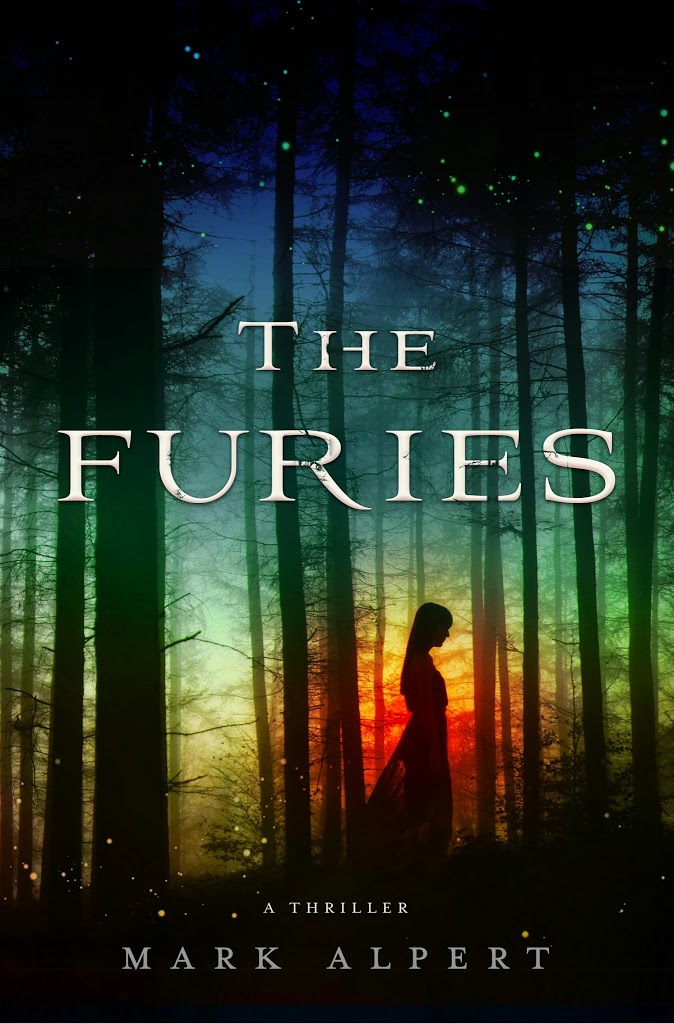
I just received a box of advance reading copies of my next novel, The Furies. This is a fun moment in the publication process. For the first time, the book actually looks like a book and not an unruly stack of manuscript pages. It’s also a fraught moment for me, because this is the point at which I will allow my wife to read the novel. She’s heard me complain about the book several thousand times, but until now she hasn’t read a word of it.

Why haven’t I let her read it until now? Because she’s a tough critic. And she’s pathologically honest. If she doesn’t like something, I can always see the disapproval on her face. Don’t get me wrong, I’m a firm believer in constructive criticism. Just about every writer could use some help pointing out the flaws that he or she has failed to fix, either because of laziness or obliviousness or sheer pigheadedness. I eagerly solicit suggestions and advice from my agent, my editor and the members of my writing group. In other words, I can take criticism from anyone but my wife. That’s just the way it is.

I’m especially worried about her reaction to this new book, because it’s a little different from all my previous novels. It’s a science thriller, but it’s also about witches. I became fascinated with the subject after my son wrote a term paper about the Salem witch trials. He learned that the witch hunt in the Massachusetts Bay colony was just one episode in a horrible series of massacres. During the sixteenth and seventeenth centuries, witch-hunters in Europe killed thousands of people. France, Germany and Switzerland were the worst. In the area surrounding the German city of Trier, 368 accused witches were burned alive between 1587 and 1593. The great majority of victims were women. Two villages in the area were left with only one woman each.

It’s incomprehensible. Scholars still argue over why the massacres happened. And because it’s so strange and horrible, it seemed like an interesting subject for a novel. I imagined a family that came to America in the 17th century after being nearly annihilated by the witch hunts in Europe. They settled in what was then the wilderness and lived in secrecy until…well, until the novel starts.

The book will be published in April, so you’ll have to wait till then to hear the rest of the story. Except for my wife, of course. She’ll have to endure several days of me saying, “What part are you reading? Why aren’t you reading it faster?” And all the while I’ll be studying her face, trying to figure out what she really thinks. It never gets any easier.

Talking Trailer Trash

By Elaine Viets

    All the cool kids have book trailers. If you’re lucky, your publisher will pop for one. If not, should you spend your money for your own trailer? If you’ve never done an exhibition trailer hire for one of your projects before, now may be the right time to make a call like this.

5528abf862412fac
    I think it’s good advertising.
     A book trailer is an animated version of the elevator pitch. It’s fun to show off your trailer on your Web site and Facebook page, like tooling around in a new car. Of course, you have to Tweet it.
    Then what?
    The book trailer is just starting its work. I have four trailers now and find new uses for them with each book.
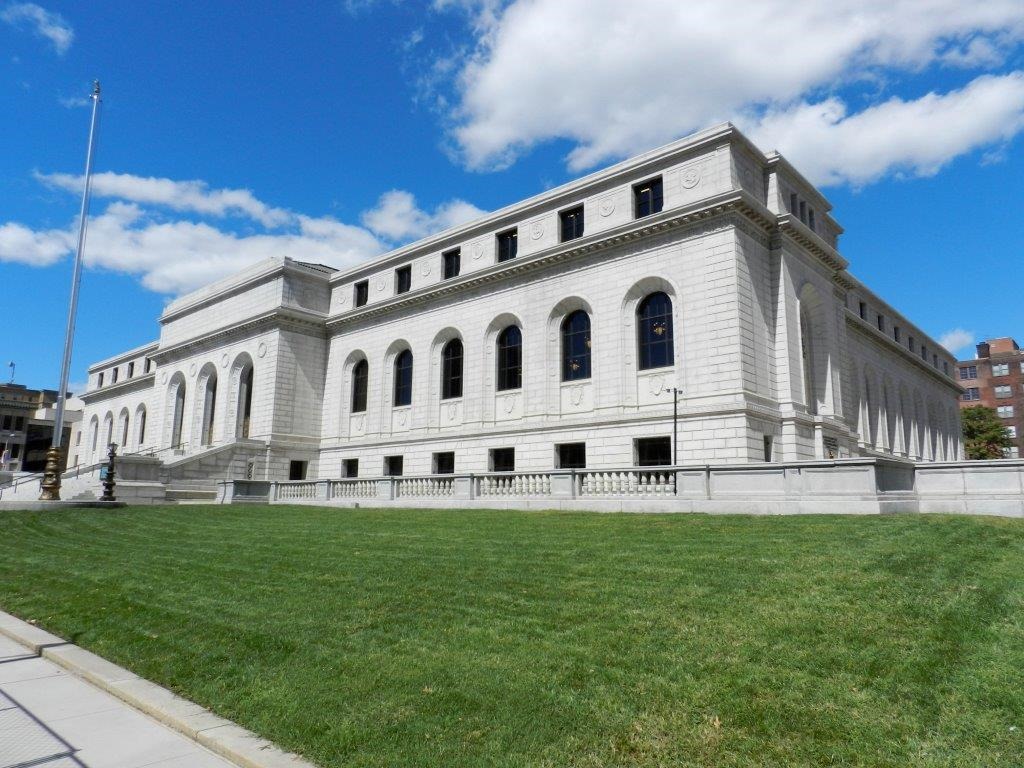
STL Public Library Central

    –  Signings at bookstores and libraries. Most bookstores and libraries will run book trailers on their Web sites and Facebook pages. Unlike author photos, which seem to feature identical “Is the ordeal over yet?” smiles, book trailers look fresh and different. Nobody ever says, “You don’t look like your book trailer.”
    – Media interviews.  Send the station your book trailer for their Web and FB pages. Some TV stations will use it on air. Others will post it on their Website, promoting your book after your interview. Newspapers use them, too. 
   – Special events. I do a number of charity events when my mysteries debut.  Some of the e-vites feature the book trailers.

   – Sites that show off book trailers. My favorite is Shelf Pleasure www.shelfpleasure.com. More free publicity. (That’s its name. I’m not pulling your leg, or anything else.)
    How much does a book trailer cost?
    A one or two-minute trailer can run $5,000 to $7,000 and up, especially if it has original video and a professional  announcer. Even with stock footage and photos, book trailers can quickly rack up price tag between one or two thousand dollars.
    If you’re clever, like TKZ’s Nancy Cohen, you can make your own book trailer. Nancy described how she made her trailer for “Shear Murder” here:
http://nancyjcohen.wordpress.com/2011/08/01/book-trailer-how-to/

gallery-kellywritinglife4
    I use EZ Book Covers. Kelly Nichols, one-half of the mystery duo PJ Parrish, is easy to work with, partly because she’s also a writer. Over the rumbles of rolling logs, I hope you’ll hear this: She’s good. I wouldn’t recommend her just because she’s a friend. I’ve paid less than $500 for all four book trailers, including music and photos.
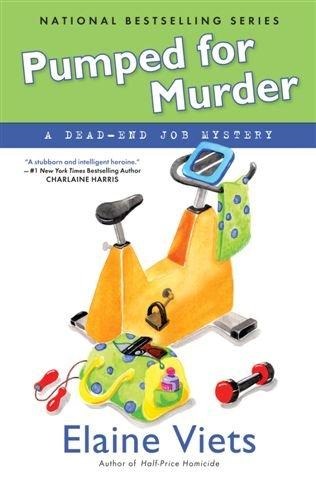
   Pumped_for_Murder My first trailer, for “Pumped for Murder,” a Dead-End Job mystery about extreme body building, was  nearly two minutes long: 1:58. http://www.elaineviets.com/new/misc/trailers.asp
Kelly had to really search to find photos of women body builders, but she got some doozies.
    Then mystery author James Swain told me that book trailers don’t have to be so long. He recommended short pitches to get the message across. He’s right. Here are the short trailers for “Final Sail,” set aboard a yacht: http://www.elaineviets.com/new/misc/trailers.asp

FinalSail_approved[1]
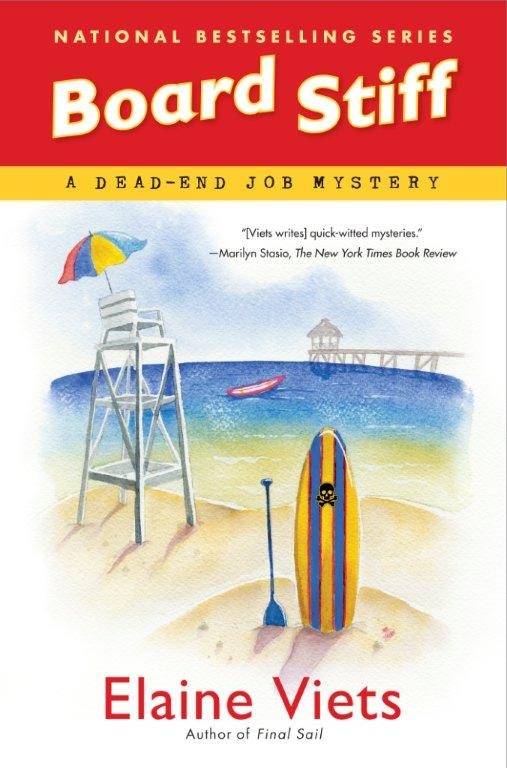
    And “Board Stiff,” a paddleboarding mystery. http://www.elaineviets.com/new/misc/trailers.asp

BoardStiff

Thankfully, there’s no video of me taking standup paddleboard lessons.
    I have a show on Radio Ear Network, so I narrated my videos.  I also assembled a focus group of writers and friends to look at the rough cuts. That’s essential. Sometimes, I got so wrapped up in the video, I lost track of the story.
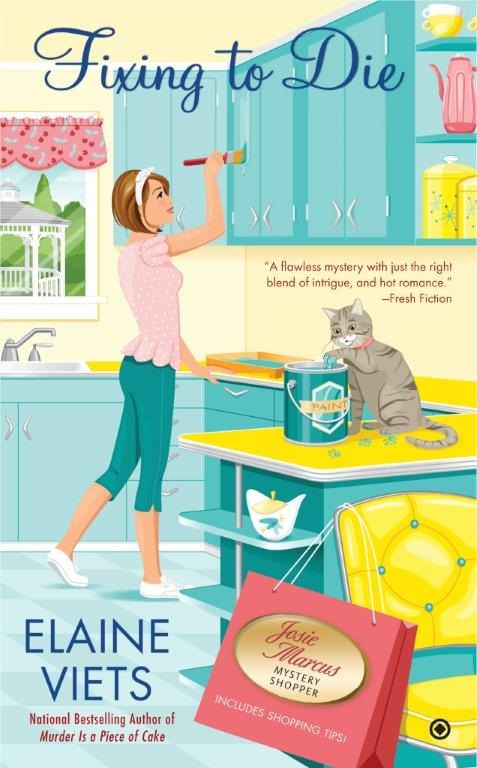
FixingToDie 

My new trailer is for “Fixing to Die,” my November Josie Marcus Mystery Shopper mystery. This short trailer was different from the Dead-End Job mysteries, which are set in anything-goes South Florida. Josie is a St. Louis single mom who’s newly married and renovating her first house. The trailer and the music needed a sitcom feel. http://www.youtube.com/watch?v=y7B8_GR0WIo&feature=youtu.be
    Six months worth of work and seventy thousand words reduced to 57 seconds: That’s the art and the goal of the book trailer.

The Old College Try

By Mark Alpert

Monday’s the first day of school in New York, and both my kids are nervous. My son is starting high school and my daughter’s going into seventh grade. They’re worried about all the usual things — making new friends, dealing with new teachers, resuming the nightly struggle with homework. (Frankly, I’m worried about that too. I hate cracking the homework whip.)

I try to empathize with my kids by telling them how nervous I got on my first day of college. I remember it so clearly, the sick feeling in my stomach as I drove with my parents down Route 1 in New Jersey and saw the Gothic spires of Princeton on the other side of Lake Carnegie. But that feeling vanished as soon as I met the other kids in my dorm. By dinnertime I was laughing my ass off. (And I hadn’t even drunk my first beer yet.) College turned out to be the best four years of my life. Well, at least the most amusing four years.

And those old college ties can be very useful for a novelist. Over the decades since graduation I’ve stayed in touch with my thesis adviser, Professor Richard Gott of Princeton’s astrophysics department. Dr. Gott is one of the world’s leading authorities on time travel. In his book, Time Travel in Einstein’s Universe, Gott describes how a spaceship could travel back in time by maneuvering around a pair of rapidly moving cosmic strings (infinitely long strands of high-density material left over from the Big Bang). He’s a brilliant, fascinating man, so when I was writing my first novel — a science thriller titled Final Theory — I decided to add a fictional version of Dr. Gott to the cast of characters. And when I finished the first draft I asked my old prof to look over the manuscript and tell me what he thought of it.

His first reaction: “Well, I recognized me.” He also recognized some of the other characters who were based on real scientists. Better yet, he fact-checked the manuscript, pointing out a multitude of scientific errors. If not for his help, I would’ve come off like a real dunce.

I also reached out to Princeton’s alumni magazine, which gave the novel a nice review. The book got some additional exposure when I wrote a cover story for the magazine about the latest advances in cosmology. And whenever I have a new book coming out, I make sure to send an advance copy to the magazine’s editor.

In a world of limited attention spans, this kind of resource is invaluable. Making the connections sometimes requires a bit of work, but it’s worth it. Although I attended Columbia for grad school, until recently I hadn’t made much of an effort to maintain ties with the place. But now I’ve signed up to participate in an alumni book fair that’ll be held at the Columbia campus on Saturday, October 12th, from 11 am to 5 pm. So if you happen to be in New York that weekend, drop by the alma mater and say hello!

Don’t We Have Enough Books Already?

By Boyd Morrison

A couple of years ago, as part of Google’s effort to catalog every single book ever written, the company tried to figure out how many books that would encompass. After surveying the list of books in the Library of Congress, Worldcat, and numerous other book databases, they came up with a figure: 129,864,880.

How they could be so exact when new books are released every single day is a puzzle to me, so let’s just round up to 130 million books. And since that was in 2010, the number is now too low. Every year about 2.2 million books are published worldwide. So that’s about 135 million total in the world, with six thousand more published every day. You can even find a real-time counter here.

I don’t know about your reading speed, but I can read about 50 books a year. If I kept that average up for my entire adult life, that’s about three thousand books in an eighty-year lifetime (maybe upping it to four thousand if I have a lot of spare time in retirement).

I think you can see that four thousand books is somewhat less than 135 million. It would take me over three hundred lifetimes just to read one percent of the books in the world. Even the contents of a typical Barnes and Noble would be too much. And that’s not including the more than 88 million additional books that will be written before I die.

Which begs the question: why do we need more books?

I can see why new nonfiction makes sense. The world changes all the time, and nonfiction is a way we try to understand our world. But fiction accounts for about thirty percent of books, or approximately forty million volumes. Isn’t there enough fiction already?

Of course, as a novelist myself I would say no, but why? What new stories could be written that haven’t been told a hundred times before?

It’s been said that there are only seven or twelve or twenty basic plots out there, depending on who you ask. Because a story is much more than just plot, it’s the virtually infinite diversity enabled by a complex language and the passage of time that makes new stories possible. A detective story told in my present will have similarities to ones from Arthur Conan Doyle’s present, but the time elapsed between then and now has made new stories different enough that they provide unique takes on crime solving. In addition contemporary stories help us understand the world we now live in, whereas older stories show us where we’ve come from.

Being a writer, I constantly ask myself if what I’m coming up with is unique. If the answer is no, there’s no point in writing it. However, I haven’t read every book out there, so it may be similar to something that’s been written before, but as long as it’s unique to me, I’ll keep going.

Most new stories are modest variations on tales told previously, maybe told better. But occasionally we’ll find that ground-breaking plot or character or style that’s never been seen before, and we’ll fall in love with the discovery process of reading all over again.

That’s what will keep us writing and reading forever, no matter how many stories have already been told.

Why do you think we need more fiction?

Going Places

By Mark Alpert

I’m going to a wedding in Vermont this weekend. I know the state fairly well; my first job (almost thirty years ago!) was at a newspaper whose coverage area straddled the border between New Hampshire and Vermont. I went back and forth between Claremont, New Hampshire, and Springfield, Vermont, almost every day, and at night I often ventured to a bar called Bentley’s in Woodstock and a place in Proctorsville whose name I can’t remember. (The Station? Maybe that was it. I do remember that last call was at 12:30 am, which seemed ridiculously early.) I’ve skied at Killington, Okemo, Mount Snow and Stratton, and I went to the state fair in Rutland and the inaugural ball of former governor Madeline Kunin. But the wedding this weekend will take place in the fabulously picturesque northeastern corner of Vermont, which is so different from the rest of the state that it’s called the Northeast Kingdom. I’ve never been there, so this is going to be a real treat.

And I’ll be checking out the place as a possible setting for future novels. I’m always doing that. I don’t feel comfortable writing about a place unless I’ve been there.

In my upcoming novel The Furies (to be published in April, right after the paperback of Extinction comes out) I decided to set a gunfight in Bushwick, a neighborhood in Brooklyn I’m not so familiar with. I wanted to put the scene in a neighborhood that was gentrifying but still kind of dicey, and that’s what everyone says about Bushwick. But I was feeling a little uneasy about the choice, so I decided to take a stroll down Bushwick Avenue the other day. I started at the gentrifying western edge of the neighborhood, and I did indeed see many hipsters and artist types hanging out at newly renovated cafes carved from the ground floors of former warehouses. And as I walked a couple of miles east, the hipster percentage gradually decreased and I started to see abandoned buildings and lots of graffiti, and I definitely got the sense, “Yeah, this is dicey.” On the plus side, I felt a lot better about the choice of neighborhood for my book, but on the minus side I began to worry about wandering into a real gunfight. So I cut the expedition short and found a great little deli and bought a bottle of Jarritos fruit-punch soda. It’s delicious stuff, incredibly sweet. Then I climbed up the stairs to the elevated track of the J subway line and headed back to Manhattan.