Things Left Behind Suggest Stories

imageI’ve been on the road for the past two weeks, helping family members get organized to downsize and move to a new home. Among other things, I spent the better part of two days rummaging around my dad’s attic in Vermont. My job was to determine which items should be given away, and which should be kept within the family.

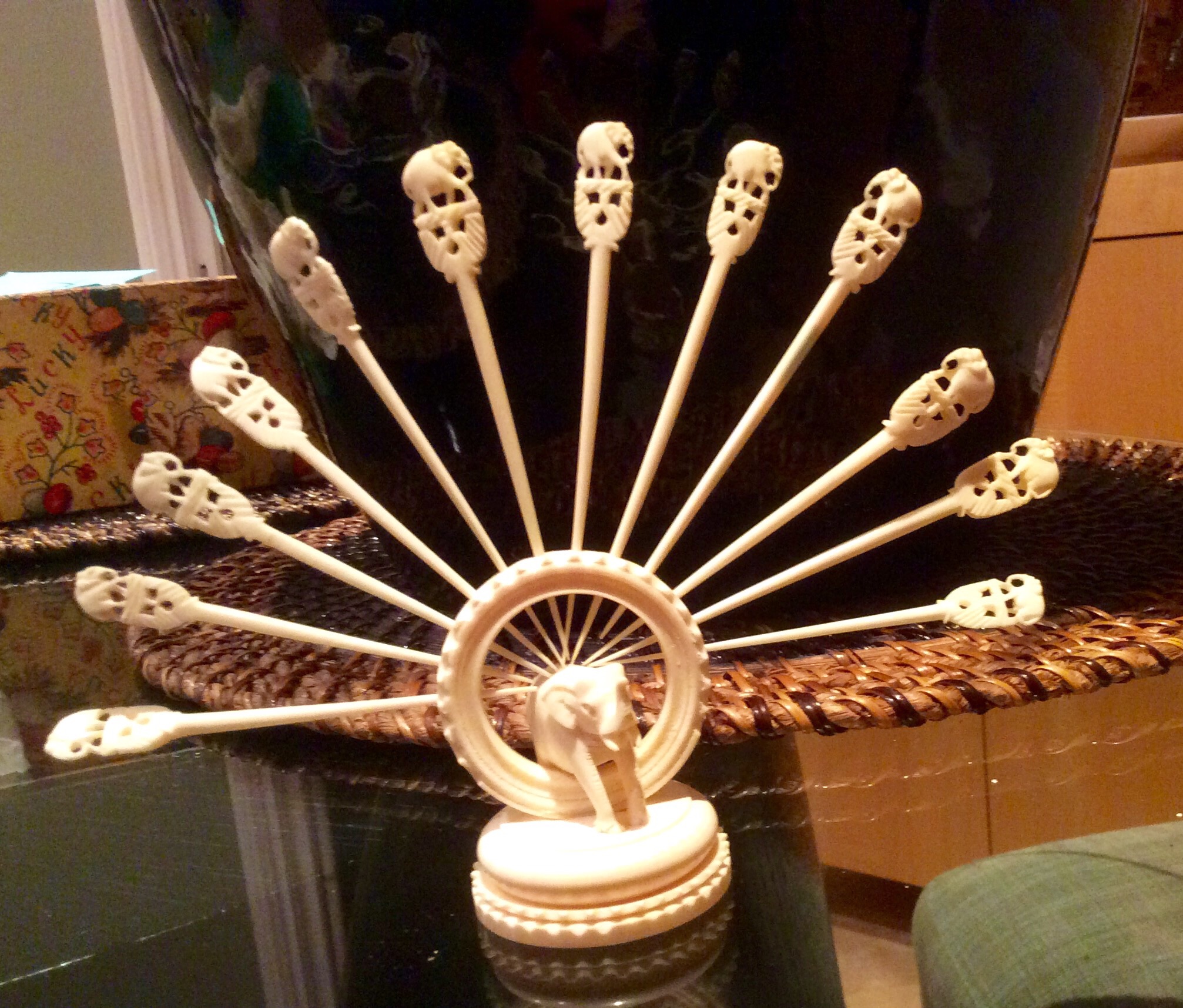
This was no easy task. My father has alimageways been an avid collector and Saver of Things. Walking through his farmhouse in Vermont is like being in a very homey museum or antiques shop. There’s the oil lamp collection, the vintage China sets, the scientific instruments, and the cannons (yes, cannons), for starters. I was really trying to help organize the process, but I kept getting distracted. For example, I came across a collection of silver spoons, the kind travelers buy when they’re visiting a new place. As soon as I found some spoons from the 1915 San Francisco Exposition, I was hooked. I then had to try to recreate that long-ago trip. And then I polished the spoons. There was a box of trinkets from a trip to Japan in the 1950’s, a set of antique toothpick holders from India, and a Victorian portable writing desk. Everything I saw suggested some interesting story. Who wrote on that desk? What lady kept her calling cards in the delicately carved ivory case? What ancestor used that Confederate sword in battle?

In the end, I couldn’t decide to part with any significant portion of my dad’s collection. So I’m renting a storage place to store it all, which I guess makes me the family’s official new Saver of Things. But if I’m ever in need of a story idea, I’ll know where to go for inspiration.

Has a family object ever inspired you to write a story? Tell us about it!

Accountability

Unknown-1I had an immensely frustrating week this week, basically having to put all my writing (and life) aside to get a volunteer project completed at my sons’ school simply because other people dropped the ball. The experience opened my eyes to an issue that vexes many people doing volunteer work – why is is that so many people feel they have no accountability? I often get the feeling that people view my writing in a similar way- to them it seems a fantasy life involving gazing out of windows, searching for inspiration in rainbows, and jotting down a few beautiful turns of phrase on a whim now and again. They don’t seem to realize that being a writer is all about accountability – to yourself, your agent, your editor as well as your readers. Unpublished and published writers alike know that 90% of the battle is showing up, time and time again and again (I call it putting on the bum glue), to get the writing done. It’s about setting goals or deadlines and making sure you meet them – otherwise a project can (and probably will) languish on the computer or in the drawer for years.

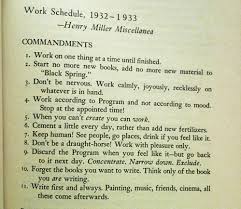
Recently, someone on Facebook posted a copy of Henry Miller’s work schedule ‘commandments’ for 1932-33 – I’ve copied it to this post below:Unknown

Miller had some great strategies which I need to remind myself of more often than I care to admit. I particularly like the two: ‘Work on one thing at a time until finished’ and ‘Forget the books you want to write. Think only of the book you are writing’. Who amongst us hasn’t started a new project only to fear, just a few weeks into it, that they really should be writing at least a dozen other projects instead? I always get my best ideas for other books as soon as I start writing one!

The one, however, that I was trying to really stick to was Miller’s commandment: “Write first and always. Painting, music, friends, cinema, all these come afterwards”. A few weeks ago, I had told my friends how I felt I really needed to start heeding this (I called it starting my era of ‘no’ – as I was spending way too much time getting sucked into other projects and activities that took me away from my writing). Part of my frustration this week, was that I could not hold to this in any shape or form. Despite communicating a deadline to my fellow volunteers (with summer looming I have to finish my draft WIP before the boys go on summer break) their lack of accountability meant I had to drop everything to get the  job done:(

But thankfully, it’s the start of a new week and I have a renewed commitment to follow Henry Miller’s ‘commandments’ (and get over myself in the process:)) So, TKZers how do you establish a maintain your own ‘accountability’ to your writing? I am sticking to my original deadline and trying to mentally readjustment my frustration to meet it despite the week’s delay. What about you, how do you manage putting the ‘writing first’? Is it just me, or do people just seem to feel less accountable these days?

You Might Use This When You Write Your Next Book

I love flash drives.  I collect them, actually. We have at least one of each gigabyte size currently available at casa de Hartlaub, and in a couple of different shapes as well. Late at night, when the rest of the house is asleep, I tiptoe downstairs and play 24, pretending I’m Jack Bauer, moving documents and photos and music, oh my, from one computer to another and back again and doing it quickly, because, y’ know, “we’re running out of time!” Yes, I love flash drives, particularly the ones that come in shapes. If technology stopped right now with flash drives, I’d be happy.

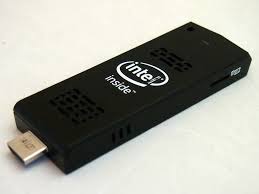
Technology of course isn’t stopping. I just this morning learned of something — a couple of something’s, really — that made a shiver run up (or maybe down) my leg. You will be able in less than a month to buy something called an “Intel Compute Stick.”

intel compute stick

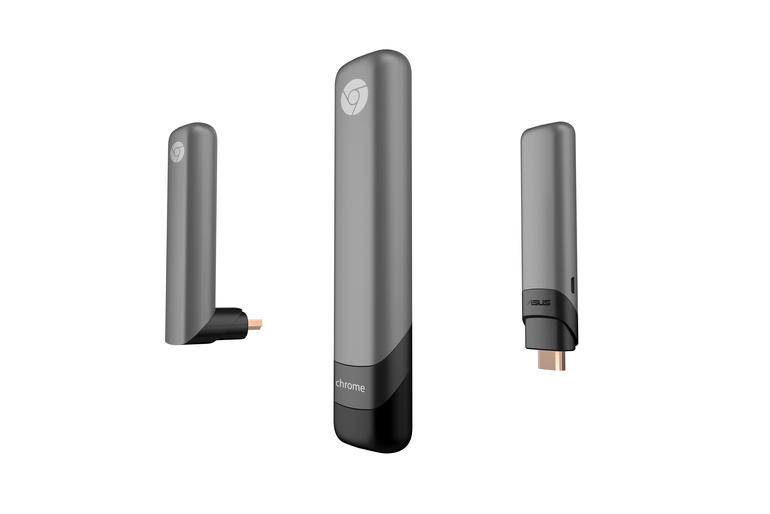
It is a computer which is just a bit larger than a flash drive. Yes, I said a computer: not just a hard drive, but a computer. It will have an HDMI connector so that you can connect it to your television monitor (or that older computer monitor that you keep in the spare bedroom where you stash your brother-in-law when he turns up, unannounced) and a Bluetooth connection for a keyboard. The Stick will come in Windows and Ubuntu versions and will run between $100 and $150, and watch for that price range to drop quickly. That’s not the end however:

.asus-chromebit

Asus is coming out with something called the Chromebit this summer (which will — can you guess? — run Chrome). it is also a computer and it will be had for under $100.00 as well. A comparison between the two computer-on-a-stick models can be had in an excellent article by Jamie Lendino running on ExtremeTech and which you can find here.

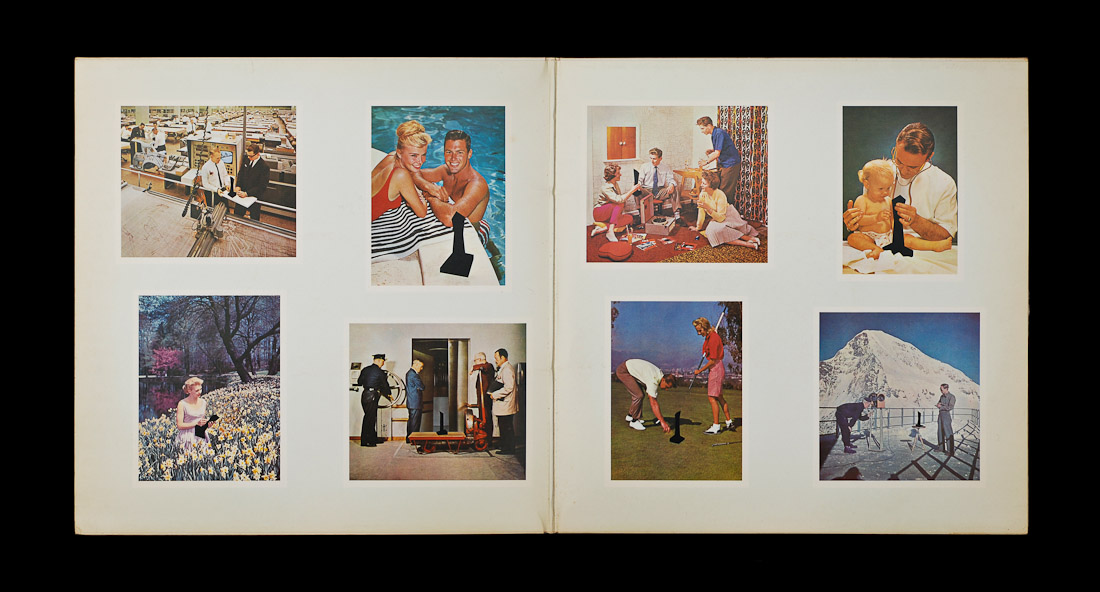
I’m going to go way out on the limb of the tallest tree of the forest and predict that these little innovations — computers that you can carry on your keychain — will change everything again. There will need to be a couple of innovations in the fields of monitors and keyboards (maybe those virtual tabletop models that keep popping up in the James Bond movies and, uh, 24) but this innovation put a computer in the hand — literally — of every school kid in the country for one-sixth the cost of an iPhone. And what does it mean for me and you? More portability.  More access.  More productivity. Things that are beyond my imagination.  It reminds me of the images that graced the cover and gatefold of the Led Zeppelin album Presence, which was created by a graphic design group named Hipgnosis. Those guys knew what was coming, back in the 1970s. They just didn’t think small enough:

presence led zeppelin

Check all of this out, if you are so inclined. What do you think? Can you use this? If so, how? Or do you think it will be a dud, for you and for everyone?


Libraries and Las Vegas

By Elaine Viets

CheckedOut_FC

Libraries are like Las Vegas.
Seriously.
The bookies may look different, but the attitude is the same: What happens at the library, stays there.
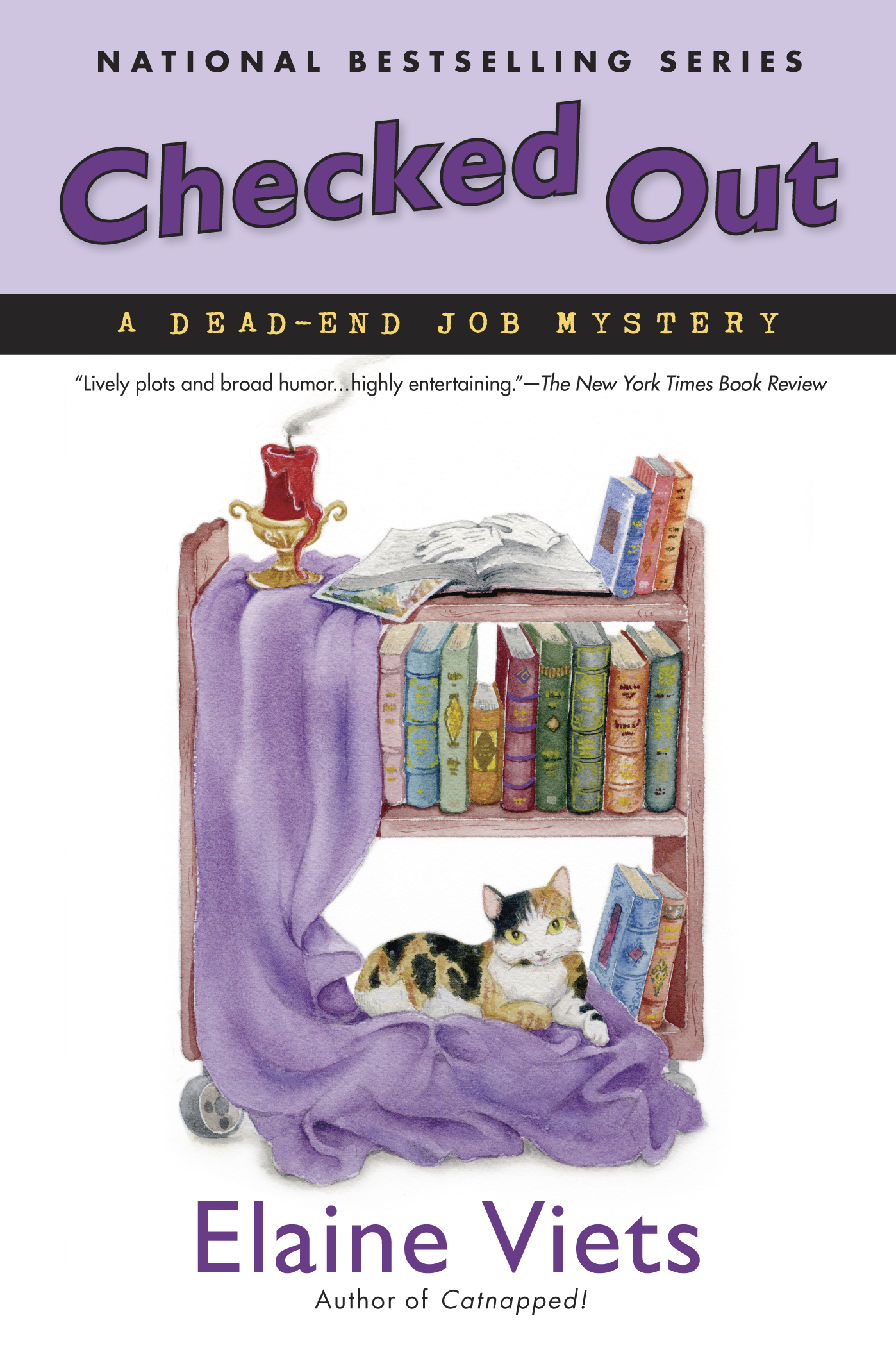
In Checked Out, my 14th Dead-End Job Mystery, private eye Helen Hawthorne’s search for a missing million dollars hidden in a South Florida library leads to murder. Meanwhile, her private eye husband and partner, Phil, is booked to broil in the sun while he hunts for a ruby necklace stolen at a scandalous party.
I researched Checked Out by volunteering at my local library. That’s where I learned that libraries don’t blab about their patrons.
Helen found this out when she was snooping through the browser histories in the library’s computers. Alexa, the library director, caught her. Here’s the scene:

 “Helen!” Alexa said.
 Helen jumped. She didn’t hear Alexa enter the room.
  “Please tell me you aren’t violating our patrons’ privacy by reading their browsing history,” Alexa said.
 “Uh,” Helen said.
 “I’ll excuse you this time, since you didn’t know,” Alexa said. “But we don’t release information on what our patrons check out. We don’t tell anyone their reference questions. Actually, we don’t keep records on those, though some of our librarians keep lists of unusual questions.
 “We also consider database searches, interlibrary loans, any materials or equipment they use, even library fines and lost books, private information. Even law enforcement agencies can’t have this information unless they get a subpoena.
 “Now, are we clear on this policy?” 
 “Yes,” Helen said. “A library is like Las Vegas. What happens here, stays here.”
 Alexa looked a little startled, then said, “Yes, that’s correct. Unless a patron breaks the law in the library, then we call the police.”

This is good news for mystery writers. It means if our editor is found with a knife in her heart after she butchered our novel, the police can’t check the library computer where we researched “How to Stab Someone and Get Away With It” without a subpoena. And by that time, they’ll have caught the real killer.
I thought the libraries and Las Vegas line had promo possibilities: Both librarians and patrons would appreciate it. I asked Kelly Nichols, one-half of the talented PJ Parrish writing team, to make me a meme. (Which rhymes with “theme.” I found that on the Internet, so I know it’s true.)
VietsMeme12x18 Now I have this free downloadable poster on my Website, www.elaineviets.com
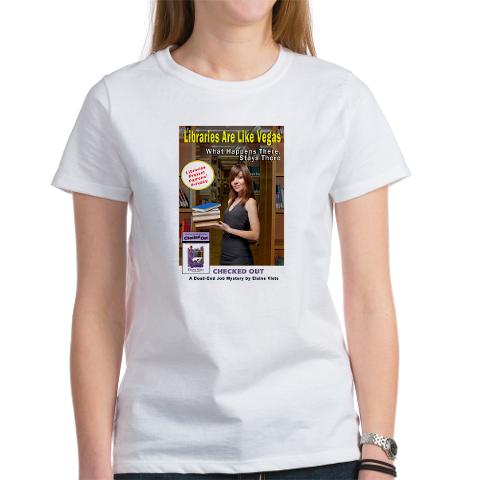
But I wanted more. I also have Elaine Viets Merchandise, and my Webmaster made this T-shirt.T-shirt
Take my meme to heart, library lovers. Better yet, wear it over your heart.
***********************************************************************************
 Check out the freebies and good offers at www.elaineviets.com:
 (1) Download the Libraries and Las Vegas poster on the Home Page.
(2) Buy the T-shirt on the  Merchandise Page.
(3) Win a free hardcover Checked Out by clicking Contests at www.elaineviets.com.


A Plea for…Unhappily Ever After

nv-3

I see the novel ending with an open door. — Michael Ondaatje

By PJ Parrish

I just finished reading a terrific book. And I was going to blog this week about how much I liked it and why I thought it works on all levels – complex characters, a delicious plot with well executed twists, and a setting so well rendered that I felt I had been parachuted in.

But then last night, I got to the ending. It was so…tidy. After three hundred pages of gloriously messy narrative, the author chose to tie up all the plot threads into a pretty pink bow. It just didn’t work for me. Why? Because it deprived me of thinking for myself. It slammed the door on the possibilities I was creating in my head for her characters. It didn’t leave my imagination anywhere to go. And thus, it lost its power.

If you haven’t yet guessed, I love ambiguous endings. I love that Rhett tells Scarlett off and walks away into the fog. I loved that we don’t really know what happens to Offred in Margaret Atwood’s The Handmaiden’s Tale, when she says, “Whether this is my end or a new beginning I have no way of knowing: I have given myself over into the hands of strangers, because it can’t be helped.” And yeah, I even sorta kinda maybe liked the ending to Gone Girl.

Four of my favorite movies are Now Voyager, The Graduate, Lost in Translation and Cinema Paradiso. Will Jerry continue to light two cigarettes for himself and Charlotte? Do Ben and Elaine stay together? What did Bob whisper to Charlotte at the end and did they go back to their awful relationships? Will the adult Toto ever believe in love again?
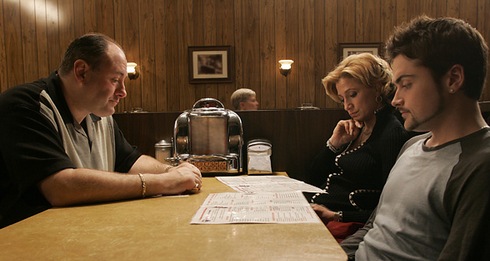
sopranos2

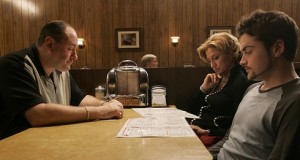
And about that last scene in The Sopranos? You know, where the family’s sitting in a diner as Journey’s “Don’t Stop Believin'” plays, the tension builds and then suddenly the screen goes dark and silent? Loved it! The series creator David Chase was later quoted as saying, “I have no interest in explaining, defending, reinterpreting, or adding to what is there. People get the impression that you’re trying to (mess) with them, and it’s not true. You’re trying to entertain them. Anybody who wants to watch it, it’s all there.”

Chase might well have added, “it’s all there…in your head.” Because for me, that is where the power of great storytelling lies. For me, even the best constructed novels can fail because almost always I can sense the author moving toward that inevitable ending, starting to close the circle and make sense of it all for me instead of letting me do it.

Now we crime dogs don’t have a lot of latitude when it comes to ambiguity. The conventions of our genre dictate that there is a crime to be solved and that usually implies something to be resolved. Readers are drawn to mysteries and thrillers because the stories usually attempt to impose order on chaos, to make sense out of the nonsensical, to have a hero triumph and make the world right again. I think readers of most kinds of fiction –- yes, even literary – want their novels to make sense. And while they might be willing to let things slide for a while, they usually crave a gratifying conclusion. The reason is easy to understand: Our real lives are messy, confusing, full of dead ends and false starts, horny toads instead of Christian Grey princes, and let’s face it, we all don’t live happily ever after. So when we turn to crime fiction and romance, we are looking for a satisfying conclusion.

But what is “satisfying?” Isn’t there room in there for shadows and crooked lines? Can’t we have some ambiguity?

Some crime writers try to allow for this, but readers sometimes get testy about it. I have two books in my series that have open-ended conclusions. One (A Thousand Bones) involves the case itself and I got emails from readers taking me to task for not “solving” the case in a conventional manner. But the crime was so awful and so personal for my protag, for her to do anything else would have been too…tidy. The other time I left an ending open was in our latest Louis Kincaid book, Heart of Ice, and it involves our hero’s personal life. My editor at the time wanted us to tell readers what exactly was going to happen, but we fought for the open ending. I trust the readers to figure it out.

Tana French, in her Edgar winning debut In the Woods, had similar reaction to her ending. The plot involves two separate cases, decades apart, that are playing on the psyche of the detective. He solves the newer one but the older one, that truly eats at his soul, remains unsolved. French actually cautions us this is going to be outcome in the book’s opening lines:

“What I warn you to remember is that I am a detective. Our relationship with the truth is fundamental, but cracked, refracting confusingly like fragmented glass. It is the core of our careers, the endgame of every move we make, and we pursue it with strategies painstakingly constructed of lies … and every variation on deception. The truth is the most desirable woman in the world and we are the most jealous lovers, reflexively denying anyone else the slightest glimpse of her. We betray her routinely … This is my job … What I am telling you, before you begin my story, is this–two things: I crave truth. And I lie.”

I was watching The French Lieutenant’s Woman on TMC the other night. I’m not crazy about the movie, but it got me thinking about the book, which I had to read eons ago as a literature major. I remember being baffled by it, because right in the middle of Sarah and Charles’s doomed love affair, a narrator appears out of nowhere and tells us we now will have three endings and even flips a coin to decide what order we will get them.

Now John Fowles loved bending narrative rules and was famous for his ambiguous endings. (Maybe because he studied the Existentialists at Oxford?) The Magus ends with the hero’s future an open puzzle that readers are challenged to solve for themselves.

Fowles once told an interviewer how he had received a sweet letter from a reader who wanted to believe that Nicholas, the protag of The Magus, was reunited with his girlfriend at the end of the book — a point Fowles had deliberately left ambiguous.

“Yes, of course they were,” Mr. Fowles told the woman.

Fowles got a second letter the same day from an irate reader taking issue with the ending and demanded, “Why can’t you say what you mean, and for God’s sake, what happened in the end?”

Fowles wrote back, “They never saw each other again.”

Now we mere mortals probably have to be a bit more careful when we use ambiguity. It doesn’t always work. At best, it conveys pretension and at worst, it just confuses the reader and pisses him off. Which brings me all the way back to that book I finished the other night. It was such a letdown to be spoon-fed that ending after such brilliance. Why was the writer compelled to tie the ends up so neatly?

E.M. Forster, in his splendid Aspect of the Novel asks the same question: “Why is this necessary? Why is there not a convention which allows a novelist to stop as soon as he feels muddled or bored? Alas, he has to round things off, and usually the characters go dead while he is at work.”

Okay, one last quote before I go, but it’s a beaut. And it comes from a fictional person, Stephen Maturin. He is a character in a series of novels by Patrick O’Brien, who shows up as the ship’s doctor in the fabulous move, Master and Commander.

“The conventional ending, with virtue rewarded and loose ends tied up, is often sadly chilling; and its platitude and falsity tend to infect what has gone before, however excellent. Many books would be far better without their last chapter: or at least with no more than a brief, cool, unemotional statement of the outcome.”

Oh yes.

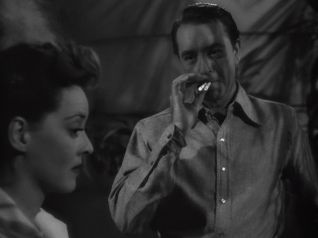
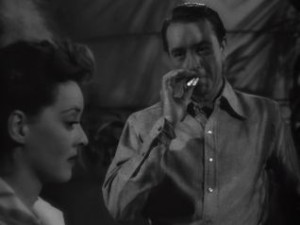
Give me a book that makes sense and is satisfying. But don’t wind things up so tightly that you squeeze the life out of it. Let me think, when the story ends, that the characters are like Bette Davis and Paul Henreid, on a big ship, setting sail on some grand voyage, going…somewhere. And that I am going with them.


How to Show What Your Characters Think

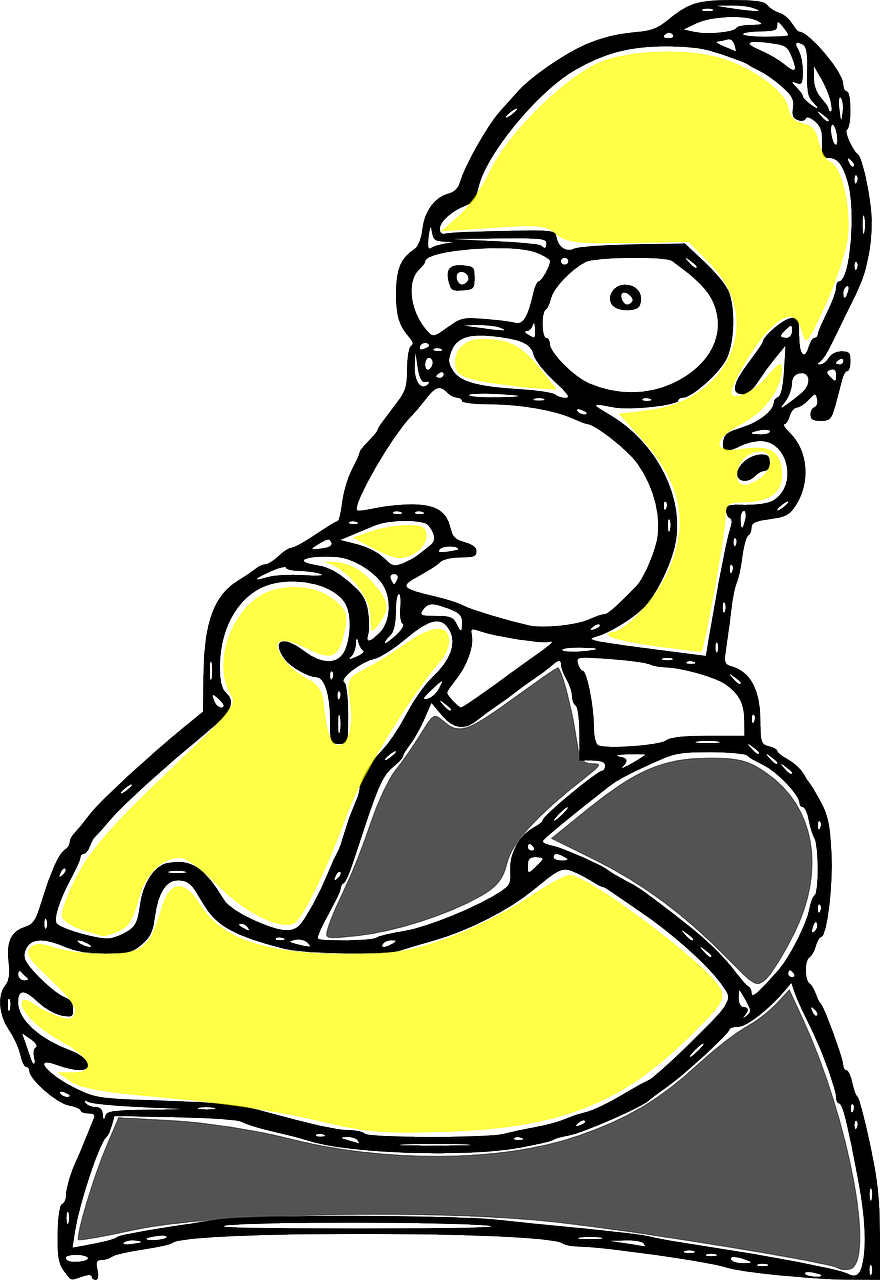
homer-simpsons-155238_1280I love hanging out with writers. Who else can you talk to about such important matters as the possessive apostrophe, or whether to use semi-colons in fiction? (On this last one, I usually get pugnacious and am asked to leave the room).

So last week I’m at a conference and some colleagues and I are sitting around the breakfast table on morning when the subject of character thoughts comes up.

The short version of the issue is this: Is it unfashionable these days to use italics to show a character thinking?

This is the sort of question readers don’t care about, but which affects them. We as writers are always looking for the best ways to keep readers inside the “fictive dream.”

Traditionally, there have been two ways to show a character thinking. You either do it with italicized lines, or unitalicized with the added attribution he thought or she thought. Thus, you might have the following:

John walked into the room and saw Mary by the window. I wonder what she’s doing here, he thought. [Note how the thought itself is in a first person voice]

John walked into the room and saw Mary by the window. What was she doing here, he thought. [Note how the thought is now in a third person voice]

John walked into the room and saw Mary by the window. I wonder what she’s doing here?

You’ll sometimes hear talk about “deep POV,” which means we are so ensconced inside the viewpoint character’s head that italics or attributions are not necessary. I’m not a stickler on this. I don’t mind he thought or she thought on occasion, and don’t think readers even notice. But it’s worth, ahem, thinking about. If you’ve got a strong POV established, you can dispense with attributions and render the thought in a third- or first-person way:

She opened the door. Saw his body. Bullet holes all over him.
He deserved it, every bit of it.

She opened the door. Saw his body. Bullet holes all over him.
You deserve it, Frank, every bit of it.

On the matter of italics, it’s become something of a meme among writers and writing groups that italics are out of date. I think that’s mainly because italics can be abused. I’ve seen it done this way, and it always rubs me the wrong way:

  Rip looked at her with those cobalt blue eyes.
  Kiss me, kiss me now, oh please, I need to be kissed.
  “I like you, Dakota, I really do,” Rip said.
  If you like me, go for it, my lips are ready for yours.
  “Do you like me too?” Rip asked.
  Like you! Can’t you see it in my eyes? No, maybe he can’t, because my heart has been broken so much it has grown calluses and become a hard, unnatural thing. Oh, break my heart, please break, so that you melt and warm my eyes for him, so he will take me in his arms and give me the love I have been yearning for.
  “Yes,” Dakota said. “I like you.”

Now, I don’t mind a short, italicized thought when the emotions are running high. It’s sometimes the best way to render the emotional impact on a character without stopping the flow of the action. Thus:

   He shoved her to the ground. Searing pain ran up her elbow and exploded at the base of her neck. She wanted to call for help, but her mouth wouldn’t work. His laugh filled the void as he took off his mask.
   John!
Her former lover had…

Or:

   “I hope you’re happy,” Max said.
“Oh I am,” said Constance. “So, so happy. Especially since you had the liposuction.”
He laughed then. And it chilled her to the bone.
“Now,” he said, “we are going to make love.”
   Fat chance.

Sometimes, for stylistic reasons, you may want to try second person POV thoughts. Yes, that’s what I said. It works if the emotion is running high.

   He walked over to the window and looked at the street. A homeless guy was preaching to an invisible choir.
Well, this isn’t exactly what you wanted, is it? You wanted fame and fortune, and you got a cheap room in a crummy hotel, and you know you deserve it. Welcome to reality, pal. You done good, real good.

To sum up:

  1. Use italicized thoughts sparingly, if at all. Save them for short, intense thoughts.
  1. You don’t need italics, or he thought/she thought if the POV is deeply established.
  1. If the POV is deep, you don’t even need he thought/she thought. Use them on occasion if you wish, but also analyze your scene to see if you might do better without them.

So those are my thoughts on thoughts. What do you think about my thinking?


What Did You do Today, Writers? Tell Us About It

Jordan Dane

@JordanDane

iStock_000006470200Medium (2)  CROPPED

Purchased from IStock by Jordan Dane

Lately I’ve had a lot of personal things happening that have been a distraction from my writing. Some are good distractions, while others are more of a black hole, as if I’m walking in a fog some days.

Today I will be at a home inspection. Yes, I am buying a new home. Home buying can be a scary prospect, as well as a spark of hope for a new beginning. It can be especially scary when it comes to looking at mortgages, I was lucky that my friend told me about something like Money Expert so at least I don’t have to worry about whether or not I’m getting the right mortgage. But I have been thinking about other things. I haven’t been able to sleep much lately with thoughts of “nesting” in my head. I’m not one to second guess my decisions, but I can see how taking this step could spiral a person into self-doubt.

Buying my home might represent leaving the past behind or it could be taking a metaphorical leap off a cliff that I may or may not be ready for. It could mean putting down roots that I wasn’t sure I could do on my own, or it might be a way of setting a firmer foundation for the rest of my life, or my new home can be a gathering place for my friends and family (meaning that I am opening my life to others).

I’m buying what I hope will be my last home, a place where I can retire comfortably. Another thing on my list today is meeting with my parents. I’ll show them the house then take them for breakfast. A facet of this day’s adventure is that my folks are considering selling the family home and looking into their options going forward. They are still teaching me life lessons as they age and I may be showing them how to let go by my home adventure. I expect today will be life changing in a quiet meaningful way for the three of us.

So you see? As a writer, I can read into so many things. I can write this scenario any number of ways for a story. How much do I give a glimpse into my personal life if I were to thread this reality into a character of mine? That’s the fun part of writing for me. Is it for you? How much of your life experiences do you weave into your stories? Or do you purposefully stay away from anything too close?

Another aspect to this story could be that I’m buying a home from a previous tenant. Who were they? Is there a mystery that surrounds their life? What clues could they leave behind for me to find? This property has an amazing terraced garden. I can feel the love of the gardener in every rare plant grown with such care. It makes me want to plant my own contributions with as much thought and diligence, so that I can pass the love on to the next “gardener.” I have a plan to create a beautiful garden storage space when I thought “garden site sells timber storage” spot on.

The point to sharing this tidbit with my TKZ family is that it can be important to remember how even the mundane aspects of your life can hold a story. This is one thing I am doing today that can turn into a story in books ahead.

So I’ll give you a homework assignment. I’d like you to jot down what you did today, right down to what you ate for lunch and where you ate it. Then pick something from your list to share what might make a good story, similar to how my home inspection launched a range of emotions in me.

Go on, TKZers. Share your day with me.

What is Your Writer’s Personality?

head-607480_640(1)So I just took an online personality test offered by the The University of Cambridge, and now I’m trying to absorb a few puzzling facts about my personality. Based on the principles of psychometrics, the test measures a person’s personality profile on the classical “big five” personality traits (Extroversion, Emotionality, Openness, Agreeableness and Conscientiousness). The test also classifies one’s general personality “type”.

According to my test’s results, my personality is characterized mainly by Openness (52%), Extroversion (58%), and Neuroticism (52%), with Agreeableness lagging behind (34%). Conscientiousness came in a distant fifth (16%).

Wait, Neuroticism? Is that what the University of Cambridge meant by the “Emotionality” personality trait? Wasn’t that a label switch?

Also, according to this test, my MBTI (Myers-Briggs Type Indicator) personality type is an ISTP, which is a kind of personality that is usually found in engineers. That’s confusing, but I can’t say more about this finding because I lost the page with the results about that part of the test (which is probably a reflection of my low score on the Conscientiousness personality trait).

I don’t know how accurate this psychometrics stuff is, but I don’t think these results are problematic for a career in writing. In fact, I think writing is about the only thing I can do, given my personality. (I’d certainly never get very far as an engineer).

Why don’t you take the personality test, and share your results? They can’t be more embarrassing than mine.

http://tests.e-psychometrics.com/

7 Habits of Highly Successful Writers

atlas1Some time ago I came across an article about the success habits of wealthy individuals, based on a book by Tom Corley. As I scanned it, the habits seemed to me applicable to writers as well. The ones I know who’ve made it in this game—who’ve been published traditionally, or are making good dough as indies, or are doing a bit of both—they share these seven habits:

1. They are persistent.

The article states, “While we generally think of persistence as more of a personality trait, it’s certainly a habit that can be learned and practiced over time. When faced with adversity, wealthy individuals keep pushing through, knowing that success could be right around the corner.”

The successful writer never gives up. Or stops learning. The article found that 88% of the wealthy successes (in other words, not trust-fund babies) read at least 30 minutes every day in order to increase their knowledge. Are you doing the same, writer? I cannot think of a single week in the last 25 years where I have not read or studied something regarding the craft of writing.

2. They set attainable goals.

The article discusses the wrong kind of goals, such as:

“I want to become a recognized leader in my field.”

“I need to bring in more money in order to meet my financial obligations.”

“I want to take an expensive vacation with my family every year.”

The problem with these goals, of course, is that they aren’t specific, and they aren’t necessarily realistic. For instance, if I’m working for minimum wage, going on an expensive holiday probably isn’t in the cards for me this year.

True goals are those to which action may be applied. “I want to be a New York Times bestselling author” is not a goal, it’s a dream. You can’t push a button to make it happen. What you can do are the things that will make you a better writer. You can determine to spend 30 minutes a day studying craft, and an hour a week brainstorming projects. Most of all, you can determine the number of words you will write each week. These are things you can measure and control.

3. They find a mentor.

The article contends that 93% of wealthy individuals had a mentor who assisted them on their path to success.

Mentors can be personal or they can be in print. I consider Lawrence Block to be a mentor, even though he’s never personally coached me. Why? Because I religiously read his fiction column each month in Writer’s Digest and felt like he was counseling me each time. He had the ability to get into the writer’s mind, and certainly he did mine. The books I contribute on the craft I try to write the same way.

A good editor, of which there are many out there, can provide mentorship (usually for a fee, which is money well spent when the editor knows what he or she is doing). A good critique partner fits this role as well.

4. They are positive.

According to the article, wealthy individuals had a positive outlook on life, were upbeat and happy, and grateful for what they had. Some specific findings were as follows:

94% avoided gossiping
98% believed in limitless possibilities and opportunities
94% enjoyed their chosen career

Writers, too, need to be grateful that they have the ability to write. And grateful for the opportunity to publish. Further, don’t tear down fellow authors. Believe in your limitless choices. Nurture the love of writing that got you started in the first place.

5. They educate themselves.

The article found that 85% of the successful people read two or more books per month on an ongoing basis. This is especially important for writers, who need to read widely and not just fiction. All sorts of nonfiction helps to expand your horizons and understand humanity better.

What are you reading, besides fiction, these days?

6. They track their progress.

Corley found that wealthy individuals were meticulous about measuring how they’re doing:

67% kept up-to-date to-do lists
94% balanced their bank account each month
57% counted the calories they consumed
62% set goals and tracked whether or not they were on track to achieving them

Since 2001 I have kept track of my writing on a spreadsheet. I can tell you how many words I wrote, and on what projects, day by week by month by year.

I prioritize my projects and know each day which one I want to work on.

However, I don’t count my calories. I have determined that eating healthy food does not make you live longer, it only seems longer

7. They surround themselves with success-oriented people.

Corley writes, “Wealthy, successful people are very particular about who they associate with. Their goal is to develop relationships with other success-minded individuals. When they stumble onto someone who fits the bill, they then devote an enormous amount of their time and energy into building a strong relationship. They grow the relationship from a sapling into a redwood. Relationships are the currency of the wealthy and successful.”

His suggestion is to dedicate 30 minutes each day to nurturing such a relationship. This could mean being a sounding board, giving advice, or just generally being a helpful companion. As you build and nurture relationships, people likely to reciprocate and become trusted and valuable supporters.

Writers are mostly an encouraging lot. You can find places to hang out with them, starting here at TKZ. Join a local writers group, like an arm of Mystery Writers of America. Go to a good conference.

Systematically disassociate yourself from the sour pickles of life.

Have fun, write, assess, measure, study, correct—then have more fun, write, and never quit. That’s a formula for success.

Anything you’d like to add?

[NOTE: Today I am associating with a bunch of fellow writers at a conference near Santa Cruz, California. Yes, suffering for my art. I’ll try to pop in. Until then, talk amongst yourselves!]