80th Anniversary of Pearl Harbor

by Debbie Burke

@burke_writer

Arizona Memorial Pearl Harbor
Photo credit nps.gov

Today is December 7th, 2021, the 80th anniversary of the attack on Pearl Harbor that launched the US into World War II in 1941.

Few people are alive today who remember “a date which will live in infamy” (President Franklin Delano Roosevelt).

Fewer still are people who survived the attack that morning in Pearl Harbor. The last ones are in their late 90s to 100+ years.

The closest that we in 2021 can come to learning about that day are stories collected and recorded at this link.

December 7, 1941 was a pivotal date that changed the history of the entire world.

Our parents, grandparents, and great-grandparents could all tell you exactly where they were and what they were doing on that day.

Long before tattoos became a fashion statement, many young sailors had “Remember Pearl Harbor” permanently inked on their arms.
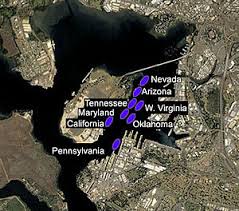
Battleship Row Pearl Harbor
Photo credit – US govt.

On December 7, 1941, my husband’s grandfather was serving on the USS Tennessee docked on Battleship Row. During the attack, his duty was to grab burning sailors who were being handed up to him from below decks. He then had to throw them over the side of the battleship, far enough out that they didn’t strike the anti-torpedo blister, in order to extinguish the flames consuming their clothes and bodies.
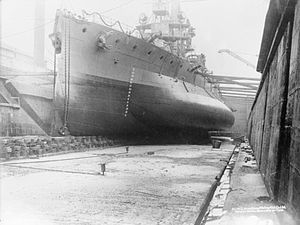
Anti-torpedo blister
Photo credit – Wikipedia


When the USS Arizona blew up, his back was toward the explosion. He was horribly burned but, after a year in the hospital, he returned to duty through the end of the war. His back was forever scarred like a topographic relief map.

About ten years ago at a gym, my husband was talking with an older man on an adjacent treadmill about World War II and specifically Pearl Harbor. A young man about 20 who overheard their conversation approached. He was a junior in college, polite, well-spoken, articulate, and appeared to be a curious, conscientious student.

He asked my husband, “Excuse me, sir, can you tell me what Pearl Harbor is?”

Apparently the “date which will live in infamy” was no longer taught in school.
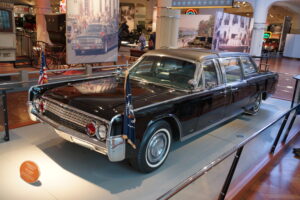
JFK Lincoln Continental – photo credit Wikimedia

November 22, 1963 was the defining date of infamy for my generation of Baby Boomers. We can all tell you exactly where we were and what we were doing when we learned the news that President John F. Kennedy had been assassinated.

Again, the world shifted on its axis and events that occurred after that date were forever stained by it.  

About five years ago, my husband and I were chatting with a young woman working her way through college as a server in a restaurant. We mentioned John F. Kennedy. She said, “Kennedy? Wasn’t he a president that was killed in a car crash?”

Apparently, my generation’s date in infamy is now a barely-remembered blip in history.

Two years from now will mark the 60th anniversary of JFK’s assassination. Oh my, that makes me feel old.

World Trade Center – photo credit Wikimedia CC BY-SA 2.0


September 11, 2001 again changed the entire world. Generations born after that date have never known air travel without the TSA, body scanners, pat-downs, luggage X-rays and searches.


2020 doesn’t have one specific date when the entire globe changed. But just the mention of “2020” is enough to provoke a sigh, a grimace, or an eye roll in every person of the age of cognizance who’s alive today.

2020 is part of our collective consciousness, as December 7, November 22, and September 11 were part of the collective consciousness of earlier generations.

Last week, a friend came to visit with her 18-month-old baby who was born in 2020. We were contemplating what Aubrey’s future might look like. Because of pandemic restrictions, she hadn’t encountered many people outside her close family and almost no one around her age.

Recently, they had gone to a playground where Aubrey saw other toddlers for the first time and reacted with amazement and curiosity. She approached a little boy and touched him.

The boy’s mother immediately swooped in and picked up the child, scolding, “We don’t touch.”

People born after December 7, 1941 never knew a world that wasn’t profoundly influenced by World War II. That was their frame of reference, their concept of “normal.”

Same for people born after November 22, 1963 and September 11, 2001. They never knew what the world was like before JFK’s assassination or before planes struck the World Trade Center and the Pentagon.

What will school be like for Aubrey in a few years? We don’t know. But, whatever the circumstances are, that will be “normal” to her because it’s the only frame of reference she knows.

The generation born in 2020 or later will never fully realize the world was once a different place.

Aubrey won’t know that parents once thought it was perfectly normal socialization for children to play, touch, push, hug, and watch each other’s reactions.

What does all this have to do with writing?

Nothing and everything.

As writers, we record the world we live in, or research, or make up. We also contrast our story worlds with other locales, other cultures, other periods in history, and even imaginary journeys into the future.

Throughout time, writers have chronicled the collective consciousness of different generations.

No matter the genre—crime, romance, history, fantasy, horror, nonfiction, etc.—we capture the zeitgeist, which Merriam-Webster defines that as “the general intellectual, moral, and cultural climate of an era.”

That’s an awesome, daunting responsibility.

~~~

Eighty years later, is Pearl Harbor relevant in today’s world?

A handful of remembrance ceremonies will be held today but, in a few more generations, there won’t even be ceremonies.

The date will fade into obscurity like April 14, 1865.

What happened on that date?

Back then, every American could probably tell you exactly where they were and what they were doing when they learned Abraham Lincoln had been shot that night and died the following morning.

Time marches forward. Younger generations replace older ones who have been the keepers of the memories. Old memories are forgotten and new ones take their places.

If future generations find our stories on the dusty shelves of cyberspace, they may smile or scoff at quaint, outdated references.

But I hope they will also recognize human truths we wrote about that transcend time.

Dates like December 7, 1941 are still worth remembering and worth writing about because of the people in Pearl Harbor who made history. 

~~~

Today is my last post in 2021 before TKZ goes on annual hiatus.

I’m grateful for your friendship and interest. Except for the written word, we probably wouldn’t have met. So glad we did!

Warmest holiday wishes to you and your loved ones.

~~~
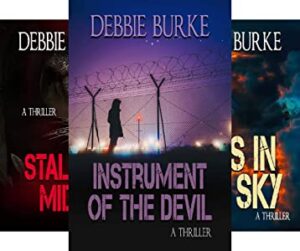
 

Special holiday prices for all Tawny Lindholm Thrillers with Passion through the end of the year. A great gift for your reading friends…or yourself!
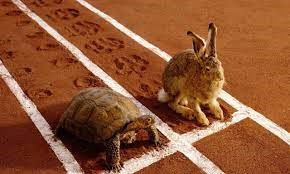

Festina Lente!

There are many familiar adages that refer to the need to be careful and diligent in our work.

“The race is not always to the swift.” – from Aesop’s Fable, The Hare and the Tortoise

“Whatever is worth doing at all, is worth doing well.” – Philip Stanhope, 4th Earl of Chesterfield

“There are no shortcuts to any place worth going.” – Beverly Sills

Here’s one you may not have heard of:

“Festina Lente.”

I encountered this saying a couple of years ago, and it captured my imagination. So much so that it’s written at the top of the whiteboard that sits on my desk so I see it every day as I’m working.

Festina lente is a Latin phrase that literally means “make haste slowly.” It’s an oxymoron, a contradiction in terms, that refers to the proper balance of speed and diligence in one’s chosen field. Too fast and you risk delivering a sloppy product. Too slow and you miss opportunity. Finding the right pace is the key to success.

The phrase has been used throughout history. One notable proponent was the Roman Emperor Augustus who used it to caution his military commanders against making rash decisions. The emperor apparently felt so strongly about it that he had coins minted with images that referred to the saying.

Writers will be interested in the Renaissance printer Aldus Manutius who adopted the phrase Festina lente and its symbol of a dolphin wrapped around an anchor for his publishing business. Interestingly, the dolphin / anchor symbol is currently used by Doubleday Books.

Manutius was a highly successful businessman who made significant contributions to the fields of printing and publishing. In addition to inventing the italic typeface, he produced the first small, portable books that scholars regard as the prototype of modern paperbacks.

So how does Festina lente apply to authors today?

Self-publishing has made it easy to publish without a quality gatekeeper, so the opportunity is there to rush an unpolished manuscript into production. On the other hand, it’s possible to overanalyze every word and phrase in an endless cycle of revision and never publish anything at all.

Each author has his or her own methodology from concept to production. Some are awesomely speedy in their work. Others (me, for example) are on the lente side of the equation. But in any case, we each build the finished product to our own specifications and on our own timeline.

So TKZers, how do you thread the needle between too fast and too slow? Do you have a word count quota to keep your pace up? What quality controls do you employ? How do you know when you’ve cleared the last hurdle and are ready to release the book into the wild?

* * *

“Slowly make haste, and without losing courage;
Twenty times redo your work;
Polish and re-polish endlessly,
And sometimes add, but often take away.”

— Nicolas Boileau-Despreaux

Festina Lente!

* * *

Nancy Drew meets Tom Sawyer in this new release, book three in the Watch series of cozy mysteries featuring Kathryn Frasier and Cece Goldman.

Mr. Tyme is dead, and strange, coded messages have been left in the chapel prayer box on the campus of Bellevue University. When Kathryn and Cece attempt to decipher the codes, they begin to suspect foul play. But things get dicey when a couple of misguided young girls get wind of the investigation and decide to find the killer on their own. It’s bedlam in Bellevue!

Getting Your Books Noticed

It is my pleasure this morning to introduce Patricia Bradley, one of the regular participants here at the Kill Zone community. During a recent discussion of marketing, her comments on use of social media and success with creating a following caught my eye. She has agreed to share her methods and experience with us. Please welcome Patricia with your comments and questions.


Getting Your Books Noticed

by Patricia Bradley

When Steve Hooley emailed and asked me if I was interested in writing a post for TKZ on how, as a traditionally published author, one goes about getting their books noticed, I replied, “YES!”

Can you tell I’m very impulsive and step into things before I think them through? Once it sunk in that I would be posting on The Kill Zone, nerves hit. You see, y’all are my heroes. Posting on this blog is a dream come true, but also very intimidating. It took me years before I even posted a comment.

So here we go: how to get noticed among the thousands of authors publishing today, and how to do it when you’re traditionally published and not in control of the numbers.

I have a wonderful publisher who invests advertising dollars in their authors and their books. They send my new releases out to about a hundred bloggers who review my book on their blogs then post reviews at places like Amazon, Goodreads, Bookbub, B&N…and my state’s very own Mississippi Magazine. They also buy advertising spots at conferences and provide swag for me to give away and probably a hundred other things I’m not aware of.

So, if my publisher does all that, what do I do? I promise you, there’s plenty left to do to get your name out there. Number one is to write the next book.

At the same time, you need to be active on Facebook, Twitter, and Instagram even though these social media outlets seem to change their algorithms daily, shrinking my readership. I am active in several groups that are geared to romantic suspense and connect/interact with my readers there.

One way to connect with your readers is to ask questions. My readers have named a few of my characters, towns, and even suggested titles for the books.

I’ve learned that videos get more attention on these sites than plain posts or even those with photos, so I’ve learned how to make trailers and all sorts of stuff on BookBrush. It’s like Canva on steroids for me. I can upload my covers and use them for all sorts of things, like the short videos and book trailers. I also make all the memes that appear at the beginning of my Tuesday and Friday blogs.

Speaking of blogs, I’ve had one since 2010, but in 2016, I found a theme for it. In 2015, I had less than a thousand visitors. Since then I’ve had over 193,000 visitors with 20,000 comments. I know some say that blogs don’t sell books, but that’s not why I have a blog. I use it to interact with my readers and to catch the attention of people who are checking me out.

I post twice a week on my blog. Some people post every day and some only once a month, but how often isn’t as important as being consistent. If you’ve told your readers they’ll get a post from you once a week, make sure you post something, even if it’s an explanation of why you’re not posting that day. It’s all about connecting.

It’s important for you to tie your theme to the genre you write. For instance, both of my blogs are connected to what I write. On Tuesdays I have a Mystery Question for my readers to solve. There are four stories, three true and one made up. Lately it’s been con games or scams, and thank you very much, Debbie Burke, for your excellent True Crime posts. More than one has ended up on my Mystery Question blog.

My readers love to try and figure out which one I made up, and once or twice, I’ve skunked them. Right now, I get anywhere from ten to twenty comments on the posts. For the week of November 8-14th, I had 1,149 visitors. Since some blogs get thousands of hits a day, that might not sound like a lot, but you have to remember that before my first book released in 2014, readers had never heard of me.

My Friday posts are reviews of books I’ve read. Ninety-five per cent of the books I review are mysteries of some sort–romantic suspense, thrillers, straight mystery, or cozies. Often I’ll give the first line and ask my readers to give the first line of the book they’re reading. I get just about the same number of responses to the Friday blog as Tuesday’s.

You can check out my blog here. Once you get there, just scroll through and find a post that interests you. Another thing, I also post on other blogs like the Suspense Sisters, How to Write a Novel, occasionally on Suite T, and I comment on a lot of other blogs like Carrie Booth

Schmidt’s Reading is My Superpower and KTZ. In other words, I’m visible. Readers get to know me. Then when they see I’ve written a new book, if it’s in a genre they read, they will check it out.

One advantage of a blog is that it gets readers to your website where they can sign up for your newsletter. They (I’m not sure who they are) say that a newsletter is the most important marketing tool you have, and even though I don’t know who they are, I agree.

Like your blog, you own your newsletter—unlike social media sites such as Facebook, Instagram, Twitter, etc. Readers sign up for your newsletter because they want to know more about you. In the past I’ve used Rafflecopter giveaways to get people to sign up for it, but no longer. I figure the 50% who don’t open my newsletter are the ones I acquired through a big giveaway, and they only signed up hoping to win the prize. I do give away a novella when someone signs up on my website. It’s tied to one of my series and acts as a magnet for my books.

So how many newsletters should you send out, and what do you write about? I send out one a month unless my publisher runs a deal on one of my books and I think my readers would be interested in it. Nicholas Erik’s book, The Ultimate Guide to Book Marketing has helped me tremendously, especially with his section on newsletters.

As for what I write about, mine are usually short because I rarely read long newsletters myself. I include something about how my writing is going, often discussing a problem I’m having with the manuscript. If I have a book releasing, I talk about that, then I spotlight a couple of books I’m currently reading—it never hurts to promote other authors. I always end with a recipe. A few of my newsletters have videos—the last video, lifted from my YouTube channel, showed how to get rid of pet hair using a rubber glove.

Before you say you’re too old to learn how to make trailers, videos and memes, I’m telling you, if I can do it, so can you. I came to the writing game very late in life. Not sure it’s wise to give my age, but let’s just say I watched the original Andy Griffith Show as a teenager.

There is so much more I could say, but this post is long enough. In summary:

§ Write the best book you can, then write another one.

§ Chose at least one social media platform and connect/interact with your readers.

§ Consider having a blog.

§ Read and comment on blogs aimed at your genre.

§ Develop a newsletter list and send out newsletters.

I hope this post has given you a few tips on how to make yourself visible. Additional suggestions are welcome!

***

Patricia Bradley is a Carol finalist and winner of an Inspirational Readers’ Choice Award in Suspense, and three anthologies that included her stories debuted on the USA Today Best Seller List. She and her two cats call Northeast Mississippi home–the South is also where she sets most of her books. Her romantic suspense novels include the Logan Point series and the Memphis Cold Case Novels. Crosshairs, the third book in the Natchez Trace Park Rangers series, released November 2, 2021. She is now hard at work on the fourth book, Deception, and will soon start work on her fourth series set in the Cumberland Plateau around Chattanooga, Tennessee..

She’s conducted writing workshops at the American Christian Fiction Writers Conference, the Mid-South Christian Writer’s Conference, the KenTen Retreat where she was also the keynote, and several other conferences. When she has time, she likes to throw mud on a wheel and see what happens.

Links: Website https://ptbradley.com/ Blog – https://ptbradley.com/blog/ Facebook – www.facebook.com/patriciabradleyauthor Twitter – https://twitter.com/PTBradley1

Amazon – https://amzn.to/2S6DKGY Bookbub- https://www.bookbub.com/profile/patricia-bradley Goodreads- https://www.goodreads.com/author/show/7789445.Patricia_Bradley Instagram – https://www.instagram.com/ptbradley1/ Pinterest – https://www.pinterest.com/ptbradley/

The Astounding Secret Behind Leonardo Da Vinci’s Creative Genius

Leonardo da Vinci had the world’s most observant and creative mind. With an estimated IQ well over 190 — probably 200+ — da Vinci was a true, versatile Renaissance man. He was far ahead of his time in art, anatomy, architecture, engineering, mathematics, and many other disciplines. Few came even close to Leonardo’s prolific output of artistic masterpieces and scientific discoveries. And many deeply pondered the astounding secret behind Leonardo da Vinci’s creative genius.

Author Leonard Shlain spent years exploring da Vinci’s work and analyzing what made him so outstanding. In the book Leonardo’s Brain: Understanding da Vinci’s Creative Genius, Shlain makes an excellent case that Leonardo da Vinci was biologically different from practically all other humans. According to Shlain, da Vinci’s brain was the perfect balance of right and left hemispheres. It was because of a one-of-a-kind abnormality in Leonardo da Vinci’s corpus callosum—the part of the brain responsible for controlling analytical left-brain observation and right-brain creativity.

In Understanding da Vinci’s Creative Genius, Leonard Shlain did what he calls a “postmortem brain scan”, seeking to illuminate the exquisite wiring inside Leonardo da Vinci’s head. It’s an in-depth psychological/neurological profile about what’s known of da Vinci’s phenomenal behavior and the ingenuity of his works. At the end of this fascinating book, Shlain concludes that Leonardo da Vinci’s brain was so advanced that his understanding of all things in nature and his grip on personal creative ability allowed him to access unique ways of thought.

Shlain postulates that da Vinci saw universal interconnectedness in everything… everywhere. Biologically advantaged by some quirk of nature, da Vinci elevated his mind to a higher state of consciousness than achieved by other people. Leonardo da Vinci—according to author Leonard Shlain—evolved into a superhuman.

— — —

Genetically, there didn’t appear to be anything special about Leonardo da Vinci. He was born out of wedlock in 1452 at the Italian town of Vinci in the Florence region. His mother was a peasant and his father was a notary—somewhat of a playboy. Infant and toddler Leonardo was raised by his mother and neglected his father who only supplied modest child support.

Because Leonardo da Vinci came from low class, he wasn’t eligible for a formal education as were nobility associated with the church and state. In fact, da Vinci had no conventional schooling as a youth. He wasn’t able to learn the “secret code” associated with the education of the time. That was learning to speak, read and write Latin and Greek which unlocked the doors to classical learning. Without knowing these two prominent languages, it was practically impossible for da Vinci to conventionally participate in making the Renaissance.

Leonardo da Vinci was taken from his dysfunctional mother at age 5 or 6. His kindly uncle Francesco did the best he could to provide for the boy. Regardless of his lack of formal schooling, da Vinci showed a remarkable curiosity and intellectual ability right from a young age. He seemed “gifted” and was able to visualize abstracts including art forms and mathematical equations far beyond normality. Soon, the Florentine painter and artistic leader Andrea del Verrocchio saw a protégé and took Leonardo da Vinci under his wing.

For most of his life, the European world recognized Leonardo da Vinci as a painter. In reality, da Vinci wasn’t a prolific painter. He painted sporadically and nominally as a side-line commission. Art experts at Christie’s auction in New York estimate that over 80 percent of Leonardo da Vinci’s paintings were lost over the years. Today, there are only 15 verified da Vinci paintings in the world including Mona Lisa, The Last Supper, and Annunciation. Salvator Mundi sold in 2017 for $450.3 million US.
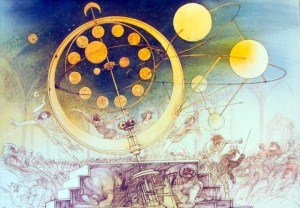
But Leonardo da Vinci was really prolific in his drawings and writing. His anatomical sketches, scientific diagrams, and thoughts across the spectrum fill volumes now held in private collections and public museums. Da Vinci’s unquenchable curiosity and feverishly inventive imagination consumed his waking hours. The world is extremely fortunate that many of Leonardo da Vinci’s notebooks still exist.

Da Vinci’s interest held no bounds. He was a true polymath who studied astronomy, anatomy, architecture, botany, engineering, science, music, math, language, literature, geology, paleontology, ichnology, painting, drawing, and sculpting. Leonardo da Vinci also invented. Concepts for the helicopter, parachute, and airplane wing came from da Vinci. He even built the first automated bobbin winder before the sewing machine came to be, and Leonardo worked with solar power, double-hulled ships, and even armored military tanks. He also thought out a robotic knight.

Unlike most innovators who are a fine line between nut and genius, Leonardo da Vinci was incredibly well-balanced on an emotional scale. Besides having an extremely high intelligence quotient (IQ), it’s said Leonardo had a tremendous emotional quotient (EQ) as well. Nowhere is there any suggestion he was an egomaniac or unapproachable. History indicates da Vinci was a pacifist, vegan, and humanitarian with a good sense of humor.

So what made Leonardo da Vinci so special? Short answer—his brain. There was something nearly out-of-this-world going on in da Vinci’s mind. And there might be a scientific explanation about what it was.

Twenty-first-century science knows a bit of how the human brain functions. But, it’s far from comprehensive knowledge. Science has almost no grasp or understanding of how human consciousness works, and there’s a good reason for that. Brain science is tangible where grey matter can be physically dissected and electrophysiological waves are recordable on computerized graphs. You can fund, study, and measure with reports.
Consciousness is a whole different matter. Conventional science has no grip on what human consciousness—or any form of consciousness—really is because it’s non-tangible and can’t be defined within current terms. Because consciousness is slippery, it’s not fundable. There’s no money in it. You can’t measure to monetize it. So consciousness study is left to individual groundbreaking leaders like David Chalmers and Sir Roger Primrose… but back to da Vinci.

Leonardo’s Brain: Understanding da Vinci’s Creative Genius takes a really good look at how LDV’s brain activated his mind to tap into a higher state of consciousness—the world of “Forms”, as Plato termed it, or the source of where all “in-form-ation” sits. In current consciousness research, there’s a distinct difference between the physical brain, the non-physical mind, and the plane of infinite intelligence where all ideas come from.

Leonardo da Vinci’s brain was so evolved—author Shlain writes—that his mind easily accessed information not readily there for normal people. Da Vinci’s brain/mind power was so special that he “thought” his way to fantastic ideas. It also let da Vinci observe what was going on in the universe and record it. That might have been simplistic beauty as in the Lady With an Ermine, an anatomical analogy like Vitruvian Man or a geometric complexity seen in the Rhombicuboctahedron.

Despite Leonardo da Vinci being bright, talented, and affable, he was an outlier in the Renaissance period. Da Vinci was biologically different. He was a misfit in the world of conventional ideas and creativity. He thought different. He acted different. He dressed and talked different. That made others uncomfortable. Back then, da Vinci sat at the back of the bus, and today he’d still be so far ahead that the rest of us would see dust. Author Leonard Shlain tells us his version of why:

“Leonardo da Vinci’s left and right brain hemispheres were intimately connected in an extraordinary way. Because of a large and uniquely developed corpus callosum, da Vinci’s left and right sides constantly communicated and kept each other in the loop on observations and creative options. Each brain side knew what the other was doing, and this gave da Vinci’s mind unprecedented and unrestricted freedom to observe, understand and create.
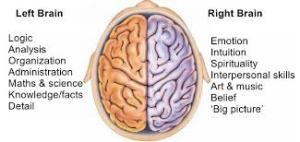
In current brain science, the left hemisphere is the analytical and conservative side. The right is the creative, liberal sphere. Brain scientists think that’s nature’s safety mechanism to prevent humans from getting too stupid or smart in either extreme. Da Vinci’s brain seems to have found the middle ground—the apex of the triangle or the tip of the see-saw.”

In Leonardo’s Brain: Understanding da Vinci’s Creative Genius, Leonard Shlain backs up his theory with facts. The most interesting fact supporting da Vinci’s left/right corpus callosum uniqueness is his handiness. Leonardo da Vinci was a southpaw—he was left-handed.

Left-handers aren’t that unusual in the human population. Studies show approximately 8-10 percent prefer left-hand prominence. A tiny proportion are ambidextrous, but the vast majority have manual-dexterous abilities with their right. However, there are unusual advantages south-paws have. They tend to be far more creative than right-handers.

It’s no news the left side of the brain controls the right side of the body—same with vice-versa. When one hemisphere is dominant over the other, a person is usually analytical or creative. But, when both sides are equally balanced, something phenomenal happens.

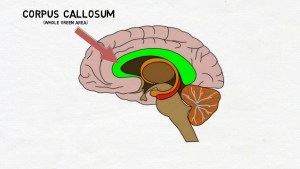
Anatomically, the corpus callosum—aka the callosal commissure—is a wide and thick nerve bundle sitting at the brain’s foundation. It’s the largest white matter brain structure that binds the left and right gray matter. The corpus callosum isn’t big. It’s about 10 centimeters or 4 inches long. Neurologically though, it’s huge—having about 250 million axonal projections.

The corpus callosum regulates electrical activity happening in the left and right brain sides. It’s got a big job to do. One of its jobs is responsible for the primordial fight-flight response ingrained in all of us. But the corpus callosum also lets humans get imaginative, like the right brain inventing tools to slay saber-toothed tigers while the left side stays alert.

The Leonardo’s Brain: Understanding da Vinci’s Creative Genius book goes beyond a left/right brain dichotomy. It delves deep into something uniquely known about da Vinci’s left-handedness. Leonardo da Vinci’s brain let him write left-handedly in a mirror image. Da Vinci’s writings, notes, and diagram annotations have him writing right to left where you need a mirror to decipher them.

This mirror-image phenomenon provides profound insight into Leonardo da Vinci’s psyche. Here was a poor boy without formal education who developed his own style independent of traditional academic influences—even choosing which hand to use and how to communicate with. Da Vinci was the poster boy of self-taught, self-investigating, and self-assured individuals—the likes the world never experienced in his time or so-far thereafter.

Leonardo da Vinci’s lack of indoctrination by limiting dogma taught through conventional institutions like the church and its lap-dog societal constraints liberated him from mental restraints. Combined with perfect neuro-equilibrium between inquisitive left and creative right brain functions, da Vinci broke free of earthly bounds and set his mind soaring into airy lofts not there for common minds.

Author Leonard Shlain of Leonardo’s Brain: Understanding da Vinci’s Creative Genius makes another interesting observation and conclusion. Because da Vinci was removed from his biological mother’s hold so early, he became mentally self-reliant. Da Vinci was also gay or at least asexual. He wasn’t driven by a common male preoccupation with the little head thinking for the big one.

Brain science recognizes that “normal” human brain thoughts primarily focus on survival concerns like food, shelter, and sex. That didn’t seem a factor with Leonardo as he progressed in life. He just abnormally sensed reality. Then he painted, sketched, or wrote what he knew.

No, Leonardo da Vinci was much more than “normal”. He was the prime exemplar of a universal genius whose brain far out-thought humankind. Looking back… and forward, if da Vinci showed up for a job interview, his unique selling proposition on his resume would be “I have an unusual brain and my mind knows how to use it”.

That’s the astounding secret behind Leonardo da Vinci’s creative genius.

What about you Kill Zoners? Have you read this book or anything on Da Vinci? And as for your own creative genius, what’s your secret sauce?

— — —

Garry Rodgers’s creative genius was his ability to fool the authorities into keeping him employed as a homicide detective and coroner for over three decades. Now, he’s managed to hoodwink the public into believing he’s a competent crime writer.

Part of this ploy of deception is Garry’s blog on the DyingWords.net website. He has another ruse where you can follow him on Twitter @GarryRodgers1. By the way, Garry Rodgers may or may not be his real name. Same with the headshot.

Engineering A Novel

By John Gilstrap

I think of a book as an engineered product. The premise comes to me via the magic that I don’t understand, and then it’s less about asking “what if?” then it is about “why/how would that happen?”

In Crimson Phoenix, the entire premise depended on the aftermath of a nuclear war. The reasons behind the war aren’t really important to the larger plot, but it needed to be addressed. I had to work backwards: Who fired first? Why? How do I justify my main characters surviving? All actions have consequences, so I had to select carefully to put together a plot that gave me what I needed without straining credulity.

In the case of my first novel, Nathan’s Run, I started with a theme I wanted to explore. I wanted to write a story about someone who had to make the binary choice between doing his job and doing the right thing. He couldn’t do both. Full disclosure: The premise of a kid escaping from a juvenile detention center arrived as a gift of circumstance that’s too complicated to go into here, but once it burrowed into my head, it was there to stay. I knew that the kid needed to be about 12 years old. And if the kid was an escapee, then he needed to be pursued, and it made sense that the pursuer needed to be a cop.

This is the point where creativity meets engineering:

How does a kid (I made him an orphan to make things easy on myself) escape a juvenile detention center? Answer: He steals keys from a guard.

How does he steal keys? Answer: In a fight.

How does a 12-year-old (Nathan) win a fight with an adult guard? Answer: The guard is drunk.

How does Nathan cross paths with a drunk guard? Answer: the guard is trying to kill him.

Why is the guard trying to kill him? DING DING DING: I had no idea, but I knew that I had the mystery that would drive the story and keep it from being one-note.

How does Nathan win the fight? Answer: He kills the guard. DING DING DING: Now a character we care about has crossed a line that can’t be re-crossed. The plot was cooking, even before I put a single word on the page.

At this point, in my head, Nathan’s journey is on its way. He’s got a sustainable story. I didn’t know the details yet, but enough parts were in motion to give the character a mission to survive. I could wing those sections during the Great Pretend that is writing.

Now I had other questions to address:

How would cops and the rest of society react to the news of an escaped cop-killer? Answer (in the fictional community of the book): Politicians would posture, the media would play for ratings, and the cops would double-down on the efforts to bring a cop-killer to justice. DING DING DING: Subplots defined.

When the evidence shows that Nathan is the bad guy, what will cause a grizzled police detective to soften his heart for the kid? The answer is too much of a spoiler.

Okay, now that I had defined both the the pursued and the pursuers, now what? How does a little kid hold his own against the rest of the world? First things first: Where does he find shelter? Answer: He breaks into the homes of people who have newspapers stacked in their driveway, an indication to him that they must be on vacation.

How do I keep a burgling killer sympathetic in the minds of the readers? Answer: He does the laundry.

At this point the plot was nothing but vignettes in my head. They were just disconnected scenes. This was the problem that torpedoed the three novels I wrote before Nathan’s Run. I needed a through line.

How could I make the plot bigger–something more than just a straight line chase? Answer: Media manipulation. I could have Nathan listen to a radio and hear the terrible things that people are saying about him. Callers want him to be thrown in jail forever. Others want him to be executed. [NOTE: When I wrote Nathan’s Run, OJ Simpson and the attendant media frenzy drove every news cycle, and Rush Limbaugh was just beginning to change the face of talk radio.]

I knew I had a great character opportunity here. The talk show host, Denise Carpenter (radio name: The Bitch) is stoking the fires against Nathan. We’ll learn as we go on, just how insecure and frightened she is of her own success.

How does Nathan change people’s minds? Answer: He calls the show himself, and gets to tell his side of the story.

From that point on, the story propelled itself.

I don’t want to imply that this is a simple process. Each answer to each question is a choice from a flood of discarded alternatives, and any given one of them may turn out to be a mistake for the story. In my experience, though, they rarely (never, actually) turn out to be a mistake because I make them work. You wouldn’t tear down a nearly-completed house because a couple of doors were out of plumb, right? That’s what furring strips and leveling compound are for.

How many times have we all heard that storytelling is driven by the Great Question: What if? To be sure, that’s a great starting point to define a premise, but from then on, Why and How take the lead.

So, TKZ family, do you consider yourselves to be story engineers?

First Page Critique: Time to Stop
Thinking And Start Screaming

By PJ Parrish

Happy post-Thanksgiving, folks. If you traveled, hope all went well and you enjoyed some good family time. As you read this, I am probably somewhere in the air, returning from Lansing, Michigan, where I had a quiet dinner with my bestie-in-life Linda. No turkey. Just a couple hens sharing a couple hens and some good pinot noir.  Back to work! Here’s a First Page Critique for us to gnaw on. No turkeys here either, I’m glad to say. Just a homing bird.

THE HOMING BIRD

Heather
Victoria, Vancouver Island
Friday, October 6, 2017
7:05 AM

Every morning, I take a forty-five minute drive to my favorite screaming beach.

Its rocky shoreline spills discretely off the edge of a remote provincial park. Decades ago, someone must’ve pulled heavy cargo ashore, because there’s a sandy clearing on the beach between the large rocks. It’s my runway to the sea, a path to the place where the tide meets the shore. It’s where I stand every day, all year round, fiercely emptying my lungs at the horizon.

I get out of my truck, donning the gumboots that are always tucked under the passenger seat. I wait until my eyes adjust to the dawn’s low light, then walk through the long grass, over the crunchy seaweed, and along the sandy path that leads me to the water’s edge. I wait for a moment, allowing the roar of the sea to wash over me like an auditory embrace.

The water is rough today, and the wind stings my eyes, lifting my long, salt-soaked hair around my head like the strings of a puppeteer. Autumn is my favourite season; it’s the time when everything slows down and goes inward.

It also means that less tourists stroll the beach, so I can spend as long as I like throwing my screams out into the vast foamy sea.

I look around to check that the beach is deserted, that there are no early morning kayakers who could pick up on the sounds of my laments crossing the waves. I don’t want to draw attention to myself; it’s not about that. It’s about sending a loaded missive to the God or Universe or Spirit who’ve failed me. It’s the only ritual and the only form of catharsis that I allow myself.

I’ve never been very good at therapy. It makes me too nervous. I sit like a specimen, like an inexperienced, malnourished mountaineer, in front of a kindly stranger who invites me to explore my twisted internal topography. Demons wait around every corner, popping out of crevices, reminding me of my many failures: not living up to my mother’s impossible standards, not protecting my sister, and the pathetic way I begged to stay in the Fellowship after I was deemed an apostate.

“No one,” a therapist once said to me, “is more qualified to heal you, to mother you, than you.”

___________________

This came in with no particular sub-genre other than “mystery,” so that’s what we’ll assume here. We can also assume our writer is Canadian, given the location, spellings (ie favourite) and words like “gumboots” instead of the American term galoshes and “provincial park” instead of “national park.”

There is much I really like about this submission. I love the opening line. It starts out so ho-hum and ends with a hammer of an image. There’s a fancy word for this —  Paraprosdokian. It means an unexpected shift in meaning at the end of a sentence. Here, the writer sets us up with the calm words “Every morning I take a drive…” And then adds “to my favorite screaming beach.”  Love this effect. It pulled me in from the get-go.

What does the opening line also accomplish? A hint to the sense of place (shoreline). A not-so-subtle hint that Heather is deeply troubled; the mood is tense. And third, we get a clear voice. So bravo, writer.

The writer is also skillful in her/his descriptions, and you know I am always asking for more than we usually get. The beach “spills off” the edge of a park. Seaweed is “crunchy” underfoot. Not much meat here, but what’s there is cherse.

I do think the writer gets a little bogged down as the paragraphs pile up, however, in trying to look more writerly than necessary.  The simple and very effective images of the opening beach imagery give way to some borderline overwrought imagery when we get to Heather’s thoughts.  On the beach, we are hearing Heather’s voice, but when we get inside her head, the writer’s voice begins to intrude some. It’s a fine line, but an important one. For example, in one graph, we are given THREE images to digest: first Heather as “specimen,” presumably being examined under the shrink’s microscope. Then comes the laden image of Heather as a “malnourished mountaineer” befriended by a stranger. And finally, Heather as a victim of harpy-like demons screaming out her inadequacies.

Do you see the problem I have with this? As impressive as the writing seems on first glance (and this is a deft writer), as you begin to digest it, the three images compete with each other in a sort of dyspeptic stew. Dear writer, you are too good to let this happen, so I’d suggest a hard second look and that you select one metaphor/image to burnish.  I rather like your phrase about twisted internal topography because it echoes the beach location. Remember: Your setting should also MEAN something. You chose a craggy windswept beach for a reason — perhaps because it mirrors Heather’s tortured and lonely psyche? Something to think about.

Now, we should address the fact that nothing much is really happening here. We have a woman with a dark past walking down a beach stalked by demons. I’m okay with slow-build openings, but only to a point. Heather isn’t doing. She’s thinking. And while your set up is intriguing, if you stay in this woe-is-me reminiscence too much longer, your reader will get antsy for action.  Also, you cite the idea of a “screaming beach” in four versions.. You need to trust the reader to get it the first time and move on. Something has to happen. And thinking about your past isn’t enough. You must move the PRESENT plot forward. I’m going to show you an example of how this might work in the following edit. My comments are in red.

Heather
Victoria, Vancouver Island
Friday, October 6, 2017
7:05 AM I am an avowed-not-a-fan of taglines like this. Unless you are going to switch into multi-POVs and settings or time frames, I’d suggest finding a way to incorporate this info into the narrative. You do this well already by telling us it’s dawn and it’s fall, so just find a way to weave the locale. 

Every morning, I take a forty-five minute drive to my favorite screaming beach. Love love love this. But “favorite” implies she has more than one screaming beach. More powerful if you delete “favorite” imo, so it becomes the creepily possessive and deeply personal “my screaming beach.” 

Its rocky shoreline spills discretely Discrete means distinctive or unique. Discreet is means secret or modest. Because most folks confuse the two I’d find a better word off the edge of a remote provincial park. Decades ago, someone must’ve pulled heavy cargo ashore, because there’s a sandy clearing on the beach between the large rocks. It’s my runway to the sea, a path to the place where the tide meets the shore.   Second line is redundant. Love the runway image but maybe it could be stronger? It’s not just a path to the sea but rather a runway to, in her sad state, what the sea represents — freedom? Oblivion? You’ve missed a chance to make the metaphor mean more.  It’s where I stand every day, all year round, fiercely emptying my lungs at the horizon.  Another “screaming beach” reference. You’ve already told us she does this. Move on.

I get out of my truck, donning the gumboots that are always tucked under the passenger seat. I wait until my eyes adjust to the dawn’s low light, then walk through the long grass, over the crunchy seaweed, and along the sandy path that leads me to the water’s edge. I wait for a moment, allowing the roar of the sea to wash over me like an auditory embrace. Very pretty phrase but you call it a roar, so isn’t that at odds with the gentle phrase “auditory embrace”? Isn’t a sea-roar more of an sensory assault? I know this sounds like picking nits, but description must be precise for it to ignite the reader’s senses. As Poe said, every word, phrase and sentence you write must work to create a UNITY OF EFFECT to create consistent mood.  

The water is rough today, and the wind stings my eyes, lifting my long, salt-soaked hair around my head like the strings of a puppeteer. Autumn is my favourite season; I’d lose all the semi-colons. Nobody thinks in semi-colons. it’s the time when everything slows down and goes inward. Also, here is where you can tell us it’s October rather than relying on a tagline. It’s more connective to your character to have this info emerge via her thoughts and senses rather than in a bland tagline. Something like “October is my favorite month, a time when everything slows, blurs and begins to go inward. This time of year, it feels like the whole of Vancouver Island is retreating into the mist. (That’s awful but you get the idea). 

It also means that less fewer tourists stroll the beach, so I can spend as long as I like throwing my screams out into the vast foamy sea. This is the third reference to what she is GOING to do. We want to see her do it. 

I look around to check that the beach is deserted, that there are no early morning kayakers who could pick up on the sounds of my laments crossing the waves. Fourth reference. We get it. I don’t want to draw attention to myself; it’s not about that. It’s about sending a loaded missive missive is a letter, a rather passive little word. Is there a more powerful one? Grievance? Screed? Rant? What emotion are you trying to convey here exactly from Heather? I am not quite getting it. Your scene is SO personal and emotional. Make your word choices all go to that unity of effect! to the God or Universe or Spirit who’ve failed me. It’s the only ritual and the only form of catharsis that I allow myself.

Pause here for a second and consider this: You need to have something happen in the present time, to get us out of her thoughts. How about if you put the primal scream right here on camera? Does it help her? Does it bring relief? The fact that she is compelled to do it EVERY DAY implies to me that it’s not working. It might make a very powerful scene here if you give us the scream NOW.  Then give us an emotional reaction from Heather. THEN go into the backstory below. Whatever she feels AFTER the scream would then logically make her think about how therapy was no help either. I don’t like to rewrite anyone’s work but allow me to give an example so you see why this might work:

I close my eyes and the scream erupts from me, ringing in my head but lost in the roar of the waves. I scream, scream, scream until my lungs burn and my throat is raw. When I open my eyes, my face is wet from the wind and my tears.

I should feel empty but I don’t. It’s still there. That black box deep inside me is still there and all the winged-things have escaped from it again and are beating hard to burst out of my chest. I choke back a sob, trying to force them back into the box. 

It doesn’t work. It never does. 

I think of Dr. Martin and what she told me two months ago, the last time I showed up for one of our sessions.

No one is more qualified to mother you than you.

By giving us the scream now, this would then logically lead Heather — and your readers — into her backstory, especially if it involves something amiss about her mother. I love that line about no one can heal you but yourself, which is why I set it apart by itself. I might be wrong, but I think it’s one of your themes. But put that scream in your first 400 words, please.  Act first and then explain!

I’ve never been very good at therapy. It makes me too nervous. I sit like a specimen, like an inexperienced, malnourished mountaineer, in front of a kindly stranger who invites me to explore my twisted internal topography. I’m not sure I get this mountaineer reference. Do you mean to imply she lost her way on a steep journey? Okay. But for the “kindly stranger” to work, you need to balance the metaphor — the therapist is metaphorically a guide who finds her on the mountain? Demons wait around every corner, popping out of crevices, reminding me of my many failures: not living up to my mother’s impossible standards, not protecting my sister, and the pathetic way I begged to stay in the Fellowship after I was deemed an apostate. This is very interesting because you giving us hints of backstory — that her mom was difficult, she failed to protect (nicely loaded word!) her sister and that she was a member of “the Fellowship” which kicked her out. (intriguing! Religion? Cult? Makes us want to read on) 

Also: Something to reconcile. A paragraph ago you had her yelling at the gods who you say “failed” her. And now you say the demons are reminding her that she herself failed. She can’t blame fate if she believes it is her fault. 

“No one,” a therapist once said to me, “is more qualified to heal you, to mother you, than you.” So did the scream work or not?

Okay, let’s summarize. This is good stuff. You’re truly a good writer. I am engaged by the scene you’ve set up with the screaming beach. Terrific idea. But I started to get impatient with being stuck only in Heather’s thoughts, and I think this great beginning could be energized by a healthy primary scream. Let go, Heather!

Thanks so much, dear writer, for brightening my day with The Homing Bird. Vancouver  is one of my favorite spots on earth (though I’ve never seen the sunrise on Victoria Island!) and I would read on, definitely. My suggestions are merely that, one reader’s opinion. Please know that the better you are, the harder I am on you. Good luck!


Funny Business

I cut my writing teeth on humor columns.

It came from years of reading great writers who knew how to make readers smile and laugh, authors such as Patrick McManus (one of the funniest columnists I’ve ever read, who made me laugh out loud and was a surprise when I finally met him, because the guy was dry as a geology professor), Donald E. Westlake (who combined classic whodunits with humor), Max Schulman (author and creator of Dobie Gillis), and Jack Douglas (most of you haven’t heard of him, but he was an outstanding TV writer who became a noted author in the 1960s and 70s), and finally a good friend and author, Joe R. Lansdale, who combines action and dark humor and is still going strong.

They all taught me one thing about being funny. Don’t try so hard to make people smile and most of the time, subtlety is the answer (which is not the column below).

I can go into the sociological aspects of writing humor, but that ain’t one bit funny.

I sat in on a humor writing class once, and came out weeping. The presenter broke down humor with sentences like, “Writing comedically usually requires establishing a setup pattern and then misdirecting the reader by throwing in a punch line. The simplest way is to create a pair of ideas and then add an incongruent statement. I like to list three, because 30 is too many.”

Good lord.

How about misdirection, which can be funny by taking readers someplace they expect to go and suddenly shifting direction.

“I looked down at my five-year-old son who broke the window and lied about it. I was shocked to think he wouldn’t tell the truth, and had to get him to understand what he’d done wrong, so I knelt on one knee, took his small shoulders in my big hands and looked him in the eye. Son, I have something to tell you.”

“What?”

“Quit picking your nose.”

Most of the things we laugh at in real life are true stories that someone exaggerates for effect. I once wrote a column about running from a bear while wearing a backpack…

“That thing was right on my heels, and I ran like rats across the tundra. My backpack came open and I left a string of equipment behind, my tent, half the food I’d packed, tent stakes, the stove, a laptop computer, two cameras, a chair, the kitchen sink and a VCR along with all my John Wayne videos. Now light as a feather, I left the bear far behind, sniffing the laptop full of newspaper columns and probably wondering what stunk so bad.”

Some other things I’ve learned:

Don’t try to write jokes. Look for something that happened in real life and make a few changes. Here in Texas, every truck has a trailer hitch. We all know they’re right there, but when the guys get together, someone inadvertently barks his shin on the damn thing. While we curse and rub that shin, the rest laugh like loons. What is it that makes us guys giggle like little girls? We’ve all done it. Exaggerated familiarity is funny

Don’t tell your reader something is funny: “Hurts, don’t it,” he joked. Like the old saying goes, if you have to explain it, it ain’t funny.

Avoid sarcasm, except to identify a character.

Surprise your reader.

I’ve judged humor writing contests, and cousin, exclamation points don’t make a story funny!

Use humor sparingly, unless you’re shoving it in someone’s face, like this slightly insane column I wrote some years ago about an Outdoor Detective that somehow caught on with readers. I only produce one of these a year. They’re a lot like fruit cakes, you don’t want too many, but an occasional bite is good.

The Case of the Invisible Case

I’d been puttering around my office all afternoon. After a while I put the putter away, kicked the golf balls into a corner and leaned back in my chair. Putting my feet on the battered desk, I scraped some off on the floor and relaxed.

I had just returned to my job as the Outdoor Detective from a weekend of pheasant hunting in the Texas high plains. We flushed birds for two days. Then I called the plumber and he cleared the drain.

“Don’t flush anymore pheasants,” he ordered.

I joined him and ordered a hamburger and fries as well.

“Try flushing quail, they’re smaller,” he said, then left.

A timid knock at my office door caught my attention. It was noir time. I turned on the background saxophone music to set the mood. “Come in.”

The man who entered looked like he wanted to run. He was sweating. It was his running shoes, headband, and shorts that gave him away. “Where’s that sax music coming from?”

“It’s a mystery ain’t it. That’s what I do. Solve mysteries. What can I do for you?”

“My name is Nobody. I want to hire the Outdoor Detective.”

“That’s me,” I answered.

“I expected more.”

“They always do. What can I do for you?”

“I want to hire you to find my missing hunting guide. His name is Earl. You need to keep your eyes peeled for him.”

“I’d rather not,” I said. “They always dry out when I do that, and those dried peelings crackle under your feet.”

His gaze wandered as I talked. “Is that your dog?” Nobody pointed to the corner.

“Yes.”

“What’s his name?”

“Neil.”

“Play dead, Neil,” Nobody said. “Good dog.”

“He is dead. Croaked last night.”

“Don’t don’t croak.”

“Oh. Wise guy, huh? Fine. Now we know where we both stand.”

Nobody pointed at the floor. “Of course. You’re there, and I’m here.”

“Now that we’ve established that, I’ll help you look for the guide. You can be my partner.”

“But I don’t know how. Maybe you could show me the ropes around here?”

I produced several ropes of various lengths.

“It looks too complicated,” he decided. “Maybe you’d better do it for me. How much will it cost?”

“That depends. Are you rich?” I asked.

“No, I’ve already said my name’s Nobody, but that sometimes confuses people. You can call me Ken.”

“You don’t look like kin. You must be from dad’s side of the family.”

He nodded. “Will it cost a lot?”

“What’s a lot to you?”

“A big piece of land to scrape clean and cover with concrete buildings.”

“I’m talking about money.”

He produced a wad of bills and I licked his hand gratefully. “All right. What happened to your hunting guide?”

“I’m not sure. We were hunting out near Abilene and communicating by walkie-talkies…”

I took notes as he talked. Mostly B flats.

“…and I was in a deer stand. He was in the coffee shop and we were singing a duet when a huge buck stepped into my view. I described it; a large animal with legs and antlers. I heard him order coffee and then he said “shoot.”

I was almost ready to pull the trigger. I just had to load the rifle and attach the scope, when guns began firing all around me. Then machine guns started chattering and pretty soon I heard artillery thumping in the distance. Soon the mortars kicked in for support. It was awful.”

“The shooting?” I asked, sympathetically.

“No, the coffee he’d ordered. He said it was chicory. Ya gotta help me!” he shouted.

“You’ve gotta stop saying words like ya gotta!” I shouted back. “I don’t know what your guide looks like. Do you have a picture?”

He produced an oil portrait of Picasso.

I didn’t say a word. He has mean eyes, I thought, both on the same side of his head.

“What do you think?” he asked.

“Just read the sentences above.” Annoyed, I dummied up.

His eyes narrowed. “I can see the dummy’s mouth move when you talk.”

“It’s supposed to be the other way around,” I answered.

“Good luck.”

“Luck has nothing to do with it.” We shook hands and he left.

I practiced my yodeling and for a while, turned off the music and smiled at Neil. “Good dog,” I said.

I hate it when dogs jump up on people.

*

And with that, potential humor writers, read the authors who make you laugh and study their technique. They’ve figured it out and it’s something that triggers your giggle-box. Learn to use it in your own way.

Good luck, adios, and adieu.


True Crime Thursday – Thanksgiving Wine Heist

By Debbie Burke

@burke_writer

In 2013, a pair of Seattle plumbers decided Thanksgiving sounded like a good opportunity for a heist. The Sodo neighborhood should be deserted for the holiday. No one was likely to notice two vans parked outside Esquin Wine and Spirits. The building housed climate-controlled rental storage lockers where wine collectors kept valuable vintages.

Samuel Harris and Luke Thesing, then 35 and 36, had planned the heist at least a month ahead. Harris kept a journal entitled “The Plan” with all the steps plotted out.

They rented a locker for access to case the building. At Lowe’s, they bought spray paint, gloves, and black plastic sheeting.

On the big day, they carefully parked the getaway vans to block exterior surveillance cams. Once inside the building, they spray-painted lenses of other cameras, covered motion detectors with black plastic, and went to work. They cut through sheetrock between lockers to gain access to 200 cases of expensive wine valued at $648,000 that they planned to sell.

However, they probably shouldn’t have parked the vans in a towaway zone.

While the thieves were busy inside, their vehicles were impounded.

Uh-oh.

Plan B: They loaded the stolen wine into Harris’s Cadillac Escalade.

In an attempt to cover their tracks, Harris cut a natural gas line and tampered with a pilot light, believing the building would catch fire and burn down.

With the vans gone, the exterior security cams now had a good view of Harris and Thesing as they drove away in the Escalade.

The next day, someone reported smelling gas inside the building. The arson attempt could have resulted in an explosion that would have devastated the neighborhood. Fortunately, it was unsuccessful and the theft was discovered.

Things didn’t go according to “The Plan.”

The Escalade was tracked to Harris’s residence. He was identified by the business owner who recognized him from the previous month when he had rented the locker.

They neglected to throw away the Lowe’s receipt that police found in Harris’s possessions. The store’s security video showed Harris and Thesing together buying supplies used in the heist.

Detectives also found more evidence in Harris’s car and home, including his journal plus additional documents: “Is it Accidental Fire or Arson?” and “How to Commit the Perfect Crime.”

Apparently, they did not study those directions thoroughly enough.

The investigation also tied Harris to an earlier theft. In May 2013, he had stolen $250,000 worth of wine from a Belltown woman who had hired him to build a wine cellar.

Harris and Thesing pleaded guilty in King County Superior Court. In July 2014, they were sentenced to prison, Harris for nine years and Thesing for five years.

The best-laid plans…….

~~~

Today, I’m raising a toast (with lawfully-purchased wine) and giving thanks for many good friends at The Kill Zone.

Wishing you a wonderful Thanksgiving surrounded by loved ones and lots of leftovers! 

A Very Happy Thanksgiving

A Very Happy Thanksgiving
Terry Odell

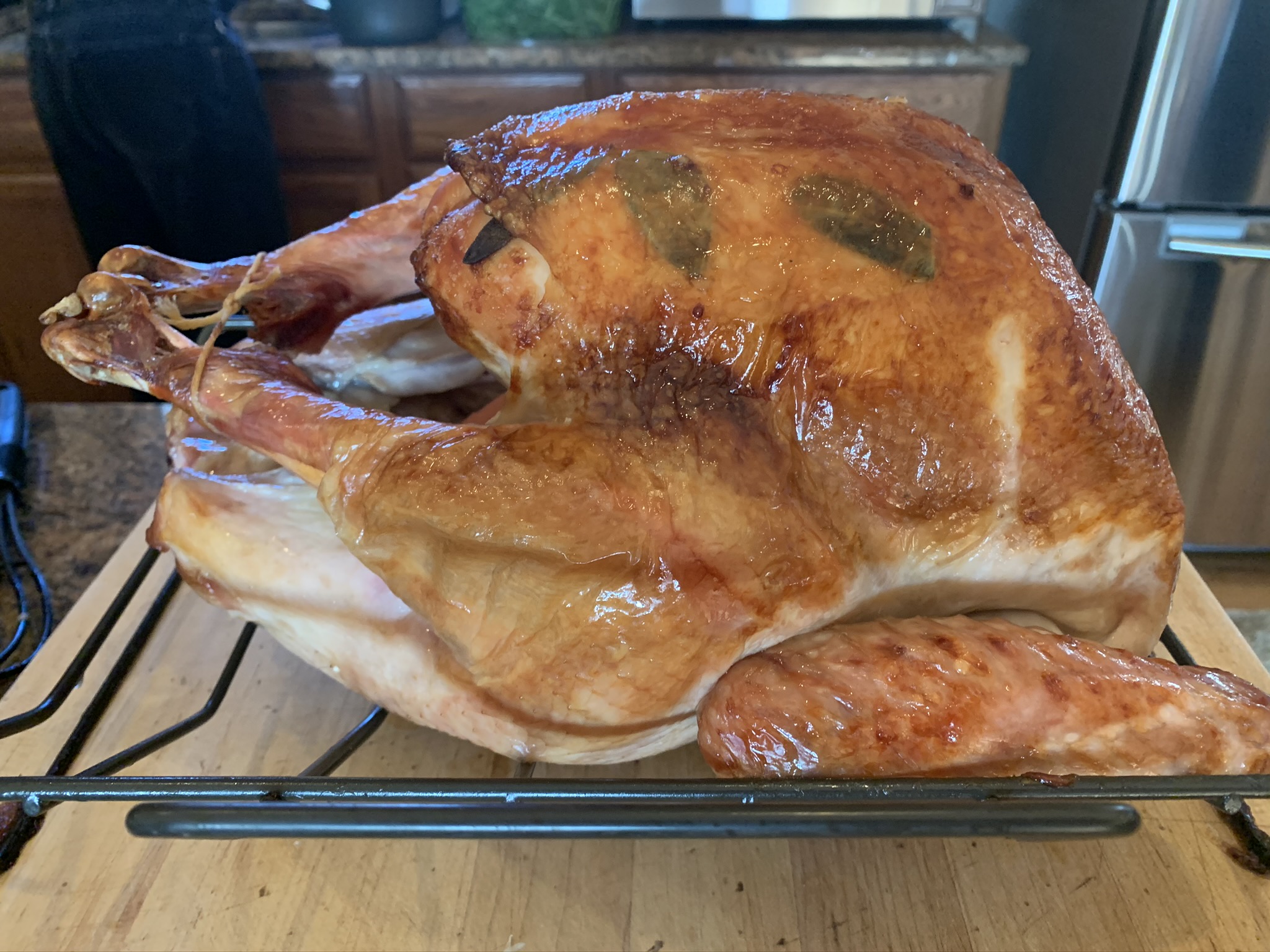
Thanksgiving turkey
Tomorrow is Thanksgiving. Last year, most of us weren’t ready to get out and mingle, especially if it entailed long-distance travel. That was the case at our house, although it was short-distance travel for most of the immediate family. This year, we’re fortunate and thankful that our Northern Ireland-based daughter is able to be with us, and that we can gather round the table, not the computer screen.

In our household, most of the traditions revolve around the food. One year, over 40 years ago, I came across an interesting recipe for stuffing (now dressing, thanks to health concerns.) The kids loved it and insist that it can NOT be varied. I shared the recipe on my own blog last week. You can find it here.

Here’s a turkey tip from my chef brother that’s served us well for decades. No matter your “recipe” for the bird (unless you deep fry), start the cooking at 450 degrees (or 425 if it’s 16 pounds or more). After 30 minutes, lower the temp to 350 (or 325). Continue to cycle the temp up and down like that every 30 minutes. This moves the juices up and down inside the turkey, and even the leftovers are juicy.

Here’s a little fun.

Another tradition of ours is listening to “Alice’s Restaurant.”

And here’s an interesting article – Arlo Guthrie’s thoughts on the 50 year anniversary tour of Alice’s Restaurant.

What are your Thanksgiving traditions? Any you wish would disappear?

I know I speak for everyone here at TKZ when I say “Happy Thanksgiving.”


In the Crosshairs by Terry OdellNow available for pre-order. In the Crosshairs, Book 4 in my Triple-D Romantic Suspense series.

Changing Your Life Won’t Make Things Easier
There’s more to ranch life than minding cattle. After his stint as an army Ranger, Frank Wembly loves the peaceful life as a cowboy. Financial advisor Kiera O’Leary sets off to pursue her dream of being a photographer until a car-meets-cow incident forces a shift in plans. Instead, she finds herself in the middle of a mystery, one with potentially deadly consequences.


Terry Odell is an award-winning author of Mystery and Romantic Suspense, although she prefers to think of them all as “Mysteries with Relationships.” Follow her on Facebook and Twitter.