Becoming a Writer by Mistake, or How I Traded Needlepoint for Writing

Becoming a Writer by Mistake, or How I Traded Needlepoint for Writing.
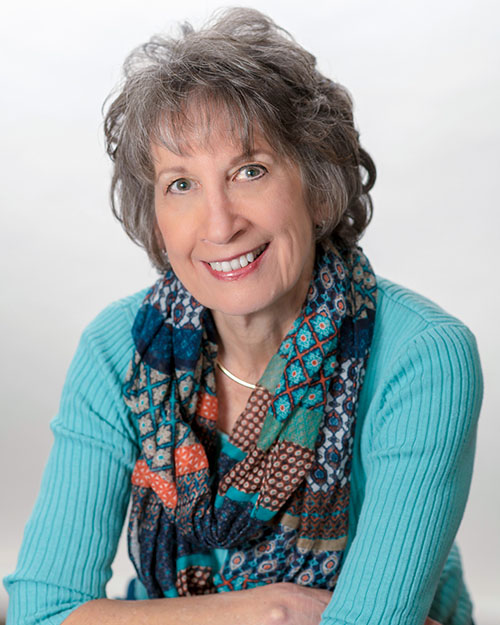
Terry Odell

**Note: We’re having new windows installed and they’ll be doing my office today, which means moving my desk and disconnecting electronics, and I’m not sure when I’ll have connectivity to respond to comments.

At reader-focused conferences, such as Left Coast Crime, most panelists are asked the question, “How/When did you start writing?” regardless of the panel topic. Readers are interested in learning more about the person behind the book. I listen as everyone else spouts off their histories of wanting to write since before they could talk, or how they wrote their first manuscript in crayon. Then my turn rolls around, and here’s my answer.

I was a card-carrying AARP member before I considered writing anything. How did I get started? The short answer: I ran out of room on my walls for needlepoint and had to find another creative outlet. But the real answer is, “By mistake.”

I never had any dreams of being a writer. Creative writing classes weren’t my forte. I knew all the rules of grammar, got A’s in English, but I was a reader. I devoured books. I read anything, from comic books to cereal boxes. My parents tell everyone that we moved when I was 12 because I finished the library. I made up stories, but they were in my head. I never thought about writing one down. They were usually daydreams, or continuations of books I’d read, or stories about characters on television. The closest I came to writing was two pages of a story I’d had running around in my head—something featuring MacGyver. But the actual typing was a total drag. Punctuation mattered. You had to start sentences with capital letters. There were quotation marks to deal with. All that use of the ‘shift’ key was a total drag.

Years later, my son was visiting. He, as all men are wont to do, was “watching” television by flipping the remote. He stopped on a show. “This one’s cool,” he said. “It’s all about these guys who can’t die unless you cut off their heads.”

My son went back home. Being a good mother, I decided to watch the show so we’d have something “cool” to talk about. I found “Highlander” in the listings, set the recorder, and watched an episode. Okay, I’m not proud. Watching Adrian Paul was no hardship. But the show also raised questions about what these Immortals could and couldn’t do, and I got curious. There were no Yahoo groups then, or even Google (I think, anyway). There were CompuServe forums. I found one about Highlander and discovered the world of fan fiction. It seemed right up my alley. I discovered one author whose voice resonated with me. (Of course, back then I had no clue it was her “voice.”)

We hooked up via email, she connected me with some of her friends, and I did some beta reading for them. Just because I wasn’t a writer didn’t mean I wasn’t a good reader, and I definitely used all my English skills to hone their stories.

Then, one day, hubby was out of town, and I decided to see what would happen if I tried to write a story. The beauty of fan fiction is that your world and your characters are all there. You can work on the skills of the craft in small increments. I cranked out my little story—actually, sweated it out, because it still didn’t come easy, what with getting all those quotation marks in the right place—and bravely sent it to the writer I’d befriended.

I’m sure she got a good laugh, but she came back with advice and comments. What the heck was POV?

I accepted the challenge. After all, I did get all those A’s in English, and surely I could learn how to put a story on paper instead of sucking up what others wrote. She had immeasurable patience, and when I finally had her approval that it was done, she insisted I post it to one of the Highland fan fiction forums. I got positive feedback, and like any good puppy, kept trying to please. (Had I known then how low the bar was for positive feedback, I might not have kept going, but since I didn’t, I did.)

Eventually, I found another writing group at a site called iVillage, and thought I’d try writing some original fiction, just to see if I could. I recall an exercise, where we were supposed to write a “hook” in under 200 words. I sent mine in, and got lots of “Wow, what happens next?” comments. How did I know? So, I kept writing. 143,000 words later, the first draft of Finding Sarah was finished, and I’d hooked up with a local, in person, critique group who drove me to consider the “get it published” side of the writing craft. And one of my Highlander fan fiction short stories eventually provided a starting point for the next book I wrote, What’s in a Name? There’s a lot of Duncan MacLeod in Blake Windsor.

And somewhere along the line, I was talking with my son. I asked him what he thought of the writers killing off Tessa. He said, “What?” I said, “You know. Highlander. Tessa. Duncan’s girlfriend. They killed her character.”

His reply. “Oh, I never actually watched the show. I just thought it was a cool concept.”

And that’s how I became a writer by mistake. I don’t think I’ll go back to needlepoint.


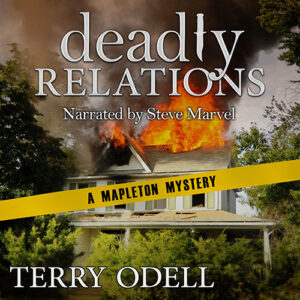
Cover image of Deadly Relations by Terry OdellAvailable Now
Deadly Relations.
Nothing Ever Happens in Mapleton … Until it Does
Gordon Hepler, Mapleton, Colorado’s Police Chief, is called away from a quiet Sunday with his wife to an emergency situation at the home he’s planning to sell. A man has chained himself to the front porch, threatening to set off an explosive.


Terry Odell is an award-winning author of Mystery and Romantic Suspense, although she prefers to think of them all as “Mysteries with Relationships.”


Survival Tips for Conferences

Survival Tips for Conferences
Terry Odell

Header of the Left Coast Crime 2023 Conference showing a setting sun, cactus and man wearing a black hat and coatI’m in Tucson for the Left Coast Crime Conference, so forgive me if I don’t respond to comments right away.

Left Coast Crime is a reader-based conference, which means the focus is on connecting writers with readers. The panels will be aimed more at “tell us about your book” and they’re a great way to meet readers and let them know what you have to offer. In a writer’s conference, a workshop on setting would tell you how important it is, and would give you a “lesson” in how to develop setting in your book. At a reader’s conference, the panel will be a discussion of where each author sets his or her books, and why they chose that setting. Same goes for characters, or genre, or anything else.

This year, I’m on a “Romance in Mystery” panel and who knows where that one will go! Ultimately, the goal is to entice readers to pick up the books, and also to let them know you’re a real, live, person. It takes a different mind-set when you attend a conference like this as an author. You’re wearing a marketing hat, not a writing hat.

However, no matter what kind of a conference you attend, there are some “survival” techniques I’ve picked up over the years, listed in no order of importance.

  1. Have copies of your receipts. Nothing like finding out they’ve lost your registration or meal choices or room reservation to start things off on a stressful note. Better to have them and not need them than to need them and not have them.
  2. Bring your own tote if you have one. Although most conferences hand out tote bags, they all look alike. If you bring one from a different conference, you’re less likely to have it picked up by mistake. (I also bring my own badge holder—the kind with compartments from another conference, just in case they give you a simple plastic one. This way, I’ve got a secure place for my badge, meal tickets, a little cash and other vitals—like business cards or bookmarks.)
  3. Don’t be afraid to meet people. It’s not required that you travel with a glued-to-the-hip companion. Take an empty seat, smile, hand over your business card, bookmark, or simple swag, and introduce yourself. This is one place where there’s an immediate conversation starter: “What do you write?” Or, in the case of a readers’ conference ‘read’? On the flip side, be polite and invite people to join you, include them in conversations. There’s a popular author who ignored me at a conference lunch table, and I haven’t bought any more of his books. Another good way to “mingle” is to volunteer. Most conferences are always looking for help.
  4. Bring comfortable clothes, especially shoes. You’ll be doing a lot of sitting, and a lot of walking, depending on how far apart the meeting rooms are. Also, bring layers. Regardless of the outside temperatures, meeting rooms can be meat-locker cold or steamy hot.
  5. Pace yourself. You’re not obligated to participate in every single event. Take breaks. Hide in your room for an hour if you need to. I long ago stopped feeling guilty about crawling into bed with a book at a decent hour. A lot of action takes place in the bar, so think about leaving some time for a visit there. Prioritize. Returning home with “conference crud”, or these days, the nasty virus, isn’t the souvenir you want.
  6. Speaking of books…bring either a bigger suitcase than you need, or some other method of transporting books. Most conferences are heavy on giveaways—and then there’s the inevitable bookstore and/or book signing. Another good reason to bring your own tote. Use the one they give you for books.
  7. Budget. Long ago, when I traveled with the Hubster on his per-diem, I learned how to save a few bucks. Think college dorm room. Almost all hotel rooms have coffee makers. They make hot water as well as coffee. There are all sorts of “just add boiling water” meal options out there. I’ll have instant oatmeal in my room for breakfast. This saves getting dressed early and going downstairs to a crowded hotel restaurant and blowing way too much money on a simple meal. And avoids the possibility of the staff not being able to handle several hundred people arriving at the same time. I’ll carry snacks as well. I’m not one for huge lunches at home, so for conferences that serve a banquet meal at lunch—well, that’s usually my dinner as well. A drink at the bar, maybe an appetizer or salad, and that’s enough for me. No need for another huge and expensive, calorie-laden meal. I can buy books with what I’ve saved.
  8. Scope out the facilities. Find out-of-the-way restrooms. Given short breaks between sessions and everyone on the same schedule, lines can get long.
  9. Giveaways. Odds are there are giveaway tables. Having swag is a great way to get your name in front of people. I’ve given away post-it notes, pens, lip balm, business cards, and bookmarks. I posted about pros and cons of some swag I collected in a previous TKZ post. Paper items such as bookmarks and business cards seem to be least effective based on what’s leftover at the end of the conference, but this year, I’ve had postcards printed with links to one of my books which will be a free download at BookFunnel. We’ll see how that goes.
  10. Have fun.

Cover image of Deadly Relations by Terry OdellAvailable Now
Deadly Relations.
Nothing Ever Happens in Mapleton … Until it Does
Gordon Hepler, Mapleton, Colorado’s Police Chief, is called away from a quiet Sunday with his wife to an emergency situation at the home he’s planning to sell. A man has chained himself to the front porch, threatening to set off an explosive.


Terry Odell is an award-winning author of Mystery and Romantic Suspense, although she prefers to think of them all as “Mysteries with Relationships.”

Are you Lying or Laying Around

Are you Lying or Laying Around
Terry Odell

lie or layAnalytics from my own website/blog shows that consistently, one of the top three search terms (after my name) ended up on a basic grammar post I did a number of years ago. If that many people were searching, I thought some of our TKZ readers might find it useful. If you’ve already got a handle on the usage, enjoy the picture of the cat.

Years ago, when I was tutoring for the Adult Literacy League in Orlando, one of my students was a native Korean speaker. She’d been in the US for almost two decades, but she needed a lot of help with grammar. I relied on a book my kids had used in elementary school, Scholastic’s A+ Guide to Grammar by Vicki Tyler. I don’t think you can find it anymore, and I’m glad I kept the book. The pages are yellowing, but it’s a great quick reference, explained in easy to understand terms.

One problem my student had, and one that I still see when evaluating manuscripts, is the “Lie vs Lay” usage. So, here’s your grammar tip for today:

LIE (Not the fib-telling usage)
Means to rest or recline, and also to remain or be situated.
NEVER takes a direct object.

LAY
Means to put or place something.
Usually takes a direct object that tells what was placed

Confusion arises when you change tenses.

LIE is present tense. Past is LAY

LAY is present tense. Past is LAID.

Here are some examples in a variety of tenses which might clarify things. Or give you something to refer to.

LIE

  • If you’re tired, lie down and take a nap
  • I wonder what lies beneath the pile of clothes in my closet.
  • Your sweater is lying on the couch
  • Last summer, we lay by the pool every day after lunch
  • The envelope from my sister lay unopened for a week
  • I have lain in bed all morning

LAY

  • Lay the grocery bag on the table
  • I was laying the new hardwood floor in the dining room.
  • I laid the grocery bags on the table before I answered the phone.
  • I have laid my cards on the table.

So, in answer to the question posed in the title of this post — you’re lying around.

I don’t know if this helps. I tend to rely on the “takes an object” rule if I’m not sure. Of course, there’s always the write-around option. Use a different word!

What about you? Any grammar issues you have to stop and think about? Any you’ve noticed while reading?

Image by Mabel Amber from Pixabay


Available for Pre-Order
Paperback format available now.

Deadly Relations.
Nothing Ever Happens in Mapleton … Until it Does
Gordon Hepler, Mapleton, Colorado’s Police Chief, is called away from a quiet Sunday with his wife to an emergency situation at the home he’s planning to sell. A man has chained himself to the front porch, threatening to set off an explosive.


Terry Odell is an award-winning author of Mystery and Romantic Suspense, although she prefers to think of them all as “Mysteries with Relationships.”


Not Even More Rules

Not Even More Rules
Terry Odell

Photo from Wikimedia Commons

If there’s one “rule” of writing, especially in these days of indie publishing, it’s that there are no rules. Want to leave out quotation marks? Go for it. Want to replace them with dashes? Why not? Want to publish without any eyes but your own on the prose? Do your thing.

And, in these days of indie publishing, we can split these ‘rules’ into two basic categories. Rules of writing, which lean toward grammar conventions, and rules of publishing, which relate to what happens once the book is set loose into the world of readers.

Since there was a recent post about Heinlein’s rules, I’m following up with these from Kurt Vonnegut, which, as did Heinlein’s, relate more to the publishing side of things.

8 Rules for Writing

  1. Use the time of a total stranger in such a way that he or she will not feel the time was wasted.
  2. Give the reader at least one character he or she can root for.
  3. Every character should want something, even if it is only a glass of water.
  4. Every sentence must do one of two things—reveal character or advance the action.
  5. Start as close to the end as possible.
  6. Be a sadist. No matter how sweet and innocent your leading characters, make awful things happen to them-in order that the reader may see what they are made of.
  7. Write to please just one person. If you open a window and make love to the world, so to speak, your story will get pneumonia.
  8. Give your readers as much information as possible as soon as possible. To hell with suspense. Readers should have such complete understanding of what is going on, where and why, that they could finish the story themselves, should cockroaches eat the last few pages.

— Kurt Vonnegut: Bagombo Snuff Box: Uncollected Short Fiction (New York: G.P. Putnam’s Sons 1999), 9-10.

My personal thoughts and interpretations:

  1. The last thing I want is to hear someone saying, “well, there are XX hours I’ll never get back” after reading one of my books.
  2. Totally agree. It’s all about the characters for me, and I give readers more than one.
  3. We’ve heard this one a lot, both here at TKZ and at a myriad of other writing sites. Enough said.
  4. Need to remember this one. Wandering down Happy Lane in Happy Town doesn’t do much for book pacing.
  5. Yep, we’ve heard this one a lot, too. My self-measured progress as a writer was how much less I had to cut from the beginnings of my books.
  6. Another familiar one. Put your character up a tree and throw rocks at them. Or shoot at them.
  7. This one sits at the top of my list when I hit the editing phase. Don’t second guess yourself. Some readers will have issues with something in your book, be it a character who reminds them of their ex, or setting, or POV, or tense, or anything else. Let it go. Write your
  8. Not sure how to interpret this one. As writers focused on mysteries and suspense, we want that twist, that surprise.

Seems to me, we each make up our own rules, be it on the production side or the story side. We do what works for us, writing the best story we can by our personal standards.

Any of Vonnegut’s rules resonate with you? In either direction?

**Anyone going to Left Coast Crime in Tucson? Would love to meet!


Available for Pre-Order

Deadly Relations.
Nothing Ever Happens in Mapleton … Until it Does
Gordon Hepler, Mapleton, Colorado’s Police Chief, is called away from a quiet Sunday with his wife to an emergency situation at the home he’s planning to sell. A man has chained himself to the front porch, threatening to set off an explosive.


Terry Odell is an award-winning author of Mystery and Romantic Suspense, although she prefers to think of them all as “Mysteries with Relationships.”

Automated Editing? Or Not?

Automated Editing? Or Not?”
Terry Odell

In the process of doing the final pass of the manuscript for Deadly Relations before sending it to my editor, I ran checks through several automated programs. I use SmartEdit to check for overused words and phrases, adverbs, etc. I’ve reported about that here at TKZ before. People have talked about using Grammarly (SmartEdit doesn’t check for grammar), so I tested that with a few chapters. (I used the free version. Premium mileage may vary.)

I wasn’t impressed, as almost every suggestion Grammarly made was “wrong” but I had to look at them to decide. Time suck. And, I had to know enough grammar to recognize when the suggestions were valid, optional, or off-the-wall. A while back, John Gilstrap talked about discovering an Editor function in Word, so I gave that one a shot as well. Most of the suggestions the Editor gave me dealt with commas. I agreed with some, disagreed with many—mostly about commas before “but”. Enough so I looked it up, because Mr. Holtby in HS English drilled into us that ‘but’ can connect two independent clauses, but you needed to use a comma. The Google Machine agreed. I don’t know why the Editor didn’t.

Which brings me to the main ‘flaw’ with these automated editing helpers. They’re not set up for fiction, and they can’t read in context.

Example: The jerry can sat in a spreading puddle of liquid. Both Grammarly and Word’s Editor told me that “can sat” is incorrect usage. It didn’t understand that “can” is a noun in that sentence.

And never mind dialogue, which comes from the character and many rules fly out the window because people don’t speak with perfect, rule-abiding grammar. Or jargon. Many of my characters in this book are cops, and they use “cop speak” which doesn’t follow the rules of grammar.

There’s also the case of voice, which is mine, and I’m not changing my style for any automated program.

Then there’s the section called “Inclusiveness.” Mr. Gilstrap opened a big discussion when he talked about what the Editor flagged in that category for him, so I did a deeper dive. Editor flagged several spots where it thought some people might find my word choices offensive. Not offensive in a profanity way, but rather reinforcing biases and stereotypes.

Here are some examples of what I’d written and what (and why) the Editor suggested changes. It also gave suggested words to substitute. Some made sense. Some didn’t.

“Be home soon.” Gordon put his SUV in gear—only a little white lie that he was already on his way—and headed for home.

You might consider using different language to avoid equating “black” with negative or “white” with positive. Although this term doesn’t directly refer to race, these connotations can unintentionally reinforce racial stereotypes and biases.

A high-pitched voice—Frieda’s—called to Moose. The dog, tail wagging, bounded to the front porch. “Who’s there?” Frieda clutched the dog’s collar. Moose, still eyeing Gordon warily, sat by her side. Not that the frail woman could restrain him should the dog bolt.

Some expressions may draw undue attention to age or imply negative attributes due to a person’s age. Consider removing unnecessary, negative, or condescending references to age.

The coating of dust on the three-inch wide rungs was disturbed by what Gordon interpreted as the toe end of boot prints. Man-sized.

Some terms may suggest negative attitudes or stereotypes related to gender roles or a person’s gender identity or expression. Consider avoiding expressions that may imply bias.

Other usages the Editor pointed out:

  • Gordon checks his manpower spreadsheets.
  • He refers to someone manning the front desk.
  • He searches for a character using her maiden name
  • Gordon faces a gunman.

After a little digging, I discovered you can adjust the settings so the Editor checks only for what you want it to. (Note: You should also be sure you’ve selected “Casual” rather than “Formal” or “Professional” before running any checks.) Under “Inclusiveness” I found the following options:

  • Age Bias
  • Cultural Bias
  • Ethnic Slurs
  • Gender Bias
  • Gendered Pronouns
  • Gender Specific Language
  • Racial Bias
  • Sexual Orientation Bias
  • Socioeconomic Bias

Now, I’m of a generation that remembers the addition of “Ms” to the honorific options. I remember what we referred to as “Women’s Lib.” I asked my daughters about some of the usages the Editor flagged, and they agreed with the sentiments behind them, and didn’t think the Editor was out of line. Their social and professional circles differ a great deal from mine. But they also agreed that reading a novel wasn’t the same as face to face talking to other people.

The Big Question is “How does this apply to fiction?” Word doesn’t have a setting for that. And, if you’re writing in Deep POV, everything on the page should come from the character’s voice. Will I consider the words the Editor said were biased? Yes. Will I make all the changes the Editor suggested? No. Because my characters don’t talk that way. At least now. Will they change with the times? Maybe.

**Note. We here at TKZ value our readers’ comments and discussions. Recently, we’ve been having some issues with leaving comments. If this happens to you, we hope you’ll understand. And keep trying. Our web guru is working on the issue.


Coming Soon! Deadly Relations.
Nothing Ever Happens in Mapleton … Until it Does
Gordon Hepler, Mapleton, Colorado’s Police Chief, is called away from a quiet Sunday with his wife to an emergency situation at the home he’s planning to sell. A man has chained himself to the front porch, threatening to set off an explosive.


Terry Odell is an award-winning author of Mystery and Romantic Suspense, although she prefers to think of them all as “Mysteries with Relationships.”

What’s Your Writing Time Like?

What’s Your Writing Time Like?
Terry Odell

Image by 0fjd125gk87 from Pixabay

We’re four days into the new year, and by now, I’m sure everyone’s been inundated with posts about the good, the bad, and the ugly of 2022, and suggestions for a better 2023.

I’ll offer my take on why I don’t make resolutions, and that’s it on the subject of New Years, other than wishing everyone at TKZ a very positive one.

Okay … on with a more writerly offering. Another one of my questions about how people approach their writing.

Note: I’m talking about getting words down, not ideas. To me, that’s a different facet of the process.

I’ve got a writer friend who wants large chunks of time for fear she’ll get “on a roll” and then have to leave for lunch, an appointment, watching the football game, whatever, and lose momentum. She’ll say, “It’s almost lunchtime, so no point in starting now.” There’s nothing wrong with that. She produces and meets her deadlines, but her comment got me thinking about how other writers utilize time.

I’ll go first. Disclaimer: I’m a retired empty-nester with a husband who understands that I spend time at the keyboard. (In fact, I think he’s glad I do.)

My first activities of the day (which starts for me at about 5:30) include checking email, doing the Mini-Cross, playing Tiles, and chatting with one of my critique partners. Breakfast fits in there somewhere, along with crushing a few candies. Getting the “easy stuff” out of the way until I’m coherent. I can barely find the right keys for the crossword, so being productive first thing doesn’t work for me.

My first “writing” thing comes after I’ve finished my playtime. It’s probably around 7:30. I look at the marked up chapter from the previous night’s read. If I didn’t end a scene or chapter and had nothing to print, then I have nothing to tweak, which throws off my morning routine. I’ll reread to see where I left off and try to pick things up from there, but it takes longer to get into the story.

I know I’ll be interrupted for dog walkies around 9:30, but unlike my writer friend, instead of waiting until I get back, I try to move forward. Once I get going, I keep the manuscript open on the PC all day and work on it as time permits (which, as mentioned above, for an introverted, retired empty-nester is significant). If I have appointments, or need to cook dinner, or it’s laundry day, I write until it’s time to deal with them, take care of the chore, and return to the work. Looking at my productivity, I do better in the afternoon, as there seem to be fewer things needing my attention, so I can remain immersed in the story. But a goal of 500 words before lunch and at least 1000 words a day is my norm.

I know some people carry a notepad or recording device and are never not writing. They’ll write a paragraph, or a single sentence, utilizing time in waiting rooms, car pool pickup/dropoff lines, sporting events. If they’re plotters/outliners, they might work on a scene that’s way down the line. That doesn’t work for me. I write at my computer, and figure my word count output is justification enough for leaving the manuscript alone if I’m not around the house.

In a Q&A session with Nora Roberts, she says she works out 90 minutes a day and works in her office 6-8 hours a day. That’s her job, as she puts it, and she takes it seriously (obviously, to look at her output).

So, what kind of writer are you? Bits and pieces? Longer sessions? Dedicated hours for writing when nothing else is allowed to happen? Can you hop around the story as ideas hit, or are you (like me) extremely linear and everything hits the page in the order it happens in the story?

Bargain/BSP Time: The first book in my Mapleton series, Deadly Secrets, is perma-free, and the second book, Deadly Bones, is on sale for 99 cents this week only. My 11th book in this series, Deadly Relations, is about ready to go to my editor. I’m hoping it’ll be ready to go in time for Left Coast Crime in March—and hope to see some TKZers there.


Coming Soon! Deadly Relations.

Nothing Ever Happens in Mapleton … Until it Does

Gordon Hepler, Mapleton, Colorado’s Police Chief, is called away from a quiet Sunday with his wife to an emergency situation at the home he’s planning to sell. A man has chained himself to the front porch, threatening to set off an explosive.


Terry Odell is an award-winning author of Mystery and Romantic Suspense, although she prefers to think of them all as “Mysteries with Relationships.”

A Jar of Rocks

A Jar of Rocks
Terry Odell

image of rocks inside a glass jarChecking my calendar, I see that this is my last post before the annual holiday hiatus, so it’s time to think “loftier” thoughts as we reflect on the upcoming departure of 2022.

A while back, a post from Garry Rodgers introduced me to the weekly newsletter from Farnam Street.

This past Sunday’s offerings included a variation on something I used to do with my 7th grade science students early in the semester, which was to take two graduated cylinders, each with 100 ml of a clear liquid and pour the contents into a third graduate. The combined liquids did not reach the 200 ml line, and we discussed possible explanations of why. Answer in the comments.

The article included in Farnam Street was similar, but the teacher’s goal went beyond the science. I thought it worth sharing at this time of year, especially after NaNoWriMo, where word count became the focus of participants.

A high school science teacher wanted to demonstrate a concept to his students. He takes a large-mouth jar and places several large rocks in it. He then asks the class, “Is it full?”

Unanimously, the class replies, “Yes!”

The teacher then takes a bucket of gravel and pours it into the jar. The small rocks settle into the spaces between the big rocks.

He then asks the class, “Is it full?”

This time there are some students holding back, but most reply, “Yes!” The teacher then produces a large can of sand and proceeds to pour it into the jar. The sand fills up the spaces between the gravel.

For the third time, the teacher asks, “Is it full?”

Most of the students are wary of answering, but again, many reply, “Yes!”

Then the teacher brings out a pitcher of water and pours it into the jar. The water saturates the sand. At this point, the teacher asks the class, “What is the point of this demonstration?”

One bright young student raises his hand and then responds, “No matter how full one’s schedule is in life, he can always squeeze in more things!”

“No,” replies the teacher, “The point is that unless you first place the big rocks into the jar, you are never going to get them in. The big rocks are the important things in your life …your family, your friends, your personal growth. If you fill your life with small things, as demonstrated by the gravel, the sand, and the water…you will never have the time for the important things.

So, what are the “Big Rocks” in your life? Spending time with your children, your parents or your spouse? Taking the seminar or class to get the information and perspective you need to succeed? Making the time to set goals, plan or evaluate your progress? When you are hassled because there is no time, remember the story about the Big Rocks and the Jar!”

— Author Unknown

 All right TKZers, at this busy time of year, what are your Big Rocks?

(If anyone knows why I didn’t get 200 ml of liquid, feel free to mention it in the comments. Or take a guess.)

Have a safe and happy holiday season no matter what you celebrate (or don’t).

See you in 2023!


Now Available: Cruising Undercover

It’s supposed to be a simple assignment aboard a luxury yacht, but soon, he’s in over his head.


Terry Odell is an award-winning author of Mystery and Romantic Suspense, although she prefers to think of them all as “Mysteries with Relationships.”

Being Thankful – Writer’s Edition

Being Thankful – Writer’s Edition
Terry Odell

Here in the US, tomorrow is Thanksgiving, a day where families often gather around a groaning table, eat way too much, and maybe watch a little football. At one point during the holiday, most people share something they’re thankful for.

In her post on Monday, Kay asked readers what they were thankful for. While we routinely mention family, friends, health, creature comforts, and maybe a pet or two, I thought we could lighten up and look at things less lofty. Little things, “writer-specific” things.

Here are a few of the little writerly things I’m thankful for, in no particular order

  • No work wardrobe
  • No commute to work
  • Post-it notes and foam core boards
  • Legal tablets, red pens, and highlighters
  • Red squiggly lines
  • Word’s Read Aloud
  • Indie publishing
  • Critique partners
  • Draft2Digital’s free conversion software
  • My editor
  • My readers
  • Books

What about you? What writer-specific things are you thankful for?  (Note: TKZ is a given!)

And Happy Thanksgiving, everyone!


Now Available: Cruising Undercover
It’s supposed to be a simple assignment aboard a luxury yacht, but soon, he’s in over his head.


Terry Odell is an award-winning author of Mystery and Romantic Suspense, although she prefers to think of them all as “Mysteries with Relationships.”

Where’s The Body?

Where’s The Body?
Terry Odell

Sherlock Holmes with pipe and magnifying glass I write a small town police procedural series that readers have said “has a cozy feel.” I’m not big on traditional thrillers (defined as a suspense with consequences of global proportions), or psychological suspense, or serial killers—probably because I burned out on them the year I judged the Edgars, and I don’t think I’ve fully recovered.
So, here I am in the 7th novel in my Mapleton Mystery series. Book 1, Deadly Secrets, revolved around a new and reluctant chief of police faced with solving the first homicide in the town’s collective memory. Avoiding the Jessica Fletcher/Cabot Cove syndrome became my challenge as I continued through the series. I had a cold case, homicides discovered while my character was outside of Mapleton, another case when the victim wasn’t a Mapleton citizen. With the current WIP, currently approaching the 35K mark, I realize I have yet to have a homicide. The story begins when someone sets off an IED in the protagonist’s house and subsequently disappears. It’s an arson investigation. There are personal connections between the arsonist and the protagonist, but I don’t have a body yet. Will I? Should I? What happens if I don’t?
Maybe it’s because I learned to love mystery with Sherlock Holmes, and I’m sure he solved a lot of puzzles where nobody died.
My question to you TKZers: Is a dead body critical to a book that’s going to end up on the mystery “shelf” in bookstores? There are plenty of crimes that aren’t homicides, but why is the focus on a mystery always the murder victim?
Floor is open.
Note: This is a short post because the Covid virus has invaded the Odell household. The Hubster swore it was “just a head cold” and didn’t take my “suggestion” to test until two days later. Meanwhile, we’d been going about our normal, relatively isolated rural lives, so we still have no idea where we contracted the disease. Fortunately, we’re both fully vaccinated and boosted, so our symptoms have been mild. But the old brain isn’t making all the connections, most notably with the fingers.


Now Available: Cruising Undercover

It’s supposed to be a simple assignment aboard a luxury yacht, but soon, he’s in over his head.


Terry Odell is an award-winning author of Mystery and Romantic Suspense, although she prefers to think of them all as “Mysteries with Relationships.”