About Joe Moore

#1 Amazon and international bestselling author. Co-president emeritus, International Thriller Writers.

All Aboard!…

 
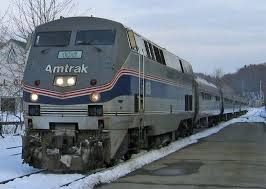
…well…not allaboard. Many are called, some will enter, and a few will be chosen. Am I talking about heaven? No. I’m talking about Amtrak. We all know what Amtrak is, but how many of us have ever taken a trip by passenger train? Not me; the closest I’ve ever gotten to a trip by train have been rides around the parks on the choo-choos at the Columbus Zoo and Hershey Park. Amtrak, however, is sponsoring an “Amtrak Residency for Writers,” believe it or not. It is happening right now; you can apply here until March 31, 2014. The application includes the submission of a writing sample which will give you the opportunity to strut your creative stuff as well. Amtrak representatives will start selecting winners on March 17 and keep doing so through March 31. Amtrak will choose twenty-four winners. The residency will be for six months…I’m kidding about the duration: if you are one of the very lucky winners, the terms of  the residency will be two to five days, and it appears that Amtrak will select your destination. You will be provided with a private sleeper car with a bed, a desk and a window. Gamblers need not apply (again, just kidding. I can’t resist. Hope you’re not, um, keeping track.). I do regret to note, however, that Brother Basil Sands is not eligible; please read the contest rules carefully to see why.
This contest looks as if it would be just the berries if you are looking to jump start your next (or even your current) writing project via exposure to inspiring scenery in an environment removed from your normal distractions of daily living. I have submitted an application, and while I would love to be one of the winners, I’d like to see at least one of you, our loyal and wonderful visitors to The Kill Zone, listed as a winner as well. Should you be selected, all I ask in return for alerting you to this wonderful possibility is that 1) you dedicate your completed novel to me and 2) you insist upon a clause in your ancillary rights agreement that I am to be given a featured role in the film version of your work. That’s all. Wink wink.
Good luck. And if one of you should be a winner, please let us know. For now, however, please tell us: if you are selected as one of the winners, where would you like to go? And how would you schedule your daily writing activity?


13 Ways to Sell More Books

By Elaine Viets

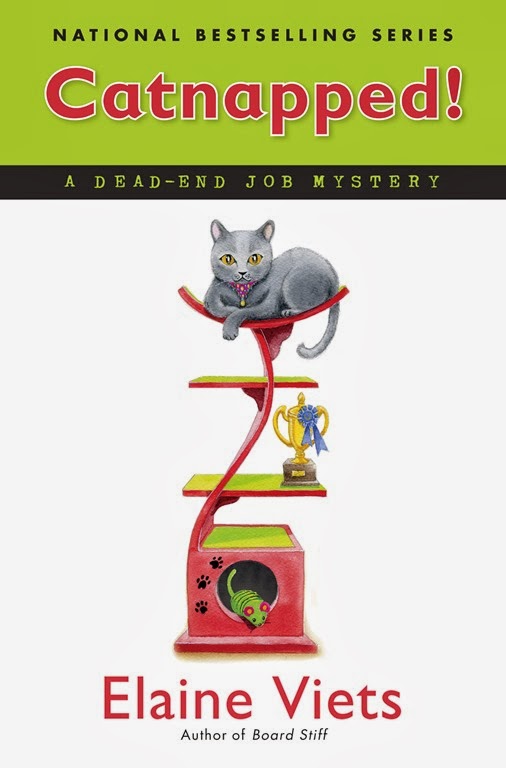
I’m a woman with a one-track mind. Catnapped!, my 13th Dead-End Job mystery, is published May 6, and I’ve been thinking about easy ways to sell my latest hardcover. I’ve updated my Website and I have a new book trailer. Brace yourself for a storm of BSP. I’m using my Website as examples for many of these tips.

Catnapped!

1. Support your local bookstores throughout the year. Even if you publish only e-books, you need to hand sell your work. Cultivate bookstores. If you can’t afford a book when you visit, buy something you can afford – a cup of coffee, a bookmark or card.

2. Ask the store manager or mystery section bookseller if they’d like a copy of your novel or an ARC, an Advance Reading Copy or uncorrected proof. The key word is “ask.” Don’t just hand the bookseller a copy.  Bookstore offices and break rooms are piled high with books and ARCs. Sadly, many of them are never read.

3. Your publisher may ask you to link to Amazon and barnesandnoble.com on your Website. Also link to at least one independent bookseller. Better yet, link to IndieBound. Check out my Website at http://www.elaineviets.com

HomeMain_03

4. Check all your Website links often, including the ones to your books. You’d be surprised how often booksellers change those links. Your site could be sending readers to buy remaindered hardcovers or used copies of your books. You won’t receive royalties for those sales. I have 22 books in two series and I list them in order. Readers love to know the book order. Check out my Novels page. http://www.elaineviets.com/new/novels/default.asp

5. Keep your Website updated. Add your new books, awards, short stories, and large print editions of your work. Have bios ready in three versions: 50 words, 100 words, and expanded. I have a Press section. http://www.elaineviets.com/new/press/default.asp

6. Invest in professional author photos. I know, you hate having your picture taken. I do, too. And your husband/sister/talented niece takes good photos. But you need a public face. Suck it up, and get the photos. Women writers, get your hair done and have a pro do your make-up. And please, don’t go a “glamour shots” studio for your makeup. A wedding makeup artist is a better choice. Put those photos on your Website so they can be downloaded by the media. Here’s one of mine – and I’m wearing freaking false eyelashes. I suffered and you should, too. http://www.elaineviets.com/new/press/default.asp

Elaine

7. You cannot master all social media. Learn which ones work best for you – Facebook, Twitter, Good Reads, Pinterest – and don’t feel guilty about avoiding the others. My Twitter handle is @evmysterywriter

8. Your Facebook and Twitter posts should match your personality as a novelist. If you write funny novels, make your posts light and entertaining. Find me on Facebook at ElaineVietsMysteryWriter

9. Constant bragging and sales pitches can lose you Facebook friends. You’ll sell more books if you give your FB friends something to enjoy just for the heck of it.

10. If you can’t Tweet or post anything interesting, don’t post that day. Only your mom cares if you had a ham sandwich for lunch.

American-Ham-Sandwich

11. Never post anything on Facebook that you wouldn’t put on a billboard. Facebook friends are not the same as real friends.

12. Resist the temptation to make political Tweets or Facebook posts. Readers want to escape politics with a good novel – yours.

13. If you don’t like a bookstore’s public relations person, sit tight. PR people move on quickly, especially the bad ones. At a local bookstore, the PR person wouldn’t even allow me to leave a mysteryfor the staff. He’s gone, and the PR person who replaced him is an author’s dream. He’s asked me to do two events at his store next month. Things can change for the better.

Rereading the Same Book

Nancy J. Cohen

Recently, I’ve returned to reading The Lost Prince by Frances Hodgson Burnett. I like his other stories as well: A Little Princess, Little Lord Fauntleroy, The Secret Garden. These historical novels have tropes that appeal to me, and I could read them many times over. But who wants to reread something you’ve already perused when you have a wealth of new books on your shelves and on your ebook reader?

Bookshelf

I feel guilty rereading a volume when I “should” be reading a friend’s work to give a review, a book I’ve obtained at a conference, a freebie on my Kindle, or the books sitting on my shelves for years begging for attention. How about the newest books by my favorite authors? Shouldn’t they get priority? Why am I wasting time reading something I’ve already enjoyed when authors who are alive and well clamor for my reading hours?

I don’t even reread my own books, although I’d like to return to my original Light-Years trilogy and immerse myself in that world again. At least I had the chance to do so when I revised these titles for their digital editions.

How about you? Do you ever go back and pick a book off your dusty shelves or buy the digital version of a book you’ve already read? Does it make you feel guilty that you’re not sitting with a current novel whose author can use your customer review?

Bench Sml (244x241)

Do you have a system to prioritize the books you read? For newer books, I’ll read the next installment by a favorite author or a book by a friend before titles by an unknown writer. The beauty of the digital age is that when you discover a writer you like, you can order the next book in a series right away on your Kindle or Nook. So the historical novel I bought at SleuthFest and am reading now, by an author previously unknown to me, is number one in a series. I’m not even halfway through it, and I know I’ll want the next two books.

This points out two issues about our current age that are both troublesome and exciting. The next books in a series are literally at your fingertips. Push a few buttons, and they are yours. That’s the good thing.

However, I discovered this book as it lay out for display at the on-site conference bookstore. Discoverability is the hot issue today. Most of us with small press or who are indie published do not see our books in bookstores, thus browsing readers will never discover us that way. If I hadn’t spotted this intriguing cover, I’d never have known about this writer. And that’s sad. We have to turn to free books online or book group recommendations to discover new authors whose series we might decide to follow.

Is there room for the older volumes sitting on your shelves, for those books you’d love to read again if only you had the time?

Are You Ready For Your Mystery Agent Date?

By P.J. Parrish

I was at SleuthFest last week and after my panel was over, a woman came up to talk. We had met the previous year, and she wanted to thank me because evidently I had said something that inspired her to quit her soul-killing job and finish her book.

Now, I remembered her but I didn’t remember what I had said to her. If you read this blog regularly you know I am a realist about this business so I’m pretty sure I didn’t pull a Pollyanna with her. I’ll do what I can to encourage other writers just starting out, but I won’t give false hope because that is just cruel.

So last week, I didn’t really know what to say to this woman. I mean, just because I might like skydiving and have managed to get seven or eight jumps under my belt, I’m not going to push someone else out of the plane. Only they know if they have the guts and can afford the parachute. But she was very excited, and said she was very happy with her decision, so we talked some more.

It went something like this:

“So, are you submitting it yet?” I asked.

“Oh yeah,” she said, “And I got a letter from Big-Name Agent at the Gigantoid Talent Management. He asked to see some sample chapters.”

“Great! That’s farther than most folks get,” I said. “What about the others?”

“Others?”

“Other agents. What did they have to say about your query?”

“Well, I only sent out two. And Big-Name said he had to have an exclusive. So I’m not doing anything until I hear back from him.”

“Oh,” I said. “How long has Mr. Big had your chapters now?”

“About four months.”

Okay…can you figure out where I’m going with this?

This woman had worked hard for three years to write her book. She had gone to writing conferences and workshops. She had done her homework. She had quit her job so she had enough time to follow her dream. (Don’t worry; she had other means of support, so that’s not the issue here).

But then she fell for the first guy who said “maybe.” As in, “Yeah, maybe we’ll hook up. Maybe I’ll give you a call someday, baby. I don’t know when exactly — maybe even never. But in the meantime, I don’t want you to talk to any other guys.”

Now I realize Mr. Big was her Dream Date. And it’s easy to get blinded by good biceps and blue eyes. Or in this case, a 212 area code and a client list heavy with bestselling authors. But would you wait around for this guy?

Of course not. If your book is finished and you’re ready to send it out into the cold, cruel world, why would you do anything that lessens your chances of success? Finding a good agent — no, let’s correct that; not just a good agent but the right agent — is maybe the single most important business decision you make as a writer. This person will be your advocate, your guide, your champion, your career-coach. And the best agent for you might not be Mr. Big at Gigantoid Talent Management. The best agent for you might be Miss Sincere at Small But Personal Inc. Maybe even Mr. Cassius at Lean And Hungry House. But most definitely, the best agent for you is the one who sees something so special in your work that he or she plucked you out of the 200 to 300 queries they get every week. The best agent for you is someone who will believe in you even in those dark moment when you don’t even believe in yourself anymore.

Exclusives are bad things — for writers. Why? Because you are giving that one agent the power to tie up your manuscript for months. Odds are, the sample chapters you sent will be rejected. (Maybe for reasons that have nothing to do with its quality remember). But by agreeing to an exclusive, you have lost six to eight precious months in what is a long and tortuous process even in the best of circumstances. Until an agent agrees to take you on as a client, they just don’t have the right to control your work like that.

If you won’t take my word on this, I bow to a higher source. Here is Miss Snark Literary Agent on the subject.:

“Exclusives stink…To ask an author to tie up his/her work on open ended terms is disrespectful and counter productive. It’s also a lazy ass way to do business. You can’t provide her an exclusive read and you shouldn’t. If she doesn’t see the merit of that, why would you want to work with her?”

But, you say, Mr. Big said he liked her stuff. What if she turns around now and sends out a hundred queries and he finds out?

Worse case scenario: No other agent is interested. She is back sitting by the phone waiting for Mr. Big to call.

Best case scenario: She gets responses from forty agents who want to see her sample chapters. Then ten want to sign her up. She now has the luxury of choice. She can talk to them all, make a measured thoughtful decision and find the agent who is the best fit — for her.

I wouldn’t sit home waiting for Mr. Big to call. Don’t know about you, but I had enough of that crap in high school.

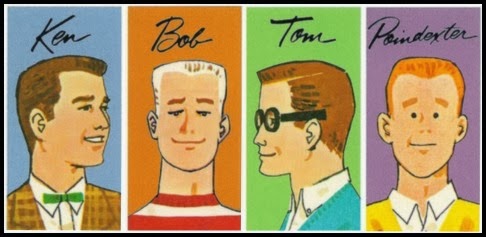
So don’t give away your power to the first pretty face that says “maybe.” Beneath that pretty face there could be a true Poindexter.

Waste Not, Want Not

by Brad Parks, award-winning mystery writer

– Note from Jodie: I sold my house (Yay!) and am busy planning my cross-country move, editing a great new thriller for our own Joe Moore and his co-author, Lynn Sholes, and preparing a webinar to present at a cyber conference, so it was perfect timing when Brad Parks contacted me about guest posting on TKZ. – Take it away, Brad!

It was the great and revered mystery author P.D. James who once said, “Nothing that happens to a writer – however happy, however tragic – is ever wasted.”

I mention this because, one, it makes me sound well-read and erudite. And, two, because it is exactly the kind of soft-headed, touchy-feely, writer-as-artiste horse-apple I used to completely dismiss.

Of course things that happen to a writer are wasted. I mean, when I was a newspaper journalist I had to write whole stories about peoples’ reaction to the weather (“Boy, is it hot,” said Robert Smith of Manalapan. . . “I’m soooo cold!” said Sarah Jones of Weehawken). Believe me, those are dead brain cells I will not get back.

I think up until recently, I would have been ready to tell P.D. James to take her nothing-is-ever-wasted aphorism and stick it on a poster with kittens, because real writers don’t think of themselves as artists but, rather, as craftspeople. We use a well-honed set of tools – our sense of story, our intuition about human nature, a facility with language and prose, etc. – to craft thrilling tales of suspense. We don’t go in for all that navel-gazing, namby-pamby hogwa…
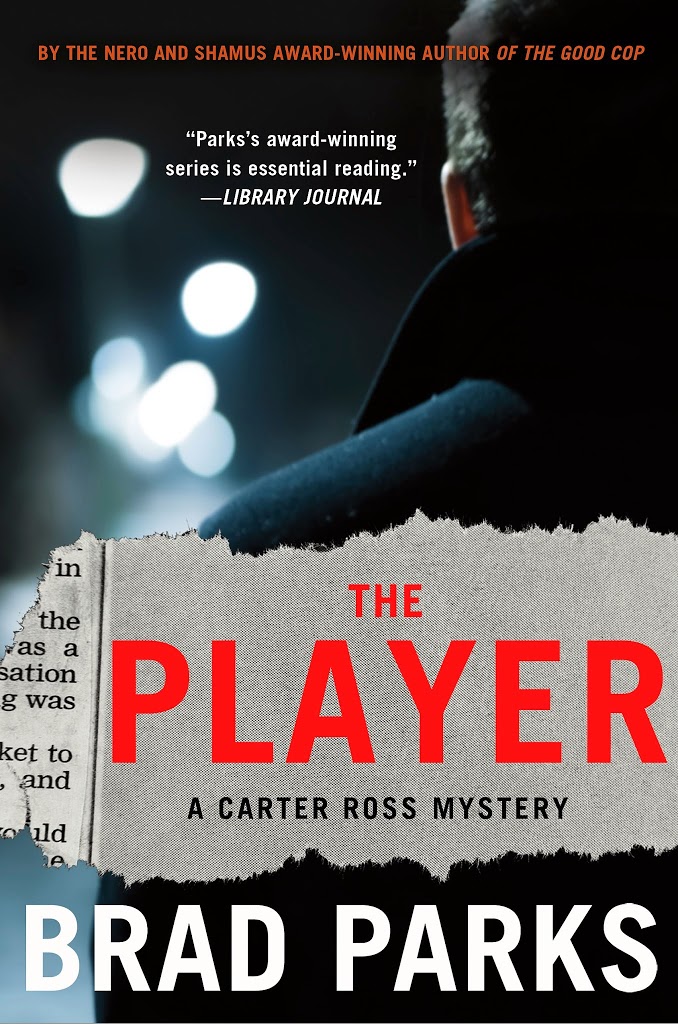
… And then along came this book. It’s called THE PLAYER, the fifth in my series featuring sometimes-dashing investigative reporter Carter Ross.

I was throwing a few notes together for various talks I’ll be giving at bookstores and libraries in the coming months and I remembered that, back when I started writing it, I thought of it as a book that dealt with the subject of brownfield redevelopment – that is, the cleaning of contaminated sites to make them suitable for new construction.

(Mind you, I no longer call it a book about brownfield redevelopment, because I’d actually like to sell a few of them. When you say “brownfield redevelopment,” peoples’ eyes get glassy. I now call it a book about toxic waste and the mob).

Anyhow, just for kicks, I went back and looked at some of the clips I had written about this subject back when I was a reporter. I tripped across this one story from 2007. It was about an abandoned landfill in Edison, New Jersey that was being eroded away by the Raritan River. The result was that every time the river rose – every rainstorm, every high tide – fifty-year-old trash was being swept into the current.

It was unhealthy, unsanitary, and a major eyesore. And yet because the original owner of the landfill was no longer around, there was no money to clean it up. Basically, the only hope for this dreadful little patch of earth was if a developer came along and decided to build a golf course there – or an office park, or whatever.

When done well, this is actually a great win-win. The contamination gets cleaned up. The developer gets some free land. It’s all good. But of course in the name of journalistic balance you always have to find someone to sound a note of alarm and remind readers that something that sounds too good to be true sometimes is. So I interviewed this environmentalist named Bill Wolfe. Here, I quote from what I wrote:

Wolfe said old landfills have been known to leach benzene, TPC, TPE, arsenic, lead, cadmium, chromium – a laundry list of killer chemicals. He calls redevelopment schemes “madness.”

“What should have been a public enterprise – cleaning up old landfills – has become a private, for-profit, economically driven enterprise,” Wolfe said. “It really is asking for a disaster.”

When I re-read that not long ago, I was agog. It was the thesis of THE PLAYER, stated in two succinct paragraphs. And I had completely forgotten that I ever wrote it. It was just fifty-six words buried near the bottom of a 1,800-word story. Since it published, I have written hundreds of other articles, to say nothing of a pile of full-length novels. We’re talking about something that was roughly a million words in my rearview mirror. I had no shot of remembering it.

But it was obviously rattling around in my head somewhere. And it managed to leak out onto the page and form a novel. Apparently P.D. James was onto something.

(Oh, incidentally, I did look up Bill Wolfe and sent him a copy of THE PLAYER. I figured it was the least I could do).

Now, maybe for some of you who are more enlightened on this subject, this connection between what you do and what you write isn’t news. For me, it’s been something of a revelation. It’s not that I’ve given up on my view that writers are craftspeople. It’s that I’m opening myself up to the idea that we’re artists, too.

I find myself living more consciously, being more aware of what I’m reading, who I’m talking to or what I’m seeing – because you never know when that article, that conversation or that experience will inform your future scribbling.

After all, nothing that happens to a writer is ever wasted.

Brad Parks is the only author in history to have won the Shamus, Nero and Lefty Awards. His latest book, THE PLAYER, received starred reviews from Kirkus and Library Journal. RT Book Reviews made it a Top Pick for March, saying, “Parks has quietly entered the top echelon of the mystery field.” Visit him at www.BradParksBooks.com.

Marketing Lessons My Grandfather Taught Me

@jamesscottbell


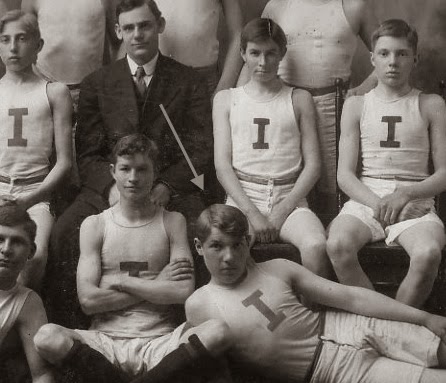
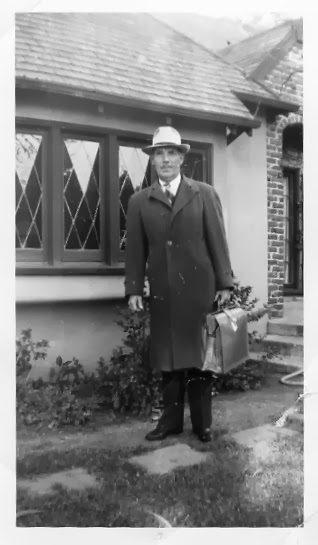
My grandfather, Arthur Scott Bell, was born in 1890. He grew up in Ann Arbor, Michigan, where he was an outstanding high school athlete. 
He won an athletic scholarship to DePauw University, later transferring to the University of Michigan to play football. He joined the Army in World War I, during which time he met my grandmother, Dorothy Fox. One of the treasure troves I have is the box of love letters he wrote to her from Fort Sheridan, Illinois. My grandmother kept them all, bound with ribbons. When my father was little he’d hear his father call his mother Dot, and he combined that with Mama, so ever after my grandmother was known as Mama Dot. Later on, my dad started calling his father Padre.
And that’s how all his grandkids knew him.
One of Padre’s favorite phrases was, “Go your best.” He said that to me a number of times—when I was off to a new school year, or starting Little League. 
During the Great Depression, Padre fed his family as a field salesman for the Encyclopedia Britannica. He was a stellar salesman, rising to become one of the top ten in the entire company.
From what Padre and my dad told me about those days, I gather five lessons that apply to writers (and anyone else) trying to peddle their wares.
1. He believed in his product
Padre loved the Britannica. I have a full set from 1947, passed down to me. [NOTE: if you have one, don’t get rid of it. The entries in these volumes are often better and more authoritative than anything you can find today.]
Do you believe in your product? Are you convinced that what you’re writing is the best you can make it? Or are you going out there with something less than that––and still expecting good sales?
2. He believed in self improvement  
Padre was a life-long learner. On my shelf I have Padre’s dictionary, the Webster’s New Collegiate, 2d Edition. In the front of the dictionary, on one of the blank pages, Padre had written himself a note on a new word: psycho-cybernetics. That would place this note around 1960, when the book by Maxwell Maltz first came out. Padre was 70 years old then, but still interested in growing his vocabulary.
He was of the Dale Carnegie school of self-improvement. Another treasure I own is the hardcover copy of How to Win Friends and Influence Peoplethat Padre and Mama Dot gave my dad upon his graduation from Hollywood High School. They each inscribed it. Padre wrote:
To have a friend is to be a friend. I am sure you are getting to be an expert at it. Don’t let down!!
And from Mama Dot:
You can do more than strike while the iron is hot. You can make the iron hot by striking.
Are you growing as a writer? Are you spending some part of your week in purposeful study of the craft? Padre and Mama Dot’s generation believed anyone could succeed if they studied and worked hard enough.
3. He concentrated on the best prospects
Padre had a definite strategy when he pulled into a new town. He looked up all the lawyers and doctors. These would be the people most likely to have some disposable income during the Depression. Thus, they would be the most likely to buy.
Simple enough. But when it comes to marketing, how many writers out there are trying to cast a wide net in the hope of snagging some random fish? The difference between 100,000 robo-gathered followers, and 10,000 quality followers, is huge. Don’t try to be all things to all people, but be a value add-on for those who are most likely to want to sample your work. 
4. He made people feel good
My grandfather was a natural storyteller. He had a deep, resonant voice. I can hear it now. And when he started spinning a tale you sat mesmerized.
I remember one story he told about a football player at Michigan named Molbach. The fellows called him “Molly.” He was a fullback, a powerhouse runner who just would not be stopped in short yardage situations. Padre told about one tough game where Molly put his head down and ran so hard he kept going over the sideline and ran right into a horse––and knocked the horse down!
Padre’s storytelling made you feel good. Got you into the moment. The legend in the family was that Padre had a story for every occasion.
Does your marketing make people feel good? If someone sees you’re tweeting or Facebooking, will they generally be pleased at what you’ve posted? Or do you depend on a barrage of value-less “buy my book” type messages?
Work at making your social media a pleasure for others to read. “To have a friend is to be a friend.”
5. He could laugh at life
Padre was a man “at home in his own skin.” He’d been through plenty in his life, the Depression not least among them. But he always came out all right in the end.
He had the greatest laugh in the world. It came from deep in his chest and rumbled out in joyous reverberation.
You need to be able to laugh and not stress over outcomes and expectations. If you follow Padre’s lessons, you’ll work hard on yourself and your writing. You’ll be smart about marketing and refuse to let setbacks stop you. You simply won’t worry about the things that are outside your control.
Manage your expectations, don’t let them rule you. Concentrate on what you can do, not what is out of your  hands.
Keep working.
Keep writing.

Go your best.

Bryan Cranston!

Last weekend my wife and I went to see All the Way, the play about Lyndon B. Johnson that just opened on Broadway. The show has gotten a lot of press because it stars Bryan Cranston of Breaking Bad fame. I love this actor. I’ve never seen anyone do such a remarkable job of combining funny and scary. His Breaking Bad character, Walter White, is a totally pathetic clown in some episodes and a stone-cold monster in others. And sometimes he manages to be both at the same time. (SPOILER ALERT: I’m thinking of the scene where Walt shot Mike, in the fifth season. It was so stupid and petty of him.)

I’m happy to report that Cranston does an equally fine job of portraying LBJ in this new play. It would be so easy to play the 36thpresident as a caricature, either a goofy Southern good ol’ boy or a boring Tragic Figure, but Cranston deftly sidesteps both traps. His LBJ is amazing. You have to see it to believe it.

The problem is the rest of the play. It’s written like a high-school history lesson, an earnest, dumbed-down summary of the civil rights movement and the 1964 presidential election. Cranston’s performance is so good that you don’t really notice the play’s flaws when he’s talking. But when the other actors open their mouths, watch out! It was particularly painful to listen to the guy who played Hubert Humphrey, who was portrayed as a naive idiot. This was jarring, because I distantly remember watching Humphrey on TV when I was a kid. He was an idealist, but he wasn’t an idiot.

While my wife and I were talking about the play afterwards, she asked if I could think of any novels that had a similar problem — the main character is rendered exceptionally well, but the rest of the book is just so-so. I drew a blank at first. Then I started to formulate a theory. In most first-person or close third-person novels, I said, the main character is so intimately tied to the narration that it’s hard to separate the two. A character is excellent because his/her narration is excellent, and vice-versa. But in a book with multiple points of view, it’s very possible that an author could do a great job with one or two characters and much worse with the others. Then I tried to think of an example to back up my point.

I’m still thinking.

Reader Friday: Your Town


Los Angeles, give me some of you! Los Angeles come to me the way I came to you, my feet over your streets, you pretty town I loved you so much, you sad flower in the sand, you pretty town. 
Ask the Dust by John Fante (1939)

Describe your home town: where you grew up, or where you live now. How has it influenced you as a person and as a writer? 

Angry Enough To Kill – First Page Critique

Jordan Dane
@JordanDane
 

This anonymous submission is called Angry Enough To Kill. I’ll have my critique comments on the flip side. Enjoy!
 
HUNTING SEASON
​Some people say most decisions are reversible, but what do they know? Not this decision. This time, she’s damned if she´ll change her mind and damned if she doesn´t. She’s come too far and given up too much. The time to reconsider is past.
 
In the late Fall chill, she quickens her pace along the forest trail, the ground hard and frozen beneath her moccasins. The winter snows have yet to fall in Jackson, Wyoming, and for this, she is grateful. The sawed-off shotgun digs through the backpack into her waist, and she shrugs its weight to the side, rubbing her hands over her arms to warm them, forcing her fingers deep into her gloves. Her mouth is so parched, her lips cling to her teeth.
 
The fog forms and fades away, only to form again in different shapes, hunters …witnesses.
 
Don’t think. Just get it done.
 
Beside the Snake River, trees pierce the haze. Tendrils of fog slither down the alder standing alone in the center of the clearing, and she imagines them creeping along the ground toward her. Magpies tch, tch, tch. An eagle screeches, wings flapping, and the river churns in the distance.
 
At the side of the clearing, she clambers over a fallen pine, crawling under the boughs she arranged so meticulously the day before. The laces on one of her moccasins have come undone. She ties them, this time with a double knot, loads the tranquilizer pistol and settles down. It shouldn’t be long now.
 
Nothing obstructs her view of the pathway leading from the town to the river. She rests her arms on the log, and waits, like a child playing soldier, but this is not child’s play.
 
Something crawls up her neck. She swats at it; a spider lands on her arm. She coughs back a scream, and brushes it off. After a time, her knees ache and she shifts on the damp leaves, releasing a whiff of mold and decay.
 
A twig snaps.
 
Her hand tightens around the dart pistol.
 
Please let it be Devlin.
 
He’s whistling, a tuneless wheeze she’s heard before, and he carries a plastic bag. She knows what’s inside: a Sears catalog with pictures of children in their back-to-school clothes.
 
Will he take a leak as he did yesterday and the day before? She tries not to breathe.
 
He hangs the bag on a branch of the alder and…
 
 
My Critique:
Wow. Did I love this. This author creates tension and doesn’t over-explain or “tell” the reader what’s happening. The author shows it and also does a great job at incorporating the setting in an evocative way. The first strong foreshadowing (beyond the intro paragraph) is the word “witnesses.” Good instinct, author. In one word, the reader knows the woman is not there to hunt.
 
Use of Present Tense:
I’m not a big fan of present tense. I’ve seen it effectively used for the young adult market, because it puts the teen reader into the moment with more immediacy. If this is a book for teens, maybe the present tense will work, but in general, the use of it throws me from the work. We’ve talked about this on TKZ before. Anyone have comments on present tense?
 
No Name:
This isn’t a big deal in this strong submission, but is there a reason that the character is not named? Sometimes an author thinks it is necessary to withhold a name and I’ve certainly had my reasons for doing it on occasion (mostly no name characters who will be dead by scene end). But it might help the reader to connect with this character if she’s given a name. Something to think about, dear author.

Stronger Opener:

Option 1: The first option to make this start stronger is to eliminate the first paragraph. It foreshadows what’s ahead, but it reads as author intrusion, like a storyteller giving an omniscient point of view. If it’s deleted, the reader can get immediately into the action and still have a subtle foreshadowing doled out in the narrative to come.

Option 2: Tweak the opening lines to make them stronger. Here are a few suggestions:


<<Some people say most decisions are reversible, but what do they know? Not this decision.>>
This line could be stronger if the author commits to the thought from the character’s POV and not make it a generic saying about “some people.”
 
For example:
Most decisions can be changed. Reversed. Not this one. 
 
Some may have the view that the first paragraph isn’t necessary, that the author could lull the reader into the menace of the story by making it seem as if she’s merely hunting before they learn “who” she’s stalking. Although I like the short and sweet foreshadowing of the first paragraph, it could use more punch.
 
<<She’s damned if she´ll change her mind and damned if she doesn´t. She’s come too far and given up too much.>>
These lines are good, but they seem a bit cliché and generic for me. When an idea can be expressed in a cliché manner, I try to find an alternative way to express the thought, but with a more visceral approach.
 
For example:
She’d be damned for what she’d come to do, but damned for doing nothing is worse. He’s given her no choice. Not now.
 
<<The time to reconsider is past.>>
This line seems weak and without emotion, given what the character’s intention is. To pull out my meaning, this time I’ll ask the author an open ended question only they can answer, so I don’t sway the author into my point of view on specific wording. This line needs more punch that foreshadows the danger and commitment ahead.

1.) What does it feel like for her to know she will be a lawbreaker? This isn’t lip service. She’s crossing a moral line and she’ll never get back her innocence.

2.) Does her decision physically manifest in her body? She’s committed to a cause and willing to risk everything.


Sentence Structure:
In the sentence “At the side of the clearing, she clambers over a fallen pine, crawling under the boughs…” That sentence can be made simpler and stronger if the writer eliminates the ‘ing’ from crawling.

Example: “At the side of the clearing, she clambers over a fallen pine and crawls under the boughs…”

I understand the cadence of the structure, but this is something I have to look out for myself. Overuse of ‘ing’ words can force the reader to reread a passage if they get lost in a long sentence and forget what is modifying what.

Also look at the sentence: “An eagle screeches, wings flapping, and the river churns in the distance.” The eagle screeching doesn’t imply the bird is flying. It could be on a branch in a tree. Flying can be assumed, but the sentence would be clearer as follows: “An eagle screeches overhead with its wings flapping and the river churns in the distance.”
 

In critiquing another author’s work, it’s easy to nitpick on word choices and phrasing. We all want to give feedback to help the author make this a stronger submission (in our opinion), but only the author can make the decision on what will be changed. Overall there is a lot to like about this submission. I would definitely love to keep reading. The author has my undivided attention.


Comments, TKZers?