About Joe Moore

#1 Amazon and international bestselling author. Co-president emeritus, International Thriller Writers.

Is Your Book Tone-Deaf?

By. P.J. Parrish

I don’t get to read for pleasure often, so when I ducked away to Sanibel Island last week, I took a couple paperbacks and my Kindle, all loaded up with stuff I’ve been meaning to get to.

It was like a unleashing a starving stray dog on a smorgasbord table. I finished Joyce Carol Oates’s short story collection “The Female of the Species,” woofed down a couple old John D. MacDonalds, Tom Franklin’s “Crooked Letter, Crooked Letter” and Gilbert King’s “Devil in the Grove.”

When I ran out of stuff, I turned to the shelf of ratty paperbacks in our rented bungalow. There was a book by an author I hadn’t heard of before. I love discovering new authors, so I read the back copy. Good premise. I skimmed the first page. She had me. I took it down to the beach, lathered up with sun block, and settled in. I was ready. I wanted to be seduced. The first chapter was really good. A female cop, a grisly setup, a clear narrative voice, taut writing that teased me to turn the page.

So I did. And damn, I wish I hadn’t because things went downhill fast. This female cop suddenly turned into a blithering mess. Worse, her ex-boyfriend came sniffing around and after she took him back, he took over the case. HER case! Suddenly, this cop — traumatized though she might have been — allowed weasel boy to take charge of everything. Worse, the writer LET HIM DO IT! Every time there was a new twist in the case, it was weasel boy who led the charge. Where was our heroine? Weeping and whining on the sidelines, a pathetic Hamlette, torn by indecision.

The thing degenerated into a mass of bad romantic cliches. Complete with a see-it-coming-a-mile-away pregnancy that by book’s end gives our girl a good reason reason to quit her police job and make waffles for weasel boy. I was furious. Do you ever have the urge to throw a book across the room? I was sitting on the beach and would have heaved this one into the sea oats but I might have hit a turtle nest so I got up and threw it in the Dumpster.

Why?

It wasn’t because I hate women in distress books. The female in jeopardy is a standard of our genre and in the right hands, this can sometimes rise above cliche. But this author was dishonest. She started out with a premise that promised a woman of strength and depth. And I had expectations that this character would rise above her awful trauma through her own grit and courage. As I read this book, I found myself thinking about another book I had read, Theresa Schwegel’s “Officer Down,” which won Best First Edgar. This author also had a damaged heroine whose lover muscles in. But Schwegel let her heroine solve her own problems. The woman cop wasn’t waiting for Dudley Do Right to right her ship.

In the end, I decided I was angry about this other book because I had been misled. I don’t begrudge readers romantic escapism. Hell, I used to write it. But this book was so schizophrenic it was like the first three chapters were written by Germaine Greer and the rest by Phyllis Schlafly. (Yeah, I’m showing my age there). If your setup is a dark tale of a woman cop’s redemptive journey, you can’t switch tones mid-book and start going for the Rita Award.

Tone is so important. And it’s not really the same as mood. Tone is the narrator’s attitude toward the subject — be it playful, ironic, dark, hardboiled, romantic — whereas the mood is what the reader feels by virtue of the setting, theme and voice. And I think tone is something often overlooked by some beginning writers. You, the writer, have to know in your heart what kind of book you are setting out to write. And then you should bend all the powers of your craft to that end. Poe called it Unity of Effect and wrote about it in his essay “The Philosophy of Composition.” He believed that a work of fiction should be written only after the author has decided which emotional response, or “effect,” he wishes to create. And once that was decided, everything else — theme, setting, characters, conflict, and plot — should serve the effect.

We do this via the countless choices we make as writers. What words we use, what imagery is in play, what the sentence structure is, what details we put in (as well as those we leave out). Here’s a visual.:
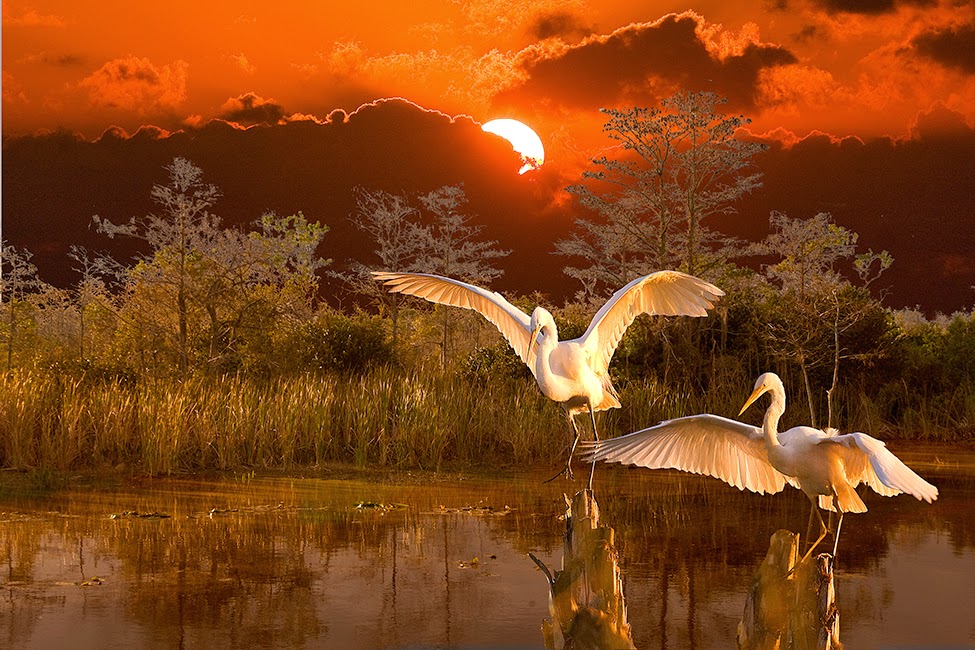

Both are photos of the Everglades. I’m choosing them because I also went on a “swamp walk” hike in the Corkscrew Swamp this week. The first photograph is by Susan Schermer. The second is by Clyde Butcher. Schermer’s is lush and color-saturated, with emphasis on the birds and setting sun. Butcher’s is desolate, empty of all apparent life and in stark black and white. The first is somewhat sentimental; the second almost existential. Both artists made choices about what details they wanted to include — or leave out — in their work, how they lit their landscapes, the types of trees, the quality of the water.

Same subject, different tones. Each is successful in its own way. But you can’t mistake one for the other.

So what’s my point? I’m not asking anyone to buttonhole their work. It isn’t necessary to try to psyche out editors and the folks who shelve the books at Barnes and Noble. (Is this neo-noir? Is it chick lit? Is it teen dystopia? Do we even care anymore?) I’m not even talking about all the sub-genres we tend to impose upon crime fiction. Some of the best stuff being written in crime fiction right now crosses so-called divides and genres.

What I am asking for, I think, is consistency. And honesty. Be honest with your readers. I don’t mean be predictable. Being honest means finding a tone for your work and sticking with it so that the reality you create on your pages is believable and satisfying. If you want to write romance or romance suspense, go for it and do it well.

But don’t promise me Katniss Everdeen and then give me Donna-Too-Dumb-To-Live. The book will end up in the Dumpster.

Nail it with Just the Right Word!

 by Jodie Renner, editor, author, speaker  

To set the mood of a scene in your story, bring the characters to life, and engage readers in their world and their plight, it’s critical to choose just the right nuance of meaning to fit the character, action, and situation. And verbs are the heavyweights in your sentences, so pay particular attention to them. Especially avoid the very common but tired, overused verbs like walked, ran, and looked. Instead, find a synonym that shows how that action is taking place.

Say you’ve got a character going from one place to another. How are they moving, exactly, and why? Convey their physical and emotional state at that moment by using a strong, precise, evocative verb. Readers will envision the character and situation much differently, depending on whether you show them strolling or striding or skipping or shuffling or sauntering or slinking or strutting or sashaying or slogging along, just to name a few “s” movement verbs, for example.

For help in zeroing in on the very best word to convey the tone and mood you’re after, it’s a good idea to use both a thesaurus and a dictionary (either online or print). Use the thesaurus to find a wide range of possibilities, then if you’re not 100% sure of the meaning, check with the dictionary to avoid embarrassing slip-ups.

But avoid choosing words your readers will need to look up in a dictionary.

Just make sure to choose a word that really nails the meaning you’re looking for, not one that will impress your readers with your literary prowess. Choosing obscure words that just draw attention to themselves is a sure way to distract readers from your story and annoy them. So read your story out loud later to make sure the words you’ve chosen sound natural and are words your characters would actually say or think in the given situation. (And remember that narration is really the viewpoint character’s thoughts and observations!)

Example from my editing:  She heard a stridulous sound coming from the basement.

I’ve never heard the word “stridulous” before, so it conjures up no image or meaning whatsoever to me. That’s the danger for a lot of your readers, too – no image, no impact. And a mild irritation at having to look a word up in the dictionary if they want to know what it means.

If you’d like to introduce some interesting words your readers might not know, it’s best to use them in context, so readers can guess at the meaning.

Choose words that enhance the tone, mood, and voice of your scene.

Find vivid verbs

Verbs are especially important, as there are so many variations in the way someone can move or speak or eat or whatever, depending on their personality, mood, age, gender, size, background, health, fitness level, and of course the circumstances. So it’s worth the effort to find just the right verb that nails the action and makes sense in the context of the scene. A verb that doesn’t quite fit can be jarring and turn a reader off, whereas finding a stronger, more specific verb can really strengthen a scene.

Words for “walked”:

I’ve compiled a handy list of synonyms for “walked” to fit various situations and characters:

– Drunk, drugged, wounded, ill: lurched, staggered, wobbled, shuffled, shambled

– Urgent, purposeful, concerned, stressed: strode, paced, treaded, moved, went, advanced, proceeded, marched, stepped

– Relaxed, wandering: strolled, sauntered, ambled, wandered, roamed, roved, meandered, rambled, traipsed

– Tired: trudged, plodded, slogged, clopped, shuffled, tramped

– Rough terrain, hiking: marched, trooped, tramped, hiked

– Sneaking, stealth: sidled, slinked, minced, tiptoed, tread softly

– Showing off: strutted, paraded, sashayed

– Other walking situations: waddled, galumphed (moved with a clumsy, heavy tread), shambled, wended, tiptoed

So in general, it’s best to avoid plain vanilla verbs like “walked” or “went” if you can find a more specific word to evoke just the kind of movement you’re trying to describe.

But don’t grab that synonym too quickly! Watch out for show-offy or silly words.

After you’ve found a list of interesting synonyms, choose carefully which one to use for the situation, as well as the overall tone of your book. For example, for “walk,” don’t go to extremes by choosing little-known, pretentious words like “ambulate” and “perambulate” and “peregrinate” (!), or overly colloquial, slang, or regional expressions like “go by shank’s mare” and “hoof it.”

And beware of words that just don’t fit that situation.

Also, some synonyms are too specific for general use, so they can be jarring if used in the wrong situations. I had a few author clients who seemed to like to use “shuffled” for ordinary, healthy people walking around. To me, “shuffled” conjures up images of a patient moving down the hallway of a hospital, pushing their IV, or an old person moving around their kitchen in their slippers. Don’t have your cop or PI or CEO shuffling! Unless they’re sick or exhausted – or half-asleep.

Similarly, I had a client years ago who was writing about wartime, and where he meant to have soldiers and officers “striding” across a room or grounds or battlefield, he had them “strutting.” To me, you wouldn’t say “he strutted” unless it was someone full of himself or showing off. It’s definitely not an alternate word for “walked with purpose” as is “he strode.”

Or, disguised from another novel I edited:

Joe stood up, shocked and numb, after his boss delivered the tragic news about the death of his friend. He dreaded his visit to Paul’s widow. He sauntered back to his office, his mind spinning.

The verb “sauntered” is way too relaxed and casual a word for the situation. The guy’s just been told his friend is dead. Maybe “found his way” or even “stumbled” back to his office.

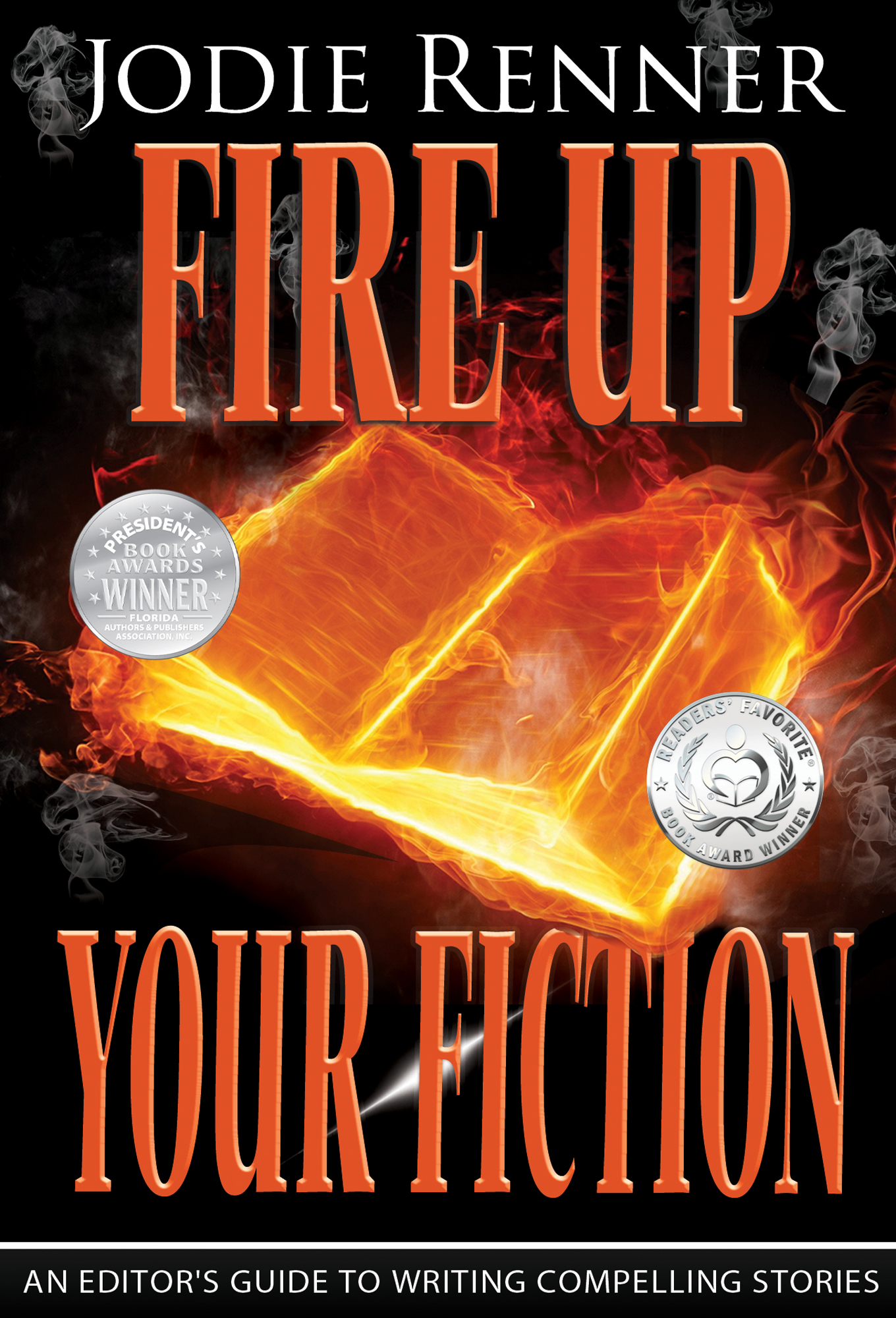
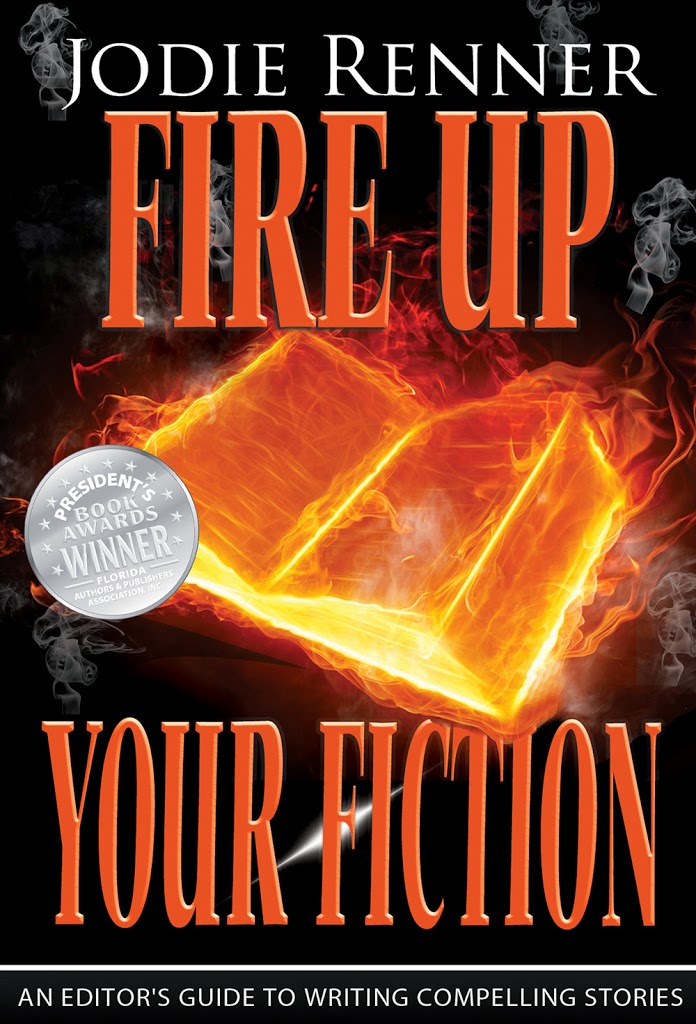
For similar lists for the verbs “ran” and “looked,” as well as lots of other tips for writing compelling fiction, check out my award-winning writing guide, Fire up Your Fiction.Fire up Your Fiction_ebook_2 silvers

Here are two recent quotes from two different contest judges about Fire up Your Fiction:

“This should be on the booklist for Master’s Programs in Writing for Publication.” ~ Writer’s Digest Judge

“FIRE UP YOUR FICTION is the Strunk and White for writers who want to be not just mere storytellers but master story-compellers.” ~ Judge, IndieReader Discovery Awards


Jodie Renner is a freelance fiction editor and the award-winning author of three craft-of-writing guides in her series An Editor’s Guide to Writing Compelling Fiction: Captivate Your Readers, Fire up Your Fiction, and Writing a Killer Thriller. She has also published two clickable time-saving e-resources to date: Quick Clicks: Spelling List and Quick Clicks: Word Usage. You can find Jodie at www.JodieRenner.com, www.JodieRennerEditing.com, her blog, http://jodierennerediting.blogspot.com/, and on Facebook, Twitter, and Google+.

Sometimes You Have to Write for the Love of It

@jamesscottbell

There are writers who write only for money. There’s nothing illegal about that. Indeed, I strongly believe in writers making dough.
There are other writers who write primarily for artistic expression, and don’t seem to care about money at all. That’s not illegal, either.
And then there are writers who write as a source of income but sometimes just want to write something for love of the writing itself, even if it’s not going to generate revenue.
That’s how I would describe my new short story, “Golden.” 
This story is different from my other work. It’s not a genre piece. Let me explain.
I admire great short-story writers, because the form is so challenging. Among my favorites are Hemingway, Saroyan, Irwin Shaw and John D. MacDonald.
The latter author is not usually thought of as a short-story writer. He’s best known for his brilliant Travis McGeeseries.
But I contend that MacDonald was one of America’s great literary talents. That he chose pulp and paperback originals for most of his work had to do with his need to make a living as a writer, and fast, after World War II.
I have an extensive MacDonald collection. A few weeks ago I pulled off the shelf his volume of literary-style short stories, The End of the Tiger. I turned to a story I’d not read before, “The Bear Trap.” A man is on a road trip with his wife and children. When they stop at an isolated gas station a seemingly innocuous event triggers a memory in the man. His “shattering moment” comes back to invade his present. It tells us about who this man really is and, in the way of great short stories, something about ourselves.
It reminded me, once again, that a great short story can have an emotional resonance as powerful as a novel. I still remember the strong emotions I felt after finishing stories like “Hills Like White Elephants” and “The Short Happy Life of Francis Macomber” (Hemingway); “The Daring Young Man on the Flying Trapeze” and “A Word to Scoffers” (Saroyan); “The Girls in Their Summer Dresses” and “The 80-Yard Run” (Irwin Shaw); “Where Are You Going, Where Have You Been?” (Joyce Carol Oates); “Will You Please Be Quiet, Please?” (Raymond Carver).
And speaking of Carver, many of you know I got to be in a workshop with him when he taught for a time at U.C. Santa Barbara. What I recall most is that I couldn’t do what he did. Or what some of the “star students” in the class were doing. And no one was able to teach me. I felt like a failure, like I didn’t have any true literary talent at all.
It took me years to discover you could actually learn the craft. I’ve also written about how I came out of the movie Moonstruck wanting (needing, really) to write something that would make others feel the way I felt just then.
A similar feeling overtook me when I finished the MacDonald story. 
So I wrote “Golden.” 
I have no idea if it’s any great shakes. I feel a little of the old knee knocking I experienced in that classroom with Raymond Carver. 
But maybe that’s a good thing. If your knees aren’t knocking on occasion, maybe you’re not stretching enough as a writer. 
Maybe you’re not risking love.

So what about you? Do you write for love, for money, or some combination of both? 

Hardcovers vs. Paperbacks


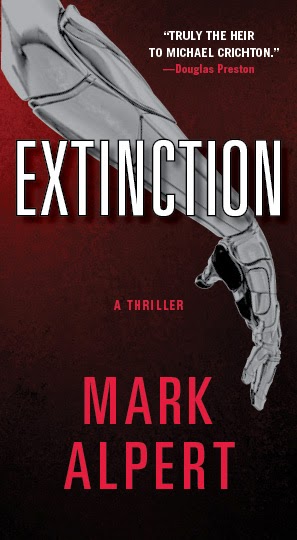
My third novel, Extinction, will come out in paperback on Tuesday. I’m a big fan of paperbacks in general; of all the books I buy, only about twenty percent are hardcovers. The main reason is the price difference. Whereas the list price for the hardcover of Extinction is $25.99, the price on the cover of the mass-market paperback is only $9.99. The difference isn’t quite so extreme after discounting — Amazon, for example, sells the hardcover for $18.80 and the paperback for $8.99 — but it’s still pretty significant for all but the wealthiest book-buyers.

Paperbacks are also lighter and more portable. They fit inside the pockets of my winter jacket. They’re easier to hide (in case you’re embarrassed about what you’re reading). And they take up less space on your bookshelves, which is an important concern if you live in a smallish apartment with a spouse, two kids and all their paraphernalia. (Electronic books would be even better in that respect, but I just don’t feel comfortable reading them. I can’t really relax when I’m holding a screen. I can’t ignore the screen’s presence, which makes it hard for me to get lost in the story.)

Don’t get me wrong — hardcovers have their place. When I buy a book as a gift, I never get a paperback if the hardcover is available. And I love certain authors so much that I just can’t wait for their paperbacks. (I’m talking about you, Lee Child. And you too, Dennis Lehane.) But I’m a pretty patient guy. I’m dying to read Gone Girl, but I’m willing to wait a few more weeks until the paperback comes out. I’ll bide my time by reading a classic or two. (I’m reading Blood Meridian now. What a freaking amazing book!)

Speaking as a writer now, I love being published in hardcover. I’ve been lucky to have gorgeous book jackets for all my novels. And it feels good just to hold the hardcover — it feels substantial, weighty, lasting. But I’m a relatively unknown writer trying to reach new readers, so publishing paperbacks is crucial to broadening my audience.

Over the past year I’ve noticed that a few very famous authors are eschewing the hardcover route for some of their books and putting out paperback originals. Stephen King did this last summer with Joyland, which was a fun read (definitely not weighty!) and had a great pulpy cover. Taipei, a serious literary novel by Tao Lin, also went straight to paper.

And there’s one more advantage to paperbacks that I haven’t mentioned yet: the teaser. After I finish reading a fantastic paperback, I love turning to the last pages of the book and getting a sneak preview of the author’s next novel. I’m pleased to say there’s a teaser at the end of the Extinction paperback, previewing the prologue and first chapter of my fourth book, The Furies. That novel will be published — in hardcover — next month.

In Absentia – Mea Culpa

@JordanDane
JordanDane


Apologies for the lack of a post today, TKZers. I’m dealing with an increase in personal demands regarding my aging parents. My siblings and I are fortunate that our parents are in reasonably good health and are still living in their HUGE home, but that’s where things get crazy. None of us want to intervene in their decision making process. We’re sure that will come eventually, but it’s hard to know what’s best for them when they still have steam left in their mid to late 80s.


Are any of you dealing with something like this?


My dad is adamant he wants to stay put or move into a bigger home, when my mom wants something smaller and newer so there are no maintenance issues. We’ve discussed my husband and I living with them or moving into a situation where we both buy homes next door, but I am a firm believer in privacy for married couples. My dad is hard of hearing (and won’t admit it) and has the TV blaring all day on news stations. I couldn’t work under those conditions. We’d have to invest in a headset or make sure he has his own needs taken care of, independent of the rest of us under the same roof. There is no easy solution to the living arrangements, but they are realizing something needs to happen.


They also need services to help them day to day. Services like: grocery delivery, maid service, perhaps assisted living, but my father refuses to start anything that reminds him he is aging. Weird, I know, but his outlook has kept him “young” with an active mind so it’s hard to tell him otherwise and I don’t know if I want to. He’s still driving, but his days of being behind the wheel are numbered. He’s beginning to realize it.


So this week my mom has leg pain and is wheelchair bound or on a walker. We’ve got med appts lined up and I’ve been taking her since I can question the doctor and make sure she’s getting his replies right. She writes down her ailments and goes down her list to make sure she covers things, but it helps to have someone younger with her to make sure she’s explaining things right. That way we can both talk about it after and I can discuss further with my siblings.


So I’d appreciate any input from you on how you’re dealing with aging parents. I need commiseration, people. Any help?


Thanks my TKZ family!


Careful what you wish for

By Joe Moore
@JoeMoore_writer

When your first book was published, was the experience everything you dreamed it would be? For me, it was quite different than what I expected. In 2005, when I first walked into a national chain bookstore and saw my brand new novel on the new release table, it was a bananarush. I was proud. I felt like I was on top of the world. I couldn’t wait to see customers gather it up in their arms and rush home to read it. Then I stood back and watched as shoppers picked up my book, glanced at the back cover copy, and put it down with no more interest than in choosing one banana over another at the supermarket.

Didn’t they realize that book cost me 3 years of my life? How could they pass judgment on it within 5 seconds?

Reality set in. Not everyone will want to read my book. Not everyone will like it if they do read it. And I found out rather fast that once a book is published, the real work begins.

Today, I’m about to start (with co-author, Lynn Sholes) my eighth novel. My books have won awards, become bestsellers, and been published in many languages. And yet, every day I face the reality that the true test of my success or failure is what the customer does when they stand over that literary produce bin and pick what they think is the ripest banana. It’s about as scary as it can get.

As a full-time writer, I have the best job in the world. I would not trade it for anything. But a word to anyone dreaming of publishing their first book: be careful what you wish for. You just might get it.

So when your first book came out, was it everything you dreamed of? And if you’re still working at getting that first banana out there, what are you dreaming it will be like?

————–

Coming this spring: THE SHIELD by Sholes & Moore
Einstein got it wrong!

Have you attended a virtual conference yet?


Cyber Conferences – A Growing Alternative to Costly “in-Person” Conferences?

by Jodie Renner, editor & author

(TKZ’s beloved “den mother,” Kathryn Lilley, is feeling under the weather today, so I volunteered to fill in for her. Get well soon, Kathryn!)

Live, in-person conferences — stimulating and great for networking
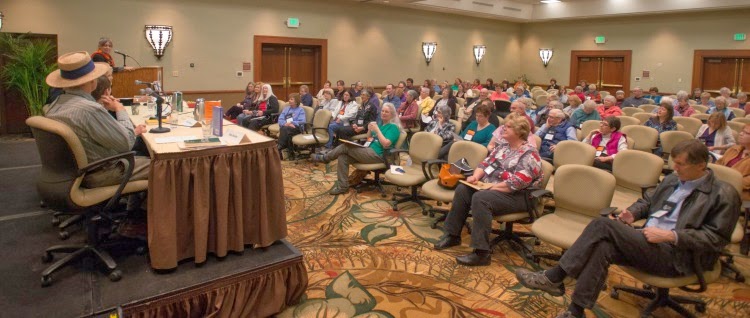
Do you attend many writers’ conferences and/or book festivals? Since I started editing books 7 years ago, I’ve been to a lot of writers’ conferences (including Thrillerfest & Craftfest 4 times) and a few great book festivals (notably the Tucson Festival of Books). I’ve also presented workshops and participated in panels at several in the last few years.

Overall, I’ve found writers’ conferences to be a stimulating and enriching experience, not to mention great for networking and selling books. And best of all, I’ve made some lasting connections that have turned into great Facebook and blog friends. And finally met up with other blog and social media friends in person!

For a detailed, comprehensive list of “real” in-person writers’ conferences in North America in 2014, click HERE.

But traveling to conferences and book festivals can be costly and time-consuming.
The down side is it can get really expensive flying across the country and continent to attend live conferences and book festivals! (I’m in Canada and an excellent one I attended was in San Miguel de Allende, Mexico.) Also, for a rather hyper, type-A introvert like me, all that stimulation can be exhausting! By the second or third day I end up missing great stuff to grab a nap!

So if your finances are tight or you just don’t have time to interrupt your paying job or writing schedule, cyber conferences might be the way to go. Now we just need more of them!

Advantages to attending an online conference:
Virtual conferences are a great way to get a lot of useful info and even interact with presenters without getting out of your sweats – or pyjamas! I have to admit it’s great doing these through video conferencing. And more importantly, without spending big bucks on plane fares, conference registration, hotel costs, restaurant meals, etc. Not to mention the packing and traveling time.

Presenting a webinar – a learning curve.
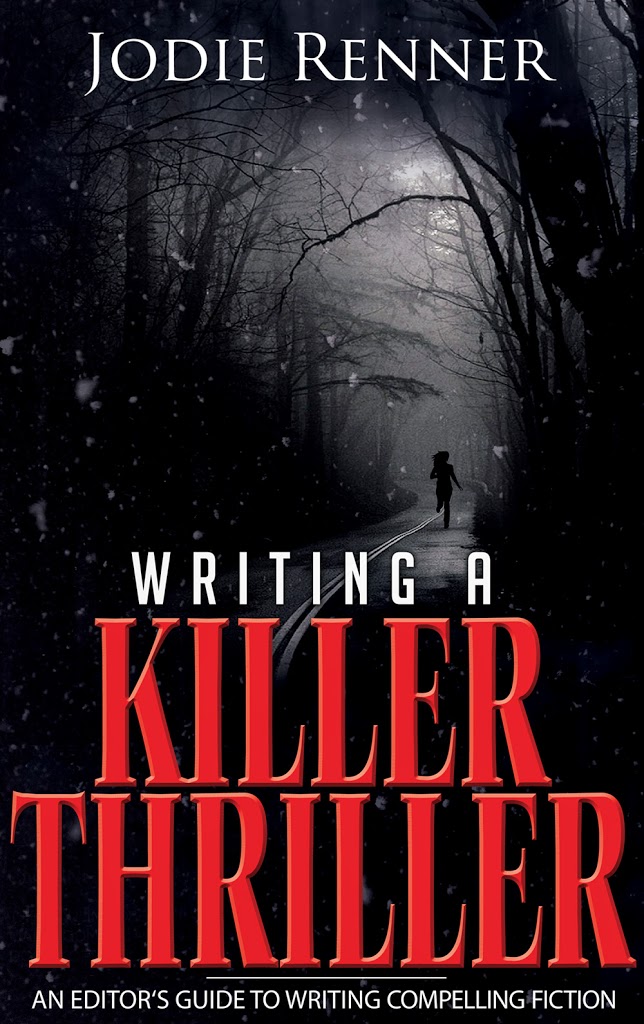
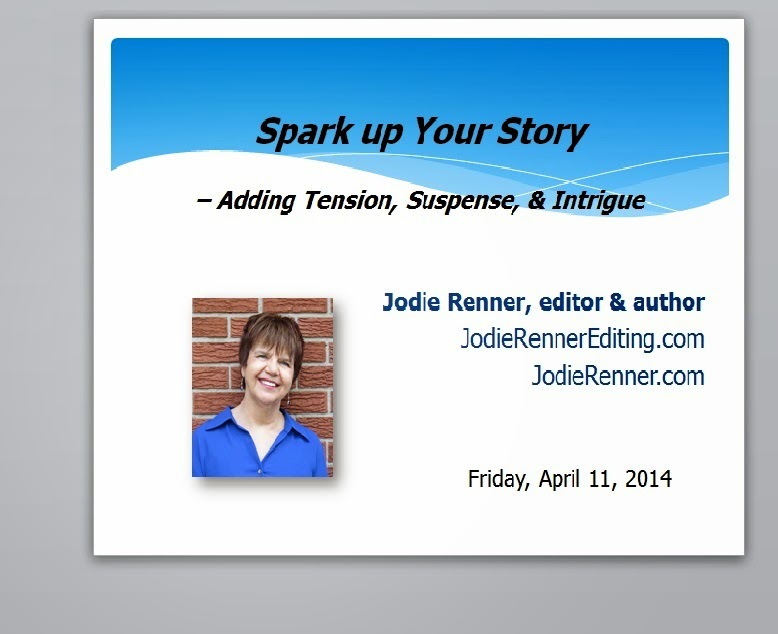
Recently, Caralee Hubbard, the president of the Calgary Assoc. of Freelance Editors (CAFE) contacted me about presenting a webinar at an upcoming Cyber Symposium for Editors & Writers. The topic was a breeze – we quickly agreed on “Spark up Your Stories – Add Tension, Suspense, & Intrigue.” I’ve written lots of blog posts and a whole book (Writing a Killer Thriller) on this subject and knew I had lots of value to offer fiction writers and editors, so that was the easy part.

But I’d never presented a webinar, and with my busy schedule, have only viewed a few so far. In addition, their preferred format was PowerPoint for the main screen, with me smaller in the corner, speaking live. That sounded fine, except that I’d also never presented a PowerPoint before, so I had two new skills to learn on time for the conference on April 11. But I’m not one to shy away from a challenge, and I figured it was time I learned to do webinars and audio/video presentations anyway, as I could apply that skill to present short clips on my websites, blog, or YouTube on various topics to do with on writing compelling fiction or indie publishing.

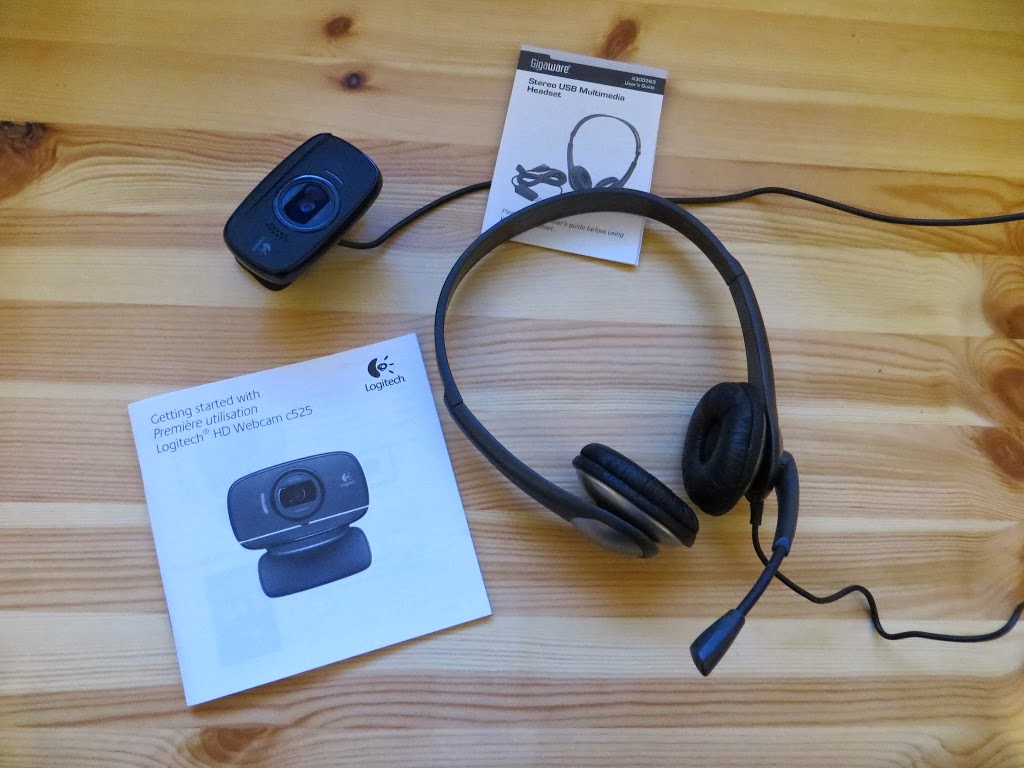
So between editing, packing to move across the country, and doing income taxes, I’ve been learning
how to present a webinar and also PowerPoint, starting with getting the right equipment.

I think I’ve got the hang of it all now!


A few great virtual writers’ conferences I /we missed:

Indie ReCon
Too bad I didn’t know about Indie ReCon’s FREE virtual conference, 2013, for indie authors. Events and presentations included costs of self-publishing, building a publishing team, and using social media. In 2014, they decided to go back to a live conference, held in February. It will be interesting to see what happens for 2015!

The 2013 Muse Online Writers Conference, Oct. 7-13, 2013
This one looked great! Missed it?  Mark your calendar in advance for the 2014 Muse Online Writers Conference on Oct. 20-26.

WANACon International, February 21-22, 2014 –  Kristen Lamb’s excellent WANAtribe conference – a recent one I’m kicking myself for missing.

Here’s the info from before the conference:

“Welcome to WANACon Feb 2014. The conference you can should attend in your PJs.

“Why spend your hard-earned money on plane tickets, overpriced food and hotels when you can have the conference experience right from the comfort of your own home? YES. WANA has made it that easy with live presentations in our state-of-the art virtual classrooms. This is as close to the conference experience as possible, only every seat is the BEST seat.

“WANACon is a truly interactive entirely-online Writer’s Conference. No Yahoo loops or text based online conferences here. You’ll be able to chat with the presenters, see most presenters via their webcam, see a slideshow or the presenter’s screen, type text questions if the pets or children are making noise, and of course, pass notes behind the moderator’s back.”

And if, like me, you missed this conference, you can still purchase recordings of the various excellent presentations. Check it out HERE.

Two notable upcoming online conferences:

Nonfiction Writers Conference, May 7-9, 2014.  This is their 4th annual cyber conference, so these people really know what they’re doing! Looks like they’ve established an excellent model for other writers’ conferences to emulate.

Their brief description: “Once again we will feature 15 speakers over three days, all conducted via teleseminar. No travel required–attend from the comfort of your couch via phone or Skype! Recordings and transcripts are available, depending on your registration option.”

And I love this feature: You can choose your registration option, depending on whether you want to save money and just listen and view live on their schedule, ($99), have both live access and downloadable recordings of all the sessions ($199), or opt for live access plus recordings and Word doc transcripts to review at your leisure ($299).

Cyber Symposium, a PD Event for Editors & Writers, April 11-12, 2014. This online event, organized by the Editors’ Association of Canada – Prairie Provinces Branch (EAC-PPB) and the Calgary Association of Freelance Editors (CAFE), is the virtual conference where I’ll be presenting my webinar called “Spark up Your Story: Adding Tension, Suspense, & Intrigue.”

Check it out here and scroll down for info on the webinars and presenters. Eight webinars are scheduled, on a variety of topics of interest to both writers and editors. As Caralee Hubbell, President of CAFE, says, “See you in cyberspace!”

Readers – do you know of any other good upcoming virtual conferences of interest to writers and/or self-publishers? Or have you had any experiences attending or presenting at cyber conferences? Please share in the comments below!

And by the way, I just found out that my editor’s writing guide, FIRE UP YOUR FICTION (formerly titled Style That Sizzles & Pacing for Power), in addition to having won a Silver Medal from FAPA and an Honorable Mention from Writer’s Digest, is now a finalist in the ForeWord Reviews Book of the Year Awards and also just received a great review from IndieReader.

My Favorite Irish Writer

by Clare Langley-Hawthorne


In honor of St. Patrick’s Day, I’ve been thinking about my favourite Irish writer, Edna O’Brien, and just how influential she was to me when I was a ‘formative’ (i.e.: terribly young and earnest) writer. I was first introduced to her as a teenager and fell in love with her lyrical, stream-of-consciousness approach to writing. Much of her work inspired my own (far less stellar) writing attempts. She was also so  quintessentially Irish, that her work resonated with me at a time when I was particularly fascinated with Irish history (my family has Irish blood and I do believe in a kind of genetic memory that draws me to the places and stories of my ancestors).

In recent years I’ve not read as much of O’Brien’s work and I wonder if that’s partly due to the fact that her books were inextricably tied up with a particular period of my life. I was also
worried that if I re-read her old books now, their impact and beauty would have somehow diminished over the years. I’ve often found that when I go back to a novel which had a huge impact on me at one time in my life, I’m disappointed that it no longer has any such impact at all. 

But in anticipation of the day that celebrates all things Irish, I sought out my Edna O’Brien novels on my bookshelves and started leafing once more through their pages. I was relieved to find the lyricism of her writing still drew me in and was delighted to feel the same sense of anticipation, wonder and sadness I used to feel when I read her work. I thought I’d share a short passage – from the opening to her 1994 novel, House of Splendid Isolation:

It’s like no place else in the world. Wild. Wildness. Things find me. I study them. Chards caked with clay. Dark things. Bright things. Stones. Stones with a density and with a transparency. I hear messages. In the wind and in the passing of the wind. Music, not always rousing, not always sad, sonorous at times. Then it dies down. A silence. I say to it, have you gone, have you gone. I hear stories. It could be myself telling them to myself or it could be these murmurs that come out of the earth. The earth so old and haunted, so hungry and replete. It talks. Things past and things yet to be. Battles, more battles, bloodshed, soft mornings, the saunter of beasts and their young. What I want is for all the battles to have been fought and done with. That’s what I pray for when I pray. At times the grass is like a person breathing, a gentle breath, it hushes things.

As O’Brien writes at the very start of this book: History is everywhere. It seeps into the soil, the sub-soil. Like rain, or hail, or snow, or blood. As a writer of historical fiction, I love being reminded of this from a wonderful writer who captures the essence of place, history, and emotion, so beautifully.

So do you have a favorite Irish writer, and if so, what is it about their work you find so compelling? Or, if you aren’t as into Irish history as I am, which writer captures for you the stories of your ancestors?


Now You Can Call Yourself A Writer

@jamesscottbell

There was a bit of a dustup recently over the issue of who should be “allowed” to be called an “author.” The incendiary post can be found here. A response, here.

Personally, I’ve always preferred the term writer. But I think it does come with a qualification. That is the subject of this post.
One comment I’ve often seen is, “Writers write.” Or, “If you write, you’re a writer.” That always reminds me of Jack Torrance in The Shining, and his page after page of All work and no play makes Jack a dull boy. That ain’t writing, it’s typing.
If someone takes a nine iron, with no clue how to grip it or swing it in any reliable manner, and goes out hacking up perfectly good grass day after day after week after year, I would not call that person a golfer. To play golf so it doesn’t harm flora, fauna or people on the next fairway requires at least minimal practice and instruction.
This kerfuffle over labels reminded me of a journal handed down to me by a family friend, written sometime in the 1940s. It is the unpublished memoir of a pulp writer named William “Wild Bill” Armbrewster, who was born in 1893 and made his bones with the legendary Black Mask. Note: This paragraph is fiction. I made up Armbrewster the other day and typed out the following entry. I like the guy. I may bring him back in a future post. In any event, here’s a clip from his journal.


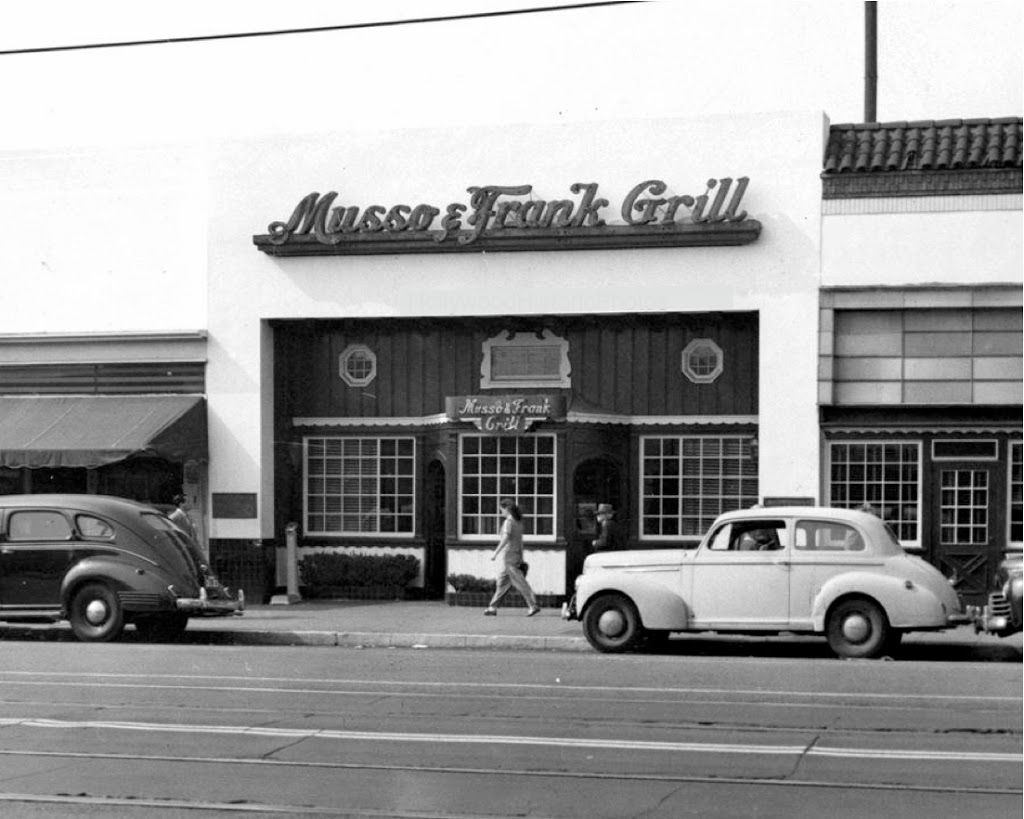
   The afternoon crowd at Musso’s was loud and obnoxious, like a haberdasher with a hangnail. I sat in the corner with my typewriter, pounding away at the new story for Black Mask. It was fighting me. It was pummeling me into the canvas. I was a bleeding mess. So I gave the business to my Martini and cursed the page mocking me from the roller. That’s when I noticed the kid. 
He was just standing there, holding his hat. He was maybe twenty-two, twenty-three, which made him a kid to me.
“Are you Mr. Armbrewster, the writer?” he said.
“Right now I’m Mr. Armbrewster, the stinker. Who are you?”
“My name’s Benny. Benny Wannabe.”
“So?”
“May I sit down?”
“If you buy me a drink. See that man over there behind the bar? In the red coat? His name is Joe. Go tell him to make another for Mr. Armbrewster and then you can sit.”
The kid romped off like a happy puppy. I looked at my typewriter and tried to make my detective say something witty. But he just sat there, the piker.
The kid came back and set a fresh one before me.
“Now, what can I do for you?” I said.
“Well, I…I’m a writer. I’ve read every story you’ve ever written. I think you’re the best. Even better than Hammett and Chandler.”
I was starting to like this kid.
“And I just wanted to meet you,” he said. “Somebody at the hotel said you like to work here, and so I took a chance and here you are.”
“You say you’re a writer, eh?”
“That’s right.”
“What have you written?”
“A short story.”
“One short story?”
He smiled, nodded. I took a snort of Martini. Then I popped the olive in my mouth, chewed, and scowled.
“Don’t call yourself a writer just yet, kid,” I said.
“But a writer writes,” he said. “So I’ve been told.”
I ripped the sheet I’d been working on out of the typewriter, crumpled it, and tossed it on the pile on the floor. “No,” I said. “A writer works.”
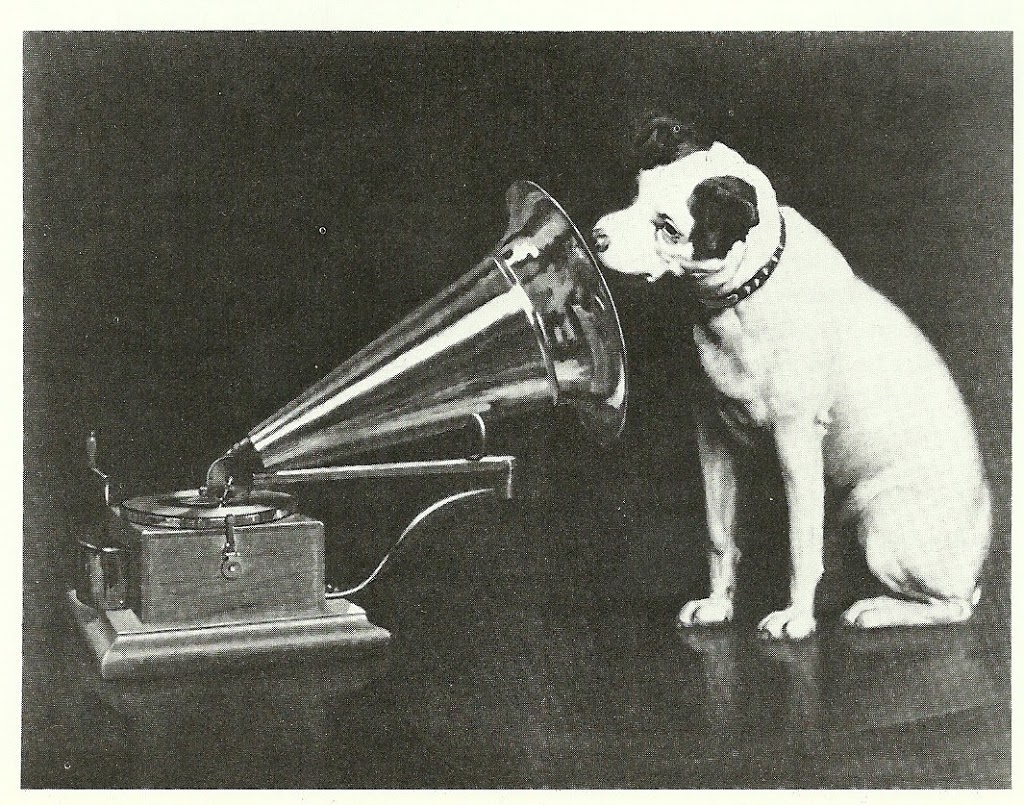
Benny Wannabe cocked his head, like that dog listening to the gramophone.

“Look, kid, it’s fine to want to write. It’s a hell of a business, though, and if you want to make any money at this thing, you have to work, and hard. You have to look at it as a craft, not some ethereal vapor dancing through your noggin, and sweat and fight until you figure out how to do it. Then you have to put your stuff out there, get rejected, fight some more and keep on writing and fighting and typing, until you die.”
“Gee,” Benny said.
I closed my eyes.
“I have my story with me!” The kid fished out some folded pages and handed them to me. I scowled again, then read the first paragraph.
The wind was a torrent that day, the day of my birth, the day of my beginning life’s sad yet remarkable sojourn, and the trees were golden with leaves that looked like little pots of gold with rainbows coming out of them, full of the promise of life and song and the iridescence of possibility. Suddenly, a shot rang out.
“I’m going to need another drink,” I said.
“Right away!”
When the kid came back I said, “Listen, Benny, do you really want to be a writer?”
He nodded.
“Not just so you can call yourself one. I mean, so you actually have a chance to make some lettuce at it. You do want to make lettuce, don’t you?”
“Oh, yes sir. I believe in lettuce.”
“Do you have a job, Benny?”
“I’m a writer!”
“Not yet you’re not. I mean, do you have any source of income?”
He shook his head.
“What are you using for dough?”
“My savings. I bought a train ticket, then got a hotel room down the street. The last of it I used on, um, your drinks.”
“You want my advice, Benny?”
“Oh, yes!”
I took a fin out of my pocket and slapped it on the table. “Buy yourself a train ticket home. Go back and get a job and marry the girl next door. Run for mayor or dog catcher. Join the Elks. Do anything but write.”
Benny’s face fell harder than Max Schmeling in the second Louis fight. He said nothing, trembled a little, and tears starting pooling in his eyes.
I looked at him for a long time. Fresh-faced kid, right off a turnip truck, but with a dream. Sort of like a kid I once knew a long time ago. Born in Cleveland, dropped out of college to ride the rails and see life, hoping to gather enough material to make himself a real writer, going off to war and coming home and writing for years without a sale, but never stopping because of the hunger for it, the love of it. I could see just a spark of that in the kid’s misty lamps.
“Okay,” I said. “You’ll need a job to keep a roof over your head. Go on over to Al’s Market on Sunset, tell him Bill Armbrewster sent you. Only don’t embarrass me.”
“I won’t, sir!”
“Then you agree to meet with me once a week, and write what I tell you to write, for a year. You willing to do that, Benny?”
“Yes, sir!”
“All right then. Now you can call yourself a writer. Take the fin. Go tell Joe we want a couple of egg-salad sandwiches and some soup. And between here and the bar make sure you grow a thick skin.”
“Yes, sir!”
I liked it that the kid’s enthusiasm was back, but enthusiasm only gets you so far in life. The ones who make it are the ones who can get kicked in the teeth, have all the stuffing knocked out of them, and still get up and come back typing.

If this Benny Wannabe could do that, he’d maybe make a real writer yet.

So what about you? When do you think someone should be called a writer?