About Joe Moore

#1 Amazon and international bestselling author. Co-president emeritus, International Thriller Writers.

First Thing We Do, Let’s Kill All The Writers

By John Gilstrap
Yesterday, an otherwise unknown writer named Phillip R. Greaves II became way more famous than he deserved after publishing an ebook no one would ever have read but for spasms of media apoplexy. The work in question is The Pedophile’s Guide to Love and Pleasure: A Child Lover’s Code of Conduct.

Disgusting concept, eh? In case you’re on the fence, read the author’s summary of the book, as reported by The Los Angeles Times (the grammar and spelling are all Mr. Greaves’s): “This is my attempt to make pedophile situations safer for those juveniles that find themselves involved in them, by establishing certian rules for these adults to follow. I hope to achieve this by appealing to the better nature of pedosexuals, with hope that their doing so will result in less hatred and perhaps liter sentences should they ever be caught.”

Oh, my goodness. Where to start? Let’s first agree for the sake of argument that “pedosexual” is a word. Next we need to accept that child rapists aren’t all bad. I confess that I haven’t read this code of conduct, but sight unseen, it’s tough to imagine a set of social rules that would make child rape somehow less worthy of hatred or more worthy of “liter” sentences. If I’m elected king, these monsters will spend long months dangling from the anatomical tools through which they perpetrated their crimes and fulfilled their fantasies.

I think I read that Greaves’s book first appeared on Amazon.com on October 28, and instantly climbed the list to #1.3 bazillion in paid Kindle sales. Then someone noticed it and tweeted discontent. The presence of a pedophile manual went viral faster than Bieber and the fat kid with the light saber combined. Soon pressure was building for Amazon.com to take the book down. Amazon refused initially, but as the Mad Morality Police Force built momentum to boycott all Amazon.com products if the book remained, the company caved and pulled it down. We have lost forever our opportunity to learn Mr. Greaves’s child rapist code of conduct.

Unless, of course, he decides to put it up on a website of his own. If he does that, I wonder if the MMPF will demand a boycott of computers and cyberspace.

The world is no doubt a better place without a pedophile’s guide in circulation, but man oh man, I am not comfortable with this kind of de facto censorship. Book burning is scarier than any idea I can imagine, even if the burned books are printed in electrons instead of ink. It’s not as if someone was proposing to mentor wannabe kid-touchers.

If this is the precedent, where do we stop? In these days of self-publishing, cyberspace teems with poorly-written, ill-conceived screeds on all kinds of topics. Is The Anarchist’s Cookbook next on the list? How about Tom Clancy’s early books where he gives excellent instruction on how to build a nuclear warhead? (A side note to terrorists: Please follow all of the instructions in The Anarchist’s Cookbook to the letter. The only people you blow up will be those who are gathered in your terror lab. And maybe your next door neighbor if your house is small.)

A pivotal moment in Prince of Tides involves the rape of a child. When do we boycott Pat Conroy? What about Alice Sebold? The Lovely Bones is all about a child’s murder, for God’s sake. That’s even worse than pedophilia. Golly, when I really put my mind to it, I can draw up a huge list of story lines that might offend.

Make no mistake, there’s no Constitutional issue here. The First Amendment does not guarantee a right to have one’s words stocked in a bookstore, and to my knowledge, no one’s threatening to prosecute Mr. Greaves for writing his book. (I wouldn’t be surprised if someone took a peek at his research materials, however.) What bothers me is the tyranny of the outraged majority dictating what’s available for purchase.

Help me out here, Killzoners. Are there thoughts that are so distasteful and upsetting that they should be banned?


HELP WANTED

By Jordan Dane

My husband. He’s one of the most focused people I know. And he can never sit still. He just retired from a long career with the airline industry as a customer service rep, or as I like to say, he’s the guy who lost your luggage. I should have known that even with time on his hands, he would act like there’s never enough hours in a day. (I mean seriously, what did he do when he had a full time job?) No kidding, this guy works non-stop, running errands, adding his personal touches to our new home (mostly guy type stuff like switch plates, bulbs, window tinting, garage shelves, etc), and wandering the aisles of Home Depot looking for new projects worthy of his attention. What’s not to love about this guy? Especially when he putters around the house and leaves me to write.

Now I’ve got the holidays coming up, and yet again, I have a book project deadline that is looming. It’s a squishy one. My publisher has already given me more time, but I still don’t want to abuse that courtesy, so I’m trying to stick close to the original date. But as the holidays get closer, there are certain things I do that are purely my thing, like our Christmas newsletter. (Joy to the world! Another writing project with a hard and fast deadline.)

Now for years, my busy, detail-oriented husband dutifully has given me HIS list of noteworthy things we’ve done during the year, to make sure I don’t forget to mention them. Need I say, that as an author of FICTION, I find these things fairly tedious and mundane. Are they real? Yes. Do people need to know we did them? Not so much.

So in the past, I have embellished our lives with my creative imaginings by making us ambassadors to foreign countries, or polar bear hunters, or the first line of defense when space aliens invaded Aruba while we were drinking numerous libations at the Pega Pega bar. So before my husband gives me his list, I was hoping to get help from the very creative people we have posting to this blog.

What fun—and very untrue—things can I add to my Christmas letter for 2010? Or what fun things have you read in other Christmas newsletters? Has anyone made you laugh out loud at their annual letter?

Job Skills

A recent news article said that more than one million people in Florida need a job, but many positions are not being filled because applicants don’t have the proper skills. Employers want enthusiastic people who have a broad knowledge base along with cutting edge skills. Technology keeps changing. Applicants need to keep up with the times to be competitive.

How does this apply to the writer? Most communications today take place via email between editors, agents, and authors. We’re expected to format our manuscripts according to publisher guidelines and know how to follow track changes in Microsoft Word. We’re asked by publishers if we have a webpage, blog, Facebook fan page, and Twitter. It’s great that we can save money by not having to copy and mail manuscripts anymore, but do we save time? Not when we have to keep up with the rapidly changing technology.

A writer can’t get by without these skills nowadays. Never mind that all an author wants to do is write the next book. Too much involvement in these business activities can lead to burnout. One doesn’t get tired of writing the story. One gets tired of the racing train that keeps going in circles, round and round the promotional track. The pressure to stay on top can build to a momentum that forces our creativity to derail. This wasn’t the train we wanted when we got on board, but we’re stuck with it now.

I’m about to get my first eReader device. After much consideration, I’ve decided to get a Kindle. Now I read that the next generation may have E-Ink Color, as opposed to LCD color. As for touch screens, there’s two different types and one is supposed to be better than the other. Dedicated eReader, Tablet, or Smart Phone? Eventually all of these devices may be rolled into one of ideal size and technology to perform multiple functions with clarity and readability under all lighting conditions. But until then, we have to choose which device will serve the purposes we need. We have too many choices, when we should be focusing on word choice instead.

In the writing kitchen, what kind of cook are you?

Clare’s post yesterday about NaNoWriMo reminded me of something I wrote awhile back when I was blogging over at Killer Hobbies (KH is a great blog about mysteries that incorporate crafts, by the way). Back then I’d never heard of NaNoWriMo (maybe the contest hadn’t even been invented yet), but I’ve always known I could never survive a rapid writing marathon. Here’s a recap:

Maybe I’ve been watching too much Top Chef on TV this week, but my two obsessions in life—writing and food—have started to converge.

Because I’m on a killer deadline right now, I’ve been doing some stressed-out musing about my personal writing practices. And I’ve decided that as a writing “chef,” I am a slow cooker. You could even call me a crock-pot.

My forward progress through the first draft of a novel is chunky and irregular, like an ice cutter breaking its way across a packed-solid river. There’s the occasional hang-up on the ice as I stall for a few days, working and reworking difficult sections. My average forward progress rarely exceeds a page a day. Barely tugboat speed, in other words.

On the plus side, I write every day. Every day, at the same time of day: before dawn. Over the past year, I’ve missed only two days of writing—once when I was stuck in an airplane (when I fly, I can’t concentrate on anything more challenging than a Danielle Steel novel). And once when I was retching my guts into the toilet from a bout of stomach flu.

As a writer who produces at this relatively stately pace, I reel in shock and awe when I read that some writers can tap out thousands of words a day. In the great writing kitchen of life, these people must be the flash fryers .

My best friend from college is a flash fryer. As a student she redefined the time-honored, collegiate art of procrastination. She’d wait until well past midnight to start a paper that was due at eight a.m. the next morning. Finally, in a Selectric burst of typing and crumpled pages, she’d bang out her essay. And receive an A. One time she procrastinated so long on a paper about Chaka, King of the Zulus, that it endangered her graduation status. We still call it “Chaka time” when one of us is desperately behind on a deadline. (These days, my friend is an uber-successful sitcom writer. And still procrastinating, but man her shows are funny!)

I admire the flash fryers, but I am resigned to chugging along at my crock-pot writing pace. I have to go back (and back, and back) over sections, layering in changes, rethinking descriptors, building connections, to make the prose sing. Or at least, warble.

I figure that no matter what our cooking style, all writers are heading toward the same goal: to serve up sizzling prose to the reader’s table.

What about you? Are you a slow cooker, fast fryer, or something in-between?

NaNoWriMo Smackdown

by Clare Langley-Hawthorne

Well, maybe not quite…though there was certainly an online brouhaha when Laura Miller, a columnist at Salon.com, voiced her opinion that the November ‘write a novel in a month’ project was a ‘waste of time and energy ‘ (click here to view her article).
Miller’s view on the whole NaNoWriMo phenomenon was that it just gave a lot of people an excuse to write a load of crap that would morph into ‘slapdash’ novels adding to slush piles everywhere.
Unsurprisingly Miller became the target of online vitriol/bile/horror for daring to to diss NaNoWriMo but many of her points remain, nonetheless, totally valid. Now before I become the object of a flamewar, let me preface this by saying I think NaNoWriMo is a great way for people to motivate themselves to get a first draft finished. I’ve even contemplated doing it myself but I have to confess the fear of letting volume alone dictate my writing was too worrisome (and the mere thought of it, exhausting!). However, if we boil Miller’s objections down they actually seem pretty uncontroversial:
First, she worries that if the focus of NaNoWriMo is merely on tapping out a bad first draft (and, lets face it, all first drafts are terrible!) then would-be writers may be mistaken in believing that the endless grind of revising and editing is not required – hence her concern over all the hastily put together manuscripts subsequently invading agents desks in December.

Second she argues that the ‘selfless art of reading is being taken over by the narcissistic commerce of writing’ and worries that, while there is no shortage of people eager to write, there is, however, an acute shortage of people eager to read. Can’t say I can argue with that, as almost everyone I meet these days tells me they want to write a book but few, if any, can find the time to actually read.

In Laura Miller’s view, true writers would be pounding their keyboards whether or not NaNoWriMo existed and that we should be focusing our support on getting people motivated to become avid readers rather than would-be writers. Given the amount of money spent on the whole ‘how-to’ write industry it is depressing to realize just how much of Laura’s article rings true.

So what is your opinion of NaNoWriMo – just an excuse to pound out 50,000 words of crap or a valuable tool to nurture the next great American novel? Is our culture so focused on self-expression that we have forgotten the one thing all books need – readers?!

The Great Backstory Debate

Last week we looked at the great semi-colon debate, which was a bit tongue-in-cheek (but only a bit!) Today we look at a real writing controversy, a little thing called backstory. Specifically, how much (if any) do you put in your opening pages?
You will find those who argue that there should be no backstory at all in those first chapters. Why not? Because, by definition, backstory is what has happened before your narrative opens, and you want to establish the action first, get the readers locked in on that.
This is, on the surface, sound advice. These days we do not have the leisure time, a la Dickens, to set the stage and do a ton of narrative summary up front. Or, a la Michener, begin with the protozoa of the pre-Cambrian earth and record their evolutionary development into the Texans of today.
I am an advocate of beginning with action (which doesn’t mean, necessarily, car chases or gun fights). The best openings, IMO, show a character in motion. And further, manifesting a “disturbance” to their ordinary world.
I tell writing students, “Act first, explain later.” A big mistake in many manuscripts is that chapter one carries too much exposition. The writer thinks the reader has to know a bunch of character background to understand the action. Mistake. Readers will wait a long time for the explanations when there’s a character in motion, facing a disturbance.
However, I believe in strategic backstory in the opening. I say strategic because you do have a strategy in your opening, one above all—bond your character with the reader.
Without that character bonding, readers are not going to care about the action, at least not as much as they should. Backstory, properly used, helps you get them into the character so there is an emotional connection. Fiction, above all, should create an emotional experience.
I also stress properly used. That means marbled within the action, not standing alone in large blocks over several pages.
The guys who do this really well also happen to be two of the bestselling novelists of our time, King and Koontz. You think that’s a coincidence?
So here’s the simple “rule.” Start with action. Let’s see a character in motion, doing something. Make sure there’s some trouble, even minor, on the page (disturbance) and then you can give us bite-sized bits, or several paragraphs (if you write them well!) of backstory.
An early Koontz (when he was using the pseudonym Leigh Nichols) is Twilight. It opens with a mother and her six-year-old son at a shopping mall (after an opening line that portends trouble, of course). On page one Koontz drops this in:
To Christine, Joey sometimes seemed to be a little old man in a six-year-old boy’s small body. Occasionally he said the most amazingly grown-up things, and he usually had the patience of an adult, and he was often wiser than his years.
But at other times, especially when he asked where his daddy was or why his daddy had gone away––or even when he didn’t ask but just stood there with the question shimmering in his eyes––he looked so innocent, fragile, so heartbreakingly vulnerable that she just had to grab him and hug him.
Koontz bonds us with this Lead through sympathy. We don’t know why the boy’s father isn’t there, but we don’t have to know right away, do we? In this way Koontz also creates a little mystery which makes us want to keep on reading.
Now, a word of warning when writing in first person POV. It’s much easier for the narrator to give us a backstory dump. But the “rule” remains the same: act first, explain later. To see how it’s done, check out the opening chapter of Harlan Coben’s Gone for Good, which begins:
Three days before her death, my mother told me – these weren’t her last words, but they were pretty close – that my brother was still alive.
We then cut to the mother’s funeral, and the narrator, Will Klein, leaving the house to walk through his old neighborhood. He has a specific place he’s going, the place where a terrible murder happened years before. Along the way he describes the setting and drops in some backstory, especially about one night when his big brother explained the “facts of life” to him from a ninth grader’s perspective. It’s a warm, human bit that creates sympathy. But Coben weaves it in with the action, which is about the narrator getting to the murder spot. That happens on the very next page. Very little time is lost to backstory.
Some time ago I interviewed Laura Caldwell, author of the Izzy McNeil series. She told me the following:
“I wish I’d known how to weave in background information instead of dumping it in big chunks. It’s still something I struggle with, although I think I’ve improved a lot. It’s a skill that has to constantly be refined so the background information which gets delivered reads and feels organic right at that point in the story.”
Good point from Laura.
How do you handle backstory in your opening pages? Are you strategic about it?  

Luther. Not Martin.

I had one of those uncomfortable epiphanies a couple of weeks ago: I am getting old enough to have senior moments. On Sunday night, at 9:45 PM, my Blackberry gave a reminder beep and a window popped up that read: “Luther BBC America 10:00 PM.” I had no recollection whatsoever of entering that notation in my calendar. That’s much worse, to my mind, than forgetting the entry until it popped up — I mean, what are reminders for, other than to remind? — and then thinking, “oh yeah, I wanted to see that.” No, this was like one of those Philip K. Dick stories where the Joe from the future sends a note to Joe in the past, like, “Sell short on Simon & Schuster on December 1!” I had no idea what Luther even was. Anyway, I need to thank whichever of my personalities, present or future, wrote the memo because Luther should be required viewing for anyone who loves crime fiction.

Luther is an unrelentingly grim and dark psychological crime drama about a London homicide detective who is, as it happens, unrelentingly grim and dark. The lead role of Luther is played by Idris Elba, who was so riveting in The Wire. Elba plays the role just right, all frowns and sudden, explosive anger at what he sees and what he has become, a cog missing a couple of teeth in a machine that no longer works. The criminals are scary-frightening, but Luther, who is supposed to represent the side of goodness and light, is more so, given his willingness to do whatever it takes to catch the murderer of the week. Last week he conducted an illegal search of a suspected serial killer’s living quarters and found a dead victim, a young mother who had been abducted from her home, in a freezer. Luther left her dead body as he found it so as not to alert the baddie that the law was onto him, in order to entrap him later. AGGHHH!!! Luther is also involved in a love rectangle of sorts. His wife has left him and taken up with someone else; at the same time a very smart, powerful and attractive woman who has more loose screws than Home Depot is trying desperately to seduce Luther, who meanwhile, was last seen having an affair with his own wife. As with the best of film, it chills and heats at once and by turns. The series is created by Neil Cross, who also has written several episodes of MI-5, now in its seventh season. Throw in the haunting theme music by Massive Attack and you’ve got an addictive hour. TiVo The Walking Dead on AMC and watch Luther instead. Cross, incidentally, is a fine crime fiction author in his own right, though way too little of his work is available in the States. Hopefully, that will change, and soon.

***

What I’m reading: BURIAL by, uh, Neil Cross, BOX 21 by Anders Roslund & Borge Hellstrom, and HYPOTHERMIA by Arnaldur Indridason. BURIAL is a nasty little tale of sins coming back to haunt the sinner; BOX 21 is a sordid, one-sit novel which concerns the sex trade in Sweden, among other things; and HYPOTHERMIA is the sixth of the Inspector Erlendur novels to be translated from the Islenka, brooding tale about an obsessive investigation of a suicide.. I’m bouncing back and forth amongst them all to the accompaniment of “Take It Easy On Kathy At Least She Can Dance” by Andrew Graham & Swarming Branch, played over and over. It sounds like a much younger Bob Dylan fronting the Velvet Underground & Nico.

Blame it on the Time Zone

By John Gilstrap
Yeah, yeah, yeah, I know I’m posting late today.  I write this from the departure lounge of McCarran International Airport in Las Vegas, having just finished a grueling week of meetings in service to my Big Boy job.  Parroting the words I spoke so often in my college days, I’m sorry, but I’m unprepared for the assignment.  Sir.  Or ma’am.

If it makes anyone feel better, it’s really friggin’ early here, on the end of a not-very-early night.  If that sounds like an excuse, it is; and it gives me the right to disavow any stupidity contained in this post.  (That semicolon was for you, Joe.)

Within the range of my casual gaze, I see two people reading newspapers, six or seven people thoroughly absorbed in their PDA devices, and one person with an eReader.  I can’t tell the Nook from the Kindle at a distance, but I’m pretty sure it’s one of those.  Of the two people who are reading pBooks, both are reading stories by Stieg Larson.  (They actually have Stieg books open on their laps as they watch the crowd milling around them.  I see that happen a lot with Stieg books.)

I spent the week in the new Aria Hotel on the Vegas strip.  It’s up there on the opulence meter, and it’s enormous.  Unfortunately, according to the Wall Street Journal, it’s losing $126 million this year.  I’m no economist, but I’m guessing losses like that can’t be sustained for very long.  If you want to stay there, perhaps you should plan to travel soon.

I’ve been to Vegas many times over the years, and I still can’t decide whether I like the place or hate it.  There’s a grandness to it that is sort of mesmerizing, but after a few days, the audible and visual noise begins to make me feel kind of twitchy.  Where else, though, can you find PornCon–the convention that represents the puplishers and purveyors of pornography.  (PornCon might not be the actual name, but it’s close.)  According to the ads, for $50, anyone over 21 can spend the entire day touring the aisles, perusing the publications and meeting their favorite stars.  Proctor and Gamble doesn’t make enough anti-bacterial soap to get me to go there, but I bet the security tapes are a little slice of porn unto themselves.

As I wrote that last paragraph, a lady sat across from me carrying a bag marked, “Lube Gard/World’s Finest Lubricants.”  Hey, I’m just reporting what I see.

The Stieg books are both closed, and their owners are both trying to doze. 

Here’s hoping that the movie on the plane doesn’t suck.

The real-life kidnapping that inspired KIDNAP & RANSOM

by Michelle Gagnon

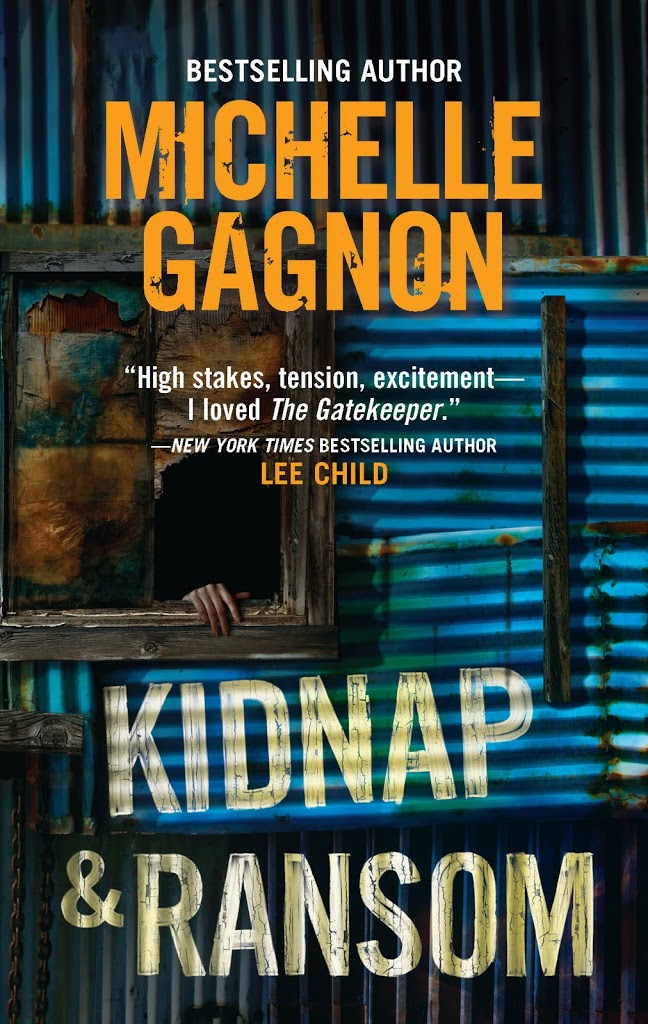
My fourth book, KIDNAP & RANSOM, was released on November 1st. And unlike my last thriller, this time a real-life kidnapping sparked the initial idea for the story.

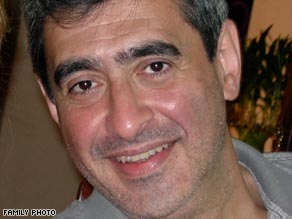
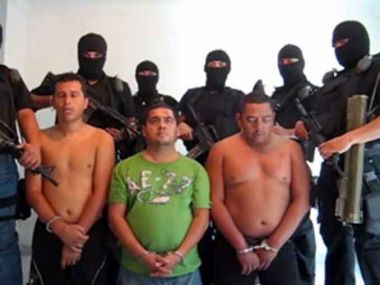
While researching border issues for THE GATEKEEPER in December of 2008, I stumbled across an article on the kidnapping of Felix Batista. Batista was a security consultant for ASI Global (if you saw the film PROOF OF LIFE, this was the same job held by Russell Crowe’s character).

Batista personally negotiated the release of more than a hundred hostages over the course of his career. That December he was in Saltillo, Mexico, offering advice on how to handle the uptick in abductions for ransom. While dining with local businessmen one evening, Batista excused himself from the table to take a phone call. On his way out of the restaurant to get better reception, he handed his companions his laptop and a list of phone numbers in case he didn’t return (this was a man who clearly knew you can never be too careful). Moments later, an SUV pulled to the curb and Batista was forced inside. He hasn’t been seen or heard from since.

The irony of the story grabbed me—the hero becoming the victim, an expert suddenly forced into the position he’d saved so many people from. Stranger still, his kidnapping wasn’t proceeding normally—there was no ransom demand, and no one claimed responsibility for seizing him. It was a true mystery. (And over the next two years, kidnappings and cartel violence in Mexico became increasingly rampant, spilling over the border to such an extent that related articles appeared in the U.S. media nearly every day.)

So I set off to find out more about narcocartels south of the border, and about kidnappings in general. I fixed on Los Zetas, mainly because their backstory was fascinating. Los Zetas is a gang comprised mainly of former Mexican Army soldiers. They were part of an elite brigade, comparable to the Army Rangers, trained in special operations techniques by the best in the business at Fort Benning in Georgia. Upon returning to Mexico, they promptly left the Army and went to work for the Gulf Cartel. Eventually, they branched off on their own, wresting control of drug trafficking operations from rival cartels. In recent years Los Zetas have become increasingly involved in kidnappings, murder-for-hire, extortion, money laundering, human smuggling, and oil siphoning. They’re suspected of killing the 72 migrants found in a mass grave in Tamaulipas last August, and of the murder of American David Hartley on Falcon Lake last September. The DEA considers Los Zetas to be the most violent paramilitary enforcement group in Mexico.
So when it came to villains, the choice was easy.

Last May, I attended the wedding of a friend from Mexico City who had helped tremendously with my research. At the reception, I was seated with some of his relatives. When they found out that my latest novel was set in their hometown, they were enthusiastic…until they heard the title.

“Oh, no,” one uncle said. “You cannot write about that. Mexico City is very safe.”

“Really?” I asked (in all sincerity, might I add). “I heard that most locals know at least one person who has been kidnapped.”

“Well, of course,” they all agreed. Every single person at the table knew someone who had been kidnapped. But as they explained, it’s much worse up north by the border with Texas. There, it’s really a problem.

Mexico is rapidly supplanting Iraq and Colombia as the kidnapping capital of the world. In the past decade, drug cartels and terror groups have seized upon kidnappings as a relatively low-risk source of financing. During a recent election in Russia, one political party’s entire campaign was funded covertly by ransom money.

Many kidnapping victims are held for months, or years. Some continue to be held even though their ransom has been paid. Many never make it home again.
I dedicated KIDNAP & RANSOM to them, and to people like Felix Batista who devote their lives to freeing them.

Opinions, Please

By Joe Moore

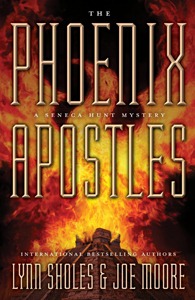
Last week, my publisher sent over the final cover design for my new thriller THE PHOENIX APOSTLES (written with Lynn Sholes) which is scheduled for release in June, 2011. TPA-blogThe title—the first one our publisher accepted with no change—refers to a group of followers of a religions cult that believes the only way to save the world from the predicted end of mankind is to appease the gods using the same technique as the Aztecs: human sacrifice. Or more specific, the ripping out of a human heart while the victim is still alive. Those are the “apostles” referred to in the title. The phoenix portion comes from the name of the group itself: The Phoenix Ministry, of which their logo is the mythical phoenix bird rising from its own ashes.

The cover consists of two main elements: the phoenix bird aflame shooting out of an Aztec pyramid, both of which go along with the plot of the story.

Although the back cover text has not been finalized, here’s the gist of the what it will say.

THE PHOENIX APOSTLES (coming June, 2011)

At a dig site in Mexico City, magazine journalist Seneca Hunt is reporting on the opening of Montezuma’s tomb when it’s discovered that the remains of the Aztec emperor are missing. Before she can investigate further, what appears to be a terrorist attack kills the dig team including her fiancé. Seneca barely escapes the carnage not knowing that a passing glimpse of an out-of-place object in the tomb may have sealed her fate. She soon learns that someone is stealing the burial remains of the most infamous mass murderers in history. Seeing a story in the making, her research uncovers a plot to slaughter millions in the name of an ancient cult. Seneca teams up with a bestselling novelist to prove the threat really exists while staying one step ahead of those who want her dead. As time is running out, she must follow a 2000-year-old trail leading back to the death of Jesus Christ.

Some of my fellow thriller authors were kind and generous enough to take the time to read THE PHOENIX APOSTLES and send me a blurb. Here are four:

"Bold, taut, and masterfully told."
— James Rollins, New York Times bestselling author of THE DOOMSDAY KEY

"A fascinating, compelling page-turner."
— Carla Neggers, New York Times bestselling author of COLD DAWN

"A knockout apocalyptic thriller!"
— Douglas Preston, New York Times bestselling author of IMPACT and THE MONSTER OF FLORENCE

"A rollicking thrill ride!"
— Tess Gerritsen, New York Times bestselling author of ICE COLD

You can read their complete quotes by clicking here.

So now that you’ve seen the cover and know a little bit about the story, would it grab your attention if you saw it in your favorite bookstore? Would it make you want to read the book? Please be honest and share your opinion. Thanks.