
“A reader lives a thousand lives before he dies. The man who never reads lives only one.” — George R.R. Martin
* * *
I’ve been wondering lately about what exactly people are looking for when they pick up a book to read. Maybe knowing that would help me understand how to construct a novel that would be especially satisfying to the reader. My search took me to a Pew Research report from 2012 where researchers asked people who had read at least one book in the previous twelve months what they liked about reading. I summarized the main reasons below:
-
26% enjoyed learning, gaining knowledge, and discovering information.
-
15% cited escaping reality, becoming immersed in another world, and the enjoyment they got from using their imaginations.
-
12% liked the entertainment, drama, and suspense of watching a good plot unfold.
-
12% enjoyed relaxing while reading and having quiet time.
-
6% liked the variety of topics they could access via reading
-
4% said they enjoy finding spiritual enrichment
-
3% said they like being mentally challenged by books.
-
2% cited the physical properties of books – their feel and smell.
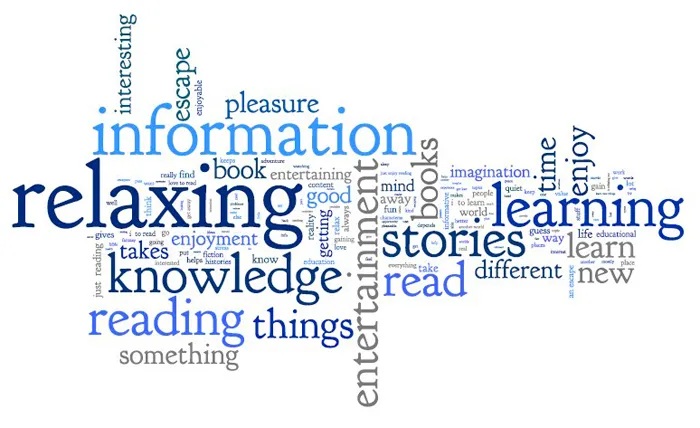
A more recent poll from Written Word Media found three top reasons people read books in 2026:
- To relax (86%)
- To be entertained (83%)
- To escape (67%)
Clearly, different people get enjoyment from different aspects of reading, but what exactly causes that enjoyment? I was looking for something a little more specific so I returned to the TKZ post John Gilstrap wrote a few weeks ago about the effect our writing has on readers. Here’s some of what he said:
The emotional connection is what counts. Like musical composition, a story is in its way an immortal piece of its creator’s soul. It lies silently until living person picks it up and interprets the author’s words through the filter of the reader’s own life experiences.
That got me thinking. How does that emotional connection affect readers of different genres? Can I use that information to improve my own story-telling?
I couldn’t find exactly what I wanted in my search, so I turned to Google’s AI to list why people prefer to read certain genres. (Google’s search provides references for the answers it generates.) Here are some of the things I gleaned from the results:
* * *
Mystery readers enjoy puzzles, suspense, and intellectual stimulation. They want compelling characters in stories that provide a comforting resolution that ensures justice has been served.
Thriller readers like adrenaline-fueled suspense and mental stimulation in fast-paced narratives, high stakes, and relatable yet flawed characters.
Readers of suspense desire an emotionally charged narrative that keeps them on the edge of their seat. They like the building anxiety that ends in a satisfying resolution.
True crime readers want to understand the psychological motivations behind criminal behavior and explore the complexities of the justice system. They like the combination of the thrill of being scared with real-life crime stories.
Fantasy readers seek immersive world-building that provides them with an escape from, or a new perspective on, reality.
Romance readers want a guaranteed happy-ever-after (HEA) or happy-for-now (HFN) ending. They’re looking for an intense emotional journey with relatable characters.
Readers of mixed-genre fiction crave fresh narratives that break the monotony of conventional, single-genre stories. They look for a “best of both worlds” experience—such as intense thrills paired with emotional romance or scientific concepts blended with fantasy.
* * *
These are, admittedly, brief summaries and not in-depth reader profiles, but they do point out that people have distinct expectations from the genre they prefer. Understanding that may help an author target a story that hits the bulls eye for their audience.
As a mystery writer with some romance included in my stories, I like the idea of combining John’s “emotional connection” with the list of specific things AI claims mystery readers crave. I guess that makes me a mixed-genre author. Puzzles, suspense, intellectual stimulation, and a strong emotional connection are the short list of keywords on my whiteboard to keep me focused.
* * *
So TKZers: What genre to you write? What do you think about profiling readers by the genre they read? Do you agree with the descriptions above? Does the psychological profile of readers in your genre help you compose your story?
* * *
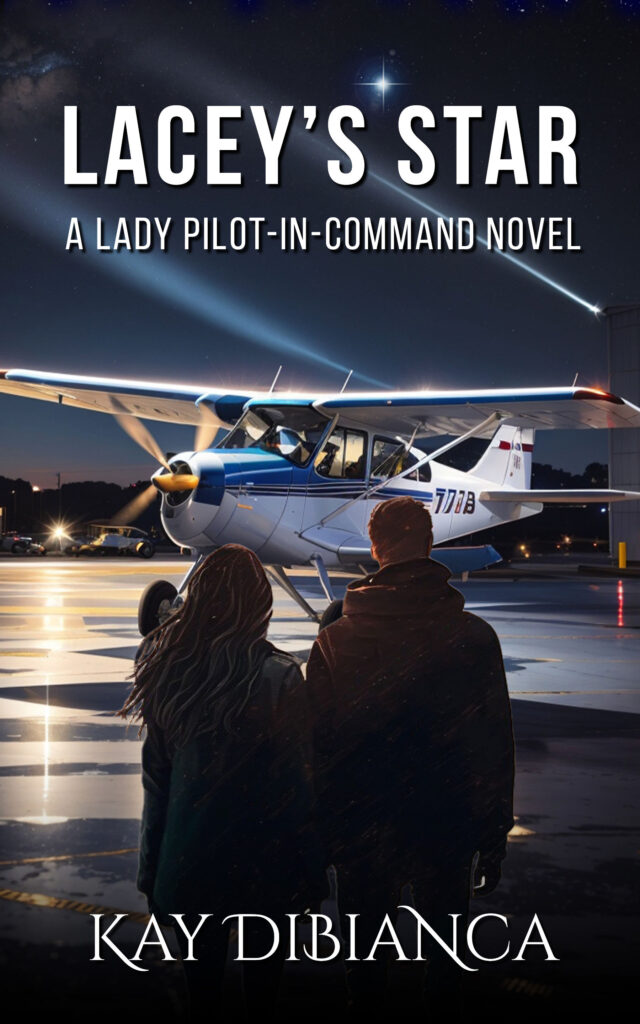
Only one person believed it was murder. Only one star held the final clue. And only one woman followed its light to find the killer.
Lacey’s Star – click the image to go to the Amazon detail page.
Excellent overview, Kay. I can’t say this applies to others, but a quick review of the book I enjoyed the most were mixed genres, approximately 60% thriller, 30% mystery, and 10% romance.
Good morning, Grant.
I get the feeling that most readers like mixed-genre books because they may not follow a traditional path. The mixture you describe sounds like a winner!
Thanks for this great analysis, Kay. I often ask people what they like to read and why they like a particular genre. Not exactly a scientific poll but here are some general answers.
Mystery/thriller/suspense readers enjoy the puzzle and excited anticipation of wondering what will happen next. They like complex stories where they’re emotionally involved with the characters.
True Crime readers are horrified yet fascinated by real cases. At first, they often seem rather shy and quiet until they begin talking about a book. Then they become animated and try to figure out how/why someone commits horrible acts.
Romance readers love the escape, the emotional journey, and the happy endings,
Sci-fi readers tend to be more interested in the engineering aspects of a different world and not as interested in emotions.
Fantasy readers escape into a different world that’s colorful and imaginative with characters they love and identify with. Young people I talk with read fantasy almost exclusively.
Historical readers want to escape into the past and learn how people lived, their struggles, customs, beliefs, clothes, food, shelter or lack thereof. War history readers want to analyze battles, strategies, and mistakes. They also often like alternate histories of what might have been if an outcome had been different, e.g. Germany won World War II.
My niche is small town/rural thrillers where ordinary people are thrust into crisis. They must do things they normally wouldn’t do to save themselves or loved ones. I like writing about the domino effect of a single act that sets off disruption in the lives of many.
Good morning, Debbie.
Your poll sounds very much like the things I’ve been reading about. It’s interesting how much personality affects reading habits.
“I like writing about the domino effect of a single act that sets off disruption in the lives of many.” Great description of your writing.
I’ve always read to escape into a world where justice prevails with a HEA. One reason I started writing was to create a world I could control. Can you imagine my surprise when my characters didn’t go along with me?
Hi Patricia!
“Can you imagine my surprise when my characters didn’t go along with me?” Yes! One of the big surprises in becoming a writer.
I can. Mine do that and it has always thrilled me when they do. (Don’t tell, but they’d probably do a better job than I do…)
I want to spend time with characters I care about, which is a requirement regardless of genre. I like characters to care about each other, too, so I like to see relationships. And puzzle solving. And dealing with what life throws at them.
Good morning, Terry.
I was thinking about you when I looked into mixed-genre because of the way you describe your books on your website.
Because I have trouble staying inside a box.
I like a well crafted mystery. Don’t take me to the county clerk’s office on a Sunday. They are closed. Technology makes this hard. In James Bond’s “Goldeneye” the latest computer has IBM written on the side and has a modem. Times change.
I may be an enigma. I love Star Wars/classic Star Trek but find a lot of science fiction writing to be a rebranded Han Solo story. I like mysteries but not true crime. Maybe it is that true crime has gotten too close.
Morning Alan.
You make a good point. Just because a reader prefers a certain genre doesn’t mean he/she is going to like every book in that space.
Have a good week.
Good morning, Kay. This is a great rundown of an important topic which isn’t discussed often enough IMHO.
It’s been said for many years that science fiction is about “sense of wonder”, that awe you feel at encountering a science fictional idea in fiction, such as time travel, alien civilization, mind-to-computer etc etc), and I’d say that’s one thing SF readers seek from their fiction, but not the only thing. Seeing today’s society and issues reflected in the funhouse mirror of the future or an alternate reality is another, and the sheer coolness of some concept rendered in fiction is a big draw.
Readers of fantasy of the epic, secondary world variety (meaning set in another world akin but different to our own) absolutely groove on the world building, and the scope and sweet. Urban fantasy readers are looking for magic in the shadows of our own world, the supernatural hidden from the ordinary, but also crave to follow the adventures of heroic characters battling evil, often in a mystery like (or mystery adjacent) format.
Recently on the Writing Excuses podcast Mary Robinette Kowal noted that SF and fantasy are “aesthetic genres,” meaning they are about the look, the feel, the vibe of a fictional universe, whereas mystery and romance genres are about their respective story structures.
This ties directly into why people reader mysteries, which as you note is about solving puzzles, and thus reading stories structure around puzzle solving. However, I’d say there’s another, related reason for many of us. We want to see interesting, quirky even, characters enmeshed the struggle of trying to puzzle out the mystery, on a quest of sorts to find and bring justice to the killer and restore order to their community.
Cozy has the above, plus the cozy vibe itself as a draw. Kind, fun, funny, with an emphasis on the community, which gives the reader “the cozy feels.”
Thanks for another thought-provoking post! Have a wonderful week!
Good morning, Dale.
You make a great point about the cozy mystery. Readers can identify with an amateur sleuth drawn into (often against their will) solving a crime. Add a quirky sidekick, a dog or cat, a little romance and stir. What more could a reader want? 🙂
Have a pleasant, cozy week.
The recent article here on brain science and reading would be a better source. Reading pushes chemical buttons that other media does not. For those who are willing to read more than one genre, they choose the genre that fits their current needs. During times of stress and unhappiness, that’s why romance gains way more readers. After 9/11, shows like CSI and GHOST WHISPERER became widely popular because both were about justice and peace for the dead.
Good points, Marilynn. People’s taste changes according to the circumstances.
Great analysis, Kay!
It’s no secret here that I usually write about families in crisis. (Maybe because I’m experienced…?)
It’s also no secret here that when I choose a book to read, it’s not about families in crisis. For pure reading pleasure, the story had better have good guys and bad guys, espionage, danger, and really cool weapons.
That reminds me…I think Mr. Gilstrap’s 17th JG novel releases tomorrow! Guess what I’ll be doing…
🙂
Good afternoon, Deb!
“For pure reading pleasure, the story had better have good guys and bad guys, espionage, danger, and really cool weapons.” It’s great to know what you want to read. (And you have a fabulous source right here on TKZ!)
Enjoy your reading week!
I used to read for almost all the reasons you first listed. Now, I read to relax (the world is too much with me). Oddly, I’ve always turned to fiction for this but lately, I’ve been more in tune with non-fiction — everything from John Meachem’s “The Soul Of America” (just finished the section on McCarthism) to “The Windsors” wherein we find out why the royal family changed their name from Saxe-Coburg to Windsor. (hint, it was WWII). I dunno, maybe I’m trying to impose order instead of trying to escape.
That said, I just picked up in a used book store a copy of Andy Weir’s “The Martian.” I love the movie, so it’s time to go to the source — the self-published phenomenon. Just started it last night and the first line is rather catchy:
“I’m pretty much f-cked.”
There’s something comforting in the plight of astronaut Mark Watney. First man on Mars and probably the first man to die there. And I thought I had problems.
I know what you mean, Kris. I turn to non-fiction to satisfy that need to understand the world.
I recently finished On Desperate Ground by Hampton Sides. (My next novel will have Korean War vets in it, and I didn’t know much about that war.) Right now, I’m in the middle of Over the Edge of the World by Laurence Bergreen. It’s the story of Magellan’s circumnavigation of the Earth. I’m fascinated with the early explorers and that unique period in history.
I write hard-boiled, noir historical mysteries. Such profiling is interesting and can be helpful to me. The descriptions seem pretty accurate. I keep an eye on such profiles but don’t depend on them in composing my stories.
Excellent and useful article, thanks.
Thanks for your comment, Steven.
“…hard-boiled, noir historical mysteries” are the kind of foundational blocks TKZ is built on!
I’m currently writing mainstream literary fiction (until I finish the Pride’s Children single-story trilogy), but intended to be a mystery writer at one point, and dabble in SF and mysteries if I get an idea, especially for something short.
Not interested in/good with horror, gothic, noir, or anything supernatural such as vampires, angels, demons, monsters…
Generally, I write what I used to read gobs of – but am not into romance or children’s books or anything historical for writing. Non-fiction isn’t me – too staid.
I think most of us write what we enjoy reading, but I’m limited: when I’m writing, as I am now, I almost don’t read at all because I only have two neurons that work, and one is used for breathing, so the other one can’t write if I’m reading!
Some things are the same everywhere you write. And I’ve found that I like a very deep close pov – for writing.
You make a good point, Alicia. If you write what you enjoy reading, you have a kind of built-in sense for how the story should flow.
Keep those neurons firing!