Show and Tell

by Michelle Gagnonpot stove

Last week Joe had a great post about figuring out where your story actually begins. I’m in a group that posts online excerpts, mainly of first chapters, and today I thought I’d discuss something that seems to crop up again and again in those posts.

The old nugget, “Show, don’t tell” relates to exposition; ideally, you want to limit spoon-feeding your reader, watching out for adverbs that drive home what a character is thinking and feeling. But what should also be taken into account is that you don’t need to “show” your reader everything either.

Here’s an example:

“I went into the kitchen and grabbed a pan. I put water into the pan and placed it on the stove. Then I added the seasoning to the water. After the water boiled I placed the noodles into the water.”

Now, I think what the writer was attempting to do was build suspense; the problem with this passage is that unless you’re writing a cookbook entry on how to prepare pasta, this is way too much information. By the time I got to the third sentence, my eyes glazed over. It’s a common error. Where it tends to crop up most frequently, I’ve found, is with entering and leaving a room: “I turned the knob, opened the door, and stepped inside,” rather than just, “I went inside,” for example.

There are other ways to build suspense with a passage like this. For example, “She put water on the stove to boil. The doorbell rang. When she answered it, she found the UPS man standing there with a package. Could this be what she was waiting for?”

So…the water is still on the stove, set to boil. The heroine has apparently forgotten about it- but the reader hasn’t. If you consider how you go about your day, many of your actions are automatic. You don’t think through every step of putting on a pair of pants, walking across a room, or turning on your car; neither should you walk a reader through those steps (unless it’s critical to illustrate a character struggling to accomplish those tasks).

I prefer to start a story by dropping the reader into the middle of an action or conversation, forcing them to do a little work to catch up. After all, when it comes to eavesdropping (not that I ever do that, of course), the point when your ears perk up is not at the initial hello, but when something really juicy comes out. That’s what you want to begin with. Assume that the reader will figure out the parts you’re not telling them outright- engaging with a book should require a little effort, after all. You want them to wonder what the character is thinking, and what they’re going to do next. I want to know what’s going to happen with that boiling water- but assume that the rest of it, whatever isn’t critical, is a given and not something I need to know. For that, I’ll buy a cookbook.

Coming up on our Kill Zone Guest Sundays, watch for blogs from Sandra Brown, Steve Berry, Robert Liparulo, Thomas B. Sawyer, Paul Kemprecos, Linda Fairstein, and more.

A little less action, a lot more thrills

Back in 1993, Country singer Toby Keith had a hit with the song “A Little Less Talk and a Lot More Action”. That was a great hook for a song, but the concept doesn’t always work for thrillers. I’ve found that one of the mistakes beginning writers often make is confusing action with suspense; they assume a thriller must be filled with it to create suspense. They load up their stories with endless gun battles, car chases, and daredevil stunts as the heroes are being chased across continents with a relentless batch of baddies hot in pursuit. The result can begin to look like the Perils of Pauline; jumping from one fire to another. What many beginning thriller writers don’t realize is that heavy-handed action usually produces boredom, not thrills.

When there’s too much action, you can wind up with a story that lacks tension and suspense. The reader becomes bored and never really cares about who lives or who wins. If they actually finish the book, it’s probably because they’re trapped on a coast-to-coast flight or inside a vacation hotel room because it’s pouring down rain outside. See John Gilstrap’s I’m Not As Flexible As I Thought.

Too much action becomes even more apparent in the movies. The recent Bond film “Quantum Of Solace” struck me that action1way. The story was so buried in action that by the end, I simply didn’t care. All I wanted to happen was for it to be over. Don’t get me wrong, the  action sequences were amazing, but special effects and outlandish stunts can only thrill for a short time. They can’t take the place of strong character development, crisp dialogue and clever plotting.

As far as thrillers are concerned, I’ve found that most action scenes just get in the way of the story. What I enjoy is the anticipation of action and danger, and the threat of something that has not happened yet. When it does happen, the action scene becomes the release valve.

I believe that writing an action scene can be fairly easy. What’s difficult is writing a suspenseful story without having to rely on tons of action. Doing so takes skill. Anyone can write a chase sequence or describe a shoot-out. The trick is to not confuse action with suspense. Guns, fast cars and rollercoaster-like chase scenes are fun, but do they really get the reader’s heart pumping. Or is it the lead-up to the chase, the anticipation of the kill, the breathless suspense of knowing that danger is waiting just around the corner?

What do you think? Is your favorite thriller filled with car chases or is it built on an undercurrent of suspense that’s just waiting to sweep you away? What about your own writing? Do you use a lot of action or is it all cerebral?

~~~~~~~~~~~~~~~~~~~~

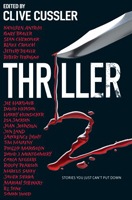
thriller2 Available today: THRILLER 2, Stories You Just Can’t Put Down.

~~~~~~~~~~~~~~~~~~~~

Coming up on our Kill Zone Guest Sundays, watch for blogs from Sandra Brown, Steve Berry, Robert Liparulo, Thomas B. Sawyer, Paul Kemprecos, Linda Fairstein, Julie Kramer, Grant Blackwood, and more.

Have you asked your writing a question today?

Every once in a while I read a story where all the requisite elements for success seem to be in place. Such stories typically contain the following elements:

  • A competent hook
  • Serviceable characters
  • A well-executed plot

And yet sometimes as I’m reading along, I find that my interest wanes (and then dies) after just a few pages. So what exactly has gone wrong?

Here’s one answer: After just a few paragraphs, I cease to give a flying squirrel about the hook, the characters, or the plot. Which means that I don’t care about the story. Which means that the Writer in question is dead as a doornail.

In a past blog post that was circulated by Esquire, writer Darin Strauss said that it helps to apply a “So What?” test to each sentence in a story. To apply such a test, according to Strauss, we can measure each of our sentences against the following criteria: Why should I care about this sentence? How does it reveal character? What difference does it make to the plot? To the story?

When I first heard about Strauss’s sentence test (which he attributed to Lee K. Abbott), it was like an epiphany to me, because when we ask every sentence in our novel “So What?” or “Who cares?”, it helps us to avoid the following writing hazards:

  • Boilerplate character description
  • Rote, unnecessary movements by all characters, especially the main character
  • Go-nowhere dialogue
  • Boring scene description

So here’s my question to you: When you’re writing, do you apply such a test to each and every sentence? Do you go back and root out “filler” sentences during rewrite?

And to take on the challenge, if you don’t mind sharing: What’s the last sentence that you wrote today? Is it important to your story? Why will your reader care about that sentence?

~~~~~~~~~~~~~~~~~

Coming up on our Kill Zone Guest Sundays, watch for blogs from Sandra Brown, Steve Berry, Robert Liparulo, Thomas B. Sawyer, Paul Kemprecos, Linda Fairstein, and more.

To be Audacious

By Clare Langley-Hawthorne
www.clarelangleyhawthorne.com

I literally just flew back from Mayhem in the Midlands and, after delays due to tornado warnings and foul weather, my apologies for being a bit woolly headed now that my body is telling me it’s close to midnight (even if that’s not quite the case back on the West Coast yet). The conference was fabulous, small but intimate, the way Mayhem is supposed to be. After hearing Jan Burke’s great interview of Dana Stabenow and Kent Krueger’s hilarious interview of Zoe Sharp I have come away with a new goal:

To be Audacious


Jan Burke said she thought all writers had to be audacious to be successful. Just committing something to the page and believing it was worthy of another person reading it was audacious in and of itself but, after hearing some background for both Dana Stabenow and Zoe Sharp, I soon realized I am way, way behind on the audacity stakes.

Though I don’t consider myself to be a totally boring wuss in real life, I do have to at least pretend to be the stable, serious mum to my boys (husband included) and this limits my capacity for recklessness in real life. In my writing life, however, I have the freedom to be whatever I want…and I definitely think I need to add more audacity…which got me thinking…

How does one become an audacious writer? How can I constantly challenge myself and the craft of writing? What is the most audacious thing I hope to achieve in my writing? Hmmm…the most erotic sex scene ever? craziest murder victim ever? Perhaps the most unexpected death of main character ever…(hmmm…am I getting anyone worried at this point???) No, I know I need to aim higher – but how?

So help me out here – what do you think is the most audacious thing a writer can do?

What Puts the Thrill in Thriller?

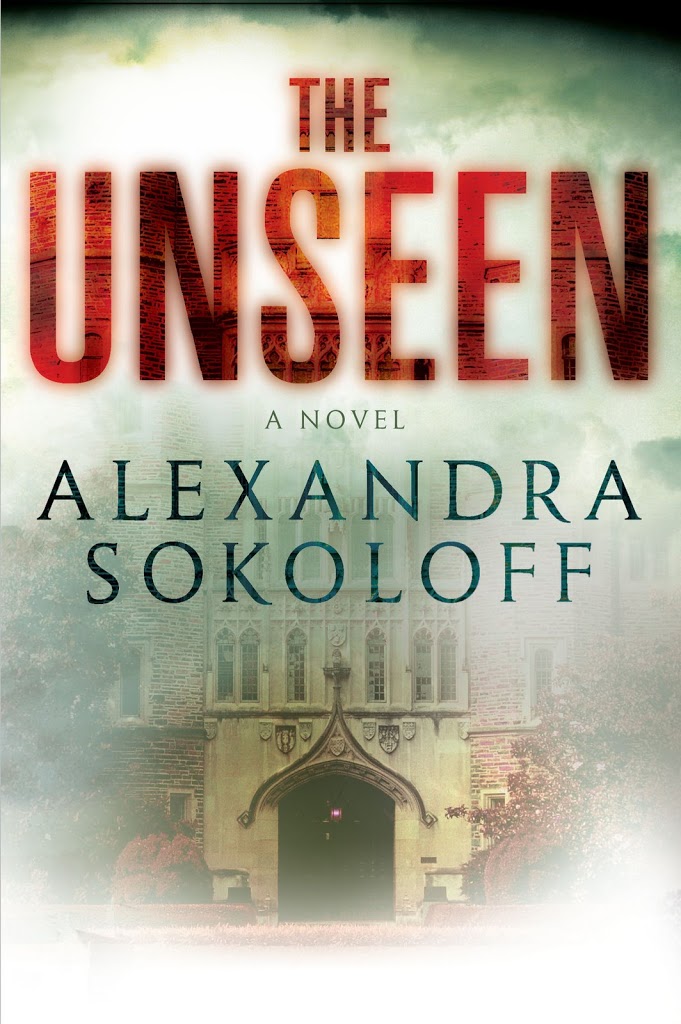
The Kill Zone is delighted to welcome Alexandra Sokoloff to the blog today. As a screenwriter, Alexandra has sold original mystery and thriller scripts and written novel adaptations for numerous Hollywood studios. Her debut ghost story, THE HARROWING, was nominated for both a Bram Stoker award and Anthony award for Best First Novel. Her second supernatural thriller, THE PRICE, was called “some of the most original and freshly unnerving work in the genre” by the New York Times Book Review, and her short story, “The Edge of Seventeen” is currently nominated for a Thriller award for best short story. Her third spooky thriller, THE UNSEEN, is out now, and is based on real-life experiments conducted at the parapsychology lab on the Duke University campus. She is currently working on a fourth supernatural thriller for St. Martin’s Press and a paranormal thriller for Harlequin Nocturne, and is writing a book on SCREENWRITING TRICKS FOR AUTHORS, based on her popular workshop and blog.

By Alexandra Sokoloff (http://alexandrasokoloff.com)

I’m sure every one of us here has ended up on or attended that particular panel by now, also variously called Thrill Me!, You Kill Me, How to Write Suspense, How to Write a Million Dollar Thriller… (and if you’ve got that last one figured out, would you let me know?).

On my Screenwriting Tricks for Authors blog http://thedarksalon.blogspot.com/ I talk a lot about specific techniques for creating suspense. But the bottom line to me is always – different things thrill different people. In people, in bed, in life, and in books. So the core issue, and something I never get tired of talking about with thriller writers and readers, is – what does it for YOU?

Because there are all kinds of literary thrills. Many thrillers are based on action and adrenaline – the experience the author wants to create and that the reader wants to experience is that roller-coaster feeling. I myself am not big on that kind of thrill. I love a good adrenaline rush in a book (in fact I pretty much require them, repeatedly). But pure action scenes mostly bore me senseless, and big guns and machines and explosions and car chases make my eyes glaze over. Nuclear threat? Not my cup of tea. Spies? I’ll pass. Assassins? Uh-uh. Terrorists?… Can I go now?

I’m not even really that fond of serial killers (God, I hate it when things like that come out of my mouth. Or hands. Occupational hazard…) unless we’re talking archetypally mythic serial killers like the ones in pre-HANNIBAL Thomas Harris, and in Mo Hayder’s darker than dark thrillers.
What I’m looking for in a book is the sensual – okay, sexual – thrill of going into the unknown. How it feels to know that there’s something there in the dark with you that’s not necessarily rational, and not necessarily human. It’s a slower, more erotic, and I’d also say more feminine kind of thrill – that you find in THE TURN OF THE SCREW and THE HAUNTING OF HILL HOUSE and THE SHINING. So although I can learn some techniques from spy thrillers or giant actioners, studying that kind of book or movie for what I want to do is probably not going to get me where I want to go.

There’s also the classic mystery thrill of having to figure a puzzle out. Now that’s a thrill I can get behind. There’s a great pleasure in using your mind to unlock a particularly well-crafted puzzle. I love to add that element to my stories, so that even though the characters are dealing with the unknown, there is still a logical way to figure the mystery out.

But conversely, and this is one of my own more peculiar quirks – I also love the feeling of being slowly taken over by complete madness.

One of my very early discoveries as a voracious young reader was Charlotte Perkins Gilman’s terrifying short story, “The Yellow Wallpaper”, one of the greatest feminist horror stories ever written, in which a new young mother is confined to her bedroom by her physician husband and is not allowed to write because it would stress her. Instead she goes horribly and inexorably out of her mind.

Now, why the vicarious experience of going mad should be such a particular pleasure to me, I can’t tell you – clearly something to do with spending my formative years in Berkeley. Or, you know, all those Grateful Dead concerts. Or those San Francisco clubs where we…
Well, all right, never mind that.
But I have come to terms with the fact that madness is an experience I crave, and I’ve made a careful study of how authors I love (Shirley Jackson, Daphne Du Maurier, Stephen King, Edgar Allen Poe, Anne Rice, the Brontes) create that effect.

Another thing I know about myself, vis a vis the supernatural, is that I need to believe that it could really happen that way. So I’m a real sucker for the slow, atmospheric, psychological build, and I research obsessively to see what people who claim to have experienced the supernatural actually experienced, and I look for the patterns in the stories: what are the common elements? What has the ring of truth?

This was especially important to me while I was writing my new thriller, THE UNSEEN http://alexandrasokoloff.com/unseen.html, because it’s a poltergeist story, and unlike with ghosts, there isn’t that much consensus about what a poltergeist really is. It’s a maddeningly elusive phenomenon.

But I love poltergeists! Just the word is thrilling to me. So I created a poltergeist which might be any or all of the things that researchers have postulated that poltergeists are: a psycho-sexual projection, a haunting, some extra-dimensional being, or very human fraud. Creating a story that explored all of those possibilities meant I got to structure in that mystery kind of thrill that I love – only the question was not only “Whodunit?” but also “Whatdunit?”

And that’s always the best for me – that mix of mystery, madness, and the unknown.
So, all you thrilling people – what kinds of thrills do it for you? What are your early influences that will give us an idea of just what twisted kicks you’re looking for in a book?
~~~~~~~~~~~~~~~~~
Coming up on our Kill Zone Guest Sundays, watch for blogs from Sandra Brown, Steve Berry, Robert Liparulo, Thomas B. Sawyer, Paul Kemprecos, Linda Fairstein, and more.

I’m Not As Flexible As I Thought

By John Gilstrap
http://www.johngilstrap.com

First things first: Thank you, John Miller, for swapping posting days with me. For those of you who showed up here today to read his words instead of mine (and who would not?), please scroll down . . .

I just returned from the worst week at the beach that I’ve ever endured. It all seemed like such a sure thing: I was with some of my favorite people, in Hilton Head, SC, one of the most beautiful resorts on the planet. I love Hilton Head. The plan was that we would arrive on Saturday evening and leave the following Saturday morning (that would be today). I would wake up early, as I always do at the beach (and only at the beach), get in an hour or so of writing in the early morning calm, and then we would head to the beach. After a few hours in the sun, occasionally visiting the outside bar, I would excuse myself from the group and log a few extra writing hours before cocktail time. It was going to be perfect.

Then the rain came. I don’t mean drizzle, folks. No misting, spitting or fog. I mean rain. Go watch the movie Platoon or Singing in the Rain if you need perspective. Gulley-washers, we used to call them when I was a kid. As if the sky was one big water balloon and someone popped it.

For five days. That would be Sunday, Monday, Tuesday, Wednesday and Thursday. I have no idea what Friday was like because we pulled the plug on Thursday morning and drove home. Not until, however, we had the honor of experiencing the coldest temperatures ever recorded in Hilton Head in May. Ever. A high of 53 on Monday. (Hint: I did not pack for winter.)

So, when you take the sun out of the equation for a beach trip, you’re left with movies (Angels & Demons was very good, I thought, as was State of Play. Ghosts of Girlfriends Past was exactly what you’d expect it to be, and Miller, before you get going, I’ll remind you that I was not traveling alone.), shopping (there was a rush on anything that was a) waterproof, b) warm, or c) both.) or hanging around a two-bedroom condo while four adults stared at each other pretending that it would somehow get better.

I used to tell people that I could write anywhere. Airport departure lounges, coffee shops, hotels, just about anyplace is a fine place to sit and write. I discovered the exception this week. I cannot, in fact, do any meaningful work in a two-bedroom condo where the only desk-like bit of furniture is the dining table in the middle of everything. Those other three adults staring at each other pretending that things would get better didn’t help a bit.

It’s sort of poetic, I think, that Miller’s post yesterday dealt so poetically with rain. I concur that it has its place. I like flowers and human survival as much as the next guy. But would a single day of sun have been too much to ask?

When Roosters Sing


By John Ramsey Miller

It appears that our long-running drought is over, and we’re up for the year with rainfall. That could change, of course. I love dismal weather. I love rainy days and nights and thunder storms. We’ve had several weeks of the kind of weather I love and the old home place is bright green. In the winter I can see my neighbors’ homes through the trees, but when the leaves come out they are no longer in evidence. I work best when it is dreary. When it rains we sleep with the door open to the screened-in porch, but we have to close it around four AM when our roosters, Ti Ali and Joe Bryant, wake up and want to have loud discussions with each other. I suppose they are bragging about the number of hens they have and how many ground bugs they intend to rid the place of as soon as they are released in the late afternoon. I love the sound of roosters, but at four AM it can be annoying. I wish they had a repertoire of songs to sing, or a few stories to tell, but they are like stuck records with the same shrieking notes in their repertory. “Er er errrr Er.”

There are writers who write the same book over and over again, and their readers want to read the same old plot gathered up and thrown through a larger fan. I’ve been thinking a lot lately about writing another kind of book. I’d keep the violence, the battle between good and evil, but I wouldn’t have a ticking clock, or a race across the landscape with guns thundering, and I’d work on deepening the characters and their relationships. Maybe let them tell longer stories. It couldn’t drag, but it could take place over months or years instead of hours. The relationships would be more complex and be allowed to develop the way they need to without all of the urgency of situation forging them. It would be nice if the female/ male relationship was built on something other than dodging bullets, her ability to load his magazines under duress, or drive through a gauntlet of fire.

I think about my father, who died almost two years ago, and his stand on human rights and dignity for all men in the 60s in Mississippi. I think about how he somehow managed to earn the respect of his friends and enemies alike, and let love, his beliefs and his spiritualism rule his life. At Emory when he was in Theology school my father went to Atlanta’s Ebenezer Baptist Church some Sundays to hear a man he called the greatest preacher of his era, Martin Luther King Sr.. I think, as did my father, that the bravest known man in Mississippi history was Medgar Evers. That man walked into a lion’s den every time he left his house, and he did so driven by his belief in a just world. It was no surprise to anybody that he was murdered, just that he lived as long as he did with the quantity and caliber of enemies he made by standing for what he believed was right and just in an unjust world.

I didn’t know Mr. Evers, but I did meet Byron De La Beckwith, the man who murdered him in cold blood. My father admired and respected him, and later he tried to bring Beckwith into the light of love––a waste of time. The day I took my cameras and accompanied a reporter from New Orleans to interview Beckwith at Rick’s Tractors where he worked at the time. He had been arrested while driving a bomb to New Orleans while heading there to murder A.I. Botnick, director of the New Orleans based B’nai Brith Anti-Defamation League, and he was awaiting trial at the time. Beckwith told me he didn’t care for my father’s politics, but that he respected my father for being genuinely able to love a man while hating his sin. That stuck with me. I have long wanted write a book that goes into the social complexities in the South during the sixties, how change came about on a personal level, and the ultimate value of forgiveness. I know it’s been done and done, but I am egotistical enough to think I can put a new spin on it and make part of that time my own.

I just finished a Thriller, and whether or not it sells, I think I am going to write the book I always wanted to put on paper. I don’t have any idea what it will look like, whether there will be a publisher for it, or whether or not it will be well received if it is published, but that isn’t why I will write it. I will write it because I want to do so, and because I think my roosters really do want to be songbirds.

Never Look Back

by Michelle Gagnon

Yesterday, Joe discussed knowing where you’re headed before getting started. I received an email from a college friend this week who’s writing his firstnever look novel, and he asked me a few questions about my process. I thought I’d share some of what I said in reply. Of course, there is no one “right way” to write a book; everyone has to find his or her own path. But after hammering out four books, I’ve learned what works for me.


1) At what point do you seek formal feedback, rather than just cranking it out?

I don’t show my work to anyone until I’ve completed two drafts. And then I send it to my “Beta readers,” 5-7 people whose opinion I trust. What I’ve discovered, however, is that they’ll all like different aspects of the story, and they’ll all criticize different aspects. I always take that feedback with a grain of salt. If more than one person is saying the same thing, I know it’s time to go back and figure out where I went wrong.

In Boneyard, one of my readers was so taken with a character in the initial chapter, she felt strongly he should be incorporated into the rest of the storyline. I had fleshed out that character fairly well, so that when something happened to him, you’d fear for his well-being. But ultimately, he was a device to kickstart the plot. Think of it as the garbage men who find a body in a dumpster in the first five minutes of Law and Order. You don’t expect to see the garbage men help track down the killers, or try the accused–they’re there to find the body, then they’re gone. Same with this character. No one else had that comment, so I chose to limit him to that opening chapter.


2) Do you counsel quantity (ie, getting more on paper) over quality (tweaking sentences) early on?

In my opinion what separates published authors from people who have been working on a book for years without completing it is this: never look back. I don’t start editing–at all–until the entire book is written. A lot of people get fifty pages in, then go back and start editing chapter one. The danger in this is that while you might end up with a perfect first fifty pages, by the time you finish those there’s a good chance you’ve lost the thread of the story.

It’s also discouraging to suddenly realize you’ve spent three months on fifty pages, and another three hundred and fifty remain to be written (of course, that’s discouraging whether you’ve stopped or not–I call it the “interminable middle”). I never even re-read what I’ve written until I’ve finished the first draft. (I also spend most of that draft thinking that what I’m writing is the worst junk ever committed to page. But I forge ahead, because I know the next draft will be better.) And then when I do go back, the bones of the story are in place.


3) When does it help to have a literary guide (agent? editor? coach?)? How do you get a good one to take you seriously?
Start the agent search only when your manuscript is as absolutely perfect as it’s ever going to be. That means a minimum of three drafts. And after completing each draft, put it away for a month before looking at it again. That gives you a fresh perspective.

Resign yourself to the fact that the agent search might take months- not always the case, but frequently enough that it’s good to be prepared for it. And not hearing back right away doesn’t necessarily mean you’re going to be rejected. My first agent asked for an exclusive on the full manuscript right away–then three months passed. If I had to do it over, I’d probably call after a month and ask if it was all right for me to submit to other agents. In the end it worked out for me, but I was gnawing my nails to the quick that entire time. A month is more than enough time for an agent to have an exclusive.

Begin by querying your 3-5 top choice agents, always making sure that a) they’re currently acquiring manuscripts, and b) they represent the kind of work you write (these seem like givens, but you’d be surprised). There are a lot of good books on querying an agent (my favorite is Noah Lukeman’s “The First Five Pages”). Your query letter needs to be perfect, as do your first five pages, since that’s what an agent reads to make a snap judgement on your work. I loved what people were saying yesterday about switching the second chapter with the first. About a year ago, I read a tremendous manuscript written by a friend. And the entire first chapter I was yawning-not good for a thriller. It was all back story: how the protagonist got his job, where he went to school, his mother’s medical condition…then, scene two kicked in. The main character picked up a woman home at a bar, was accosted in his apartment by Russian mobsters, was threatened with blackmail and suddenly boom- we were off and running. Telling too much at the outset is a common mistake. Bear in mind you have 100,000 words to develop your characters, so there’s no need to overdo it at the outset. (By the way, this excellent book- FREEFALL, by Reece Hirsch- found representation and will be published next year).

Your agent shops the manuscript to editors. Very few publishers accept unsolicited manuscripts these days.
Getting an agent is hard. My best advice would be to go to a writing conference that good agents are attending- a face to face meeting goes a long way toward getting you out of the slush pile. Incidentally, Thrillerfest is hands down one of the best for finding an agent for a thriller- I can’t think of another conference that gathers forty top agents in one place to hear pitches. Well worth the investment if your manuscript is ready.

4) Not a question but an observation — I can’t seem to help harvesting the real lives and personalities of friends and acquaintances. Ringing in my ears is Elizabeth Gilbert: “Tell the truth. Tell the truth. Tell the truth.”

I suppose my personal life infiltrates the storylines in some places–but it depends on what I’m writing. For the screenplay I’m working on right now, my co-writer and I are drawing heavily on our life experiences. But for my series, much of it is pure creation-I’ve never defused a dirty bomb, chased down a suspect, or done many of the other things my characters do. I just imagine what it would be like, basing it on research and discussions with people who do those sorts of things for a living. So the old, “write what you know” has never been something I strongly adhered to. Otherwise I’d write about sitting alone in a room typing day after day. And trust me, that is rarely exciting.


Start at the end

By Joe Moore

A topic I’ve mentioned here in the past is Kurt Vonnegut’s 8 rules of writing fiction. They’re worth reviewing and taking to heart. But his rule number 5 is the one that made the biggest impression on me. Rule number 5 is: Start your story as close to the end as possible. This is relevant for both the entire book or a single chapter. We often hear that the most common mistake of a new writer is starting the story in the wrong place.

Well, it happens to published writers, too. Lynn Sholes and I are guilty of writing whole chapters that either occurred in the wrong place, or worse, weren’t even needed. Usually they turn out to be backstory information for us, not the reader. We go to the trouble of writing a chapter only to find it’s to confirm what we need to know, not what the reader needs to know.

So if we apply Vonnegut’s rule number 5, how do we know if we’ve started close enough to the end? Easy: we must know the destination before we begin the journey. We must know the ending first. To me, this is critical. How can we get there if we don’t know where we’re going? And once we know how our story will end, we can then apply what I call my top of the mountain technique. In my former career in the television postproduction industry, it’s called backtiming—starting at the place where something ends and working your way to the place where you want it to begin.

7691695But before I explain top of the mountain, let’s look at the bottom of the mountain approach—the way most stories are written. You stand at the foot of an imposing mountain (the task of writing your next 100K-word novel), look up at the huge mass of what you are going to be faced with over the next 12 or so months, and wonder what it will take to get to the top (or end).

You start climbing, get tired, fall back, take a side trip, climb some more, hope inspiration strikes, get distracted, curse, fight fatigue, take the wrong route, fall again, paint yourself into a corner—and if you’re lucky, finally make it to the top. This method will work, but it’s a tough, painful way to go.

Now, let’s discuss the top of the mountain technique. As you begin to plan your book, even before you start your first draft, Imagine that you’re standing on 9944522the mountain peak looking out over a grand, breathtaking view feeling invigorated, strong, and fulfilled. Imagine that the journey is over, your book is done. Look down the side of the mountain at the massive task you have just accomplished and ask yourself what series of events took place to get you to the top? Start with the last event, make a general note as to how you envision it. Then imagine what the second to the last event was that led up to the end, then the third from the last . . . you get the idea. It’s sort of like outlining in reverse.

This takes it a step further than Vonnegut’s rule number 5 by starting at the end and working your way to the beginning while you’re still in the planning stage. Guess what happens? By the time you are actually at the beginning, you will have started as close to the end as possible. And you will see the logic and benefit of rule number 5.

Naturally, your plan can and probably will change. Your ending will get tweaked and reshaped as you approach it for real. But wouldn’t it be great to have a general destination in mind even from the first word on page one of your first draft?

Do you know your ending before you start writing? Or do you have a general idea for the story and just wing it? Remember that there’s no right or wrong answer here. But what works for you?

~~~~~~~~~~~~~~~~~
Coming up on our Kill Zone Guest Sundays, watch for blogs from Sandra Brown, Steve Berry, Robert Liparulo, Alexandra Sokoloff, Thomas B. Sawyer, Paul Kemprecos, Linda Fairstein, and more.

Scribd’s new e-book store: A sea change in publishing?

I was still recovering from Sunday’s 4.7 earthquake in LA when I heard the news that must have sent a shiver of apprehension through the publishing industry: scrbd, the publishing web site that gets around 60 million hits a day, began selling books online. Authors who upload their books will get an 80/20 split of the revenue from books sold on the site. That’s 80 per cent to us, folks.

NPR’s Marketplace pointed out that the two-year-old scribd has an advantage over other e-book publishers because its e-books can be read over many different types of reading devices, including laptops and “smart” phones. By contrast, Amazon’s e-books can be read only on a pricey Kindle.


We’ve been talking quite a bit on this blog about e-books, and debating their merits. I think that scribd’s move into selling books online, in a range of formats, at a price split that dramatically favors the author, has the potential to upend the publishing totem pole. The scribd platform could finally provide the grassroots publishing momentum that puts more revenue and power into the content creator’s hands, rather than the distributor’s.

In her farewell Newsweek column this week, Anna Quindlen described how, in the journalism field, young people have “created online outlets from the ground up…they are quite properly part of the action, not because we made room for them, but because they made room for themselves.”

Most novelists aren’t all that young, but scribd’s publishing model could provide the way for them to “make room” for themselves in the publishing paradigm. We’ll now be able to publish our own ebooks on a site that reaches sixty million potential readers. Sixty million!

But perhaps not all authors would consider taking hold of the reins of their publishing. I can imagine that even established authors might hesitate before taking the plunge into publishing on scribd. Would there still be a publishing contract, for example? Would uploaded works suffer from a stima from being “self-published”?

What do you think? Do you think the scribd book store has potential to change the publishing business paradigm?

Have you browsed through the new book store? Do you think it will become a morass of self-published drek as it develops, or is it going to become a juggernaut to be reckoned with?

~~~~~~~~~~~~~~~~~
Coming up on our Kill Zone Guest Sundays, watch for blogs from Sandra Brown, Steve Berry, Robert Liparulo, Alexandra Sokoloff, Thomas B. Sawyer, Paul Kemprecos, Linda Fairstein, and more.