How much is a good read worth these days?

by Clare Langley-Hawthorne

An article in yesterday’s New York Time’s entitled “Steal this book (for $9.99)” caught my eye, especially the first line: “Just how much is a good read worth?” and the story of how readers were boycotting the Kindle version David Baldacci’s latest thriller “First Family’ for being priced around $15 (some $5 more than the majority of Kindle e-books were selling for). The article went on to discuss fears in the publishing industry that e-books cannibalize higher-price print sales (rather like the flood of cheap houses onto a real estate market) and that Amazon’s low price point sets a precedent in the e-book market that may be unsustainable. Offsetting this is the evidence, however, that e-book purchasers are buying more books now than they ever did as print book buyers. This is because of the ease with which they can download the books and (presumably) by the lower price point.
This all got me thinking – what is a ‘good read’ worth these days? Should a bestselling author be able to command a premium e-book price? (though I’m guessing Baldacci’s publisher may be regretting that decision!) Does Amazon’s “loss leader’ mentality in which it basically subsidizes the $9.99 Kindle book create the perception that e-books are only worth $10 or less? And what does that mean to consumer perceptions of the cost of trade paperbacks or hardbacks?
I remember talking to an English publisher last year who said the market in the UK had become horrendous because the majority of books were being sold in supermarkets very cheaply or at chain stores as part of “Buy three get one free” and “Buy two for the price of one” kind of deals. Her argument was that in the UK at least this marketing tactic had made many consumers question the original price of books (their reasoning being, well, if I get two for the price of one shouldn’t they have been originally half the list price anyway?). It also created the perception that books were over priced (God forbid!). I wonder, in the e-book market, will Amazon’s pricing have a similar effect?

So what are you willing to pay for a good read these days? Would you pay more than $9.99 for an author you loved on Kindle? Does the cost of an e-book make you less inclined to plunk down more money for the paper version? As e-books command more and more of the market what effect will their price have on us readers and (poor sods that we are) writers? Is it a slippery slope or just a storm in a teacup???

Q & A with Oline H. Cogdill

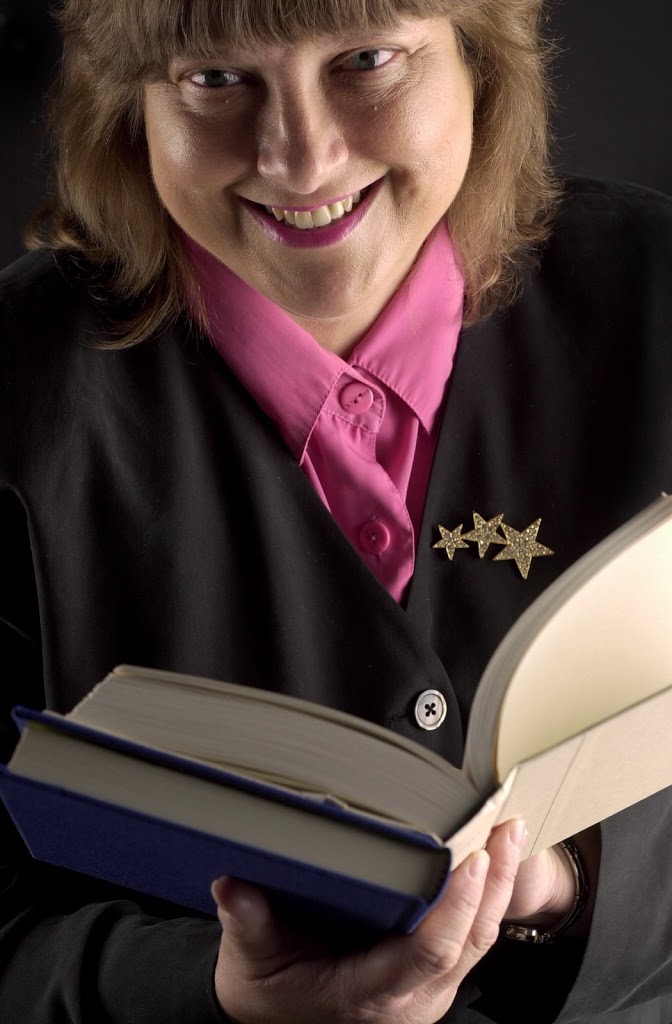
ThCOGDILL20Ae Kill Zone is thrilled to have Oline H. Cogdill, Mystery Fiction Columnist for the Sun-Sentinel in Fort Lauderdale, joining us today. She also reviews for McClatchy Tribune Wire Services, Mystery Scene magazine and Publisher’s Weekly. Her reviews appear in about 250 newspapers and publications world wide. She is a judge for the 2009 and 2010 Los Angeles Times Book Prize. Oline also blogs about mysteries, the publishing industry or anything else that amuses her at www.mysteryscenemag.com/msblog and at
www.sun-sentinel.com/offthepage.

Q. What happens when you review a friend’s book and you don’t like it?
A. I don’t review friends’ books. I am often called a “friend” or a “friend of mysteries,” but that is like using the word “friend” as one does on Facebook. I genuinely like most of the mystery writers I meet or are on panels with. But I am not their friend. There is a difference between being friendly and a friend. I’ll have a drink with them, or even a meal, but that is as far as it goes. (And I pay my own way.) I completely put the identity of the author out of my mind when I am reading a novel to review. I am focused only on the work, not the book. If I felt I was really too close to an author, then I could not review their book. My husband is working on a mystery; I have read the first six chapters and I think he is onto something good. Naturally, I would never review that, although because we have different last names I probably could slip it by. But it would not be ethical.
I want people to respect what I do.

Q. How many pages of a book will you read before you decide it’s not for you?

A. For me, the litmus test would be about 50 or 60 pages, but this actually seldom happens. Once I make the decision to review a book, I am committed to it: good, bad or indifferent. Since the books space at the Sun-Sentinel has been severely limited – and we have no idea what the future holds – the Books Editor and I made a conscious effort to try to publish reviews only on those books we liked. The idea being that we ‘d rather steer readers toward something than away from it. However, that said, if I begin a novel that I have chosen or one I must review and it is dreadful, I am committed to that book.

But there are a lot of exceptions. For one, if I just really hate a novel and don’t want to spend another minute in those characters’ company, I would just move on. Another exception is if it is a local author published by a small publisher. If I hate that book, I would not be serving anyone. I would put the author’s book signings, info in my Local Book News column and move one. Another reason for me not to continue with that novel would be if the publication I am reviewing for doesn’t want negative reviews. When that happens, I call the editor and ask that the book be assigned to someone else.
I take no pleasure in writing negative reviews, and would rather spend my reading time enjoying myself.

Q. How do you decide which books you will review?
A. For Mystery Scene and Publishers’ Weekly, the novels are assigned to me. It is kind of interesting to have novels assigned, because since I started reviewing mysteries sixteen years ago, I have always chosen what I read. Mystery Scene and Publishers’ Weekly have assigned me novels I may not have selected otherwise, opening up my world further.

For the Sun Sentinel or MCT, I choose the books. First criteria: if the author is local. Any South Florida or Florida author gets priority. Second is if the author is coming for a book tour. I can’t do everyone who swings through South Florida, but I try. There are a few – for me – must review authors such as Michael Connelly (who also has a strong Florida connection), Laura Lippman, George Pelecanos, Harlan Coben, Peter Robinson, Ian Rankin and Val McDermid (those are not my only “must review” authors, but a sampling).

After that, I look for something new, something different. I tend to review a lot more hard boiled than cozy or traditional, but I also try to self check myself and maintain a balance. Whether an author is male or female, a minority, etc., shouldn’t matter. It is the work I focus on. On a larger plane, it matters a great deal because I want to give readers a balance. I also try to remember authors I meet at Bouchercon or Malice, anyone who might have something different to bring to the table. Last year at Bouchercon in Baltimore, my husband and I ended up talking to two newbies. They had no idea who I was until at the end of the conversation, when I gave them my card and told them to make sure their publisher contacted me. (I think they are both with St. Martin’s, but that is the only hint.) The books they were describing sounded interesting. Whether they will be or not remains to be seen.

Q. Does a book have to be published by an accepted house (think ITW and MWA members’ books) for you to review it?

A. I don’t know what the accepted houses for MWA and ITW are. For me they have to be a legitimate publisher, not a glorified vanity press or a subsidized one (meaning the author pays part of the cost). I will not review novels from any publishers like that. No self published. There are so many books being published by legitimate houses, both large presses and small, that I can’t keep up with those. Cream rises to the top. If an author has to go the subsidized route, then I wonder why. Yes, I know there are some books that got their start that way, gaining a following and rising to a legitimate press; but those are the EXCEPTIONS, not the rule.

Q. Do you review mainly hardcovers, or does the format the book is printed in not make a difference?

A. It should not make a difference, but in reality it often does. I used to do a paperback a month but now with the cutbacks in space, I will often do a paperback or two a month and put the review on the blog at www.sun-sentinel.com/offthepage and then put it on the MCT wires. That way I can cover it. And those reviews on the wires get picked up a lot. Last year, the ones I did on the novels by Jeffrey Cohen and Julie Hyzy ended up in about 100 different spots.
For the newspaper, the editors prefer hardcover but sometimes I will slip in a trade paperback if I think it is really good. Or a paperback by a local writer such as P.J. Parrish. But as a rule, the novels that are reviewed for the Sun Sentinel are hard cover.
Let me add that I am a fan of paperback originals. A lot of excellent authors got their start in paperback originals. Sometimes the paperback original authors (Joel Goldman, Rick Mofina, Michelle Gagnon, P.J. Parrish) are as good if not better than many of the authors being published in hardcover.

Q. Do you agree with Dick Cavett that there are two ways to tell someone their book isn’t good: A) You book was not my cup of tea, and B) I put down your book and just couldn’t pick it back up?
A. Another thing to say would be “Your fans will love it.” But, ha!, no, I disagree with Dick Cavett. Those are kind of cocktail party responses, things you say to people to not hurt their feelings, though if you think about those responses they are hurtful in a way. I grew up watching Dick Cavett and realizing there was a whole world out there beyond my home town. But that is a milquetoast thing to do. I may try to soften a review, especially if I have liked everything else the author has written, but in the end I have to be frank.
Case in point, I reviewed a nationally known and admired author last year. I have followed this guy since his first paperback original, and have seen him get better and better until he now regularly lands on the best sellers list. But I did not like his latest one. It hurt me to not like it, but that was the reality. So I had to give it a negative review.
A book may not be my cup of tea, but it could be yours. However, I am the one writing the review.

Q. Are there any standardized rules for reviewers, such as not quoting too directly from the book or tempering your praise/criticism?
A. My two main rules are not to give away a plot twist that will spoil the book for a reader and not to fall so in love with my own voice that I forget who the review is for. The first rule is pretty standard – I hate when a reviewer gives away a plot. I remember some review of a Michael Connelly novel (don’t remember the publication or the book title) that seemed to take glee in giving away everything twist and turn. As a reader, that made me mad.

The second rule: I think too often reviewers get so caught up that they go on too much and forget that they are writing that review for the reader, not to hear themselves be clever.
I think all reviewers should follow the rule ( I think it’s from Star Trek), “to do no harm.” That doesn’t mean you can’t and shouldn’t rip apart a book if it deserves it, but review the book, not the author.
Quote from the book as much as you want to – most of the time that is just padding out a review – but don’t give away those vital plot points.

Q. Now that many reviews/reviewers are moving online, do you worry that they won’t adhere to the same journalistic codes?
A. I absolutely worry about that. I believe I am an ethical reviewer and I hope others think that too. I see a lot of reviews on Dorothy L and on a lot of online sites and, for the most part, they seem to be OK. Some of them are not especially well written but they are from the heart. But I worry that people are basing their reviews on grudges, agendas, friendship or anything else. Everyone now seems to be a reviewer. The rise of food review blogs, etc., seems to give many people permission to give their opinion on everything. When certain ethics such as being as objective as you can, approaching each book with a blank slate and others are not followed, I worry that it cheapens all reviews.

Q. What’s your take on ebook readers? Pros, cons as a reviewer?
A. If you mean like a Kindle or a Sony or whatever, I think those are just fine. It is another means to read a book. I like holding a book, that invisible connection to an author conveyed by holding their work. But if you read the book on a device or via the printed page, does it matter? I don’t think so. I would not find that a pro or a con as a reviewer.
The convenience might even encourage more people to buy books and that would be a good thing!
Actually, I wish the
New York publishers would get together and put their advanced copies on a Sony or whatever for reviewers. That way I could take an unlimited amount of books on vacation rather than limiting myself to 10. The publishers would save a ton of money, too.

Q. Amazon book reviews: many people think that readers pay attention to those starred, “street” reviews of books. Do you think they’re having a significant impact on book-buying decisions?
A. Lord, I hope not. Anyone can publish a review on Amazon. I know an author (self published) whose wife posted this glowing review on his Amazon site. Like me, she had kept her maiden name so no one else they knew the couple would know they were married. When they got divorced – and I bet you see this one coming – she posted a nasty, vicious review. Again, these reviews on Amazon are fraught with agendas, grudges, etc. I am sure some of the people posting their reviews are writing from the heart but others aren’t.

Sometimes You Get To Feel Optimistic About The Future

John Ramsey Miller

A friend of mine called me last week and said an old friend of his gave him a short story written by this friend’s 14-year-old son. He thought it was very good, and asked if I would read it and see if I agreed. Kids need encouragement, and I always try to offer an eye and encouragement if I can. We’ve all read drek by the bucket load, and since I have free time here and there, I said sure. We’ve all seen these stories written by young people, and mostly they don’t amount to much. I mean they show some glimmer of promise or they don’t, but judging the potential of a young person by a few pages doesn’t mean much. The 7 pages were single-spaced, and printed on both sides of the pages, and in blue ink. When I got them, I was working on building a structure on the place, so I folded the envelope and stuck in into my back pocket. I forgot about the pages, it was hot, I sweated, and the ink ran some.

Two days later, I finally unfolded the pages and read them, and they were excellent. This kid needs to mature, but I believe he has what it takes. Opens on a rainy night in an alley––a man with a freshly killed (huge) corpse lying on asphalt. Here’s an exert:

“He was here. It was done. Nothing left to do except run. He fumbled with the gun for a moment, wondering whether to dispose of it, or carry it with him. He shoved down in the pocket of his gray trench coat. As he pivoted away from the body and turned onto the sidewalk, he reached into his left coat pocket for his cigarettes. The pack was drenched, but inside there were dry ones left. He stepped underneath the awning in front of a closed-down pawnshop and fished his lighter out of his pants pocket, with some difficulty in maneuvering around his trench coat. He attempted to light the cigarette, but failed. He was out of lighter fluid. He reached into his other pockets looking for matches, but could find none. It was all right, because he was trying to cut back.”

I forget when I was reading that a fourteen-year old wrote it. The short story is well done and entertaining, but mostly it’s exciting to find a young person who thinks about something other than video games and who seems to have been called to tell stories. The kid is thoughtful and already understands character, economy of words, how to set a mood, and he plays his story play out like fishing line …with a nice sharp hook at the end. Yes, it is amateurish in many respects, but there’s a lot of talent there and I am sure this young man will evolve and mature and add something to the world that is hungry for new voices and stories.

How many of us have discovered a young voice and offered encouragement? And how many of these offerings have we had to trudge through to find one that makes it all worthwhile.

PFM

By John Gilstrap
http://www.johngilstrap.com/

Have you ever stopped to think about what the reading process really is? We process spots on the page as letters, which we then combine to form words. Each word has a precise meaning, and when we combine them in our heads, the words form images that can be every bit as vivid as an image projected onto a screen. When you sit down to read a “good book” (the phrase means different things to different people), the images become more real than the physical environment in which you are reading. The plight of the characters who are trying to survive become far more compelling than the reality of your reading chair.

When I teach writing classes, I refer to this process as the magical transference, and I try to get students to recognize just how fragile it is. As a reader, when you’re in The Zone, it only takes a single word, or a single abberant act on the part of a single character to eject you out of the story. Once ejected, you may or may not return. For me, when I look back on a terrific read, my judgement has a lot to do with how thoroughly I have felt connected with the story.

As an author, I realize that none of that is coincidental. Just as my connection with the stories I love was intentionally engineered by the authors of the books I love, I bear the sole responsibility for providing that same experience to my readers.

It’s about “voice.”

People who know me tell me that when they read my books, they hear my voice telling the story in their heads, and it sort of creeps them out. From where I sit, it’s the highest compliment. And it’s not accidental.

When I write a scene I’m always keenly and consciously aware of what the scene is meant o convey. If it’s a relationship scene, I can take my time. I can use longer sentences with more complicated structure. If it’s an action scene, on the other hand–say a shootout–then rapid-fire staccatto sentences are the order of the day. And through it all, I strive to be invisible. I have no interest in impressing readers with my vocabulary (as if it were big enough to do that), and I have no plan for them to marvel at my turns of phrase. At the end of the day, I just want them to become lost in my stories.

My formula is to bond readers to my work through my characters. A friend of mine, whose books outsell mine by a factor of ten, freely admits that his chacaters are an afterthought–that plot twists drive his plots. At then end of the day, we both get to the same place–a good story well-told–but our routes of travel couldn’t be more different.

What do you think? How important is the magic spell that defines reading? How aware are you at every moment when writing that every new word threatens the magical spell? How do you make it all work for you?

At the end of the day, is it all just pure f%$#ing magic?

The Digital Revolution is Already Here

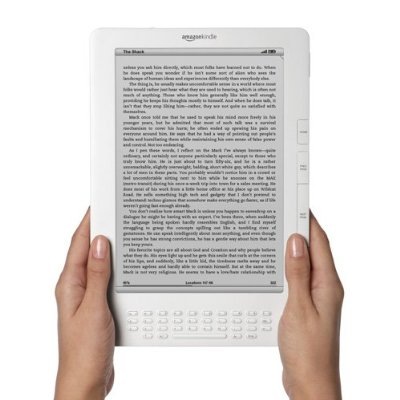
by Michelle GagnonKindle DX

During a press conference last Wednesday to celebrate the release of their latest Kindle reader (more on that in a bit), Amazon.com CEO Jeff Bezos made a startling announcement: for books available in Kindle format, more than 35% of their total sales were for the Kindle editions. Considering the fact that the Kindle is still in its nascency, introduced a little over a year ago, that’s an astonishing statistic (especially since it was basically mentioned as an aside during the introduction of a new product).

Granted, there are still only around 275,000 books available in Kindle format (in addition to numerous newspapers and magazines, which the new “DX” model is supposed to ease the reading of). Major writers like J.K. Rowling have yet to jump on board the Kindle bandwagon, so you can’t read their books on the device (not a legal version, at least). But it certainly shows the tide is turning.

I also have it on good authority that a major online publishing site which already has more than 50 million users a month (that’s right: 50 million) is about to jump into the fiction game. They’re hoping to recast themselves as the YouTube of online publishing. Authors will be able to release their own books directly to the public, and the split will be 80/20…for a change, that 80% will be going to the author, not the publisher. Some publishers have already begun releasing new books-for free-on the site. This could potentially open the flood gates, hopefully having an impact on how major houses split royalties. In my first contract, e-book royalties (which were still a blip on the horizon) were split 50/50 between me and my publisher. The last contract, it was down to 15% of the digital list price. As a friend of mine said recently, it’s tough to fathom the reasoning behind that split when the bulk of the publishing costs will have been completely eliminated. And why would already established NY Times bestselling authors continue to hand over such a significant chunk of their profits when they could release a book online, for free, and take that 80%?

It was particularly interesting that Amazon announced this during the release of a pricier Kindle model, not the cheaper one I would have anticipated. It could be a brilliant move- college students are traditionally early adopters, and a e-reader that seems perfectly tailored to reading textbooks could be a huge seller, despite the price tag (you can buy a laptop for less than the $489 a new Amazon DX costs). But surely they have a more reasonably priced Kindle on the horizon.

kindle appRumor has it that Apple has an e-reader in the works that will likely be as elegant and user-friendly as their iPod line. I’m willing to bet that by the end of the year, we’ll see e-readers in the $100-200 range, just in time for the holidays.

Getting back to Apple…what Bezos neglected to mention (again, surprising- clearly he needs to hire me for his marketing team) was a free application released in March that enables iPhone users to order and read Kindle books. Last October, an independent firm estimated that Apple had sold more than 10 million iPhone 3Gs; and that was before the Christmas rush. They have yet to say precisely how many Kindle units have sold, but when you start adding up those numbers, it’s already a significant chunk of the market.

I have both a Kindle and an iPhone, and the really cool thing is that I can be reading a book on one device, switch to the other, and it updates to the page I was on. The backlit screen can be tough to read for long periods, but for the length of a subway or bus commute it works great. The font size is large enough to read comfortably, and the pages are even easier to turn than they are on the Kindle. (However, you can only download Kindle books to the iPhone, not manuscripts sent in pdf format. Or if you can, I haven’t figured it out yet).

I’m going to argue, once again, that all of this is a good thing. I find that I buy more books now that I own a Kindle, not fewer-the Kindle editions are cheaper, and so easy to download, I make impulse purchases that I would never make in a store. Especially now that my bookshelves are threatening to overtake the house, Kindle editions are a guilt-free option that go a long way toward maintaining domestic harmony. And that’s always a good thing.

It’s Smackdown Day and I need your vote!

By Joe Moore

It’s going to be a short post today because there’s little time to spare. Like any great thriller, the clock is ticking. My co-author Lynn Sholes and I are in a death match with none other than Dan-da-Vinci-Code-Brown. And we’re determined to win.

Don’t get me wrong, I like Dan Brown. At least I like his books. megalithI’ve never actually met him, but I’m sure he’s a great guy you’d want to have a beer with. But today there’s something called the May Madness Thriller Author Smackdown over at a website/blog called Megalith. So a potential Brown-Sholes-Moore warm & fuzzy beer fest is not in the cards right now. This is serious smackdown stuff.

Each day of this month, the Megalith blog is matching up two thriller authors (or teams) to go head to head. The final round and championship will be on May 31. But today, we need your votes.

I mean, when you get right down to it, aside from a small difference of 80 million or so copies in sales, just like Dan’s, our thrillers have secret societies, ancient religious relics, angels and demons, globe-trotting heroes and villains, secret codes, seat-of-the-pants action, inside the Vatican cool stuff, creepy tunnels, dusty tombs, scary castles, and apocalyptic threats galore.

So call your family and friends, use names off headstones and the Chicago voter rolls—whatever it takes. Just get over to Megalith blog and vote. It’s a smackdown, and the future of the thriller world is in your hands.

~~~~~~~~~~~~~~~~~~
Coming up on our Kill Zone Guest Sundays, watch for blogs from Sandra Brown, Steve Berry, Robert Liparulo, Thomas B. Sawyer, Paul Kemprecos, Linda Fairstein, Oline Cogdill and more.

Does your story have a “wobble”?

Sometimes your story may get unbalanced in some areas, like a tire that’s gone out of alignment. Severe story wobble can kill the pacing and reading experience, so it pays to recognize the symptoms, and take remedial action to push your narrative back into shape.

When you’re doing any of the following in your writing, it’s likely that your story is getting off kilter:

  • Over describing the actions of the main character.
  • Over describing background information that you think the main character needs to know.
  • Under describing (or losing track of altogether) the actions of secondary characters in a scene.
  • Using repetitive sentence structure.

It’s easy to fix most cases of story wobble. Here are some remedies:

  • Use only minimal actions to show the actions of the main character.
  • When you have some background information that the main character needs to know, sprinkle it in, or create an SME (Subject Matter Expert) for your story.
  • If it’s been a while since you’ve mentioned a secondary character in a scene, be sure to “establish” the character in the reader’s mind before giving him dialogue or action. Otherwise the reader won’t know who the re-introduced character is.
  • Do search-and-destroy missions on repetitive sentence structure. It’s easy to fall into using the same sentence patterns repeatedly throughout a book, so make sure you change things up in every paragraph. This is also known as varying the sentence rhythm.

What are some of your story wobbles that you have to search for and destroy when you’re rewriting? Has there ever been one that has caused you embarrassment?

How much do awards matter?

By Clare Langley-Hawthorne

I was on a Yahoo! discussion group the other day and we were discussing a recent book choice when the question was posed – how much do awards influence what you buy and read? This got me thinking of the bigger issue about how much mystery awards matter – for readers, writers and the publishing industry in general.

My theory (and feel free to disagree!) is that while awards are influential in terms of industry perceptions and in terms of making authors feel great, they have only minimal overall influence on readers. Now, I’m not talking about the mystery reading community but rather the wider reading community in general. I have to confess before I had my first book published I had never heard of most of the mystery book awards – and I was an avid reader! (though not, to my shame, a huge mystery reader – I have subsequently rectified this, at least a bit!). I vaguely knew about the Edgars but that was it – so while I had heard of the Booker prize I had no idea about the Lefty, Agatha, Macavity or Anthony – so for me (obviously!) awards didn’t have much of an influence on my book buying. In fact, many awards (Booker for instance) often reflected rather strange selections so I was more inclined to be influenced by reviews and recommendations than the seal-of-award approval. But that’s just me…

I do think awards recognize excellence and that the publishing industry certainly takes notice. I think (although I have no personal evidence…) that being nominated or winning an award may help an author secure the next publishing contract and perhaps garner a higher advance than would otherwise be the case. I also think, though, that an author’s track record in terms of sales is what really counts for publishers…There have been many terrific authors who have been nominated and who have even won awards who have still been subsequently dropped by their publisher on the basis of sales.

The consensus on the Yahoo! group appeared to be that awards were nice but not really influential. Most people preferred to rely on recommendations made by friends or reviewers they trusted. Many on the listserv also noted that in the mystery field there were so many awards that some readers felt the impact was diluted as many ‘popular’ choices went on to dominate – some people felt the awards lost their significance as a result. Many of the mystery awards are nominated and won on the basis of votes from members or registered conference attendees so overlaps are probably only to be expected – but I’m not sure whether this means in terms of the awards themselves or their significance to readers.

So what about you? How much do you think awards matter? Do awards influence what you buy and read? If so, which ones are the most influential and if not, why not??
~~~~~~~~~~~~~~~~~~
Coming up on our Kill Zone Guest Sundays, watch for blogs from Sandra Brown, Steve Berry, Robert Liparulo, Thomas B. Sawyer, Paul Kemprecos, Linda Fairstein, Oline Cogdill and more.

A Challenge from Across the Pond

Today we welcome our guest James Scott Bell to TKZ. Jim is the author of the Ty Buchanan thriller series – Try Dying, Try Darkness and Try Fear (July 09). His latest standalone, Deceived, was called a "heart-whamming read" by Publishers Weekly. He has taught novel writing at Pepperdine University in Malibu, and at numerous writers conferences. In July he’ll be conducting a workshop on suspense dialogue for the International Thriller Writers CraftFest portion of ThrillerFest in New York. Jim is also the author of two bestselling books in the Write Great Fiction series from Writers Digest Books: Plot & Structure and Revision & Self-Editing. A former trial lawyer, Jim lives and writes in L.A. His website is www.jamesscottbell.com

By James Scott Bell

jim-bell Perhaps you saw the challenge a group of British thriller writers laid down last month. In The Guardian (UK) , Jeffery Archer, Martin Baker, Matt Lynn and Alan Clements declared they are out to end "the reign of the production-line American thriller writers, such as James Patterson, John Grisham and Dan Brown" and return British thrillers to their "rightful prominence."

Talking a little English smack, Archer said, "The tradition of thriller writing should never be allowed to die. Not least because we are better at it than anyone else in the world."

My thought upon reading that was, We whipped ’em in 1781, and we can do it again.

But I set my musket aside and continued reading. Here’s a clip:

Lynn, author of the military thriller Death Force, said that authors such as James Patterson – who writes, with the aid of a team of co-authors, up to eight books a year – have "drained a lot of the life out of the market". "Look at Fleming, look at Len Deighton – they had a quirkiness to them. Yes they were very popular, and had elements of the formulaic, but there was an edge of originality to them," he said. "All the writers in this group believe in bringing that back … Too many of the American thrillers are just being churned out to a rigid formula. Good writing is never a production line."

"We’re trying to say ‘why would you want to read fairly cynical, ghost-written books which are being pumped out by publishers when there are a lot of good new British writers you could be reading?’" explained Lynn. "We feel the genre has been quite neglected in the last seven to eight years … There haven’t been any new writers coming through. It might be because there aren’t any very good writers, or maybe it’s because publishers and booksellers have been neglecting it – they’ve become obsessed with the big names, and because they’ve got a new James Patterson or John Grisham four to five times a year to put at the front of the bookshop, it crowds out all the new British authors who are coming through."

These writers, who call themselves The Curzon Group, have come up with "five principles" for writing a thriller. They believe–

1. That the first duty of any book is to entertain.

2. That a book should reflect the world around it.

3. That thrilling, popular fiction doesn’t follow formulas.

4. That every story should be an adventure for both the writer and the reader.

5. That stylish, witty, and insightful writing can be combined with edge-of-the seat excitement.

Let’s take a closer look.

1. That the first duty of any book is to entertain.

Check. Without that, nothing else matters, because no one is reading you. And note that entertainment does not mean fluff. Being "caught up in the story" can happen in many ways and in myriad genres.

Our top thriller writers clearly entertain. Look at what’s being read on any given plane on any given day. For a read that gets you caught up in the fictive dream, we Americans are certainly holding our own, wouldn’t you say?

2. That a book should reflect the world around it.

TRY DARKNESS final cover I’m not sure what this means. Social comment? Message? Verisimilitude? You can take it a number of ways.

I do think a thriller has to "reflect" the world to the extent it establishes the feeling of reality, that the events in the story could happen. How well you do this is a matter of individual style, and avoiding things that could pull readers out of the story.

But this is SOP for any fiction writer, not just those who do thrillers. I’m not sure this principle moves the debate along.

What do you think it means?

3. That thrilling, popular fiction doesn’t follow formulas.

Here, I disagree a bit. There is a reason we have formulas in this world: they WORK. Try making nitroglycerin out of egg whites or lip balm out of sandpaper. We use formulas every day. We’re lost without them.

What most critics mean by this jab is "formulaic," which is a euphemism for "by the numbers" or otherwise without original content and style.

And we’d agree. Thrillers need formula, but should never be formulaic.

So what’s the formula?

For one thing, somebody has to be in danger of death. (I’ve talked elsewhere about the three types of death—physical, professional and psychological. For most thrillers, physical is on top).

Another ingredient: an opposition force that is stronger than the Lead. If not, the reader won’t care about the stakes.

And the Lead has to be a character we care about deeply. Not perfect, and not necessarily all good (think: Dirty Harry). We just have to care, and there are things you do and don’t do to forge that reader connection.

What keeps a thriller from being by-the-numbers is the freshness you bring to it by way of character, voice, style, and the arrangement of plot elements.

Take A Simple Plan by Scott Smith. A tried and true formula: innocent man finds forbidden treasure, succumbs to greed, disaster results (the death overhanging this novel is psychological death, which the Lead and his wife suffer by the end). That story’s been done over and over. But Smith brought to it compelling characters in complex relationships, and a style that drives you relentlessly from chapter to chapter.

Or the film The Fugitive. Innocent man on run from the law. Formula! But what they did with both Richard Kimble (Harrison Ford) and especially Sam Gerard (Tommy Lee Jones) turned it into a classic thriller. We’ll never forget Sam’s line, "I don’t care!" Or the beat where Kimble, trying to get out of Cook County Hospital without being recognized, puts his own troubles on hold to help a kid in the emergency ward.

When the film was over, and Sam does care, we’ve been taken on an almost perfect thrill ride.

4. That every story should be an adventure for both the writer and the reader.

Check. For the writer of thrillers, that means taking a risk in each book, somehow. Stretching the muscles. For example, I love that Harlan Coben has taken Myron Bolitar international in his latest. I’m sure you have your favorite examples, too (what are they?)

No adventure in the writer, no adventure in the reader.

5. That stylish, witty, and insightful writing can be combined with edge-of-the seat excitement.

Who is going to argue with that?
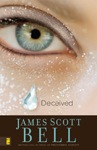
deceived I’d aver, however, that style cannot overcome a weak story construct. So while I’m at it, let me put in a good word for Patterson, who has been castigated by so many. His concepts are terrific. He knows story at the fundamental level. His books wouldn’t do nearly so well without the solid scaffolding of the basic premise.

Before I can start outlining or writing, I have to have a logline that excites me, that calls up all sorts of possibilities in my mind. That’s something Patterson, Grisham and Brown also have as the baseline of their books. And so do all successful thriller scribes, as far as I can see.

Our team, the American thriller writers, do pretty well after all. So if the Brits want to have a contest, I say: Bring it.

I’m in.

Any other takers?

And what do you think of the five principles?

~~~~~~~~~~~~~~~~~~

Coming up on our Kill Zone Guest Sundays, watch for blogs from Sandra Brown, Steve Berry, Robert Liparulo, Thomas B. Sawyer, Paul Kemprecos, Linda Fairstein, Oline Cogdill and more.


“The Past Is Not Dead, It Isn’t Even Past.” William Faulkner

By John Ramsey Miller

http://www.johnramseymiller.com

When I was in Miami, 17 years ago, a boy of sixteen was killed by one of two off-duty policemen late one night. Andrew Morello was the sixteen-year-old son of dear friends of mine. That was terrible enough, but what followed was a cover-up by the police for a bad shooting. I didn’t write the story for the Miami Herald because I was too close and emotionally involved at the time. And I was involved because I knew Andrew, and I knew he was a good kid who loved his parents. Andrew was dead for being in the wrong place, doing the wrong thing, at the wrong time. What might have been a tragedy turned into a life destroying event because of several things that happened afterward.

That Saturday morning I was in the shower in my home in Coconut Grove when my wife came into the bathroom and said, “John, Andrew Morello is dead. He was killed by the police.”

I learned that Andrew and three of his friends were stealing speakers from a vehicle, and the alarm went off and two off-duty cops ran out of their house and shot Andrew. He was shot in the heart, and his friends drove the van to his aunt’s house a few blocks away. She called 911. Someone cancelled the ambulance, saying it was not needed. The tape of the cancellation somehow was accidentally erased before a voice pattern could be charted. It was obvious that someone, nobody knows who, didn’t want him to live.

The female cop who shot the gun said Andrew was trying to run her down, but his two friends said he was backing up when the shot was fired. The windshield with the bullet hole in it was “accidentally” shattered by the cops before the Morellos’ independent investigators could test it. The CSI’s own test seemed to prove that the cop was not where she claimed to have been when the bullet hit the windshield and supported the evidence that Andrew was not driving toward the cop, but was turned in his seat so he could see while he was backing up away from the cops as the other boys testified. In the end, the two friends with him went to prison because Andrew died and they were taking a radio or speakers out of a Jeep. This was only really covered by the alternative newspaper, NEW TIMES, and it was covered well. The Herald wrote very little about it. The Morellos tried to have this tried by suing the police, but a judge ruled they couldn’t sue the police and closed the investigation, which was performed by the police department whose cops were involved.

The event put me at odds with Janet Reno, the Attorney General, and she and I had heated arguments about the fact that she would not investigate the police, but accepted their “evidence”, saying that I should bring her evidence of a cover-up. I told her that discovering evidence was her job. My wife can attest to her angry calls and our heated debates over the phone. At the time I knew Janet Reno a little, because I had done portraits of her for a NEW TIMES cover article. She was mad at me at the time for using a picture of her wearing bad glasses, but I doubt that was why she refused to investigate unless I came up with evidence of a cover up.

The Morellos have a large Italian family––a close knit bunch who live to love and love to live. Susie and I were taken into their family after I spent a week at the family’s pawn shop in North Miami Beach doing a piece for the Miami Herald’s Sunday Magazine titled “Pawnography”. Every Thanksgiving we had dinner with Joe and Andrea and their large extended family. Turkey and Lasagna. Andrew’s death all but destroyed that family. Not so much his death, as the unfortunate aftermath of it.

The point of this rehashing is that Andrew’s mother sent me an email saying that she wanted to write Andrew’s story. Not with a book in mind, but to tell the story from a mother’s perspective. She said a lot of her friends and family said she should forget it, that the past should left in the past. I sent her the Faulkner quote about the past. I want her to write that because I want to read it. It won’t matter whether or not it is published, because I think it will help Joe, and the family to heal and put it in their past. At least I hope so. I wrote Andrea that until she puts the past to bed, she can’t truly see her future. I know Andrew would want her to be able to do that. I received the first 13 pages and it was all I could do to read them. My wife cried as she read those pages. Of course it was personal for us and we saw the suffering first hand and love the people involved. Reliving the past can be painful but a healing experience. Losing a child is the worst fate a mother and father can experience, and after 17 years it is no easier for them.

And there were letters to the editor and calls and letters to the Morellos (all anonymous) who said all three boys should have been killed, and one that said that if they had raised Andrew right he would still be alive. How people can do this is simply beyond my ability to understand how people can be so cruel in the face of this heart-breaking event. Yes, Andrew was doing the wrong thing, at the wrong time, but he was a child being influenced by other kids. Andrews father owned a large pawnshop and he had tons of speakers that Andrew could have taken with Joe’s blessings, and that haunts his father. It all haunts his parents and friends, including myself. The Morellos are people of integrity and compassion and they didn’t deserve what happened. I believed that the shooter did nothing but make a huge mistake, and that what happened after was the true crime. I don’t believe the cops set out to murder a child, but that they over reacted in the worst way possible. Those cops, who were married, have to live with what happened––killing a child, and the rest of us have to live with the ramifications of their mistake. What haunts me most is that Andrew would have grown up and become a productive member of society because that was where he was headed, but he never got a chance to become that man.

The future is so uncertain that these days I think about the past more and more and it is clearer than it used to be. I guess my mind has polished the rough spots until it’s all glass smooth. Some things cannot be polished until they become smooth, and this is one of those. It was a horror and a tragedy and it changed all of us who were involved. Now when I write what loss does to good people, I do so from painful experience.

“The Past Isn’t Dead, it isn’t even past.”