What I’m Thankful For (and a pumpkin cheesecake recipe)

Of course, there’s the usual: my health, my family and friends, the fact that I didn’t have to board a plane today and brave the madding crowd. I’ll be enjoying my turkey right here in (relatively) warm and sunny California, thank you very much.

pumpkin But this year, I do have a little something extra to be thankful for: my new two book contract. Because as many of my writing friends have recently discovered, this is a tough, tough environment for book sales. I share writing space with nine other authors. Two of them had contracts fall through in the past few months. Two others have manuscripts that their agents think would have gone into a bidding war earlier in the year: but as of right now, they haven’t had a single offer.

With the news that Houghton Mifflin has stopped acquiring manuscripts for the time being, many writers’ worst fears are confirmed. Forget the automakers: how are writers going to survive the economic downturn? Is it time for us to hand in our private jets, God forbid? If my contract had been negotiated after the crash, I suspect my publisher would never have offered the amount we settled on. In this industry, so much comes down to timing.

Of course, it’s not as though much happens between Thanksgiving and New Year’s in the publishing industry anyway. Much as they are loathe to adjitneymit it, it’s the only American profession that seems to mirror the European vacation calendar. Most agents won’t even bother trying to shop a manuscript this time of year. And August: fuggedaboutit. The Da Vinci Code could land in an editor’s lap and they’d toss it aside while rushing off to catch the jitney to the Hamptons. Mind you, I’m all for that. Especially since most editors spend their days in meetings and their nights and weekend working on manuscripts. It’s definitely not a job you go into for the money, by and large. So time off is well-deserved.

But parissince the lack of acquisitions at this time of year is largely a given, why did Houghton Mifflin even bother making the announcement? Their "temporary freeze" is a bad sign. Will it last through January, or longer? Will it spread to other houses? Does this mean that the publishing industry is throwing in the proverbial towel, and will eventually only publish a handful of titles every year about vampire detectives with difficult (but beloved) dogs who reveal religious conspiracies while recording their downward spiral into drug addiction followed by their inevitable redemption? Or, God forbid, Paris Hilton’s latest musings on hair, boys, and other national security issues? Because let’s all just admit that Paris Hilton can walk into pretty much any publishing house and get a seven figure deal before you can say "Salman Rushdie."

The irony here is that all things considered, books are cheap entertainment. And historically, entertainment has done well during economic bulldogdownturns, when people need to take their minds off their troubles. Little known fact: more books sold during the Great Depression than in the period immediately before and after. Sure, in the new millennium we have many other distractions available to us, from television to video games to bulldogs on skateboards. But what if the publishing industry banded together and advertised reading as the ultimate inexpensive pastime? Something along the lines of the dairy industry’s "Got Milk" ad campaign? Who knows, it might make a difference. And hoping to shore up the industry by releasing fewer and fewer titles doesn’t seem like the best option.

Anyway, that’s my thought for the day. And I’m hoping that by the spring of 2010, when my renewal comes up, the economy will have recovered somewhat. Until then, I’m honing my vampire knowledge base.

As promised, my killer (no pun intended) Pumpkin/Ginger Cheesecake recipe, in case you’re in charge of dessert:

Ingredients

  • 1 gingersnap crumb crust baked and cooled
  • 3/4 cup sugar
  • 1/4 cup chopped crystallized ginger
  • 8 ounces cream cheese, softened
  • 2 large eggs
  • 1/4 cup whole milk
  • 1 tablespoon all-purpose flour
  • 1/2 teaspoon freshly grated nutmeg
  • 1/4 teaspoon salt
  • 1 cup canned solid-pack pumpkin (from a 15-ounces can)

Preparation

Make the gingersnap crumb crust:

  • 5 tablespoons unsalted butter, melted, plus additional for greasing
  • 1 1/2 cups cookie crumbs (10 graham crackers or 24 small gingersnaps; about 6 oz)
  • 2 tablespoons sugar
  • 1/8 teaspoon salt
  • Special equipment: a 9- to 9 1/2-inch pie plate (4-cup capacity)

Put oven rack in middle position and preheat oven to 350°F. Lightly butter pie plate.

Stir together all ingredients in a bowl and press evenly on bottom and up side of pie plate. Bake until crisp, 12 to 15 minutes, then cool on a rack to room temperature, about 45 minutes.

Cook’s notes: • To make cookie crumbs, break up crackers or cookies into small pieces, then pulse in a food processor until finely ground. • For pumpkin ginger cheesecake pie, use 4 (not 5) tablespoons melted butter plus additional for greasing.

Then, for the cheesecake part:

Keep oven rack in middle position set at 350°F.

Pulse sugar and ginger in a food processor until ginger is finely chopped, then add cream cheese and pulse until smooth. Add eggs, milk, flour, nutmeg, and salt and pulse until just combined.

Reserve 2/3 cup cream cheese mixture in a glass measure. Whisk together remaining 1 1/3 cups cream cheese mixture and pumpkin in a large bowl until combined.

Pour pumpkin mixture into gingersnap crumb crust. Stir reserved cream cheese mixture (in glass measure) and drizzle decoratively over top of pumpkin mixture, then, if desired, swirl with back of a spoon. Put pie on a baking sheet and bake until center is just set, 35 to 45 minutes. Transfer to a rack and cool to room temperature, about 2 hours, then chill, loosely covered with foil, at least 4 hours. If necessary, very gently blot any moisture from surface with paper towels before serving.

They’ll love it, trust me.
The “O” word

By Joe Moore

theletteroI love being a writer, I just don’t always like writing. I find first draft writing to be painful. So much so, that I don’t know how I’ve managed to finish a single book, much less four novels. Some writers love the process and have an easy time at it. But many of my fellow author friends are like me—we fight for every word. It seems to be the nature of the beast for many of us. But what I do love is the process of rewriting. There, the pain is replaced with pleasure and fun as more and more meat is added to the bones.

One of the methods I have to cope with first draft writing is to use the advice I received from one of my beloved mentors who said, “A bad plan is better than no plan.” To equate that to writing, I believe you must have some plan of action before you can start. There are many writers who claim they can sit down and start writing from the first word, and complete their book in a stream of consciousness. I can’t do it. It rarely comes out freely like water from a hose. So I always create a plan of action. I hate to use the dreaded "O" word: outline. But that’s what it is. Some writers complain that outlining inhibits their creative muse. For me, it’s no different than taking a trip and using a roadmap. You might take a side trip now and then but the destination is always predetermined. I just keep it simple, basic, easy to understand—enough to have a general idea where I’m going at any given time. That way I always know what I’m working towards.

Someone once said that first draft writing is a lot like looking out over a fog-shrouded sea with only the tips of mountainous islands pocking up. With a plan of action, I know enough about the islands to realize that I must navigate to each one. What I don’t know is what will happen in the fog. My plan helps me get through it.

Do you outline? If so, how basic or extensive is it? Or do you just wing it?

Catching the digital wave

Digital book sales, aka e-books, continue to soar.

According to the AP and other news reports, Random House has announced that they are digitizing thousands of additional books. Excerpts will be available online.

This move comes in the wake of the explosive growth of Amazon.com’s Kindle reader, which Oprah put on the map. I haven’t tried the Kindle yet, but if I’m lucky, maybe I’ll wind up on Santa’s list for it this year.

In general, it sounds like the heads of the book publishing industry must read the pixels on the wall and embrace ebooks, or risk becoming that industry’s next version of Detroit’s Big Three.

Of course, buried in the recent news reports about rise of e-books was the caveat that digital book sales represent only a thin slice of publishing’s pumpkin pie–estimated to be about one percent. But I’m old enough to remember when Japanese car makers had only a small piece of the American automobile market. Today, they’re cleaning our clock.

I do love the idea of being able to sample book excerpts and audio books online. That’s a powerful “sales lead-in” that’s going to encourage hard-core hardback book readers like me to jump aboard the e-book wagon.

I think it’s time for all of us to stop mourning the nongrowth of paper book sales, and celebrate the new digital age. It’s the future. Let’s embrace it. For example, last week when I posted, I was freaking out about the changes in the industry. This week, I have decided to reframe my thoughts about the book publishing crisis, and seek out the hidden opportunities in those changes.

Because ready or not, the digital era is here.

So what about you? Are e-books in your library yet? Have you asked Santa for a Kindle?

Update: Speaking of changes in the industry–in the comments, Joe alerted us to the fact that Houghton Mifflin has told its editors to stop acquiring manuscripts. Here’s a link to the article.

Rituals, Celebrations and a Horse Race

By Clare Langley-Hawthorne
www.clarelangleyhawthorne.com

Believe it or not, a number of Americans have asked me how we celebrate Thanksgiving in Australia…before I remind them (with a cough) that Australian don’t celebrate Thanksgiving – it’s (another cough) an American ritual…and believe it or not they often seem genuinely shocked.

I am an unapologetic adopter of celebrations – I figure when in Rome…So my family are the ones cheerfully flying the American flag and organizing the Fourth of July street party. We take our boys trick or treating (something that growing up in Australia we never did) and at Thanksgiving we oblige by going through the whole nightmare of traveling, visiting and cooking – all in honor of our adopted home. I like celebrating. I like eating and drinking (I am, after all, an Australian!) and we get to enjoy the best of both worlds.
We fly the Australian flag on Australia Day and enjoy explaining the often strange rituals and celebrations of our homeland – which even to this day celebrates English holidays such as Boxing Day (which is the day after Christmas) despite the fact that no Australian I know has the least idea what this day is all about (apart from post-Christmas sales!).
When researching my Ursula Marlow series I came across a social calendar for 1910 which revealed just how the Edwardians set their calendars by events such as yacht races, polo and cricket matches, art gallery openings, theatre season etc. I was jealous just thinking about the pace of life back then. My favorite holiday is ‘Empire Day’ – it’s such an imperialistic conceit that I almost wish it was still celebrated – only because it would reveal how the British Empire is no more.
Of course Australia is still officially part of the Empire and as we have failed to ever pass a referendum to become a republic, the Queen of England is still our head of state. Yes, we even have a public holiday in honor of the Queen’s Birthday – now isn’t that hilarious! (Hey, I’m not knocking it though – I’m all for public holiday’s no matter what they are in aid of!).

Nothing in my research however is as funny as seeing American reactions to one very famous public holiday in Melbourne – one celebration that reveals the quirks of Australia that Americans would probably find hard to believe. That day is Melbourne Cup Day – the first Tuesday in November. It’s my all time favorite holiday mainly because my birthday quite often coincides (as it did this year) and who would ever complain about having a public holiday on their birthday?! So there you have it – in Australia we give everyone the day off in celebration of a horse race.

As immigrants we get to enjoy bringing the rituals from our home and taking on the rituals and celebrations of our adopted home, America. This Thanksgiving week I like to think it gives me the opportunity to reflect on how fortunate we are to be able to do this – to freely celebrate or not as we wish and to enjoy the welcome we have received here. America has been very good to me – it gave me the opportunity to fulfil my dream of being a published writer. I have been able to achieve things here that frankly I doubt I could have achieved in Australia. For that I am extremely thankful – but believe me when I say, I will never, ever be able to stomach pumpkin pie, no matter how many Thanksgivings I attend…

Some food for thought…what rituals and celebrations have you adopted and what have you brought with you from your other home (if you have one)? And in the spirit of Thanksgiving what are you thankful for?

The Dog Rapist

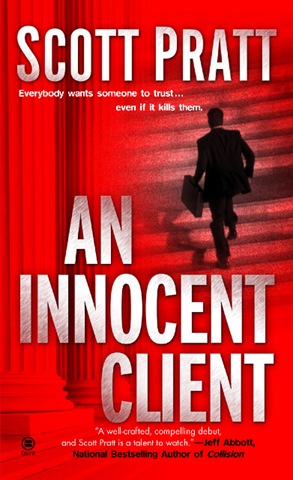
The Kill Zone is thrilled to welcome author Scott Pratt for a discussion of outlandish cases and how they can influence your work. Publisher’s Weekly called AN INNOCENT CLIENT a “brilliantly executed debut,” and awarded it a starred review. I can attest that it’s a remarkable book, not to be missed.

INNOCENT CLIENT1 People often ask me what it was like practicing criminal defense law, representing guilty people, being close to murderers and rapists and various other scumbags. They want to hear the stories. I write about those stories now in my novels, but there’s one that’ll never make it into a novel. A couple of years ago, a good friend of mine who worked for the public defender’s office found himself representing a dog rapist…

These are the facts:

Truck driver and wife fall out of love. Wife leaves home and files for divorce. Truck driver is miserable, drinks too much, and becomes lonely. Wife has moved into an apartment that doesn’t allow pets, forcing her to leave her beloved Irish setter with the truck driver. The only way she can see the dog is to visit her former home. She usually goes by right after work – around 5:00 p.m. – and lets herself in with her key. This particular day, however, she is forced to work late and then runs a couple of errands. Believing her soon-to-be-ex-husband is out of town, she stops by to say hello to the setter. When she walks in through the kitchen and enters the living room, however, she is greeted by a horrifying scene – hubby is on his knees on the floor in the corner, trying to insert his penis into the dog. Wife calls the cops.

Scott004 Under the Tennessee animal cruelty statute, a person could be found guilty for committing a litany of offenses against animals: starving them, neglecting them, beating them, etc. But screwing them was not one of the elements listed in the statute. This important bit of information was passed along by my buddy to hubby, who was relieved to know that he couldn’t be convicted under the animal cruelty statute. What’s more, Tennessee does not have a statute on the books that makes having sex with an animal a criminal offense – called a “bestiality” statute in many states. Subsequently, hubby took a hard line and refused to plead guilty to any offense. He didn’t want to pay any fine, he didn’t want to pay any court costs, and he didn’t want to do any time in jail or be placed on probation. He even asked my friend about suing the police to recover the money he had to pay out for bail. When my friend relayed this information to the district attorney prosecuting the case, the D.A. said, “Fine. I guess we’ll have us a little trial in a couple of hours.” In the meantime, the prosecutor got on the phone and called the local media and asked them to come down to the courthouse. He filled them in briefly on the details, and being the dedicated journalists they are, they came running. The prosecutor also asked the wife to go get the dog and bring it to the courthouse.

After the lunch break, hubby walked in and saw the dog sitting with the wife in the hallway outside the courtroom. He also saw the television cameras and the reporters. He asked my friend what was going on, and was told that someone had apparently called the media to cover the trial.

“What the hell’s the dog doing here?” the hubby said.

“She’s here to testify that the sex was Ruff!” my buddy said.

Okay, that last line is a lie. But the rest of it’s true. Once he was confronted with the possibility of testimony being presented in a public trial, hubby pleaded guilty to animal cruelty, paid a fifty-dollar fine and served fifteen days in jail. His explanation to my buddy for his conduct? “I was drunk. Besides, I wouldn’t have hurt her none. Me and her has always been close.”

Hubby moved away less than a month later. Nobody’s heard from him since.

The stories that do make it into my novels are all based – sometimes loosely, sometimes not – on things I’ve done or seen, things I’ve been close to in the profession of criminal defense. It’s a fascinating world, full of zany characters, but it’s also a world that can be dangerous. The murderers aren’t always handcuffed, the guards aren’t always close enough, everyone you meet seems to be playing some angle, and there are guns and steel bars at every turn. I felt like I was suffering from battle fatigue when I finally got out, but I’m glad now that I stayed as long as I did. I have enough material to write at least ten more novels.

You might be saying to yourself, “Good for you, but I’ve never been a lawyer. Where am I going to get that kind of material?”

All you have to do is look around. Conflict is everywhere, and the world we live in is filled with danger. Mix in a little talent and a little imagination, and it’ll appear from the murk. The nugget we’re all panning for… drama.

By the time you read this some Bambi’s mother will be dead.

John Ramsey Miller

I am writing this on Tuesday because when it runs Saturday I’ll be deer hunting in dear old Mother Mississippi, and by 7 AM EST I very likely will have knocked down at least one deer. I hunt in November and December with the same boys, now older men like myself, whom I’ve been hunting with for forty-two years. My family eats venison all year long. I love it, my wife loves it, my sons love it, and their children love it. Yum, yum. I have never killed a deer I didn’t eat and I guess I’ve killed two or three every year I’ve hunted. Venison makes the best chili meat, the best crock-pot roast, the best tenderloin medallions, the best ground hamburger. Aside from the possibility that they eat grass tainted with pesticides or fertilizers, they are grass fed, acorn tempted and pure. Game won’t add weight to you either. Game and fresh vegetables is the best diet there is if you ask me. Nobody in my family is fat, nor are any particularly wormy-looking.

I sometimes hunt wild hogs in Tennessee and although wild pork smells dreadful when you cook it (we do that outside on the grill) it makes the best spaghetti sauce I’ve ever tasted. I also love boar chops, wild pork tenderloin, and Bar-B-Q. Store-bought meat has nothing on game. Game is 100% natural with no harmful fat, antibiotics, steroids, or other drugs in their systems. It keeps better than store bought. My wife cans it or freezes it. It is apparent that God put game on the earth to feed man correctly, and every time I take a game animal I thank Him for supplying the food. I almost forgot. Another good thing is, because I write about deer hunting in some of my novels, I get to call it research.

We just harvested a whole bunch of meat chickens we raised from chicks, and after 8 weeks their dressed weight ranged from 4.5 to 6.8 lbs. We fed them organic feed that comes from a local feed mill where they grind everything themselves from quality ingredients.

Our laying hens eat only organic feed, free-range for bugs and plants two hours a day, and our eggs are at least twice as tasty as store bought. I have fourteen, but want fifty or more so I’m building new quarters for them. Those I will not kill. When they stop laying, I have a friend with a large farm and he will let them pasture there as long as they live.

I do not think it’s the end of the world yet, and I’m pulling for President Elect Obama, but even if the country doesn’t collapse with half the country out on the street, food riots and infected zombies roaming the countryside, I’m serious about surviving as close to the bone as I can during the next few uncertain months and years and part of that is feeding my family as best I can. The farming community around here sort of roll their eyes at us, and probably think we’re being secretly filmed as part of some kind of reality show, but that’s okay. We are trying, and having one heck of a good time.

I know some people are opposed to killing animals, and frankly I don’t enjoy that part of hunting or harvesting, but there’s no other practical way to separate animals from their meat.

Hunting and raising animals gives me a chance to enjoy nature and think about my life and what I want to write, and sometimes even if I intend to keep doing it at all. Not that I don’t love writing, because I do and it has been good to me over the years. I just keep thinking that I should start some kind of a family business that involves my sons and grandkids. Maybe we can manufacture some sort of widget nobody can figure out how to live without owning. I do know that it should be some sort of business that won’t fail miserably, but I just don’t know what that could be yet. Feel free to give me some sure-fire ideas.

The Blurb Game

By John Gilstrap
www.johngilstrap.com

Manuscript written: check. New title determined: check. D&A payment processed: check. Let’s see . . . What’s next?

Ah, yes. Time to collect blurbs. Of all the rituals of the publishing business, this is the one I hate most. I contact friends of mine who also happen to write books and I ask them to read my manuscript and say nice things so that my book may better compete with theirs on bookstore shelves.

It’s amazing, when you think about it. I don’t know that I’ve ever seen a Crest toothpaste ad with an endorsement from Colgate. But the community of writers is small enough and collegial enough that the blurb is rarely denied; and when it is, it’s usually because of encroaching deadlines and such. That collegiality is one of the things I love most about being an author. It’s like being a part of a giant, supremely talented support group.

As much as I get uncomfortable asking for blurbs, I love to give them. Mine is not a big enough name to get much of that, but when the request comes, I rarely say no, so long as the book is under contract with a legitimate publisher.

That’s not to say that every manuscript I’m sent gets a blurb. I do have standards, and I’ll never lie on the page. Sometimes, I don’t care for the story or the writing, in which case I will likely just “never get around” to the book. I’m certainly not going to give a negative blurb. What would be the point?

And that brings me to the nerve-wracking part of the blurbing process. A few readers at a time, the population of people who have read No Mercy will grow, which means if my assessment of my own writing is flawed, the delusion will soon end, and the news will be delivered by people I respect more than any others.

Because I love my book, though, I’d be shocked to find that others might not. So there’s no rational reason to expect anything but positive blurbs. Then, when they arrive, I’ll wonder whether they really liked the book, or if are they just doing a colleague a favor. This really can be an insecure business.

So, Killzone colleagues, what are your thoughts on blurbs? Do you seek them yourselves, or do you let your publisher take care of that for you? Have you ever given a positive blurb that you didn’t really mean? Any that you’ve regretted giving in the firstplace?

Missed Opportunities

Not too long ago I was watching a primetime television show, as I am wont to do. And lo and behold, there was a commercial for the next Stephen King novel. It contained all of the bells and whistles of a movie trailer, and made those book trailers put together by authors on their own dime (mine, for instance) look woefully inadequate in comparison.

Which got me thinking: what an enormous wasted opportunity. Now I’m far from a publishing expert. Despite years working as a freelance writer, book publishing is still relatively new and shiny to me. And perhaps because of that I can see when they’re dropping the ball.

After all, not to begrudge Stephen King these promotional efforts, but I’m going to go out on a limb and say his sales are probably consistently healthy. When Stephen King has a new book coming out, his die-hard fans will know about it months in advance. And it’s not like that’s a small following. In addition to the commercials, there were probably full page ads in major book review sections and magazines, special mailings to bookstores, co-op placement…which is all well and good. But since a major complaint in the industry is that there are fewer and fewer of these blockbuster authors to rely on these days, why not seize the opportunity to create more?

For example, what if part of the commercial was devoted to a relatively unknown author whose work is similar to King’s? Showcase both titles, so that once the fans have torn through King’s latest offering, when they’re still hungry for more, another book leaps into their mind. Perhaps even set up some sort of promotional marketing, a reduced price for the purchase of both titles. You let King’s fans know about his latest release, and hopefully you introduce them to someone new. Why not take advantage of a built-in readership and expand on it?

Sounds pretty basic, right? Especially since when a J.K. Rowling decides to hang up her hat, or Dan Brown takes years to produce his next runaway bestseller, publishers start reeling as their sales plummet. Compare it to a sports team: put all the money in your stars and lose depth. If Peyton Manning gets knocked out of the lineup, you’re in deep trouble. But build a solid stable of players behind those stars, you’ve still got a chance of making the playoffs, or generating solid sales.
(On a side note, I actually have a tremendous amount of sympathy for Dan Brown. Go ahead and laugh, but can you imagine the pressure that poor man is under, having to write a follow-up to Da Vinci Code, knowing that the critics are waiting with knives that grow sharper by the year? I
picture him locked away in a room somewhere a la Howard Hughes, naked and filthy and pacing. But maybe that’s just me).

Anyway, that’s my two cents. Build a team for the future, with a wide, solid base, not one that perches precariously on a few backs. But I’d love to hear what you think…

Two heads are better than one

by Joe Moore

2heads One of the most frequently asked questions Lynn Sholes and I get is “How is it possible for two people to write fiction together?” The answer is, it ain’t easy. At least it wasn’t at first. Collaboration on non-fiction is somewhat easier to understand. In general, with non-fiction, the “facts” usually already exist and the collaborators’ job is to organize them into a readable document that has a beginning, middle and end. A good outline and knowledge of the subject matter along with professional writing skills may be all the authors need.

But with fiction, nothing exists. It’s all smoke and mirrors (a great title of a great thriller by my fellow KillZone blogger, John Ramsey Miller, by the way). Fiction is a product of an individual’s imagination. It might be inspired by actual facts or events, but only the individual has a specific vision of those events in their head. So how can two people have a similar enough vision to be able to write a novel?

I can’t speak for the handful of other writing teams out there, but Lynn and I have managed to complete 4 thrillers together because of a number of reasons. First, we love the same kind of books—the ones we read are like the ones we write. Second, we have an unquestioning respect for each other’s writing skills and a deep belief that whatever one of us writes, the other can improve. Third, we believe that there’s always a better way to write something. Fourth, we never let our egos get in the way of a good story. This comes from spending over 10 years in a weekly writers critique group. Fifth, we know each other’s strengths and weaknesses, and are willing to admit them. Sixth, we agree on the same message in each book. Seventh, we believe that we are on the same level of expertise. And last, we believe that the whole is greater than the sum of the parts.

Those points cover the mental portion. Now, how do we handle the mechanics of the job. We talk, and talk, and talk. At least once a day we conference call, brainstorming and telling and retelling each other the story. Our two favorite words are: What if? Whether it’s global plot points or an individual scene or character motivation, we keep telling each other the story until that little imaginary movie in our minds becomes as in sync as possible. Then one of us will declare they have a “handle” on the scene or character or chapter, and create the first draft.

We write very slowly because each chapter must go back and forth many times for revision. Years ago, when we first started, everyone could tell who wrote what as we tried to write our first book. It took three years of hard work before we melted our voices together. Now, because the process goes through so many revisions, even I can’t always remember what I wrote and what she wrote. I rely on my co-writer so much that I’ve come to wonder how individuals can possibly write a book on their own.

There are a number of advantages and disadvantages to collaborating. A disadvantage is that you split any money you make. So you’ll always make half of what you could as a single author. And like any relationship, there is always a chance of a falling out. And something could happen where an ego can become inflated and affect the process.

One of the pluses is that we never experience writer’s block. One of us will always have an idea on how to get out of a jam or move the story forward. And unlike our family, friends, trusted beta readers, and everyone else, a co-writer has an intimate, vested interest in the success of the story that no one else could have.

Lynn and I are approaching the mid-point of our fifth thriller together. I’ve found that creating the first draft of a chapter is just as exciting as getting a new chapter from her and seeing where the story has gone. I guess the whole thing boils down to trust. Trust in each other and in the goals we both want to achieve with the story and with our careers.

So, now that you know how we write together, do you think you could ever collaborate on a novel? Or is writing fiction too private an experience. Do you believe two heads are better than one or would you rather not have anyone sticking their nose in your work?

PODCASTING: The New Serial Radio?

Note: We’re reposting Lisa’s article today because a cyber gremlin kept it from appearing on some browsers on Sunday.

The Kill Zone is thrilled to have author Lisa Cotoggio join us today for a post on podcasting, with an eye both on the past and the future…read on to discover more.

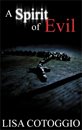
by Lisa Cotoggio

Recently I moderated a panel for the Mystery Writers of America’s New York Chapter Dinner, the topic, “Solving the Promotional Mystery”.

Now, while I thought I had assembled an interesting group of publicists, marketers and authors, who I must say gave an excellent overview of all authors can do to extend the sales and shelf-life of their books; the audience seemed to focus all their questions on one single point: Podcasts. Which, by the way, can be attributed to Jonathan Santlofer’s keen insight on the subject.

As an author, it made me ponder the thought: Are we as authors missing out on a generation of readers whose maturity has impaired their eyesight? Though the answer to that question is quite obvious we now through the magical technology of Podcast have the ability to change it in our favor. And why shouldn’t we?

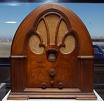
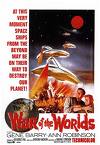
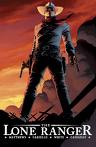
Looking back to the early days of my childhood my father used to tell me of the nights he spent with his family gathered around the radio listening intently to every word of The Shadow, The Lone Ranger; and of course, The War of the Worlds, made infamous by the actual belief of an alien attack.

And while I belong to the tail end of the “Babyboomer Generation”, the opening lines to those three shows still haunt the dark corners of my mind merely through memories of conversations with my father, born during the era known as the “Silent Generation”:

Who knows…what evil…lllllurks…in the heart of men? The Shadow knows!

A fiery horse with the speed of light, a cloud of dust, and a hearty ‘Hi-yo, Silver, away!’ The Lone Ranger!

We interrupt this program to bring…

Riveting. Wouldn’t you agree? Of course you would, which brings us back to our topic: Podcasting. A series of audio or video digital-media files which are distributed over the Internet by syndicated download through Web feeds to portable media players and personal computers. The radio of the future.

Wouldn’t we all like to have that kind of gripping attention by a beloved audience of readers? Yes. And they on the same hand would love to have us read to them. The thought of being able to relive a fascinating part of one’s childhood is a cherished moment, especially late in one’s life.

Comments?