ADMIT IT, YOU WATCH TELEVISION

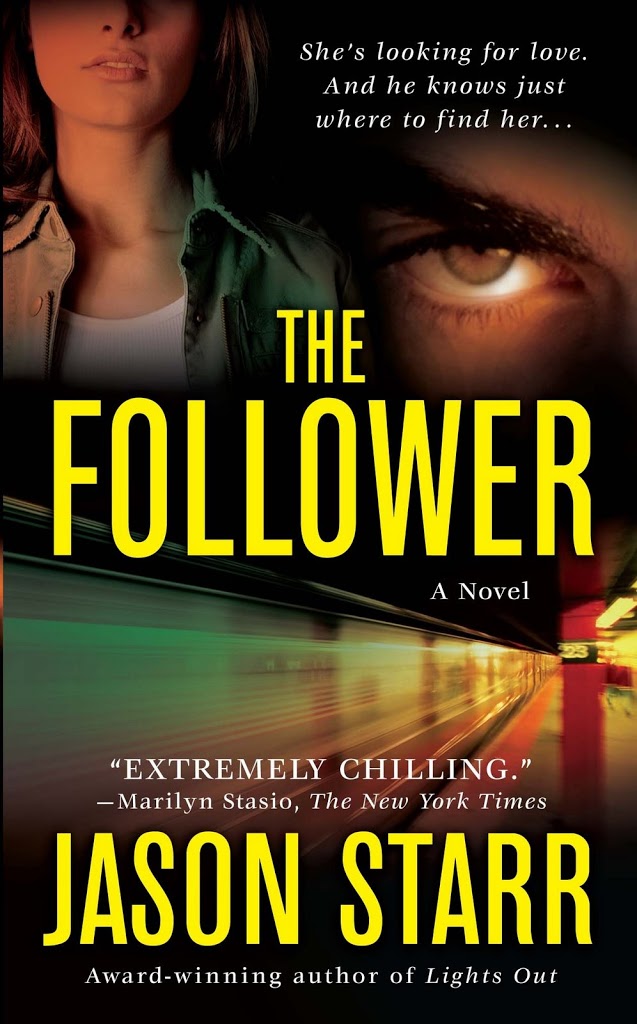
Photo of Jason Starr in Central ParkThe Kill Zone is thrilled to welcome author Jason Starr as our guest blogger today. Jason’s book THE FOLLOWER was just re-released as a mass market paperback, and I can attest that it’s a dark, funny story that absolutely everyone should read. Bret Easton Ellis said, “The Follower is Jason Starr’s masterpiece,” and The New York Times described it as “Extremely chilling.” Think of it as a dating “how not-to.”

Without further ado…

Our TV broke last week. It was an LCD set—an old model—and when the inverters go, that’s it, the set’s dead. We have a new TV now with one of the best home music systems, but for several days we were forced to go TV-less. I know, the horror, the horror, right?

Actually, going without a TV was a bit of a shock. My family and I live in a fairly small Manhattan apartment and the sudden quiet was startling. SuddenFollowerly I felt like I was back in the 1800’s, living in the Little House on the Prairie, and I had to entertain the family at night with my fiddle. I was able to read more, which was great, but it didn’t really fill the void.
I mainly watch sports and movies on TV, and cable series such as Entourage, Dexter, and Californication. Not so-long ago there was a big stigma among people, especially writers, about admitting to television watching at all. At parties, if the subject of television came up a writer would say proudly, “I’m too busy to watch TV.” Some went further and claimed, “I don’t watch TV at all.” Others—the really busy people—would boast, “I got rid of my TV.”

I always suspected that people who claimed they didn’t watch TV were closet TV- aholics. They probably sat with their asses glued to their couches four hours a night, watching the entire lineup of the dumbest sitcoms.

But something happened, I think around the time The Sopranos got popular. Suddenly it became socially acceptable to admit to TV watching, and a big stigma to not watch TV. If you didn’t watch The Sopranos, you were considered to be some kind of freak, and if you didn’t watch the finale–fuggedaboutit. I think there’s no doubt that the quality of television in general has improved greatly over the years, but there has been a change in our attitudes toward TV as well.

Now being TV-literate, especially cable TV-literate, is much more socially acceptable, even vital. I actually feel wiresorry for the writers who don’t watch TV because at parties and mystery conferences they’ll inevitably hear: “What, you haven’t seen every episode of The Wire? Oh my God, what’s wrong with you?…“What, you don’t watch Dexter? Really? You have no idea what you’re missing.”….“What, you’ve never seen Californication? You’re kidding me? Really?”….“You’ve never heard of The Shield?”
I’ve seen some television-deprived writers embellish their TV watching, smiling vaguely and nodding a lot, not wanting to feel left out when people start discussing the latest shows. That’s right, writers have now come full circle and they actually exaggerate the amount of television they watch.

So I’m wondering, how much television do you watch? And do you find that lately it’s more socially acceptable to admit it?


JASON STARR is the Barry and Anthony Award-winning nine crime novels which have been published in ten languages. His latest thriller from St. Martin’s Press, THE FOLLOWER, is on-sale this week in a new mass market paperback edition. Visit www.jasonstarr.com and sign up for Jason Starr’s newsletter for a chance to win a 50-dollar Amazon gift certificate, and other exciting prizes. Newsletter subscribers will also be eligible to win free advance copies of Jason Starr’s next thriller PANIC ATTACK, which will be on-sale in August, 2009.


Seeing Virgins and Smelling the Roses

By John Ramsey Miller

Last week some woman in California had salsa shoot out from her blender and the red stain on the wall looked to her to be a precise likeness of the actual Virgin Mary. I’m not talking about a Virgin Mary (tomato juice, Tabasco, pepper, celery stick, but hold the vodka either. What are the odds that this freak accident might just be a random stain caused by a blender lid failure and not the actual Virgin Mary communicating with this Catholic housewife? It might be the former were it not for the unexplainable odor of roses in a kitchen that ought by rights to smell like decaying salsa. Just to make sure people make the connection, this woman placed a portrait (available in any Catholic relic superstore) of the Virgin Mary on the stove and pinned up her rosary in to encircle the Salsa Virgin Mary so one’s eyes immediately zero in on her SVM. This Holy kitchen event (worthy of being covered by the world press in the time of terror attacks) got me to thinking once again about the nature of religions icon sightings. We’ve all seen coverage of the face of Jesus in the screen door in a trailer park, drawn in dirt on the side of an eighteen wheeler, in a rust stain in a shower, and in a glass window in an office building. We’ve all seen the Virgin Mary spotted in the oozing of water leaking from the concrete wall under a bridge, in a potato chip, the spot on a cat’s stomach and in various other unusual places. People flock to these sights to see Jesus or Mary in the flesh, or Salsa, for themselves. It’s hard for me to imagine Jesus or Mary planning these events, or taking place in them. You can see a better likeness of either or both in any church or cathedral in the world.

The thing I find fascinating about these iconic appearances (or mysterious apparitions) is that Protestants “always” see Jesus, while Catholics seem universally to spot Mother Mary. Likenesses of Buddah and Mohammed either never turn up on a kettle fry, in black mold on sheetrock or some other odd media or simply aren’t ever covered by the world media. Well, I suppose any appearances by Mohammed would be immediately erased by nearby Moslems since there can be no likeness of him ever created for any reason whatsoever. I wonder if that was his edict or some decision of his loyal followers due to the sorry state of portrait art in the Middle East at the time? Obviously Mary and Jesus have the whole appearing icon thing monopolized. Graven images have come a very long way since the days when Mohammed was spreading his religion by the sword. In fairness most (if not all) religions have been spread by the sword, the dunking chair, or a nice hot fire.

You know, I like religion and I’m not surprised that the latest research says that you will live longer if you attend to church regularly. In fact the more often you go to church, the longer you live. When I sit through a church service time does tend to stand still, and an hour often feels like ten. I suppose, if that is correct, that if you have a Salsa Virgin Mary in your kitchen, a screen door Jesus on your trailer, or another equally interesting Holy Relic you could just hang out a at home and live as long as you like.

Any thoughts on these sightings?

The Inaugural Onslaught

By John Gilstrap
www.johngilstrap.com

Forgive me for wandering from the topic of writing, per se, to something that’s been bugging me.

Five days out of every week, I commute from the Virginia suburbs into Washington, DC via Metrorail. Generally, it’s a half-hour drive to the station in the morning, then a half hour on the train, topped by a three-block walk to my office, which is itself three blocks from the White House. Until I took my job with the trade association, I’d never worked downtown. Washington is a beautiful city, so there’s something attractively urban to me about the commute. Most days, it’s an opportunity to read in peace amidst a couple hundred strangers.

n its busiest, craziest days, Metro sets new records that top out somewhere south of 850,000 passengers. That includes commuters and tourists in the high season, along with Independence Day celebrations when about a million people flood the city for the fireworks. During those occasions, for security reasons, the Metro stations closet to the action are all closed off, forcing revelers to flood fewer stations located quite a few blocks away. Imagine thousands of people crammed onto an underground train platform, each of them wanting to get on the next subway. It’s actually scary when you’re in the middle of it. That’s why I never go downtown on the Fourth of July.

On January 20—Inauguration Day–DC government officials are reportedly anticipating a crowd of four million people to observe the festivities. That’s four times more people than Washington has ever seen for an event! Each of them needs to get in and out of the city, and, presumably, at some point during the festivities they’re going to have to eat. More than that, they’re going to have to pee—or, worse yet, make big potty. I don’t care how many porta-poops you import; there’s no way to support that much excrement.

Judging from the barricades that are already beginning to be staged around the city, huge swaths of preferred viewing real estate are going to be closed off to mere mortals to leave plenty of elbow space for the bigwigs. Widespread street closures will make parking garages inaccessible, which will in turn force hundreds of thousands of would-be drivers onto the subways for which access will be limited.

Now let’s throw in the security checkpoints that will search all purses and bags within X yards of the Capitol Building or the White House, along with the fact that a huge percentage of those being searched wouldn’t know which building was which without a picture to guide them. The mind boggles.

I personally don’t have any hard plans for that day, but I do know precisely where I will not be. What do y’all think? Is any historical event worth that much inconvenience?

Gender Bias

There was an interesting article in the Guardian this week asking whether or not young female writers are operating at a deficit when itmorrison comes to major literary awards. Not due to any shortcomings on their part, but because (as the author posits) "the literary industry as a whole – agents, editors, booksellers and critics – currently offer disproportionate encouragement to aspiring male writers to produce the kind of serious-minded, bookish work that gets on shortlists, compared to young female writers." The argument being that for whatever reason, publishers prefer discovering the next Norman Mailer to finding another Toni Morrison.

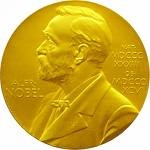
I’m not entirely certain I agree with this, but it’s an interesting piece, particularly since it was written by a young male author. I also did a quick head count, and during the past two decades only five women have won the Nobel Prize for Literature. Five mailerwomen won the Man Booker Prize. Only with the Pulitzer did women even approach parity, with eight out of twenty taking home the prize.

This got me thinking about gender bias in our own  neck of the woods. When my agent first called to sign me, she was noticeably taken aback. Toward the middle of our conversation she confessed that after reading THE TUNNELS, she’d thought I was a man (though the name "Michelle" was pretty straightforward, in my opinion). Since the subject matter was so dark, she felt it might appeal to more male readers than female ones. She recommended that I consider adopting a pseudonym, or shortening my name to just the initials (sadly, that would leave me "M.A.Gagnon," which doesn’t exactly trip off the tongue, and sounds like something the Mayo Clinic might have a specialized treatment for).

In the end, I opted to stick with my full name. Partly because I didn’t entirely believe that gender bias exists, partly because I’m just obstinate that way. But I do wonder. When I meet people at conferences who have read my books, the universal exclamation is, "but you seem like such a sweet girl." I suspect that very few male authors are referred to as "sweet" when they meet their fans, or hear that they seem "too happy to write these sorts of books."nobel

Impossible to say whether or not it affects my sales. Occasionally this question rears its head on one of the mystery discussion groups, and everyone gets up in arms. Most people declare that they will happily read any book regardless of who wrote it. But does that apply to the world at large? Especially since I don’t write cozies (which are marketed more toward women), but thrillers, is my name working against me?

Where do you stand? Will you read anything by anyone? Or does gender bias sneak into your decision-making process, subconsciously or otherwise?

Gender Bias

There was an interesting article in the Guardian this week asking whether or not young female writers are operating at a deficit when itmorrison comes to major literary awards. Not due to any shortcomings on their part, but because (as the author posits) "the literary industry as a whole – agents, editors, booksellers and critics – currently offer disproportionate encouragement to aspiring male writers to produce the kind of serious-minded, bookish work that gets on shortlists, compared to young female writers." The argument being that for whatever reason, publishers prefer discovering the next Norman Mailer to finding another Toni Morrison.

I’m not entirely certain I agree with this, but it’s an interesting piece, particularly since it was written by a young male author. I also did a quick head count, and during the past two decades only five women have won the Nobel Prize for Literature. Five mailerwomen won the Man Booker Prize. Only with the Pulitzer did women even approach parity, with eight out of twenty taking home the prize.

This got me thinking about gender bias in our own  neck of the woods. When my agent first called to sign me, she was noticeably taken aback. Toward the middle of our conversation she confessed that after reading THE TUNNELS, she’d thought I was a man (though the name "Michelle" was pretty straightforward, in my opinion). Since the subject matter was so dark, she felt it might appeal to more male readers than female ones. She recommended that I consider adopting a pseudonym, or shortening my name to just the initials (sadly, that would leave me "M.A.Gagnon," which doesn’t exactly trip off the tongue, and sounds like something the Mayo Clinic might have a specialized treatment for).

In the end, I opted to stick with my full name. Partly because I didn’t entirely believe that gender bias exists, partly because I’m just obstinate that way. But I do wonder. When I meet people at conferences who have read my books, the universal exclamation is, "but you seem like such a sweet girl." I suspect that very few male authors are referred to as "sweet" when they meet their fans, or hear that they seem "too happy to write these sorts of books."nobel

Impossible to say whether or not it affects my sales. Occasionally this question rears its head on one of the mystery discussion groups, and everyone gets up in arms. Most people declare that they will happily read any book regardless of who wrote it. But does that apply to the world at large? Especially since I don’t write cozies (which are marketed more toward women), but thrillers, is my name working against me?

Where do you stand? Will you read anything by anyone? Or does gender bias sneak into your decision-making process, subconsciously or otherwise?

Kindle Redux

By Joe Moore

kindle One of the most popular topics on the Kill Zone blog (besides the ongoing strength of the paranormal genre) has been the Amazon Kindle e-book reader. Kathryn wrote about it here and here; John G also had things to say here, and Michelle commented on it here.

After so much talk about the Kindle, I started asking myself if an electronic device could actually take the place of printed books anytime soon. The way I see it, the biggest hurdle that the Kindle and similar devices have to overcome is the technology itself. A book is probably the most ingenious storage device ever invented. Why? Because the basic format has not changed in thousands of years. And hundreds of years from now, someone can pick up a book printed today and read it. There’s no guarantee that the technology supporting the Kindle will last a decade, much less a millennium. What if batteries are suddenly no longer made to power the Kindle? What if the format is no longer efficient to archive the written word? What if a new device comes along that holds a thousand times more data at a fraction of the cost? What if it simply isn’t manufactured anymore and you still have one that needs servicing.

Can that happen? Remember 8-track audio cassette tapes? Betamax? 78 RPM phonograph records? VHS? It’s even getting hard to find a CD anymore now that iPods and MP3 has come along. How about CRT video monitors? Anyone you know still have one now that the cost of LCD flat monitors are approaching the price of a tank of gas? Seen any standard definition, 4×3 aspect ratio TVs in the stores the last time you shopped? If the device that’s needed to play the media is not preserved along with the media, you’re out of luck. There’s no chance of that happening with books because they are their own storage device.

But before we cast judgement on e-book readers like Kindle and say they’re a passing fancy that will quickly go the way of the rotary dial phone, let’s revisit a few pieces of innovation from the past that didn’t catch on at first.

“This ‘telephone’ has too many shortcomings to be seriously considered as a means of communication. The device is inherently of no value to us.”
— Western Union internal memo, 1876

“I think there is a world market for maybe five computers.”
— Thomas Watson, chairman of IBM, 1943

“640K ought to be enough for anybody.”
— Bill Gates, 1981

“But what … is it good for?”
— Engineer at the Advanced Computing Systems Division of IBM, 1968, commenting on the microchip

“There is no reason anyone would want a computer in their home.”
— Ken Olson, president, chairman and founder of Digital Equipment Corp., 1977

“The wireless music box has no imaginable commercial value. Who would pay for a message sent to nobody in particular?”
— David Sarnoff’s associates in response to his urgings for investment in the radio in the 1920s

“The concept is interesting and well-formed, but in order to earn better than a ‘C,’ the idea must be feasible.”
— A Yale University management professor in response to Fred Smith’s paper proposing reliable overnight delivery service. (Smith went on to found Federal Express Corp)

“So we went to Atari and said, ‘Hey, we’ve got this amazing thing, even built with some of your parts, and what do you think about funding us? Or we’ll give it to you. We just want to do it. Pay our salary, we’ll come work for you.’ And they said, ‘No.’ So then we went to Hewlett-Packard, and they said, ‘Hey, we don’t need you. You haven’t got through college yet.'”
— Apple Computer Inc. founder Steve Jobs on attempts to get Atari and HP interested in his and Steve Wozniak’s personal computer

“Everything that can be invented has been invented.”
— Charles H. Duell, Commissioner, U.S. Office of Patents, 1899

Can you recall something from your past that you rushed out to buy only to outlive its function and usefulness?

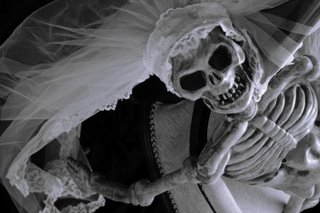
Take Two: Ghost brides, aka “The Bride Wore Bones”

Note: I’m inspired by Clare’s post on the paranormal yesterday (that, plus the fact that I’m way behind on a deadline) to repost my thoughts about the strange things that people do with dead bodies. Including, it turns out, the ancient art of marrying corpses.

The original post appeared over at our sister mystery blog, Killer Hobbies.

Call me morbid (which you kinda have to be when you’re a mystery writer), but I was fascinated to read an article put out by CNN, which describes all the strange things people do with dead bodies.

Corpse brides and ghost marriages

In China, there is an old practice of providing “ghost marriages” between women and deceased bachelors. I gather the practice got started so that no woman would have to die as a spinster (no way to verify the rumor that some women preferred to marry dead guys so that they’d escape a fate of faked headaches and arguments over the dinner table with breathing spouses.).

After nearly dying out during the cultural revolution, “ghost marriages” have recently come back into vogue–but evidently with a new, more prurient purpose. In a country that’s chronically short of women in a patriarchal society (Thank you, one-family, one-child policy), the ghost-marriage practice is now aimed at making sure that dead bachelors are…ahem…satisfied in the afterlife.

Tales have been told of people killing prostitutes and other unfortunate women so that these men will get some nooky in the netherworld.

Got some cold cream for that freezer burn?

The much-ballyhooed experiments into cryogenics have evidently run into a snag—frozen bodies are developing wicked cases of freezer burn. I mean, seriously–who wants to be revived in 200 years if you’re doomed to walk around looking like Night of the Shriveled-green Dead?

Here’s a link to the article on CNN, for further reading on the strange things that people do with dead bodies:

I’ve worked one of these macabre practices into my third book, MAKEOVERS CAN BE MURDER. (Won’t reveal which one, though—stay tuned for the book in ’09).

Now I’m getting obsessed with the subject of ghost marriages and corpse brides. The practice sounds so macabre. But it makes for a killer subplot, doesn’t it?

Why is the paranormal still hot?

By Clare Langley-Hawthorne

On the New York Time’s bestseller list for mass market fiction, ten of the top 20 are novels that deal with the paranormal – looks like (despite predictions that it’s heyday was on the wane) that paranormal is still hot. The mega-success of Stephenie Meyer’s Twilight series and recent movie certainly confirms it and I have to confess, caught up in the wave of interest, I spent most of Thanksgiving week reading the Twilight series. Seems as though the angst ridden teenager inside me has not yet disappeared…and that got me and my good friend Charysse talking. What is it about the paranormal – particularly the vampire novel – that continues to intrigue us?

After some wine and way too much food our respective husbands disappeared into the other room and we talked some more. I was particularly interested as a YA idea had been percolating in my brain and while I didn’t see any paranormal bent to it as yet – it did have some of the Gothic hallmarks of the fantasy and paranormal YA books that seem to be popular today. I’m not one to write to the market but the question was undeniable – why do we continue to be fascinated, as children, young adults and adults by the paranormal. What draws us to the mythology of the ‘other-world’? Why continue to explore the question of whether vampires, werewolves or other demonic forms walk amongst us?

We decided that sex was one of the first reasons – hey, in the romance world, sex with vampires is pretty darn hot. Maybe the lure of the paranormal is the lure of out-of-this-world sex…or not?…One of the main attractions I think for the Twilight series was the fact that sex was too damn dangerous between mortal and vampire. That somehow made the repressed, tortured emotions and desire of young adulthood all the more fraught. And here was a guy who said no…the ultimate in teenage girl fantasies perhaps? Gorgeous, brooding, dangerous, immortal but also the quintessential gentleman…At this point my friend and I both shook our heads and asked WTF???!

So if sex (or the lack of it) isn’t the allure – is it the bloodlust? Is it the fact that paranormal explanations for truly horrific crimes make them somehow easier for our human minds to digest? Does it provide us with some kind of reassurance that there are demons that are not human (as opposed to only those who are?)

I confess I’m happy to read paranormal novels as much (if not more) than the next girl. I was a huge Buffy fan and am someone willing to drink in (if you’ll pardon the pun) many a vampire novel. I love Gothic tales and revel in an imaginative story that conjures up another world.

Nonetheless the continued appeal of the paranormal intrigues me – what do you think drives the continued demand for these types of books? Do you think interest is on the wane and if it is…what is likely to replace it?

Don’t worry, it’s just the end of the world …Part II.

John Miller with Ramsey in the middle

The Mayan calendar ends in 2012, or so I’ve been told. I have been thinking about the future a lot and I have a few thoughts I’m almost sort of fairly sure of. Firstly human life on earth will probably survive 2012––the actual year and possibly even the movie of the same name. If the world does end in 2012, I’ve gotten one hell of a deal on my mortgage as I will have only paid five of the thirty years worth of payments they are expecting me to make. If the world does end, it’ll be a shock to a lot of people, but not for long. Most of us will be in denial way after we find the world dead, and denial is one of my favorite states of being.

Lately I’ve been thinking that maybe I would have been better served to have become a sheet metal bender, or a very sexy model and sometimes prostitute, or a super hero with some really neat power like mentally cashing checks across state lines. Being a writer is just so hard. Truth is, this week I’ve got nothing at all to write about. I mean my son did strike out to go back to school after the holiday and his car broke down and I had to drive a million miles and deal with his car and bring him back until I can get his car fixed on Monday, and I’m thinking being a parent never stops being hard, expensive and tiring. And what with Thanksgiving and Black Friday with a Walmart worker being crushed in the melee and the end of the world coming up in five years I think I’ll slide this week and stop this before this gets really ugly.

Plus I’m making venison sausage this weekend.

My Favorite Time of Year

By John Gilstrap
www.johngilstrap.com

It’s tradition in the Gilstrap house that Christmas decorations go up on the Friday after Thanksgiving, and come down on New Years Day. In the past 25 years, there have been no exceptions. And when I say decorations, I mean decorations. In my book, you can’t have enough lights or greenery or Santas or Nativity scenes. It’s never about impressing the neighbors, either; it’s about celebrating the season.

This is a time of year when I can get a little weepy—but in a good way. It’s a season of kindness and good deeds. As the decorations go up in DC, moods lighten palpably. People say hello and hold doors for others. More people wave with all their fingers instead of just one. For me, it’s the time of year when the impossible seems more plausible, where quiet moments bring more pleasure than usual.

I love the fact that the Christmas season celebrates ritual. The box in which we keep the treetop ornament of my youth is lined on the bottom with the New Years Day Atlantic City Press from 1964, the year my family moved into the first house I can remember as a child, and on the top with the New Years Day Washington Post from 1985, the first holiday my wife and I celebrated as spouses. The mantle ornament is one that my mother bought for us before she died. The tree ornaments include decorations made in childhood by my wife, my son and me. I still hang a stocking that was handmade by my grandmother, and still holds the silver dollars that Uncle Henny gave me when I was four or five years old.

Tree ornaments commemorate every trip our family has ever taken together, as well as other significant moments along the way. We all agree that some of the older ornaments are certifiably ugly, but they get places of honor as well.

Over the next four or five weeks, my son and I will watch A Charlie Brown Christmas, Home Alone, The Santa Clause and The Polar Express, because we love the movies, and because they each, in their own way, capture the essential heart of the season. It’s A Wonderful Life and A Christmas Story were dropped from the list a few years ago, but who knows? Maybe they’ll make a return.

As I write all of this down, it occurs to me that it all seems a bit regimented, and maybe it is, but I’ve always been a big believer in traditions, because within traditions there lies evidence of a family’s love for one another. If, one day, my son’s traditions include well-told stories about how over-the-top in love his old man was with all things Christmas, that can’t possibly be a bad thing.

I understand that the season brings dark feelings to some people, and I know that many of my artistic brethren look with cynicism on the commercialization of the Christmas season. To both groups I extend heartfelt condolences. Cynicism is only as deep as your next kind word, and as fragile as a charitable act for a stranger.

Truly, God bless us every one.