My Favorite Part

by Michelle Gagnongirl on bike

It’s done.

Four months of writing, four weeks of editing, 100,000 words total  (after approximately 10,000 words were trimmed). Three working titles (and roughly a hundred others considered and discarded), three major characters whose names changed from one draft to the next, and two alternate endings.

And finally last night, just a few hours past my deadline, I sent the completed manuscript off to my editor. Mind you, there are a few things left to do (for example, I have to go through the copy- and line-edited drafts in a few weeks). But by and large, the nitty-gritty work of writing THE GATEKEEPER is complete.

This is, hands down, my favorite part of the writing process. I dread staring at the blank page, and getting mired in what Louise Ure calls the "saggy middle," when it feels like you’re never going to actually finish the darn book. And even after the rough draft is finished and polished into something that’s largely presentable, there’s still self-doubt to wrestle with. After hitting "send" I invariably spend weeks on pins and needles waiting for my editor to respond, convinced I’ll receive an email deploring the story and the writing, insisting that I scrap it and start over (this hasn’t happened yet, but you never know).

But today, ah today- the first day after handing it in, when the editor has given the all-clear and the residual stress of meeting the deadline has dissipated and I find myself facing an entire afternoon with nothing to do (well, nothing besides writing this post, cleaning my house, and paying bills, that is). This is when it finally sinks in. I’ve finished my fifth book (for those of you keeping track at home, yes, I did say five: it will only be my third in print, since two others never made the cut). Ahead of me lies months of marketing and everything that entails (designing bookmarks, calling/emailing bookstores, self-flagellation, etc etc etc).

Today I can just sit back and enjoy the fact that for the first time in six months, I don’t have a book hanging over my head. To clarify: yes, I know I’m extraordinarily lucky to  have a contract and deadlines- and I’m eternally grateful for that, every day I feel like I’ve won the lottery. Still, that does mean I have to produce a book on a regular basis. And as I can attest from my journalism days, even if you love the assignment, having to write it in a specific time frame makes it an obligation. Some days it’s fun, others it’s work: every stage of the process has its benefits and drawbacks. But for nearly six months, I’ve tended to little else, as the stacks of paper and other detritus scattered around my house can attest.

It’s comparable to the first day of summer vacation. You know September is just around the corner, but for the moment, you can just get on your bike and go anywhere. Down the line there will be plenty of other homework assignments (new deadlines), grades (reviews, both good and bad), and field trips (tour stops). But today, you’re free. And you know what? I think my house is going to stay dirty and the bills will be unpaid for just one more day. It’s too rainy for a bicycle ride, but it feels like the perfect day for a matinee, and I haven’t been to see a film in forever. So today’s discussion question is: what should I see?


Anatomy of a Thriller

By Joe Moore

One of the author panels I’ll be on at the upcoming MWA SleuthFest is Anatomy of a Thriller (the other is Supernatural Sleuths). I’ll be sharing the panel with literary agent Nicole Kenealy (Aaron M. Priest Literary Agency) and publisher Benjamin Leroy (founder of Bleak House Books). So to follow in Kathryn’s footsteps from her post yesterday, let’s continue discussing thrillers and what makes them so thrilling.

anatomy First, what is a thriller and how does it differ from a mystery?

Although thrillers are usually considered a sub-genre of mysteries, I believe there are some interesting differences. I look at a thriller as being a mystery in reverse. By that I mean that the typical murder mystery usually starts with the discovery of a crime. The rest of the book is an attempt to figure out who committed the crime.

A thriller is just the opposite; the book begins with a threat of some kind, and the rest of the story is trying to figure out how to prevent it from happening. And unlike the typical mystery where the antagonist may not be known until the end, with a thriller we pretty much know who the bad guy is right from the get-go.

So with that basic distinction in mind, let’s list a few of the most common elements found in thrillers.

1. The Ticking Clock. Without the ticking clock such as the doomsday deadline, suspense would be hard if not impossible to create. Even with a thriller like HUNT FOR RED OCTOBER which dealt with slow-moving  submarines, Clancy built in the ticking clock of the Soviets trying to find and destroy the Red October before it could make it to the safety of U.S. waters. He masterfully built in tension and suspense with an ever-looming ticking clock.

2. High Concept. In Hollywood, the term high concept is the ability to describe a script in one or two sentences usually by comparing it to two previously known motion pictures. For instance, let’s say I’ve got a great idea for a movie. It’s a wacky, zany look at the lighter side of Middle Earth, sort of a ONE FLEW OVER THE CUCKOO’S NEST meets LORD OF THE RINGS. If you’ve seen both of those movies, you’ll get an immediate visual idea of what my movie is about. High concept Hollywood style.

But with thrillers, high concept is a bit different. A book with a high concept theme is one that contains a radical or somewhat outlandish premise. For example, what if Jesus actually married, had children, and his bloodline survived down to present day? And what if the Church knew it and kept it a secret? You can’t get more outlandish than the high concept of THE DA VINCI CODE.

What if a great white shark took on a maniacal persona and seemed to systematically terrorized a small New England resort island? That’s the outlandish concept of Benchley’s thriller JAWS. What if someone managed to clone dinosaurs from the DNA found in fossilized mosquitoes and built a theme park that went terribly wrong? You get the idea.

3. High Stakes. Unlike the typical murder mystery, the stakes in a thriller are usually very high. Using Dan Brown’s example again, if the premise were proven to be true, it would undermine the very foundation of Christianity and shake the belief system of over a billion faithful. Those are high stakes by anyone’s standards.

4. Larger-Than-Life Characters. In most mysteries, the protagonist may play a huge role in the story, but that doesn’t make them larger than life. By contrast, Dirk Pitt, Jason Bourne, Jack Ryan, Jack Bauer, James Bond, Laura Craft, Indiana Jones, Dr. Hannibal Lecter, and one that’s closest to my heart, Cotten Stone, are all larger-than-life characters in their respective worlds.

5. Multiple POV. In mysteries, it’s common to have the story told through the eyes of a limited number of characters, sometimes only one. All that can change in a thriller. Most are made up of a large cast of characters, each telling a portion of the story through different angles. Some thrillers are so complex in their POVs that you really need a scorecard. But even with multiple POVs, it’s vital to never let the reader lose sight of whose story it is. There should be only one protagonist.

6. Exotic Settings. Again, in most murder mysteries, the location is usually limited to a particular city, town or locale. 731 But a thriller can and usually is a globetrotting event. In my latest thriller, THE 731 LEGACY, co-written with Lynn Sholes, the story takes place in, amount other locations, a medieval castle in one of the former Eastern Bloc countries of the Soviet Union and ends up in Pyongyang, North Korea. Throughout the series, our stories have taken the reader to a lost city in the Peruvian Andes, a remote church in Ethiopia reputed to contain Ark of the Covenant, the Secret Archives of the Vatican, newly discovered Anasazi ruins in New Mexico, inside the royal private residence of Buckingham Palace, secret tunnels below the Kremlin, and many other places most of us will never get to visit. Exotic locations are a mainstay of the thriller genre.

Like any generic list, there will always be exceptions and limitations. But in general, these are the elements you’ll usually find in mainstream commercial thrillers. But the biggest and most important element of all is that a thriller should thrill you. If it doesn’t increase your pulse rate, keep you up late, and leave you wanting more, it probably isn’t a thriller.

Are there any characteristics of a thriller not on my list? What do you look for in a good thriller?

Shifting genres: From mystery to thriller

A new journey begins today–I’m starting a brand new book. I’m even switching genres, from serial mystery to standalone suspense thriller.

This is going to be a huge style shift from my previous work in serial cozies. So to get prepared, I’ve taken myself back to “writing school.”

Right now I’m reading T. Macdonald Skillman’s Writing the Thriller. Her book provides a good nuts-and-bolts overview of the craft of writing thrillers. I like the way Macdonald breaks thrillers down into the various subgenres. Here’s a sampling from her list:

Action-adventure
Legal
Medical
Political
Psychological
Romantic relationship

MacDonald purposefully doesn’t include paranormal as a subgenre in her list. I don’t mean vampires or werewolves–those bore me. I’m thinking about paranormals like Dean Koontz’s The Followers. Those are the types of stories in which you’re not sure whether some of the characters are crazy, or whether something paranormal really is at work.

So after the day’s reading, here’s my take-away lesson:

In a suspense thriller, my main character might die.

In a series mystery like the Fat City Mysteries, you never worry too much about the main character. After all, Kate Gallagher is telling you her story in the first person. You know she’s alive to tell the tale, and she’ll have to survive to tell you the next one.
But in a thriller, the main character might actually die. I think this has to be the case. Consider for example The Lovely Bones. The fourteen-year-old victim in that story is dead before the story even starts.

Can you think of other suspense thrillers where you were really worried about the main character? As a writer, are you willing to actually kill your protagonist before the story ends? Is that going too far in a thriller?

How scared–and scary–do you have to be to write suspense versus mystery?

How do we measure success?

by Clare Langley-Hawthorne

A friend of mine told me about a recent conversation she had with her husband which struck a cord with me. She is a published writer with a couple of books under her belt and, like me, she has young preschoolers. After spending a number of weeks in final editing mode, she had to work a couple of weekends straight leaving her husband in charge of the kids. He wasn’t, she told me, all that impressed about doing so and when she confronted him he said that while he was happy to help out he just hoped “she would be successful after all her hard work” (NB. The manuscript she was working on was not under contract). “Hmm…” she said, “But I thought I already was ‘successful’ – so far my books have been published!” Then she realized her mistake…what her husband was talking about, what for him was the true measure of success, was financial. He meant “let’s hope you finally make some money this time!”

When she pressed him further he basically said that he justified her staying home to write while he was the primary bread-winner on the basis that she was really a ‘stay at home mum.’ In other words, at least she was doing something useful – namely raising their children- while she tiddled around writing her novels. Okay, okay, I admit maybe I’m overreacting a bit:) but this started me wondering – if their roles had been reversed would the same be true? Would a women who was the primary breadwinner in the family supporting an author husband think the same way?

Given that a career in fiction writing rarely leads to financial success, how should we measure success for a writer? How should the financially supportive spouse view their ‘other half’s’ career? Is it merely a hobby until it earns real money?

Don’t get me wrong, I am eternally grateful to be financially supported so I can pursue my writing career – but like my friend I am also a ‘stay at home mum’ – my deadlines certainly get dropped if the boys get sick and, like every other working parent, I have to balance the demands of career and family – but does my writing qualify as a career or am I, like my friend, a financial drain until the writing can pay its way?

I’m throwing the debate wide open as my friend’s predicament certainly resonated with me, probably just as it would have in Virginia Woolf’s time when she argued for not only a room of one’s own but also income to support it. So how do other writers reconcile this issue? What do those who are the bread winners think?

Sweet Justice Is Coming

By Jordan Dane

The Kill Zone Blog welcomes Jordan Dane for today’s Sunday guest post.

dane-jordan1 Imagine the horror of going to your teenager’s bedroom one morning only to find her missing. Her bed hadn’t been slept in and her clothes are gone.

In 2000, that’s what one mother in Florida faced. Her only child had conspired against her and ran away. And worse, she later discovered that her daughter had left the country—without having a passport. From the moment I read this news story, I was hooked and had to know more about how such an atrocity could happen. The teen’s trail might have gone ice cold, but her mother pushed authorities in a direction.

She knew where to start looking.

Only six months earlier, the girl had received a computer for a gift—a thoughtful present from a mother who wanted the best for her child. But this gift soon brought a virtual menace into their home. A charming and anonymous stranger lured the 14-year old girl to Greece—a man she’d met in a teen chat room. We’ve all heard stories like this. But after researching the facts behind this case, I was amazed at the audacity of this Internet predator.

And I wanted to shed light on the shrewd tactics of online predators in my upcoming book—Evil Without A Face (Feb 2009, Avon, $7.99)—the first book in my Sweet Justice series.
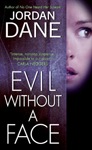
evil-face The online predator not only manipulated the teenager in Florida, but he also convinced law-abiding adults to cooperate with his schemes. These people thought they were helping an abused kid, but they didn’t know the facts, check with her family or contact local law enforcement. This stranger duped an employee of the local phone company into arranging for a private cell phone to talk to the girl directly. His slick manipulation scored him a purchased airline ticket (without a direct connection to him) and a clandestine ride for the girl to the airport. But after he bribed a child pornographer to acquire an illegal passport for her to leave the United States, the girl was out of the country before her mother knew she was gone.

And the chase to save the girl was on—a mother’s worst fear.

Now I know what some of you are thinking. This happened in 2000, before the added airport security measures were implemented after 9/11 in 2001. The girl would never have been allowed on a plane without proper ID. But after contacting a source in the airline industry, I was shocked to learn how many children travel unaccompanied and without a valid ID on domestic flights these days. So this extraordinary Florida case became the framework for my novel, Evil Without A Face. And I chose to set part of the story in the unique venue of Alaska where I had lived for ten years.

My novels have the feel of being ripped from today’s headlines because real crime inspires me. Who says crime doesn’t pay? Violence is like the ripple effect on the surface of still water. The wake radiates out from the victim and touches many people. In my books, I give a voice to the many victims of crime.

In Evil Without A Face, an illusive web of imposters on the Internet lures a deluded teen from her Alaskan home and launches a chain reaction collision course with an unlikely tangle of heroes. A new kind of criminal organization becomes the faceless enemy behind an insidious global conspiracy. And the life of one young girl and countless others hang in the balance. This is the initial driver to my new series. With an international setting, these thrillers will focus on the lives and loves of three women—a bounty hunter operating outside the law, an ambitious vice cop, and a former international operative with a mysterious past. These women give Lady Justice a whole new reason to wear blinders.

And their brand of justice is anything but sweet.

After researching the case in Florida, I became more concerned for naïve kids socializing in cyberspace—young people like my nieces and nephews. Savvy online criminals lurk in anonymity and carry on without fear of repercussion. I’m an active member of MySpace and Facebook and know how they operate. But these social networks aren’t the problem—the criminals are. And as you’ve seen in the headlines and on TV, the online community has become a real hunting ground for predators.

Why not? It’s easy pickings.

For the most part, the Internet is an invaluable tool. And it breaks down the barriers between countries, allowing many of us to have international friends. But the anonymity of cyberspace attracts all sorts of users with criminal intent. Terrorists have found new high-tech ways to recruit online and they have duped some Internet users into funding their activities or have resorted to outright stealing through subterfuge. And since crimes that cross over jurisdictions and international borders are harder to prosecute, offenders often get away with their schemes. That’s why I wanted to write Evil Without A Face and dole out my brand justice. After all, who couldn’t use a liberal dose of ‘Sweet Justice’ when reality becomes stranger than fiction?

How has your use of the Internet changed over the years? Have you become more suspicious of certain behaviors from online strangers? And if you have children who use online resources, can you share some tips on how you keep them safer?

Avon/Harpercollins launched Jordan Dane’s debut suspense novels in a back to back publishing event in Spring 2008 after the 3-book series sold in auction. Ripped from the headlines, Jordan’s gritty plots weave a tapestry of vivid settings, intrigue, and dark humor. Publishers Weekly compared her intense pacing to Lisa Jackson, Lisa Gardner, and Tami Hoag—romantic suspense that “crosses over into plain thriller country”. Pursuing publication since 2003, this national best selling and critically acclaimed author received awards in 33 national writing competitions. And recently, her debut novel NO ONE HEARD HER SCREAM was named Publishers Weekly Best Book of 2008 and Romantic Times Magazine nominated NO ONE LIVES FOREVER as Best Intrigue Novel of 2008. Formerly an energy sales manager in the oil and gas industry, she now is following her passion to write full time. Jordan and her husband share their residence with two cats of highborn lineage and the sweet memory of an impossible to forget canine.

For more, visit www.jordandane.com.

Current Titles:

NO ONE HEARD HER SCREAM (Apr 08)

NO ONE LEFT TO TELL (May 08)

NO ONE LIVES FOREVER (Jun 08)

EVIL WITHOUT A FACE (Feb 09)

THE WRONG SIDE OF DEAD (Nov 09)

Awards/Recognitions:

· Publishers Weekly Best Book of 2008 – Mass Market (NO ONE HEARD HER SCREAM)

· Romantic Times Magazine Nominee Best Romantic Intrigue Novel of 2008 (NO ONE LIVES FOREVER)

_______________________

CALENDAR OF UPCOMING GUESTS

Mark your calendar for the following guest bloggers at the Kill Zone:

Michael Palmer, February 22
Mario Acevedo, March 1
Cara Black, March 8
Robert Gregory Browne, March 15
Neil Plakcy, March 22
Liz Jasper, March 29


Zippitydodah, I Got Squat.

John Ramsey Miller

This week, I got nothing. I thought about it yesterday while I was spreading four tons of number 57 grade blue stone with a shovel. I thought about it this morning while I was shoveling sawdust laced with chicken poop and composted leaves into my wife’s garden plot. I thought about it while I was throwing tennis balls for my dogs, and while I was on the phone with Robert Gregory Browne for twenty minutes. Yep, I’ve got zippidy-doo-da butkus.

A close friend of mine died this week and I started to do this blog about losing friends, but that could be a weekly column these days. All I’m hearing from my friends is “kerplunk.” She was such a treasure, but she wanted neither a funeral nor any gathering in her honor and not even an obituary. She donated her body to a medical school to make sure some good came from her passing, and she decided to do that when she was a young, beautiful woman. Her pottery studio was open the day after she died and it’s open today. I’m not going to write about her here, but I will think about her as long as I live. I may give my body to science as long as they don’t put me in that partially peeled, men-and-animals-traveling freak show. My son took my grand kids to see that and after walking in and turning around, he demanded his money back. My son is afraid of death, and those smiling, pulled-apart people about sent him to the hospital. Nothing bothers me about death except the actual dying part of it.

Life is about relationships and the lessons you learn. Writing is about ratting them out. I am writing a book where the protagonist is an old man, a Vietnam vet with a bunch of old friends who are also over the hill. It’s easy as hell to do the research because a lot of my friends are that age and we sit around a lot. In fact, I’m darned near that age myself. It’s fun writing this one because I’m using myself as a model a lot, and I can still scrap with the younger boys, yes, I can still boogie-woogie boy howdy. Well, I can remember well enough to write about it.

See I really did have nothing.

Maybe next week, I’ll sneak up on something. I bet everybody’s mad that I had Valentines Day and only mentioned it this once. I’ve been with my wife for 32 years, and I’m still in love with her. In fact I love her more than I did Valentines Day thirty-two years ago. That’s twice. I guess we grew and changed together.

Stuff That Bugs Me

By John Gilstrap
http://www.johngilstrap.com

I’m a reasonable man. I understand that people have jobs to do, and I respect anyone who does honest work for an honest wage. I think being a novelist makes me fairly empathetic, almost by definition, and I really do try to see issues from both sides. That said . . .

Why do the baristas in Starbucks insist on asking me if I want to leave room for cream? Having paid for a whole cup of coffee, why wouldn’t I want a whole cup of coffee? As it is, a “full” cup is typically one-eighth empty. I confess that I do, indeed, put cream in my coffee (along with two Splendas for the grande size), but I reserve the right to decide how much of my justly-purchased morning dose gets poured into the trash can to make room. Some would argue that baristas make their offer as a customer service, but in my hard-earned cynicism I know that the real mission is to collect the revenue for eight or nine servings while incurring the cost of only seven or eight.

While the topic is coffee, what is it about the customer base of Dunkin’ Donuts that makes them vapor-lock when they get to the counter? “I’ll have a dozen donuts,” they’ll say. “I’ll take two glazed, and one chocolate frosted . . . No, three glazed and two chocolate frosted, a blueberry cake . . . No, really, I only want two glazed . . .” Good God almighty, it’s a freaking donut shop! What the hell have you been thinking these last five minutes as we stood in line behind the previous indecisive customer? All I want is a damn cup of coffee.

United Airlines flight attendants, listen up. Since your bosses have decided to charge 20 bucks to check bags, people are going to bring their luggage on board and try to stuff it into the overhead bins. Get over it. Your company made the call to fill every square millimeter with additional no-legroom seats; it’s not our fault. Yelling at people for taking too long in the aisle doesn’t help anything. As for your on-time departure, where the hell was all that concern when the previous late flight made me miss my connection?

Attention drive-thru fast food tellers: Quit asking me if I want your special of the day. If I want your special of the day, I’ll ask for it. However, if you must continue to ask, try pronouncing all the words. That little speaker out there sucks.

Attention fast food restaurant managers with drive-thru windows: Political correctness aside, quit putting non-English speakers on window duty. Seriously. I said cheeseburger, fries and Diet Coke. I shouldn’t have to repeat that three times.

Tourists of the world, the fact that you think might be lost is no excuse to stop dead in your tracks at the top or the bottom of a Metrorail escalator at rush hour. Come to think of it, when you’re a tourist in Washington, I’d consider it a personal favor if you would just stay off the public transit system at rush hour. It’s astonishing how badly you screw it up.

On the highway, if you’re going to pass me, pass me. If you’re going to follow me, follow me. What are you thinking when you pull up next to me and go the same speed?

I save my final appeal for the medical community: Hey Doc, as long as you’re going to make me wait in that ridiculous gown for the 45 minutes that you’d have charged me for if I was late, is it too much to ask for a little heat?

Thanks for indulging me, folks. I actually feel a little better.

The Business of Blurbs

by Michelle Gagnon

I thought I’d discuss the dark, inner secrets of blurbs today. Blurbs are those quotes on the front and back cover by a well-known author who was kind enough to say some nice things about your book, thereby inducing people to buy it. At least in theory.

So how writers get those glowing blurbs? I find that cash works quite well, or blackmail works in a pinch (just kidding). Honestly, I have yet to be turned down for a blurb. As long as you can give someone a decent time frame in which to read the manuscript (ideally a month or two), and they’re not too swamped, everyone I’ve approached has been exceedingly gracious.

But it was a bit of a learning process for me. For example: chances are, no one might mention the deadline for blurb submission until oh, say, three weeks before it’s due. That’s what happened to me with my first novel. I had prepared a list of people to ask, and we were proceeding nicely through the rounds of edits. Offhand, I asked my editor one day, "By the way, when should I send the manuscript to people to blurb?"

Dead silence.

Then, "You haven’t done that yet?"

Thus ensued one of the most frantic days of my life. I emailed everyone I knew, had met, or had even heard of, who might consider blurbing the book. I overdid it, actually, because I assumed that easily three-quarters of the people would say no when they found out I needed it in a little under three weeks. And you know what? No one did. One blurb came in past the deadline, but I was thrilled to use it on all of my promotional materials. For me, this was the best introduction to how much of a community the crime fiction writing world really is.

The next time, I was ready. I send the manuscript out early, to the two people whose work I thought most closely matched the books tone and subject matter. Because that’s another thing I learned about blurbs. If the bestselling author of medical thrillers blurbs your book, there’s a chance her fans might buy it. Imagine their shock and dismay when they discover that not only is your book not a medical thriller, but is actually a paranormal mystery involving shapeshifters. Some might love it regardless, and there are varying opinions on whether or not the name recognition of the blurber is more important than the similarity to their work. In my opinion, the book should be something a fan of the other author will find familiar.

The question is, do blurbs actually do what they’re supposed to do, inspiring book sales that might not happen otherwise? I suspect yes, since publishers have clearly done more market research on this than I have, and they’re fairly insistent about having something to put on that cover. Does a blurb from a fellow author have more or less impact than an excerpt from a good review? Tough to say (and I’m always reminded of the friend who received a review calling his book, "An excellent example of everything that’s wrong with writing today," which his publisher promptly shortened to, "Excellent.")

I’m curious to hear whether or not a blurb has ever inspired you to buy a book you might not have picked up otherwise.

Kindle 2.0

By Joe Moore

We’ve discussed the Kindle e-book reader a number of times here in the past. Even though its market penetration is still modest at best, I think everyone admits it is or will be a factor in the future of publishing. So with 230,000 titles (including mine) available for downloading onto the Kindle, it’s probably worth discussing again now that the product has some significant upgrades.

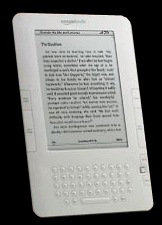
Recently, Amazon introduced the new Kindle 2. Some of the features in the updated version are a battery kindle2 that will last two weeks, more contrast on the black-and-white screen than the previous version, faster wi-fi connections, more memory, a smaller size that weighs less than the previous device, more storage (1,500 books rather than the current 200) and a speaker with a new function that reads the text aloud. Also, Stephen King’s new novella UR will be available exclusively on the new Kindle. The latest device costs the same as the old Kindle: $359.

The new "Text-to-Speech" audio function has raised some concern with the Authors Guild who stated that it must be considered an “audio right”, but Amazon said that customers would not confuse text reading with an audiobook. (Note: this is not the same as an audiobook where a professional talent is paid to read the story in a dramatic fashion.) I haven’t heard it but I assume it’s done using a synthesized voice perhaps like a dashboard GPS.

Another issue that was raised is the price of e-books for the Kindle: $9.99. Some publishers feel that the price is fine since they are investing in a lot in costly digital technology. And some say that e-books should not be considered of less value than the paper version and assume they would cost less.

With e-books being a very small (less than 1%) portion of book revenue, it would seem to me that having them at a reduced price would encourage buyers to venture into the e-book domain. But I’m sure that publishers don’t want to give up revenue in these hard economic conditions.

So, with the upcoming availability of the new Kindle 2, my questions are: Is it smart of Amazon to price the product the same as the older version? Or should it be priced cheaper than the 1.0 version even with the added features? And is $9.99 a fair price for e-books or should they be sold for less than say the mass market PB version of the same book?

This topic’s HOT, says Google Labs


I went deep into the bowels of the Internet today.

Okay maybe I didn’t go that deep. But I made it down as far as Google Labs. For me that’s like spelunking into the Bat Caves of the Cyber Geeks.

I went there because I was searching for a hot blog topic for today’s post.

You see, I had a really busy weekend. Frankly I was exhausted. I couldn’t think of a dad-blamed thing to write about for today’s post. So I thought, “Hey, you can find anything on the Internet. I’ll just look up something hot.”

So I went to IE (that’s Internet Explorer, for anyone who just left Planet DOS), and typed Hot Topic into the Search box.

And lo and behold, all sorts of links popped up. Including one article called–yes–How to Find Hot Topics to Write About.

The article sent me to a site called Google Labs, where you can select Google Suggest, type in a search phrase, and find out what trends people are currently searching for, all over the world.

So I did a few searches. And the results were a bit disheartening. Here’s a sampling of the results with Google’s “trend temperatures”:

Selena Roberts and A-Rod (Volcanic)

Georgia teaching candidates must prepare for the GACE exam before they are able to accept a position in any public school (On Fire)

Obama Press Conference (Spicy)

Cockapoos (Medium)

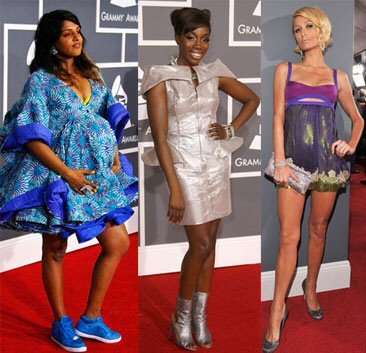
Grammy fashion (Mild)


I was hard pressed to turn any of these topics into something writing-oriented, however. But then I stumbled onto Google Suggest’s Search Trends feature, and typed in “How to Write.” That’s when I hit paydirt.

It turns out that in the last twelve months, the most-searched-for article about writing fiction on the Internet was How to write a Bestseller by Maeve Binchy.

Maeve Binchy is one of my personal icons. And this article about her is a gold mine. I feel lucky to have dug it up. It’s…hot.

It turns out that Maeve, who has sold a gazillion bestsellers, has just published a how-to book about how to write bestsellers. It’s called The Maeve Binchy Writers’ Club (published by Orion). According to the article by John Spain, the book evolved from a writing course that Maeve contributed to at the National College of Ireland in Dublin.

Aside from fiction, the number one most-searched-for writing article overall was one about how to write…iPhone applications.

No surprise there. Those writers are probably already making a bazillion dollars without writing any books at all. (That’s BAH-zillion, since our zillions are getting inflated these days by TARP economics).

And that thought leaves me cold.