Building a Writer’s Platform

By Joe Moore

As the responsibility of marketing and promotion falls more and more on the shoulders of the author these days, one of the questions that agents and editors ask novelists is “What is your platform?” With the economy putting extra pressure on publishers, they expect writers to come to the game bringing a ready-made audience. They not only want but expect authors to already have established a fan base or at least a group of potential fans—and for new writers, this is BEFORE your book comes out. Even veteran, multi-book authors must have a solid, established platform. It’s part of the “new” business plan.

So what is a platform?

platform1 In a single word, your platform is your “brand”. Having a platform helps your relationship with your publisher, and it can assist you in selling more books.

So how do you establish or build your platform? The quickest way is to start with the Internet. Here are a couple of methods to begin nailing that platform together.

Website. There was a time when a website was only for the rich and famous. Those days are long gone. A writer without a website is about as logical as an author without a telephone. Outside of the bookstore, the author’s website is the “first impression” a potential reader gets of your brand. It’s truly a no-brainer. Your website is your billboard, your advertisement, your calling card. And the potential for delivering a creative message is only limited to your imagination. Essential elements on your website must include: a method for contacting you; a method for purchasing your book(s); a method for the press to gain information (digital press kit); an incentive to linger or return such as a contest or free sample chapters; a method to track your website traffic. Other considerations include continuity in your site colors and design that are in sync with your book covers or other branding elements, and a reasonable amount of interactivity such as a method of leaving comments or subscribing to newsletters and publication news.

Blogging. You obviously know about blogs or you won’t be visiting this one. A blog is an online method of expressing your thoughts with a means for visitors to leave a comment or opinion. As a writer, your blog will probably be about your writing, your books, or some other connection to your craft and career. Some authors like to venture away from their books and discuss other topics such as politics, religion, economics, etc. A word of warning: You’ve worked hard to establish and build your “brand”. Don’t blow it by pissing off your readers. At some point they just might reject your next thriller or mystery because they don’t agree with your position on unrelated issues. A blog can easily turn into a slippery slop.

Newsletter. As previously mentioned, your website needs a method for your visitors and fans to subscribe to a newsletter or news bulletin. If they’re a fan, they want to know about you and your books. When is your next book coming out? When are you going to do a signing in their area? Will you be at a particular writer’s conference? They want the news. And the best and most economical way to get them what they want is an electronic newsletter. There are numerous email-generating newsletter sources that you can use to put together a value-filled publication. A few suggestions are Constant Contact, MailChimp, and Vertical Response.

Write some stuff. Any writing credit is a good writing credit, and it helps build your platform. No matter what you write, whether it’s for the local paper or a national magazine, you’re byline will contain a mention that you are a novelist. So if the reader likes your article or how-to piece, and they see you also write thrillers or mysteries, that’s a potential plank in your platform.

Book forums. There are a ton of forums out there dealing with readers and writers. A good resource to begin finding them is groups.yahoo.com/. Others include WritersNet, Helium, Backspace, and Absolute Write. Make yourself known on these and similar forums and you’ll be adding to your brand and platform.

Social Networks. Sites like MySpace.com, LinkedIn.com, Facebook.com, Twitter.com and countless others are perfect for building your brand. The only potential risk is the time you might spend on these sites instead of writing your book. But they are a terrific source of finding your dedicated or new fans. A word of caution: see the note on blogging above.

Additional platform building tools include professional publicity photos of yourself and a strong press-ready biography. Also, memberships in writer organizations such as the International Thriller Writers or Mystery Writers of America help build your brand and platform among your colleagues and fans. The networking and connections made within these organizations and their subsequent writer conferences are invaluable.

How’s your platform coming? Any other suggestions on building a strong brand?

Thriller writing 101: Creating an atmosphere

Every successful thriller begins with a distinctive atmosphere. The thriller writer must establish an atmosphere at the beginning of the story, to ground the reader in the story’s place and time.

Note: Atmosphere, while related to setting, is not the same thing as a setting! The atmosphere is what draws the reader in until he or she has time to engage with the characters and plot.

As an example of atmosphere, let’s say your story starts off at a hotel. Is the hotel located along the strip in Las Vegas, is it a no-tell motel along I-95 in South Carolina, or is it a beachfront motel in a party town in Southern California? Each locale would provide an opportunity for a completely different atmosphere. It’s your choice as the writer to create an atmosphere according to the needs of your story.

What works: Trilateration (I have no idea where I came up with this term; probably Star Trek)

One check list I use when creating atmosphere is the five senses. Of the five senses, writers tend to seriously overuse sight and hearing. We forget all about smell, taste, and touch. When creating atmosphere, it’s helpful to roam back through your paragraphs, weaving in references to the other senses. That’s what I call trilateration.

For what it’s worth, here’s a link to an ehow article about creating atmosphere.

What doesn’t work: Generic settings, laundry lists, overdescription

Introducing characters with description dumps is boring, and so is introducing settings with laundry lists of description. You need to bring the setting alive by infusing it with mood, in the same way that you inject your characters with life and attitude (For the how-to about that, see Robert Gregory Browne’s post about bringing characters to life).

So I’d love to know, how do you go about creating atmosphere in your thrillers? What techniques or tricks of the trade can you share with us today?


New Characters Wanted

by Clare Langley-Hawthorne
http://www.clareangleyhawthorne.com/

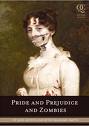
Jane Austen was a vampire…Pride & Prejudice meets Zombies or Predator…

What next – Charles Dickens as a serial killer? Charlotte Bronte as a transgender PI? I’ve had enough of people ripping off famous authors, famous characters and famous historical figures. Create your own bloody characters I say!

Inspired by yesterday’s blog post on creating powerful characters that jump off the page I simply had to vent today (yes, it’s my Monday rant!) about the use of what I call gimmicks rather than characters. I know that in today’s commercial environment, the publishing industry (just as the movie industry) wants name recognition but really…WTF???

In Australia we used to have a segment called ‘what cheeses me off’ – and here’s mine for today – a list if you will of character gimmicks that drive me nuts.

  1. The rehash of past literary detectives – enough with Sherlock Holmes already! The only one who has pulled this off (in my mind) is Laurie R King and she created her own terrific character in Mary Russell on top of pulling off the aged beekeeping Holmes with aplomb…but for everyone else – enough!
  2. The ‘other perspective’ gimmick – Does the world really need Mr Knightly’s diary? What next – Uriah Heep’s peeping tom memoirs? Confessions of a rake by Mr Willoughby?
  3. The never ending sequel – Once a classic is done, it’s done as far as I’m concerned – so I don’t need to read Mr. Darcy’s Daughters or Pemberley the sequel (the latter was particularly bizarre I felt, though I confess I did read it!). The only ‘sequel’ I appreciated was the two books written by Jill Paton Walsh based on Dorothy L. Sayers unfinished notes.
  4. Real life historical figures as sleuths….I’m just not buying the King/Queen who can sneak out of court and go sleuthing…

Now don’t get me wrong, some people have managed to pull off these things and more power to them if their book sells. Jasper Fforde has a hilarious series featuring Thursday Next that spoofs all sorts of literary figures (I particularly loved the therapy session for the cast of Wuthering Heights in which Healthcliff [now a porn star known as the Black Stallion] arrives and then the session is disturbed by a bomb thrown by the pro-Catherine faction) – but unless you can achieve that level of sublime satire, I say, leave well alone.

In this environment, however, everyone seems to want the easy fix – the ‘hook’ that will draw in the sales without having to do the hard work of creating new ‘jump off the page’ characters. Call me old fashioned but the classics of tomorrow are not going to be reheated leftovers from previous classics – or are they? I sometimes wonder and despair…

So what ‘cheeses’ you off when it comes to rehashed characters…any others to add to my list?

Creating Characters that Jump Off the Page

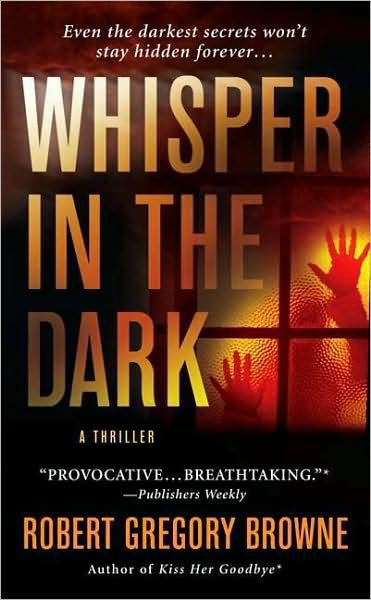
Rob-Toughguy Today our guest blogger is Robert Gregory Browne, whose latest work WHISPER IN THE DARK received a starred review from Publishers Weekly, and is currently available in stores everywhere…

Imagine, if you will, The Fugitive with Ace Ventura as the lead.

While much of the plot of this exciting movie could remain intact, the entire flavor of it would be radically different. Scenes would change, dialog would be altered… and, despite the plot similarities, chances are pretty good these two versions would wind up on completely different shelves in your local video store. Which isn’t all that surprising.

Because when we watch a movie or read a book it isn’t really plot that we invest ourselves in. It’s character. The characters set the tone, and our acceptance or rejection of those characters is essential to our acceptance or rejection of the story itself.

Great characters make us laugh and cry or even frustrate and infuriate us. Great characters make us squirm in suspense and excitement. Great characters take us on an emotional rollercoaster ride and are absolutely essential to our suspension of disbelief.

WELL, SURE, BUT…

Whenever I spout off about the all-important need for great characters, someone invariably disagrees. True writing success, they say, lies not only in great characters, but in your ability to come up with a great plot and structure, compelling dialogue and so forth.

And they aren’t wrong. In fact, I couldn’t agree more.

But the simple truth is this — and I’m not the first to say it: your characters define all those things. They are your story. Even if you succeed in giving us a wonderful plot and structure, you’ve got nothing unless your characters jump off the page. In writing fiction of any kind, characters are everything. Everything.

It is impossible to imagine Gone With the Wind without the feisty, self-centered yet courageous Scarlett O’Hara. Or Citizen Kane without the domineering presence of Charles Foster Kane.

But not only are these lead characters all-important, every character that surrounds them seems to be full-bodied and alive. The authors have somehow managed to pump life into every single character that occupies the page.

Now the question is this: how do you and I do the same thing?

CREATING COMPELLING CHARACTERS
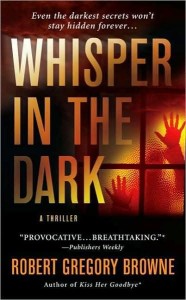
WHISPERTruth is, I can’t tell you how to do this, but I can tell you how I do it — and I’m often complimented on my great characters. But my method, like any other method taught out there, is not surefire for everyone who tries it. In fact, many people will reject it out of hand as being far too simplistic. And they may be right. Yet it works for me. And, who knows, it might just work for you.

There are writing gurus who will tell you that the only way to create a great character is to sit down with a legal pad or a bunch of note cards or a character chart and start filling in the blanks.

How old is the character? What’s his occupation? What are his likes and dislikes? What school did he graduate from? Where’s his hometown? Who were his best friends in grammar school. What kind of parents does he have? Does he have any siblings? The list goes on and on and on.

All of these questions are designed to help you get under the skin of your character. To help you understand him or her to the fullest extent possible so that when you write your scenes, your character will be alive in your own mind. And if he’s alive in your own mind, then surely he’ll be alive in the minds of your audience.

Well, yes. Of course. But, I’m sorry, call me lazy, call me stupid — I just can’t bring myself to sit down long enough to answer all these questions.

Oh, I’ve tried. But halfway through I find myself wondering, what’s the point to all this? I may say my main character attended Dartmouth — but how exactly does that bit of information help me unless it’s directly related to the story at hand?

I have yet to figure it out. Instead, I approach the task in this way:

CHARACTERS ARE ATTITUDE

Let’s go back to Scarlett O’Hara for a moment. How did I describe her? Feisty, self-centered yet courageous? You could throw in flirtatious and childish as well. These are all attitudes that our audience can immediately latch onto and understand. We don’t need to know that she comes from a pampered Southern background and a rebellious Irish father to understand — and perhaps identify with — that attitude. Her attitude alone is enough to draw us in.

Why? Because attitude is action — the character in a state of being. Giving your character an attitude — preferably one that conflicts with the other characters in your story — is a great way to help you and your audience understand who that character is.

CHARACTERS ARE EMOTION

Adding emotion to your character can help your audience identify with him or her. Looking at Scarlett O’Hara again, when Gone With the Wind opens we see the flirtatious and selfish side of Scarlett’s personality. But as the opening scenes continue, we discover that despite all the attention she’s getting from the men in her world, she’s actually in love with another and has been rejected by him. Scarlett is wounded by that rejection yet hides the hurt from all but the object of her affection.

This is an emotion/reaction we can all identify with. If we haven’t experienced it ourselves, we have seen it in others we know and love. The emotion is what gives depth to… the attitude.

CHARACTERS MUST HAVE A GOAL

Every character must have a goal. Not just the main character. This is a given. Without a goal, your main character will wander aimlessly and your audience will disappear.

But every character that inhabits your story should have a goal. The character’s goal is often what defines both attitude and emotion.

Let’s take a relatively minor character for example. A grocery store clerk. The hero is buying a carton of milk. For a beat of conflict in an otherwise innocuous scene, we might give the grocery store clerk a goal: she wants to go home. She’s been on her feet all day long, the new shoes are killing her and all she wants to do is punch that time clock (and maybe anyone who gets in her way) and get the hell out of there.

This goal can help you define the character’s attitude. Is she weary? Is she grouchy? And how does this affect (read: conflict with) the hero?

Giving such a minor character a goal and an attitude/emotion may seem silly, but the result is a much richer story with much richer characters.

CHARACTER IS ACTION/DIALOGUE

Defining an attitude/emotion and a goal are all wonderful, helpful things. But none of them mean squat if we don’t see these things in action.

Sure, we can have Joe Blow say our hero is a selfish, manipulating bastard, but that means nothing unless we see this for ourselves. The way your character acts and speaks is what finally defines her/him.

When I describe Scarlett O’Hara as flirtatious and self-centered, these attributes are defined by what Scarlett says and does. She flirts with just about every man who enters her world, she manipulates them into paying attention to her despite the unhappiness this brings to the other women around her. By seeing her in action and hearing her words, we quickly understand the attitude and emotion she brings to the story.

The cliche, Show Don’t Tell, couldn’t be more true here. We must always show our characters acting and reacting — not simply talking about their motivations and desires.

ME + IMAGINATION

Defining a character’s goal/attitude/emotion/action are all wonderful things, but how exactly do we go about doing that without resorting to those cards and charts and character sketches the writing teachers tell us we so desperately need?

Again, this works for me. It may not work for you. And it’s deceptively simple:

Every character I write is me. From the hero and heroine down to that grocery store clerk, every single character I write is… me.

Yes, you say, but isn’t that a bit limiting? Doesn’t that make for a rather monotonous set of characters?

Maybe. But I have yet to hear any complaints. If my lead character is a divorced father of three who finds himself unwittingly involved in a conspiracy to overthrow the government, the first thing I ask myself when approaching a scene (even though I’m happily married and wouldn’t know a conspiracy if it jumped up and bit me) is this: how would I react in this situation.

Then I add the color (read: attitude/emotion). How would I react, if… I was a self-centered bastard… a no-nonsense cop… an officious political hack. And I apply this technique to every character I write.

In short, I’m like a method actor playing all of the parts. By using myself and a healthy dose of imagination, I can approach characterization from the inside out. And once I’m able to get into the skin of my characters, it’s much, much easier to create someone whom I, and hopefully the audience, can identify with.

FINALLY…

If you still feel like you have to drag out the cards and charts, then so be it. If knowing every single little detail about your character is important to you, then by all means write them all down, cover your entire wall with important tidbits of information. I would never belittle anyone for doing what feels right for them.

But while you’re at it, take into consideration the things I’ve talked about here. Remember attitude, emotion, goal and action.

Because these are the things that will make your characters leap off the page and propel your audience through the story. The key to success is to get your audience to say (and I’m cringing as I write this):

Frankly, my dear, I do give a damn.

Rob Gregory Browne was an award-winning screenwriter who rode the Hollywood roller coaster until severe motion sickness forced him to retire. He has now settled comfortably into his new life as a thriller writer, producing the books KISS HER GOODBYE, the just released WHISPER IN THE DARK — which received a starred review from Publishers Weekly — and the upcoming KILL HER AGAIN. Rob lives in California.

~~~~~~~~~~~~~~~~~~~~~~~~~~~~~

CALENDAR OF UPCOMING GUESTS

Mark your calendar for the following guest bloggers at the Kill Zone:

Neil Plakcy, March 22
Liz Jasper, March 29

Millionaire For a Night

John Ramsey Miller

Last weekend Susan and I went to Fairfax, VA to visit good friends. We went to a casino with John and Joy Gilstrap. We played blackjack. I drank Scotch. Starting with a check for $25,000.00, I found a table and the four of us began gambling. I soon bored with wagering $1,000.00 a hand because I was winning more than I was losing, so I quickly moved to bets of two and then three thousand a hand, but soon went to $5,000.00 a hand. Somehow I lost most of the money in thirty minutes.

When I was down to my last three thousand, I went to the roulette wheel and started betting color, even or odd and some other combinations––never numbers. After I’d picked up fifteen thousand dollars, I went back to blackjack, and before I stopped I was betting 75,000.00 a hand and doubling up. When I finally stopped and cashed in, I’d won one-point-four million dollars. I handed the winnings over to Joy Gilstrap. I mean she did stake me to the original $25,000.00 and we were her guests. And we all won, I just won more because I have a devil-may-care attitude about money, especially money in the form of chips, backed not by cash, or gold, but by thin air.

While the casino was a country club ballroom in Arlington and the casino dealers were novices. My dealer had clearly never dealt Blackjack before and barely had a grasp on the rules. In fact he’d never before played poker. Sometimes he paid off nineteen when he’d won with a twenty-one. He paid any twenty-one double. He paid ties. He couldn’t count. In fact any pit boss sober enough to be breathing would have hit him over the head with a bottle. So it was no surprise that I won, my wife won, and John and Joy won as well.

Sometimes the deck is stacked against you, and sometimes you just can’t lose. Winning… well, there’s no feeling its match.

I wish I could write like I played Blackjack last weekend, but even without the gaming, spending time with people you enjoy and care about is what life ought to boil down to. This weekend I’m off to the Mississippi Delta to a wedding. I sure hope it’s half as much fun as gambling with a rotten dealer and good company, but I doubt it will be.

Report From the Snob Farm

By John Gilstrap
http://www.johngilstrap.com

First an apology about missing my slot last week. My Big Boy Job sent me to Charleston, WV for the week to recertify as an instructor for OSHA-certified safety classes that I’ve been teaching off and on for about two dozen years. The Holiday Inn in Charleston—the one whose closed windows emit a frigid breeze and whose “closed” doors leak enough light to read by—didn’t have working Internet access. Thus, no blog.

I thought I’d give a report on the panel I moderated a couple of weeks ago called “Literary Snobs and Commercial Sellouts: The Truths and Truisms of Literary Prejudice,” the one I introduced in my previous entry here in the Killzone. The panel consisted of mystery writer Donna Andrews, thriller writer James Grady, and literary novelist and PBS radio commentator Alan Cheuse.

I started things off by reading parts of a New York Times article which denounced the decision to bestow a National Book Award on Stephen King. The tone of the article dripped condescension. After my selected five- or six-sentence quote, I just opened it up, and the discussion ran at full speed for an hour and fifteen minutes, during which absolutely nothing was resolved.

Don’t get me wrong. The panelists were all articulate and they were all good sports, but this is the kind of topic that draws more fireworks than conclusions. My only disappointment was that they were all so damned polite to each other. I was sort of hoping for a “Jane, you ignorant slut” moment, but it never came.

A couple of comments did stand out. The first one involved a question from a young lady in the audience. I forget substance of the question, but prelude was fascinating. She is in the process of writing a novel, and by way of defending the literary side of the argument she went on at length about the importance of words and images. In her book, she said, the thrill of writing lies in the beauty of her prose and the vividness of the scenes she creates.

Nowhere in her soliloquy did she mention story as an element of writing a book. When I asked her about it, she seemed rather flummoxed. Having already introduced myself as the quintessential commercial sellout, she seemed unmoved and a little put off when I suggested that while writing is itself an art form, the selling of writing is all business; and that to convince a publisher to invest in the production and distribution of a book, there needs to be some reasonable chance of earning back the investment. That expectation, I told her, requires a good story well told. I’m fairly certain that my observations fell on deaf ears.

The one truism on which all attendees seemed to agree was that movies suck, and that people who write them are talentless hacks. Books, they agreed, are so much better than movies. Every time a screenwriter touches the cherished words of a writer like Gabriel Garcia Marquez, the result is something terrible. As discussed at the conference, Marquez reportedly turned down Anthony Quinn’s offer of $1 million for the rights to One Hundred Years of Solitude because he didn’t want those movie hacks to ruin the product of his muse. Clearly, he was less protective of Love in the Time of Cholera.

Thus began the movies-are-crap discussion. As moderator, I did my part to keep things going, but then, as resident script-writing talentless hack, I felt compelled to defend the craft. I explained that when I adapt a book for the screen, I am not trying to recreate the reading experience, anymore than a landscape artist in Yosemite is trying to recreate the great photographs of Ansel Adams. Or vice-versa. Books and movies are entirely different art forms; one cannot replicate the other. The job of the screenwriter—and subsequently of every one of the hundreds of people involved in the production of a film—is to tell a compelling story well. If the story was first told as a novel or short story, credit is given, and that’s where the creative obligation ends.

Here’s some food for thought (and, hopefully, discussion): Movies released in 2008 include The Reader, Slumdog Millionaire, Saw V and Space Chimps. The “quality” of these movies is all over the board, as far as I’m concerned. I’d pay $10 NOT to see Space Chimps or Saw V, and I’m guessing many of you agree.

Together, we’ve made the value judgment that some movies are just not worth our time. Does this make us “cinematic snobs” who are dismissive “commercial” films? At the end of the day, is it all just a continuum that boils down to taste?

How to write a thriller: Great beginnings

As I mentioned in a post a few weeks ago, I’ve been working on a new thriller. But before penning a single word of prose, I’ve had to lay the foundation for my new story, much like a brick-layer lays the foundation for a new house. All kinds of groundwork has to be laid, such as decisions about:

* Which suspense category the story belongs in

* POV issues

* Character goals and motivation

Now that all of that’s done (mostly), comes the hard part: Writing Chapter One, Page One.

Which brings me to today’s topic: Great Beginnings.

I want my thriller to have a great beginning. I want it to have the best dad-blamed beginning you have ever read in a thriller, EVER.

So I’m reaching WAY back to a sort-of thriller, Rebecca, and its simple but great first line:

“Last night I dreamt I went to Manderley again.”

When I was in the eighth grade, that story made a huge impression on me. I was spellbound by the tale of its protagonist, who is haunted by the ghost of her husband’s dead wife. I even named one of my daughters Rebecca, and have to wonder if it didn’t have something to do with my love for that book.

Here’s a link to the best 100 opening lines of novels, as chosen by the editors of American Book Review.

But those are mostly first lines of…ahem, “literary” novels. (For an explanation, see John’s recent post about “Literary snobs and commercial sellouts”.) Right now, I want to talk about the first lines of thriller novels.

You know ’em when you read ’em. They’re the ones that make the hair stand up on the back of your neck on page one and you don’t go to sleep until THE END.

So I’m wondering…what is the BEST grab-you-by-the-throat opening line (and para) you ever read in a suspense book? And what made it so good for you?

What makes you stop reading?

by Clare Langley-Hawthorne
http://www.clarelangleyhawthorne.com/

Aloha from rainy Hawaii! Waiting for the sunshine and inspired by a panel I attended on the weekend at Left Coast Crime on ‘things that make me stop reading’, I thought I’d offer my top 5 reasons for putting a book down (or throwing it against a wall!) and find out from you what, as readers (and writers perhaps), you consider ‘deal breakers’ – when you just cannot continue with a book.

The panelists (Hallie Ephron, Mysti Berry, Kate Stine, and Sue Trowbridge) mentioned a number of things which caused them to put down a book and not read further. Here’s some of their (abbreviated) list:

  • Stereotypes
  • Lack of clarity – where the hell are we, when are we, who is talking etc…within the first few pages.
  • Gratuitous violence, sex or animal cruelty
  • Lack of character pull – the character fails to draw them in
  • Geographical inaccuracies (like someone flying all the way from San Jose to San Francisco!)
  • Prologue that seems gratuitous, manipulative or contrived

Reducing these issues to a list always seems to lessen the impact of the discussion but I agree with all that was said and with the panelists’ assertion they will forgive almost any of these if the writing is sufficiently compelling to keep them interested.
As for my top five list – well here goes:
  1. Characters that make me a yawn- if I’m not drawn in by them then I’m not going to keep plowing through the book.
  2. Set up requires more than just a suspension of disbelief but putting aside all reality.
  3. Clunky, awkward writing that requires way too much concentration – I want the story to flow, to draw me in – I don’t want to have to take out the paddles and brave the rapids to get there.
  4. A sense of manipulation or self-awareness – if I sense the author pulling the strings I’m taken out of the story (and I’m pissed off).
  5. Blatant inaccuracies that make me doubt the writer. I think when you start a book you place a great deal of trust in an author and if that trust is broken too quickly by inaccuracies or false steps it’s hard to regain it and keep reading
So what are the deal breakers for you – what makes you stop reading a book? What about in a series – when does an author ‘blow it’ and stop you from continuing? For me bringing back dead characters (Patricia Cornwall anyone) is a deal breaker – If I want that kind of plot twist I’ll tune in to General Hospital…What about you?

Cara Black Grills Her Publisher

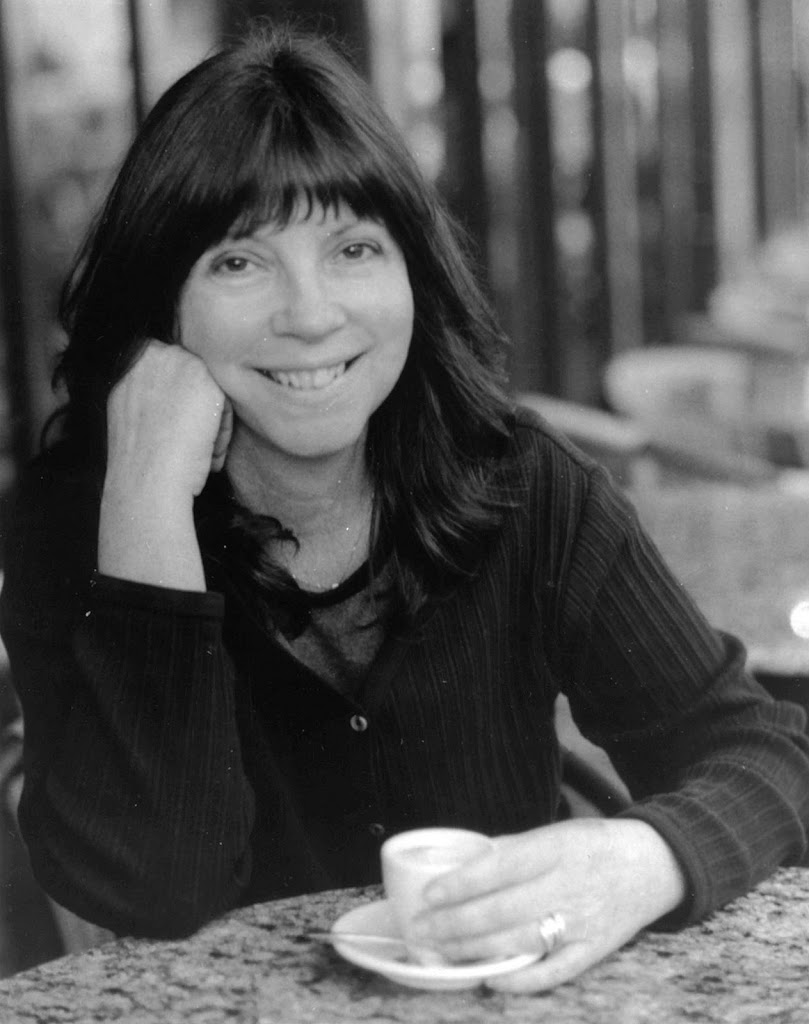
CARA BLACK The Kill Zone just loves it when guest bloggers visit, especially when their posts provide an inside glimpse of the industry. So when Cara Black offered to rake her publicity and marketing directors over the coals for us, we applauded her (from a safe distance). Courtesy of Cara and the lovely people at Soho Press, today we’re bringing you answers to some of the pressing questions you’ve always wanted to ask but were afraid to…

Thanks for inviting me Michelle! I know the most important thing is to write the best book you can. Then rewrite, rewrite, rewrite as Voltaire said. But after the real work is done and the manuscript has been accepted, copy edited, and slated for publication, what happens after that? I’ve often wondered, and have frequently been asked the same question at conferences. So I thought I’d ask the experts, in this case Soho Press, who publish wonderful books (and mine, too).

I love my publisher and I know they share the love. We’ve been together for nine books over ten years. Soho is a fiercely independent book publisher, based in New York, and their specialty is crime fiction from around the world. The Wall Street Journal has described Soho’s books as, “Some of the most exotic crime fiction in the world.”

But I thought I’d use this opportunity to rake them over the coals, grilling them about what we all want to know: how do the publicity and marketing director of a publisher—in this case mine —promote, market and sell a book? Something that, as either pre-published or published writers, we’d all like to know, right?

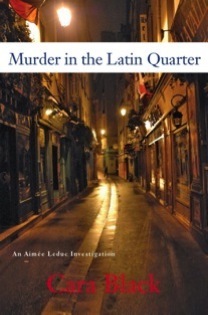
I think the answers and insights will prove universal and, hopefully, helpful. So now with my ninth book, Murder in the Latin Quarter, available this week—yes, murder in the latinthis week-I thought I’d politely ask them about what the heck it is they do. I know it’s not a fluke that Soho authors are regularly reviewed by the New York Times and interviewed on NPR. So I spoke with Sarah Reidy, Soho’s publicity director, and Ailen Lujo, their marketing director, both superstars in my book.

Cara Black: Can you describe a sales conference? It’s a mystery to me…who’s there? I’ve heard that the chains can decide a book cover.

Sarah Reidy: A sales conference is basically a meeting in which we (publicity, marketing, and editorial) present our upcoming list (of books) to the sales force. The sales team consists of all the wonderful people who are responsible for actually getting your book into stores. They take the information we give them and share it with Barnes & Noble, Amazon, Borders, Baker & Taylor, Ingram, and all the great indie stores out there. In terms of book jackets, that’s usually determined at pre-sales. I’ll let Ailen explain that one.

Ailen Lujo: In regard to presales: Twice a year an editor and I fly out to Minnesota where our distributor consortium is based, and we introduce our potential titles to the sales and marketing staff. In many ways this meeting is even more important than the actual sales conference because we talk about the minutest details of the book, from price and format (should we do this as an original paperback or hardcover?) to book jacket designs. If our account reps hate a jacket, we go back to the drawing board. We present titles at sales conference. We discuss titles at presales.

CB: What about blogs? Conferences? Bookstore events? How effective are each or do you recommend a combination?

SR: Oh, my. This is one of those questions that really depends on the author. I think blogs are great, and there is such a variety out there almost everyone can find a good match for him or herself. There are straight review blogs, of course, but there are also a number of blogs that do author Q&A’s, accept guest blog posts, or will post podcasts and book trailers. In addition, there are blogs that serve as extensions of “traditional” media outlets, such as Papercuts (The New York Times), Jacket Copy (Los Angeles Times), NPR.com, and Washington Post Live Online. This is a market that is constantly growing and offering more opportunities. For any author, I would recommend researching literary blogs and reading them for examples and ideas. Once you get a feel for a blog, you can start coming up with ideas about how your book could fit in.

Specialized conferences are wonderful. As Cara knows, Ailen and I are both huge fans of Bouchercon for mystery authors. It’s such a close knit community, and it feels like every attendee is there for the love of a good novel. If you are a less well-known author, I think conferences and conventions are a much better option that a traditional book tour.

Bookstore events are good in some cases, and not in others. If you’re Tori Spelling or John Grisham, you should absolutely do bookstore events. People are going to turn out to see you no matter what. You lucky son of a guns. However, if you are a debut novelist with no real connection to a location, it’s hard to turn people out for these. Instead I typically recommend doing one big event in your home town, and perhaps somewhere else where you have a large community of family and friends who will come.

You should also look into reading series. There are some great series out there that set up a night with multiple authors…often at a bar! And everyone knows that drunk people are more likely to buy books (I just made that up, but I imagine it could be true). A reading series tends to have a built-in following, so it’s a good way to expose your writing to a new group of people.

Cara here. I really appreciated Sarah and Ailen taking the time to answer questions.Hopefully this parted the mist of publishing marketing and publicity somewhat. Does this mirror some of your experiences? Or does your publisher do things differently?

Cara Black writes the award nominated Aimée Leduc Investigations set in Paris. MURDER IN THE LATIN QUARTER, the ninth book in the series, was just released and is available online and at fine bookstores everywhere. In MURDER IN THE LATIN QUARTER, Aimée travels to the Left Bank unraveling the trail of a woman who claims to be her sister, murky Haitian politics and international financial scandals that lead to murder.

~~~~~~~~~~~~~~~

CALENDAR OF UPCOMING GUESTS

Mark your calendar for the following guest bloggers at the Kill Zone:

Robert Gregory Browne, March 15
Neil Plakcy, March 22
Liz Jasper, March 29

Politicians Make Great Villains For Good Reason

John Ramsey Miller

With a few notable exceptions, we all love to hate politicians. They are a sociopathic bunch who seem interested only in power, and most seem to sell their votes to the highest bidder all the while swearing they can’t be bought by the people who make their living bribing votes. They will swear that on the eyes of their children until the day they walk into the nearest Federal prison. They talk out of both sides of their mouths and straight out of their asses at the same time. They almost never do what they say they will do to get into office and will stay on decades after they’ve worn out their welcome. Even senility cannot pry them from the marble halls. If you need a villain every reader will hate, make them a Congressman, Senator or an assistant of some sort to the sitting President. Hell, even a President will do.

A villain will do anything to keep their jobs, including killing innocent people, or people close to a protagonist to get the protagonist worked into a lather. Almost never will a protagonist be a politician, because it’s playing against type. The good guy(s) are always fighting a corrupt official or an agency dedicated to protecting the Status Quo, which is usually the career of a powerful politician. A good villain can corrupt the Military, IRS, NSA, CIA, DEA, even the FBI and its believable because they have actually done so, and will again I am certain.

Writing thrillers is easier if you are paranoid. The longer I live, the more I understand the sanity of being among that number. Villains need to be powerful, and that is all they have to have on the line for them to do anything it takes to remain there. In the book I am writing at present the protagonist remarks how anything that rich people acquire and value so highly eventually end up in the possession of someone else. It’s a thought I have anytime I go into an antique shop, or a consignment shop. What the bad guys we write about rob and kill for is never worth what they do to get or keep it. Power is extremely intoxicating. Power is even more transitory than objects. I love writing about power and more about perceived power and the fear of losing it will cause a villain to do anything to your protagonist. Corruption and power go hand-in-hand in novels and in real life as well.

I was watching the news the other night and saw that 85 year-old President Robert Mugabe of Zimbabwe was throwing himself a quarter million dollar birthday party in (what was) the most financially troubled economy on earth, where disease, corruption, starvation and murder are as commonplace as chiggers in an Alabama weed field. THE MAN IS 85, for Christ’s sake. And the very next news story I watched was about bank officials here doing the exact same thing as Wild Bob Zimbob. Big party and big bucks involved. And then I watched a politician (Okay, Barney Frank) complaining that those bank executives were wasting “our” tax dollars. Amazing. How can ANY politician accuse anybody else of wasting tax dollars and keep from laughing out loud at the audacity of that accusation? Just staggering. Goes to show you that arrogance has no physical boundaries.

Next time you are looking for a villain just watch the first ten minutes of the national news, and take your pick from the lineup.