- First, make sure you know exactly what your publisher is proposing to do in terms of in-house sponsored publicity. Are they sending you on a book tour? If so, where? Where are they sending your ARCs? What media, if any, are they arranging?…These are all critical questions that you need to have answered before you consider hiring your own publicist. In my experience, it can be difficult to get the level of details you want from your publisher so you might have to probe and push to get the information you need. I was given a publicity/marketing plan so I did have an overall sense of what my publisher was and was not going to do (though my publisher was still reticient about giving me specific details regarding media/other event contacts made). For The Serpent and The Scorpion, I was fortunate my publisher sent me on a book tour and that my in-house publicist was willing to work with my independent publicist on media opportunities and events in parallel to what she was organizing.
- Outline your own publicity plan, identifying what you can do on your own – this will help you identify publicity needs that an independent publicist can fill. There are many things you can do on your own – it’s just a question of time and identifying the appropriate contacts – but you need to ask yourself how much time you are willing to devote to setting up media events etc. and whether you feel comfortable doing this on your own.
- Next, you need to seriously consider what opportunities exist that an independent publicist can assist you with. Fiction can be a hard sell publicity- wise, so you need to consider what angle(s) a publicist may be able to take advantage of – and you need to be realistic in terms of your expectations. Just because you hired an independent publicist does not mean you’ll be appearing on Oprah…
- You need to also consider what you are willing to do – and what strengths/weaknesses you have. For instance, are you willing to do radio? Do you enjoy public speaking? Are you an introvert who would simply die if you had to address more than 10 people at an event? It’s important that you play to your strengths and are honest about your own abilities…
- When you have decided that an independent publicist could add value to your publicity campaign, then you need to think long and hard about that dreaded word – budget. You need to consider what are you willing to pay and what results you expect for the money you plan on plopping down. Remember there are additional things that you will have to pay for as part of the hiring process like a national crime check…which leads to my final point…
- Negotiate so you set expectations up-front and so you know exactly what you’re getting for your money. Many publicists work on retainer and make no promises as to outcomes – this can be frustrating if you find yourself doling out the money and getting little in return. Other publicists work on a ‘per-gig’ basis so you only pay for the radio interviews/TV appearances/reviews/events they actually set up. In my opinion, the latter is the better way to go but you must still be up-front in terms of your expectations. There’s no point you envisaging an appearance on the ‘Today’ show when your publicist can only get you a community cable TV spot…that’s just a recipe for disaster!
The Future of Reading…and Everything Else
The man who does not read good books has no advantage over the man who can’t. – Mark Twain
Twain’s words remind me of one of the formative movies of my youth, The Time Machine. In this version of the H. G. Wells story, the narrator (Wells himself, played by Rod Taylor) goes far into the future where he discovers the Eloi. They are placid people, living without passion or curiosity–and therefore powerless victims of the Morlocks, who reside underground.
What disgusts Wells is the discovery that the Eloi have given up reading. Their books have crumbled into dust. They have no repository of collective knowledge, except in a museum they don’t frequent.
Thousands of years of building up civilization, gone! So that they can become what they are, virtually mindless beings who spend their days seeking pleasure (only to be enslaved, and eventually eaten, by the Morlocks)
In an essay in the L.A. Times entitled “The Lost Art of Reading,” Times book editor David L. Ulin reflects on the increasing difficulty people are having focusing on, and “inhabiting,” the world of a book:
“Such a state is increasingly elusive in our over-networked culture, in which every rumor and mundanity is blogged and tweeted. Today, it seems it is not contemplation we seek but an odd sort of distraction masquerading as being in the know. Why? Because of the illusion that illumination is based on speed, that it is more important to react than to think, that we live in a culture in which something is attached to every bit of time.”
We know this to be true. With a smartphone and/or an iPad or iTouch, or any other similar item to come down the pike, one never has to face a moment of silence or contemplation again.
So what does this portend for the future of reading? And writing long form narrative fiction? What, in fact, does it portend for the future, period?
I’m asking you. What do you think?
Every Author Wants A Great Review
By John Ramsey Miller
Over my career I have been extremely lucky because I have mostly had positive reviews for my works. The only negative reviews I’ve had were on Amazon left by skunks, idiots, or enemies. What sane person pans one of my books? At least one hopes bad reviews are a result of a conspiracy. Those Amazon reviews you can mostly ignore, especially when you discover the reviewer is a fan of one of your competitors (whom you may have been compared to somewhere), or someone who always reviews your books and gives less than positive reviews, a failed author who hates everything because it’s inferior to their own misunderstood opus. I think that if a reader doesn’t like your first book, why would they keep reading consecutive novels by you and adding negative reviews for each? Perhaps it could be someone you fired or someone whose manuscript you didn’t send to your publishing house with a note demanding it be published forthwith and a massive advance paid. Some of these authors will assume you are jealous of their talents and trying to suppress their greatness. Whatever it may be, the reviews on that place shouldn’t depress or impress.
Of my seven novels, none got a starred review in Publisher’s Weekly. It’s a big deal, as we all know well. A very big deal considering the number of books published and the few slots available. Most reviewers find something to not like as much as they like the rest. Gilstrap, whom you might have figured is a close friend of mine, (although I have never seen him in a Speedo) would never have put this review in his blog, but I can put it in mine because he deserves to have it shared by those who value him and understand what a struggle his career has been and how hard and diligently he has labored at this game we play. Nobody writes or thinks harder than John Gilstrap, and nobody deserves a dollop of praise more.
May I present:
Hostage Zero
John Gilstrap, Pinnacle, $6.99 (448p) ISBN 978-0-7860-2088-1
The addictively readable second thriller featuring freelance hostage rescue operative Jonathan “Digger” Grave (after 2009’s No Mercy) marries a breakneck pace to a complex, multilayered plot. When two teenage boys are inexplicably kidnapped from a Virginia residential school for children of incarcerated parents, Grave and his crew set out to locate the victims and apprehend the abductors. Then one of the boys is drugged and left to die in a field, saved only by the fateful intervention of a passing homeless man, and Grave’s investigation begins to turn up leads that point to government and organized crime connections. A roller-coaster ride of adrenaline-inducing plot twists leads to a riveting and highly satisfying conclusion. Exceptional characterization and an intricate, flawlessly crafted story line make this an absolute must read for thriller fans. (July)
We’ve all had good reviews with a bomb somewhere in the body of the review. I had one review where the woman, who was not a fan of fiction and said so, said the opening chapter of my book was like walking into a mens locker room and kicking over a bucket filled to the brim with adjectives. I’ve had one of my books praised as one hell of a read, then described as “Gun” fiction. I thought that was a pretty good plug. Last night I went to a birthday party for a friend and I gave him a box of 9mm tracer ammo I’d had in the closet gathering dust for a few years.
Reviews have been discussed here before and will again. Nothing lights up your day like a review in a place like PUBLISHERS WEEKLY or KIRKUS because those reviewers know books and everybody in the industry and most book buyers read those reviews and often base buys on what they say. We don’t know how many sales are generated by reviews because there’s no real way to measure that. Oprah could (and probably can still) sell millions of copies by mentioning a book. I believe reviews do affect sales, but probably not as much as we think they do. The best sales tool is word of mouth, or BUZZ, which when it comes, usually vanishes just as quickly. Think cigarette smoke in a wind, more than oil spewing from a pipe a mile underwater which nobody can figure out a way to plug. We are depending on the same scientists to save the world and they can’t plug a ten inch pipe.
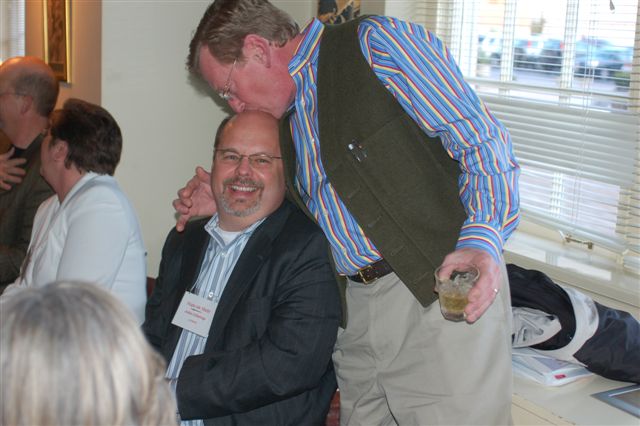
I also wanted to share a picture of John and I taken at Magna Cum Murder.

So, how many of you have received less-than-stellar reviews? What was the most distressing or comical lines, if you can remember them? And do you think reviews really affect sales? Have you ever kissed John’s head? Do you know the taste of Turtle Wax?
Way Too Much Information
John Gilstrap

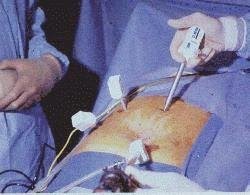
Last week, you may have noticed (I certainly hope you did) that I was MIA from my blogging duties thanks to an emergency cholecystectomy. That’s what normal people would call the separation of one’s gallbladder from one’s viscera. Mine had decided to die on me, and it turned out it had intentions to take the rest of me with it. Murderous bastard. In the end, good triumphed over evil, with Mr. GB incinerated in a medical waste bag, and its betrayed sponsor going home to his family.
I had suspected for a few weeks that my gallbladder was plotting against me. Even as two sonograms confirmed that no calculi (gallstones) were present, and that there was no telltale thickening of the organ’s walls—the two diagnostic indicators of cholecystitis—my symptoms persisted, including vomiting and the feeling that a woodland animal was trying to eat its way out of my abdomen. I’m no doctor, but I know when stuff’s not right, and that stuff was not right.
But it also was not perpetual (thank God). My worst attack lasted about 12 hours; most would run their course in four or five hours. When they were done, and I’d had a chance to rehydrate, I would feel more or less normal. Not so the past six weeks, however, in which I had multiple attacks. We’re talking Technicolor attacks here, shot in biological 3-D VistaVision, complete with Dolby sound. As tests came back negative, I was actually disappointed. I knew what I had, dammit. Why wouldn’t the doctors stake their reputations and their futures on my intuition?
The Alamo of gallbladder tests is the HIDA scan (hepatobiliary iminodiacetic acid). They inject a nuclear tracer into a vein, and then you lie under a camera for an hour. I actually fell asleep. That is, until the results uncovered my gallbladder’s murder plot. From there, it was directly to the ER, and from there to the OR.
During those few weeks when no one could prove what everyone suspected, I did research on my own. The Internet teems with information on cholecystitis and cholecystectomies. You can actually watch videos of full operations. I learned a lot about laparoscopic procedures and about the function of the gallbladder. Since this was my first medical procedure of any import, and because my personality borders on obsessive-compulsive, my thirst for knowledge was insatiable.
And for all that, I never did find the common-sense answers to the practical questions that concerned me the most. So, with the guarantee of providing way too much information, here, for the benefit of others, are the answers I wish I had found (not that the answers would have changed anything):
1. Yes, they shave you for laparoscopic surgery. Crown of my head notwithstanding, I am a fairly furry fellow, and at the risk of sounding vain, this is the summer season, and, well, you know. I was concerned. For good cause. They mowed everything from the right of mid-left abdomen, from nipple line to pubic line. They do it after you’re sedated. Now that it’s done, the cosmetics worry me less than the prospect of a lot of itching over the next few weeks. (Months? I have no idea how long it takes to grow back.)
3a. Note to nurses everywhere: When you’re talking about shoving a 15-inch tube into a man’s winkie, you have to choose your words carefully. I heard “long term” and panicked. Turns out they were thinking along the lines of 18 hours. Sorry, ma’am, but unless you’re a fruit fly, 18 hours is “short term.”
5. A two-day hospital stay for laparoscopic surgery makes you fat—but only for a while. Between the gas they pumped into my belly for the surgery and the fluids they flowed into me to keep me alive, I came home with three inches more girth than when I first checked in. Good news: physical activity (i.e. walking) triggers the mechanisms to relieve the discomfort. Bad news: you don’t want to be in genteel company when those mechanisms kick in. I literally peed away six pounds in my first 24 hours at home. As for the residual gas, well, you get rid of that exactly how you would imagine.
I apologize that none of this is topical to the subject of this blog, but since you’ve read this far, allow me one last indulgence. I write books about people who save the lives of perfect strangers, but this is the first time that I’ve ever played the role of the stranger. People I’d never met literally worked overtime to return me to my family with a shining prognosis. I make light here, but understand that the humor is a cover. How do I return that kind of favor? The phrase, “thank you,” seems sort of hollow under the circumstances, but it’s all I’ve got.
Konrath & AmazonEncore strike a deal
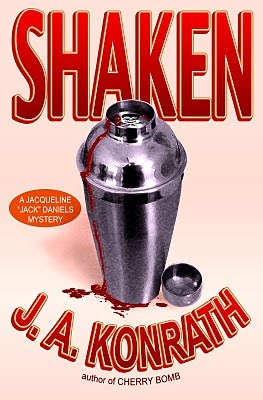
I’m a huge fan of Joe Konrath‘s ‘Jack’ Daniels series (written under “J. A Konrath”). So it was with tremendous excitement that I read this news:
Amazon.com, Inc. today announced that AmazonEncore, Amazon’s publishing imprint, will release the newest book in bestselling author J.A. Konrath’s Jacqueline “Jack” Daniels series, “Shaken.”
This is a huge step forward, both for Joe and for Amazon’s imprint, which traditionally has only published reprints of self-published books by new authors, not original titles from known authors.
Clearly Amazon is now throwing the gauntlet to the traditional publishing houses, starting with a writer who has already
carved out a name for himself by publishing over a dozen books using Amazon’s Digital Text Platform (in addition to his success in the traditional publishing milieu).
Joe played coy regarding the actual details of his advance with AmazonEncore, saying only that he received a very favorable contract. The digital version of the book will be available on Kindle four months before the print version.
So what does it all mean? It brought to mind an interview a few weeks ago with a Newsweek editor. Responding to the news that Newsweek had been offered for sale, he said that he felt they’d been doing things backward in recent years, compiling a weekly magazine while simultaneously offering daily articles on Newsweek.com. In the future, he thinks the most viable model will be to start with the daily articles, compiling the most popular into a print edition at the end of every week for readers (such as myself) who prefer reading in print form.
In other words, the online content will drive the print content, not vice versa.
Coming on the heels of my post last week about the recent uptick in digital vs. print sales, this was big news. I’ve felt for a long time that if Amazon got their act together by offering Kindles at a lower price point (which hasn’t happened yet, but must be on the horizon), they could easily position themselves to dominate the industry, effectively cutting out traditional publishing houses. They already have massive marketing and distribution resources at their disposal. All they’d have to do was hire a team of editors, and offer the mainstays of the industry (Patterson, King, Child, Steel, etc) a larger percentage of the royalties. As Konrath says in his press release, “[This] company can email every single person who has every bought one of my books through their website, plus millions of potential new customers. I’ve never had that kind of marketing power behind one of my novels. I’d be an idiot not to do this.”
As with the music industry, what I suspect will end up happening is a consolidation of the various houses into a few major players (with, most likely, Amazon, Barnes and Noble, and Apple among them). A few months ago the industry seemed to wake up to this threat, leading to the “agency model” battles between MacMillan and Amazon. (The “agency” model is based on the idea that the publisher, not the vendor, is selling to the consumer and, therefore, setting the price.)
I think that in the end what the publishers need to fear is not that Amazon will set the prices for their new releases, but that they’ll take them over entirely.
I’m not saying this is good news for writers-it remains to be seen if this will lead to a larger publishing base, or a more narrow one. But it does appear to be the first volley over the decks in the coming battle.
What is sellthrough?
By Joe Moore
Someone emailed me the other day and asked what sellthrough means in regard to publishing. Sellthrough is one of those buzzwords that helps a publisher evaluate their current and future relationship with a writer. It’s determined by the amount of books that were shipped and paid for, and it’s expressed as a percentage. For instance, let’s say a writer had a print run of 5000 books and the publisher shipped 4000 (orders). Of those, they received payment for 3500. The sellthrough would be 87.5% since 3500 is 87.5% of 4000. And a sellthrough that high would be a very good thing.
Now, the next question sent to me was: How important is sellthrough in the eyes of the publisher?
For that answer, I went to my friend Neil Nyren. Neil is senior vice president, publisher and editor in chief of G.P. Putnam’s Sons. Here’s his response:
“Sellthrough is important for a couple of reasons. Every book has returns, no matter how successful it is – that’s just the nature of the business. But returned books cost money. We’ve printed and shipped them, but they haven’t sold, and so now all we can hope to do is sell them as remainders. So the fewer books that come back, the better the potential profit picture, for both the publisher and the author.
“Sellthrough is also an important indication of the traction a writer is acquiring in the marketplace. If your sellthrough is 80%, that means the books are sticking and the accounts have a positive history with you (after all, for every five books they ordered, they sold four). And that means a publisher can use that as a springboard to get them to order more copies next time (“Look how well you did!”). It’s an indication that – even if the figures are still small – there may well be growth potential there. It’s a very positive sign – and we can use all the positive signs we can get!”
So for all the published authors out there, it’s easy to calculate your sellthrough. Check your statement and divide the number of books sold by the number shipped—some publishers even calculate the sellthrough for you and display it on the statement. In the above example, the answer is .875 or 87.5%. For those who aren’t published yet, when you finally do get your first statement, you’ll already know one number to watch for that can tell you and the publisher a great deal about how you’re doing.
Download FRESH KILLS, Tales from the Kill Zone to your Kindle or PC today.
Where is Kathryn?
Our lovely and talented blogmate, Kathryn Lilley, will be taking a medical hiatus for a while. As she makes a speedy recovery, we are going to open up Tuesday’s as a general discussion day for any topics relating to publishing and writing (or anything else you think we can answer). Is there a term or buzzword you’ve heard but don’t quite understand? Are foreign rights a mystery? Do all contracts pay an advance against royalties? What’s the difference between a novel and a novella? How can you get a discount when ordering those free-range eggs from Miller?
Post your question in the comments and we’ll try to answer any and all for the next few weeks while Kathryn is away. So let us know what’s on your mind but were always afraid to ask.
BTW, I’ll be discussing the term Sellthrough in my post tomorrow so be sure and come back for that.
What’s wrong with readin’ that?

The Guardian book blog recently had a piece entitled ‘nothin‘ wrong with teen fiction’ which discusses the ‘raised eyebrow and indrawn breath’ that we all remember so well when we were caught reading something that was (disapprovingly) considered ‘teen fiction’. You remember the books – the ones by Judy Blume or VC Andrews – the ones that your teacher regarded as something akin to eating Lucky Charms for breakfast rather than whole-grain granola, in the belief that teenagers should be eating a diet of classics by the likes of the Brontes, Jane Austen or Charles Dickens.
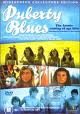
school. It was a coming of age book called Puberty Blues and for a young teenager (I must have been about 12 at the time) the fact that my own mother disapproved of it was enough to ensure that I had to clandestinely procure a copy. Now I think back I can’t understand what all the fuss was about – except for the sex and drugs there was nothing controversial:) Today’s teenagers would no doubt think it very lame.Boyd Morrison Interview
Boyd Morrison does not know what he wants to be when he grows up. So along the way in his life’s trek he got himself a PhD in industrial engineering, worked on the Space Station Freedom project at Johnson Space Center, got some really tough duty managing an Xbox games group at Microsoft, was and still is a professional actor . . . and, oh yeah, made a little stop on TV to became a Jeopardy champion.
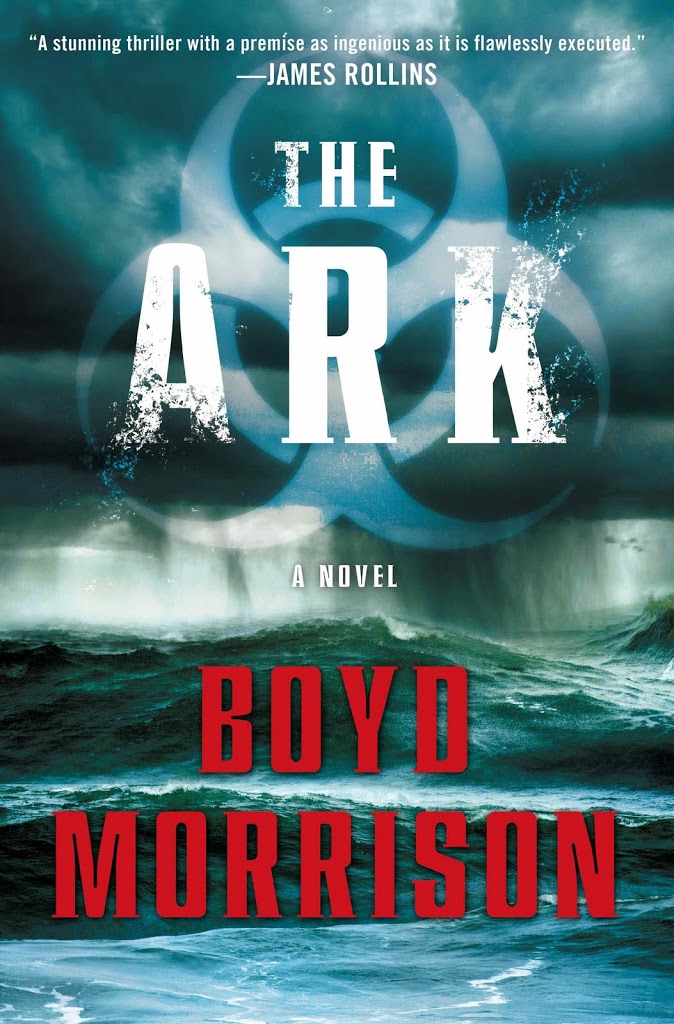
One other little item: he’s got a hot new novel that just came out from Simon & Schuster. It’s called The Ark.
Boyd’s journey to publication covers about 13 years, and I wanted to interview him for TKZ because I saw someone who approached this whole business wisely and systematically. In this interview, along with everything else, you’ll find Boyd’s tips about getting the most from a conference. Pure gold. Be sure to learn more about Boyd at his website, BoydMorrison.com. 
JSB: Publication of your novel, The Ark, is a success story with a unique background. How did you get the idea?
BM: Engineers usually get a raw deal in thriller fiction, which is something I pay attention to because I’m an engineer myself. When the strapping hero needs some critical piece of technology to save the world, he turns to an engineer for said object or solution and then proceeds to kick butt (think James Bond getting his gadgets from Q or Captain Kirk demanding more power from Scotty). And I got sick of that, so I decided to cut out the middleman and create an action hero named Tyler Locke who IS an engineer. Nerds rule!
While I was looking for an adventure for Tyler to swashbuckle through, I saw a documentary on the search for Noah’s Ark. I’m a skeptic by nature, so my first thought was, “Yeah right. They’re going to find a 6,000-year-old ship intact on a snowy mountaintop.” But then I got the inkling of an idea: maybe the reason we’ve never found Noah’s Ark was because we had been deceived all these years as to its true location. And maybe the Ark held such a terrible secret that it could very well mean the end of mankind if it were ever found again. Noah was the first engineer (who else but an engineer could build the Ark?), so it was the perfect object for Tyler to search for.
JSB: How did you get an agent to represent The Ark?
BM: The Ark was the third book I wrote, so I had already gone through two rounds of rejections from agents (both of those books have since been acquired by Simon & Schuster). But I had gotten pretty good at pitching my novels, and I’m a big believer in meeting agents in person. It’s so much easier to get your first three chapters read by an agent when you can put “Requested Materials” on the envelope. So I attended the very first Agentfest at the Thrillerfest conference in 2007.
Today Agentfest is done speed-dating style, but the first Agentfest was more leisurely paced, with an agent sitting at each of the tables during the luncheon session. I was late to the luncheon, so I snagged a seat at the very last table. Irene Goodman, who is a highly regarded agent, was attending because she was looking at extending her client list to include thriller authors. She asked every aspiring author at the table to give her their pitch. I had practiced mine so that I could rattle it off. It went like this:
“A relic from Noah’s Ark gives a religious fanatic and his followers a weapon that will let them recreate the effects of the biblical flood, and former combat engineer Tyler Locke has seven days to find the Ark and the secret hidden inside before it’s used to wipe out civilization again.”
I could have stopped at the words “Noah’s Ark” because once she heard them she asked to read the first three chapters. I was still working on my own revisions, so it took a couple of months before it was ready to send to her. She told me later that she started to wonder if I’d forgotten about her, but she was one of the first agents I sent it to (I sent it to my five highest agent choices as a simultaneous submission).
She got the chapters on a Monday, read them right away, and then called me when she was done. That day. I practically keeled over in my chair when I got the phone call because no agent had ever called me before. She said she loved the beginning and asked me if I would mind overnighting the rest of the manuscript (note to aspiring authors: it’s a good sign when the agent is that eager to get the manuscript). I told her I’d have to think about…oh, who am I kidding? I was already in the car on the way to the post office before she had finished her question.
Irene received the manuscript on a Tuesday, and I figured it would be at least a week before she got back to me. She called on Thursday. With an offer of representation. This time, I did keel over. But I pulled it together and told her I would have to contact the other agents who had it before I could give her an answer. After a few frantic phone calls to the other agents who had the submission, I called Irene back on Friday and said I would love for her to be my agent.
Again, all of this was in 2007. So for those of you who think getting an agent means a smooth path to publication, I’d like to remind you that it’s now 2010. The book that Irene snapped up in five days took three years to get published.
JSB: You have been very good not only about attending the top conferences, but getting the most out of them by meeting people, networking and so on. What tips can you give unpublished writers in this regard?
BM: Virtually every person I know in the writing and publishing industry I met at conferences, so I highly recommend that unpublished writers attend them. I could write twenty pages on writers conferences, but I’ll boil it down to a few key points.
Know why you’re going
Attending a conference is well worth the time and money when you know what you want to get out of it. If you want to meet agents, going to a conference like Bouchercon or Left Coast Crime will be a waste of time because few agents attend them, and then it’s usually to serve on a panel, not to search for prospective clients. But if you want to meet writers and readers, Bcon and LCC are perfect. There are plenty of conferences featuring agents looking for new clients. Check out the back of Writer’s Digest magazine for conferences near you.
Don’t be afraid
Everyone I’ve met at conferences was incredibly welcoming to me when I was unpublished. No one looks down on unpublished authors. In fact, they’re very encouraging. So go up to people and introduce yourself. You’ll probably make many friends, as I have. It doesn’t matter if they’re writers, agents, editors, or readers. Everybody there wants to meet other people. And one important tip: agents and writers hang out at the hotel bar at night; having a drink with them (or even buying a round) is a great way to hear the best industry stories.
Have your pitch ready
If you’re pitching a novel, it needs to be a completed manuscript. Nothing disappoints an agent more to hear the idea for a great novel and then find out it won’t be done for another year. Have your novel boiled down to a sentence or two that outlines the premise for the plot and the main character that the reader will be rooting for. Then you can elaborate if and when the agent asks follow-up questions. Memorize the pitch so that you can say it without thinking. If you ramble about your story for five minutes, you’re going to confuse agents and make them think your manuscript will be just as rambling.
Be nice
This last point should go without saying, but it needs to be emphasized. Be friendly and polite. Smile. You can introduce yourself to agents even if they’re not in a pitch session, but don’t follow them into a bathroom or slide your manuscript under a stall (believe or not, this happens). Don’t put writers on the spot by asking for blurbs in person. If you get to know them, follow-up later with an email asking if they have time to read your manuscript (don’t be offended or take it personally if they don’t; published writers are super busy as I’ve recently discovered first hand).
Have fun
Writing is a solitary business, so enjoy yourself in the supportive community of a conference. Every writer gets their batteries recharged by hearing from other writers who’ve been through exactly what they’re going through and made it as a published author. Those conference memories help keep you going when you’re sitting by yourself in front of that white screen.
JSB: Tell us a little about your acting self (that makes about three or four “selves” I count for you).
BM: My acting hobby is the exact opposite of my day job as a writer. Writing is rewarding and fun, but it is not interactive or, for that matter, active. Acting–well, it’s right there in the word–gets me up on my feet in a collaborative environment with a lot of other talented people. And it’s a blast–I mean, they are called “plays” after all. For some reason, I have a need to perform, usually at great peril of making an idiot of myself. I’ve done stand-up comedy, musicals, improv, stage productions, commercials, and films. I’ve even done some print ads, and I appeared on the packaging for an herbal tea while wearing a space helmet (you think I’m joking, but I’m not).
Plays are my favorite. There’s nothing better than getting that audience reaction when you make them laugh or cry or gasp in surprise. For me, comedies are the most fun. I’ve done some of the classics, including Noises Off, The Importance of Being Earnest, and Barefoot in the Park. Last year, I appeared in Leading Ladies, a Tootsie-style play featuring yours truly trying to pass himself off as a woman to get an inheritance. And I just finished a five-week run in Rumors by Neil Simon, a farce in which I played a politician who keeps putting his foot in his mouth.
JSB: Boyd, many thanks for giving us the time and benefit of your experience getting to publication.
The Future is Now
I heard an interesting term the other day. A friend was discussing the book she’s reading for her book club, and she referred to it as a “pBook.”
I was initially mystified.
Turns out a “pBook,” as she explained, is a book in print form. Or, as I like to refer to it, a book.
But is this the wave of the future? As eBooks become more prevalent, will the term “pBook” enter our lexicon?
Recently Andrew Gross announced that for his latest release, RECKLESS, a full 35% of his sales were digital downloads. I noticed that he made the long list for New York Times bestsellers, and it made me wonder. Do digital sales count toward the list now? I’d love an answer if anyone knows.
Regardless, 35% is simply remarkable, considering what a leap that likely is from previous years. I know that in the past, my books averaged between 5-10%. I’m currently awaiting my most recent royalty statement, and I wonder what kind of increase I’ll see for my titles.