John’s post on Friday sparked a healthy combox on the subject of self publishing in this new age. We all know it’s now possible to send an entire novel out to the e-osphere without having to pony up for printing or warehousing. Dreams of making a good sum of money this way, a la Joe Konrath, are dancing in many heads, like visions of sugarplums. Since it isn’t Christmas yet, I feel the need to offer a word of caution.
If you upload your self published novel before it’s ready, you’re more likely to turn off future readers than gain them. If someone plunks down even 99¢ to take a chance on your book, and is disappointed, they are not going to plunk down that money again. If you want to have a career as a novelist, you have to reverse that dynamic. You have to offer books that readers love and leave them wanting more.
Now, this is America. We have free speech and free enterprise. You can put your novel out if you want to. But before you do, I would urge you to consider the following:
It takes a long time to learn how to write narrative fiction. I would guess that 98% of traditionally published authors paid years of dues learning their craft. That same 98% would probably look with horror at their first attempt at a novel. That novel likely sits in a drawer, or on a disk, and will stay there—as it should. Many of these writers have multiple efforts that never saw the light of day.
But let’s say you’ve written and studied and been critique-grouped to the point of psychosis. You have determined you are ready. Hold the iPhone. Before you publish, do the following:
1. Get your manuscript to five “beta” readers. These should be people who are not just going to gush over your work, but people you can trust to give you direct comments on likes and dislikes. Make sure 4 out of 5 give it high marks, and the fifth is pretty close.
Note: this is not your critique group (if you’re in one). Such groups have their own peculiar dynamics. What you want are people who will experience the book as the average reader would. Be prepared to make substantial changes based on the feedback.
2. Hire a freelance editor. It’s well worth it to find somebody who can go over the manuscript, catch glaring errors, and offer fixes. Do your research, though, and make sure you get what you pay for.
3. Pay for a good cover design. Nothing looks cheesier than a typical, self-pubbed, self-designed cover. I recently went browsing at the Kindle store, looking at self-published works. The covers were, by and large, terrible. Unless you have strong graphic and artistic ability, find someone who can design you a great cover.
4. Even after your upload, do not get overconfident. The odds are stacked against you making walk-away-from-your-day-job money this way. If you want to be a real writer, and not just somebody who has made an e-book available, keep growing and working at the craft. Every single day. Then maybe your efforts will start to pay off, down the line.
The modern self-publishing movement, which began with Bill Henderson’s The Publish-it-Yourself Handbook (1973) has just taken a quantum leap forward with e-publishing. But the same caveat that applied then applies now: just because you wrote it doesn’t mean it’s ready.
Be patient. Take some time. And don’t go it completely alone.
Then, if you want to play, you’re free to try your hand at this. As Henderson wrote back in ’73: “Publishing-it-yourself is in the individualistic tradition of the American dream.”
Just do your dreaming with your eyes wide open.
Any other words of advice or warning for those who are itching to jump into self-publishing?
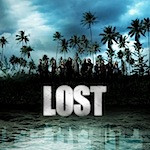 s provided in its best moments. Since the debut it was an emotional ride, focused on the characters and the journey they’ve undertaken together. It provided enough answers to give some satisfaction, while still leaving quite a bit open to debate. I suspect that if the writers had known from the outset how many episodes total they’d have to play with, it would have been a much tighter story arc. But alas, that’s not how the world of TV works. Going in, they never could have guessed what a hit the show would become, and how many slavering fans would dissect every scene. That being said, I think they did a great job. In the end the series shone a light on the true meaning of love and friendship, redemption, and mortality. Some people complained that it was mawkish and maudlin. For me, the sentimentality worked. After all, I’d spent years with these characters. I cared about what happened to them. I wanted things to work out for them- and based on my interpretation of the finale, it did.
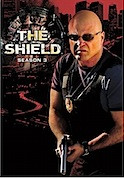 because every character possessed the capacity for both good and evil acts (even Dutch: remember him strangling that cat?) And the conclusion here was grim. In the end, Vic Mackey ended up losing his family and friends, stuck in a day job that was for him a living hell, with all of his crimes brought to light. Things didn’t really end well for most of the characters we cared about: they were either dead, in jail, or alone and isolated. It was the furthest thing from a happy ending, yet it was satisfying, because there was a sense that justice had been done, and everyone ended up paying the price for it.
 n Jimmy Kimmel, see them