Just in case you tuned in earlier and saw this post appear and disappear on Friday, we had a PICNIC (Problem In Chair Not In Computer) incident where this offering was posted prematurely. Sorry about the confusion, for which I am totally responsible.
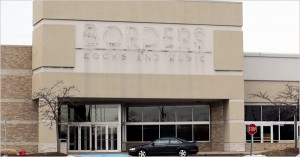
I have been watching the slow motion train wreck, otherwise known as the Borders bankruptcy, for over a year now, knowing that it was coming but hoping that it would not. It came this week and it is, not to mince words, a disaster, at least for the short term.
I am aware that the wiser among us say that other bookstores in the areas of the shuttered Borders will pick up the slack, and no doubt they will, to a greater and lesser extent. My immediate concern is for the good folks who worked at the closed stores, and who now join the ever-growing number of people looking for employment. Of longer range concern, however, is the amount of debt owed to publishers large and small, and by extension to authors.
http://www.thestreet.com/story/11014549/1/who-borders-owes-in-bankruptcy.html I have no idea whether the parent companies of the publishing houses that we deal with are large enough to absorb some of the losses I am hearing about, or even if they are inclined to do so. What I am worried about in the intermediate term, however, is the future of the printed, bound book. I thoroughly enjoy my Kindle, and I have managed to own it for almost one year without breaking it. But I haven’t given up books. I’m kind of like the guy in the (more-or-less) committed relationship who also has a friendship with privileges, and who isn’t sure who fills which need. I really don’t want to have to make the decision any time soon. But the Borders situation creates a giant bump in the road of physical commerce. There are a number of questions hanging out there. Will publishers ship new product to the remaining Borders stores? What happens to physical product in warehouses? Or to product remaining in the closed stores after this weekend’s G.O.B. sales in the stores which are closing? Someone will answer all of these questions fairly quickly, but the shift is going to be a pain in someone’s rear end. In any event, I am sure that someone in an office in midtown Manhattan has floated the idea to their underlings that if all books were e-books, no one would have to worry about all of this. The book isn’t printed and delivered until it’s ordered and paid for, so no inventory. Great, right?
Sure. In some ways. But I don’t think most of us are ready to give up books or the stores where we buy them. Which is why I am asking you to join me, and to ask others to join you, in a demonstration of faith: buy a new book, a physical book, from a brick and mortar establishment dedicated to that purpose, each month for the next twelve months. Many of us already do this, but many of us use libraries, and many of us borrow from friends. Nothing wrong with that, and bless you for reading. But I am asking you to move the budget around a bit, bite the bullet, and buy a book. At worst you’ll have several Christmas gifts to give by the time December comes. I am going to visit the wonderful and indispensable Foul Play Books in Westerville, Ohio for this month’s purchase, and maybe for all of the rest of them each month as well. If you like the bigger stores, go for it. If enough of us do this, the publishers may decide that its worth it to stay in the game, even if they have to move that god-awful inventory around. But please do it. Let’s counter that ripple effect, before someone gets a not-so-bright idea.
***
A get well soon to John Miller, whose operation on his hand is not preventing him from writing.