JACK CANFIELD’S SUCCESS: 10 Tips to Self Promote Like a Marketer

By Kathleen Pickering http://www.kathleenpickering.com/
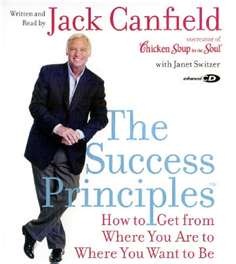
jack canfieldJack Canfield spoke on one of Steve Harrison’s marketing webinars on “How to get from where you are to where you want to be.” Listening and taking notes, I couldn’t help but nod like one of those spring-neck dolls in the back window of a California low-rider and think, “This plan can work!”

Most everyone has heard that Canfield’s first Chicken Soup book was rejected 144 times. He also didn’t mind sharing that he’d maxed out his credit cards up to an impressive $400,000 to get his business off the ground. Now, I don’t feel so badly about my marketing debt!

Jack said his success turned around when he applied a marketing mindset to his book sales. By thinking like a marketer, Jack Canfield achieved resounding success. He has sold millions of copies of his books, and enjoys huge notoriety as an author and motivational speaker.

Jack’s webinar was loaded with advice from which I’ve culled ten tips for success by thinking like a marketer. While much of this advice works especially well for non-fiction or how-to books, Canfield’s advice can be tailored for fiction, as well. Here goes:

1. People remember stories. Telling stories is emotional Velcro to the mind. When promoting your book, introduce it with a background story, i.e., the inspiration behind the work, obstacles to publications, happy endings. A story gives your listeners insight to you, your process and gives them the opportunity to become proactive in your success by buying your book.

2. Have a mission behind your work, i.e., why you’ve written your book. Canfield’s Chicken Soup series were written to inspire and empower people to live their highest vision to achieve their personal goals through body and soul. Why do you write your books?

3. Decide to deserve to succeed and EXPECT success, including personal satisfaction as well as monetary growth.

http://www.public-domain-image.com (public domain image)

4. DREAM HUGE! For whatever we dream, our subconscious will begin to seek solutions. Can you imagine? What a simple, yet great tool for achieving success.

5. Visualize your goal. Make print-outs of your dream and paste them all over the place! Visualize book stores with only YOUR book plastered in the windows. Jack’s efforts ended up with Chicken Soup for the Soul books having their own section in book stores! Here are more tools for visualization:

– Use vision boards — put them on your screen saver. (Here’s a link to creating vision boards on my website: Kathleen’s Vision Boards)

Vision Board 2

– Next, use affirmations. Speak out loud positive statements such as, “I am so joyful and happy that I am making millions of dollars a day using my God-given talent to make the world more aware of their relationship as ONE with each other and our Creator.” (This is Jack’s affirmation. What would yours be?)

6. Take ACTION on your IDEAS. Others may have the same thoughts but only a few will act. ACTION brings success.

7. Live your gratitude for your success:

– You can be a go-getter or a go-giver! Be a go-giver! Use the motivation of wanting to give the best for your reader. (Back to the idea of writing a GREAT book. You can’t market junk!)

– Identify a charity to receive a portion of proceeds for all books written. Put that charity in the back of the book. When you give these organizations recognize you and help you market your product.

– Give away chapters from your book.

– Give away articles about/from your book.

– Give FREE talks. Speak to different churches, chambers of commerce, libraries, schools.

8. Become a Joiner. Join associations and pay dues. Your exposure is well worth the expense to be around other professionals in your field where you can network. You never know who you will meet who has a solution to one of your goals. (This just happened for me at the NINC conference in Tampa. While chatting with a man about social media marketing, he gave me a resource for selling a game idea I have. That precious nugget wouldn’t have been delivered if I hadn’t been “out there” to receive it!)

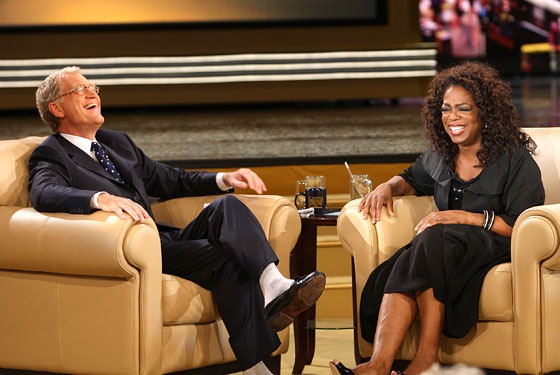
9. Target radio and TV interviews. I can see myself sitting across from Oprah or David Letterman, one day—despite the fact that they both look like they’re laughing at the idea in the photo. But, seriously, can you see yourself in one of those seats?
oprah-ends-show

As we all know, a book is like an iceberg: 10% is writing; 90% is marketing. You have to be out there among people! Books travel word of mouth. But, they can’t travel if no one is talking about them. Take whatever interviews you can get. The more interviews keeps your product before viewers and guarantees sales. How to get exposure:

– Get a directory of direct-marketing companies and call and pitch your book to see if they will sell your book for you.

– Get a directory of radio shows to see who will let you speak about your work. The successful, spiritual motivational speaker, Scott Peck, said he started with three radio interviews/week for a year. Best are to get a one hour interview so listeners can really get to know you.

– Internet radio shows are excellent, too, because that is niche marketing.

10. Never underestimate the useful tool called Bypass Marketing. One out of 7 people go out to buy books. That means 6 folks do not go out to buy. Bypass Marketing is taking the book to where you don’t think people will go to buy a book, i.e., gas stations, bakeries, pet stores, salons, spas, doctor’s offices. Anywhere someone has to wait is the place to leave your book.

Canfield says, when you start thinking differently, visualize and act like a marketer, you attract the audience your require. New thinking brings the audience to you . . . automagically.

Yes, you too can create your own words when you’ve sold over 80 million copies of your books. How big are your dreams? Which of these tips appeals most to you?


Podcasts, Research and Marketing

by Clare Langley-Hawthorne

Ever since I purchased my iPhone and iPad a year and a bit ago, I have become a podcast junkie. I listen to them in the car, while cooking, even while walking the dog, if the mood so inspires me. I simply cannot imagine my life without listening to podcasts (of course, that might also be because Australian radio totally sucks!) After our recent blog discussions on ‘discoverability’ and the ebook revolution, I started thinking about all value of podcasts in terms of research, marketing and publicity for authors. Although I haven’t (as yet) done my own podcasts, I can definitely see a role for them in the future for many authors.

Already I find podcasts are a great source of research and ‘idea generation’ – granted that is probably because, as a writer of historical fiction, I find the BBC History Magazine, BBC Witness, History of the World in 100 Objects and British Library podcasts so invaluable. I can be driving in my car when suddenly I hear a segment and I think – wow, file that away for a future novel!

I also hear about a good many books that I end up purchasing via podcasts. It might be a review on the New York Times Book Review podcast or on an NPR podcast or it might be through an author interview. Though it is just as hard to get these review/publicity opportunities for authors, I do think the wealth of podcasts out there widens the options for many authors seeking to publicize or discuss their novels.

Which leads me to the plethora of author options when it comes to podcasts. These include doing some yourself (either interviews or book readings) or appearing/speaking on other people’s podcasts. There is even an option of publicizing author book tours this way ( Such as the Tattered Cover bookstore’s authors on tour live podcast or Barnes and Noble’s video podcasts). Apple even has its own “Meet the Author” podcast series and, for mystery writers the ‘Behind the Black Mask‘ podcast series. I am sure this is just the tip of the podcast iceberg…and so, as I delve further into the podcast opportunities that abound, I’d like your feedback…
  • Have you incorporated podcasts into your marketing or promotional efforts, and if so how?
  • Which author/writer podcasts do you listen to?
  • Are there any podcasts that influence your book buying decisions?
  • How do you think authors might be able to use their podcasts to help increase their ‘discoverability’? (Secretly I am hoping my sexy Australian accent will by ticket to my success:)!)
And finally, TKZers, what do you think? Maybe we should expand our repertoire into podcasting?


What Gives Me the Writing Heebie Jeebies


heebie-jeebies |ˈhēbē ˈjēbēz|, pl. n., a state of nervous fear or anxiety


I love almost everything about writing fiction.
Getting the idea is the most fun. I can come up with concepts all day long. Ideas constantly pop into my head, or I’ll see something on the street that gets me asking, “What if . . . ?” I write these down put them in an electronic file. Every so often I go over the ideas and cut-and-paste the best ones into a document called “Front Burner Concepts.”
Eventually one of these grabs hold and says, “I’m the one, Dude.” And then I’m totally jazzed. Because starting a book with a killer idea is like falling in love. The writing of a first draft is the first year of marriage. You’re committed. You’ve still got glow. It’s young love and that keeps you going, keeps you bringing flowers to the project all the way through.
Then comes the editing process. This is like marriage counseling. Now you’ve got to work to keep you and your story together. There are problems to address. And if you’ve received an advance, divorce is out of the question. But with time and patience and some give-and-take, you’ve got your final draft done.
And then . . .
I just received the page proofs from my publisher for the next book in my Mallory Caine, Zombie-at-Law series. The title is The Year of Eating Dangerously and it takes Mallory through a full year of dealing with her brain-consuming ways while defending the downtrodden in the courtrooms of Los Angeles.
This is where I get the heebie jeebies. This is the last time I’ll get a crack at the book before it goes to the bookstores and readers.
Which is why I never read any of my books once they’re in print. I’m too afraid I’ll find a mistake, or something I wish I’d phrased differently. At least with digital self-publishing one can make changes fairly easily. But in the traditional world, usually it’s one-and-out.
So, dear reader, send up a good thought for your humble correspondent as he takes pencil to page . . . and trembles.
What part of the writing process do you dearly love . . . or dread? 


I’M ALL SWIMMY HEADED, SO I MUST BE DOING IT RIGHT.

John Ramsey Miller

Just to get everybody up to speed, I’m going through my process as I rewrite and move to publish my latest novel. At this point I am thinking I will probably self-publish as an eBook. That said, I won’t rule out a paperback deal if my agent wants to shop it and a publisher wants to put it out.

So two weeks ago I said I hired an editor who’d left a major house to go with her husband and kids to Ohio. I’ve finally read through her notes, and frankly she has nailed the weaknesses I painstakingly installed in BURNING BRIDGES from its inception. I can see it all clearly now. And (as always) I’m embarrassed for my agent who sent this to the editors, and for myself because my name is on the MS. What was I not thinking? I know that if I can’t fix all of the flaws, I can certainly make different ones to replace them. This is the point in the process where I feel like I’m at my desk in a classroom wearing BVDs.

DEAR GOD, NOW THEY ALL KNOW I CAN’T WRITE!

Editors always start editorial letters with something like, “I really enjoyed my read of (Name of the novel goes here). There’s a lot to like in the book as well some things I have trouble with.” Translation: Holy Mother of God, what is this steaming pile of crap you sent me?”

Okay, that’s the old insecurity shining through like the warming rays of a neutron bomb.

The editor I am utilizing is as good as any editor I’ve ever worked with and I have worked with the best. Another plus is that her sense of humor is pitch perfect. An example of editorial humor would be a circled sentence with this penciled into the margin… “Please read this over carefully and tell me that this is in English.”

My process is akin to what a blind and starving wolverine that’s been thrown into a henhouse might go through in those first few moments when the wolverine senses the meat, and the chickens become aware of their situation and reach critical mass freak out in a confined space.

I must also say that I am not gifted with organization skills beyond lining up Skittles in neat lines by color and eating them one hue at a time.

First I read the ten-page editorial letter several times to get a general picture of the depth of the stacked-word catastrophe. Next I cleared off my dining table and placed on it my laptop, laser printer, index cards, legal pads, ink and roller ball pens, sharpened Black Warrior pencils, red erasable pen, stick-on notes in yellow, those peel off arrows in six colors, Snickers bars, and roll in my Herman Miller Aeron in Author Black that I bought years back.

The next day my table was a huge disaster, and I was juggling the edited MS, a blank document for rewriting, killing, or combining chapters, and creating new ones from scratch. And there’s the construction document where I will assemble the refined mess. Then I will print that and go back and edit myself before having the editor hit it again to see if I was successful. All of this will take a month to six weeks. And each day when I sit down I have no idea what the session will bring to the pages.

I think initial confusion and wading through the piles is how a pretty good effort sometimes goes on to become a very, very good book. That is what keeps me going at this point. More to follow…

Virtual Book Tours – YA Style

By Jordan Dane

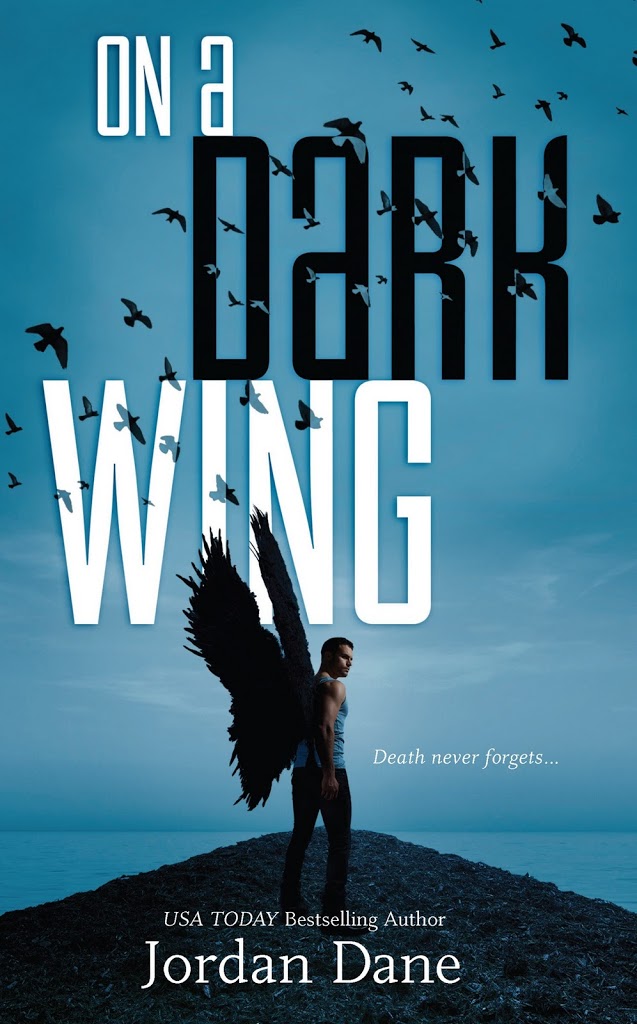
On a Dark Wing – When 16-year old Abbey Chandler cheats Death and lives past her expiration date, her lucky break comes at a heartbreaking price. And Death has never forgotten.

For my adult debut “No One” series for HarperCollins, a gracious group of aspiring authors offered to conduct a virtual tour for me. It would be their first and they wanted to learn how to do one. Being a new author, I jumped at the chance. I learned a lot from that experience. It brought traffic to my website and exposed me to new readers, but it was also a lot of work to come up with fresh material at each tour stop. It exhilarated and drained me at the same time, if that makes sense. By the end, I had nothing to really gauge my effectiveness, except that I had made new author friends, which I’m always grateful for.


Flash forward to the present—and my, oh my—how things have changed.


After reading my Young Adult (YA) debut book – IN THE ARMS OF STONE ANGELS – YA fantasy author Trisha Wolfe of YA Bound loved my book and contacted me. We kept in touch. She’s a talented author with her debut book – DESTINY’S FIRE – coming out in early 2012. When she heard I had book #2 being released soon—ON A DARK WING (Jan 2012, Harlequin Teen)—she asked if she could host a virtual book tour for me. I’m learning so much from her. She’s a very generous soul. With more and more readers following each other’s review sites and getting book suggestions from this growing resource, it intuitively made sense to me that I should tap into this trend, but how? I had little idea how to get “Discoverability” as Clare Langely-Hawthorne described in a great TKZ post on Monday.


Here’s what we’ve done to date and I’ll share what’s ahead.


COVER REVEAL – I held off on revealing my cover until YA Bound was ready to launch the sign up for bloggers wanting to be tour stops. This took coordination with my house so they wouldn’t make my cover available to public forums like Amazon or Goodreads.


TOUR HOSTS – From my Twitter & Goodreads activity, I had the pleasure of meeting Trish of YA Bound online, but I’ve learned since then that hosts sometimes charge for their services to host a tour. Another site I’ve heard about is THE {TEEN} BOOK SCENE. Coordinator Kari has a great reputation and conducts her services for free, but asks for donations. If you query “Virtual Book Tours” online, you will find many links on the subject, including host sites who may specialize in your type of genre.


TOUR SIGN UP – On Oct 3rd, when I posted a reveal of my cover, I announced that YA Bound would host my online tour and sign ups would start on Oct 4th. On the first day, Trish told me we had a record number of blogs join the tour and more were coming. The sign up period ends Oct 31. The last time I checked, we had 45 blogs on that list. The next step will be to evaluate who will get selected. Participants will be notified soon with the tour to commence as soon as YA Bound determines a schedule.


TOUR REQUIREMENTS – What do bloggers do on the tour? Look at YA Bound’s tour requirements HERE. Trish’s experience as tour host shows in this detailed list of requirements. The more that is spelled out in advance, the smoother things will run, but an experienced tour host is vital to make the tour look effortless.


DISTRIBUTING ARCs – Harlequin Teen uses Netgalley to get advance reader copies into the hands of tour members as well as other online reviewers who are approved by them. My book is HERE on Netgalley. To read Harlequin Teen’s reviewer criteria, click HERE.


BANNERS & COUNTDOWN WIDGETS – Trish created a tour banner using my cover and the logo of my publisher. These graphic designs can cost money, but Trish did mine for free using WidgetBox. She did an amazing job. Click HERE to see the tour banner and the countdown widget she created for free too. These banners and countdown widgets can be cross posted by bloggers and sites signed up for the tour to help spread the word. But anyone can grab the code, even if they aren’t participating in the tour.


TOUR STOP VARIETY – In my very first virtual tour, most of the tour stop formats were Q&A interviews where the host (who had read the book) would ask interview questions that ranged from book inspirations to craft advice. By the time you schedule 20 tour stops, however, this format can lose steam when the questions seem redundant. With the new tours, the host will work with each tour stop to come up with different kinds of features. I’ve seen longer lists of ideas to make each stop unique, but here are only a few (some of my favorites): Vlog Interviews (video interviews with the author posted online), When I’m not writing (highlights of hobbies, family or pets), Author Book Picks, Cover Interview, Author with Editor Interview, Character Tweets (I’m planning one with Death), Character Interviews, or a Top Ten List that can be related to the author or the book. There’s more, but this will give you an idea of how creative these tour stops have gotten.


GIVEAWAYS – My publisher has contributed books to giveaway on the tour, but my character, Abbey Chandler, will have a special gift for readers who win a book. She’s says it’s a secret. [Insert eye roll here. She can be a real drama queen.] And at the conclusion of the tour—on a live chat hosted by YA Bound—a Grand Prize will be given away. It’s really cool, but I’m not saying what it is yet. Shhh!


GRAND PRIZE – A grand prize will be given to tour participants who make every stop & comment or participate. As you might imagine, the grand prize is aptly named for its GRANDEUR, incentive for blogger to FLIP OUT!


SOCIAL MEDIA TANGO – With every tour stop, it will be key to promo on Twitter or other social media sites. My tour host will help with this and so will my publisher & other bloggers who are part of the tour. This could be significant & retweeting (RT) by others can add fire to the buzz. I’m a big lover of Twitter. Most morning, I check in to see what’s happening. I RT messages or post a link to TKZ to promo our post using appropriate hashtags (ie #writing, #amwriting, #publishing) if the posts relate to craft or industry. Hashtags allow my Twitter messages to reach beyond my followers and tap into a bigger universe on Twitterville, folks who follow writing or publishing news.


TWITTER CONTESTS – I recently saw an author run a series of quick contests on Twitter for a limited period of time. She had simple rules stated in advance, but her main reason for conducting the giveaways was to get her ARCs (Advance Reader Copies) into the hands of readers AND to gain followers. Her ARC freebies earned her hundreds of followers in 2 days. ANOTHER CONTEST TIP – If you’re running book giveaways on Twitter or via a link you are tweeting, use the hashtag #BOOKGIVEAWAY to call attention to your post and reach beyond your own followers.


GAUGING RESULTS – A daily posting group blog like TKZ can lighten the load of posting to a blog and is very helpful for name recognition. Plus, if you blog or have a website, you can use stats to gauge traffic to your site. Recently, James Scott Bell noticed that TKZ had risen to #37 in literature blogs and brought that to our attention. Joe Moore pointed out that we see 1500+ page hits a day on average. On these Blogger stats you can see where traffic comes from and Twitter is a big resource to drive people to your site. If you’re not using Twitter to its fullest potential, you’re missing out on a freebie.


Since many of you who follow TKZ are considering self-publishing or have already taken the plunge, I wanted to share what I’ve learned on advance promo that can create buzz about your book. You can find opportunities to promote your work that are cost effective or spend a little money on giveaways or find the right host to showcase your novel.


Please share your thoughts on what has worked for you or ask questions about virtual book tours. TKZ is about sharing ideas and supporting authors.


Reckoning for the Dead (Adult thriller, Sweet Justice Book #4) – HarperCollins, Sept 2011 Now Available.


On a Dark Wing (Harlequin Teen, Jan 2012) – Virtual Book Tour Sign-up at YA Bound – Deadline Oct 31st.

Kill ‘em, kill ‘em all!

By Joe Moore

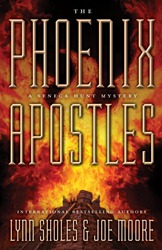
phoenix-apostles-webFirst, a huge thank-you to everyone who responded to Amazon’s “daily deal” promo yesterday and downloaded the e-book version of my newest thriller THE PHOENIX APOSTLES. It quickly became the #1 bestselling Kindle book on Amazon. I hope everyone enjoys it. Let me know what you think.

And now back to our regularly scheduled blog . . .

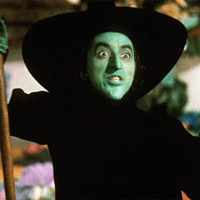
OK, so most of the time we expect the bad guys to get their just rewards in the end. We imagecan all think of a million examples like the Wicked Witch melting to the cheers of the crowds. But what about killing everyone including the heroes? What about ending it  for all concerned and leaving no survivors?

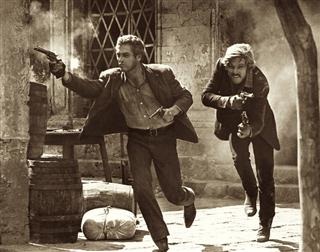
Why would a writer eliminate all the main characters? Think it’s rare? Think Shakespeare. He was big on killing off the bcsk1 (Mobile)entire cast. Let’s look at the movies for a second. Think The Wild Bunch or Butch Cassidy and the Sundance Kid. How about The Godfather or Gladiator? Not too many walked away from those stories unscarred.

Writers, have you ever killed off the whole cast, good and bad? Do you hesitate killing off someone the reader cares about? After all, killing a character, especially one that the reader is attached to can add great emotion and momentum to the story. But killing a character without a very good reason could kick the reader right out of the story. It can cheapen the blow of the death if there is no reason for it, and leave the reader feeling dissatisfied. Obviously, there must be a good reason to do it. Is it something you avoid?

Readers, have you ever read a book where the good and bad guys bit the dust? Did you feel satisfied?

So which is it? Curtains for everyone, or leave a few standing?

Creating a vision of your writing future

Photo by Wesley Fryer

I’m in Colorado Springs, where yesterday I was lucky enough to hear a keynote presentation by futurist Thomas Frey. Frey is Senior Futurist at the DaVinci Institute, and Google’s top-rated futurist speaker. His job as a futurist, Frey says, is to “help turn people around and give them some idea of what the future holds.”

Frey’s speech was targeted at business types, but much of his message applies to writers. One of his charts illustrated how digital media is rapidly displacing print. In the future, Frey said, society is going to become less text-based; keyboards will start to disappear (that may be already happening–think of how the touch screen is replacing key pads on Smart Phones). People are also going to have increasingly limited attention spans. (I worry about that one).

Rather than being controlled or frightened by the future, we should embrace and help shape it, according to Frey. He discussed various ways to create and implement a vision of the future. Those who successfully manage that change process, he said, will prosper and control the future. He called those people the “Futuratis.”

I like to think of the TKZ is a colony of potential Futuratis. As Jim and Clare discussed in their posts this week, we’re already grappling with the e-publishing revolution, trying to find ways to navigate through new, uncharted waters. My take-away from Frey’s speech was this: instead of simply responding to trends, we need to build and implement a vision of the future. By doing so, we can impact the very shape of the future itself.

I stayed up late last night reading Frey’s book, Communicating with the Future, and started thinking about my own vision of the future. I decided I’ve spent too much time reacting to the present, rather than mapping out my own vision of what the future will hold.

Have you created a vision of your future as a writer? Do you think you have what it takes to become a Futurati?

“Discoverability”


Continuing Jim’s great discussion yesterday, I heard a term last week that I think sums up one of the challenges in this new e-book publishing revolution – “discoverability“. It’s one of the things a traditionally published author would look for in a publisher – their ability to get your book noticed. “Discoverability” is about being able to rise above the noise out there in e-book land and, for me at least, I think it represents a real and ongoing challenge.

While I agree that we authors should view this brave new world as a marathon not a sprint, I also think its hard enough already to juggle writing with all the publicity currently demanded. This marathon could, for so many writers, become a marketing slog to the detriment of honing their craft. For me, therein lies the dilemma. While I would love to be putting out independent e-books as well as traditionally published titles, I worry about how I am going to fit in all the marketing and publicity I need to make both a successful endeavour. Likewise I see the vast wave of self-published e-books and worry how will my books be noticed amid all the flotsam and jetsam.

So just how can a writer increase their “discoverability“?

First off the quality of the writing needs to be there – that’s a given…but then what?
  • Social networking sites, websites, blogs, twitter feeds etc. are all necessary components but there is still a lot of ‘noise’ (and a lot of writers hawking their wares!) out there in all of these;
  • Advertisements (in all print, media and digital forms) – although I think many authors have had mixed results when it comes to traditional forms of ‘advertising’;
  • Word of mouth – the most powerful of all and the driver of almost all successful novels. I suspect however that ‘discoverability‘ is an important precursor to getting this;
  • Reviews and review sites (by industry, readers as well as peers) – definitely an important component of any marketing plan – but nonetheless there remains the age old problem of books that receive great reviews but still fail to garner much in terms of sales or recognition;
  • Personal networking opportunities – still, I suspect, as important as ever, but with book tours falling by the wayside, writers have to increasingly use social networking media to achieve this.
What else should be added to the list?

Do you think that despite the revolution, traditional publishers may be able to regain an upper hand by offering more opportunities to achieve this elusive “discoverability” (and the jury is out on this one as many publishers paid little attention to getting their authors noticed anyway!).

So what does “discoverability” mean to you? How are you going to try and achieve it?


Field Report from the E-Book Revolution


As the E-book insurrection continues apace, things change on the landscape (some would call it a “battlefield”) almost weekly. Today your intrepid reporter issues a few notes and predictions which I am typing inside a tent somewhere in the literary DMZ:
– Physical shelf space continues a precipitous decline. Print sales are down 25% this year, so bookstores are folding or increasing their stationery footprint at the expense of physical books. Book buyers increasingly browse and buy online, adding to the woes of brick-and-mortar.
– E-Readers are going to explode this Christmas (again). Last year Kindles and Nooks broke the sack on Santa’s back. This year St. Nick will be lugging Kindle Fires all over the universe.
– E-fiction (what Mike Shatzkin calls “narrative text”) is already 25% of the total market. Look for it to be close to 50% by the end of next year. Shatzkin thinks it’ll be 80% within five years.
– This puts increasing stress on the Traditional Publishing Industry (TPI) because print is what made it and sustains it. TPI is doing what it has to do to survive, which comes down to keeping and making happy their A-list authors, and reducing overhead and advances (which of course means less money to invest in new and midlist authors).
– Agents are feeling the pinch, too, since their bread has been buttered by advances. That’s why many of them are transitioning into e-publishing hubs for their clients. The dollars and sense [sic] of this is still being worked out. An agent might broker a deal with a digital house like Open Road in a somewhat traditional manner. Others might offer actual e-publishing services, which raises conflict-of-interest and competency issues. Literary agent Jason Allen Ashlock argues that, “workflow restraints, small staffs, capital concerns, and the modest revenues generated by most digital properties will prevent most Agent-Publishers from adequately managing and effectively publishing more than a few titles.”
– Authors who are succeeding at being completely independent are those who are able to bring entrepreneurial analytics to the task. If you’re going to publish successfully as an indie, you have to think like a business. You have to think about genres and branding and marketing and design and all the aspects of bringing a book to the world. Authors like Bob Mayer, who are trained in strategic thinking, have an advantage. Business skills can be learned but it takes time. For that reason authors may decide to partner with a digital publishing entity. There are way too many variables to discuss here (percentages, length of time for rights, what marketing advantage is offered, and so on). Suffice to say you’ll need to be just as sharp about the details (where the devil is said to hang out) when signing away any digital rights. 
– New and frustrated authors are attracted by the nice royalties they can earn by going indie, but you still have to move units to make dough. And to do that, you have to get noticed in the ever-increasing content tsunami. The two bottom line requirements are: consistent production of quality books coupled with creative marketing efforts. Those who are able to deliver the goods at a brisk pace, and are savvy about promotion, have the best chance to reap rewards over time.
– The greatest benefit of indie publishing is speed. It’s hard to wait 12 – 18 months for a physical book to appear. Over the course of a year, from March to March, I will have eight new books out. Three of them traditionally published (one of these is non-fiction), five of them indie originals (and I’m not counting the 7 backlist books I have all the rights to and will bring out next year). I love this! Why the heck not? I love to write and my e-book income in the first 6 months surpassed my latest traditional advance. I say it is okay for writers to make money doing what they love. Radical, I know, but there it is.
– I like TPI. I wrote a nice open letter to that effect. But we all know there is a vicious business spiral going on. Imagine you’re the Ty-D-Bol man and a giant has just flushed the toilet. TPI is in that little boat, hanging on for dear life. Conference rooms all over Manhattan must feel like they’re swirling.


– BTW, did you know Robert Ludlum did voiceovers for those Ty-D-Bol commercials?
For writers considering the indie trail, the times are both challenging and refreshing. But you have to be realistic. The metaphor that e-book publishing is a “gold rush” is no longer apt. There were some early strikes for the bold (e.g., Joe Konrath, Amanda Hocking) but now things are reaching a market equilibrium. That means: an indie writing career is a marathon, not a sprint. You have to train (learn to write), get plenty of nutrition (critical feedback) and then run a smart race (strategize with business thinking, pick your spots, make your moves).
And while huge success is not guaranteed, the nice thing is the race is now open to anyone who loves to run.
So what is your current thinking on this ever-changing landscape? What do you think the future holds, say, a year from now? 


****
NOTE: I want to amend a response I made earlier this week to Paula Millhouse, who asked about the advisability of putting a book online before getting a deal. I said Nay. David DeLee respectfully dissented. So I asked my agent about this, and he said it was true a couple of years ago, but things have changed. Publishing online will not kill a potential deal if the book performs. No guarantees either, of course, but that’s always been true in the writing game. Thanks to David for the prompt.  

Things That Trip Up in the Night

It has been a happy and sorrowful week. Annalisa, my younger daughter, celebrated her fourteenth birthday. Anna, the stray cat we took in…well, she took us over, actually…died on the same day. Anna would spend her nights outside by (her) choice during the summer; in the morning I would open the front door and tell her, “Welcome to Egypt! Where cats are worshipped!” and she would saunter in, looking for breakfast, which, of course, was quick in coming. Anna would venture outside in the winter for a few moments, then appear at the rear sliding glass door, screaming the feline equivalent of “It’s cold and I have no pants!”

An aside: Anna’s death continues a pattern. Birthdays at casa de Hartlaub are viewed with simultaneous anticipation and trepidation. Bad things can happen. My mother died ten years ago on Annalisa’s birthday (I wanted to ask Annalisa, upon Anna’s death, “Who do you think will die on your twenty-fourth birthday?” but I didn’t, since I will be seventy by then, and, uh, well, it might be me!). My grandfather passed on my cousin’s special day; my grandmother went beyond on my father’s birthday, who in turn, died on the same day as another cat of ours, and of the same cause. My birthday, of course, is on September 11. No explanation necessary.

We spoil our pets around here; Anna, as a result, has chosen not to leave just yet, despite being buried in our backyard pet cemetery. She follows the example of Madrigal and Rebel, our other deceased cats, who choose to dart across our paths occasionally in different parts of the house at all hours of the day and night. Madrigal, a Siamese who loved me like no other creature ever has, has tripped me a few times in the middle of the night when I have gotten up from bed to do what old men do in the middle of the night. The first time it happened was startling; now, if she doesn’t do it once a month, I wonder where she is. Cats are not the only spirits who visit us. Someone/thing at irregular intervals walks slowly across the upstairs floor. This occurs, when it does occur at approximately three pm or seven pm. It may not happen for months, but then will occur every day for three weeks. Annalisa, when she was much younger, told us that it was an angel, and that she saw it several times at the top of the stairs, surrounded by light, looking down at her. She didn’t consider it to be frightening; it was just there. She stopped seeing it when she was about four years old. Whatever it is continues to make itself known when it so chooses.

I’m not necessarily given over to haunts and the like, but I know what I see and I see what I know. I’ve only discussed so far the strange things in our house which I am able to explain. The cats all belong here. The angel, or whatever it is, seems to have come with the house. There is one thing that occurred, however, which I am at a loss to understand, and which accordingly comes closest to that state we call “frightening.” I got up one night about three am (that old man thing again) and when I came back to bed my wife Lisa was moaning in her sleep. While I was debating whether 1) she was having a nightmare and 2) I should wake her up or 3) just let her sleep, I heard a voice in my head, the voice of a young woman, asking “Are you okay?” Lisa, still asleep, answered “um hmmm” with a lilt, as if in affirmative answer. She remembered nothing about it the next morning; I will never forget it.

Not all houses are so benevolent, particularly in fiction. Hopefully you have been watching the stylishly gory AMERICAN HORROR STORY, which has something that will offend and titillate nearly everyone. It is a psychological thriller dressed in ghoul’s weeds, centering around a family who has moved from the east to the west coast in hopes that a change of scenery will salvage their relationship. Of course, the house that they move into is loaded with ghosts. It is the family, however, that is truly and fatefully haunted, and as they continue to make the mistakes that caused them to leave Boston the viewer slowly comes to realize that they can’t get away from themselves. It’s just the thing to watch as the spirits of dead pets sit and sleep in the corners, waiting to trip the unwary in the middle of the night.