Presenting the Author: 24/7

By: Kathleen Pickering  http://www.kathleenpickering.com

My life is a three ring circus. No wait. My husband said living with me is like a three ring circus.
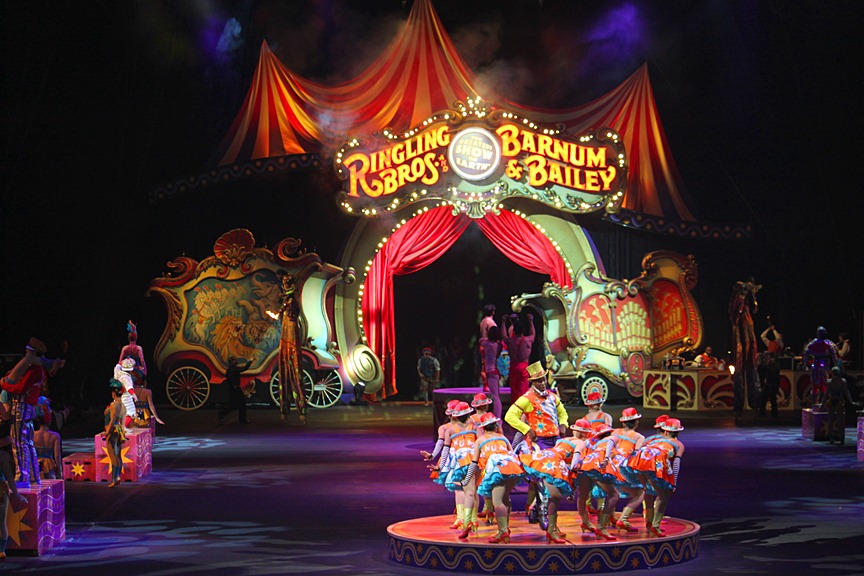
circus

A far more honest assessment, for sure. One for which I take immense pride.

Why?

Because if a writer is going to be effective in her work, she must experience life. Things have to happen. Places must be seen. People must be met, interviewed, interrogated or just plain stalked! (Just kidding. Actually, no. I’m not. Ask Heather Graham or Bonnie Raitt. Another story for another  time, but at least I didn’t leave Heather horror-struck and plastered against her tour bus!)

What does this have to do with my promise from my last blog to reveal the second Tweet I am tweeting on Twitter? (What a fun sentence!)

My friend and mentor, Heather Graham, proves the “you gotta live to write” theory to me constantly. Meaning an author views the world and “is” an author 24/7. The simplest event in an author’s life is a possible morsel for a plot.

Today when I post this blog link on Twitter, my Tweet will read: Member of the Peer interviews Heather Graham at my house!
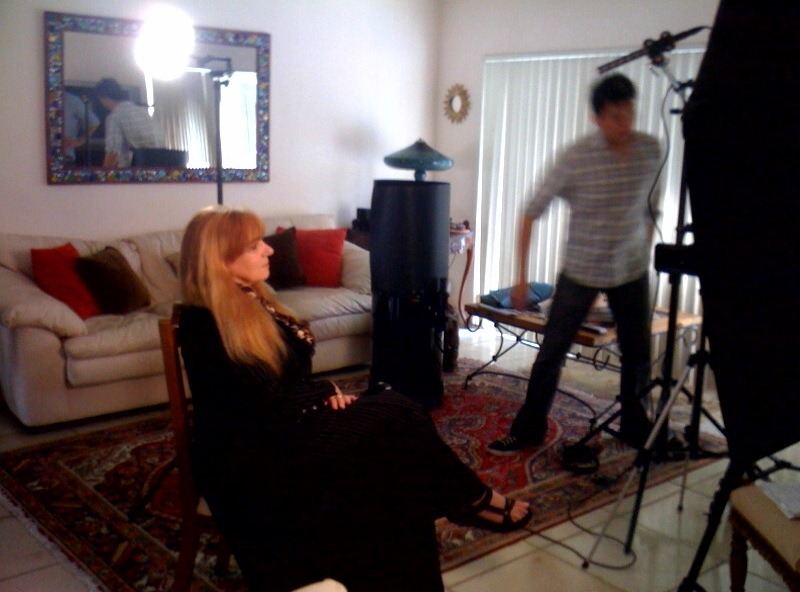
HEATHER INTERVIEW1

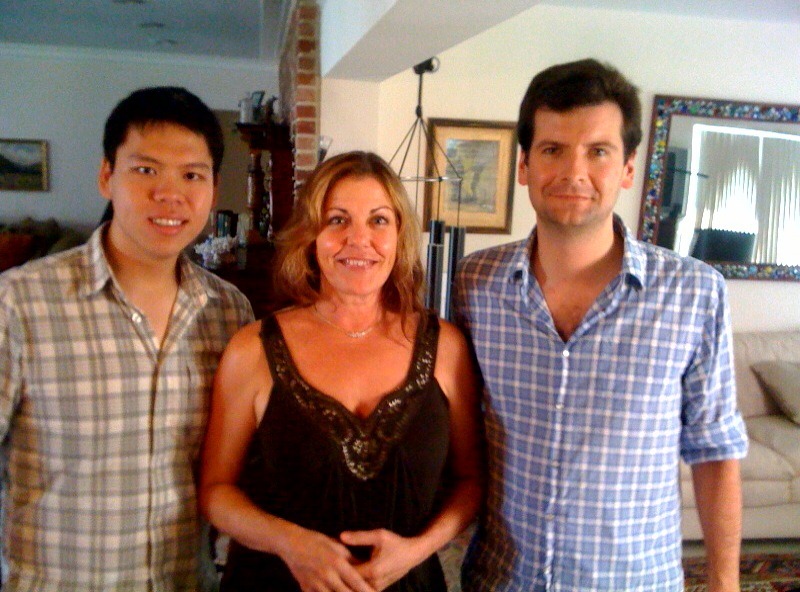
Heather is always doing exciting things to fill her “creative well” to the brim. And, sure enough, one of her adventures was an interview with British transplant Luke Parker Bowles from Open Road Media in New York. She was photographed by Tim Wu.
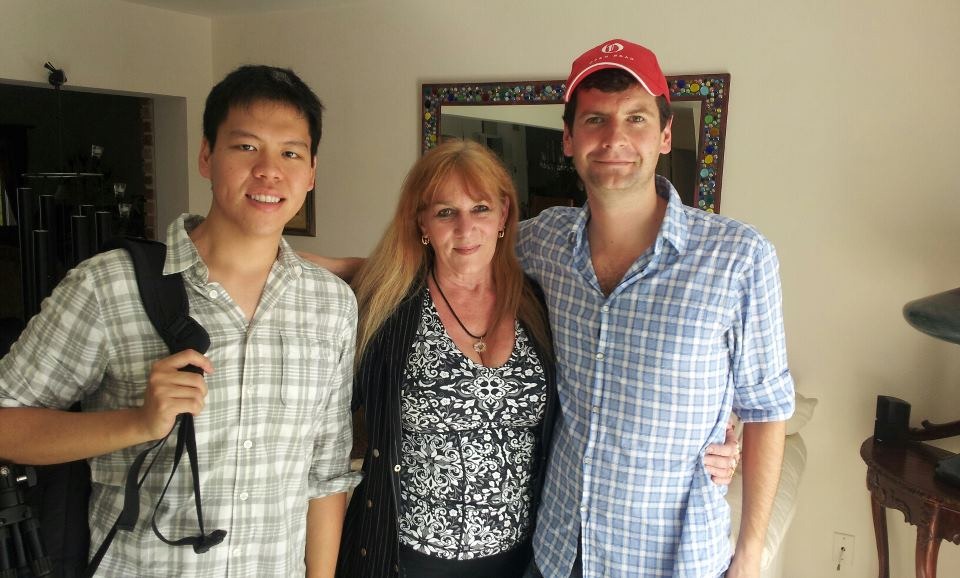
Heather Interview

Heather’s interview is part of a future media campaign and I was invited to join in the fun . . . which makes Heather’s “you gotta live to write” theory suddenly a part of mine.
HEATHER INTERVIEW3

A good student pays attention!

Now, you may ask what makes this event a three ring circus in my life?

Well, it’s simply that this interview happened on Monday when I had just returned the evening before from a quick two day jaunt to New York for a family gathering of 75 people for a double-engagement party for my sister’s twins. And that on the heels of a five day real estate search to help another family member invest an insanely huge amount of foreign dollars in US real estate. (Yes, I am a Realtor in my secret life.)

All of which is fueling new stories. And, there is more.

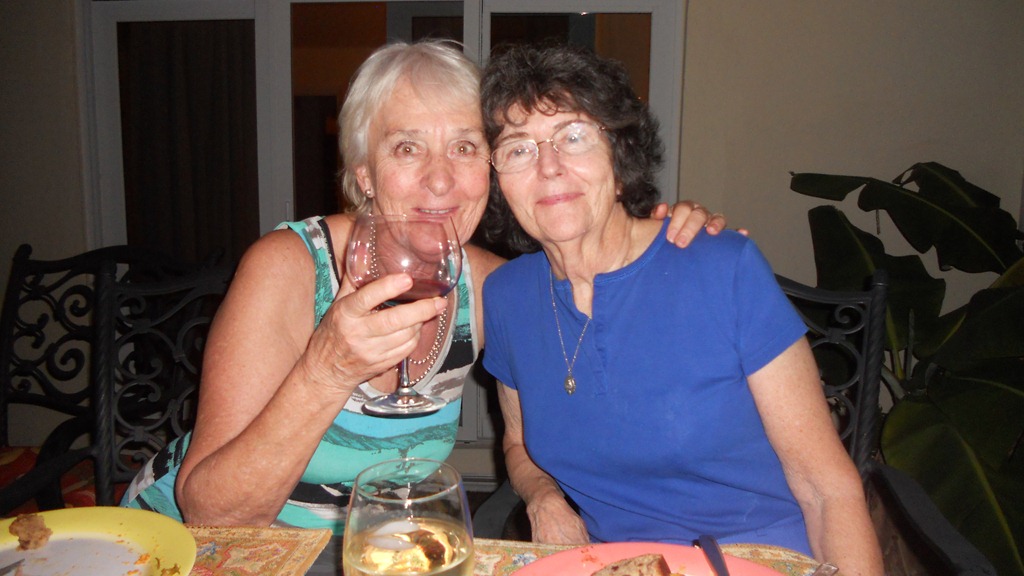
This fun filled day with Heather and friends was followed by in instant surge of 12 family members, including a first for us which was both mothers-in-law under the same roof for the Thanksgiving holiday.
mothers in law

Did the family drama that ensued give me fodder for a new book? I know I don’t even need to answer that one.

I still have a few more days before I launch my mother-in-law back to Chile. However, the circus continues. While attending to my MIL’s needs (and they are many), going to yoga classes, taking a 12 week on-line Agents for a Conscious Evolution class, brainstorming with author friends, contributing to social media AND spending quality time with my husband, I am scrambling to finish two more book proposals for my editor to cement her beautiful offer for a three book contract with Harlequin.

What can I say to that?

I am thrilled for the circus that is my life because after I finish this blog, I can finish the two “romance in real life” proposals for my editor. Why? Because I gleaned story ideas from my travels and mingling with family, friends and strangers. I am an author 24/7. I live to write and I write to live. The trick is to see every moment as a writing opportunity. Oh, and to make really good use of those few hours of sleep!

Soooooooo . . .

Ladies and gentlemen, and children of all ages! I invite you to tell me how your lives fuel your creative wells. I am already laughing at the prospect of how Basil Sands will answer this one. (I just read on Facebook that he was grilling 40—count ‘em—40 steaks in freezing weather.)

Let the show begin!

 

Reasons not to Self-Publish?

By Clare Langley-Hawthorne

Last week I read a blog post by Edan Lepucki entitled Reasons not to Self-Publish and it prompted me, yet again, to consider the pros and cons of going it alone. As James Bell discussed in his TKZ blog post yesterday if you decide to go the ‘indie’ route be sure to start with your eyes wide open as not every adventure into the forest ends happily. But as Lepucki explains there are reasons why some authors decide to stick with the traditional route despite the positive experiences of some on the indie side.

At the risk of raising the ire of a few writers who have very determined opinions, I thought I’d explore some of the reasons that resonated with me. I suggest if you’re interested you read the original post to see all eight items on her list (some of which are more controversial than others judging by the comments!). I have highlighted (and paraphrased) just some of Lepucki’s reasons…those which speak to my own confusion/dilemma over the best road ahead… and apologies to Lepucki as I have also renamed her list items to accord with my own views)

1. A traditional publisher often gets it right…

The first reason on Lepucki’s list is entitled “I guess I am not a hater” and like her, I guess I don’t have any negativity towards the publishing industry. My experience has been very positive – with agents, editors and publicists all eager to do their very best for an author despite the business imperatives of the industry.

More controversially, Lepucki states “I want a reputable publishing house standing behind my book; I want them to tell you it’s so good so that I don’t have to.” Now this may say a lot about my own self-confidence, but this statement did resonate with me. I understand her need for validation. It’s what has always made me hesitant about self-publishing. Even though it’s probably a bit dorky to admit it, I wonder how many other writers feel the same?

2. The conversation about self-publishing often ignores the role of smaller independent publishing houses.

Lupecki rightly points out that these independent presses offer a great option for authors. They tend to be well-respected and provide a specific brand and identity that can give an author an opportunity to get their work out there even if they don’t meet the formula for a bigger house. Lupecki argues that these small presses provide a level of ‘legitimacy’ and quality control suggesting again the importance of having a traditional-style publisher backing an author.

In previous blog posts about the current publishing industry we haven’t really touched on the role of these smaller presses (sadly, many of which have closed due to the harsh economics of running such an operation) so I would be interested in hearing opinions on the role and value of the small independent presses in the current market.

3. The conversation overlooks the value of the publishing community

Lupecki quotes Peter Straub’s acknowledgement of the invaluable contributions made by editors and copy-editors to his books and goes on to describe how helpful some of the comments made by editors rejecting her first novel were. In many ways, much of what Lupecki argues comes down to the same issue of mentoring that James Bell discussed in his blog post yesterday.

I do think she asks an important question when it comes to writers hiring their own editors and copy editors: How is that role affected by the fact that they are being paid by the writer him/herself? What, Lupecki asks, if the hired editor told you not to publish?

Having only worked with editors from my publisher I don’t know the answer to this – have any of you hired an editor only to have them recommend against publication as the work wasn’t up to snuff? And if so, did you take their advice or go ahead and submit or self-publish it?

4. The e-reading conundrum

Lupecki argues that while she doesn’t mind if Amazon is just one of the places to purchase her work she is worried about Amazon monopolizing the reading landscape. Her concern certainly resonates with me – I would hate to find the traditional publishers being replaced by a monolithic self-publisher either. But what do you think – is this a legitimate concern? While I would argue this isn’t really a reason against self-publishing (there are other avenues available, after all, not just Amazon), I think her fear of Amazon’s potential power in the marketplace is valid.

5. Is the self-publishing boom best for readers?

Now this is a tricky question and I think in many ways this goes back to Lupecki’s need for validation – but as a reader I certainly don’t want to wade through thousands of unfiltered self-published novels without any guide as to quality. I do think, however, (and TKZ have touched upon this in many previous blog posts), that as the digital industry matures, there will be more self-selection/review options which will help guide readers to quality work.

So what do you think about Lupecki’s reasons against self-publishing?

Literary Agents in the Digital Age


Gray-eyed Athena sent them a favorable breeze, a fresh west wind, singing over the wine-dark sea. – Homer, The Odyssey
My friend, literary agent Wendy Lawton, recently wrote an intriguing post wondering about her own obsolescence. It is an honest and open look at the current state of affairs in traditional publishing and what that could mean for agents in the future.
This prompted a few musings of my own, from a writer’s point of view. To begin, I dip into the realm of myth.
The traditional publishing industry has long been a Forbidden Kingdom. Writers on their journey toward publication had almost no hope of entering the gates alone. They had to find someone willing to show them the way, someone with influence within the walls.
Enter the agent as mentor. That word comes from a character in The Odyssey who guides Telemachus through the dark world. It turns out later that Mentor is really the goddess Athena in disguise. She has special powers to help, and so do agents seeking to get writers their own set of keys to the Kingdom.
But here is the question: what if a new kingdom is discovered by Telemachus? And what if access to this kingdom is open to all? Does Telemachus need his Mentor anymore?
If he still wishes to enter the Forbidden Kingdom, the answer is yes. But there have been reports flown out via carrier pigeon that this Kingdom is in turmoil. There is chaos and infighting and confusion and bonfires. At the same time, word is that in the new kingdom a revolution is underway. It has no walls or gatekeepers. Writers are dancing through tulips and earning gold sovereigns all by themselves.
Why should Telemachus tarry outside the forbidden walls when he can join that dance on the other side of the river?
This is the question of the moment for writers: pursue the “forbidden kingdom” of traditional publication? Or go join the rebels?
If the former, which is certainly a free and legitimate choice, you need a mentor, a guide. You need someone who: knows who is buying what, can brainstorm a project with you, can negotiate a contract, can collect your money, can buck you up when you’re down, can feed you valuable information about the industry.
If you decide to go solo, you will need to fill your own gaps in “quality control,” and believe me, you’ll have them. You’re on your own, and not every adventure into the forest ends happily. Start the journey with your eyes wide open.
As e-books continue toward becoming the primary delivery system (you no doubt saw that Amazon sold four times the number of Kindles on Black Friday this year than they did last year). agents become crucially important in the negotiation of contracts. For example, the agent should fight against draconian option and non-compete clauses. There should be real give and take with a publisher, keeping the long view and the writer’s best interests in mind.
But as we all know the traditional publishing industry faces challenges of major proportions, and that has affected agents. Advances are low and not as many deals are being struck. Thus, some agents have become de facto publishers, which has raised concerns about conflict of interest. Others are actively seeking to secure the best e-rights options for their clients.
Agents are human. Not all of them are good. I’m fortunate in that my own agent, and the agents I know personally, are superb professionals. But there are lemons out there, so know this: having no agent is better than having a bad agent. And the best agents will see the value in the author having a platform-building presence on the indie publishing side of the valley.
Like everyone else in the publishing game, agents are going to have to explore ways to adapt to the increasing rate of change. But they will continue to have a role to play because traditional publishing still exists.
What do you think the future holds for agents? 

Please. No whining.

I have an overarching theory on life that I believe I might have mentioned here on TKZ before: Failure cannot be inflicted upon anyone; it must be declared by the individual.  No matter how hard an artist is knocked down, or how often, as long as he gets to his feet and stays true to his obligations as a professional and a craftsman, the game is still on.  

To quit, however, is to guarantee failure. I respect those who grow too tired of the fight and walk away, just as I respect anybody’s well-reasoned choice to do anything.  To chase the choice to quit with a lot of whining, though, is unseemly.  No one forces another person to give up writing or to seek publication, and since the decision was not inflicted, it makes no sense for an artist to blame anyone who’s not staring back at him from the mirror every morning.

There’s a corrollary: Success must be earned.

It’s worth noting, I think, that with very few exceptions, every person who has found success in any endeavor in any industry shares the single attribute of having worked hard.  They brushed away rejection and tried again.  And again.  When success didn’t come as quickly as they wanted, the real achievers took a look at their own skill sets and identified what needed adjusting in order to improve their marketability. Actors learned to sing, singers learned to act.  Literary writers learned how to write more commercial stuff.  English Lit majors went back to school to learn about cyber security—or to get the PhD that would allow them to teach what they love at the collegiate level.

They didn’t sit around and blame others.  Yes, the publishing industry is changing, so adapt. No one owes success to anyone else.

Throughout the struggle, it’s important to keep your head in a positive space—a space that can be elusive, given the state of popular media.  Entertainment Weekly published a snarky article last week entitled “Stars’ Worst Movies.”  In it, they made fun of an early George Clooney movie called Red Surf.    Rather than being embarrassed about an admittedly less-than-great film, though, Clooney said in the article, “I’ve done some bad jobs along the way.  But you’ve got to do them.  The Facts of Lifes and the Baby Talks and the Red Surfs.  When you’re starting out, those are big breaks.”  He didn’t apologize for those early efforts because he was doing his best to make a living doing what he loved to do.  When the movie flopped, he went on to the next one.  I hear he makes decent coin as an actor these days.

What’s the analogy to novel writing?  Recognize your own big breaks as they happen.  Judge your path to success not just based on the long road that lies ahead, but on the accomplishments you’ve achieved.  Start with the fact that you’ve finished a book.  Or three.  That puts you in the stratosphere among those who dream of publication one day.  Got a short story pubbed in your local supermarket rag?  Shout it from the rooftops.  It’s a big deal.

Opportunity never knocks.  Opportunity lurks  out there, waiting to be discovered through hard work, dedication and risk taking.  It makes itself most visible to those who are focused on possibilities, and are open to trying new things.  Some of my greatest successes in this industry and in others can be traced to casual conversations that were struck up in the most unlikely of places.  Some might call these chance encounters, but I don’t buy that.  Sure, there’s an element of serendipity, but that would not have mattered if both parties hadn’t had their heads and their hearts in the right places.

Whenever anyone asks, “How do I get an agent?” or “How do I get a producer interested in the film project I want to do?” my answer is always the same: Go out and find them.  Introduce yourself.  Attend the meetings they attend, and introduce yourself.  Talk to them.  

Earn their attention.  If that takes you out of your comfort zone, then either expand the zone or abandon the dream.  Or invent a brand new approach that no one’s ever heard of.

But please.  No whining.

Write What You Fear

By Jordan Dane

Everyone has heard the line – Write What You Know. When I first heard the line, the first thing that hit me was a question. What the hell did I know that would interest anybody, except my mother who is easy to please? Obviously I didn’t listen to that advice. My debut book was about a woman cop, a far cry from my accountant/commodity energy trader occupation.


Lee Child wrote on an email loop I belonged to in 2008 (of debut thriller authors he mentored as part of the International Thriller Authors debut program) that he thought it should be – Write What You Fear – because books are about emotion. Raw emotions resonate with people. We can all relate to what makes us scared or what we can hate or love. That’s not as intimidating as “write what you know” and hope someone buys it. It doesn’t take special knowledge to write about emotions you feel. It only takes an ability to dig deep, write honestly and find words to express those feelings.


Lee’s words have stayed with me.


Lately I find myself thinking about death. It’s not a subject I know a lot about, but I sure know how it makes me feel. My book ON A DARK WING (Harlequin Teen, Jan 2012) stirred these thoughts in me when I had to envision what a conversation with the Grim Reaper might entail and imagine an afterlife and a role for the Angel of Death. A young girl deals with the grief and guilt she feels after the tragic death of her mother in the book. And this week, a blogger (who will be on a tour stop for the promo of my book) asked for an interview with Death. I’ll be the voice of Death on the day of the blog post when I comment, so followers can ask their own questions. Do I have any idea what I will write? Absolutely not, but I think it’s important to keep challenging myself as an author to delve into areas of my imagination, especially when it’s most difficult.


But there’s a reason I wanted to share why writing about Death and imagining an afterlife has been particularly challenging for me. In my own life, my brother-in-law Michael (my husband’s only brother) is losing his battle with cancer. He’s in hospice now and he’s been in my thoughts and prayers for months. I can’t even imagine what that finality is like for him or his sweet wife and their family.


Sometimes the fiction we write becomes all too real…or too personal.


My post won’t be long today, but I would like to hear from those willing to share. Whether you had a personal tie-in or not, what has been the most difficult scene you’ve written or read in a book? What challenges did you face in writing it? Or why did the scene you read stick with you? Readers and/or writers can respond to this. There are scenes in books that I’ve read long ago, that I can still imagine in my head because they touched something in me that has stayed.


Please share those scenes and books that have stayed with you.

Elements of a great ending

By Joe Moore

We’ve had plenty of posts here at TKZ about story beginnings. As a matter of fact, we invite submissions and devote the month of March to critiquing the first page of your stories. Beginnings are so important because they set the hook and grab the reader.

But what about endings? Are they as important as beginnings? After all, they occur after the big finale, the gripping climax, the roaring finish. In a way, we can think of endings as anticlimactic. And yet, they have an important function to perform in any story.

First, the ending should resolve anything that was not addressed during the climax. Once the conflict between the protagonist and antagonist is put to bed, what’s left must be brought together as a resolution in the ending. There must be closure to anything still hanging in the reader’s mind.

The ending also answers the story question. Since the story question usually deals with character growth or change, the ending must make sure the story question is answered.

Let’s say that the main character had to stand by and watch his family perish in a terrible accident that he inadvertently caused. The story question might be: will he ever forgive himself and have the courage to find love again and perhaps start a new family? The actual plot might deal with something totally different, but along the way he finds a new love interest. Once the climax occurs and the plot is resolved, the reader must discover the answer to the story question. It has to be made clear in the ending. In most stories, the main character takes a journey, whether it’s physical, mental or spiritual. How he completes the journey is the answer to the story question and must be resolved in the ending.

Another function of the ending is to bring some sense of normalcy back to the characters’ lives. It can be the restoring of how things were before the journey began or it can be the establishment of a new normal. Either way, it must be resolved in the ending. Our hero has found a new love and plans to start a new family. It’s his new normal and the reader must understand the changes that he went through to establish the new normal.

If the story contains a theme, message or moral, the ending is where it should be reinforced. Not every story has an underlying theme, but if it does, it must be clarified in the ending. This way the reader can close the book with the feeling that the theme or message was accomplished or confirmed. The main character(s) got it, and so did the reader. Even if the reader doesn’t agree with the message, it has to be confirmed in his or her mind what it was, and if it was completed.

The end resolution of the theme or message must be in sync with the story. For instance, if the theme is to accept a spiritual belief in the existence of a greater power in the universe, the plot and characters must touch upon or address the idea somewhere along the way so the end resolution confirms that they have changed their beliefs to support or at least admit to the theme.

The ending should also cause readers to feel the way the writer intended them to feel. Whatever the emotional response the reader should experience, the ending is where it’s confirmed. After all, the writer is the captain of the ship. He steers the story in a specific direction—a direction he wants the reader to go. The reader is a passenger along for the journey. It’s important that in the end, the ship dock at the right port. Worse case is that it doesn’t dock at all. That’s the result of a weak ending.

The ending is how you leave your reader. It’s the last impression. And it just might be the reason the reader wants to buy your next book. Or not.

Have you been disappointed with an ending to a book or a movie? Did you invest the time only to come away feeling betrayed? And what book or movie do you feel contained all the elements of a great ending and left you wanting more?

The ultimate holiday wish list for writers

The holiday shopping season has barely begun, and already I sense desperation in the air. Last week the anchors at CNBC fretted over whether Black Friday and Cyber Monday would lift the fortunes of a sagging stock market (they did, briefly).

Then there’s the quiet desperation of trying to find a perfect gift. If you’re shopping for a writer, it helps to know what type of writer she is. Organized or overwhelmed? Disciplined or a Lazy Mary? The following list of gift ideas is tailored to some universal writer types:

For the writer starting a book tour:  A special signing pen. This should be something fairly showy and substantial, like a Montblanc.  Get both black and blue inks.

For the writer who hates her bug-ridden, balky PC: An Apple MacBook Pro, pre-loaded with the Scrivener writing program. She’ll think she died and went to writer heaven. (This is top of my list this year, just in case Santa is reading this blog).

For the writer who is researching a setting for his book: An all-expenses paid trip to the most exotic locale in his WIP. This gift has the added bonus of being tax deductible for Santa.

For the writer who is desperately in need of inspiration: A weekend event with motivational guru Tony Robbins. Last year we were at the Marriott in Palm Springs during a Tony Robbins event. We rode the trams with gaggles of freshly-inspired seminar attendees. I can’t imagine a more gung-ho group, except for possibly Seal Team 6.

For the writer facing a photo shoot: If your writer is stressing over posing for her author’s photo, a little makeover is in order. This gift can include anything from hair and makeup to a wardrobe re-do. You can easily order makeup online but why not go the extra mile and get organic cosmetics online instead? At the extreme end, consider springing for some plastic surgery (but only if she’s been yearning for something specific along those lines. Don’t suggest it first, or you’ll be sitting at the bottom of the stocking with a lump of coal).

For the disorganized, overwhelmed writer: A year’s underwriting for   housekeeping service. Your writer may still be disorganized at the end of the year, but she’ll have fewer excuses.

So, Dear Reader, what would you add to my wish list of gifts for writers? And what is on your own list this year?

Book Group Etiquette


My mother-in-law’s book group has kindly asked me to come visit next year which has prompted me to think about authors and book group etiquette. Thus far, I have been incredibly lucky that the book groups I have visited have loved my books (or at least pretended to!) so I have never faced that awkward moment of realization that someone found my books…er…’lacking’.

As a member of a book group myself I have, however, been known to initiate some pretty ‘lively’ (and negative) debates over the merits of a particular book. So what is the etiquette for author visits to book groups? How do participants and authors handle the fact that not everyone is going to like a book?

When I visit a book group I usually focus on the inspiration for my books and the writing process or writing life itself. Very rarely do I enter into a debate over the merits (or otherwise) of my writing. I wonder, however, have I just been lucky? Is the day of reckoning going to come when I have to face the hard questions? And how, assuming that day does come, should I react?

So here are some questions for authors and readers alike:
  • Have you ever had an author visit to a book group that ended badly?
  • How should book groups handle an author visit when not everyone likes the books (which, lets face it, is 99.9% of the time)?
Now obviously we all expect a modicum of decency and respect…but apart from that what should the etiquette be (for book groups and authors alike)?


My Lunch With Larry


Every writer needs a mentor. Or at least someone to offer encouraging words during those dark, dismal days of doubt (like when you use too much alliteration and wonder if you’ll ever get this writing thing right).
Many writers had an English teacher or creative writing instructor in school who gave them encouragement. I had the good fortune of taking creative writing from Mrs. Marjorie Bruce at good old Taft High. She saw something in me when all I saw was a jock who wanted to play college hoops. She really got me going and believing in myself as a writer, and I kept in touch with her for the rest of her life, until she passed into that great classroom in the sky at the age of 90.
I went to college where they undid some of Mrs. Bruce’s good work. There I was told: Writers are born, not made. You can’t really learn this stuff. You either have it or you don’t. And I certainly didn’t have it. I thought writers just sat down and plots and great characters burst out of their fingertips without any effort whatsoever. And I couldn’t do that.
So life went on, I did other things, got married, went to law school. But one day I woke up and realized I still wanted to write, that the desire had never gone away. So I set out to try to learn what they said couldn’t be learned.
And one of the first people I found who helped me along was Lawrence Block. I read his book, Writing the Novel, and knew at last I had found the encouraging mentor I was looking for. I subscribed to Writer’s Digest and read Larry’s fiction column every month. I still have big binders on my shelf full of old copies of the magazine, with his columns copiously underlined.
He seemed so able to communicate what it feels like to be a writer, and how a writer thinks. I never read any column of his where I didn’t nod my head at least a couple of times, thinking here is a guy who really gets it. And he’s generous enough to give it to others.
But it wasn’t just his instruction, it was his fiction. The first novel of his I read was Eight Million Ways to Die. It blew me away. I consider it one of the classics of the crime genre. It motivated me. I wanted to be able to write a book someday that packed that kind of punch.  
Years later, when I was offered the fiction column at Writer’s Digest, I felt like some junior prophet who was taking over the sacred page from Moses. It was a privilege, and I tried my best every month to give readers what Larry had given me.
So it was great to catch up with Moses a week ago at the annual Men of Mystery gathering. Authors and fans of mystery and suspense fiction were there to have table talks and lunch, with Larry as the keynote speaker. His riffs on how he writes, how he stumbled into series, how he picked up one series after a quarter-of-a-century gap––these once again took us into the mind of a consummate pro.
Lawrence Block has won all the mystery awards, some several times, and has a publishing record that is among the top in the field. And he still takes time to go out and encourage writers and talk to fans.
Nice.
So who has been your mentor, or encourager? What did that person give to you that you needed to hear?

Now We’re Cooking

I cook the Thanksgiving Dinner at casa de Hartlaub each year. It involves some basic planning, such as buying a frozen turkey on Sunday. It sits in the refrigerator and thaws and by Thursday it’s ready for the oven. The real planning comes Thursday. I start at 7:00 AM with the pies. The lasagna goes in the over at 9:00 AM and at 9:35 I begin preparing the turkey and its stuffing. The whole kit and caboodle goes in the oven at 10:00 and then I stuff the potatoes, sit back and mfive hours later and it’s time to bake the rolls and prepare the mixed vegetable dish. By 4:00 PM dinner is served.

It occurred to me this year — probably because I had a blog entry to write — that preparing Thanksgiving dinner is a lot like the act of writing. The first and foremost step is that I have to get up and start. Getting up whenever I happen to wake up and having a cup of coffee and taking 20 to 30 minutes to transition between into it is not going to do it done. Before I know it I’ve lost half of the day. I have to get up and start.

The second element is making a schedule and doing everything I can to stick to it. Sometimes things, like life, get away from me, like that fire in the kitchen. We still had dinner that Thanksgiving, however, even though the dog got part of one of the pies. Since there were all males in the house, however, we ate the rest of it without worrying about germs. So too, when I’m writing: sometimes the idea will get away from me and I’ll find myself far afield, being just as clever as can be but not with anything that helps the story. I drag myself back and get on target and on schedule. And the sooner that I do that the better off I am.

The third element is the possession of the proper tools to get the job done. I discovered at the last minute that I didn’t purchase one of those turkey broiling pans that I use every year (one dollar at uh, The Dollar Store) and had to go out and get it. I had everything else all lined up and ready to go. Writing, I use Word and Google docs, but when my computer crapped a sandcastle while I was in New Orleans in September I used Evernote on my T-Mobile MyTouch to take notes and write whole chapters. My fingers will never be the same, but I got it done.

The fourth step is sticking with an outline. My outline for dinner is laid out above in my first paragraph. I have a more difficult time outlining a novel, but I’m finding that things work out a lot better when I do; otherwise I dislocate my arm patting myself on the back for a great beginning and a strong ending. It’s hard to fill that vast expanse of white space in between the beginning and end when your arm is dislocated. I’ve started using Scrivener, and that helps. It’s almost as good as…well, as a reliable oven.

That aside: I hope that you had a great Thanksgiving. I’m thankful to have lived much longer than I really should have and to have the love I don’t really deserve from so many wonderful people. That would include, first and foremost, the family I prepare dinner for every Thanksgiving, and who are my most loyal readers. And it would include you for stopping by here regularly. Thank you, and God Bless.