Release Day!

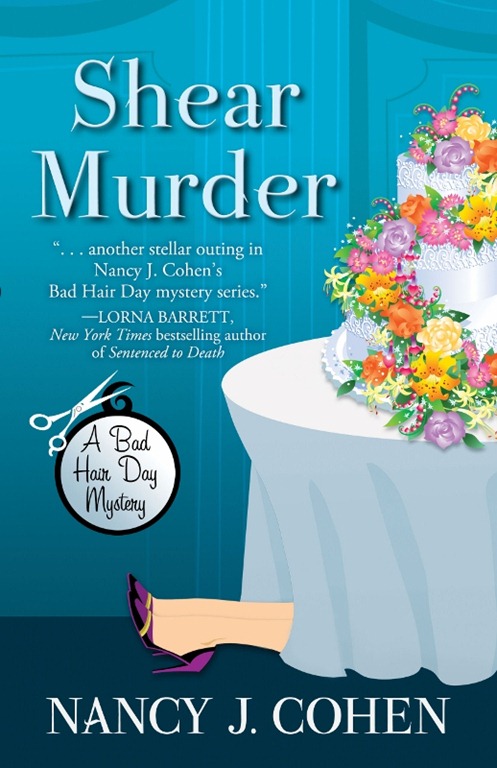
Today is the official release date for Shear Murder, my ShearMurder (518x800)tenth Bad Hair Day mystery, so you’re going to have to put up with my shameless self-promotion. That’s the trouble when we authors must toot our own horns. We get as tired of talking about Me as you do hearing about it. Lately I’ve been clogging the loops and social networks with my blog tour announcements. I want to make it worthwhile for my hosts by getting a crowd on days when I guest post. But it means I am constantly tweeting and FB’ing and listing my tour dates and topics. I sent out one email newsletter to my fans already and will send another blast next month on my book’s official sale date.            
What? You thought I said today was the release date? Indeed, I did. However, for this publisher, that means the books are shipped from the warehouses today. They’ll be ready in the bookstores on February 8, the actual “on sale” date. Confusing, isn’t it? It was a lot less so with my prior publisher, who just had one pub date. As it is now, I’m not sure which day to urge fans to buy the book. Does it really matter anymore?

Here are a couple of sample interview questions from my online blog tour:

Tell us about your latest book.

Shear Murder is the tenth book in my Bad Hair Day mystery series. It’s the culmination of a personal journey for my hairstylist sleuth, Marla Shore. It’s about weddings and new beginnings. Just when Marla is planning her own nuptials, she gets caught up in another murder investigation. Marla is a bridesmaid at her friend Jill’s wedding when she discovers the matron of honor—the bride’s sister— dead under the cake table. She has a lot going on in her life, but when Jill pleads for her help in solving the case, Marla can’t refuse. It’s a fast-paced tale with humor, romance, and suspense as Marla races to find the killer before her wedding day arrives.

Considering the book is a mystery, how much can you tell us about the antagonist?

Since the story is a whodunit, I can’t tell you much! Many people had reason to want Torrie, the matron of honor, dead. Torrie was the bride’s sister, and Jill had a secret past that Torrie threatened to expose. How far would Jill go to maintain her sister’s silence? Then again, Torrie’s colleagues each had their own reasons to want her out of their way.

Meanwhile, Torrie’s husband inherits a piece of property that Torrie had jointly owned with her sister. How badly does he need the money from a property sale? And speaking of commercial property, Jill’s uncle and cousin were involved in a shady real estate deal with the owner of Orchid Isle, where Jill’s wedding took place. Did Torrie learn too much about his secrets? And so on. As you can see, there are a number of suspects. You’ll have to read the story to figure out which one of them is the culprit.

What motivated you to write this story?
My books all have happy endings, and so I wanted to give my series one, too. Seriously, my fans wanted to know when the next Marla Shore mystery would be coming out, but my former publisher had cancelled the series. As the markets changed, I decided to finish this book and give my readers the closure they deserved. So I really wrote it as a response to fans and in gratitude for their support. I hope they are pleased with Shear Murder. It was a delight to write, and I had fun bringing back all the secondary characters we’ve grown to know and love. I am grateful to Five Star for getting this book in front of readers. So if you’re looking for a humorous mystery centered around weddings with a whodunit puzzle to solve, check it out.


Watch the Book Trailer
BUY NOW!

Muscling the Muse: Or Three Easy Steps for Talent on Demand

By: Kathleen Pickering http://www.kathleenpickering.com

I was a sweet, but scrappy kid. Caught a couple of bruises along the way, but as you can see from the photo, whatever tangle caused the shiner, it wasn’t enough to get me down. I was quick to smile.

black eye

That’s how I feel about the writing process. You can’t let challenges get you down. I figure it this way: Writing is fifty percent talent, fifty percent Muse. Both need my undivided attention to stay strong. Every other obstacle will fall away with these two muscles pumped.

As stated above, talent for one’s vocation is a muscle that must be exercised. Otherwise, the gift atrophies. So, I write and write, and write some more. At different times, in different places or adhering to a schedule for a particular project. Whatever works. I do it.

There are talented individuals in  every field  who never realize their genius because they never exercise their gifts. Worse, some never know they possess unique skills at all. To that end, I highly encourage every thinking soul to explore what excites them. Always investigate topics that pique your interest. My mantra: Honor your passion. (Unless, of course, you are a terrorist or a serial killer. Then I suggest you seek help!)

My passions are writing and public speaking. These are the muscles I exercise. As we all know, the more we work our muscles, the more defined they become.

It is my sly little Muse, however, who until recently had me wrapped around her finger. For way too long I let her govern my work with her whims and fancies. Not any longer. When my editor asked for three more proposals, I realized I could not just wait for my Muse to wave her creative wand. She needed muscling.

So, you ask, how do you muscle your muse? I have three simple but important rules.  While they require determination, they are so easy that your Muse won’t even know she/he is being manipulated.

1. LOVE YOUR MUSE. You may say, of course I do! But keep in mind the self-critic can be cruel to our adventurous Muse. No matter what your talent, your individual creative view is unique to you. You have to respect that fact and let nothing damage your self-worth. It is your individuality that makes you one with the world. You might say, Not so. The world would carry on just fine without me. I say, the world might carry on if you were not to love and exercise your muse, but the world–and you–would sadly miss a profound part of creation. Otherwise, why are you here in the first place?

No one else sees the world quite as you do. It’s the Kurt Vonneguts, the Picassos, the daVincis, the Einsteins, the Maria Tallchiefs, the Luciano Pavarottis and Maria Callases, the Stephen Kings, The Kathleen Pickerings (just checking to see if you’re still reading) and YOU who make the world go ‘round.

All artists have their critics. They all have their admirers. Neither matters. You and only you matter to your Muse. If you don’t love what your Muse offers, you will not let him/her create. Your talent will atrophy and you will wonder why you have become a sarcastic and bitter being rather than a shining light.

writersforneworleans-2010At Heather Graham’s Writers for New Orleans conference with authors Linda Conrad and Traci Hall.

2. FEED YOUR MUSE. Now that she/he is loving you back, you must feed your Muse. What others call writer’s block, I call a poor diet for the Imagination. The Muse needs exposure to everything delectable—and sometimes things not so tasty in life. That means your Muse accompanies you on your travels. Let her be the finger that taps the keyboard or opens the books on your research. Let your Muse listen in on conversations and initiate a few of her own. Then Listen. Watch. Smell. Touch. Devour. Your Muse will not disappoint you. With love and food, your Muse will be generous in return. You might even get a belch for a good laugh out of the deal. That works, too!

3. LET YOUR MUSE FLY. Muses are flighty creatures. They may burrow. They may forage. But, once they feel safe, they fly. Your job as an artistic soul is to give your Muse the updraft, the cliff’s end, the launch pad to soar. Your Muse may create unusable material at first, but the more he/she exercises the muscles in those wings, the more beautiful the magic dust that will alight from them. Don’t be afraid. (Fear is an awful four letter word that shall not be used.) Love your Muse enough to let him/her take a chance, test an idea. Create. A Muse’s wings may be as delicate as a dragon fly’s or as powerful as an eagle’s. Only by launching from that artistic limb of “what if” will you know which wings your Muse possesses. Think of the freedom!

dreaming aMy artist friend, Kimana Evans, once asked me how I see my myself. I told her that in my dreams I fly. She gifted me with this wonderful water color of me . . . or shall I say, my Muse. (Can you see me flying in the clouds?) I love this artistic expression created by my friend. This painting hangs where I write. It reminds me of my passion, talents and Muse every day.

I’d say I’ve come a long way from that scrappy kid with the shiner! I may have had to muscle my way into a foothold in my creative world, but I have certainly carved out my ground. I know that by honoring my talent and adhering to the rules for my Muse, I will create the impression that I was born to make. So far, the journey has been exciting, challenging and way too much fun to be called work. I am a grateful woman.

So, tell me. What do you do to keep your talent fresh and your Muse loved, fed and flying?

Happy Writing or whatever your talent may be!

PS: By the way, Kimana would be happy to create a painting for you, as well. You can find her on Facebook: www.facebook.com/people/KimanaEvans/ Tell her I sent you.

Revision, Revision, Revision

by Clare Langley-Hawthorne

I’m on the final round of revisions to my current manuscript and considering a new editing process. In the past I have always tended to bite off more than I can chew when revising – trying to look for plot inconsistencies, character missteps (blue eyes one chapter, brown the next), typos, repetition, dull dialogue, boring exposition and errors all at once. What I’ve found is that about midway through the process, I get completely mired in the editing process and start dismantling what is essentially the final version of the novel, as I lose confidence in both the story and myself (you know, the usual author angst!). This time, however, while I am waiting for beta reader feedback, I am looking at adopting an alternative approach and would love some advice.


My current system involves editing throughout the writing process – from editing the first draft (which pretty much equals rewriting) to doing a final line edit on the completed manuscript before I turn it in to my agent. It’s what happens in these later stages that I need to refine. What I am considering is parsing the final editing into multiple discrete re-reads looking for:

  1. Plot/timeline issues alone – checking for holes, inconsistencies, and errors.
  2. Character issues alone – checking for inconsistencies, misdescriptions etc.
  3. Stylistic issues – repetition, boring/dull descriptions etc.
  4. Final line-edit – looking for grammatical and spelling errors and typos.


Although I’ve looked at all these areas already (multiple times!) while editing previous drafts, with the final version, it’s time to have one more look as invariably I still find errors. My concern is that trying to re-read the final manuscript multiple times to look for these discrete set of issues will be time-consuming and slow (and may possibly drive me demented!). 


What I’d love is feedback/comments on what final editing process has worked for you. 

  • Do you try and do everything all at once? 
  • Do you reread with specific areas in mind? 
  • Do you get others to do a final line-edit? 
  • How do you balance the need for one last look at all the critical areas in a manuscript against being driven crazy after the 50th reread?  


An Old Peg In A New Hole

John Ramsey Miller

I’m am not old. I hear that all the time, but I am sixty-two and often I feel old. I see myself working at a slower pace than I used to, and not just with the writing, but with most things. I have never been an organized person, and once in a while I jump into the chaos of my desk, my closet, my tool shed and put things on hangars, in ordered stacks and in proper cubbies. I admire the organized Miller world, and for a few days I keep the organization organized. After a few bits of time have passed I have scattered my tools all over the property, my desk is buried, and my closet looks like I’ve taken it back to college with me. It’s just me.

Here’s the thing. I need to be organized to write. We all do. I remember the stories of Kerouac’s editor getting his handwritten-partially typed manuscripts as loose sheets and legal tablets all shoved into a grocery bag or two and I smile. None of us believe that could be true, even though I have presented my financial dealings to my accountant that way.

I have accepted some of the changes in our fluid (think mountain stream rapids) world better than others. I still do not understand how Tweeting can be any more effective than going out into the back yard and barking what I’m doing at trees. I type something and it does what? I have a Tweet account and a few followers, but I have nothing going on in my life that seems worth telling people. I’m delighted to have followers even though I have no expectation of holding their interest.

Recently I looked at my writing /dining table made from cherry and walnut harvested from our Mississippi property, milled, planed, and built by my little brother). You might remember how I described it back when I started my rewrite- with the legal tablets, two dozen sharpened pencils, index cards, long roll of paper for time-lining, pens, highlighters, a laser printer, my lucky charm (A buckeye my father gave me when I was about to start my first high-school newspaper column), a huge McCarty bowl for balls of rejected notes, and all ordered in the manner of an actual anal compulsive. Looking back on my life is more like standing in the stern of a speedboat admiring the towering rooster tail. Now weeks later, the order is a dim memory and I found myself peering into something akin to a coal mine.

I decided last week that what I needed was a computer program that would allow me to have everything organized and at the touch of (both) my trigger-fingertips. I type with two fingers, while staring at the keyboard. I didn’t fail typing class in high school, I was asked by the instructor to find another sort of machine to abuse. So I asked Joe Moore if such a program existed that would think the way I think, only organize things. I wanted it to accept my outline, transfer that outline to index cards that I could line up and sort as I wished, keep my notes, order my research, show me what I’ve written, thrown out… basically become my anal writing partner.

Joe gave me two. Scrivener and another I can’t recall. I looked at Scrivener and the other (Tweedle-dum or Flip-sticks or something) and ended downloading Scrivener, a very British program. The tutorial has “organization” spelled “organisation” and the videos are all by a gentleman who sounds like an Attenborough. According to the tutorial it not only does what I hoped it would, but will do it the way I think it should do. It has templates for non-fiction, novels, short stories, radio, film, and TVscripts, and poetry. A template for poetry? What would e e cummings or Sandburg have made of that? It is all that I (be I novelist or poet or BBC presenter) could have wished for. Did I mention it will format eBooks in all known formats and allow you to add cover art?

Now all I have to do is figure out how to use it. My wife understands it, which means I may never do.

So this oldling is still working on Word with this rewrite, but I am going to write my next book using this amazing program (and it’s only $45.00 US which is cheaper than hiring an anal compulsive assistant for just part of one day). I am not recommending it yet. The thing is, if I can figure it out, I’ll either tweet about it, or maybe I’ll sing its praises to the trees in my back yard.

What Writers Can Learn from Tim Tebow

[NOTE: John Ramsey Miller and I are switching posting days this weekend, for reasons that will quickly become apparent. – JSB]
“There were ten guys in my writing class at Williams College who could write better than I. They didn’t have what I have, which is guts. I was dedicated to writing, and nothing could stop me.”
—John Toland
Did you really think Tim Tebow wouldn’t show up in a Kill Zone blog post?
How could he not? America’s favorite athlete is the talk of the sports nation. Unless you’ve been collecting moon rocks at their place of origin, you’ve read something about him over the last few weeks.
But for anyone who just got back from Mare Tranquillitatis,let’s summarize: Tim Tebow is the young quarterback of the Denver Broncos who, this past season, has been pulling out miracle wins all over the place. This in spite of the fact that virtually all NFL prognosticators said he couldn’t succeed in the league.
Yet, lo and behold, Tebow has led the Broncos into the playoffs, and last week to their first playoff victory since 2005. And he did it in stunning fashion.


Last Saturday against the vaunted Pittsburgh Steelers, big favorites to win, all Tim Tebow did was carve up the league’s #1 pass defense for 316 yards. The last 80 of those yards will be celebrated forever in Bronco’s history.
It was the first play of overtime. Tebow had played a great game, his best so far, but the Steelers had come back and tied it in regulation. Well, it took Tim Tebow all of 11 seconds to win the game in OT. He sold a fake run, got the Steeler linebackers to bite, then threw a strike to receiver Demaryius Thomas. Thomas caught the ball in stride, issued a sweet stiff-arm to Steeler defensive back Ike Taylor, and carried the rock all the way to the end zone for another miracle, magical finish.
I’ve been a Tebow fan since he played at Florida (which is a very hard thing for a USC Trojan to admit). What I love about the kid is that he harkens back to a time when athletes really did take role modeling seriously. Tebow, a devout Christian, does not act like an idiot off the field. He does not go to nightclubs with loaded firearms. He does not get hammered and sexually assault co-eds. He does not think, just because he has been blessed with amazing athletic talent, that he is immune from standards of civil conduct. He is, in short, what young men used to strive to be at one time in our society––a gentleman. (Even typing that sounds quaint nowadays, which does not reflect favorably upon “nowadays”).
But make no mistake. On the field Tim Tebow will cut your heart out. He will find ways to beat you. He will drive you crazy. Tebow, like all champions, is a fierce competitor in his arena of battle. I loved the shots of him on the sideline during the Pittsburgh contest. He had his game face on––intense, focused. And all this with the pressure of a lifetime on his shoulders.
You see, Tebow had played three mediocre to lousy games in a row. He was being counted out by the know-it-alls. He was a flash in the pan. He had no future in the NFL, let alone with the Broncos. So he not only had a playoff game to deal with, but possibly his whole future.
And yet he didn’t fold, falter, or play scared. He took it right to Troy Polamalu and the fearsome Pittsburgh secondary and shredded them. (And yes, props to his coaches and teammates, of course. Tebow would be the first to point that out).
So why do I bring this up for writers? Because we can learn something of the utmost importance from Mr. Timothy Richard Tebow. We can learn that it’s not a matter of what other people say about you that counts. It’s a matter of your heart and determination and guts. During his phase of getting criticized all over the place, Tebow never lashed out. He was full of humor and modesty.
Plus, he worked his butt off. He spent extra hours with his coaches, practicing his mechanics, giving every last ounce of energy to getting better at what he does.
The same should be true for you. You will get jeerers and critics in your writing life. You will endure negative comments and reviews and people – maybe even in your own family – telling you that you stink, or that you’re deluding yourself with this writing thing.
Maybe you have the dream of being published by an established company. Perhaps you want to go it alone in the new world of digital self-publishing. Or some of both. Whatever your profile, if you care about writing, if it’s a burning passion within you (I have nothing to say to those who are just out to make a buck), then you’ll get your share of blowback, much of it unfair.
So are you going to let that stop you? Or are you going to keep working, keep typing, keep studying the craft?
In short, are you going to dig down and find a way to win?
This post appears on the day the Broncos play the New England Patriots to determine who will take the next step toward that ultimate prize—the Super Bowl. I have no idea how the game, or Tebow’s performance, will turn out. But I don’t have to. Because I know something already: Tim Tebow will never give up, no matter what happens today. He doesn’t have any give up in him. He will keep on finding ways to astonish us, both on and off the field, despite anything the doubters have to say.
Go thou and do likewise.

Choosing the Best Point of View

By John Gilstrap
Stories are collections of moments the propel the plot through the eyes of characters.  One of the critical decisions that an author has to make dozens of times over the course of a book-length manuscript is to determine which character each moment belongs to.  I don’t think this issue applies to first-person narration because the POV is forever locked in the head of the protagonist.  For third-person storytelling, though, the decision is paramount.


It’s also a key element of the overall strategy of a book.  For example, in my Jonathan Grave books, Jonathan’s is almost always the primary POV for scenes in which he is involved.  The exceptions are limited to moments where I want to reveal other characters’ impressions of Jonathan.  I never write a scene from the point of view of Boxers, however–Jonathan’s best friend and protector–because his character works better through the eyes of others.


Because these books are a series, I have the luxury of developing my primary characters over a multi-book arc.  That’s not the case for the secondary characters–the guest stars, if you will, the people who are the focus of Jonathan’s current adventures.  I have to bring these focus-characters to life, make the reader love them (or hate them) and resolve their entire story arc within the confines of the current book.  Plus, I have to do all of that without letting the story sag under the weight of obvious characterization.  If I don’t plan well, it can become a nightmare.


As an example, whose POV is more compelling during a hostage rescue scene, the hostage or the rescuer?  If the bad guy is going to be killed in the shootout, should some of the action be from his point of view, too?  If so, then that means I needed to give him some scenes earlier in the story so that I don’t have to introduce his worldview to the reader in the middle of an action scene.  (As far as I’m concerned, an action sequence combined with exposition isn’t an action sequence at all–it’s a muddled mess.)


These choices aren’t just limited to chases and shootouts, either.  If male and female characters we both care about are meeting for the first time, whose POV is more compelling?  If the meeting doesn’t go well, is it better to see the rejection from the point of view of the rejectee or the rejector?


There are of course no right or wrong answers because this writing game has no rules.  There’s only what works and what doesn’t, and even that decision is bound only by artistic choice.  In my heart of hearts, I think that we all know the difference, but there are few among us who haven’t on occasions stuck with the wrong choice for fifty pages too long.

The Seduction of Mystery

by Jordan Dane


No matter what genre, a book can always seduce a reader with the titillation of mystery. A suspense or thriller plot can race towards the end with its escalating stakes, but the lure of an underline mystery teases the reader and holds them tight as the storyline unfolds to reveal its fleshy curves and tantalizing secrets. The seduction is made more complete and satisfying.


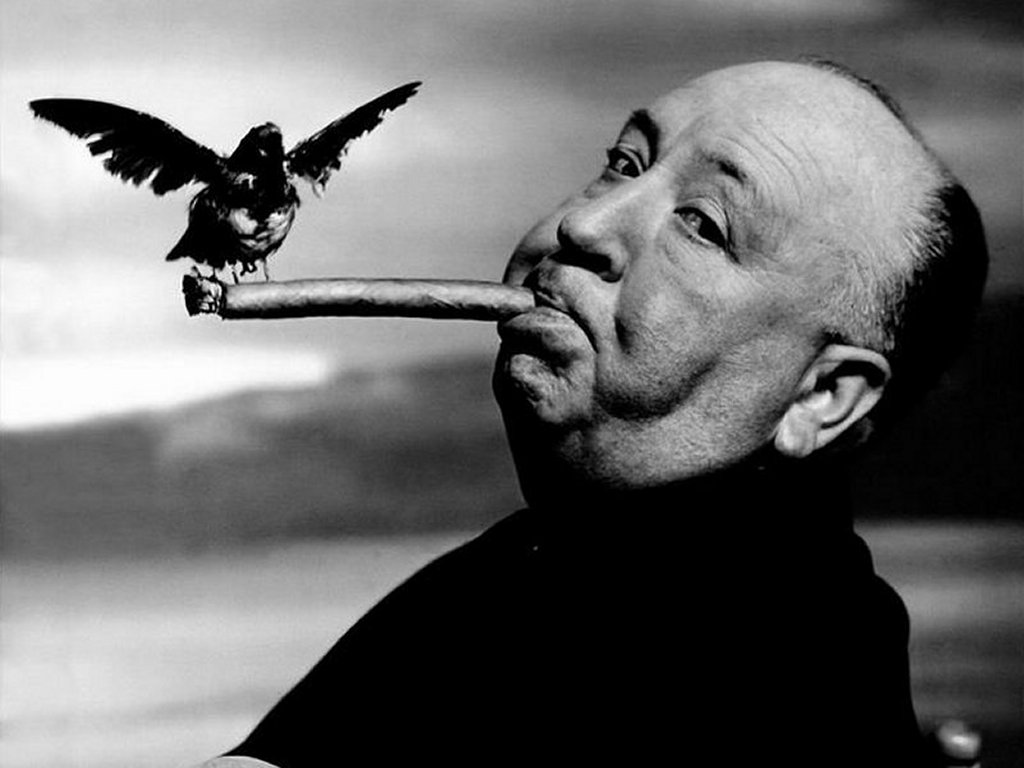
Alfred Hitchcock knew this.

Hitchcock believed suspense didn’t have much to do with fear, but was more the anticipation of something about to happen. When I read this, it was a huge epiphany for me. The idea changed how I thought about scenes and chapter endings, but I was recently reminded of the importance of anticipation in other ways when someone in my local writers’ group asked me when and how to use back story. In a seduction, back story is the equivalent of smoking a cigarette after. At some point, you want it to happen, but it’s anticipation that drives you to turn those pages all night long.

There’s no faking that.


If you’re a writer, anticipation doesn’t have to ONLY be about big plot movements. Don’t forget the voyeur in all of us, readers and writers alike. Relationships need a story arc too. Conflict and tension make them more delectable. Our main characters are tested, tortured, pushed to the limits to justify their starring role in our books. And when a man and woman are involved in a personal relationship, a writer makes them pay for wanting to be together. That’s how a writer knows when they have the right balance of emotion to suspense. If the emotional human story can be stripped out and the book no longer makes sense, then the right balance is achieved. One is integral to the other.

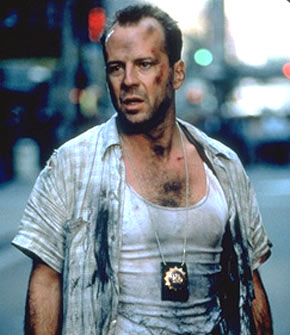
A high octane Bruce Willis movie—with its special stunts and computer generated action sequences—may not stick in moviegoers heads if there weren’t the emotional elements, the drama of his estranged wife in danger. Only his love for her puts him in harm’s way from the beginning and keeps him taking risks for her. It’s not just about saving her life. It becomes—will they get back together? A suspense/thriller plot escalates the stakes and ramps up tension as the pages turn, but something as simple as unanswered questions or a mounting attraction between two characters that you care about—while they are on a perilous journey—adds palpable heat that can sustain the rush to a gratifying end.


On my current project, I had a choice to make. I could have unfolded the story by relying on the suspense plot to be the main driver—or I could present my characters by their actions, without explaining the reason for their behavior until I absolutely had to. I chose to make my character’s back stories a strong mystery component where the plot will eventually force them into revealing themselves to each other and the reader. I’m orchestrating a seduction, one garment at a time, like a voyeur. With some elements, for key secondary characters, I layer the mystery without even knowing the answers myself. What an incredible rush! I can’t wait to see what happens.


Please share a book that seduced you completely with the right heady balance of compelling characters to intriguing plot—that unforgettable read that has stayed with you—maybe a guilty pleasure that you’ve read more than once.

Paperback Writer

By Joe Moore

“Dear Sir or Madam, will you read my book?”*

Paperback Writer, the 1966 hit by The Beatles, is a great example of a finely crafted query letter (in musical format) that lays out pretty much all the elements of a solid manuscript pitch. It covers a summary (. . . based on a novel by a man named Lear), conflict (. . . his clinging wife doesn’t understand), characterization (It’s a dirty story of a dirty man), motivation (it’s a steady job but he wants to be . . .), length (. . . a thousand pages give or take a few), author flexibility (I can make it longer if you like the style), the writer’s acceptance of reality (If you must return it you can send it here), and a heartfelt closing (But I need a break).

Chances are your query letter won’t become a smash hit on its own, although the hope is your book will. But there are some basic elements that all strong manuscript query letters must have.

It’s important to realize that the query letter is probably the most important letter a writer will ever compose. Unlike correspondence to a friend or family member, you must spend a great deal of time molding and shaping your query into the same caliber of perfection as your manuscript. So here are a few points to keep in mind before mailing it or click “send”.

Length. Agents and editors are busy professionals. They have little time to read long query letters. It’s important that you make your case in one or two pages, tops. If you can’t, the agent might assume you won’t be able to grab a reader in the first few pages of your book, either. So don’t ramble, just cut to the chase.

Attitude. Don’t come across as arrogant or condescending. Humility can go a long way to gaining respect. You should give the impression that you would be easy to work with. Listing your credentials and credits is part of the query process, but it should be done in a business-like manner and only the ones that contribute to your writing qualifications. In addition, if you have an established writer’s “platform”, include the info. A platform includes a website, Facebook, Twitter, blog, and other Internet and traditional lines of communication with significant numbers of potential readers.

Poor punctuation, grammar and spelling. Check, check and re-check your letter. Let someone else check it. Let 5 people check it. Bad grammar and misspelled words are not a sign of a professional writer. If your query contains mistakes, you’re just making it harder on yourself to gain the attention and respect of an agent.

Unprofessional presentation. There are countless reference guides and writing manuals on how to compose a proper business letter. Query letters are business letters. Showing a lack of knowledge on how professionals communicate will not score you any points.

Be brief. As stated earlier, the agent or editor has a few seconds to devote to your query letter or email before moving on to the other hundred she received that day. Get to the point, and do it fast. Identify yourself. What is your desired outcome of the letter? Why did you choose that particular agent? What is your book about? Why would someone want to read it? Why are you qualified to write it? Close with a thank-you and offer to send more. All of the above can be stated in one or two sentences each.

Be ready for the follow-up. Are you prepared to supply the agent whatever she requests; full manuscript or sample chapters, short synopsis or complete outline? If not, you may not be ready to start the query process. And assume that each agent will ask for something different, so have all variations ready to go.

Identify your genre. You must know what genre your book falls into. Know the difference between a thriller or mystery, cozy or procedural, hard boiled or medium or soft, or any of the other dozens of sub-genre. And please don’t refer to your work as a fiction novel. ALL novels are fiction. Using terms from the department of redundancy department screams amateur.

Billboard. Your query letter is a single-page billboard advertising your book. It very well could be the only shot you’ll get at SELLING yourself and your manuscript. It must be perfect. Every word has to count. You may not get a second chance. And just like that billboard on the highway you see as you speed by, the agent has just about the same amount of time to devote to your query letter. Give yourself a fighting chance and make it perfect the first time.

Now let’s take a listen to one of the best query letters ever written: Paperback Writer by The Beatles.

*Paperback Writer, © 1966 Lennon & McCartney

Old clues emerge about a family mystery

If your kin are like mine, you probably have a skeleton or two hanging in the family closet.


Some of my relatives still lower their voices when they ponder the fate of a long-lost ancestor: he is my great-grandfather and resident family skeleton, George Thomas Jones.


Very little is known about George. His name was never spoken as my father grew up in Whistler, Alabama. As the lore goes, George made his way west in the early 1900’s, leaving his wife and baby daughter (my grandmother) behind in Mobile, Alabama. It’s not clear why he went west. George may have been searching for opportunity, part of the vanguard of Scots-Irish migration at the turn of the 20th century. The only thing we know is that George died in Texas, and never returned. His name does not appear in the family Bible.


Family silence shrouded the mystery of George’s fate. Eventually my dad tried to track down any mention of his grandfather in Smithville, Texas, the town where he’d died. There, in an old register in the Episcopal Church, he found George’s name. “George Thomas Jones, found decapitated on railroad track.” A handwritten note next to entry added, “Murdered?”


Ever since the discovery that old George was beheaded and possibly murdered, my father and I have been hungry for details about him.


Last week my father discovered a letter in a box of family mementos, plus two faded photographs. Using information from the letter and a bit of deduction, he believes he finally has a picture of George Thomas Jones. In the formal studio photograph, George appears to be a handsome, well-dressed man of the era. His light eyes gaze sternly at the viewer. George has my family’s jug ears and an unruly cowlick, which defied the pomade’s attempt to slick it down. He looks a bit like my father.


We still don’t know exactly how George died, or what the circumstances were. Did he abandon his home, only to meet a dark fate? Was he a bad guy, or a working man in search of a better life for his family? We may never know. But it’s nice to finally have a face to attach to my fantasies about the family’s mystery man. As I conjure up fictional characters, these in-house stories have always helped stoke my imagination.


Do you have a family skeleton you can share? Have they ever played a part in your story-telling?

Keeping the Momentum

by Clare Langley-Hawthorne

Following on from Jim’s great post yesterday, I thought I would write about ‘momentum’ in a novel. Having just finished the revised draft of my latest WIP (just sent it through cyberspace to my beta readers for input yesterday!), I have been looking closely at the issue of momentum as part of the editing process.  


By ‘momentum’ I mean the way in which the novel moves and progresses so that a reader desperately wants to keep turning the pages. It requires a balance between conflict and suspense, exposition and relationship development (and these are by no means mutually exclusive). The reason momentum has been on my mind of late is that I have recently read  three YA books that lost steam about half to three-quarters of the way through and I couldn’t understand why. They were all the kind of books that gripped me from the start and had me turning pages enthusiastically until…I wasn’t anymore. 


And it was more than just ‘mid book sag’ it was a total loss of momentum and it had me puzzled – how, when the authors clearly had great conflict and suspense and terrific pacing for the first half the book did the they manage to lose that initial head of steam. 


It started me thinking – what went wrong? 


I came to the conclusion that there were three critical issues:


1. Predictability 


About half way through these books the threads started to come together and suddenly the way forward became predictable. As a reader I started to guess how it was going to progress from hereon and thus, the conflict and suspense factor faltered and never recovered. This demonstrates that when it comes to pacing an author must keep ratcheting up the stakes and keep things unpredictable. A surprised/shocked reader is going to read on – one that has guessed the ending is not.


2. The conflict/tension between the main characters was resolved too early 


Although the books I was reading were all YA this applies equally to mysteries and thrillers (in fact any novel!). All the authors I read did a fabulous job establishing initial conflict between the characters. The characters developed were complex and believable and above all, the tension and set up was really compelling. However, about half way through the book instead of this tension escalating or changing it merely morphed into immediate attraction and/or friendship and this meant the book started to fizzle rather than sizzle. When editing my own WIP, I kept this firmly in mind, so that no matter the growing attraction between the main characters that level of tension and conflict continued to increase (from both external and internal factors) so that a reader couldn’t really be sure how it was all going to resolve. 


3. The authors wanted to resolve everything neatly and it showed  


I think this issue was more a question of mechanics and (as all three were debut novels) experience but about half way through the book I felt that the framework of the plot began to show through – devices were more evident and coincidence suddenly took the place of real suspense. It felt as though the authors, knowing the destination they were trying to reach, had put up road signs for the reader which meant the thrill of the ride was gone (to use a cliche!).


Having realized these three pitfalls, I found myself focusing on momentum as I edited my own work (trying not to fall into the same trap, which can be difficult I know). Given the book I was writing was a YA, I also closely studied books I felt really succeeded when it came to momentum (such as The Hunger Games) and tried to pinpoint what it was that kept me turning the pages. It all really came down to what Jim discussed yesterday – conflict & suspense. 


So what about you – how do you keep an eye on momentum in your own work? Where do you think authors fall down when a book loses its fizz?