
What are three clichés you’d love to wipe off the books in 2013? Feel free to vent!

By Jordan Dane
@JordanDane
This post doesn’t have anything to do with writing or books, but I could seriously use your help, TKZ. You are all so creative and imaginative. My family is starting a new Christmas tradition. We’re doing a white elephant gift exchange. I know the best stuff is the tacky re-gifts that you may already have around your house. There is this horrid wooden Man of La Mancha statue that we got from someone when we were first married. (A nameless but not forgotten someone.) That eye sore has made it through countless moves and the wooden lance Don Q came with has broken and left him defenseless against his windmills. But since we can’t find him now, I need other ideas.
Here are a few ideas that I’ve seen that might appeal to crime fiction readers and writers:
 |
| Anything Dexter |
 |
| Finger Soaps |
 |
| A Thumb Drive |
 |
| When this bath mat gets wet, it bleeds. A must have. |
 |
| Armed and Loaded |
 |
| A murderous knife holder for your kitchen |
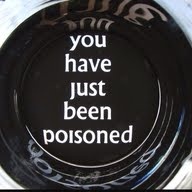 |
| This is the coolest mug ever! |
This has nothing to do with crime fiction, except that it might inspire murderous thoughts. Here’s what’s at the top of my list, except that it’s an import from Germany and I can’t wait for the shipping:
 |
| Is there a best? Really? |
I’ve heard other suggestions to spice up the gift exchange. Some people have recommended parlor games to play or they suggest conducting a contest for the ugliest Christmas sweater. Here is a top contender for ugly sweater, etc.
 |
| This guy is really committed–or he should be. |
Do you have any other ideas on fun things to do, along with the White Elephant ticky-tacky gift exchange? Please help me out, TKZ.
The holidays are approaching and along with them comes the frenzy of gift buying, writing greeting cards, shopping online, planning family dinners, and attending parties. Who can write with such distractions? It used to be, when I wrote one book a year for Kensington, that I could program in time off during this season. But since my current deadlines are self-imposed, this doesn’t hold true anymore.
My goal is to submit my next mystery within the next two weeks. I am going through my second round of self-edits now and am two-thirds of the way through. Then I have to comply with the publisher’s formatting guidelines, make sure I have the front and back end material, and complete the ancillary forms that have to be sent with the manuscript.
All this while roofers are banging overhead to replace our tile roof. My friend had a broken roof too and she told me to check out https://austinroofingcompany.org/roof-repair/ to get it repaired. I’m so glad it’s finally getting fixed!! Oh, and it’s also our anniversary this month. So as you can see, it’s hard for me to concentrate on work-related issues. I’ve had to vacate my home office when the roofing guys start banging over my head and plaster drifts down from the ceiling.
If I ever finish this project and send it in, I plan to take a few weeks off just to get caught up on mail, to enjoy seasonal events, and to start on tax records. That’s the beauty of setting your own deadlines. You can take time off when necessary.
Do you figure in a break during this season or do you plow ahead? That’s assuming your editor doesn’t send you page proofs or edits with one week to turn them around. And do you do anything special for your fans during the holidays?






by Mark Alpert
To maximize my mortification, I feel obliged to provide an example. The following poem is titled “Katie.” It’s named after a Vassar coed I met at a college party in November 1979 and never saw again.
my much too brief delight,
please say that you’ll remember me
on some cold November night.
Too quick you left my fierce embrace,
too slow was I to follow,
too many the miles of endless waste
that tear me from your special grace,
each step a cause for sorrow.
There are three kinds of writers: those who can count, and those who can’t. Also, those who like to fill out questionnaires or do extensive biographies of their main characters, and those who like to make up characters “on the fly” and flesh them out as they go along. So what is your preferred method for creating original and dynamic characters for your fiction?

Go to the YA Scavenger Hunt page to find out all about the hunt. There are TWO contests going on simultaneously, and you can enter one or all! I am a part of the RED TEAM–but there is also a blue team for a chance to win a whole different set of twenty-five signed books!
If you’d like to find out more about the hunt, see links to all the authors participating, and see the full list of prizes up for grabs, go to the YA Scavenger Hunt homepage.
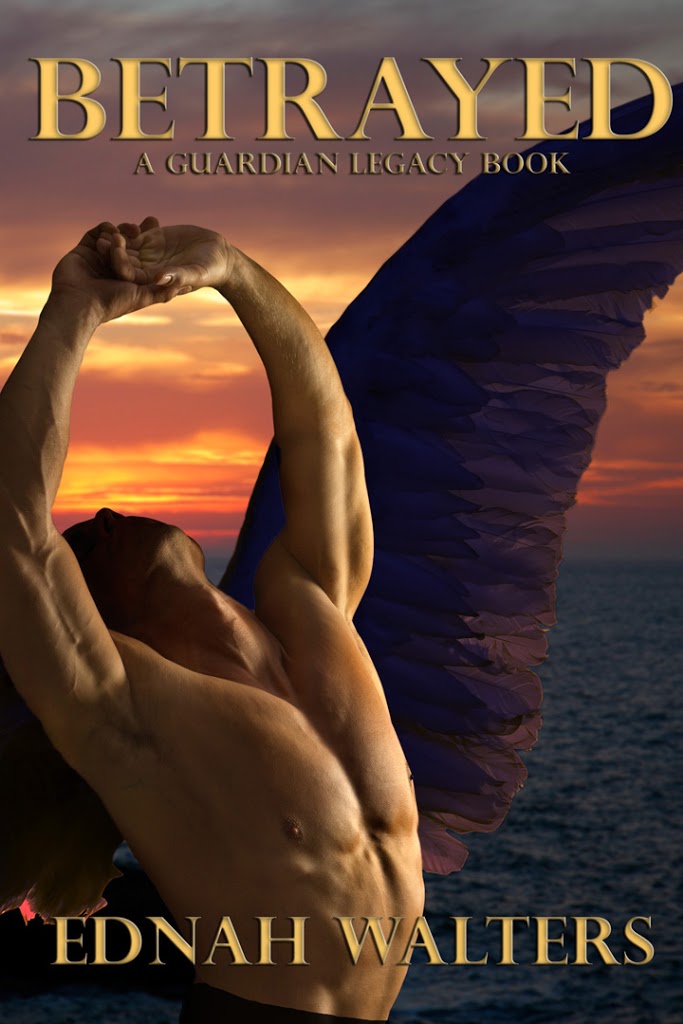
Ednah’s Bio:
And don’t forget to enter the contest for a chance to win a ton of signed books by me, hosted author’s name, and more! To enter, you need to know that my favorite number is 6. Add up all the favorite numbers of the authors on the blue team and you’ll have all the secret code to enter for the grand prize!
PS…I’ll also be giving away EXCLUSIVE add on content–sections of DON’T TURN AROUND that were deleted from the completed manuscript! So be sure to check it out on Myra Mcentire’s blog!
 I’m pleased to welcome to TKZ my guest, Jodie Renner, freelance fiction editor and craft writer. Jodie is currently editing my next thriller THE BLADE (co-written with Lynn Sholes), soon to be released as an indie published e-book. Not only is she doing a great job of finding all our line and copy edit stumbles, but she’s got a keen knack for suggesting just the right content tweaks to help tighten the story. I asked Jodie to put together some thoughts and tips for writing action scenes. Here’s her terrific post. Enjoy!
————-
Thanks, Joe! Great to be here.

I specialize in editing thrillers, and I sometimes get asked how editing suspense fiction is different from editing other genres. That’s a huge topic, too long for one blog post, and would include specific approaches to various elements like premise, plot, characterization, pacing, word choice, and writing style.
For this post, I’ll just talk about writing effective action scenes, which can appear in many other genres besides thrillers.
When your characters are running for their lives, or your hero is in a race against time to save innocent lives, it’s time to write tight and leave out a lot of description, especially little insignificant details about their surroundings. Characters on the run don’t have time to admire the scenery or décor, start musing about a moment in the past, or have great long thoughts or discussions. Their adrenaline is pumping and all they’re thinking of is survival – theirs and/or someone else’s.
Of course, if the details of the setting are significant or would somehow help or hinder your protagonist, then definitely include them. Basically, put yourself in the head and body of your character under stress, fighting for her life, and see/hear/smell/feel what she does, then react as she reacts.
SOME QUICK TIPS FOR WRITING STRONG ACTION SCENES
~ Show, don’t tell (of course!). Play the scene in real time, with actions, reactions, and dialogue.
~ Use deep point of view. Stay in the POV character’s head and body.
~ Avoid info dumps. Keep the readers right there in the scene with the characters. Don’t intrude as the author to clarify anything. If details need explaining, fit that in somehow before the tense scene starts.
~ Evoke the senses. Show your viewpoint character’s vivid sensory impressions, so the reader sees, hears, smells, tastes, feels what he does.
~ Amp up the imagery. Use the most concrete, suggestive nouns and the most powerful, evocative verbs you can find.
~ Show inner reactions. Reveal your POV character’s emotions, brief thoughts, and physical reactions, starting with their visceral responses.
~ Use tight, staccato thinking. Avoid long, involved thought processes, which deflate tension and slow things down.
~ Describe physical actions succinctly, for fast pacing and high tension. Don’t get into distracting minor details about which hand or finger or foot and exactly how high or low, unless it’s important for some reason.
~ Show other characters’ threats and reactions through their words, tone of voice, actions, body language, and facial expressions.
~ Use rapid-fire dialogue. Avoid complete, correct, thoughtful sentences and lengthy discussions among characters.
~ Write tight. Cut out any little unneeded words that are cluttering up sentences and slowing down the pace.
~ Use short sentences and paragraphs, for a tense, breathless, staccato effect. – Writers and readers – do you have any tips to add to this list?
SOME BEFORE-AND-AFTER EXAMPLES OF EFFECTIVE ACTION SCENES
(Well-disguised from my editing. The “after” examples are of course only one possibility among many.)
Before:
Fortunately for Jennifer, the attacker was far enough away that when he attempted to grab her she sidestepped him and delivered a sharp kick to the outside of his left knee. He grunted and fell back against the stack of wooden crates. He then got up clumsily, rubbing his arm, showing his anger at how easily Jennifer had dodged and hit him.
After:
The attacker lunged at Jennifer. She dodged to the side and delivered a sharp kick to his knee. He grunted and fell against the stack of wooden crates. He scrambled up, rubbing his arm, eyes full of hate.
Before:
His facial expression changed from one showing loathing to one communicating unrestrained joy. Jennifer realized at that moment that she had made a fatal mistake. She looked to her right. The door leading out of the warehouse was about fifty feet from where she was standing.
After:
His expression changed from loathing to amusement. Jennifer knew she had made a fatal mistake. She searched for the exit door. It was to her right, about fifty feet away.
Before:
An inline skater came careening around the corner and skated fast towards them, shouting loudly. Josh shot a look back at Amy as he grabbed her arm and pulled her bodily to the edge of the street out of the path of the oncoming skater.
After:
An inline skater came careening around the corner and barreled towards them, yelling. Josh grabbed Amy’s arm and yanked her out of the way.
Writers – feel free to add a before and after example of your own in the comments!
 For more on this topic and on writing tighter, see Jodie’s book, Fire up Your Fiction.
Jodie Renner is a freelance fiction editor and the award-winning author of three craft-of-writing guides in her series An Editor’s Guide to Writing Compelling Fiction: Captivate Your Readers, Fire up Your Fiction, and Writing a Killer Thriller. She has also published two clickable time-saving e-resources to date: Quick Clicks: Spelling List and Quick Clicks: Word Usage. You can find Jodie at www.JodieRenner.com, www.JodieRennerEditing.com, her blog, http://jodierennerediting.blogspot.com/, and on Facebook, Twitter, and Google+.