
Time to tip your hat. Who is someone who has helped you along your writing journey? What did they give you that you appreciate?

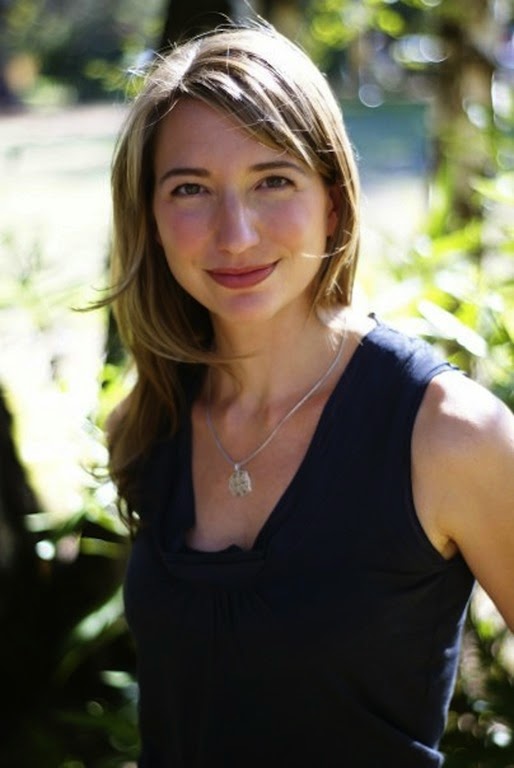
Today we welcome our guest, friend and TKZ emeritus, Michelle Gagnon filling in for Jordan Dane.
—————————
On the road to publication, I was fortunate to receive many tips and pointers along the way. Today I wanted to offer the three pieces of advice that had the biggest impact.
 –Perseverance
Getting published was an extremely long and tortuous process for me.
More than a decade ago, I started compiling a series of short stories into a novel. Like many debut novels, it didn’t have much of a story arc, and was largely autobiographical (sounds great, right? J). Convinced that it would be an instant bestseller, I immediately send it off to dozens of literary agents.
Then the rejections started rolling in. I seriously must have set some sort of record; by the end, more than 50 agents had passed on it.
A few wrote lovely letters, encouraging me to try again. But frankly, I was heartbroken. By that point, the book represented years of my life; time I would never get back.
So I stopped writing for a few months. Then by chance, I attended an author event. Lee Child spoke about how it usually took a decade to become an “overnight success story.” And he explained that in his opinion, the authors who succeeded were the ones who didn’t give up.
I’d come close to doing just that. But the next day, I started writing another book. That book became THE TUNNELS; the first literary agent I sent it to offered to represent me (and mind you, this was an agent who had rejected my first novel).
So tip #1: never give up
–Don’t pick up that red pencil until you’ve reached the end
I meet a lot of writers who have written 50, or 100 pages of a book. And that’s precisely when a lot of them give up. Listening to them, I’ve figured out why: when they got to that point, they went back and started editing their work.
Granted, everyone has a different process, but here’s my advice: don’t start editing AT ALL until the bones of the story are in place. I’m currently finishing the rough draft of my 12th novel; and when I say rough, believe me, it’s no exaggeration. The manuscript is riddled with typos, overwrought metaphors, and clunky dialogue. I accept that much of the time, I’m going to despise what’s appearing on the page. But I grit my teeth and keep going, because the rough draft is called that for a reason. It’s all about getting the bones of the story in place. Later, I’ll end up reworking it chapter-by-chapter, scene by scene; I usually make between 15-20 passes on every book I write. So there’s plenty of time to fine tune it later.
The problem with editing as you go is that it’s a much slower process. I usually write 10 pages a day; during the editing process, I’m lucky to get through 3. So when a first time writer finally gets back to page 50, after perfecting those opening chapters, it’s daunting; like looking up at Everest, and realizing that you’ve barely reached base camp. Many, many people give up at that point. Avoid that by not stopping until you reach the end.
–You don’t have to write every day
Stephen King famously claims to write 4 hours a day, and read 4 hours a day. Every time I hear that, all I can think is that he probably never has a day that starts with driving carpool, followed by a PTA meeting, then returning home to discover that the water heater burst and somehow he has to get that fixed and clean all the water up off the floor.
Or maybe he does, I don’t honestly know. But the truth is, we’re not just writers, we’re people too; with families and pets and homes to maintain. We need to go grocery shopping and pay the bills. We need to take care of the people in our lives, and sometimes that doesn’t leave a lot of extra time to work on our manuscripts.
And you know what? That’s okay. Because here’s the thing: even if you only write one page a day, by the end of a year, you’ll have a book. And if you manage to write five pages one day, and nothing for the next four days: same result.
I write when I can, for as long as I can. And there are days—heck, weeks—when I don’t write at all. I don’t bring a laptop on vacation; I don’t take it with me for family visits. It’s not always easy to get back into the groove of a story after a long absence, but it’s manageable. And preferable to not writing at all. So don’t buy into the myth that a “real” writer spends every spare minute slaving away at their keyboard, because by and large, that’s not the case.
I hope these three tips are helpful; I honestly wished that I’d known them when I was starting out. So persevere, plow through your rough draft, and know that skipping a few days doesn’t make you any less of a writer.
We all take different paths to publication; the important thing is that we all end up at the same place.
Michelle Gagnon
Michelle Gagnon is the international bestselling author of thrillers for teens and 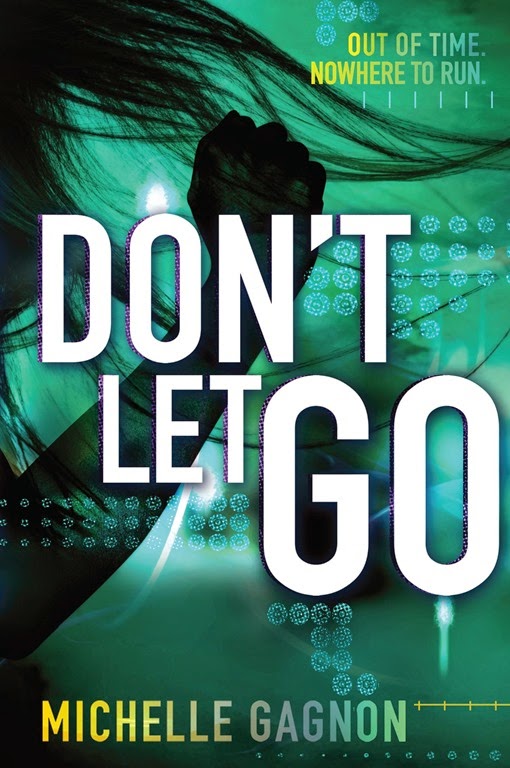 adults. Described as “The Girl with the Dragon Tattoo meets The Bourne Identity,” her YA PERSEF0NE trilogy was nominated for a Thriller Award by the International Thriller Writer’s Association, and was selected as books of the year by Entertainment Weekly Magazine, Kirkus, Voya, and the Young Adult Library Services Association. The final installment, DON’T LET GO, was just released. She splits her time between San Francisco and Los Angeles.
Today, I welcome to TKZ my friend and fellow ITW member, New York Times bestselling author, Tosca Lee. Because of the historical nature of so much of Tosca’s writing, I asked her to share her thoughts on research. Enjoy!
Joe Moore
—————–
I’m asked often how I research my historical novels. I’ve steadfastly avoided writing about this topic until now I think because it’s such a personal process—one dictated by how a  person sorts, digests, and stores information. None of us will do it the same. That said, having had to pack the equivalent of a dissertation’s worth of research into six months on occasions before, I have picked up a few tricks.
1) Start pedestrian. Do what everyone else does: Google. Wikipedia. YouTube. See what’s available on Amazon. Read and watch widely.
2) Acquire key references for your library. These are the staple works and experts that books, articles and documentaries about your topic refer to time and again. For the first century, it’s the historian Josephus. For period warfare, Carl Von Clausewitz. Find your staple information.
3) Find specialty outlets. This is where I divert to the History Channel. National Geographic. The Discovery Channel. Coursera. Two of my power tools: The Great Courses and the (in my opinion) less-utilized and under-appreciated iTunes U. These last two, in particular, are rich sources of highly-organized, consumable information by leading experts and ivy-league academics. True, the Great Courses are not cheap. If scrimping, look for the course on eBay, or order only the transcript. iTunes U. is free.
4) Identify your experts—the writers of the staple books (or their commentaries), the leading academics or specialists teaching the lectures or commenting in the documentaries. These may also be area experts or locals living in your setting (travel guides, bloggers and book authors are excellent for this) or doing what they do.
5) Recruit. I never write a novel without at least a small group of experts in my pocket to either point me in the direction of information I need or to directly and expediently answer a question as I’m working. Don’t be afraid to write and introduce yourself and how you came to find them. Be direct with queries and questions, and therefore respectful of their time. Curators of specialized information are eager to help someone who shares their enthusiasm. Offer them the gift of some of your previously published work if they express willingness, and a consulting fee if you have the resources. If you find yourself relying on their help at regular intervals, be gracious with a token of appreciation. And of course remember them in your acknowledgments and with a finished copy of the project. Having made friends with several of my sources, the research has become easier; when I start a project in the purview of one of them, I ask for a starting bibliography, which cuts down on steps 1 and 2.
Of course you need a general idea what you want to accomplish when you start researching. That said, I have found it most helpful to let the research inform my outline, particularly in writing historical fiction. I find it most helpful to let the political, cultural and religious climate of a point in history inform my characters’ backstory and upbringing. In fact, I have three rules as I create historical characters in particular: their lives must adhere to or put an interesting (but plausible) twist on their historical record; their lives and actions must be in keeping with their political and cultural setting (even a visionary is only a visionary relative to setting); and ultimately, their pains, joys and actions must ring true to human nature.
My research library for my first book consisted of some fifteen items. My library for Iscariot, more than 100. There’s an inherent risk in so much information and it is this: the temptation to put every tasty morsel of obscure but fascinating information into your prose.
Don’t do it.
Despite my telling myself this advice, my first draft of Iscariot was 800 pages. Part of that is my own habit of over-writing first drafts. The other part of that was an overabundance of interesting stuff. Too much clever innuendo that required first educating the reader.
Readers are not reading fiction to be educated, but entertained (or else they would be reading the same research material as you). Take the time to read and absorb everything pertinent—not for their sake, but yours. Sort your information in a way that you can find what you need when you need it. These days, I organize information by topic in Scrivener. But having absorbed everything I’ve read, listened to, and watched, I try to push it all away when I sit down to write. I let loose, keeping maps or immediate references nearby if necessary, but adding historical details in very small doses later—and mostly to the first part of the novel, where I am buying credibility with the reader.
Save yourself the trouble of hashing through a barrage of information by cutting to the heart of your story from the get-go. Because ultimately, the storyline that will draw and keep your readers is not the product of your diligent research (that will only keep you out of hot water with the critics)… but the emotional connection with a character’s hopes, dreams, failures and fears—the things that bind us all, regardless of time and place.
—————–
Tosca Lee is the award-winning, New York Times best-selling author of Iscariot; Demon: A Memoir; Havah: The Story of Eve, and the Books of Mortals series with New York Times best-seller Ted Dekker (Forbidden, Mortal and 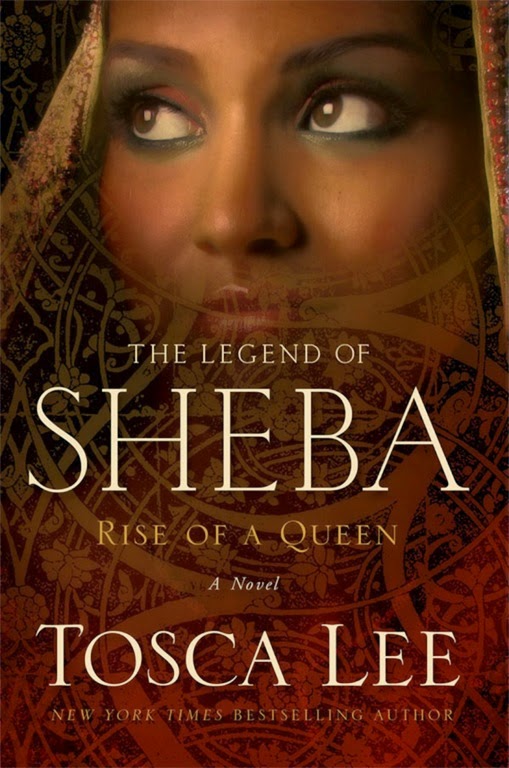 Sovereign). Her highly anticipated seventh novel, The Legend of Sheba, releases September 9, 2014.
Tosca received her B.A. in English and International Relations from Smith College in Northampton, Massachusetts with studies at Oxford University. She is a lifelong world adventure traveler and makes her home in the Midwest. To learn more about Tosca, visit www.toscalee.com.
For a limited time, download ISMENI, the eShort prequel to SHEBA for free.

Is it just me, or did this summer season seem especially dramatic? Ebola outbreak! Russia invades! Marches in the street! People trapped on a mountain surrounded by madmen! The world is burning up, and drowning at the same time!
To forget about all these real-life crises for a few hours, I’d like to find a great, end-of-summer read. What’s the best book you’ve read this year? I need something I can down in one big, escapist gulp of reading. Let me know in the comments. Thanks, and Happy September!
Today, in honor of Labor Day, I wanted to cover something that has been bugging me all week. It began last Monday when I started a new book and within pages the prose was already starting to annoy me. The words, or at least the author’s choice of long, lugubrious, often archaic words were already getting in the way of the story – and I wasn’t even at Chapter 2! As soon as I started to read I got the impression that the author was trying way too hard to impress the reader, rather than focusing on creating a compelling story. In some ways the writer was confusing style with content and in so doing, this reader at least, was no longer interested in reading. It had become too laborious. The words themselves had got in the way.
So why was this? I think in this instance it was the result of a naive writer hoping to show-off their linguistic prowess (or something like that – it felt like dictionary gymnastics at times!) and hoping perhaps that this somehow created an aura of literary validity (it didn’t!). What frustrated me the most was that the word choices detracted from what could have been a pretty strong start to a cozy mystery. It got me thinking about why – for someone like me who is drawn to perhaps the more wordy novels anyway (I love Dickens!) – was the prose was so off-putting? I decided it was simple – it was because it was unnecessary. And this at the heart of most things that go wrong with the start of a novel. Anything that feels unnecessary to the reader creates a barrier between them and the page. It stops them from wanting to keep turning that page. Instead, I like to think that a writer should go through a checklist, when reviewing their work, asking themselves a series of questions – something a little like this:
Basically, don’t belabor your words. Let them flow, simply and easily. Readers will thank you.
So TKZers, tell, me what was the last book that you felt the author belabored their words? Any of your own advice to add to the checklist?
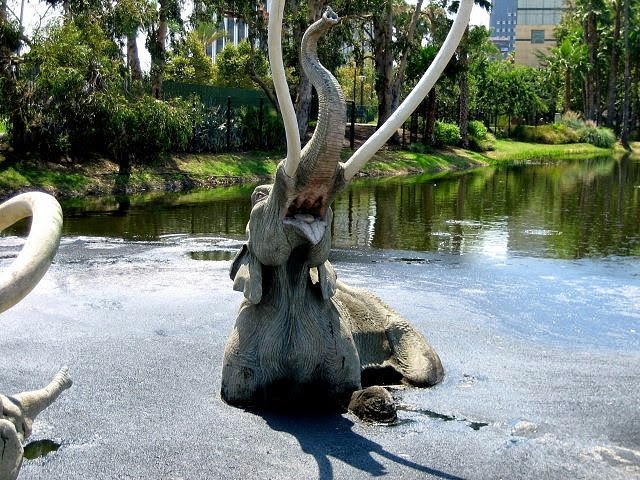
These tips will keep you out of the goo.
I’m filling in for Jordan today and we have another first page critique. This one’s entitled ‘Discovering Aberration’ – my comments follow.
DISCOVERING ABERRATION
I stood before the lectern in the Grand Literature Hall clutching my mangled copy of Draganvich’s The Lament of the Beggar. Though I had the intention of reading a selection aloud, I found myself fixated on a note in the margin which caught my eye and caused me to pause. “I’m always homesick for the journey,” I had once written in ink speckled script, adding almost as an afterthought, “…no matter what it might hold.”
“No matter what it might hold,” I whispered absorbed in remembering.
It had been two years since my extended journey to the orient. Two years spent writing and searching for employment, poor as Job’s turkey. And then, six months ago everything simply seemed to happen on its own accord. The Oriental Adventure, the book I had written and published under the name Franklin P. Fitzgerald became a rousing success. I was honored by the Tetraelly Academy with a grant and a residency on condition that I teach. And then as suddenly as it all began I found myself, for lack of a better phrase, fantastically bored. Not weary, nor depressed, nor any other such nonsense. Bored, standing in front of a crowd of affluent students (any one of whom had inherited more than I had earned in my entire life), fumbling though the teaching process, and now lost in thought, remembering.
“Professor Fitzgerald?” came a voice from the young lady in the front row. “Professor, are you not feeling well?”
“Hm,” the sound carried almost unnaturally clear through the vast auditorium and over the sea of students. Even those in the back sitting elbow to elbow could hear the slightest of whispers, such were the acoustics. I looked at the book in my hands to the fog of young and wealthy sons and daughters, most wearing ridiculous collections of posed taxidermy. As was the growing fashion among the young and wealthy, they wore the corpses of beasts of the air upon their hats or beasts of the land slung over their shoulders, but never both. Strange, to have all these eyes on me, the eyes of the students and the threaded eyes of the animals.
It still holds true, thought I. Homesick for the journey once more, eh old boy. I fumbled to find myself again, seeking out my originally intended selection. “Yes,” I replied to the girl sitting directly before me. “I’m quite alright.”
MY COMMENTS
I have grouped my comments by heading, to make things a little clearer.
Setting? Genre?
Overall I had the sense from this first page that I was getting a lot of information I didn’t really need, and not enough of the information I did need. From the outset it felt like we were entering the fantasy realm (the Grand Literature Hall, Draganvich’s The Lament of the Beggar, Tetraelly Academy) and yet the reference to the orient and Job pulled me out of this and I was left wondering about what world and what time period I was supposed to be in. Was the main character a religious man? It sure sounded like he was about to give a theology lecture and his use of the expression ‘Job’s turkey’ made it sound 19th century – so I was a little confused from the outset as to whether this was fantasy or history (or both).
Nothing in this first page gave me much of a grounding for the world I was entering and, without this, I found it hard to get excited about the story. To be honest this first page left me wondering why I should care about Professor Fitzgerald, or his memories of his trip to the orient. I did like the idea of him being up on the lectern, suddenly gripped by memories of the past, and unable to present his intended lecture – but I needed a higher level of tension to become fully engaged and invested in the story from the outset.
Character?
I couldn’t really visualize Professor Fitzgerald. At first he sounded elderly, mulling over the past. Then it sounded like he was slightly younger and bored. Then he went back to sounding old again (particular when he thinks ‘eh old boy’). As a character he was too amorphous for me. I needed less details about the audience and more about him. I also don’t think a character who is merely bored (even if it is ‘fantastically’) generates a lot of narrative drive. I would prefer him to be haunted by his experiences in the orient and so when the memories return, they overwhelm him.
Redundancies?
So what makes it hard to critique this first page is that the details we do get don’t really seem drive the story forward. We get some background regarding Professor Fitzgerald’s journey to the orient but all we know is that he went poor, wrote a book that was a ‘rousing success’ and them ended up teaching. (As a side note why was the book ‘published under the name Franklin P. Fitzgerald’ – which makes it sound like this was an alias – when it appears that it is actually his name?) This information didn’t really compel me to care about Professor Fitzgerald.
Instead of piquing the reader’s interest with details of his journey to the orient, the author provides more details instead about the students. So we know they are affluent (this is repeated – we get told twice more that they are wealthy which is unnecessary repetition in the first page) and that they make strange taxidermic fashion statements. But even this makes it hard for me as a reader to visualize the world we’re in. Is it a historical setting in an alternative world? Or is it in our real world? Again, I’m left without any real sense of where the story is set in terms of time or place. I also found it strangely redundant to know that the students wear ‘corpses of the beasts of the air upon their heads or beasts of the land slung over their shoulders but never both’ – and are these beasts ones we would know or are they fantastical? I think the fashion provides plenty of scope to be intriguing but instead it seems stilted and too generalized. In a first page a reader wants to have the world evoked in a dramatic and sensory way.
Voice
So the author’s voice in this piece seems old fashioned and a little stifled at times, as if designed to evoke the past. This can work if used to good effect but at the moment the first page isn’t grounded enough in a vivid world/time period for this to be all that effective. Instead, this voice creates distance between the reader and the story.
Punctuation/POV issues
There is some lack of punctuation but, as it didn’t detract from the story, I’m not going to focus on this – except to point out that the internal monologue ‘eh old boy’ needed a question mark. When the professor is supposedly lost in his memories, staring at his book, it was also hard to understand how he knew that the voice was coming from the young lady in the front row.
Recommendations
I would recommend refocusing this first page on getting the reader intrigued about Professor Fitzgerald and what happened on his journey to the orient. I would ensure enough detail is given so the reader is well grounded in the world that he inhabits. I’d also do away with redundant details about the acoustics of the auditorium or the wealth of the students. The author needs to make it clear from the outset what kind of disturbance or event is going to provide the narrative drive to this story. Even the title ‘Discovering Aberration’ is ambiguous and I’d like to get some sense of where this story is headed…is it about species aberration? Does the plot turn darker and more ‘thriller-esque’ or is it going to be more of an alternate history or fantasy novel? It’s really hard to tell at the moment.
Finally, readers need a reason to turn the page and at the moment there isn’t enough happening to do this. Everything seems to hinge on the main character’s ‘ruminations’ which isn’t really enough (especially when they offer little in terms of drama).
So TKZers what feedback do you have?
Archetypes are recurrent themes found in works of literature and film. Recently I attended a talk by a nautical archaeologist (http://nancyjcohen.wordpress.com/2014/08/14/nautical-archaeology-for-writers/). While this professional is concerned with preserving underwater shipwrecks and their associated artifacts, treasure hunters seek to plunder these watery grave sites. Now pit two of these opposing people together as hero and heroine, and you have instant conflict.
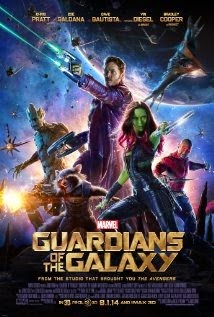
Or take the Star Lord and the green-skinned girl in Guardians of the Galaxy. He’s a cocky womanizer. She’s a feminist warrior. Don’t you love the sparks that fly between them until they realize how much they care for each other? Here’s a list of other familiar archetypes.
AMNESIA: Is he/she married, a parent, a missing bride/groom, presumed dead? Did he kill someone? Did someone try to kill him? Is she a witness to a violent crime? Is he an undercover agent who got hurt by the bad guys? American Dreamer, The Bourne Identity
BRIDES: Marriage of convenience, fake fiancés, mail order bride, runaway bride/groom, green‑card, royal, shot-gun wedding, jilted, terms of the will, Vegas spur-of-the-moment wedding. Runaway Bride, Father of the Bride, Wedding Crashers, Sleepless in Seattle, What Happens in Vegas
CHILDREN: Abandoned, lost, adopted, biological, inherited, stolen, secret baby, true identity unknown, switched‑at‑birth, kids playing matchmaker for single parents. Home Alone
DISGUISE: Hidden or unknown identity, switching places: True Lies, The Prince and the Pauper, The Scarlet Pimpernel, Freaky Friday, The Princess Diaries, Arrow
FISH OUT OF WATER: Enchanted, City Slickers, Kate and Leopold, Outlander
MAKEOVER: The Princess Diaries, My Fair Lady
MISMATCHED COUPLES: Bad boy/Good girl, Cowboy/Lady, Pirate/Princess, Real Estate Developer/Preservationist, Wanderer/Homemaker, May/December, Womanizer/Feminist, Duke/Governess, Mentor/Protegé, Boss/Employee. Romeo & Juliet, Beauty and the Beast, Six Days Seven Nights, Guardians of the Galaxy
RAGS TO RICHES: Cinderella, Pretty Woman, Ever After
REUNION: Former lovers, estranged spouses, lost love, thwarted romance, divorced but still in love. Sweet Home Alabama
SECRET POWER: Harry Potter series, Superheroes like Superman and Spiderman

SINGLE PARENTS: Struggling unwed mothers, clueless divorced dads, inexperienced surrogate. Three Men and a Baby, Baby Boom
TWINS: Switched identities, mistaken identities, trading places to fool people and having the tables turned on them instead. Parent Trap, New York Minute
Now wouldn’t it be interesting to pick one of these for your suspense/thriller novel? That’s what I did for Warrior Lord, my latest action-packed romance with scifi/fantasy elements. Drift Lord warrior Magnor of the Tsuran must recover the fabled Book of Odin. Hidden in its text is information on a weapon to defeat his enemy. Magnor has received a tip that a clue to the whereabouts of this book can be found at the Viking Vegas Resort.
As soon as he steps inside the casino, he’s drawn to a woman playing blackjack. When he hears her mutter how she can use the cash from a contest for engaged couples as announced over the loudspeaker, he suggests they enter the competition even though they’ve just met. Before you can blink, they win and are married on live TV. Marriage of Convenience meets Lord of the Rings plus Star Wars. It was fun tossing this trope into my paranormal universe.

Think about the books on your shelves at home. Do you repeatedly buy the same types of stories? Does this tell you something about the plot devices that appeal to you? What other movies can you fit into the categories above?
