Revisiting the Mirror Moment

@jamesscottbell

Please allow me a bit of shameless self-promo, because it involves Kevin Costner. No, he’s not contacted me about filming one of my books (though he should). It’s about one of his older movies. Stay with me.
Earlier this year I put out a book called Write Your Novel From the Middle. In it I describe what I call the “mirror moment,” a powerful beat I saw happening in the middle of solidly structured movies and novels. It has since become the basis of all my plotting, and seems to have helped many other writers, too. For example, here’s a recent email I received (used by permission):
Hi James,
I own so many of your books, so I want to email you about a small epiphany I had. I recently bought “Write Your Novel From The Middle” and, jaded as I am about writing books, read it with some interest but not much conviction.
Two weeks later, I’m elbows-deep in the guts of a novel I wrote 7 years ago, and cutting. I mean, I’m slicing and dicing like Freddy Krueger, blood and guts everywhere. I took 20k out of a 127k novel.
And there was that weird passage where my main character has a health crisis (he essentially screws up his immune system from overwork, but he thinks it’s something worse) and basically lies flat on his back in his bedroom, waiting to die.
And he realizes that due to the path he’s chosen, he’s completely alone on the planet, in London, and nobody cares if he lives or dies. It’s a moment of great weakness, self-pity and the existential crisis that propels him – once he gets better – to really work that human interaction, make friends, network. (He’s in finance, so being good with people is important). Long story short, I really gutted the book, cut that scene down by at least half, and some editors said I should cut it entirely, but for me it was weirdly important. It felt powerful, and it wasn’t the typical “kill your darlings” kind of vanity on my part. I knew it was important, so I only condensed it and kept it in place.
The book then went to layout. It was exactly 400 pages in PDF.
Guess where that scene fell? Pages 202 and 203. If you take out the front matter/cover, it’s SMACK BANG in the middle.
I admit I guffawed.
Thank you for putting your writing advice out there. You definitely blew my mind this time.
All the best,
Aleks
The reason I share this is that this writer’s reaction is one I continue to experience in my own writing as I utilize the mirror moment and writing from the middle.
Now, on to Kevin Costner.
A few months ago my wife wanted to watch the thriller No Way Out with Costner and Gene Hackman. We hadn’t seen it in ages, so I got the DVD from Netflix and popped it in the player.
Halfway in there’s a critical scene involving Hackman and Costner. I paused the DVD. I looked at the counter. We were in the exact middle of the movie.
I turned to my wife and said, “Kevin is about to have his mirror moment.” I did not know what it was going to be or how it would be shown. I just felt it was coming. 
My wife looked at me the way Jack Palance looks at Alan Ladd in Shane when he says, “Prove it.”
I started the film up again. And this is what happened next:
I stopped the movie and smiled at my wife.
She said, “Don’t let it go to your head.”
If you were writing this scene in a novel, you would give us the inner thoughts of the Costner character. He’s thinking along the lines of, “This is too much. I’m dead. There’s no way out of this…” That’s one of the mirror moment tropes. The other is a reflection on questions like, Who am I? What have I become? What must I become?

It’s my contention that knowing your book’s mirror moment illuminates the entire novel better than any other single technique. And the great thing is you can do this at the beginning, middle or end of your draft. You can use it whether you’re plotting or pantsing your way through.

Anyway, I had to tell you about the Costner thing. Thanks for indulging me. Write well and prosper, my friends! And may the mirror be with you.
So here’s today’s question: What’s your favorite Kevin Costner movie?

Learning from Stephen King

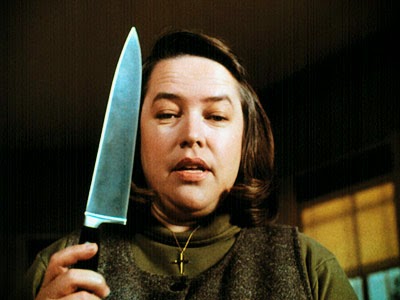
Last month I had the great pleasure of reading Stephen King’s Misery to my 15-year-old son. Actually, I read only about a quarter of the novel to him; he read most of it on his own, devouring the chapters while he rode the subway to his cross-country team practices. I’d never read Misery before. I saw the movie when it came out in 1990 and loved it. In fact, that’s why I didn’t read the novel for almost a quarter-century. I doubted it could be better than the movie.
But the book is better. It’s even more disturbing and gruesome. In the movie, the insane nurse Annie Wilkes (played so wonderfully by Kathy Bates) punishes her bedridden captive Paul Sheldon (played by James Caan) by breaking his ankles with a sledgehammer. But in the book she chops off his left foot with an ax and cauterizes the stump with a blowtorch. Then, for good measure, she cuts off his thumb with an electric carving knife. But she’s also careful enough to apply a coat of Betadine antiseptic to both the knife and the ax blade. One of the most memorable parts of the novel is the image of the carving knife in motion, flinging drops of Betadine every which way as it saws back and forth. As my son put it: “That picture really stays with you.”
What’s more, King uses the novel to make several interesting points about writing. Paul, the narrator, is a bestselling novelist (like King) who’s loved by millions of readers but disliked by many reviewers (again like King, at least back in the 1980s). Annie is Paul’s deranged “number one fan.” At the start of the novel, before all the torture and amputations, Paul tries to explain some of the techniques of fiction to Annie, but she has no interest in them — she’s strictly a reader, not a writer. And yet she’s passionate about the books she reads and gets furiously upset at implausible plot twists. (“HE DIDN’T GET OUT OF THE COCKADOODIE CAR!”)
King explores the issue of plausibility by having Paul recall a childhood memory. He remembers a grade-school class where the teacher encouraged Paul and the other students to play a game called “Can you?” The students would collectively tell a story, with each boy or girl contributing a few twists and turns, and when the story reached a point where the hero faced an impossible dilemma, the teacher would challenge the students to come up with a way out of the fix. She would ask, “Can you?” and the student who accepted the challenge would propose a solution, and then the other students would vote on whether it seemed plausible.
This reminded me of a different game my wife and I still play with our kids during long car rides: the Fortunately/Unfortunately game. The kid playing the Unfortunate role thinks up terrible disasters while the Fortunate kid thinks of ways to escape death and ruin. Both of these games are good exercises for budding novelists. (In our family’s case, though, the games usually go downhill fast. We don’t do well on long car rides.)
Halfway through Misery’s plot, Paul realizes that only writing can save him from his own impossible dilemma. He starts writing a novel that rivets Annie, preventing her from killing him until he finishes the book. King’s descriptions of the writing process are spot-on. Paul talks about seeing a hole in the piece of paper he’s typing on, and through the hole he can see what’s going to happen next in his book. On some days the hole is big, on other days it’s tiny. He also talks about ideas that pop up from the unconscious mind, which he refers to as “the boys in the sweatshop.” Just the other day I was having some trouble with the book I’m working on — I was out of ideas, I didn’t know what would happen next — and my son reassured me by quoting from Misery: “Don’t worry, Dad. Sooner or later the boys in the sweatshop will send up a flare.”

After my son and I finished the book, we rented the movie (he’d never seen it before). The screenwriter (William Goldman) and director (Rob Reiner) made a few smart tweaks to the plot, and Kathy Bates’s performance was just as good as I remembered, but I missed the intimacy of being inside Paul Sheldon’s head and seeing all the fear and despair and cleverness in there. That’s the picture that really stays with you, the one that can’t be filmed.

Top Three Tips for Getting Published

Today we welcome our guest, friend and TKZ emeritus, Michelle Gagnon filling in for Jordan Dane.

—————————

By Michelle Gagnon

On the road to publication, I was fortunate to receive many tips and pointers along the way. Today I wanted to offer the three pieces of advice that had the biggest impact.

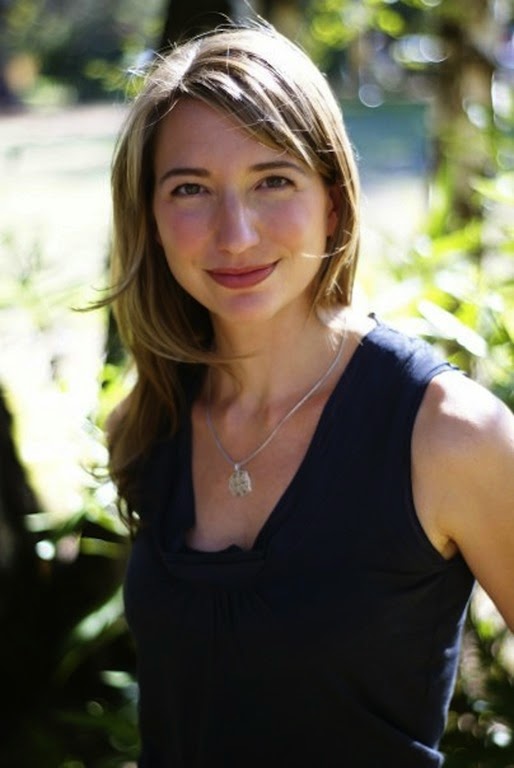
high res Michelle_Gagnon color Perseverance

Getting published was an extremely long and tortuous process for me.

More than a decade ago, I started compiling a series of short stories into a novel. Like many debut novels, it didn’t have much of a story arc, and was largely autobiographical (sounds great, right? J). Convinced that it would be an instant bestseller, I immediately send it off to dozens of literary agents.

Then the rejections started rolling in. I seriously must have set some sort of record; by the end, more than 50 agents had passed on it.

A few wrote lovely letters, encouraging me to try again. But frankly, I was heartbroken. By that point, the book represented years of my life; time I would never get back.

So I stopped writing for a few months. Then by chance, I attended an author event. Lee Child spoke about how it usually took a decade to become an “overnight success story.” And he explained that in his opinion, the authors who succeeded were the ones who didn’t give up.

I’d come close to doing just that. But the next day, I started writing another book. That book became THE TUNNELS; the first literary agent I sent it to offered to represent me (and mind you, this was an agent who had rejected my first novel).

So tip #1: never give up

Don’t pick up that red pencil until you’ve reached the end

I meet a lot of writers who have written 50, or 100 pages of a book. And that’s precisely when a lot of them give up. Listening to them, I’ve figured out why: when they got to that point, they went back and started editing their work.

Granted, everyone has a different process, but here’s my advice: don’t start editing AT ALL until the bones of the story are in place. I’m currently finishing the rough draft of my 12th novel; and when I say rough, believe me, it’s no exaggeration. The manuscript is riddled with typos, overwrought metaphors, and clunky dialogue. I accept that much of the time, I’m going to despise what’s appearing on the page. But I grit my teeth and keep going, because the rough draft is called that for a reason. It’s all about getting the bones of the story in place. Later, I’ll end up reworking it chapter-by-chapter, scene by scene; I usually make between 15-20 passes on every book I write. So there’s plenty of time to fine tune it later.

The problem with editing as you go is that it’s a much slower process. I usually write 10 pages a day; during the editing process, I’m lucky to get through 3. So when a first time writer finally gets back to page 50, after perfecting those opening chapters, it’s daunting; like looking up at Everest, and realizing that you’ve barely reached base camp. Many, many people give up at that point. Avoid that by not stopping until you reach the end.

You don’t have to write every day

Stephen King famously claims to write 4 hours a day, and read 4 hours a day. Every time I hear that, all I can think is that he probably never has a day that starts with driving carpool, followed by a PTA meeting, then returning home to discover that the water heater burst and somehow he has to get that fixed and clean all the water up off the floor.

Or maybe he does, I don’t honestly know. But the truth is, we’re not just writers, we’re people too; with families and pets and homes to maintain. We need to go grocery shopping and pay the bills. We need to take care of the people in our lives, and sometimes that doesn’t leave a lot of extra time to work on our manuscripts.

And you know what? That’s okay. Because here’s the thing: even if you only write one page a day, by the end of a year, you’ll have a book. And if you manage to write five pages one day, and nothing for the next four days: same result.

I write when I can, for as long as I can. And there are days—heck, weeks—when I don’t write at all. I don’t bring a laptop on vacation; I don’t take it with me for family visits. It’s not always easy to get back into the groove of a story after a long absence, but it’s manageable. And preferable to not writing at all. So don’t buy into the myth that a “real” writer spends every spare minute slaving away at their keyboard, because by and large, that’s not the case.

I hope these three tips are helpful; I honestly wished that I’d known them when I was starting out. So persevere, plow through your rough draft, and know that skipping a few days doesn’t make you any less of a writer.

We all take different paths to publication; the important thing is that we all end up at the same place.

Michelle Gagnon

www.michellegagnon.com

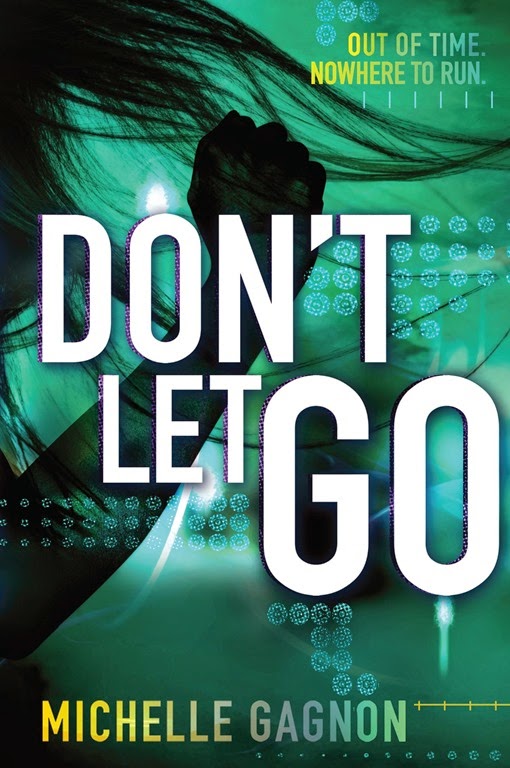
Michelle Gagnon is the international bestselling author of thrillers for teens and Dont Let Go_jkt_des6.inddadults. Described as “The Girl with the Dragon Tattoo meets The Bourne Identity,” her YA PERSEF0NE trilogy was nominated for a Thriller Award by the International Thriller Writer’s Association, and was selected as books of the year by Entertainment Weekly Magazine, Kirkus, Voya, and the Young Adult Library Services Association. The final installment, DON’T LET GO, was just released. She splits her time between San Francisco and Los Angeles.

Tosca Lee On Research

Today, I welcome to TKZ my friend and fellow ITW member, New York Times bestselling author, Tosca Lee. Because of the historical nature of so much of Tosca’s writing, I asked her to share her thoughts on research. Enjoy!
Joe Moore

—————–

I’m asked often how I research my historical novels. I’ve steadfastly avoided writing about this topic until now I think because it’s such a personal process—one dictated by how a IMG_2385rd2person sorts, digests, and stores information. None of us will do it the same. That said, having had to pack the equivalent of a dissertation’s worth of research into six months on occasions before, I have picked up a few tricks.

1) Start pedestrian. Do what everyone else does: Google. Wikipedia. YouTube. See what’s available on Amazon. Read and watch widely.

2) Acquire key references for your library. These are the staple works and experts that books, articles and documentaries about your topic refer to time and again. For the first century, it’s the historian Josephus. For period warfare, Carl Von Clausewitz. Find your staple information.

3) Find specialty outlets. This is where I divert to the History Channel. National Geographic. The Discovery Channel. Coursera. Two of my power tools: The Great Courses and the (in my opinion) less-utilized and under-appreciated iTunes U. These last two, in particular, are rich sources of highly-organized, consumable information by leading experts and ivy-league academics. True, the Great Courses are not cheap. If scrimping, look for the course on eBay, or order only the transcript. iTunes U. is free.

4) Identify your experts—the writers of the staple books (or their commentaries), the leading academics or specialists teaching the lectures or commenting in the documentaries. These may also be area experts or locals living in your setting (travel guides, bloggers and book authors are excellent for this) or doing what they do.

5) Recruit. I never write a novel without at least a small group of experts in my pocket to either point me in the direction of information I need or to directly and expediently answer a question as I’m working. Don’t be afraid to write and introduce yourself and how you came to find them. Be direct with queries and questions, and therefore respectful of their time. Curators of specialized information are eager to help someone who shares their enthusiasm. Offer them the gift of some of your previously published work if they express willingness, and a consulting fee if you have the resources. If you find yourself relying on their help at regular intervals, be gracious with a token of appreciation. And of course remember them in your acknowledgments and with a finished copy of the project. Having made friends with several of my sources, the research has become easier; when I start a project in the purview of one of them, I ask for a starting bibliography, which cuts down on steps 1 and 2.

Of course you need a general idea what you want to accomplish when you start researching. That said, I have found it most helpful to let the research inform my outline, particularly in writing historical fiction. I find it most helpful to let the political, cultural and religious climate of a point in history inform my characters’ backstory and upbringing. In fact, I have three rules as I create historical characters in particular: their lives must adhere to or put an interesting (but plausible) twist on their historical record; their lives and actions must be in keeping with their political and cultural setting (even a visionary is only a visionary relative to setting); and ultimately, their pains, joys and actions must ring true to human nature.

My research library for my first book consisted of some fifteen items. My library for Iscariot, more than 100. There’s an inherent risk in so much information and it is this: the temptation to put every tasty morsel of obscure but fascinating information into your prose.

Don’t do it.

Despite my telling myself this advice, my first draft of Iscariot was 800 pages. Part of that is my own habit of over-writing first drafts. The other part of that was an overabundance of interesting stuff. Too much clever innuendo that required first educating the reader.

Readers are not reading fiction to be educated, but entertained (or else they would be reading the same research material as you). Take the time to read and absorb everything pertinent—not for their sake, but yours. Sort your information in a way that you can find what you need when you need it. These days, I organize information by topic in Scrivener. But having absorbed everything I’ve read, listened to, and watched, I try to push it all away when I sit down to write. I let loose, keeping maps or immediate references nearby if necessary, but adding historical details in very small doses later—and mostly to the first part of the novel, where I am buying credibility with the reader.

Save yourself the trouble of hashing through a barrage of information by cutting to the heart of your story from the get-go. Because ultimately, the storyline that will draw and keep your readers is not the product of your diligent research (that will only keep you out of hot water with the critics)… but the emotional connection with a character’s hopes, dreams, failures and fears—the things that bind us all, regardless of time and place.

—————–

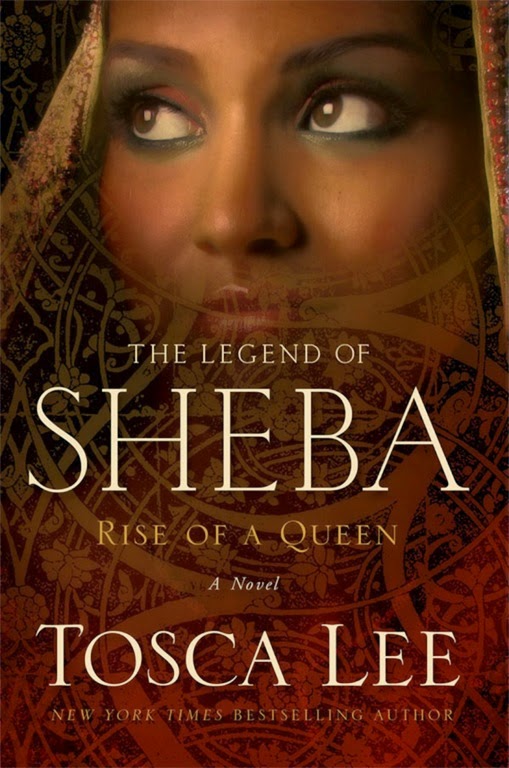
Tosca Lee is the award-winning, New York Times best-selling author of Iscariot; Demon: A Memoir; Havah: The Story of Eve, and the Books of Mortals series with New York Times best-seller Ted Dekker (Forbidden, Mortal and PastedGraphic-5Sovereign). Her highly anticipated seventh novel, The Legend of Sheba, releases September 9, 2014.

Tosca received her B.A. in English and International Relations from Smith College in Northampton, Massachusetts with studies at Oxford University. She is a lifelong world adventure traveler and makes her home in the Midwest. To learn more about Tosca, visit www.toscalee.com.

For a limited time, download ISMENI, the eShort prequel to SHEBA for free.

The End of a Long, Hot Summer

Is it just me, or did this summer season seem especially dramatic? Ebola outbreak! Russia invades! Marches in the street! People trapped on a mountain surrounded by madmen! The world is burning up, and drowning at the same time!

To forget about all these real-life crises for a few hours, I’d like to find a great, end-of-summer read. What’s the best book you’ve read this year? I need something I can down in one big, escapist gulp of reading. Let me know in the comments. Thanks, and Happy September! 

Don’t Belabor Your Prose

by Clare Langley-Hawthorne

Today, in honor of Labor Day, I wanted to cover something that has been bugging me all week. It began last Monday when I started a new book and within pages the prose was already starting to annoy me. The words, or at least the author’s choice of long, lugubrious, often archaic words were already getting in the way of the story – and I wasn’t even at Chapter 2!  As soon as I started to read I got the impression that the author was trying way too hard to impress the reader, rather than focusing on creating a compelling story. In some ways the writer was confusing style with content and in so doing, this reader at least, was no longer interested in reading. It had become too laborious. The words themselves had got in the way.

So why was this? I think in this instance it was the result of a naive writer hoping to show-off their linguistic prowess (or something like that – it felt like dictionary gymnastics at times!) and hoping perhaps that this somehow created an aura of literary validity (it didn’t!). What frustrated me the most was that the word choices detracted from what could have been a pretty strong start to a cozy mystery. It got me thinking about why – for someone like me who is drawn to perhaps the more wordy novels anyway (I love Dickens!) – was the prose was so off-putting? I decided it was simple – it was because it was unnecessary. And this at the heart of most things that go wrong with the start of a novel. Anything that feels unnecessary to the reader creates a barrier between them and the page. It stops them from wanting to keep turning that page. Instead, I like to think that a writer should go through a checklist, when reviewing their work, asking themselves a series of questions – something a little like this:

  1. Can I use a simpler word, phrase or description? When I substitute that, does it propel the story forward, or dilute it? (If it dilutes the power of what is being described or being said, then maybe the original word, phrase or description should stay).
  2. What is my reason for using a long/obscure word instead of a more straightforward one? Does it serve as mere affectation, or provide something more nuanced and appropriate in the circumstances? Am I using it because I think it makes me sound more erudite or because it’s the right word to use?
  3. Would most readers have to look the word up? (if so, why use it? It only stops a reader dead in their tracks).
  4. Does my writing sound like I just ingested a thesaurus? (If so, edit now!)
  5. When I read my writing aloud does it flow or do I find myself stumbling over the word choices I’ve made? (I find this an invaluable tool – because if I find myself tripping over the words I know I reader will find it hard to read the piece too).

Basically, don’t belabor your words. Let them flow, simply and easily. Readers will thank you.

So TKZers, tell, me what was the last book that you felt the author belabored their words? Any of your own advice to add to the checklist?

Avoiding the Tar Pits of Fiction

@jamesscottbell

Nothing slows down a novel quite like large mounds of exposition and backstory. Expositionis material the author puts on the page to explain context. Backstory is story material that happened in the past but for some authorial reason is dropped in the present. When this kind of material appears in the middle of a scene it can slow the pace, sort of like a Mastodon trying to escape a hungry caveman by way of the tar pits. 
Now, let me be clear that not all exposition and backstory is bad. In fact, properly handled, it’s tremendously helpful for bonding reader with character. But if it’s plopped down in large doses, and without a strategy in mind, it becomes a pool of hot goo where the story gets pitifully stuck.
Here is how to handle exposition and backstory, especially at the beginning.
First, ask yourself is it necessary at all? Quite often the writer has all this story info in his head and thinks the reader has to know most of it to understand what’s going on. Not so! Readers get into story by way of characters facing challenge, conflict, change or trouble. If you give them that, they will wait a LONG TIME before wanting to know more whys and wherefores.
You can do yourself a favor by highlighting the exposition and backstory in your opening chapters and then cutting all of it. Make a copy of the material. Look it over. Then dribble in only what is necessary. And I do mean necessary. Be ruthless in deciding what a reader has to know, as opposed to what you think they have to know.
Second, put a lot of this material in dialogue. Dialogue is your best friend. Make sure there is some form of tension or conflict in the dialogue, even if it is simply one character feeling fearful or nervous. Arguments are especially good for exposition and backstory. Recently I watched the Woody Allen film Blue Jasmine, and nodded approvingly at an early scene between Augie (Andrew Dice Clay) and his ex-wife, Ginger (Sally Hawkins). They’re arguing about Ginger’s sister, who calls herself Jasmine. A lot of background is revealed in this exchange:
“What’s the rush, Ginger? You got a date?”

“It’s none of your business. It happens to be Jeanette, so…”
“Jeanette?”
“Jasmine.”
“What’s she doing in town?”
“She’s living with me till she gets back on her feet. She’s had a bad time.”
“When she had money she wanted nothing to do with you. Now that she’s broke, she’s moving in.”
“She’s not just broke, she’s screwed up. And it’s none of your damn business. She’s family.”
“She stole our money.”
“Okay!”
“Understand? We coulda been set. That was our whole chance in life.”
“For the last time, Augie, he was the crook, not her, okay? What the hell did she know about finance?”
“Don’t stand there and tell me that. She’s married to a guy for years, up to his ass in phony real estate and bank fraud. She knew nothing about it? Believe me, she knew, Ginger.”
Third: Act first, explain later. Stamp this axiom on your writer’s brain. Or put it on a note and tape it where you can see it. This advice never fails.
Let’s have a look at the opening of one of Robert B. Parker’s Jesse Stone novels, Stranger in Paradise:
Molly Crane stuck her head in the doorway to Jesse’s office.
“Man here to see you,” she said. “Says his name’s Wilson Cromartie.”
Jesse looked up. His eyes met Molly’s. Neither of them said anything. Then Jesse stood. His gun was in its holster on the file cabinet behind him. He took the gun from the holster and sat back down and put the gun in the top right-hand drawer of his desk and left the drawer open.
“Show him in,” Jesse said.
As we will find out, Jesse Stone knows this Cromartie very well. He’s called “Crow,” and he’s a Native American hit man. There is lots of backstory between Jesse and Crow. But Parker doesn’t reveal any of yet.
What he does instead is show Jesse getting his gun ready. That’s intriguing. He knows something about this man after all, and it requires his gun being ready. Act first, explain later. The scene continues:
Molly went and in a moment returned with the man.
Jesse nodded his head.
“Crow,” he said.
“Jesse Stone,” Crow said.
Jesse pointed to a chair. Crow sat. He looked at the file cabinet.
“Empty holster,” he said.
“Gun’s in my desk drawer,” Jesse said.
“And the drawer’s open,” Crow said.
“Uh-huh.”
We now know that this Crow is someone who notices things, especially when it comes to guns. What kind of person is that? We don’t know and Parker isn’t telling us. We only know this guy is probably dangerous. This is not friendly small talk. The air is crackling with potential trouble.
Half a page later, we get this:
“Last time I saw you was in a speedboat dashing off with a lot of money,” Jesse said.
“Long time back,” Crow said. “Longer than the statute of limitations.”
“I’d have to check,” Jesse said.
“I did,” Crow said. “Ten years.”
“Not for murder,” Jesse said.
“You got no evidence I had anything to do with murder.”
Boom. Now we get backstory information, but notice where it is. In dialogue! And that, indeed, is how Parker delivers almost all the essential information in this novel.
Of course, Parker is writing in a particular, stripped-down style. But the principles he uses will serve you as well.
It may be your choice to render some backstory in narrative form. If you do, let me give you a rule of thumb (not the same as an unbreakable rule!) that I’ve given to many students with good results: in your first ten pages you can have three sentences of backstory, used all at once or spread out. In your second ten pages you can have three paragraphs of backstory, used all at once or spread out. But if you put backstory or exposition into dialogue, then you’re free to use your own discretion. Just be sure the dialogue is truly what the characters would say and doesn’t come of as a none-too-clever info dump (I explain more about this in my book, How to Write Dazzling Dialogue.)
We place a lot of emphasis here at TKZ on sharp, intriguing openings. For good reason. That’s what editors, agents and browsing readers look at first. We don’t want to leave them in the tar pits—we want them to keep on reading!

These tips will keep you out of the goo.              

Adding Machines and Libraries

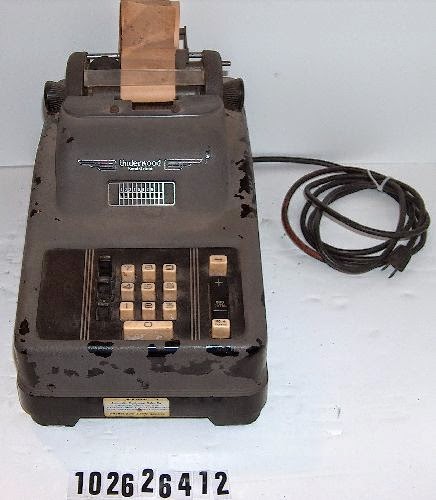
I am old enough to remember when one could make a living selling something called an “adding machine.” It was fairly large but fit nicely on a desk and had numerical keys on its face (as one might expect). A roll of white paper sat on the top of it, the better to show the process by which one added, subtracted, multiplied and divided their way to the bottom line. Accountants, insurance agents, automobile salesmen, and other incredibly interesting people would punch numbers which would then with great noisy and crunchy fanfare be printed on a page to show how the potential victim on the other side of the desk how one arrived at this or that figure for this or that good or service. The father of a friend of mine, a quiet, somewhat bookish fellow (the father, not the friend) was employed by Honeywell or some such company and went around his region selling such items and supported his family by doing so until something called a “calculator” took over the world.  You can still buy adding machine paper rolls, and for a bit more than the price of the rolls, something called a “printing calculator” with a digital face and a fairly quiet printing process but nobody is making a living by selling the things. In prosperous times, actually, banks give them away to new customers. I felt badly for my friend’s father; it seemed to me — then and now — that he deserved better.

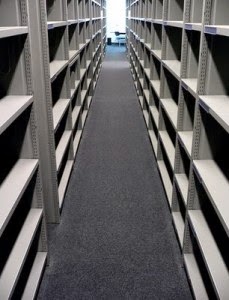
I remembered my friend, his dad, and adding machines (as well as telephone booths, hat stores in every major city, and a blacksmith or two in every town) when I came upon an article about a new library that doesn’t have books. The library is on the campus of Florida Polytechnic University in Lakeland, Florida. There are comfy chairs and nice lighting, and the like, and a resource desk with helpful…librarians?…but no books. I didn’t read about this in The Onion, unfortunately; it’s apparently a legitimate article from Yahoo! about a real place and you can read about it here. I probably should not have been surprised; my younger daughter went through her entire high school career without cracking open a textbook, since all of her study materials were online. That a college should take things a reverse step further, or backward, is not surprising, though interestingly enough the individual courses offered at the university in question generally require textbooks.

I get it, kind of. Research and reference books these days are of temporary value at best. The more we learn the less we know. Today’s conventional wisdom is all too often obsolete tomorrow. It makes no sense to replace a reference book every year or three (the Physician’s Desk Reference comes to mind) when it is available as a phone app that is updated more or less constantly. But. But. If we’re at the stage where a library doesn’t need books, why do we need a resource desk? Why do we need a librarian, when we can just pull our phones out and ask Siri?
This may be the first step in a trend, and there are advantages to it, but it doesn’t mean that it is good. I made one of my earliest contacts with an adult to whom I was not related) at a library. Mrs. Helen McBride, a librarian at the Lane Avenue Shopping Center branch of the Upper Arlington, Ohio Public Library, was one of the first grownups I can remember who was a friend to me in my somewhat lonely, very bookish early childhood. She actually took me seriously (which may or may not have been a good thing) and listened to me no matter how busy she was. I learned about an entire universe of books the day that she took me by the hand and led me in between some bookshelves and showed me row upon row upon row of mystery novels. My six year old self resolved to read every book on every shelf. I’m still working on it, even as I’ve contributed, here and there, to adding to the volumes on those shelves. Is that over, or close to being over now for kids and adults alike? I would hope not. I’d like to think that there is still a place in the world for the Helen McBrides who would take the time to open up new worlds to a bespeckled fat kid wandering into the library by accident or design. Alas, it may not be long before there is no “in” to wander into any more. It will reside in the same place that adding machine does.

Please read the article that was the saddle for my high horse (if you missed the link above, you can find it here) and tell me: do you think that this is where we are headed? Is this a good thing? Or not? Why?