Breaking the Rules the Right Way

Learn the rules like a pro so you can break them like an artist. — Picasso

By PJ Parrish

So I cracked open a new thriller the other day. Starting a new read is like going on vacation. You buy your ticket and you’re filled with excitement and expectations. Where am I going to go? What cool sights will I see? What fascinating people will I meet? What great adventures await me?

I had heard this book was really good, and I haven’t been swept away by a novel in a long time. I was ripe for seduction.

Then I started reading it.  And the writer in me took over the reader in me. I started to analyze what the author was doing.  Good grief…he broke every rule we here at TKZ talk about:

  • The opening graph was slow and boring.
  • The style mixed past and present tense
  • The writer cut away at a crucial peak moment in the set-up action scene and didn’t show it “on camera.”
  • The first four chapters are heavy with backstory info dumps
  • The point of view head-hops between characters in mid-scenes
  • One chapter ends with “little did he know that…” (death was coming for him)

But I couldn’t put the book down. See all those bullet points above? I didn’t care about any of them because the story was so darn compelling that the writer in me was elbowed aside by the reader in me. I’m now about halfway through the book and it’s getting better and better.  I’m totally invested in the characters, even the detestable ones. I can’t foresee what is going to happen. And I can’t wait to see how this all plays out.

I guess you want to know the title. It’s Before the Fall by Noah Hawley.  It won the Edgar for Best Novel this year.

Now Hawley isn’t exactly a novice. He’s written four novels before this, including two that could be classified as thrillers.  He’s also a screenwriter, best known for creating and writing the television series Fargo and Legion.

Before the Fall definitely has the bones of a good screenplay. Here’s the setup: A privileged family sets off on foggy night from Martha’s Vineyard with a down-on-his-luck painter tagging along for a ride back to Manhattan.  The plane goes down into the ocean and only two survive — the painter and the family’s four-year-old boy.

The story then moves into flashback, with detailed dossier chapters on the main characters, and the driving ideas and themes start emerging — the harsh price of our 24-7 media culture, the twists fate takes, how ordinary people become heroes, and the inextricable ties that bind us together.

Let’s go back for a moment and the rules that Hawley broke. Here’s the opening paragraph:

The private plane sits on a runway in Martha’s Vineyard, forward stairs deployed. It is a nine-seat Osprey 700SL, built in 2001 in Wichita, Kansas. Whose plane it is is hard to say with real certainty. The ownership of record is a Dutch holding company with a Cayman Island mailing address, but the logo on the fuselage say GULLWING AIR.  The pilot, James Melody, is British. Charlie Busch, the first officer, is from Odessa, Texas. The flight attendant, Emma Lightner, was born in Mannheim, Germany, to an American air force lieutenant and his teenager wife. They moved to San Diego when she was nine.

Snooze-fest, right? I mean, none of these people is important. They all die within sixteen minutes of takeoff. Who cares where the plane was built? If this showed up on one of our First Page Critiques we’d tear it to shreds.  Here’s the second paragraph:

Everyone has their path. The choices they’ve made. How any two people end up in the same place at the same time is a mystery. You get on an elevator with a dozen strangers. You ride a bus, wait in line for the bathroom. It happens every day. To try to predict the places we’ll go and the people we’ll meet would be pointless. 

Again, this breaks the usual thriller rules. It is omniscient point of view, the writer telling us something about the book’s theme. It’s a tad portentious. The protagonist artist won’t even come on scene for another nine pages and even then he’s a blip on the narrative radar. Yet I was very willing to let the writer rather than the characters steer the story at this point.

The plane takes off.  At the end of what is essentially a prologue (untitled as such) we drift into the wife’s POV:

As she does at a thousand random moments of every day, Maggie feels a swell of motherly love, ballooning and desperate. They are her life, these children. Her identity. She reaches once more to readjust her son’s blanket, and as she does there is that moment of weightlessness as the plane’s wheels leave the ground. This act of impossible hope, this routine of suspension of the physical laws that hold men down, inspires and terrifies her. Flying. They are flying. 

Then here is the last sentence of the “prologue”:

And as they rise up through the foggy white, talking and laughing, serenaded by the songs of 1950s crooners and the white noise of the long at bat, none of them has any idea that sixteen minutes from now their plane will crash into the sea.

Little did they know…

Maybe Hawley deserve a small wrist slap for that one, but I was willing to let him get away with it. It fit in with the tone he was using, like he had gathered us all around a campfire and was pulling us in. We know from the back copy what is going to happen, so he’s not stepping on any surprise here.

Back to the broken rules.  In the next chapter, Hawley switches from present tense to a more conventional past tense. And it is all backstory on the artist, Scott Burroughs, starting with a key childhood memory of Scott going on a family vacation to San Francisco that culminates in the boy watching Jack LaLanne swimming from Alcatraz pulling a boat in his wake. The chapter is laden with details and ends with the author telling us that as soon as Scott got home, he signed up for swimming classes. We are left to understand that this memory chapter is here to underscore the theme of heroism and doing the impossible. But we really want to return to that plane crash, right?

Here is the opening of chapter 2:

He surfaces, shouting. It is night. The salt water burns his eyes. Heat singes his lungs. There is no moon, just a diffusion of moonlight through the burly fog, wave caps churning midnight  blue in front of him. Around him eerie orange flames lick the froth.

The water is on fire, he thinks, kicking away instinctively.

And then, after a moment of shock and disorientation:

The plane has crashed.

Why didn’t Hawley show us the crash “on camera?” He’s a screenwriter! We should have seen the whole crash, like that terrifying scene with Tom Hanks in the film Castaway? Yet Hawley CHOSE to withhold it. As a reader, I initially felt deprived of a visceral experience. But when I got to a later chapter, I understood why he did it.  When Scott the artist is finally safe and has to recount the crash for authorities, the horror of the crash feels even more vivid and it becomes a tool for Hawley to comment on the fragility and unreliability of memory.

The chapter is all action (again in present tense) that intensifies when Scott happens upon the little boy clinging to a cushion. Scott, dislocated shoulder and desperate, takes the child on his back and starts swimming for a shore he can only see in his hopes. The chapter after takes place in the hospital and starts dealing with the media frenzy and Scott’s realization that he is man who has been hiding from a failed life and now has been pushed into the light.

The next chapter is titled DAVID BATEMAN, April 2, 1959 — August 23, 2015. This reverts to past tense and is devotes to the backstory of the dead father, who is a younger, handsomer version of Roger Ailes in that he created a Fox News type network.

The rest of the book jumps back and forth between present (Scott and the boy) and the past (backstories on all the key dead  characters). Again, the rule is broken: Stay with the linear more visceral plot.  But I wanted to know, needed to know, what had brought the dead characters to their tragic ends. There is reason the book is called Before The Fall. Yes, it can be a biblical allusion, that people are innocent until they are corrupted. But it is also a comment on the novel’s structure and the choice Hawley made: What happened BEFORE is just as important as what happened after.

I didn’t realize until I went back and looked at the notes I had made in the margins that Hawley broke another basic rule.  He has no chapter numbers. Most chapters are titled: “Storm Clouds,”  “Orphans” “Funhouse” and such. But the titles are not what they seem; they all have double meanings.

I wish I had finished the book so I could comment more fully on it here for you.  But as I said, I am halfway through and it is keeping me turning the pages and the characters are very alive in my mind when I put the book down. So yes, you can break the rules. In fact, sometimes you must.  I will probably go back and read Hawley’s other novels now, because I am interested not only in what the author has to say but how he says it.

But for now, I’m off on an adventure.  I’ll let you know how it turns out when I get back.

First Page Critique: Finn Slew

Happy Monday! Today I’m critiquing a first page submission for a novel entitled Finn Slew which begins in Afghanistan and appears to be the start of an intriguing suspense/thriller. My comments follow.

Title:   Finn Slew

MAY, 2011, Kandahar, Afghanistan

The phone was vibrating. Again. Alive and angry, like he’d stuffed a rabid weasel in the breast pocket of his ballistic vest. If Finn was going to be shot, it was small consolation the phone would die first.

The ringer was off. Best not to draw attention on the streets of Kandahar City. If the phone squawked his two soldier escorts, front and rear, would want to shoot him before the Taliban had a chance.

The first four messages this afternoon were from increasingly higher links in the Astral Media chain of command.

The fifth, just now, was a text from his direct boss, Kate Adachi, managing editor of his home newspaper, the Vancouver Journal, the westernmost outpost in Astral’s media empire: “WTF Finn? Supposed to file from the base newser on  plans for our troop withdrawal. Major heat from head office AND our publisher. Also fm Major Cahill, at CFB Kandahar, wondering where the hell you are. Call me. Now.”

He ignored that, too.

He’d written the ‘glorious farewell’ story weeks ago, with too much emphasis, in Cahill’s view, on those allies who felt Canada was cutting and running with the job unfinished.

Not that the job will ever be finished. Ask the Brits. Ask the Soviets. Hell, ask the Afghans. 

The news conference would play out as others he’d endured. Cahill, the public relations flack at Canadian Forces Base Kandahar, would lay on what soldiers cynically called “the Full Canuck.” A visiting general with a full display of chest candy would share Tim Hortons coffee and donuts with the troops as he declared the mission an unqualified success.

There’d be a moment of silence for those killed in the service of their country during Canada’s decade in Afghanistan, and a nod to the grievously wounded. Not a mention of those tortured souls carrying the war home in a nightmarish loop of pain and fear. Soldier suicides? What suicides?

Then, off to the ball hockey rink at Kandahar Airfield where the big guy would play enough shinny for network visuals before hopping a flight home.

They’d make damned sure a dead soldier wasn’t catching a lift in the cargo hold. Don’t want to go off-message.

No more press-release journalism. Finn was chasing bigger game: misappropriated aid money, corrupt military contractors, black market trade in weaponry. That’s why Cahill’s shorts were in a knot.

Comments:

I think this first page is off to a great start. I’m intrigued by the premise of a Canadian journalist investigating corruption in Afghanistan just as Canadian troops are being withdrawn. The voice of our main protagonist is strong, cynical, and determined and the short paragraphs, clipped sentences and snide comments all fit the protagonist well. This is an easy first page to critique as I don’t have much to say, except well done and I want to read more!

I have only three (relatively minor) comments:

  • The first is to reconsider the title of the book. Finn Slew (to me, at least) sounds strange and a little awkward. I think a stronger, darker title that gives a reader a better sense of the book would work better.
  • The second is to perhaps shorten the 4th paragraph as the reader gets some extraneous information here about the newspaper/media corporation that slows the pace of this first page. Something like: “The fifth, just now, was a text from his boss, Kate Adachi, managing editor of  the Vancouver Journal”  – it would be simpler and the extra information can be provided later.
  • Finally, the last line suggests Major Cahill knows the story the main protagonist is pursuing, and yet in Kate’s text he’s trying to find out where the protagonist is so I’m not totally sure if the author intends Cahill to know (and hence have his shorts in knots) or not. Maybe this could just be clarified.

Otherwise, I thought this was a terrific beginning and I would definitely want to read more. What about you, TKZers, any comments/thoughts?

Writing Lessons From Ireland

JSB at the River Boyne

by James Scott Bell
@jamesscottbell

The Bells were a turbulent Scottish clan that stopped throwing rocks at their enemies long enough to move to Ulster during the great Scot migration of the 1600s. After several generations in Ireland, one of us, William Bell of County Armagh, decided to give America a whirl, landing in Philadelphia in the mid-1700s. From this line your humble correspondent emerged in the far-off land known as Los Angeles.

A couple of weeks ago I went with my wife and daughter to Ireland, to see what I could see. I thought I’d share a bit about the trip, and how it relates to writing.

Take Risks

Since we really wanted to get to know the place, we decided to rent a car and drive around the island.

Which meant driving on the left side of the road.

Do you know how hard that is for an American? Especially on these twisting former bridle paths they have the temerity to call roads. My wife was constantly saying, “Too close!” as I consistently veered toward the shoulder. That’s because I was trying not to get hit by the oncoming vehicles, several of which were TOUR BUSES. These behemoths didn’t even slow down and took up every bit of space between lane line and whatever was on the other side: stone wall, grass, dirt, the occasional cow. Driving in Ireland feels like a 300-pound man going cave spelunking. I survived the ordeal through a combination of quick reflexes and sheer terror.

Which is how writing should feel sometimes, yes? If you’re never a bit scared of what you’re writing you’re not going far enough. And just like these automotive jaunts brought us to a new and wonderful location, so too will your risky writing take you to story stuff you would have missed otherwise.

Observe Intentionally

My favorite part about a research trip is walking around, listening, seeing, drinking it all in. Speaking of which, the pubs were a delight. Like at the wonderful Sin é in Cork. Here’s a bit of it:

Our barman, Tony, welcomed us with a big Irish smile and was more than happy to offer some tips on seeing Ireland. “Don’t do just the tourist stops. Stop in the little towns and villages and walk around during the day. Then go to the pubs.”

So when we walked around, I looked around. Some of the things I noticed:

Irish eyes really do smile. I saw some of the most gorgeous eyes on the lasses, and dancing eyes on the lads. There’s an old saying that a fellow has “the map of Ireland on his face,” and it holds true. There’s a distinctive Irish look, especially on the men—the kind of face you can imagine with a pipe, regaling you with a story about the banshee or the little people.

I found something else to be true: the Irish love to talk. There were a couple of occasions when we needed to get on the road. But an inn keeper here and a villager there kept up with friendly gab. We’d probably still be in Ireland if, on our last morning there, I hadn’t grabbed old Aidan’s hand (“I worked thirty-five years for Aer Lingus. Then was in Mozambique and oh, that was somethin’ all right …”) and said, “Thanks, but we’ve gotta run.”

We Americans always gotta run, which is the source of some amusement to the Irish.

Lesson: Lap up the sights, sounds, and smells on your research trips—and especially listen to the people.

Find the Gold in the Obstacles

My favorite encounter occurred by way of an inconvenience. Our rental car started acting funny, and the key card had a “low battery” warning. Luckily we were near the Kerry airport and went in for a word with the Hertz man. Who was not in his trailer. (Kerry airport is about the size of an elementary school playground.) So I went next door to see the Avis man, who told us the Hertz man should be back “in a bit.” It was more like three bits, but he finally arrived.

The Hertz man made a call and told us, “Go out the exit there and turn left and go to the top of the hill. Turn left again and go until you see a shop on the right. On the other side of the shop you’ll see a sign for Tom Murphy’s place. He’ll fix you up.”

Dutifully, we followed the directions and pulled into a dirt yard full of haphazard cars, piles of old tires, and a couple of trailers from a 1959 surplus sale.

No one was in either trailer. Then from an old house next door came the biggest Irishman I’ve ever seen. Think Hagrid from Harry Potter, only with a haircut. He also had the thickest Irish brogue this side of Barry Fitzgerald. And he talked fast. So after replacing the key battery and test driving the car he rat-a-tatted, “No worries about the motor andlikethatyasee? If there’s somethin’ wrong with the motor ye’ll see a yellow light andlikethat, yaknow? But if ya don’t see it it’s no worries andlikethat, okay?”

Okay! I wasn’t about to argue with the man.

Which is to say, the best part about research for me is finding something unexpected and delightful, which often happens when you meet an obstacle and are forced to push through it.

Times Are Always Tight For Poets

In Galway, we strolled along Shop Street, known for its (shockingly) shops. We really wanted to see the much-touted buskers, but I have to say the fare was, this day, disappointing. Several single acts (guitar, sax), and one fairly good trio. I was hoping for somebody like Dick Van Dyke in Mary Poppins. Now that’s a busker.

Anyway, toward the end of the street, we came upon a poet, with his little table and typewriter, offering to write a poem about anything upon request. Saw no one take him up on it, and then it began to spit rain. The poet had to gather up his things and run for cover.

Lesson: write poetry for fun, not profit, and bring an umbrella.

Serendipity

There is much more I could tell you about the trip, but I fear I’d end up like that friend who comes to dinner with 500 slides of his visit to Sri Lanka. Instead, I’ll leave you with one of those happy occurrences that come when you least expect it. It’s a title.

That car I told you about? Well, it went fritzy (yasee?) in the tiny car park in Galway (tiny car parks are all they have in Ireland. One false turn and you scrape off your side-view mirror). The car would not start. So I called Hertz, who called roadside assistance, who sent out a couple of fellas who arrived about forty minutes later. One was a squat, bald bloke who looked a bit like Michael Chiklis. He was chatty and charming, asked where I was from. I said, “Los Angeles,” and he said, “Oh, posh! Beverly Hills and all that!” I merely smiled, as I wanted him to get to work.

The other fellow was a tall red-headed lad in a rugby shirt. He was the serious one, told the chatty fellow to pop open the bonnet and try starting the car. It chugga-chugged but didn’t turn over. Rugby Lad fiddled with something and told the guy to try it again. It started. They stopped and started it one more time.

“Should be all right now,” Rugby Lad said. And with a wave and a smile from the jolly bald fellow, they were off.

I summoned my wife and daughter, who were waiting at a nearby restaurant. When they joined me my wife asked what had been the matter. I told her it was something about the injection system.

“Do you know what to do if it happens again?” my wife sensibly asked.

“Well,” I said, “I saw where he jiggled.”

To which my daughter, sitting in the back of the car, said, “Out of context, that sounds really strange.”

We laughed. But I did have my title: I Saw Where He Jiggled: My Trip to Ireland.

And … it’s good to be home!

So what’s a serendipitous event that occurred during one of your trips, research or otherwise?

First Page Critique: SOME KIND OF DEAD

Photo by Marks Polakovs. All rights reserved.

Welcome, Anon du jour, welcome to The Kill Zone! Thank you for submitting Some Kind of Dead, your masterpiece in progress (and I mean that sincerely) to our First Page Critique:

Some Kind of Dead

By the time the dark blue BMW made a second pass past the bar, Andy Weber pegged them for amateurs. Unlocking the door he had just secured, he ducked back into the bar, keyed the alarm pad and then grabbed the cut-down Remington 870 that Gus kept below the register. Cops called it a “street sweeper” for good reason. Checking through the window for the car, he slipped outside and stood in the dark shadow of the doorway. As the sedan slowly rounded the corner at the far end of the block to make a third pass, Andy was ready for them.

The car drew even with the front door. Two mini-mag machine pistols began to emerge from the open back window on the driver’s side and Andy started unloading on the slowly moving car. First, the driver, to immobilize the vehicle, then the two passengers in the rear…one, two, three, and it was over just like that. The dead driver’s foot had jammed the accelerator. The Beemer, accelerating rapidly, entered the intersection against the light, right in the path of a fast moving gasoline tanker. The truck driver tried to avoid the car but he overcorrected and jackknifed the trailer, slamming into the BMW.” The tanker wasn’t as lucky. After hitting the car, it slid sideways through the intersection. The driver could see what was coming and jumped out, rolling to a stop. The tanker turned over, exploding in a ball of flame, engulfing three cars in the fireball. The driver stood, dazed, in the middle of the intersection.

Andy, satisfied that no one else was coming for him, picked up the ejected shells and returned the street sweeper to its rightful place under the bar. Resetting the alarm, he locked up and started off down the street, away from the carnage he just created. Tomorrow he would have to remember  to clean the shotgun and pay Gus for the three shells he used. “Amateurs”, he whispered to himself as he walked down the street.


This is simply terrific, Anon. I am predisposed to to love this anyway,, given that it sits solidly in my favorite literary genre — crime noir — but even after looking at it as critically as I could I found very, very little here with which to quibble. You draw the reader right in, hold their interest, create the proper dark mood and have the requisite mayhem and explosion which readers these days tend to expect right from the…well, from the first page. It reminds me of the paperback crime novels that I cut my reading teeth on back in the 1950s and which I read to this day. That said, I have a few things to mention in the hopes of making a terrific opening page a perfect one:

1) First paragraph:

— Let’s get everything parallel in the first sentence. The car goes around the block and Andy pegs “them” for amateurs. Who is them? Let’s change that to “By the time the dark blue BMW made a second pass past the bar, Andy Weber pegged its occupants for amateurs.”

— Wow, those guys really were amateurs. I know grade school cub scouts who could pull off  a better ambush than they attempted. I’m puzzled as to why they didn’t shoot Andy on the second pass. I assume they didn’t see him, even though he saw them. How about showing that to your readers like so (there are many different ways to this): “By the time the dark blue BMW made a second pass past the bar, Andy Weber pegged its occupants (see above) for amateurs.Gus’s doorway was the perfect place for observing without being observed. Andy had been able to clock the car’s occupants as they played two games of urban ring-around-the-rosy without their having a clue that he was watching. Unlocking the door…

2) Second paragraph:

— Let’s break up that compound sentence. Like so: “Two mini-mag machine pistols began to emerge from the open back window on the driver’s side. Andy stepped quickly out of the shadows, unloading on the slowly moving car.”

— …“ against the light, right in the path…” How about “…against the light, into the path…” instead?

— “The driver could see what was coming and jumped out, rolling to a stop.” I generally think of cars, rather than people, rolling to a stop (or when I’m driving, rolling through a stop).  I’d suggest this: “The driver could see what was coming and jumped out. He hit the ground and rolled until he ran out of blacktop.” Or something like that. There are a few different ways to write it.

3) Third paragraph:

Andy, satisfied that no one else was coming for him, picked up the ejected shells and returned the street sweeper to its rightful place under the bar. Resetting the alarm, he locked up and started off down the street, away from the carnage he just created. Tomorrow he would have to remember  to clean the shotgun and pay Gus for the three shells he used. “Amateurs”, he whispered to himself as he walked down the street.

You use the word “street” three times in the same short paragraph. Let’s eliminated the first and third ones. For the first, call the street sweeper a shotgun; as for the third: when Andy whispers “Amateurs” we already know he’s walking down the street because you just told us. You could end that paragraph with “Amateurs,” he whispered.”  (see below) and it would be just fine.

4) There are also a couple of typos:

Second paragraph: “ The car rolled twice, and came to rest on what was left of its tires.”  I suggest striking the comma in the sentence “ between “twice” and “and.”

Third paragraph, last sentence: Let’s stick that comma after “Amateurs” after the ‘s’ and before the final quotation mark.

Thank you again, Anon, for submitting this first page of SOME KIND OF DEAD. I sincerely cannot wait to see what follows. I will now sit back,  attempt to stay uncharacteristically quiet, and let our TKZ audience hold forth.


Can Writing for Amazon Kindle Worlds Be Right For You? Guest Post: Elle James

Jordan Dane

@JordanDane

I’m on deadline and in a crunch, but I am honored to have my dear friend, Elle James (aka Myla Jackson for a sexier read), as a guest at TKZ. She’s a USA Today & New York Times Bestselling author best known for her suspenseful military romances. She writes for Harlequin Intrigue, Romantic Suspense, and Nocture, as well as having her own successful indie projects. This woman is busy, but always generous with her time to support other authors. As a former member of the Army and Air Force Reserves, Elle has traveled across the United States and to Germany, managed a full-time job until she eventually quit to write full time. Ask her about what it takes to raise very large exotic birds in the Texas hill country. Take it away, Elle.

Is Kindle World right for you? If you are not familiar with Kindle Worlds, the stories are basically fanfiction you can get paid for. An author agrees to open his/her world, allowing other authors to write in that world and they split the profit.

So, why not just write in your own world and skip the splitting of profits gig? Keep it all to yourself. Here’s why you might want to dip your toe or pen into the Kindle Worlds of other authors.

You can write a crossover from the author’s Kindle World into your own series or world. What that buys you is a door into that author’s readership. The readers who love that author will buy books by other authors knowing they will catch glimpses of their favorite characters in those books. If they like the new author, they will find more of the new author’s books to read. It’s a cross-promotional effort that could expand your reader base.

I’ve written in two other authors’ Kindle Worlds for that very reason. Their stories were Military Romance and Military Romantic Suspense. The crossover made sense. The assumption is that their readers will like my books because they are in the same genre.

I expanded my reader base and now I have my own Kindle World. The beauty of Kindle Worlds is that you don’t have to stick to the same genre. Other authors from other genres can write in your world. An author might pick up readers who typically read other genres than what the author writes. But a good story is a good story and the readers might look for more of that author’s stories.

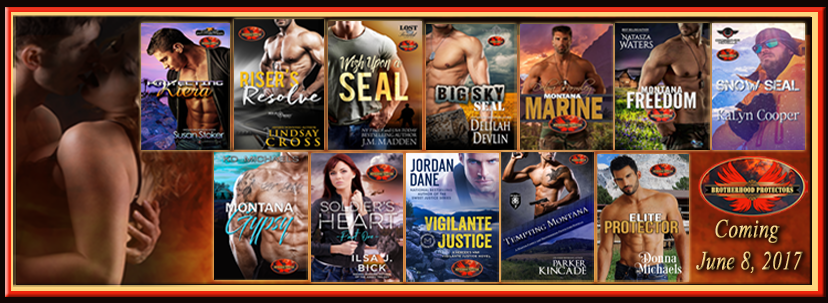
Writing in a Kindle World is not for every author, but if you’re still building your audience, you might give it a try. Brotherhood Protectors Kindle World is a Military Romantic Suspense genre. Authors writing in my world include young adult, thriller, contemporary romance, military romance and more genres. I hope they all pick up new readers because of their experience writing in my world. I invite you to write in mine! If you are interested, contact me through my website. I’d love to include you in an organized launch.

You can visit my Brotherhood Protectors Kindle World page on my website to see the books already written in my Kindle World or visit my Brotherhood Protectors Kindle World on Amazon to find out how you can participate in my Kindle World. Or read some of the books in my kindle world to get a flavor for what other authors have done. You can get them Here on Amazon. You can also read my original Brotherhood Protectors series. I’d love to have you join the Brotherhood Protectors Kindle World!

DISCUSSION:

1.) Would you consider writing for one of the Amazon Kindle Worlds?

2.) What experiences have you had writing shorter projects between novel length books? Did that experience of writing shorter, allow you the flexibility to try other genres?

3.) What genres have you attempted and enjoyed?

Jordan here: I wanted to add a couple of comments. Amazon Kindle Worlds sets the price for your project, depending on its length. You can write whatever length you have time for, between projects. HERE is a link for the details behind Amazon KWs and samples of their boiler plate agreements and exhibits.

Website

Join my newsletter to hear about my latest releases!
Elle James’s Newsletter

First Page Critique: The Last White Rose

Photo by Laura Benedict.


Cheery good day, TKZers! It’s time for a critique of an anonymous author’s work. The Last White Rose is an excerpt from a novel that appears to be a modern gothic with both horror and romantic elements. But it might be a thriller.  I’m anxious to know what you think.


THE LAST WHITE ROSE

Epigraph

In my dream, I see my own green eyes, filled with terror and tears.I fall to my knees, submitting to the command of invincible blue eyes raging with white fire.His face twists into something else, something evil. He is ending my life. I wake with a strident scream… and stare into the same blue eyes.

Chapter One

Stonington, Connecticut

He was elusive, a ghost I needed to catch. The stranger whose face I’d never seen lurked around town, maintaining enough distance to mask his features in shadow. I saw his face for the first time in late July after the annual Blessing of the Fleet. His bold gaze burned into mine from the opposite side of Water Street. The highland band, piping loud and marching through the center, drew the post-ceremony procession to a close, granting me an unobstructed view.

A shiver slid through me despite the stifling summer heat.

He was magnificent. The kind of man you’d never find living in small-town New England. Imposing height and broad, muscled shoulders defined his stature. He wore jeans and a faded indigo tee shirt that exposed cut biceps and forearms. Sun-streaked, dark blond hair in a classic front wave and a commanding jawline framed his handsome, smirking face.

“Parade’s over,” someone shouted.

Even so, Jess and I held our advantageous spot at the curb. My best friend soaked in the late morning sun, sipping her raspberry lemon mimosa, watching me stare at him.

She elbowed me. “Who’s he and why are you staring at each other? Wait—Ellie, is he…”

My eyes skipped to Jess to deliver a dirty look. When I refocused across the street, he was gone. “The guy who followed me home the other night. Yes, I think so. There’s no one else as tall. Maybe I’m wrong. Maybe he’s just staying nearby.”

“And maybe you should say something to someone.”

“Not until I’m certain. Paranoia is my sister’s thing, not mine. Besides, aren’t you always saying I should be more open to meeting new people?”

“You do need to get out of your artsy little head. Just be careful.”

I struggled, trying to reconcile his presence in town and the sense that he watched me. After all, it was summertime. Stonington was a historically rich town, the only one in Connecticut to face the open Atlantic waters, so it attracted countless visitors. It was common to see strangers around town. Drunken tourists wandered the streets at night, unaware most businesses closed before ten. It was a colonial fishing town, and outsiders came from far and wide to work for the commercial fleet. It wasn’t the first time a man from one of the crews or a tourist had looked my way, I reasoned.

Then I saw him again.

The next day after the last of my noisy day-campers had gone, I locked the art studio door and headed for the fishing pier to sketch. It was either that or listen to another of Jess’s lectures. She’d go on about how I wallowed in self-imposed loneliness, and how it left her alone to test the waters in the pool of dateable men. The pool was small—blue plastic toddler swimming pool small—and I didn’t need to dip a toe to know there was nothing left in it for me.

The pier was a respite from my grandmother and sister’s intrusiveness as well. Gran and Isobel were all I had, and they meant well. Trysts with my art kept me sane, human.

I looked out over the harbor and spotted Neptune trudging her way in. The sailboats beyond paled in her presence. I don’t know what it was about the old girl, but I loved that fishing boat. Her emerald green hull had become chalky over time, and the once black and white hoists and booms were covered in rust, but she was still glorious against the backdrop of the sea. I lost myself in the sketch at once.

Photo by Laura Benedict


Dear Anonymous Author of The Last White Rose:

What a pleasure it was to critique this novel opening. There’s so much to work with here: you’ve obviously read a great deal of fiction and have a practiced hand in basic mechanics. Your grammar and sentence structure are strong, and even your barely-mentioned characters are vivid and distinctive. You also know how to structure a scene, which is no small feat, and your first person POV is flawless.

I like the Connecticut setting. It gives the story an immediate New England gothic feel. Gothic is one of my most beloved genres, so I’m particular.

Jess and Ellie have good chemistry. Jess is a lot of fun, though she falls down a bit on the best friend front. (More on that later.) These cracked me up: “My best friend soaked in the late morning sun, sipping her raspberry lemon mimosa, watching me stare at him.” And “She’d go on about how I wallowed in self-imposed loneliness, and how it left her alone to test the waters in the pool of dateable men. The pool was small—blue plastic toddler swimming pool small—and I didn’t need to dip a toe to know there was nothing left in it for me.”

And the scene with the Neptune was completely charming and nicely visualized. I could picture the boat “trudging” its way in. Your descriptions are—for the most part—very nicely done.

Please, dear Anonymous Author, read all of the above twice, because I know that, like most writers, you will forget it immediately as you read my criticisms and suggestions.


Here we go:

I’m not sure what sort of novel this is, and that distresses me. It contains gothic and demonic elements and is set in an old New England town. But there’s some romance as well. I need a few more hints. Does our heroine feel strangely attracted to the giant hot guy stalking her? Or is there some menace in the town that he might be connected to? The strong emphasis on the stalking makes me think it’s trying to be a thriller, but the stalker’s attractiveness makes me wonder if he’s a demi-god or paranormal beast or demon. Another mystery is that we don’t know if he’s the guy in the epigraph or not.

There’s a phrase that I learned from my mother-in-law very early in my marriage: “too much of a muchness.” That’s what you have in this opening section. You need to take a breath. Don’t try to tell us everything in 672 words, and definitely only tell us things once. Readers are smart. This section has too many repeated actions, too much stalking, and way too many characters. It’s important to mention or introduce all of your significant characters in the first thirty pages of a novel, but if you try to do it in the first three, your reader is going to be very confused. Fortunately, you can look at this as an embarrassment of riches because you can use much of this detail in other parts of the novel.

It’s also important for you to balance the light and dark. You can have both.

The last thing I want to address is your heroine, Ellie. Good heroines can be tough to write. Sidekicks get to be fun, villains get to be fun. Heroines can be a bit dull. Thoughts on Ellie below.


Epigraph

This is a dream: check.

I’m a bit confused as to how Ellie’s seeing her eyes in one line, then is falling to her knees in the next. Is she watching herself? Or is she experiencing it? Just clarify. Even if it’s a dream, it has to have its own dream physics and dream logic.

Perhaps reframe it so we know she is watching it as a scene, wondering at her own complicity.

“Strident” is awkward. As is “invincible blue eyes raging with white fire.” There’s an awful lot happening in those eyes all at once.

“He is ending my life.” Simple and to the point, but “ending” feels a bit tame since she’s about to be devoured/murdered by what appears to be a demon.

Clarify the last line and be specific:

“I wake, screaming, to find those same blue eyes—now watchful and worried (or laughing and scornful, etc)—gazing into mine.”

Chapter One

First paragraph:

The opening lines are confusing. He’s a ghostly elusive guy that has been skulking around the shadows for…some period of time. Months? Weeks? Two days? Then in the next sentence she gets to the immediate scene: “I saw his face for the first time…”

Instead, get right into it.

We’re prepped by the epigraph for scary and dubious. Give us something new at the top of chapter one. I’d much rather read: “The first time I saw Jeremy Porter’s* handsome face, he was smirking at me from the opposite side of Water Street.” Something straightforward adds a bit of levity, and keeps the story from being so frontloaded with ominosity (technically not a word, but ominousness is clumsy). I confess that I’ve been guilty of over-ominosity myself, so I know whereof I speak. He seems more condescending than threatening. If you want to make him threatening, change “smirking” to “staring.”

*Don’t be afraid to name the guy. We know he has a name. As Ellie’s telling the story, she already knows his name because she’s telling it in the past tense. As it is, it’s cheap suspense. If the story were all in present tense/present action, then we wouldn’t find out his name until she learns it. But the cat’s already out of the bag.

By making the opening of Chapter One just another in a series of stalking incidents, you’ve taken away the power of the epigraph, which could be very compelling. The epigraph hints that she dreams of a man who might be a demon, but she wakes to find him watching her in real life. My assumption is that she becomes romantically involved with sexy stalker guy during the course of the novel…? But we still don’t know if epigraph guy and stalker guy are the same.

The epigraph has already set your tone. Let it rest. We get it.

“He was magnificent.”

Our guy is obviously a gorgeous, eye feast of a man, and the word “magnificent” is striking. I kind of imagine him as a blond Gaston, from Beauty and the Beast. Is he unreal in his perfection? Some small flaw would make him more believable—unless you’re going for supernatural perfection.

Let’s break it down:

Why would we never find someone like him living in small-town New England? Where would we see a man like him? Hollywood? The cover of a magazine or romance novel?

Imposing height—how tall? Ellie says: “There’s no one else as tall.” What does that mean? Significantly taller than everyone else in town? Wilt Chamberlain tall? If so, someone would have surely noticed him by now. A man that tall would be a very poor skulker.

Instead of using an indefinite phrase like “defined his stature,” let’s see him through Ellie’s editorial filters:

“I’d never seen a man so tall in real life, at least not one with shoulders so broad that they made me wonder for a moment if he had to have his dress shirts specially made. But he wasn’t wearing a dress shirt. His taut, cut biceps emerged from the sleeves of a beautifully faded black tee that just reached the waist of his indigo jeans. And his black motorcycle boots looked comfortably worn. Most women I knew would pay a fortune to have their stylist give them highlights like the ones that seemed to flow naturally through the waves of his dark blond hair. His jaw was strong and commanding, reminding me of paintings I’d seen of ancient Roman centurions on my last trip to the Louvre.

“Parade’s over,” someone behind me shouted.

I startled, and felt my face flush. The slow smile of the man I came to know as Jeremy Porter told me he’d caught me staring.”

Then you can go on and have her interact with Jess. But let’s have some more urgency and concern in their exchange. Is Jess implying Ellie should call the authorities? Who is the “someone” of whom she speaks? Be specific.

In this next section, we get a lot of new characters introduced: noisy day-campers, dateable men, Gran and Isobel, an anthropomorphized fishing boat, drunken tourists, sailors. It’s overwhelming.

And, suddenly, skulking sexy guy appears again.

What is this book about? Right now I’m just reading stalking scenes, and I’m feeling fearful that they will just go on and on…

Three scenes (including the epigraph, if it is the same guy), three appearances. Actually four, because we learn he followed her home on some other night (super alarming to have a giant follow you home!). We have no resolution of his parade appearance in Chapter One before the pier scene. He has now let her see his face, and he’s still obviously stalking her. Please give Ellie some spunk. She seems incredibly unaffected by his stalking—her friend acts alarmed but then apparently lets her go home and go about her business and go to work the next day without any further investigation of the guy. It’s one thing that Ellie’s not paranoid. It’s quite another to make her seem not very bright. And I think she is bright.

Your opening chapter has to do more than establish the tone, and Chapter One tells us little more than that Ellie is living in a historic small town and is being stalked by a hot guy. It’s an ominous situation, but she’s reacting in a way that’s not credible. And we still don’t know if this is a romance, a thriller, or a paranormal story. Give us better clues.

My first suggestion would be to work on the epigraph and just let it set the tone. Then in your opening chapter, have Ellie confront hot stalker guy after the parade. It will make her the real protagonist rather than a woman who seems to be setting herself up as a victim. I love the sketching scene on the pier, but it’s too much with what you have already. Save the setting and scene—maybe it happens after they’ve actually met.

Having her confront the guy right off puts us immediately into the story, and will surprise the reader. Even if he is our villain, he will be put momentarily off-balance. Ellie and the hot guy instantly become equals, and thus more interesting adversaries. Or a more interesting couple. Therefore it becomes a more compelling story. Be bold.

That’s my two cents. I think this story could go far.

Chatter over, TKZ friends and bloggers. What say you?


Write That Caption! New Yorker Cartoon Contest

Purchased from Shutterstock by KL

How did I manage to miss this elegant little contest/game–The New Yorker Cartoon Caption Contest–which offers a new way for writers to procrastinate and waste precious writing time? The New Yorker cartoons were a cherished element of my childhood reading experience (I confess I skipped reading the articles until I was well into high school years).

Check out the weekly New Yorker cartoon (by clicking this link) and tell us what caption you’d write for it. Here’s my entry for the caption:

“My doctor says it’s an off-label use for energy drink withdrawal.”

Yours?

A Nuance of Understanding That Can Change Your Writing Career

by Larry Brooks

Today I am waxing enthusiastic about what might end up being the most important step in the development of your story. Because right here, at the concept and premise stage, is where many writers come up short.

Most writers begin a draft with a vision for concept and premise in mind. Others don’t, using the draft itself as the search-mechanism to find concept and premise, then retrofitting it into the story in subsequent drafts. The common mistake is to forget to do just that, leaving the story without a clear and compelling concept and premise at its core.

Concept, as it relates to premise, is the vision for the entire story… at the idea level.

Weak story ideas easily account for half or more of story rejection, or at least, when it comes to explaining why they don’t resonate. I was talking to a writing-guru type friend recently, and he suggested this issue resides at the core of as much as 80 percent of story failures.

If you don’t get this right, if you don’t make it as strong as it can possibly be through an understanding of this nuance, then you are already putting your story at risk no matter how well you write it.

Concept and premise are the first things agents and editors look for in a story, over and above characterizations and writing voice. The nuance is this: concept and premise are different things. Superman is a concept. The plot of each story, which includes the villain and the threat they represent, is the premise… one unique dramatic arc for each Superman movie, TV episode and comic book edition.  One concept has birthed 13 major films and at least six television series alone.

One concept. An alien child crashed on earth, is raised by human parents, and ends up with powers we consider super, which he uses to fight evil and save us, time and time again.  Notice this is not premise (which is synonymous with plot in the context of this understanding).

Not every story needs to be “high concept.”

But the presence of something conceptual – which is the very essence of concept – adds strength to any story.

Concept and premise are different essences, yet one (concept) feeds into the other (premise). One of the most common shortfalls of rejected stories is when a premise doesn’t promise something conceptual to the story, when it’s all plot with nothing fresh or freshly respun, or worse, where there is nothing inherently interesting or provocative at its core.

An Example

I was teaching this at a workshop recently. I asked people to toss out a concept, old or new, for the purpose of seeing whether it met the criteria for concept (which I had presented first, but have not yet revealed here; I do this to see if, upon reading this example, you might quickly and intuitive see how and why it lacks “concept” at the level required to carry an entire novel).steals a woman’s ashes on the way to a funeral.”

“Someone steals a woman’s ashes on the way to a funeral.”

We talked about this one for a long time.

The Definition of Concept

A concept is the presence of something conceptual at the heart of the story’s essence.

A concept is a central idea or notion that creates context for a story – often for a number of stories, not just your story – built from it.

A concept becomes a contextual framework for a story, without defining the story itself.

It is an arena, a landscape, a stage upon which a story will unfold.

It can be a proposition, a notion, a situation or a condition.

It can be a time or place, or a culture or a speculative imagining.

It can even be a character, if even before the premise itself surfaces there is something conceptual about that character.

Concepts are a matter of degree.  Every story has a concept, the issue then becomes this: how does it contribute toward the reading experience?

Those stolen ashes?  That idea is more suited to a scene in the Part 1 setup of a a novel, something that starts a sequence of events.  But the real concept would be why someone did that, toward what end. And at that level, the criteria shown below would still need to apply.

The Criteria for Concept

It is inherently, before character or plot, interesting, fascinating, provocative, challenging, engaging, even terrifying.

High concepts depart from the norm, they exist at the extreme edge of imagination and possibility.

Not all stories are high concept. Stories about real people in real situations also benefit from something that creates a compelling context for the story.

Concepts promise a vicarious ride for the reader. Taking them somewhere, or placing them into situations that are not possible, realistic or something tense or horrific, something they would not choose to experience in real life.  But will love experiencing vicariously in your story.

A concept can define the story world itself, create its rules and boundaries and physics, thus becoming a story landscape. (Example: a story set on the moon… that’s conceptual in its own right.)

In summary, a concept is simply the compelling contextual heart of the story built from it. It imbues the story atmosphere with a given presence.

It does not include a hero… unless the hero is, by definition, a conceptual creation (examples: Superman, Sherlock Holmes, a ghost, someone born with certain powers or gifts, a real person from history, etc.). A story is then built around that hero leveraging the hero’s conceptual nature.

All of this is a matter of degree.  Do those stolen ashed meet these criteria? Perhaps. Could they crack open a killer story? Maybe that, too. But would that pitch – “someone steals a woman’s ashes on the way to a funeral” – offered in an elevator to an agent, motivate the agent to his the STOP button and hear the entire story

Doubtful. Because a concept is not a tease or a piece of setup. Rather, it is an OMG notion that becomes the contextual foundation of the entire story itself.

It might be helpful to consider what a story without a vivid concept would sound like in a pitch: two people fall in love after their divorce. Period. End of pitch.

And the agent says, “next!”

It’s not a bad story if you can pull it off – the writer of such a story would intend to plumb the depths of characters on both sides of the divorce proposition – but there’s nothing unique or provocative beyond the notion of divorce itself. Which is all too familiar, and therefore not all that strong a concept. If you could bring something contextually fresh to it – like, two people who both want to murder their ex fall in love – then the story has even more upside.

When we read that agents and editors are looking for something fresh and new, concept is what they mean.

When a concept is familiar and proven – which is the case in romance and mystery genres especially – then fresh and new becomes the job of premise and character, as well as voice and narrative strategy.

Concept is genre-driven.

Literary fiction and some romance and mysteries aren’t necessarily driven by concept (however, the sub-genres of romance – paranormal, historical, time travel, erotica, etc. – are totally concept-dependent). Other genres, such as fantasy and science fiction and historical, are totally driven by and dependent upon concept.

If your concept is weak or too familiar within these genres, you have substantially handicapped your story already.

Examples of Criteria-Compliant Concepts

“Snakes on a plane.” (a proposition)

“The world will end in three days.” (a situation/proposition)

“Two morticians fall in love.” (an arena)

“What if you could go back in time and find your true love?” (a proposition)

“What if the world’s largest spiritual belief system is based upon a lie, one that its church has been protecting for 2000 years?” (a speculative proposition)

“What if a child is sent to earth from another planet, is raised by human parents and grows up with extraordinary super powers?” (a proposition, leading to one of the most iconic characters is all of entertainment)

“What if a jealous lover returned from the dead to prevent his surviving lover from moving on with her life?” (a situation)

“What if a paranormally gifted child is sent to a secret school for children just like him?” (a paranormal proposition)

“A story set in Germany as the wall falls.” (a historical landscape)

“A story set in the deep South in the sixties focusing on racial tensions and norms.”  (a cultural arena)

These cover a breadth of genres, a few of them from iconic modern classics in their own right.

Notice than NONE of these are plots. Each is a framework for a plot. For any number of plots, in fact. The are conceptual.

Just remember: concept is not premise.

This one differentiation can make or break your career.  By way of analogy… concept is the idea to go to college and major in architecture. Premise is actually what happens when you do that, with a fresh and dramatic twist.  Different levels of meaning, with different criteria almost entirely.

Concept, when it works, becomes the reason why your premise will compel readers. Because it is compelling. Fascinating. Intellectually engaging. Emotionally rich. Imbued with dramatic potential. It infuses the premise with something contextually rich, even before you add characters and a plot.

Can you differentiate the concept from the premise in your story?  If not, then this becomes an opportunity to take your story to the next level.

Final thought on this, for now.

Thrillers are one of the most fertile genres for concept. Great thrillers are just that – great – often because of the concept.

Series heroes – Jack Reacher, James Bond, Tom Cruise in the Mission Impossible stories – become their own concept. People come to the story for Jack Reacher, rather than the specific plot idea on the back cover.  As authors trying to establish a thriller series, this is a critical nuance to understand.

Mysteries, however, are more challenging at the conceptual level. Given that, the creation of a conceptually fresh hero is the key, and then giving her or him something highly vicarious and emotionally-resonant to do.

Of course, this implies the need to grasp the difference between a mystery and a thriller, which is obvious once you get it, less-so before that ah-hah! moment arrives.

Have fun with that one here… I’ll chime in with that difference if it doesn’t emerge clearly in the thread. I have a feeling it will.

When Cold Cases Kill: Guest Post By Meg Gardiner

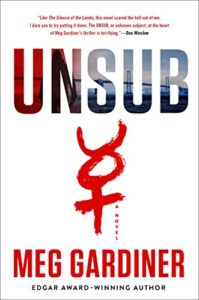
JSB: I am on a research trip and will only have sketchy, if any, internet access today. So I’ve asked Meg Gardiner if she would step in for me. Meg is an Edgar Award winner whose new novel, UNSUB, is getting rave reviews. Like this one: 

“Outstanding series launch… Taut pacing and sympathetic characters play against a terrifying villain, who will crawl beneath your skin and trouble your sleep. Thriller fans will eagerly await the sequel.” — Publishers Weekly, starred review

Plus, it’s just been announced that CBS is going to adapt UNSUB as a TV series!  

UNSUB releases June 27, but you can pre-order at Amazon, Barnes & Noble, or Indiebound.

Welcome, Meg!

UNSUB is about a legendary killer and the young cop who hunts him. In my thriller, the UNSUB—an unknown subject in a criminal investigation—starts killing again after twenty years, and Caitlin Hendrix must decipher his coded plan before he drags more innocents to the abyss.

The novel was sparked by the unsolved case that has haunted California for decades, and me since childhood: the Zodiac. That infamous UNSUB shot and stabbed seven people in the San Francisco Bay Area. The Zodiac sent dozens of messages to the police and media, including cryptograms that have never been broken. The terror wrought by the killings still lingers today.

I grew up in California, spooked by the knowledge that the Zodiac could strike at any time. Today, I’m spooked by the thought that the killer hasn’t been caught. The Zodiac could still be out there.

And, being a thriller writer, spooky thoughts lead me to spooky ideas. What if a terrifying cold case turned hot again? What if a killer who’d disappeared—as the Zodiac did—resumed killing decades later?

I turned that unnerving idea, that they-never-caught-him fear, into this novel.

In UNSUB, Bay Area sheriff’s detective Caitlin Hendrix is pulled into the chilling world of the serial killer known as the Prophet. This UNSUB posed his victims in garish crime scene displays, and marked their bodies with the ancient sign for Mercury. He’s given Caitlin nightmares since she was a small girl. Her father, Mack, was the lead detective on the original case. The investigation shattered Mack emotionally and tore his family apart.

To write the novel, I had to create the killer’s secret world. I delved into codes, puzzles, astrology, poetry, ancient symbolism—and 21st century hacking. The Prophet is a master of mind games. To stop him, Caitlin must do what her father couldn’t. She must decipher both the Prophet’s old, taunting messages and his strange new rhymes. What do the crime scene tableaus signify? What does the Mercury sign mean? And what is the Prophet’s end game?

Readers ask if I write to exorcise my demons. I don’t. As a writer, I take what frightens me and try to turn it into gripping fiction. I put my demons on the page, and turn them loose for readers to experience in the most exciting and suspenseful ways I can create.

UNSUB is a psychological thrill ride. Enjoy it.

But, if it gets you thinking about what’s out there, don’t turn off the lights.