
The publishing world is changing, so we’d like to know: where did you buy (or borrow) the most recent book you obtained to read? Was it Amazon? An Indie bookstore? A chain? The public library? A garage sale?
Let us know!

Hi Guys! Today we have a first-page submission from another brave writer. This one is called ALICE IN REAL LIFE.
My comments follow.
***
Life is funny . . . in a brutal kind of way.
One minute you’re a youngster surrounded by grown-ups shoving sunshine up your ass about your bright, shiny future and the next, you’re alone in a crappy apartment, pushing thirty and taking stock of your inadequate underwear supply while packing to leave the country.
Or, is this just me?
Come on, I can’t be alone here. As a kid, you must’ve heard crap like, “the world is your oyster”, whatever that means. And I know I’m not the only one given this inspirational little book by a well-meaning grown-up at high school graduation: “Oh the Places You’ll Go!” by Dr. Seuss. Sound familiar? At one point, the main character enjoys a magical balloon ride, ascending through marvelous new experiences in a whimsical world. As if the only place to go is up. It’s cute. It’s promising. It’s bullshit.
Maybe parents hand this out to see the hope in their kids’ eyes that was lost when they found out the truth about Santa. Or, maybe they’re sadistic assholes that just want to tell one more lie. They know the ride into adulthood will be much more like a roller coaster. Not the Disneyland kind. The questionable, County Fair-taking-your-life-into-your-own-hands kind.
Sure, Dr. Seuss’s character hits a couple of bumps along the way, but my version would have even more reality mixed into those colorful pages. I’d still call it “Oh the Places You’ll Go”, but without the exclamation point and with a sad little Who on the cover pinching the top of his nose and shaking his head. Still whimsical, but with a hint of shame. Chapter 1, “Vomiting in a men’s room toilet while a stranger holds your hair”. Chapter 2, “The choice between paying rent and eating”. Chapter 3, “Your boyfriend’s selling drugs out of your apartment”. But, wait – there’s more! Chapter 5, “The engagement’s off”. Then, there’s the part I’m on now, Chapter 6, “Your mom battles cancer . . . and loses”.
Okay, I can see how this sounds like a great big bummer and book sales would not be good. Dr. Seuss wasn’t stupid. And Mom wasn’t sadistic for giving me hope, but, let’s cut the crap at graduation. Because I’ll tell you, the only time the world was full of magical shapes and whimsical colors was during Chapter 4, “That regrettable mushroom incident”.
***
My comments:
“Doctor Bombay! Doctor Bombay! Emergency! Come right away!“
Wow. Talk about having a voice. Reading this first page, I feel like I just got a two a.m. call from a close friend in crisis. The kind of call which would cause me to knock the sleep out of my eyes, throw on some clothes, and trundle across greater LA, braving freeway traffic to see how I could help sort things out.
My feeling is that this section sounds like the first page of an incredibly interesting memoir. I want to get to know this narrator. What happened to her, and why? This page makes me want to go on the journey with her.
What say you, TKZers? Chime in!
Usually when I’m giving advice to aspiring authors, I name the 3 P’s as Practice, Persistence, and Professionalism. In his recent post, James Scott Bell mentioned his 3 P’s for writers: Passion, Precision and Productivity. These are all valid and equally important.
Practice
It helps if you set a daily word count or page quota and a weekly quota, then put yourself on a strict writing schedule. This gives you definitive goals. Keep moving forward. If you get stuck, either you haven’t laid the proper groundwork or you are letting outside distractions snag your attention. Don’t get hung up on self-edits until you finish your first draft. It’s easier to fix what’s on the page once the story is complete. The point here is to write on an ongoing basis. Then follow James’ advice about Precision by learning how to hone your skills. Attend writing conferences. Read Writer’s Digest. Enter contests with feedback. Join a critique group. Go to meetings of your local writing group and sign up for workshops. And keep writing.

Persistence
Persevering at this career despite rejections, bad reviews, poor sales, and other setbacks is critical to success. If you drop out, you have only yourself to blame. Keep at it, and your skills will improve along with positive responses from readers, critique partners, and editors. “Never give up, never surrender.” That holds true for a writer same as for the crew of Galaxy Quest. Have faith in yourself. If you have the drive to write, you can improve your craft and learn marketable skills. The more books you have out there, the more chances you have to gain a following. Keep going despite the odds, and be versatile. At times, you may have to try something new and different. Don’t be afraid to take risks. Whichever route you take, quitting isn’t an option.
Professionalism
Always be polite and gracious, even when you get a bad review or a rejection. It’s hard not to take these personally, but they’re aimed toward your book and not you. You don’t want anyone saying you’re a gossip or you bad-mouthed your publisher or you made condescending remarks toward another author. It’s better to be known as someone who shares her knowledge, is helpful to her peers, and is a consummate professional in her dealings with editors and agents. If you need someone to hold your hand, turn to your critique group and not your publisher or agent. With their busy lives, these people don’t care to take on needy writers. They want career authors who will persistently turn in polished manuscripts, who establish and maintain a platform, who are active online, and who understand the publishing world. Act toward others as you’d wish to be treated. You never know when a writer friend from today might become your editor tomorrow, or an editor might become an agent, or a reviewer who raked your previous books over the coals might give you a rave review. The old adage, “Don’t burn your bridges,” holds true here, too. Be polite, courteous, and helpful at all times.

Follow the P’s along the track of your writing career. If you have to step off for a brief interval, be sure to hop back aboard the train before it gathers speed and steams ahead.
<><><>
Only 2 more days to enter the Booklover’s Bench July Contest to win a $25 Amazon/BN gift card or free books by our authors: http://bookloversbench.com/contest/
By Joe Moore
I don’t believe in writer’s block. The reason is twofold. First, I’m a professional writer; my job is to come up with ideas. I’ve never heard of a mechanic suffering from mechanic’s block or a doctor suffering from doctor’s block. When I’m faced with an issue in my story, I come up with a solution. That’s part of being a writer.
 Second, when I do get writer’s block, I turn to my co-writer for the answer. OK, so the second reason is not something every writer has to fall back on. Lucky me.
I think that writer’s block is about being stuck with coming up with ideas, not words. If I can’t come up with the words, I’m in serious trouble. It’s like that mechanic saying he can’t come up with the correct wrench. A master mechanic has a kit full of tools (words); his job is to come up with the correct procedure to fix a problem.
So writer’s block is really a matter of a writer getting stuck for whatever reason. It’s frustrating but not a show-stopper.
First, you need to focus on why you’re stuck.
The most common form of writer’s block is not knowing what happens next. This is basically a plotting issue. The solution can be found in 5 words: What does the protagonist want? If you backtrack to the last point in the story that it was clear what motivated the protagonist’s actions and how it drove the story forward, the answer to what happens next will usually be revealed. Think about the story question. Did you stray from the process of answering it? Chances are you created a scene that does not contribute directly or indirectly in answering the main story question—the big conflict. Starting a rewrite from that point will usually get you back on track.
Another common issue that will derail your story is facing the dilemma of why anything matters. Who cares? This usually deals with the question: What’s at stake. Whether it’s an internal or external struggle, the protagonist must realize that fighting the fight is worth it. If she loses, what’s at stake? What does she stand to lose? If it’s a high concept thriller, what does the community, country, or civilization stand to lose? Reexamining the stakes can help to put you back on course.
A third issue in suffering from writer’s block is facing the crippling question: Is this story logical? In other words, why would it even happen? You might have a really cool idea, but the reality is that no sane person would follow the path laid out by the plot. It’s just not something the reader would buy into. If this is the case, rethink the story in terms of how it relates to HUMAN BEINGS. Don’t get me wrong. Even the most outrageous science fiction or horror stories still have to relate to human emotions and logic. Otherwise, they become 2-dimensional. If your story is so out there that the average reader can’t relate, try reexamining the human aspects of it. Many writers including me believe that there are only two emotions in the world: love and hate. If your story lacks either, then it becomes hard if not impossible to sell the reader on an outrageous, illogical plot. And writer’s block raises its ugly head.
How about you, my Zoner friends. How do you overcome writer’s block?
_______________
Coming soon: THE SHIELD by Sholes & Moore
“THE SHIELD rocks on all cylinders.” ~ James Rollins, NYT bestselling author of THE EYE OF GOD.

It’s been a while since we played the Page 69 Game, which was introduced to us by Joe Moore. The idea is that you can tell whether a book is worth reading by turning to page 69 of the book, and reading that page. If you like that page, chances are you’ll like the rest of the book.
So, let’s share page 69 of our WIPs. Does it make the reader want to keep going? (And if you haven’t gotten that far, turn to page 69 of the book you’re reading, and tell us what’s on it.)

Tool Guy wants to know: what writing software or tools do you use?
p.s. Click here for a discussion about some specific tools.
An author lifeboat team is a band of authors who join together to cross-promote their work. I became aware of the concept when I got invited to join one. This particular group was made up of paranormal romance authors, and their rules included sharing each other’s posts on Facebook and being responsible for one post a week.
I thought that obligation and the specific genre focus might be too restrictive for me, especially since I write in two genres. So while flattered to be asked, I politely declined. The idea brewed in my head, though, so when Terry Odell invited me to join her fledging group, I seriously considered and eventually said yes.
Why did I like this team? While we were encouraged to support each other with retweets and shares, we weren’t committed to any particular schedule. And the group consisted of multi-published authors in various genres. This interesting mix could attract new readers, and that would benefit our primary goal of increasing our visibility and readership.
It’s been one year since I joined. What have we accomplished in that time? We’ve established our website, Booklover’s Bench.

Besides each of us having an author page, we have added Behind the Scenes and Excerpt features. We run a monthly contest via Rafflecopter with a $25 Amazon or BN gift card as the main prize and e-books from each of us for runners-up winners.
In another effort to cross-promote, we’ve also started offering each other’s books as prizes for personal newsletter contests and sharing the resultant mailing list.
On Twitter, we’ve each created a List for our team members. It’s easy to access the list and retweet everyone’s posts that way.
In terms of results, my newsletter in Sept. 2012 went out to 4542 recipients. In Oct. 2013, I sent it to 5339 folks. That’s an increase of nearly 800 names. Some of these might have come from my own contests, but I’d say the majority of new entries are thanks to BB.
As one of the extra options on our Rafflecopter contests, we’ve put “Like my Facebook Page” as an added choice. My FB Likes have increased quite a bit as a result. So this is another benefit.
We’re also a sounding board for marketing ideas. I learned about doing a Facebook launch party from one of my team mates. If we have an aspect of the biz we need input on or just want someone to listen, we have each other. In the future, maybe we’ll expand and hire a virtual assistant. Our only requirement is to do what we can to support each other, to tweet about the contests, take over the $25 gift card contest prize once every couple of months, and support our efforts any other way we can. We split the cost of the website hosting and manage it ourselves.

Other ideas for future consideration are a subscribers-only tab on our website for free downloads of bonus materials or short e-reads, a blog hop, a street team, a Fan of the Month selection.
How do we communicate? We’ve held two Skype conference calls so far with a third one coming up to discuss our ideas and goals for next year. Otherwise, we have a private Facebook group page and a yahoo group listserve. Or we can send individual emails.
It’s hard to work alone, especially since most marketing efforts have moved online. Consider gathering together your own author lifeboat team. Again, it’s a group of authors who band together to support each other on social media with the goal of expanding their readership. How your team operates and what you do for each other is your choice. See what other groups do and borrow their ideas that appeal to you. We all learn from each other, and we must support each other, too. Just like we do on this group blog.
As Thanksgiving passes us by, thanks to each one of you for following us and for joining our discussions. We share a wealth of information about writing craft and marketing that contributes to our online community. We’re grateful for all our cyberspace friends.
How do you juggle between writing, marketing, and having a life?
Things used to be simpler when all we had to worry about was selling to a NY publishing house. When I wrote for Kensington, I turned in one book a year. Easy, right? I wrote my Bad Hair Day mysteries and nothing else. No blogs or Facebook posts. I didn’t have a second publisher to worry about making deadlines with double the work. Promotion consisted of mailing out packets of bookmarks to booksellers, letters to reader groups, and personal appearances.

It wasn’t until my option book was turned down that I started writing in other genres to see what would sell. Now it’s years later, and Wild Rose Press has picked up my romances while Five Star is publishing my ongoing mystery series. I am preparing to self-publish an original mystery and a few other items on my agenda as well. Currently, I have four books in various stages of the publishing process. This means edits and page proofs, along with research, plotting and promotion.
Never before have we had so many options. It’s an exciting era, but it’s also utterly time consuming. Who has free time when we can publish our entire body of works through various formats, and spend hours on the social networks promoting them?
Establishing priorities is paramount. When I’m in a writing phase, I set myself a daily quota of five pages a day. That’s my minimum, and I have to be at least halfway through before I’m permitted to peek at my email via Microsoft Outlook. I have to be finished before going online. This is the only way to get your writing done. Do it first before anything else intrudes.
When I’m in a revision phase, I also set limits. Maybe it’s one chapter per day to edit or 50 pages per day to proofread. Again, this work must get done.
As for the rest of the day, it’s spent on promotion and marketing, interspersed with errands, meeting friends for lunch, or whatever else is on my daily schedule. I’m fortunate that I can write full-time. My retired husband helps out with errands, freeing more of my time. Some of you may not have this luxury. In that case, you have to set your own limits.
How many pages can you reasonably write in one day? How many pages can you edit or proofread on a steady basis? How many days a week can you devote to your writing career?
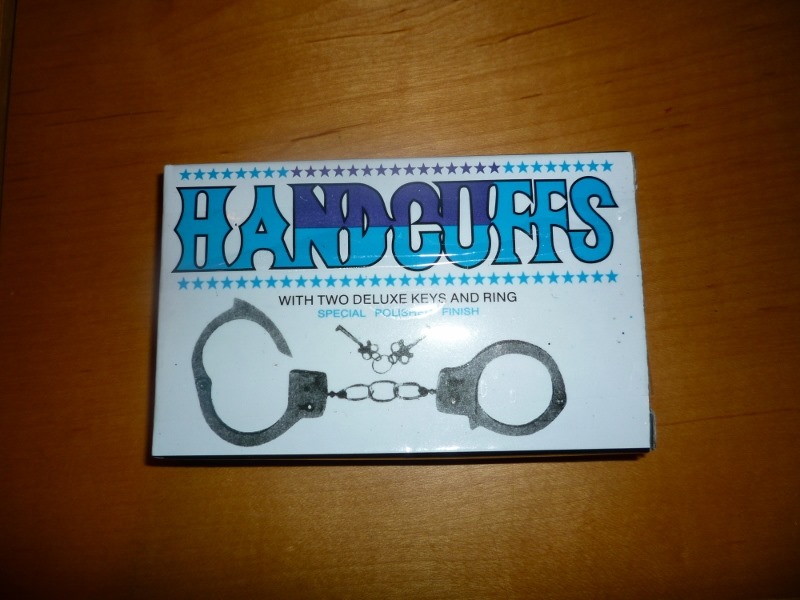
Do you enjoy social networking and marketing, or would you rather watch paint dry? Does someone have to handcuff you to the keyboard to get you to participate?
Where it comes to marketing, create a specific promotional campaign for each upcoming title. Follow this template so you’re not reaching blindly in the dark. As for the social nets, pick a select few and check in there often. Visit the other sites whenever you get to them. Schedule tweets ahead of time if you have a chance. I’ll visit Facebook several times a day because I feel this one is the most important.
Twitter comes next for me. I’ll pop in there every now and then and do a few posts. Pinterest isn’t on my daily role call. I’ll pin photos after I do a blog post with pictures I’ve uploaded. Goodreads is on my list but not on a daily basis, as is commenting on other people’s blogs and posts. You have to do what feels right for you.
I’m a big believer in lists. Write down your writing and business goals for the year. Each day, decide what you have to accomplish. These lists will give you a concrete path to follow. Write down the marketing plan for your next book. This will give you a specific focus, i.e. a blog tour or a book trailer. What you don’t want to do is flounder about, because that’s truly a time waster.
So what’s your plan for today? Mine included writing this blog. Marketing task number one is done. On to task number two.
Nancy J. Cohen
Writing Contests for Published Authors
Being a finalist in a writing contest can lift your mood, while not earning any kudos can depress you. So why enter them at all?
One reason to enter a contest for published authors is to expose new readers to your work. A judge might become a new fan. It’s another way to get your name out there. Plus, if you win, you’ll be able to call yourself an Award-Winning Author. That looks good on your book cover and in your professional biography. If you’re a finalist, you can get mileage out of that term as well. The ensuing publicity can broaden your readership.
On the other hand, low scores can totally strip you of confidence. In the mystery field, there aren’t a whole lot of contests to enter. If you write humorous cozies like I do, there’s no sense in entering the Edgars. You have to be nominated for most other awards like the Agatha, and that becomes a popularity contest as conference goers vote for the winners. There’s little judging with feedback or specific criteria like in the romance field.
Thus this past year I entered both my paranormal romance and my mystery into separate contests sponsored by RWA chapters. I did enter Shear Murder in the Florida Book Awards, even knowing a work of serious crime fiction would be more likely to win. My purpose was to gain the attention of whatever librarians might read my entry, although with the $50 entry fee, the cost of four print books (over $50), and the $15.41 postage, I might not bother again.
My romance didn’t garner a single nod in the myriad of contests I’d entered. I could understand this reaction because my mixed genre story might not appeal to the standard romance fan. My paranormal romance stories have a humorous touch and blend elements of science fiction and fantasy with mythology.
I’d had better hopes for my mystery, Shear Murder, but this title didn’t make the cut at the Daphne award sponsored by RWA’s Kiss of Death chapter. I’d entered it into the mainstream category because romantic suspense is more the cup of tea for this group. And then I got my scores back. Talk about demoralizing!
My heart sunk at the first score, 44 out of 88. Is my writing that bad? Does my series only appeal to a select group of fans? But as I read the comments, I realized that maybe this judge didn’t read a lot of cozies. Her final remark was, “A struggle to complete the reading.”
Oh, wait, there were two more scores. My spirits lifted. The next one was 72 and the last one was 87 out of 88! The last judge said, “This book is superb; masterfully written.”
So who am I to believe? Judge number one or Judge number three? Might I have finaled if not for that one judge who obviously didn’t get my work?
It doesn’t matter. The point here is that judging is subjective. One reader might love our book and another might say it should never have been published. I went for the goal and didn’t make it, but that doesn’t mean I won’t try again. I did, once in my lifetime, win the HOLT Medallion Award. If it happened once, it can happen again. You just have to grow a thick skin to keep trying and weigh the investment of time and money against the possible benefits.
Do you consider writing contests for published authors to be worthwhile?
Nancy J. Cohen
Lately my mind has been a blank when it comes to writing blogs. It could be due to the influx of out of town visitors we have been hosting this month that makes it difficult to concentrate. Or it could be due to my WIP revisions on a book that’s over 104,000 words long. This might sap my mental energy. Regardless of the reason, it’s a good time for some mindless activity in between polishing the prose or escorting visitors around town. Here are some photos of the activities that have been leading me astray (not to mention gaining another pound).

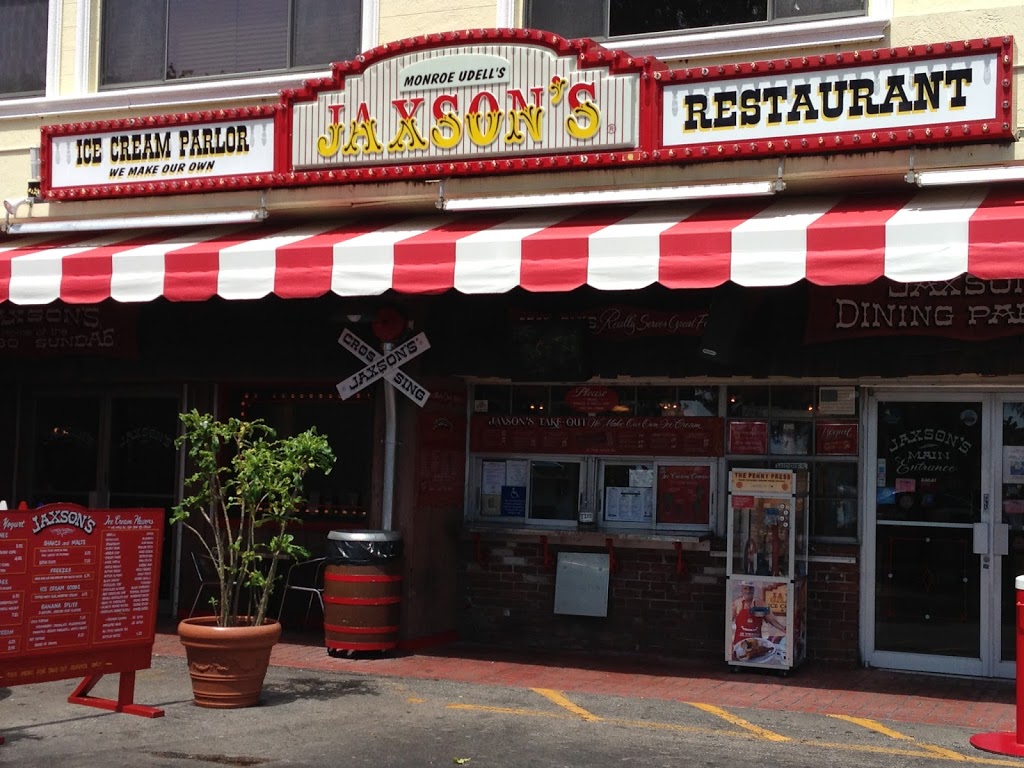

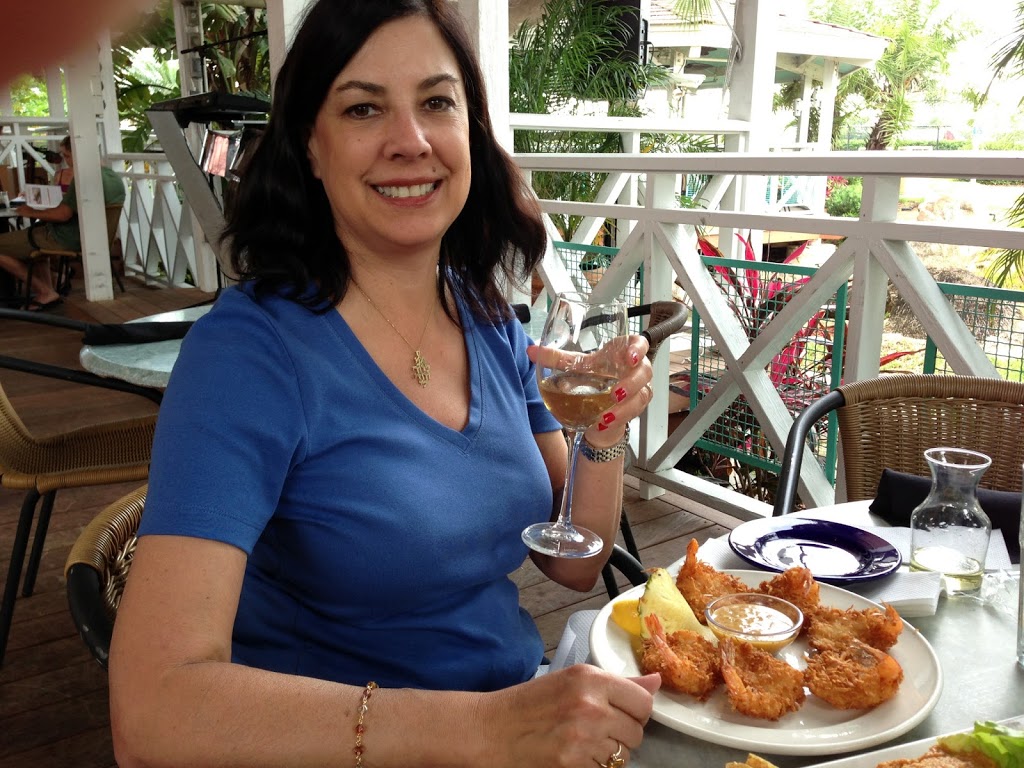
I look a bit too relaxed there, don’t I?
Consider these tasks when you feel brain dead, too distracted or too tired to think straight. Here’s a list of jobs to do when you want to be productive without much mental effort.
• Organize your Internet Bookmarks/Favorites and verify that the links are still active.
• Verify that the links you recommend on your Website and your Blogroll are still valid.
• Update mailing lists and remove bounces and unsubscribes.
• Back up your files to the Cloud or to other media.
• Clean out and sort your files on the computer and in your office drawers.
• Convert old file formats to current ones.
• Delete unnecessary messages from your email Inbox.
• Eliminate duplicate photos stored on your computer.
• Delete old contacts from your address book.
• Unfollow people from Twitter who are no longer following you.
• Delete friends from Facebook who have deactivated their accounts.
• Sort your Twitter friends into Lists.
• Post reviews of books you’ve read to Goodreads, Amazon, Shelfari & Library Thing.
• Get caught up on a tax deduction list for your writing expenses.
• Index your blog posts by date and subject so you have a quick reference.
What else would you add?