How Long Should a Chapter Be?

b5e9a52b-04c0-4988-ac4f-1d7dd34b5605

Half of art is knowing when to stop — Arthur William Radford

By PJ Parrish

This must be the week for throwing out lifesavers. Sunday, James wrote about hearing from a former student who needed help getting over his writing paralysis. Good post for all of us, so click here to read it.

Yesterday, I got an email from a participant who took the two-day fiction-writing workshop Kelly and I gave last summer at Saturn Booksellers in Gaylord, MI. This woman was our best student and her sample chapters showed real promise. She absorbed stuff like a little sea sponge, took criticism like a pro, and was eager to get back to work on her story. But then came her email. Here is her nut graph:

This is probably a dumb question but I can’t find the answer anywhere and I am really worried that I am letting it get to me and prevent me from moving forward. My question is: How long should chapters be?

I started to write her back then realized this is one of those “dumb” questions that isn’t really that dumb. So I am writing to her via our group here at TKZ. Because I know you guys will help me give her a good answer. So…

Q: How long should chapters be?
A: As long as they need to be.

{{{Well, hell, that’s a big help, Sen-Sen breath.}}}
Patience, grasshopper.

Okay, here’s the facile technical answer, according to what I found through a quick Google of writer’s sites: The average word count for a novel is about 4,000 words. For genre fiction, it tends to be about 2,500 and shorter for YA. (The thought being, apparently, that young folks have short attention spans or fall asleep easily. But that didn’t seem to deter JK Rowling.)

This word count thing, as we all know, is about as helpful as advising an aspiring novelist to start at the beginning and keep going until the end. But the email from my workshop friend did get me thinking about the structure of chapters, and how often, when I read a manuscript, I see the writer struggling to figure out how and when to bring a chapter to a graceful, logical and satisfying end.

So I’m going to turn the question around a bit and focus on a different question I often ask of writers, be they raw beginners or even my seasoned critique group buddies:

What is the purpose of this chapter or scene?

I think sometimes we all can lose sight of this important question. As we write, we often charge through scene after scene propelled by raw passion, or a desperate desire to get it all down before it disappears, or grim determination to make a self-imposed daily word quota. In that mad rush, we can lose the focus of what the chapter should be trying to accomplish. You’ve heard this advice, I’m sure:

Make your writing muscular.

Now, that refers to all the usual stuff about using sturdy verbs, active voice, lean evocative description etc. But I think it also means that we should strive to make each scene, and by extension each chapter, work hard to propel the story forward. Maybe I can explain by showing you how Kelly and I approach this. We’re sort of pantsers in outliner’s clothing. We Skype every couple days and talk out where the book is going next. We can see about five or six chapters ahead at a time. We then write out a rough template of those chapters/scenes and what we hope to accomplish in each one. Here’s the actual template for our WIP Louis Kincaid book. Skim as needed:

CHAPTER ONE – Date?
Boys in box. Two unnamed terrified boys are fleeing someone in the dark and hide in a closet. No suggestion of place or date.

CHAPTER TWO – day 1 Saturday April 6:
Louis arrives at church and talks briefly with Steele. Intro Steele as main character. Brief Louis backstory reference on why he is here.

CHAPTER THREE – day 2:
Louis finds new apartment and unpacks his mementos. Insert thoughts about daughter and Joe. Phone call from Joe maybe? Very brief backstory reference to what happened in DOW with Steele. Stress that Louis feels really good about wearing a badge again after wandering so long in PI wilderness. (Set up for Steele show-down later).

CHAPTER FOUR – day 3 Monday morning April 8
Back at remodeled church. Team members show up. Brief info about structure of this State police task force. Steele gives intros and they take their cases. Louis chooses Boys in the Box case.

CHAPTER FIVE – day 3 late night
Emily comes and they go to dinner at bar and talk. Character enhancement scene and intro Emily with bit of FBI backstory. Set up hint that something is troubling Emily (later will reveal suicide of parents, which is why she balks at her assigned case later in book).

CHAPTER SIX – day 4
The meeting in the choir loft. As Louis is packing up file and getting read to leave, he can’t resist asking Steele why? Backstory on what exactly happened in Loon Lake 5 year ago (in L’s thoughts) and what changed Steele’s mind about Louis. Est. tension with Steele.

CHAPTER SEVEN – day 4 later
Louis makes long drive to Upper Peninsula. Heavy description to est mood and sense of remoteness. Meets Sheriff Nurmi. He is invalid but sharp as a tack. They discuss the cold case about boys in box.

Scene break or new chapter?
Louis goes to evidence room and examines the box. Sees marks on inside lid and realizes boys tried to claw way out.

Scene break or new chapter?
Louis goes to local cemetery to see boys graves but can’t find them. More talk with Sheriff Nurmi about what happened to the boys remains. Nurmi suggests he talk to old Rev. Gandy who presided over boys memorial service.

CHAPTER EIGHT or NINE?? Late that day.
Louis checks into the local inn. Reviews case file of boys in his room. Heavy case info scene. Est time line clearly over last 20 yrs of cold case. L Goes to dinner, talks to locals but no one remembers the boys from 20-odd years ago. He drinks too much, falls asleep and has a bad nightmare (IT ECHOES THE OPENING CHAPTER BUT ONLY OBLIQUELY.) Wakes up in a sweat and goes for a scary night run on the Lake Mich. Shore. Feeling of extreme disquiet.

NEXT CHAPTER – early next morning.
Louis goes to visit the abandoned copper mine where the boys in the boy were found. Build Creepy atmosphere. He finds the Catholic medal but it’s too old so he doesn’t know what it is. Other mementoes found? Goes to see Rev. Gandy?

When we do these quick sketch templates, we are hyper-aware of the need to make each chapter “muscular,” to make it work in hard-harness to pull the plot along. But it’s not just about plot here. We also look for secondary purposes, like opportunities to inject spurts of backstory (and thus avoid one giant info-dump) or to illuminate characters or their motives.
Also, by articulating the main focus and the secondary purposes of each chapter BEFORE we start writing, we are positioning ourselves to be able to better recognize a logical place to END each chapter instead of just allowing the chapter to peter out through pure exhaustion or inertia. Which brings me to my next point:

Every chapter should have its own dramatic arc.

We talk a lot here at TKZ about how your entire story have a dramatic arc. But I think it’s helpful to think of each scene/chapter having its own mini-arc. Think, before you write, about what you need to accomplish in each chapter and focus your output to that end. Of course you will veer off on digressions and detours and deadends – that’s why they call it creative writing! But if you have defined the central focus of each chapter beforehand, you will be less tempted to fill the screen with mere typing.

I suspect you will find that each mini-arc has its own natural little conclusion. Think of the end of each chapter as a sort of pause, almost like you are taking a breath before moving on. That’s what you are asking the reader to do if you are breaking your chapters at the right moments. You are sending a subtle signal to the reader: Okay, I’m going to give you a second to catch your breath here. Ready? Now turn that page and let’s move on…
One great thing about crime fiction, propelled as it is by the needs of strong plot, is that it tends to give us plenty of obvious places to end chapters. Here are a couple:

  • A significant shift in time or place.
  • A change in point of view.
  • A new plan of action. You show cops outside planning and preparing to go rescue a hostage. Stop there, then open next chapter with the action itself.
  • Introduction of a new twist or information. Say your hero has just learned about a huge new clue. Stop there, then build a bridge to the next chapter. In our last book, Heart of Ice, Louis finds forensic evidence that tells him he has the wrong suspect. It’s a devastating twist that sends the plot careering off in a new direction, so we end with Louis’s partner saying, “Now what?” And Louis says, “We start over. And this time we don’t make any assumptions.” The next chapter opens with Louis back at the murder site, reassessing the evidence.
  • The classic cliffhanger. In Heart of Ice, Louis chases a black hat out onto frozen Lake Huron. Here are the last lines of the chapter:

A loud crack, like a rifle shot.
Louis froze. Afraid to look down, afraid to even take a breath.
Another crack.
The world dropped.

Good storytelling is musical. It has pacing and rhythm, and no two writers have the same rhythmic style. If you are doing a good job of identifying the mini-arcs in your chapters, your readers will start to get a feel for your rhythm and will begin to even anticipate it. Which is partly what successful pacing is about: Your reader moving in sync to your writerly rhythms.

So should all your chapters be about the same length? Hard to say. I like a certain consistency when I read and when I write. My chapters tend to run about 2500 words. But when I am nearing the end of the story or in the middle of an action sequence, the chapters tend to get shorter. And sometimes, it just feels right to throw a really short chapter in there to shake things up. Stephen King has a chapter in Misery that’s one word: “Rinse.” And William Faulkner had this classic in  As I Lay Dying: “My mother is a fish.” I mean, what can you say after that?  So go short if you need to. Vary your rhythm like a scatting Ella. But make it all work as a whole, with purpose, passion and music. Which always comes down to…

Get me rewrite, baby.

Don’t sweat chapter numbering in your first draft. Strive instead for that mini-arc structure and you’ll find, when you go back in the hard light of rewrite time that the story has its own pacing. You might find you need to merge two chapters that feel anemic, or that you need to break up two that feel bloated or aren’t organically connected. In rewrite, you can go back and really listen hard for that natural intake of reader-breath, that pause. Which leads me to the perfect ending…

On the Road

on the road

I have been known to use this space to prattle on a bit about how to get that creative spark exploding, using a bit of this or that. Here I go again.

I had no idea at all until a couple of hours ago that there is a low-cost transportation service popularly known — to those who know it at all — as the Chinatown bus. Its service area is expanding by the month but its purpose is to get you from your city of residence to Chinatown in New York. It can do this from Columbus, Ohio, to name but one place, for around thirty dollars (the more you plan ahead, the less a ticket will cost you). You show up on the second block of East Main Street downtown at the day and time appointed — buses leave twice a day — and twelve non-stop hours later you are dropped off at a storefront in New York’s Chinatown. I was familiar with Megabus and some of the other curb-to-curb interstate bus services but this is a new one for me. The service has its own website which you can use to book a trip and also discusses the company’s history, which is extremely interesting as well. I managed to quickly find a couple of folks who have used this and who told me some extremely interesting stories about using it. While the service was originally designed to accommodate Chinese and other Asian immigrants, anyone can use it with some money and planning.

Think about that: a non-stop trip to New York for less than it would cost you to drive there. If you got on the bus wanting inspiration, you would almost certainly have something in mind by the time you reached your destination, just by observing your fellow passengers and taking notes. If you weren’t inspired by the trip, certainly being dropped off in the middle of New York will get those creative juices percolating. I’m thinking — yes, you do smell smoke — of taking the Chinatown bus to Thrillerfest XI just for grins next year. And maybe just for the heck of it before that. I may even put it on my bucket list.

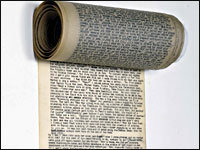
Does this appeal to you? Would you use such a trip — or any trip — as an inspirational jump starter? Or do you regard travel, regardless of mode, as a necessary evil that enables you to get where you want to go, and nothing more? And do you have a favorite travel story or novel? Mine is — of course — ON THE ROAD by Jack Kerouac, typed on a roll of toilet paper. Yours?

Let’s Discuss Book Promotion Resources

Jordan Dane

@JordanDane

Teen Pic

Purchased Image by Jordan Dane: book cover

Off the top I will say that spending a great deal of time doing promotion, instead of writing, is probably not a good thing. Even if you’re an indie author, having inventory to sell is a key way (the best way) to keep your work in front of readers.

Writing new material should be a goal for every author. Having said that, book promotion is a necessary evil, even if you’re traditionally published with book tours and appearances, but even more so if you are an indie or hybrid author straddling business and creative lines.

So let’s talk about promo. It’s been awhile since I looked into this topic. Even if you are traditionally published, it can help to enhance your sales if you assist your publisher with your own marketing strategy – something that isn’t redundant with what they may be doing for you. The average author today can not escape promoting their own books, no matter how big their publisher might be.

Promotion Resources:
BookBub still is a popular option if you are lucky enough to get your book selected by them. It can be costly (depending on what genre you pick to promote your book in) but I’ve heard authors have good odds of making the expense pay off in sales because you get your book in front of readers of your genre. Always a good thing.

Other popular options are:
BookBuzz is a fee-based service company that will help you promote your book in various packages, including getting your book listed on NetGalley for reviews (which costs money). The fees are reasonable and you choose which package best fits your purposes and budget.

BookGorilla is a reader-based service that sends out emails daily, listing great books deals. If you’re offering your book at a discount upon release or for preorder, this might be a good place to reach a vast list of reader members.

Upload Service Question:
For those of you in “the know,” is there a service that will input a new release book into 50+ reader-based sites for a fee? I seem to recall there used to be one but I’ve had trouble locating it online. It would certainly be a cool feature for any author or publisher to find a service like this.

Facebook Parties:
Many authors add Facebook Parties to their launches. It could be part of a virtual tour offered by a service company. It helps to have more than one author of a genre to make the party more fun and generate interest. Has anyone had success with a Facebook Party for a crime fiction book? (Romance and Erotica authors do these quite a bit.)

Promo Question:
Does anyone have promo sites for either promotion service companies to generate buzz or reader-based sites to get new releases into readers’ hands that have paid off? It’s often hard to quantify whether a fee has paid off in book sales, but please share anything you’ve tried with success. I’m especially interested in services for crime fiction, mystery, suspense, and thrillers.

I hope you’ll share what has worked for you. Please join in the discussion. Below are links to promote free or discounted books. Hopefully some are new to you.

ENT (E-Reader News Today)
Pixel of Ink
The Reader Cafe
Free Booksy
Kindle Nation Daily
Digital Book Today
Free Digital Reads
http://ereaderutopia.com/
http://www.humanmade.net/submission-form
http://www.orangeberrybooktours.com/
http://www.bookblast.co/advertise/advertise.php
https://www.themidlist.com/
http://www.ebooksoda.com/
http://www.masqueradecrew.com/2014/10/advertising-options-from-masquerade-crew.html
http://newfreekindlebooks.com/authors
http://kindlemojo.com/
http://www.thekindlebookreview.net/advertise-here/
http://www.bookbear.info
http://www.totallyfreestuff.com/
http://www.icravefreebies.com/contact/
http://blog.booksontheknob.org/about-this-blog-and-contact-info
http://freebooksy.com/editorial-submissions
http://www.kindleboards.com/free-book-promo/
http://indiebookoftheday.com/authors/free-on-kindle-listing/
http://freekindlefiction.blogspot.co.uk/p/tell-us-about-free-books.html
http://www.freeebooksdaily.com/
http://www.freebookshub.com/authors/
http://www.ereaderiq.com/about/
http://ebookshabit.com/about-us/
http://www.blackcaviar-bookclub.com/free-book-promotion.html#.UXFB27XYeOc
http://www.kornerkonnection.com/index.html?fb=ebookkornerkafe

First Page Critique: Tweak, Tune, and Trim

Shutterstock photo purchased by Kathryn Lilley

Shutterstock photo purchased by Kathryn Lilley

Today we’re analyzing an anonymous, first-page submission titled WHERE I BELONG. My comments on the flip side.

*   *   *

“Do you want to know why we’re not having sex?”

My husband Sam was standing at the stove, pouring pancake batter onto the griddle, when I walked into the kitchen. He had his back turned; he spoke in an even tone. He might as well have been asking whether I wanted orange juice or cranberry.

It was a sunny Saturday morning in early September. I was dressed in sweats, my long hair pulled back in a ponytail. I had been headed to the garage to let the dog out of his pen, so I was distracted and wasn’t sure I’d heard him correctly. “I’m sorry, what did you say?” I asked.

Sam turned off the stove, faced me directly, and placed his hands flat on the counter-top between them. “I said, do you want to know why we’re not having sex?”

Is there a good answer to this question? I wondered. Doesn’t this lead to either “I’ve met someone else and we need to talk” or “I am seriously ill and we need to talk.” Either way –

“I’m not in love with you anymore,” Sam said in a monotone voice.

I felt as if I’d entered a time warp. This whole conversation was bizarre. “You just stopped loving me? This morning?” I replied lightheartedly.

Ten minutes ago I’d been singing in the shower and now I heard my husband telling me– Wait. What exactly was he telling me? Was Sam upset about something? Was this his way of letting me know he was hurt?

“Okay, what’s bothering you?” I finally said. “And, honey, how can you say we’re not having sex? Just a few weeks ago, we made love. When Lily left for the weekend. You cried afterwards and said I was the only woman you ever loved.”

Sam stared at me full on. “I told you what you wanted to hear. I wasn’t being honest. And because I knew it was the last time.”

I stood still, looking at him. This time I heard him. That message was clear. His jaw was clenched but I also saw tears in his eyes. Something was seriously wrong.

*   *   *

My comments:

The first line of this story grabbed my attention. As Joe Moore discussed in his post last week, the first line of a story plays a critical role in setting the stage for everything that follows. After reading the first line of this story, about why the couple is no longer having sex, I was hooked. That’s a strong opening.

This first page does severel other things well.  It sets up a situation that many people can identify with:  a sudden, shattering rejection. By contrasting the serious nature of the couple’s discussion against the mundane rhythm of a “normal” Saturday morning, the drama is heightened all the more. We can’t help but identify with the character as she reacts to what her husband  is saying, moving from confusion to a dawning awareness that her world is about to fall apart.

Tweak and Tune

Most of my suggestions for improvement go under the category of “tweak and tune.”

Action overload

The following sentence contains too many sequential actions:

“My husband Sam was standing at the stove, pouring pancake batter onto the griddle, when I walked into the kitchen.”

We writers have a tendency to string actions together like Christmas tree lights, in order to move through the physical mechanics of a scene. As a general rule, sentences should contain one or two actions each. Use caution when combining actions by two characters within the same sentence–that’s frequently a symptom of action overload.

The sentence in this example is further weakened because the sequence of actions is out of order. The main character sees her husband after entering the kitchen, but this sentence reverses that sequence. That note seems like a small nit, but it’s important to avoid disorienting the reader. (Another related, general rule: the most important action should always appear at the end of a sentence, not the beginning.)

Echo-ING

“Standing” and “pouring”. The use of two ING words within the same sentence is  repetitive, and weakens the line.

Batch related elements

The sentence, “…he spoke in an even tone” is an important line, but it’s located too far away from the dialogue it refers too. In general, try to keep descriptive elements in close proximity to the thing they describe.

Semicolon alert

“He had his back turned; he spoke in an even tone.”

I agree with James Scott Bell, who once said of semi-colons: “I think of semi-colons the way I think of eggplant: avoid at all costs.”

Adverb alert

“I replied lightheartedly.”

The adverb “lightheartedly” undermines the strength of this sentence. The character might try to sound lighthearted, perhaps. But seriously. Don’t use an adverb here.

Focus on action-reaction

“Okay, what’s bothering you?” I finally said. “And, honey, how can you say we’re not having sex? Just a few weeks ago, we made love. When Lily left for the weekend. You cried afterwards and said I was the only woman you ever loved.”

It would be good to enhance this snippet of dialogue with some sense of interaction between the characters. For example, perhaps the woman waits for her husband to respond to her question about what’s bothering him. When she gets no answer, she then launches into the story about the last time they made love.

Overall

All my notes and nits are relatively minor, mechanical suggestions. Overall, I was completely drawn in by the character’s situation in this story. I think it’s a strong start. Kudos to the writer, and thank you for submitting this first page!

Your turn

What do you think of this first page, TKZ’ers? Do you have any additional notes or suggestions for the writer?


Three Tips For Writing Historical Fiction

by James Scott Bell
@jamesscottbell

One of the challenges of writing contemporary thrillers is that technology and forensics are always changing. Something you write about this year can be dated the next. I remember a thriller that came out some years ago, from a big name, utilizing the amazing technology of a cell phone that could take pictures!

How quaint. That book now reads like one of those 1940s movies where reporters rush to pay phones to get a scoop to the office.

With historical fiction, though, that’s not an issue. Everything is fixed. You can take your time with the research because you don’t have to beat the clock.

Which is why I enjoyed writing about a young female lawyer in old Los Angeles. Six books in the Kit Shannon series, originally for the leading publisher of Christian historical fiction, Bethany House.

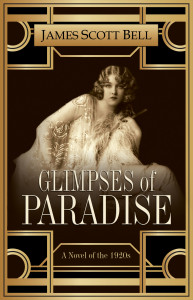
When that series was almost done, Carol Johnson, who was in charge of fiction at Bethany House, asked me if I’d consider writing a long, historical stand-alone for them. I was up for it, for I had long wanted to try writing one of those John Jakes-type historical novels. I also wanted to cover an era I felt was under-represented, World War I and the early 1920s in Hollywood.

Which is how Glimpses of Paradise was born.

glimpses-front-1

The novel follows the fortunes of two high school kids from Nebraska. Doyle Lawrence is the scion of one of town’s wealthiest families. Zee Miller is a preacher’s kid from the poorer section. But she has a spirit and zest for living that draws Doyle to her, much to the consternation of his father.

From there the narrative tracks Doyle to the battlefields of World War I, and Zee to the glitter factory of Hollywood. And a stunning series of events that brings these two together again, both with innocence lost.

Glimpses of Paradise is the longest novel I’ve ever written, at 130,000 words. I absolutely lost myself in the research. Countless hours spent at L.A.’s central library, delving into first-hand accounts of World War I (a section of the book I’m particularly proud of, since my great uncle, a Marine, was killed at Belleau Wood in 1918) and soaking myself in the newspapers of the time. I have three big binders full of my research notes, copies of newspaper stories, maps, photos. (If you want to know what corned beef cost in 1921, I’m your man.)

The result was a novel that was a finalist for the Christy Award in Historical Fiction, and one of my personal favorites. There’s even a cameo appearance by Kit Shannon, still practicing law in Los Angeles. You can pick it up from these retailers:

AMAZON

AMAZON INTERNATIONAL STORES

If you would like a PRINT copy, I have a limited number of the original Bethany House edition. If you’d like one for $10 (free shipping in the U.S.), send an email to compendiumpress [at] yahoo [dot] com and we’ll tell you what to do.

So (doffing my cap to our resident historical fiction maven, Clare Langley-Hawthorne), I offer these three observations about writing historical fiction:

  1. It’s still about characters

The fundamentals of storytelling don’t change just because you write about a certain place and time. You still need to bond reader with characters, and put those characters into a life-altering struggle that requires strength of will to overcome.

  1. Make the setting itself a character

Don’t just render a historical setting accurately. Use that setting and the particulars of the time as a source of challenge and conflict for the characters. In Glimpses, for example, I try to capture what it was like for people struggling in the post-war depression in a city known for its glamour. I put the characters in challenging places to live, and in diners where they try to score some cheap food, etc.

  1. Weave research in seamlessly

Historical fiction writers love research. You can get lost in it. Every new discovery suggests a myriad of plot points. The great task is deciding what to leave out. And then taking what’s left and weaving it into the narrative so it doesn’t stick out like a neon sign announcing what a great researcher you are. The trick here is to start with a scene that has a clear POV character with a clear objective. Then brainstorm obstacles and helps to the character from the store of historical details. Use them in the conflict, don’t just list them for the reader.

Anything you historical fiction writers would like to add?

And if you’re a reader, what’s your take on historical fiction? There is always an ebb and flow in the market for historicals, but I contend that a well-written historical novel will always find readers to please.

Finding the Right Door
to Enter Your Story

Disney2

“Begin at the beginning,” the King said gravely, “and go on till you come to the end: then stop.”

By PJ Parrish

I had a whole ‘nother blog in the works today but Clare’s post yesterday on common amateur mistakes made me want to switch gears. That, and the fact that I was hearing voices in my head the other day and this is a good way to exorcise them.

A while back, I gave a talk to a beginning writers group about what makes for a great opening in a novel. We had a good time analyzing which of their openings had promise or why they had veered off track. It’s a popular topic, as we at TKZ here so well know, but I think it’s one that we all need to revisit constantly. Me included.

See, the other day, as I was pounding around the jogging oval at the park, I heard a strange voice whispering in my head. I had never heard her before, but she was insistent: “Tell my story! Tell my story!” I tried to ignore her, because as Kelly and I await the Sept. 9 launch of our new book SHE’S NOT THERE, we are 16 chapters into a new Louis Kincaid. And one of the commandments of novel writing is Thou Shall Finish One Book Before Starting a New One. But this woman wouldn’t shut up, so I went home and banged out 2,000 words. Wow! I never get out of the gate that fast! I was chuffed.

Well, I re-read it yesterday. Wee-doggies, it stinks. I open with a woman sitting alone in a fishing boat in the Everglades. She is thinking about her life and what brought her to this point. She is sad. She is regretful. She is boring as hell. I also larded in pages of description of the saw grass, the weather, the clouds, the water, even the type of fishing lure she was using. Finally, toward the 2,000-word mark, I reveal she is a Miami homicide detective who turned in her badge when her husband and child were killed in a drug deal gone bad that she was involved in.

This morning, I deleted the chapter. Lesson number 1: Just because you have an idea doesn’t mean you should act on it. Lesson number 2: Even experienced writers have trouble with openings.

Even Stephen King. You think you sweat bullets over openings? He says he spends months and even years before he finds his footing. I read this recently in an interview King gave to The Atlantic magazine. He talks at length about what makes for a great opening, and how hard it is for him to find the right one.

When I’m starting a book, I compose in bed before I go to sleep. I will lie there in the dark and think. I’ll try to write a paragraph. An opening paragraph. And over a period of weeks and months and even years, I’ll word and reword it until I’m happy with what I’ve got. If I can get that first paragraph right, I’ll know I can do the book.

And he makes a great point, that the right opening line is as important to the writer as it is to the reader:

You can’t forget that the opening line is important to the writer, too. To the person who’s actually boots-on-the-ground. Because it’s not just the reader’s way in, it’s the writer’s way in also, and you’ve got to find a doorway that fits us both. I think that’s why my books tend to begin as first sentences — I’ll write that opening sentence first, and when I get it right I’ll start to think I really have something.

Which is why I deep-sixed my woman in the fishing boat. Maybe her story does need to be told, but I entered via the wrong door. I’m going to set her aside for a while. In the meantime, I am going back to school. Want to come along?

HOOKS

Enthuse or lose! What was the prime crime of my bad chapter? NOTHING HAPPENED! The first chapter is where your reader makes decision to enter your world. Your hook needn’t be too fast or fancy. It can even be quiet — like someone going on a fishing or hunting trip (see example below!).  But it must be suspenseful enough to makes us care about your character. Fancy hooks can be disappointing if what follows doesn’t measure up. If you begin at the most dramatic or tense moment in your story, you have nowhere to go but downhill. Also, if your hook is extremely strange or misleading, you might just make the reader mad.

What about opening with action scenes? I’ve seen it work well; I’ve seen it look silly. I think intense action scenes work only if they have context and reason for happening. Car chase, bullets fly, things explode, dead bodies! But unless you give reader reason to care about someone, it feels cheap and pushy, like a Roger Moore James Bond movie. If you can make us CARE about the person during intense opening action scene, yes. If not, it’s boring and trite.

OPENING LINES

A good one gives you intellectual line of credit from the reader: “Wow, that line was so damn good, I’m in for the next 50 pages.” A good opening line is lean and mean and assertive. One of my fave’s is from Hemingway’s story, “The Short Happy Life of Francis Macomber:  “It was lunch now and they were all sitting under the double green fly of the dining tent pretending that nothing had happened.”

A good opening line is a promise, or a question, or an unproven idea. But if it feels contrived or overly cute, you will lose the reader. Especially if what follows does not measure up.  Stephen King has two favorite opening lines. One is from James M. Cain’s great novel The Postman Always Rings Twice:  “They threw me off the hay truck about noon.”  Here’s King on why he loves it:

Suddenly, you’re right inside the story — the speaker takes a lift on a hay truck and gets found out. But Cain pulls off so much more than a loaded setting — and the best writers do. This sentence tells you more than you think it tells you. Nobody’s riding on the hay truck because they bought a ticket. He’s a basically a drifter, someone on the outskirts, someone who’s going to steal and filch to get by. So you know a lot about him from the beginning, more than maybe registers in your conscious mind, and you start to get curious. This opening accomplishes something else: It’s a quick introduction to the writer’s style, another thing good first sentences tend to do.”

GET INTO STORY AS LATE AS POSSIBLE

This is one of my pet peeves about bad writing…throat clearing. Begin your story just moments before the interesting stuff is about to happen. You want to create tension as early as possible in your story and escalate from there. Don’t give the reader too much time to think about whether they want to go along on your ride. Get them buckled in and get them moving. Preferably not in bass boat.

INTRODUCE THE PROTAGONIST

Another pet peeve of mine. Don’t wait too late in the story to introduce your hero. Don’t give the early spotlight to a minor character because whoever is at the helm in chapter one is who the reader will automatically want to follow. I call these folks “spear carriers” after the guys who stand in the background holding the spears in “Aida.”  They aren’t allowed to steal the spotlight when Radamès is belting out Celeste Aida. So don’t let your secondary characters get undue attention or the reader will feel betrayed and annoyed when you shift the spotlight.

IDENTIFY THE CONFLICT OR QUEST

Begin the book with conflict. Big, small, physical, emotional, whatever. Conflict disrupts the status quo. Conflict is drama. Conflict is interesting. Your first chapter is not a straight horizontal line. It’s a jagged driveway leading up a dark mountainside. Don’t put a woman in a fishing boat in the Everglades thinking about how crappy her life is and expect the reader to care.

WHAT IS AT STAKE HERE?

What is at play in the story? What are the costs? What can be gained, what can be lost? Love? Money? One’s soul? Will someone die? Can someone be saved? The first chapter doesn’t demand that you spell out the stakes of the entire book in neon but we do need a hint. And we don’t care that her fishing lure is a 1-ounce jig with a bulky trailer.

CREATE A DRAMATIC ARC

Your whole book has an arc, but every chapter should have a mini-arc. Ask yourself “What is the purpose of this chapter?” and then build your chapter around that. This does not mean each chapter needs a conclusion but it needs to feel complete unto itself even as it compels the reader onto the next chapter. The opening chapter should have its own rise and fall. It is not JUST A LAUNCHING PAD!

GET YOUR CHARACTERS TALKING

Dialogue is the lifeblood of your story and you need it early. Too much exposition or description is like driving a car with the emergency brake on. Likewise, don’t bog down your opening with characters doing menial things. Like fishing. Or thinking about boring stuff. Like fishing lures. Here’s some good advice from agent Peter Miller that I read once on Chuck Sambuchino’s Writer’s Digest blog: “My biggest pet peeve with an opening chapter is when an author features too much exposition, when they go beyond what is necessary for simply ‘setting the scene.’ I want to feel as if I’m in the hands of a master storyteller, and starting a story with long, flowery, overly-descriptive sentences makes the writer seem amateurish and the story contrived. Of course, an equally jarring beginning can be nearly as off-putting, and I hesitate to read on if I’m feeling disoriented by the fifth page. I enjoy when writers can find a good balance between exposition and mystery. Too much accounting always ruins the mystery of a novel, and the unknown is what propels us to read further.”

SO DOES THAT MEAN  I SHOULD OPEN WITH DIALOGUE?

This goes to personal taste. I’m not a fan of it, but I have seen it pulled off. But be careful because opening with dialogue tosses the reader into the deep end of the fictional pool with no tethering in time and place. This is like waking up from a coma. Where am I? Who are these people talking? I could be wrong because I haven’t read them all, but even Dialogue Demon Elmore Leonard gives you a quick couple lines or graphs first. (Okay, I’m wrong: LaBrava opens with “He’s been taking pictures three years, look at the work,” Maurice said.) But if your dialogue only leads to confusion, that isn’t good. Which relates to…

ESTABLISH YOUR SETTING AND TIME FRAME

The first chapter must establish the where and the when of the story, just so the reader isn’t flailing around. Yes, you can use time and place taglines, especially if your story is wide in geographic scope or bouncing around in time. But if your story is fairly linear and compact (taking place, say, all within six months time in Memphis), sticking a time tag on each chapter only makes you look like you don’t know how to gracefully slip this info into your narrative.

ESTABLISH YOUR TONE AND MOOD

First impressions matter. From the get-go, your reader should be able to tell what kind of book he is reading – hardboiled, romantic suspense, humorous, neo-noir? Yes, the cover and copy conveys this, but you need to convey it in your opening. Everything in your book should support your tone, but the first chapter is vital to inducing an emotional effect in your reader. I’ve mentioned Edgar Allan Poe’s Unity of Effect often here but it’s worth repeating: Every element of a story should help create a single emotional impact. But remember that a little mood goes a long way – think of a few swift and colorful brush strokes rather than gobs of thick paint.  Did you know that in the Everglades, intense daytime heating of the ground causes the warm moist tropical air to rise, creating the afternoon thundershowers? And that most of the storms happen at 2 p.m.? I should have just wrote “It rained in the afternoon.”

MAKE YOUR VOICE LOUD AND CLEAR

This is where you are introducing your story but also yourself as a writer. Your language must be crisp, you must be in complete control of your craft, you must be original! Shorter is usually better. No florid language or indulgent description, no bloated passages, no slack in the rope. The reader must feel he is being led by a calm, confident storyteller. See quote about by Stephen King about James M. Cain.

BACKSTORY AND EXPOSITION

The first chapter is not the place to tell us everything. Don’t be like a child overturning his bucket of toys — then it’s just a colorful clamor, an overindulgence of information. Exposition kills drama. Backstory is boring. Give us a reason to care about that stuff before you start droning on and on about it. Incorporating backstory is hard work, but you must weave it artfully into the story not give us an info-dump chapter 1.

Shoot-1

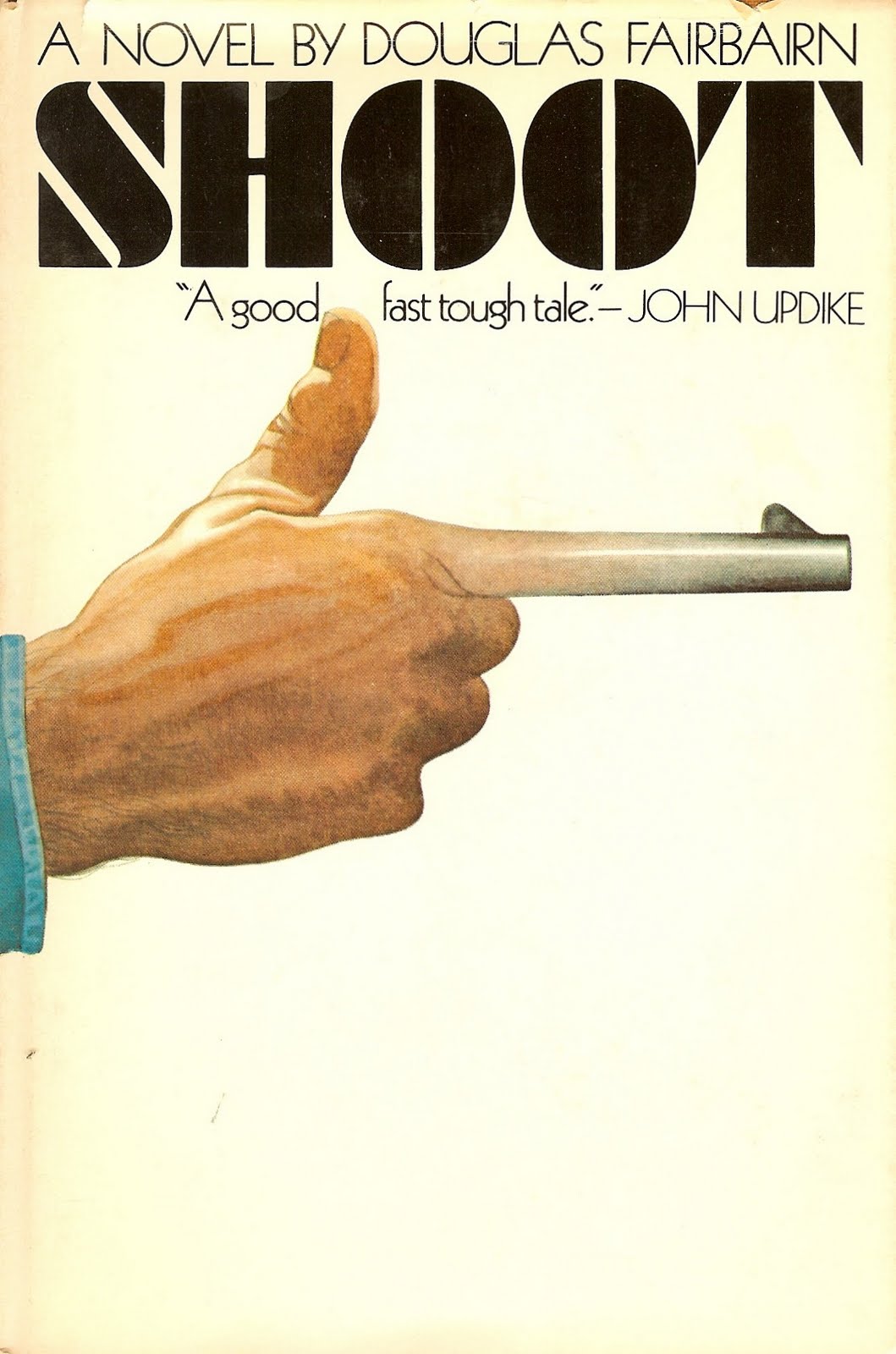
To end, let’s go back to Stephen King. So we know he admires James M. Cain. But what is his all-time favorite opening line? It is from Douglas Fairbairn’s novel Shoot. Here’s the set-up: A group of middle-aged guys, all war vets, are on a hunting trip. As they come to a riverbank, they spot another group of guys, much like themselves, on the other side. Without any provocation, one of the hunters on the opposite bank raises his rifle and fires at the first group, wounding one man. Reflexively, one of the first group returns fire, blowing the shooter’s head apart. The opening line: “This is what happened.”

And here is King on why he loves it:

“This has always been the quintessential opening line. It’s flat and clean as an affidavit. It establishes just what kind of speaker we’re dealing with: someone willing to say, I will tell you the truth. I’ll tell you the facts. I’ll cut through the bullshit and show you exactly what happened. It suggests that there’s an important story here, too, in a way that says to the reader: and you want to know. A line like “This is what happened,” doesn’t actually say anything–there’s zero action or context — but it doesn’t matter. It’s a voice, and an invitation, that’s very difficult for me to refuse. It’s like finding a good friend who has valuable information to share. Here’s somebody, it says, who can provide entertainment, an escape, and maybe even a way of looking at the world that will open your eyes. In fiction, that’s irresistible. It’s why we read.

King loves it so much, he echoed it in the opening of of his own novel Needful Things: “You’ve been here before.”  And guess what? It’s his own favorite opening. Which is a good place to end, I think.


Don’t be an Amateur!

I was going through some old files the other day and came across a folder from my old Oakland days and discovered I had kept a great article entitled:  Pat Holt’s Top Ten Mistakes Writers’ Don’t See (But Can Easily Fix When They Do). This morning I thought I’d look up her blog site, Holt Uncensored, and was delighted to see that her list was still up on the web and so, with a shout out to her, I’ve included this as the starting off point for putting together  our own Kill Zone top 15 (or maybe 20) mistakes that single you out as an amateur writer.

Holt’s top 10 are:

  1. Repeats – where a writer unconsciously has a ‘crutch’ word that is repeated (sometimes ad infinitem) in a manuscript. This may be a common word (see my recent blog post on writing tics) or an unusual word that stands out if repeated, or it could be a phrase that needs to be ‘lopped off’. So repeat after me…No Repeats!
  2. Flat writing – where your writing goes and die on the page…
  3. Empty adverbs – when used unnecessarily ’empty’ adverbs don’t add anything – in fact they can suck the meaning from a phrase or  appear infantile and clunky.
  4. Phony Dialogue – be careful not to use dialogue to advance the plot (people don’t normally recite plot facts to one another) or you can lose credibility with your reader.  Also be wary of using ‘fashionable’ dialogue or slang that can make your dialogue sound dated.
  5. No-good suffixes – don’t take a good word and muck with it by adding ‘ness’, ‘ize’, ‘ly’ or ‘ingly’ to the end of it….otherwise you get ‘meaninglessness’
  6. ‘To be’ words – nix these and use words like ‘is’, ‘am’, were’, ‘being’, ‘been’ or ‘there was’ or ‘there is’ sparingly as they can flatten your prose.
  7. Lists – don’t provide a long list of items as if they were on a checklist. Whether it be nouns (e.g. every flower in the garden) or verbs (e.g. everything your protagonist did that morning) this will only cause a reader’s eyes to glaze over.
  8. Show, don’t tell. ‘Nuff said!
  9. Awkward phrasing – cull any weird or awkward phrases that stop a reader in the midst of reading or which makes you sound like you’re trying way to hard to show you’re a ‘writer’.
  10. Commas – make sure you know your grammar and punctuation so you can demonstrate to an agent or editor you know what you’re doing.

To this great list I would add:

  1. Data downloads – don’t suddenly force feed your reader lengthy exposition that halts the story in its tracks
  2. Spell Check! – nothing says ‘amateur’ than sloppy typos.
  3. Know your core story and stick with it (for this I have to give kudos to Larry Brooks, my Monday blog-mate, as his book Story Fix clearly demonstrates,  this is where many writers (both novice and professional)  come adrift)
  4. Purple prose – If a simple, clear, precise description will suffice don’t overburden it with flowery, purple prose.
  5. Faking it – readers know if you’re not being authentic so don’t try and mimic another writer’s ‘voice’ – find your own and go with it…Also if you are writing say a romance just because you think you can make money, but you don’t actually like or read the genre, guess what? Readers, agents, and editors will know. There’s no point faking it…

So what about you TKZers, what would you add to make your ‘Top List of Mistakes That Make You Look Like An Amateur’?


How to Stay True to Your Writer Voice Across Genres

Jordan Dane
@JordanDane

Dana FB pic of Stone Angels 205250_10150186214376802_699051801_8472241_16017_n

(Surprise! I made a switch of a post date with James Scott Bell. He took my Thursday, July 16, and I swapped him for his usual Sunday. Who can say “No” to Jim, seriously?)

I made the change from crime fiction thrillers to young adult (and back) because I had a niece who wanted to be a writer and I included her in on my process while I wrote my first YA – IN THE ARMS OF STONE ANGELS (Harlequin Teen). We had fun together. I flew her from Texas and we spent a long weekend visiting the locals sights I wanted to use for the story, taking photos. I also worked with her to come up with character images and names and we plotted the first 8 chapters.

The sixteen year old character (Brenna Nash) had been born in my head while I wrote the Prologue. It should have felt like a drastic change in voice (from adult to teen), yet I made the leap with only one real foundation in crime fiction to connect my stories. I had deliberately chosen to make my first YA a cold case mystery so I could tie into my reader base. I didn’t analyze this change in genre, but I’ve been thinking of VOICE lately and wanted to break it down.

If you are a new author trying to find your way, or a more experienced writer who would like to venture into a new genre, I hope this post gets you thinking.

Keys Ways to Establish Your Own Voice Yet Stay Flexible Across Genres

1.) Ask Yourself: What is my natural voice? Answer this question on your own, but then ask those closest to you how they see you. Are you naturally cynical? Are you great with the one liners? Or are you quieter with good timing for well-timed jabs?

Exercise: Describe Yourself in Three Adjectives (Snarky, Fun, Flirty) Then ask: Is this how I talk?

2.) What books have you enjoyed in the genre you are interested in writing? I’m not just talking about reading a book and liking it. I’m suggesting you analyze exactly why you liked it. I’m talking notes in the margins and highlighted lines of dialogue or imagery you liked. Understanding your taste will help you define what comes naturally to you. You are drawn to author voices you like and hope to write yourself.

Exercise: Picture your ideal reader. If you can describe him or her, then write to your reader as if you were one on one. Does this make your voice easier to develop?

3.) Can you hear the central character in your head? Can you resist censoring him or her? I call this “free association.” It’s as if the character is telling you his story and you’re the scribe. Throw everything onto the page without filter and you might stumble onto your next book.

Exercise: Take a pen and paper and free write without censorship. Go bonkers. When you’re done, ask yourself – Do I write like this? Is this more natural than what I’m writing now? I’m convinced you must enjoy what you’re doing, otherwise it’s too much like work.

4.) Can you trust your instincts to get it right? When I’m working out a character, I resist getting feedback from anyone else. I want to feel sure about the character before I open myself up to criticism or get input from a committee of beta readers. Trust your gut. It’s your story.

Exercise: Answer these questions: Is my writing something I would read? What’s on my shelves? Am I forcing my voice?

5.) Don’t push your instincts into an area of voice that does not feel completely comfortable to you. I like writing when I’m slightly off balance and unsure, but I know my boundaries. I couldn’t write Chicklit for example. Not a whole novel, for sure. Plus my sense of humor runs more subtle so I’m not likely to try slapstick weirdness for a whole book either. Even if you’re a risk taker, I feel strongly that there are limits and we must determine what those are to make any adjustment to voice that has any hope of being successful.

Exercise: Am I enjoying what I’m writing? Does it feel like work or fun? Unless I’m writing something that comes naturally, it can seem like drudgery. Remember this is your passion and it should be fun.

Even when I ventured into YA, I still wrote about loners, the quietly brave hero, the cynical character, the well timed one liners, and the brooding male. I created my teen characters to be unique to the story line, yet my world building and character voices were consistent with my comfort zone. I read many many YA books before I wrote the genre. I wanted to write about smart and unique characters who knew how to tread through life alone if they had to, the kid who could be shadows that most people don’t notice until these kids rise up to become heroes. Those are the kinds of books I like to read and write.

So what about you? How did you develop your author voice? Any new tips to add?

To Age, or Not at All

angel headstone

(Photo by Alexy Sergeev, who retains all rights therein)

My friend and fellow TKZ contributor Joe Moore offered up an excellent post three weeks ago concerning the pros and cons of writing a series versus writing a standalone novel. You can find it here if you wish to refresh your recollection of it. My little offering today is focused upon an issue which arises in a literary series when— oh joy! — it becomes extremely popular and continues for books and books and years and years.  Lurking in that blessing is a problem: do you let your primary characters age gracefully, or not at all?

I have been fascinated with this problem since I was nine years old. I was reading a daily comic strip at the time titled “Dondi.” It was created by Gus Edson and Irwin Hasen and was about a World War II war orphan who was brought back to the United States and adopted by a G.I. The strip had been going for five years by the time I discovered it in 1960; my mother, seeing me reading it, wryly observed that Dondi was the only five-year old kid in 1960 who could still remember World War II. Dondi stayed five until the strip shut down in 1986. This got me thinking about the problem of aging in fiction, one that is confronting a number of authors right now.  No one really expects characters like Spenser or Lucas Davenport or Harry Bosch or Jack Reacher, to age in real time. What occurs in a novel of genre fiction typically takes place over a few days or weeks, with a new novel being published every year or two. I have heard it said that a year in real time translates into a month or two in the world of the fictitious character, less than that if the succeeding book picks up where the previous book left off. The problem, however, is that when you have series that have survived for three decades and beyond that, events in the real world overtake a long-running series. It’s the Dondi problem, if you will: how is it that a veteran of the Vietnam War is tracking a GPS location on their android phone in 2012, all the while climbing fences and taking down the bad-uns like the thirty-something year old they were when the series started in 1982? Even the most youthful characters should be manifesting signs of becoming long in the tooth at that point. Yes, some authors are addressing this to varying degrees. Ace Atkins, who picked up the Spenser reins from the late Robert B. Parker, is slowing him down just a bit, letting age and damage manifest themselves incrementally but irrevocably. Michael Connelly and John Sandford seem to be moving Bosch and Davenport, respectively, into new situations where they might not be quite as physically active as they were twenty or more years ago. James Lee Burke addressed the problem of age brilliantly in LIGHT OF THE WORLD, wherein he appears (and I stress “appears”) to write finis to the darkly poetic accounts of the life of Dave Robicheaux. Age and death may be inevitable; it is tough, however, to contemplate saying goodbye to these folks, to watch them walk upright, if a bit stiffly, into the sunset.  Do they necessarily have to age? Or can they be like Dennis the Menace or Bart Simpson, stuck in the amber of grade school forever?

For those of you honoring me with your presence today…what say you? If you are writing a series, do you plan to age your characters at some point? Do you have an end game planned? Or will they be forever young? And readers of series…what do you think? Do you want your favorite characters to age, or do you prefer them to be forever young? Do you have a preference?