Playing It by Ear

Photo by Dragne Marius courtesy unsplash.com

I am going to be uncharacteristically brief today. I experienced two weeks ago the return of what seems to be a chronic viral ear infection which causes me 1) occasional balance problems 2) frequent hearing difficulties and 3) sudden sharp pains in my left ear. With regard to 3), I thought that the etiology might be my guardian angel jabbing me when I had impure thoughts, but then I realized that a) I would be getting jabbed every thirty seconds and b) it still wouldn’t stop me. I’m accordingly chalking the pain up to the physical problem. I get along just fine, except for having occasional periods when I can’t drive; difficulty listening to music; and perceptual difficulties. I call myself GE: sixty “whats” per conversation.

All of this will go away eventually (and, alas, return) as it has in the past, but the problem is that my concentration is shot at the moment. I as a result don’t really have a topic to write about today. I am accordingly asking you, our loyal TKZers who visit us (and me every other Saturday): what would you like us at TKZ to write about? You can name more than one topic. I just ask that you be specific as possible. We try to cover a wide range of things here but there is always a chance that we’re missing something that folks would like to read about and then discuss. I can’t guarantee that one of us will cover something that you mention, but we’ll certainly think about it. Let us know. Thank you for filling the void today.

KINDLE SCOUT –Amazon’s Kindle Scout program will cease as of 4/3/18

By Debbie Burke

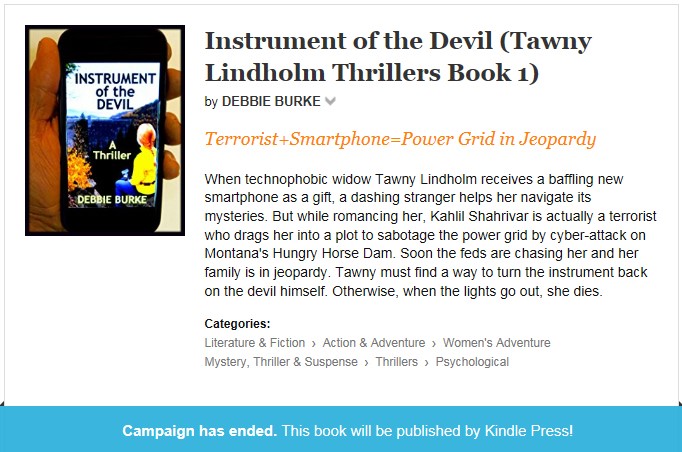
Kindle Scout is Amazon’s innovative program where readers “scout” for new books and vote for ones they believe should be published. Back in April, I covered the basics of Scout for TKZ. Since then, I submitted my thriller Instrument of the Devil and went through my own 30-day campaign. Today, let’s open the Scout door and take a tour inside.

SUBMISSION PROCESS:
To submit to Scout, Amazon requires a cover (at author’s expense), a complete, never-before-published, edited manuscript of 50+K words, a 45-character one-liner (logline), a 500-character book description, author bio, and a thank-you note to readers who nominated the book (more on this later).

After Scout accepts the submission, they select the dates for the 30-day campaign, and provide a link that shows the preview exactly as it will appear on the Scout site. The first 25 or so pages of the book are excerpted as a sample for readers to vote on.

The contest is ongoing, with new entries appearing each day. At any given time, more than 150 books are in various stages of their campaigns. Categories include: literature/fiction, mystery/thriller/suspense, romance, sci-fi/fantasy, and teen/young adult.

Entries are further classified as “Hot and Trending,” “Recently Added,” and “Ending Soon.”

FREE BOOKS!
Readers love FREE. Amazon rewards anyone who nominates a Scout entry that’s selected for publication with a FREE eBook.

BEGGING FOR VOTES:
The hardest part for many authors, who are often averse to self-promotion, is what I call begging for votes. It’s a tough balance to strike, asking people to nominate your novel without sounding cheesy. You’re requesting a favor, but fortunately you’re able to offer something in return—a free book.

Publicity drives your campaign, using social media like Facebook and Twitter, business cards and bookmarks printed with your Scout link, and direct emails. My email list started with 130+ names, which I divided into different categories, each receiving a different message tailored to that particular group.

First tier consisted of close writing associates, critique buddies and beta readers who’d been intimately involved with the book’s creation. All previously promised support, so asking them to nominate and share on social media was easy, and they came through like true friends.

Second Tier listed other writers, people I’d met at conferences or had interviewed for articles, and business acquaintances. Their note specifically addressed our mutual writing interest and asked them to take a peek at the excerpt.

Third Tier were friends who don’t write—and who think writers are a pretty weird bunch! That was the trickiest email to craft. Mass mailings can be mistaken for spam or scam, especially to people with whom contact is infrequent. In fact, my college roommate wrote back, asking, “Is this email really from you?” because the IT guy at her job warned her about clicking on an unknown link. We wound up having a nice catch-up conversation by phone.

WEEK 1:
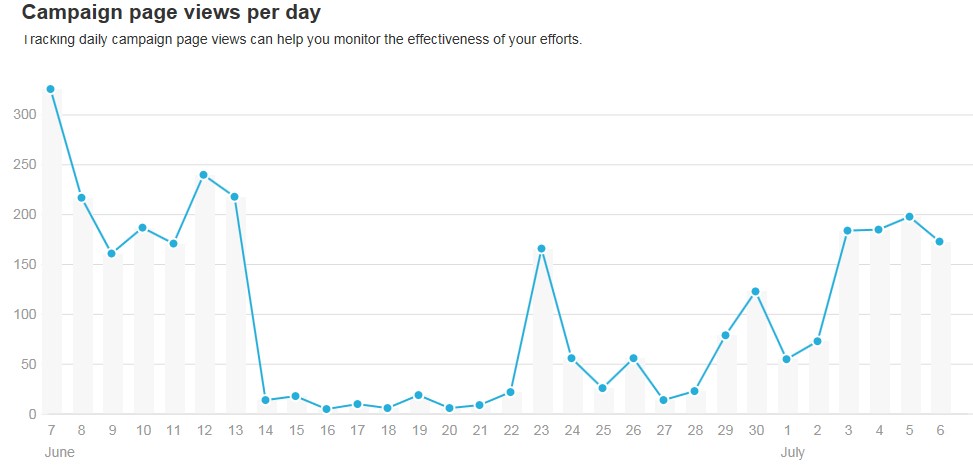
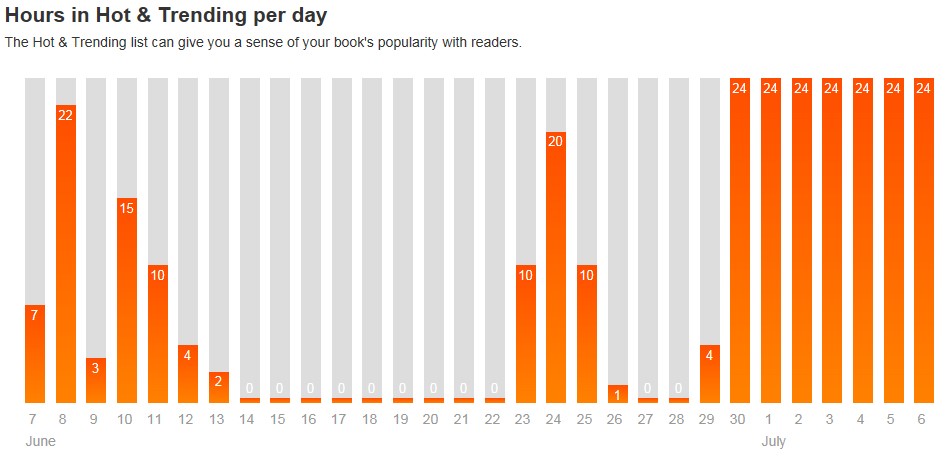
After I sent out 130+ emails, friends responded with terrific support. Instrument of the Devil hit “Hot and Trending” (H&T) off and on during the first six days.

Scout provides statistics you can access privately (not accessible to others) that count how many views your entry has received. However, views are not the same as nominations, and Amazon doesn’t reveal the number of nominations. The stats are further broken down by how many hours in H&T, number of views from internal links (the Scout site) compared to external links (social media, your website, other websites, etc.), plus how many hits from each source. The stats are updated daily, while H&T updates approximately hourly.

LESSON #1: FACEBOOK ROCKS.
Facebook generated more than half the views from external sources. I’m not even on FB, but after seeing these results, I’ll be joining!


Click on picture to open


WEEK 2
That loud smack you heard were my stats hitting the wall. After the initial rush of 200-300 views per day, they dropped to six on one day, nine the next, with a high of 19 that second week. Zero time in H&T. Underwhelming and discouraging.3

Kboards are online discussion groups specifically focused on publishing through Kindle. At this low point, I dug deep in Kboards, especially one thread devoted to Scout experiences and requests for nominations.

LESSON #2: LEARN FROM SCOUT VETERANS
Many Scout entries come from multi-published authors with substantial backlists. They discovered Scout is a great no cost launching pad for a new book. Some authors don’t even care if their book is chosen because they parlay reader views into a larger customer base when they publish it themselves.

That’s the philosophy of Lincoln Cole, previous Scout winner and author of the indispensable Kindle Scout Guide, as well as an excellent vetted list of marketing resources. With 12 books published, and refined promotional skills, his most recent Scout entry garnered more than 11,000 views with over 90% of the time on H&T. When the book wasn’t selected, Kboard members were stunned.

Although Amazon describes Scout as “reader-powered publishing,” great stats are not the only factor that determines if a book is chosen or not, as Lincoln’s experience demonstrates. But the reasoning behind their editorial choices remains mysterious.

Nevertheless, Lincoln shrugged off the rejection and plans to launch The Everett Exorcism himself on Kindle Direct Publishing (KDP), fortified by his thank-you note.

NOW…MORE ABOUT THOSE THANK-YOU NOTES
At the end of the Scout campaign, the note you’d submitted with your entry is sent to everyone who nominated the book, win or lose. If it’s chosen, they receive a free copy. If it’s not chosen, Amazon still sends nominators a notice when the book goes on sale through KDP.

Lincoln takes that one step further. His thank-you note promises a free book, win or lose, if readers sign up at his website. He understands a large email subscription list is vital to authors, who use it to keep in touch with fans, make special offers, and announce new releases. Plus readers who discover him on Scout may also buy from his backlist. This guy knows how to maximize marketing.

Since my own website subscription list was at the high one-figure level, I rewrote my thank-you note, making the same free-book offer, and resubmitted it to Scout. Considering the dismal second-week stats, I prepared to self-publish Instrument of the Devil on KDP.

LESSON #3 – “YOU DON’T HAVE TO SPEND A BUNCH OF MONEY TO GET DECENT STATS.”
Those words of wisdom came from Scout veteran Julianne Q. Johnson, whose fifth entry Ghost in the Park is now up for nominations. Cash-strapped authors are understandably reluctant to front money on advertising, particularly for books they’re giving away.

According to Julianne, “Stats don’t get you selected, but better numbers get you much more attention when you launch it yourself.” She invested only $15 in her last campaign, generating a respectable 3800 views and 90+% of the time on H&T. Although not selected by Scout, Nick of Time is her highest ranked book so far, with thousands of page views on Kindle Unlimited (a subscription program that pays the author based on how many pages are read).

I consulted Lincoln’s list of marketing resources for promotions specifically tailored to Scout. My advertising budget totaled a whopping $40—$10 to boost a friend’s Facebook reach to 9800 readers, $20 on a one-day social media promo by Just Kindle Books, $10 to Author Shout for a 30-day newsletter campaign. All three delivered significant bumps in page views, but the best ROI came from Author Shout.

WEEK #3
I re-contacted my email list, with a follow-up offer of the free eBook, win or lose. This also served as a subtle reminder to people who might have forgotten to nominate without bugging them. Friends responded positively and again shared on Facebook.

Meanwhile, back at Kboards, I contacted more Scout winners to learn about their experiences.

Jada Ryker’s mystery Take the Body and Run was published by Kindle Press in 2016. “Before Scout,” Jada says, “I was lucky to break even on cover and editing costs, let alone paid promotions. I’ve sold more copies of the KS winner than all my other books combined.” She adds, “Winning the contract tells me the book was good enough to stand out in a field of excellent offerings, and be chosen for publication. That feeling is priceless.”

William Bernhardt has over 40 published titles, with more than 10 million books sold, yet still entered Scout with his new novel, Justice Returns. Why? Bill’s answer: “I think Amazon Publishing is the best place to be today, and Kindle Scout was the quickest and agent-free way to get there. NYC publishers are not offering anything close to a 50% royalty. And I’m retaining most of my subsidiary rights.” Although Bill still pursues traditional contracts, he says, “More and more, Scout is attracting professionals who see it as a way to attract attention to their books and get them into the Amazon Publishing network quickly and without giving away a large percentage of their profits to an agent.”

WEEK #4
The last eight days of the campaign gave me new hope. The book jumped into Hot & Trending and stayed there until the end.


Click on picture to open


The final tally was 3000+ views, far lower than many Scout submissions, but I was happy and had discovered tricks I planned to use when self-publishing the book on KDP. Then I learned…

LESSON #4 – NOBODY CAN PREDICT WHAT AMAZON WILL CHOOSE
Two days after my Scout campaign ended, at 10:30 on Saturday night, the email arrived.

Congratulations! Our readers have spoken, and your book Instrument of the Devil has been selected for publication.

Talk about gob-smacked!

Why did the unseen gods of Amazon smile on my book instead of any number of books with thousands more views? Danged if I know.

But I’m not about to argue. And I agree with Jada Ryker—that feeling is priceless!

Debbie Burke’s thriller Instrument of the Devil is currently in production with Kindle Press. Check her website for the launch date.

Writer, Stretch Yourself (Like a Big Black Cat)


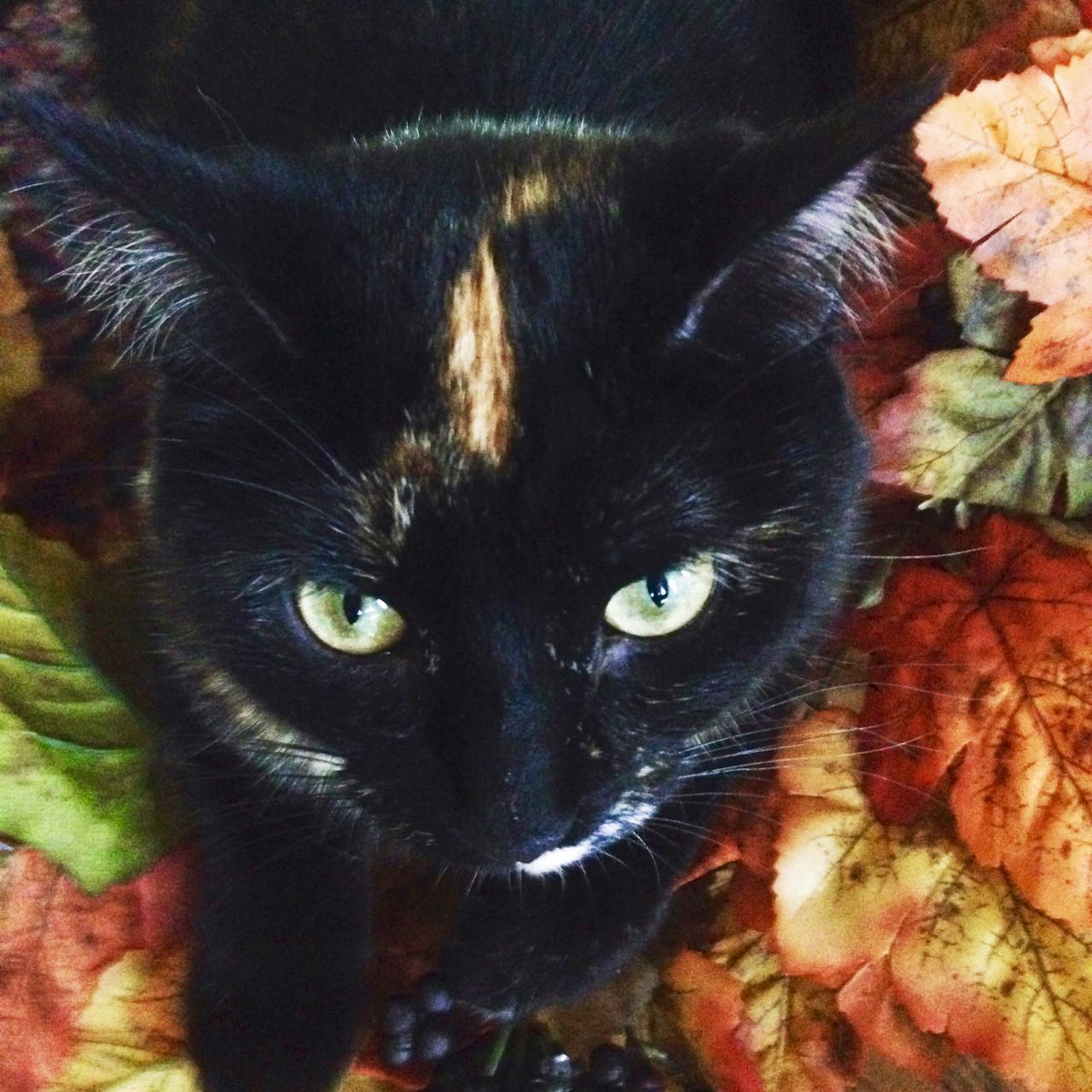
My own green-eyed black cat, Sylvie

I’m on summer vacation. No, I’m not taking any beach trips, darn it. I enjoyed a fun birthday/writing retreat in Nashville at the beginning of July, and spent the weekend of the 16th in Cincinnati with my parents for their 57th anniversary, instead of going to Thrillerfest. Mostly my vacation means I’m making only occasional excursions to social media, and I’ve given my daily blog a rest. Okay, the rest is really for me, not the blog. Oh, and I’ve been writing a novel.

Yes, that is what I do for work, too. But somehow writing this novel feels less like work and more like a summer enrichment project I might have worked on for fun when I was a kid. (One elementary summer I did a public television school math course where we had to order the workbook by mail, and I loved it. Geek much?)

For years I’ve wanted to write a cozy mystery. My existing novels are so far from being cozies that when I tell people of this desire, they give me looks that range from alarm to puzzlement. But for me, it’s just a matter of wanting to try something new. The novel I’m publishing with Mulholland Books next year, ONE LAST SECRET, is straight suspense, without any supernatural elements–and that is new for me. The cozy I’m working on is simply me trying another new thing.

Have you ever done a modeling writing exercise? I had a workshop teacher who often gave us exercises in which we would try to write in the style/voice of a famous writer: Flannery O’Connor, Dashiell Hammett, Hemingway. Hemingway was my favorite. We wrote as less distinctive writers, too. It’s an excellent exercise for emerging writers because it’s rather like walking in the shoes of the greats. Those shoes never fit, of course, but it’s as fun as being a four-year-old in Mom’s high heels. It’s useful, too. Developing one’s singular writing style takes a long time, and the exercise puts you immediately into the head of an established voice.

While I’m not particularly mystical, I have a strong belief in Things Happening For A Reason. So when my good writer friend, Carolyn Haines–who has written around 850,000 books and stories in the past few decades–said she was in search of writers to be a part of her new black cat detective mystery series, Familiar Legacy, featuring Trouble, the black cat detective, I said I’m in! before I’d even heard the details.

I mean, why not? I’d never written a black cat detective mystery, but I sure wanted to try.

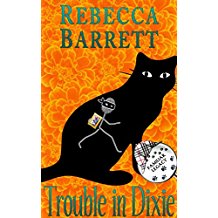
The Trouble books have a familiar formula that includes girl meets boy, and a mystery-loving critter. Trouble the cat is the son of cat-hero detective, Familiar, who was the star of of Carolyn’s long-running Harlequin Intrigue book series, Fear Familiar. She rereleased many of the Fear Familiar books this spring, and launched her first Trouble novel, Familiar Trouble, on July 10th. The second in the new series, Trouble in Dixie by Rebecca Barrett, comes out in August.

My first job was to come up with a synopsis, and a title. The synopsis blossomed into a detailed outline. For me, it was a very detailed outline. I usually write skeletal outlines for my own books, but I rarely know how the book will end before I start writing. Then there’s that messy middle bit. For Small Town Trouble I pretty much know every turn, from beginning to end. There have been a few changes as I write, but nothing too substantive. And they’ve enhanced and deepened the story.

I’ve mentioned before that I used to imagine complete stories, but then told myself that since I knew the ending it would be boring to write it out. With this book, I’ve found the complete opposite is true. It’s a huge challenge for me to follow a story I’ve put together ahead of time–but it’s also a huge amount of fun. When I sit down to write, it’s a relief to take out my outline and note which scene I’m going to write, because I’ve already done the hardest part. It relieves me of those fearful blank moments, the ones in which I’m not sure what I’m about to write–if I can write anything–is going to move the story along.

The other big challenge is to keep the voice of Trouble consistent. The good news is that Carolyn is such a pro that the voice is clear and vibrant throughout her book, so I have an excellent model. That’s where my love of the modeling exercise comes in–it’s enjoyable to have the voice ready-made for me. I simply keep Familiar Trouble open on my desktop for reference. Carolyn has read my first chapter, and approved the voice, so I’m headed in the right direction. I’m only halfway through the writing, so let’s hope it sticks.

I’m loving this new challenge. I feel like I’m growing as a writer. Learning to write in a different style grows bran cells. I’m sure of it!

I’m anxious to finish writing Small Town Trouble to see how my first cozy experiment has gone. I could write more here about how writing this book is different from others I’ve written, but I’ll save that for another day, perhaps on my own blog, Notes From the Handbasket (you can go there even though I’m on sabbatical–I think I have 8 years’ worth of posts).

Do tell. What new projects have you taken on to encourage yourself to grow as a writer?

Tips For Crediting Photos Used In Blogs

Admin Note: Our trusty admin assistant has put together a list of resources and guidelines for using and crediting photos in the public realm. (Thanks, Lynne!)

Images released under Creative Commons CC0 are free of copyrights. You may download, modify, distribute, and use them royalty free for anything you like, even in commercial applications. Attribution is not required.

If you are unsure if the image was released under CC0, indicate the photo’s source, and whether it was purchased or provided as a courtesy.

Getty Images –  You can use Getty Images if you follow their embed instructions: Embedding their images provides a legal way to utilize premium content while respecting creators’ rights, including the opportunity to generate licensing revenue.
http://www.gettyimages.com/resources/embed

Unsplash  – Free (do whatever you want) high-resolution photos. Unsplash grants you a nonexclusive copyright license to download, copy, modify, distribute, perform, and use photos from Unsplash for free, including for commercial purposes, without permission from or attributing the photographer or Unsplash.
https://unsplash.com

Flickr – Many Flickr users have chosen to offer their work under a Creative Commons license, and you can browse or search through content under each type of license.
https://www.flickr.com/creativecommons


Pixabay
– All images and videos on Pixabay are released free of copyrights under Creative Commons CC0. You may download, modify, distribute, and use them royalty free for anything you like, even in commercial applications. Attribution is not required
https://pixabay.com

Pexels –  Best Free Stock photos in one place. Issued under Creative Commons CC0. You may download, modify, distribute, and use them royalty free for anything you like, even in commercial applications. Attribution is not required.
https://www.pexels.com


Wikimedia.org
– a collection of 39,727,644 freely usable media files to which anyone can contribute – Almost all content hosted on Wikimedia Commons may be freely reused subject to certain restrictions (in many cases). You do not need to obtain a specific statement of permission from the licensor(s) of the content unless you wish to use the work under different terms than the license states.

  • Content under open content licenses may be reused without any need to contact the licensor(s), but just keep in mind that:
    • some licenses require that the original creator be attributed;
    • some licenses require that the specific license be identifiedwhen reusing (including, in some cases, stating or linking to the terms of the license);
    • some licenses require that if you modify the work, your modifications must also be similarly freely licensed; and finally.
      https://commons.wikimedia.org/wiki/Main_Page

Shutterstock – Discover over 125 million royalty-free images, video clips and music tracks.
Shutterstock.com  – free images and some for purchase.


Istock
– Photos for purchase.
http://www.istockphoto.com/plans-and-pricing

Are We Having Fun Yet?

by Larry Brooks

A few of you know that I used to play professional baseball. During my very first spring training, all the pitchers were subjected to sprints and conditioning drills in the humid Florida heat, to the extent many of us were losing our breakfast on the third base line. Every day, as many of us were near collapse, hands on knees, visibly sucking oxygen, one of the coaches would yell with glee, “Are we having fun yet?”

Various forms of cursing ensued between the collective desperate gasps and the heat exhaustion. But we were professionals, and nobody dared quit the process.

Only later, when my career was over and I was treading water in the real world, did I realize how much fun I actually was having.

One of the first pieces of business I tend to when I begin a writing workshop is throwing out this question:

Who here wants to write for money?

Almost every hand goes up. Some dislocate a shoulder, such is the urgency of their response. There are, of course, the one or two arms-crossed resisters who like to believe they’re different, or perhaps above participating. Maybe they just don’t understand the question.

Then: Who here wants to make this their day job?

Same hands, same slackers. Or perhaps, the rare (very) hobbyist writing stories for the grandkids who is merely curious.

Then this: Those of you with your hands in the air either consider yourself a professional, or you want to become one… yes?

I then assure them that the first step to becoming a professional isn’t to cash a check, but rather, to go about the business as if they were already a professional author.

The only criteria for being a writer is to write. That said, there is a right way and a less-right way to go about it… and the right way can be darn hard.

And if you find hard something that isn’t fun, then perhaps you exist within a paradox unique to us.

Writing may indeed be a different breed of profession.

Because it seems that some writers who would enthusiastically raise their hand claim that they are selecting their process and perhaps their criteria for excellence based on something that would get you fired in any other job.

They do things their way, because their way is fun.

And they happily, almost proudly, claim to skip the hard parts in the name of fun.

There continues to be a loud debate, here and elsewhere, about the writing process.

And within that debate, one opening line shows up in the comment thread of almost every post on this topic. In it the writer says something like this: I don’t outline. I tried it once, but it took all the fun out of it. It’s more fun to just let the story emerge as I write. Which is why I don’t really know much about my story as I write it. It’s fun to figure it out as I go.

Okay, that’s a mash-up of the common forms of this opening push-back.

It happened yesterday in the thread from Jim’s post. It’s happened in response to my posts many times, because I’ve written about this subject many times (check this out, it’s a virtual wrestling match).

Imagine, though, other professions in which fun is never spoken aloud.

Every summer a hundred young men gather at Fall Camp to see if they can make the roster of an NFL team. This experience is nothing short of an exercise in torture, all in context to seeing who is fit enough, tough enough and resilient enough to play at that level.

Imagine a first round draft choice saying this: Well, camp would be a lot of fun if we didn’t have to do all those conditioning drills, because I’ll just be strong enough when the real game happens. It’s just not fun. Games are fun, but all this preparation stuff, I dunno, it’s just a lot of hard work.

Flip this analogy to medical school. Law school. Architecture school. Prepping for the CPA exam. Training to be a pilot. Or a teacher. Or a checker at Safeway. Or just about anything else that presents an expectation of what the skill set and end output needs to be.

That’s the key, right there: the skill set and end outcome of writing a novel are not something you get to negotiate or short-change. Your process, yes… it’s yours for adopt, it is what it is, and that fact is what is different about writing. And part of what makes it hard, as well. Because the product you put out… that’s not something you get to negotiate. Rather, you need to reach for a bar that already exists.

If your process doesn’t get you there, then perhaps you need to look at that process. If you want to play at a professional level, then you need to summon and master professional-level skills, for professional-level output.

And if the hard work of doing that strikes you as something that’s not fun, and if you use that excuse to do it your way, even when your way presents a compromise… that’s actually fine. You get to choose.

But the end-product, and the marketplace into which you intend it to go, won’t cut you even the tiniest bit of slack.

The requisite form and function of a novel applies to pantsers and planners alike, those who put in the time to study and those who are just having fun, alike. No difference whatsoever.

So if writing an outline isn’t fun for you, fine. If you can make your story functional that way, have at it. Thing is, that very decision has derailed more writers than you know. Not because of the outline itself as a tool, but rather, the nature of the process you substitute for it.

Here’s my point. If you truly understand the criteria of a story that works…

… yes, these criteria can be defined, listed and learned… and if your process, facilitates the reaching of that high bar, then you’re fine. You may have elected the long road to get there, because without exception, writing a draft in which you don’t know the essential parts, transitions and end-game of your story is merely one of the several ways to search for your story, rather than the execution of draft itself.

And if you’re shorting that pursuit because it’s not fun for you… well, this is like your surgeon skipping the part about anesthesia because she doesn’t find anesthesia all that much fun.

A bad analogy, perhaps, for this reason: the surgeon has someone next to them in the O.R. that does find the practice of anesthesia, if not fun, then rewarding enough to practice it. But novelists are alone in a room with the patient (your story), and if you don’t find the requisite best-practices to be fun – and if you’re not really qualified yet to count on them to emerge organically on their own – then this disconnect can become a factor in the outcome.

It can explain why you may be frustrated.

But wait, says about 40 percent of the writers reading this. I don’t outline because it doesn’t work for me. Well…

Outlining is only one aspect of this cause-and-effect dynamic.

First of all, “not being able to outline” is not something to brag about. It’s not a good thing, it’s actually a blind spot in your storytelling. It’s like a pilot saying, I am afraid of heights. Please blindfold me until we get to cruising altitude and I’ll take it from there.

Outlining, in a broader sense, is simply the means, a proactive effort, of creating a vision for the story, front to back. A plan, even though that word isn’t fun for you. It, too, is what it is. A vision or a story plan is not a contract you sign that commits you to it (a common rationale for it not being fun, but that’s a story you’re making up, but a plan is totally flexible), because certainly you may evolve that vision toward an even better outcome as you go along.

Great storytellers than don’t outline absolutely do have a vision for the story in their head. And they almost always add and revise as it unfolds on the page. They also command a functional working knowledge of how to drive the story ship… because they’ve earned it. However they learned it.

The alternative – discovering your story as you write a draft – is (the forthcoming redundancy is deliberate, because not the context may be clearer) merely a means of story development. One of several. And as such, the requisite forms, functions, parts (including the ending) and impact (story physics like emotional resonance, nature and source of conflict and antagonism, extent of vicariousness, hero empathy and an optimized narrative strategy) that apply to every other form of story search apply to the make-it-up-as-I-go option, as well.

If you’re in this for the fun of it, first and foremost (and if you’re skipping over important steps, then it is first and foremost for you), then you may be missing the essence of the professionalism required. Which is exactly that roster of forms and functions… stuff you don’t get to make up, not even for a moment.

Perhaps it might better serve you if, instead of the fun of it, you’re in this for the rewarding experience of writing a story that really kicks butt. That knocks readers out of their chair.

Like any surgeon or pilot, the reward is when the patient survives and the plane lands safely.

And if your response to that is, Well, writing a novel isn’t brain surgery, ask an experienced professional if they agree… now you’re just counter-punching. In fact, ask a doctor who has attempted to write a novel if they agree.

It just might be as complex as brain surgery after all. I’ve actually had a brain surgeon tell me it is, once he encounted the moving parts required of it.

That old meme about “the journey is the reward?” Maybe not. That’s the rationalization of a legion of unpublished writers who tried to do their way, when their way is, primarily, the fun way.

When your way embraces that list of parts and essences, aligned and combined at the level required, then you’ll be within your next 400 pages of that rewarding experience.

A final story… that is not an analogy.

My son was his high school’s valedictorian, and it enabled him to get into a prestige university. But during his freshman year he did what so many freshman do… he partied.

Because it was fun. For a while he was sure this was what college was all about.

Meanwhile, he and I had an agreement in place from day one, and it wasn’t unreasonable or negotiable: earn a GPA that at least meets the academic requirement of your fraternity, which frankly, shouldn’t be all that challenging to you. Yes sir, he said. No worries, he said.

All freshman year long he told me he was killing it in class.

But then the finals happened in May.

No surprise… he was far short of the bar we had set. I mean, far short. Like, frat house probation kind of short.

It wasn’t that I didn’t want him to have fun in college – certainly, his socialization was part of the mission at hand – but in any endeavor that is worth tackling, something that will become the foundation of a dream that will spring from it, “fun” becomes a lesser calling.

Wrapping your head around the fundamental principles of writing stories is like that, too. It isn’t’ about what is fun. If that’s your priority, work at Disneyland.

Because in college and with writing a novel, the ultimate reward will require a massive amount of hard work – not just effort, but mastering some really tough principles in an artful way – leading to a higher understanding that informs an ability to take those skills forward into a professional marketplace.

A marketplace teeming with professionals who have mastered those very principles.

There isn’t a professional in any occupation out there – and this includes writing novels – that isn’t informed by a keen understanding of certain core fundamental principles… and sooner or later, fun has to acquiesce to a higher pursuit of an ultimate reward.

And when you hold that in your hands… now that is really fun.

Nobody ever hired a college graduate because they had fun at school.

Nobody ever sold a novel because they did it the fun way. Unless for that writer, the fun way embraced a complete integration of an understanding of what is required… and when that happens, it’s almost certain that the true fun of it all stemmed from it, and not skipping the hard parts.

Outlining is not required. But understanding the terms of what your vision for a story becomes… that is required. Because it’s too complex to just back into.

How do you know what is required? Where do you get that list? If you have to ask, then maybe you’re already shorting yourself in the proposition.

And so – back to my son for a moment – the contract had been violated. The terms of coming up short called for him to find funding – in the form of loans that he’s still paying off to this day, and for a few more years to come – to cover his second year at this school.

All hell broke loose at home…

… until it didn’t. He finally got it. In fact, he embraced his accountability for his end of our agreement, refusing to do it any other way. As a result, his GPA in the first semester of his sophomore year was 3.65. And while we celebrated that, he understood that a higher goal remained: to graduate with a GPA above 3.00.

Which he did.

He also had fun that year. It was all a question of priorities and the willingness to do the hard stuff.

Cut to his final week of school concluding his senior year. He had worked as a campus tour guide for incoming high schoolers (most of whom were also valedictorians… it was that kind of school), and on his final day of leading the tours a bunch of us, including my wife and I, were there.

In a classroom that concluded the tour with a Q&A session, one of the new Dads asked my son to tell us what his most rewarding experience had been over the last four years at this institution.

He thought a moment. You could hear a pen drop.

And then he told the group this story, the one I’ve just told you. He looked right at me when he concluded by saying, “I had a lot of fun here, especially at first. But that fun was taking me down the wrong road, littered with the discarded college dreams of many like-minded freshman. My Dad almost literally picked me up off the wrong road and put me onto a better one, a higher road, and while I had an immense amount of fun over the last three years here, the answer to your question is that the most rewarding part of it all was the realization that fun isn’t the point. The work is the point. Doing the hard stuff is the point. Changing into something higher and better is the point. And realizing that the world has opened up for me because of that learning… that while the journey was a blast, the real reward was in the final outcome.”

Needless to say, this Dad was a bit of a puddle.

So go ahead, have fun.

But if you’re skipping the hard parts, it may not be because you can’t do it, but rather, that it isn’t what you signed up for.

Reading a story by a pro makes it all look so easy. Maybe that’s what you signed up for.

But writing great sentences and paragraphs… that’s not the hard part.

Unspooling a story that nails all the moving story elements in the right way at the right level, with all those story physics humming with the grace and the growl of a cheetah at full speed…

… that’s the hard part, and the best part of the work. Worth every sleepless night and deficient draft it takes.

That’s why you’re here.

Because you put your hand into the air to claim your dream of becoming a professional.

And I’ve never once, in thirty years of doing this, heard a proven professional or anyone who teaches the craft to those who aspire to be one, say that they did it for the fun of it. Or that fun was even part of the process.

Rather, they’ll tell you how rewarding it all can be.

Understand the difference and live into that understanding, and everything about what has frustrated you will change, while everything you once considered fun will have evolved into something even more satisfying.

*****

If you’re interested in going deeper, I have a book on those forms and functions and essences that goes beyond structure, called Story Physics.


Lee Harvey Oswald and Me

by John Gilstrap

November 22, 2013, marked the 50th anniversary of one of my great research obsessions—the assassination of John F. Kennedy. Last name notwithstanding, I am of Irish Catholic heritage, and in my house growing up, the Pope and President Kennedy were held in equal esteem. When the news came that the president had been killed, my mother was devastated. I was six at the time, and while I couldn’t fully comprehend the enormity of the crime, I knew that Mom was upset and I found her grief unnerving.

In the years that followed, Mom became quite the conspiracy theorist. She consumed all the books by Garrison and the others, and by extension, I likewise became a conspiracy theorist. By the time I was a senior in high school, I knew that there were at least two gunmen and as many as three. I steeped my geeky self in the research, even as I was penning stories on the side. (Look up “babe magnet” in the dictionary. My high school picture is there, labeled, “Not Him.”)

Once I got my acceptance letter to the College of William and Mary in Virginia, and I realized that freshmen had to write a major research project in their first semester, I knew that JFK’s murder would be my topic. Living in the suburbs of Washington, DC, and working a night job in telephone sales, I was in a perfect position to do primary research at the National Archives downtown. In the morning, I would take the bus to Constitution Avenue, and then I would head inside the massive Archives building to the reading room.

This was 1975. The Zapruder Film had still not been seen by anyone outside of official Washington, and the House Select Committee had not yet convened to re-examine the Warren Commission evidence. This was all new territory for me, and I hoped to forge new territory for my future professors.

Here’s how it worked: I would fill out a sheet of paper for what I wanted to look at, whether Warren Commission documents or FBI interviews, or re-enactment photographs, and then I would hand the sheet to a pretty young clerk-lady, and then she would bring my requests to me. It was table service, and as an 18-year-old with braces on my teeth, this was pretty heady stuff. They even called me Mr. Gilstrap. Very, very classy.

After four or five days of taking up space and making copious notes (no photos allowed, and certainly no copiers), I was sitting at my spot at a study table when the cart full of stuff I ordered arrived not with a pretty clerk at the helm, but rather it was pushed by an old guy.

“Mr. Gilstrap,” he said.

I thought I was in trouble. “Yes, sir.”

“You’ve been the source of a lot of curiosity here,” he said. He then went on to introduce himself as Marion Johnson, the curator of the JFK exhibit at the National Archives. He observed that they didn’t often see someone my age being such a dedicated researcher.

I explained to him about the paper I had to write, and about my family’s obsession with all things assassination-related. He seemed interested, and then he said, “Come with me. I think I have some items that you might be interested in.”

I followed him into the bowels of the old building, into a large locked storage room that was under-lit, and stacked floor to ceiling with boxes and file cabinets. “This is all of it,” Mr. Johnson explained. “This is our John F. Kennedy exhibit.”

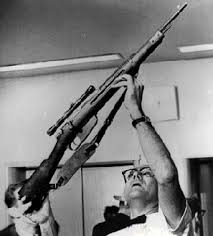
I don’t remember the place itself well enough to give dimensions, and at the time, I didn’t have a frame of reference, but the room housed a lot of stuff. When he unlocked an area within the storage room that was set off from the rest by a chain link barrier, I knew I was in for something special. Mr. Johnson pulled a wooden case off of a shelf and placed it on a clear spot in an otherwise cluttered table. He donned a pair of cotton gloves and handed me another pair. When the snaps on the box opened and he lifted the cover of the box, I realized right away that I was looking at a Mannlicher-Carcano 6.5 millimeter rifle bearing the serial number C-2766.

That was Oswald’s rifle.

“Can I hold it?” I asked.

“You can lift it,” he said. “That’s all.”

That was plenty. At age 18, I got to hold the rifle that killed John F. Kennedy.

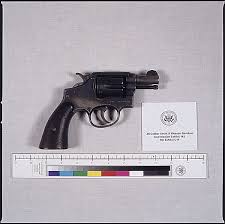
I noticed the .38 caliber pistol that was also in the box. “Is that the gun that killed Tippitt?” I asked. J.D. Tippitt was a Dallas police officer who Oswald shot to death shortly after the assassination.

“It is,” Mr. Johnson said. “But you can’t touch that one.” It seemed rude to ask why, and to this day, I don’t know.

From there, Mr. Johnson led me to a smaller room—a double room, really, with a few chairs on my side, and then a second room I was not allowed to enter that was separated from mine by a glass panel. It reminded me of the perp interview room in every cop show.

“Have a seat,” Mr. Johnson said. “You’re going to see something that very few others have seen.”

Within a minute, it became clear that the room on the other side of the glass was a projection booth. The lights dimmed, and then the screen on the far end came to life with the Zapruder film. Now that those few seconds documenting the fatal shots are so ubiquitous, it’s difficult to explain how thrilling—how heart-stoppingly shocking—it was to watch the events unfold in that little room. There’s no sound on the film, and there was no sound in the room—not even the clacking of the 8mm projector, thanks to the glass—as the motorcade swung the turn from Houston Street onto Elm, and then disappeared behind the traffic sign, where a still-unknown stranger opened his umbrella.

When the president’s limousine emerged from behind the sign, I watched his hands rise to his throat, just as they had in the countless stills I had seen of that moment. Jackie looked over, concerned, and then the top of the president’s head vaporized. Having by then seen stills of Frame 313 of the Zapruder film, I knew about the eruption of brain and bone, but those stills did not prepare me for the violence of it in real time.

I had held the gun that inflicted that wound.

I left the Archives impressed yet shaken that afternoon, and I was more fully emboldened to do my research the way it was supposed to be done. I stated above that I was a telephone salesman during the evenings, hawking Army Times magazine to people who loved to hang up on salesmen who sounded like they were eighteen years old. I hated that job, but it gave me access to a WATS Line, which was a huge deal back in the day—long distance phone calls to anywhere for very little cost. Extraordinarily little cost to me since I wasn’t paying for the service.

Abusing the largesse of my employer (who subsequently fired me, not that I cared), I was able to find and call the key players from the assassination at their homes, and like the staff at the National Archives, they were each impressed that someone my age would be so dedicated to a research project. Among the people I interviewed for that paper were Admiral J.J. Hume, USN (ret.), who performed JFK’s autopsy, Malcolm Perry, the Emergency Room physician who treated the president when he arrived at Parkland Memorial Hospital, and Cyril Wecht, MD, a forensic pathologist from Pittsburgh, who was a serious critic of the Warren Commission’s processes and conclusions. We’re talking long interviews, here, and not one of them ever lost patience with me—not even Admiral Hume, when I asked him what he thought about the accusations that he had botched the autopsy. His answer to that question, in fact, left an impression on me. He painted a picture of enormous pressure and emotion that I have later come to see as similar to the so-called fog of war. They were, after all, human, and the ravaged body of the president of the United States lay naked on a steel slab. I realized what a horrible moment that must have been for everyone in an official capacity.

By summer’s end in 1975, I had already made good progress on my paper. As I recall, it weighed in at something like thirty pages, and it contained photographs ordered from the National Archives, and the content of the multiple interviews that I had performed. When my mother read the paper, she was less than pleased by my conclusion that Oswald was the lone gunman—a conclusion I stand by today, and which has been reinforced by every bit of reliable new evidence that has since been released.

When I turned the paper in, I had no idea that it would nearly get me thrown out of college before I finished my first semester. My professor, Mr. Greene, as I recall, did not believe that a college freshman would do that level of research, and he called me in my dormitory to tell me that he was reporting me to the Honor Council. It took nearly three hours on the phone to convince him otherwise, defending every quote that I collected on my own, and every conclusion I drew.

In the end, I got an A.

First Page Critiques: Making
It Feel Fresh…and Refreshed

All writing is a campaign against cliche. — Martin Amis

By PJ Parrish

This must be the week for catching up on our First Page backlog.  Because here is another entry from one of our faithful contributors. This one is titled OTTER ROCK and appears to be a village mystery (though set in Alaska) in the grand tradition of PD James. In fact, it reminds me of the James novel Unnatural Causes in which Adam Dagliesh deals with a body in a boat on a windswept deserted shore. (More on that later) Thanks, dear anon-author, for participating.

Also, I am adding a second entry, KEEP IT SAFE, after this one. It is a longer version of an entry I critiqued a couple weeks ago. Click here to see it.  I lamented that the author should have included more sample and he/she resubmitted, so here is a longer rewritten version.  This second sample deserves a second look because it shows the value of good rewriting.

OTTER ROCK

Prologue

No one saw the paint-chipped, wood dory drifting out to sea. They were intent on what the ocean placed in their net.

The old fisherman hobbled along on the charcoal sand beach toward his three adult sons. They waited patiently for him to help them pick salmon from the gill net they had just hauled from the sea, on the east side of Cook Inlet, Alaska. The old man spilled his coffee when he tripped on a rock, disguised by wet, grey mud and volcanic grit. He cussed, turned around, and ambled back for a refill, when urgent shouting diverted his attention.

One of the sons motioned him over and pointed at the tide line. The old man forgot the coffee. He gimped toward them, as they stood grouped around the tangled net on the beach. Their two-hundred-foot, monofilament net lay partially in the water, the other half clumped around something at the low tide line. The tide ebbed, leaving the beach fresh and clean.

As the old man approached, one of his sons moved to meet him.

“Dad, we have a body in the net.”

The old man stepped over to scrutinize the snarled remains. The small body curled in a fetal position, as if asleep in a womb. Layers of moss-covered nylon obscured the face, and he was thankful for it. He inspected a small, bloated foot, then noticed a pink Hello Kitty image on an ocean-stained tee shirt. Sun glinted something poking through strands of tangled hair and citrine seaweed. An earring.

“Dear God. Son, call the troopers,” said the old man, stepping back. His son retrieved a cell phone from his jacket and called 911.

____________________________________

Well, this one’s a little short as well, but we have enough to go on, I think. What we have here is a pretty traditional opening for a mystery — body washes up on shore of remote location, discovered by colorful local person. The disturbance is there from the get-go (yay!) and I trust we will meet the hero in the next chapter or scene. But because this opening has been done-to-death, (see PD James, Benchley’s Jaws, Simon Brett’s The Body on the Beach, Chris Grabanstein’s Whack a Mole) the scene really needs something fresh, and I don’t see it here.  Yes, genre fiction is partially about working within a respected formula, but the formula must constantly be challenged to work anew. There is nothing overtly wrong with this opening. But there is nothing aha! right about it. Which makes me think that an agent, editor, or reader sampling this would take a pass. You don’t take an old house, slap on a new coat of paint, and expect to sell it for 2.5 mil — or 99 cents on Kindle even. If you’re working with old architecture — which is okay in itself — you really need to strip things down to the foundation and find a way to imprint your own unique style on it.

Quick digression: Speaking of dead things in the water, check out the beginning of Raymond Carver’s So Much Water So Close to Home and try not to bang your head on the keyboard next time you write an opening. 

I waded, deepening into the dark water. Evening, and the push and swirl of the river as it closed around my legs and held on. Young grisle broke water. Parr darted one way, smolt another. Gravel turned under my boots as I edged out. Watched by the furious eyes of King Salmon. Their immense heads turned slowly, eyes burning with fury, as they hung in the deep current. They were there. I felt them there, and my skin prickled. But there was something else. I braced with the wind on my neck. Felt the hair rise as something touched my boot. Grew afraid at what I couldn’t see. Then of everything that filled my eyes — that other shore heavy with branches, the dark lip of the mountain range behind. And this river that had suddenly grown black and swift. I drew breath and cast anyway. Prayed nothing would strike.

Back to Alaska. What could have made the set-up for our writer’s story work better? A few suggestions:

  • Make it feel like it’s a story only you can tell.  This is set in a real place in Alaska. But strike the literal reference and this could be Anyplace USA, from Maui to Montauk. (One detail I do like is “volcanic grit.”  If the writer knows this place, it doesn’t come across. Neat setting but not exploited enough.
  • Turn the cliche on its head. Okay, dead body on beach. Is there some way to make this unique? I go back to PD James’s Unnatural Causes. She dressed her corpse to the nines — “a dapper little cadaver, its shroud a dark pin-striped suit.”  But…wait for it…beneath the white cuffs of the dress shirt, the hands had been cut off at the wrists. Our writer almost gets there with the baby’s earring but we need more.
  • Slow down. I know that sounds counter-intuitive here but this story doesn’t appear to be a ramrod thriller; it’s probably a “village mystery.” So I am hoping this story is not just about a murder but about its effect on the people of this town.  A little more scene setting could go a long way once you wade deeper into your story. I’d suggest the writer go read Val McDermind’s splendid A Place of Execution and dissect how she handles this. Or read Jonathan Buckley’s excellent dead-Brit-on-the-beach novel So He Takes the Dog, which delves into the psychology of death on a small town. (Creepy detail: Things begin to go bad when a beachcomber discovers his dog isn’t chewing on a piece of driftwood; it’s a human hand.) Please don’t buy into the idea that every mystery must bolt out of the gate. That can be boring in itself.  A well-set scene with local color and mood can be more effective. Every story has its own unique pace. Let your story unfold and seduce, not pounce and poke.

That’s it for my main points. Now let’s go to the edits.

Prologue  Chapter One. Why not?

No one saw the paint-chipped, wood dory drifting out to sea. They were intent on what the ocean placed in their net. I’m not totally against omniscient POV but if you use it, stay with it and milk it for all it’s worth. (click here to read opening of James’s Unnatural Causes. Also check out the omniscient opening of Jim Crace’s body on the beach novel Being Dead. By quickly switching to old man’s POV, this just feels like a gimmick. Why not USE the boat? What if the old man (who knows every inch of this beach) sees the empty dory bobbing out in the water and sense something’s adrift in his universe. (hint of disturbance! Give him a thought about it that tells us something unique about this place.)

The old fisherman hobbled along on the charcoal sand beach toward his three adult sons. Nit to pick: I got tripped up with the image of these guys fishing from the beach and not out in a boat. What kind of fishermen are they? Take a moment to explain that they are set-netting salmon from shore with a gill net and how this works. Again, this can say something special about your setting. Never assume your reader in landlocked Iowa knows anything about fishing. It can also illuminate character. The old man is really tired because they had been out since four setting the heavy nets, etc. Slow down…They waited patiently for him to help them pick salmon from the gill net they had just hauled from the sea, on the east side of Cook Inlet, Alaska. Find a way to insert the place more gracefully. This is you the writer TELLING me where we are; let the old man SHOW us through his thoughts and senses. The old man spilled his coffee when he tripped on a rock, disguised by wet, in the grey mud and volcanic grit. Neat detail! I Googled Cook Inlet and found it is rife with volcanoes! He cussed, turned around, and ambled back for a refill, when urgent shouting diverted his attention. More you telling. Show it. How about:

“Pop! Pop! Come quick!”

The old man turned at the sound of his son’s shouts. 

One of the sons motioned him over and pointed at the tide line. The old man forgot the coffee. He gimped might be just me but this verb feels nasty… limped? toward them. , as they stood grouped around the tangled net on the beach. You’re leaching the tension out of the discovery here. “as they stood…” is boring. Have the man draw up short and SHOW US what he sees. Their two-hundred-foot, monofilament don’t waste detail on the NET; give it to the horror of the baby’s body. The net needs to be described before the body discovery. net lay partially in the water, the other half clumped around something at the low tide line. The tide ebbed, leaving the beach fresh and clean.  The man isn’t there yet. He can’t relate this in his POV; you’ve slipped into the sons’ POV.

As the old man approached, “As” construction deflates tension. Get him there and move on. one of his sons moved to meet him.

“Dad, we have a body in the net.” Can we give this son better dialogue? He sounds like a jaded cop.  “Jesus,” the son whispered. “Sweet Jesus, it’s a…..” And maybe he can’t say it. So you give the old man the next line.

 A baby…it was a baby.

And where’s the kid’s reaction as seen through the dad’s POV?  The son might turn away, even retch? Slow down and give me some human emotion here.  Where’s the other two sons? What are they doing?

The old man stepped over he’s already there. to scrutinize the snarled remains. Snarled? Remains? It’s the body of a baby. This is not a cop or coroner talking. It is a fisherman who has seen many weird things in his net, dead things, but never a human. Get out of YOUR head and into his. This is a horrible moment, ripe with drama but we need to experience through the old man, not you the writer. The small body curled in a fetal position, as if asleep in a womb. Layers of moss-covered nylon the nylon net obscured the face, and he the old man was thankful for it. He inspected did he touch it? Unclear. a small, bloated foot, then noticed a pink Hello Kitty image on an ocean-stained ????tee shirt. If the body is in fetal position, he can’t see the image on the t-shirt. Sun glinted off? something poking through strands of tangled hair and citrine seaweed. An earring. This is a cool telling detail, especially since most babies don’t have earrings. Slow down and give him a thought about it! And maybe it is a thought that says something about this unique place.  A baby with a pierced ear? Nobody in this town did that to their babies. Or do they? I believe it’s common for Alaskan native-Americans to have piercings. Could this figure in? 

Note that you’ve placed your characters in a high-anxiety horror-filled scene. Yet they have no emotions, thoughts, reactions. Slow down and humanize this moment.

“Dear God. Not enough. See above. Son, call the troopers,” police? said the old man, stepping back. His son retrieved a cell phone from his jacket and called 911.  Again, these people feel like robots. And where are the other sons? Maybe just one son to simplify the choreography? 

So, dear writer. Find a way to make your unique setting work to your advantage so the body-on-the-beach feels new. Slow down and humanize your people because we need to feel the horror through them. Good luck and keep going!

_________________________

And here is that revisit of  Keep It Safe.  I like this more on second look. There is a unique voice at work here and with the longer length and careful rewrite, we get some details and context that makes me want to read more.  I admit that my first critique was biased against this style. That wasn’t fair. You should critique something for what it is, not what is isn’t. Compare this version with the first version. Comments welcome, TKZers!

I levered the cork out of a bottle of Chardonnay and a bullet slammed into my back. Below the right shoulder blade. More to the center. A lousy spot where if you have a rash or insect bite it’s impossible to scratch and not look like you’re having a seizure of some sort. If I had known this was the night someone was out to kill me, I would have brought something up from the cellar more unique than a domestic Chardonnay, even though it had a pleasant balance of oak to it.

There was that bottle or Nieto Senetiner Malbec from Argentina, I was holding for a special occasion, for example. Like the opening but I still maintain this is one joke over the line after the first graph. Get back to the action at hand.  I would still hold this kicker for later. The chard I misread this as a misspelling of shard went flying, the bottle hit my hardwood floor, didn’t break, the amber liquid flowed out. As for me, the impact of the slug jolted me forward. I tripped over my feet and did a full body slam on distressed walnut planking.

There I was, face down, flat on a cold floor, my back hurt like hell and I heard heavy footsteps squeegee love it! their way over to me. We’re talking serious, heavy duty, outdoorsman rubber soles here. All I was grateful for at this point is I still wore my bullet proof vest from work. No, I’m not a cop, not a private dick sort of guy, no security guard, ex-military or something like along those lines. I work in a dentist’s office. Name’s Wowjewodzic, by the way. I like this. I had said initially that I didn’t like the backstory thoughts in an action scene. But this writer is going for something specific in style and it’s working. Almost an old pebbled glass detective era feel. Or like he’s Kevin Spacey in the movie American Beauty where he’s already dead and he’s telling us how it happened.  I trust Wowje is very much alive here but this high-style narrative voice works really well for this story and mood. Contrast this with the Alaska story above.  The dead baby on the beach story begs for a slower start with more scene setting and natural emotion from the old man.  This entry is going for something completely different so this smart-alec voice works.

I stayed still, bit the inside of my cheek to distract me from the pain in my back and waited. Waited for the, what’s it called, the ‘coup de – something or other,’ love this line as well. Funny and says something about the man where the bullet enters the back of the skull and you don’t care where it goes next because you’re dead.

Then it occurred to me, this guy, or gal, probably not likely due to the heavy feet, suggest a clean-up here  this guy — not likely a gal, due to the heavy feet — didn’t use a silencer. didn’t use a silencer. This was a full on, make-a-lot-of-noise, gunshot. He wasn’t concerned about the blast drawing attention from the neighbors. Then again, my nearest neighbor was three miles away. And it was raining. It does that a lot in Portland, Oregon. Now THIS is how you gracefully insert the place. And thank you for not using a tagline: PORTLAND, OREGON. A rainy Night in April.

I waited was waiting to take my last breath of air on this planet, when my would-be killer walked away. No kill shot, no turning me over to confirm his success and my death. nice construction here. He just walked away. A stroll in the park. Go figure. I didn’t even try. My thoughts were about how I managed think you need a had managed here to get myself into this mess in the first place. The answer was simple. I offered to help out a friend.  Very nice. Smooth as good scotch.

Notes: Notice the writer’s pacing here, the use of long sentences balanced with sentence fragments. And look how much info he had packed into his beginning: Action (the hero is down), place (Portland), character (he loves good wine and he works in a dentist’s office of all things!) Plus he tried to help someone out and it has backfired (so to speak.)  Thanks, writer, for resubmitting and giving us a quick lesson in the power of rewriting.


First Page Critique

Happy Monday! Today’s first page critique is a fantasy entitled A Turin Mercenary. My comments follow.

A TURIN MERCENARY

I sat silhouetted on my warhorse on the top of the hill.  I wanted them to see me.  A band of brigands had noticed me when I left the town of Ashton this morning.  I knew they would follow me.  I decided to make a stand.

It was midmorning.  The sky was clear, but it was cold.  It was the beginning of winter in the Realm.  I had taken off my warm cloak and gloves and let the cold invigorate me.  I took a deep calming breath and prepared myself for battle.

I could see the four of them riding on the road toward me now.  All too often, there were brigands that made their living by robbing people.  A lone female mercenary against the four of them.  They probably thought I would be an easy target.  I think not. Because I made my living by stopping them.  I allowed myself a little smile.  I made sure they would never harm anyone again.

The lead brigand whooped out loud when he saw me.  He drew his broadsword and held it high in the air.  The three brigands behind him drew their swords raised them as well.  They turned off the road and sent their horses at a gallop up the hill toward me.

I had given Talon the order to stand still and placed him with his left side parallel to the road.  A tactical maneuver.  In my left hand, was my longbow with an arrow notched.  I held the black bow vertically so it was hidden with my black horse, tack and clothes. The brigands would not see the bow until it was too late.

I waited patiently for them to come closer within range.  I calmly took in their expressions as they got closer, their faces tense with sneers of rage.  It was time.  I quickly lifted my bow up and drew back the bowstring.  I aimed and released the arrow at the lead brigand.  The arrow hit him square in the chest.  I immediately pulled another arrow from my back quiver, drew and fired.  The arrow hit the second brigand in the chest.  I saw the disbelief on the two remaining brigands’ faces when they saw their companions fall.

I dropped the bow and gave Talon the command to charge.  My warhorse responded with quick acceleration.  I drew my rapier and rode straight at the third brigand…

MY COMMENTS

It’s always tricky with fantasy as a writers needs time for world building – so a first page critique can be hard to do, as we really only get a glimpse of this. Nonetheless, I think this first page demonstrates that, even in fantasy, it is critical to draw a reader in right from the starts with specifics, firmly rooted in whatever world (be in real or fantastical) the author has created. With this first page, we have some tension, a little character development and action, but I think what we most miss is the specifics to add color and texture to the scene. My comments therefore center on world building, characterization and POV.

World Building

In this first page we get a sense of the world but little in the way of specifics. For example, the world is called ‘the Realm’ but we know nothing about it, except that the character is a lone female mercenary who is waiting for a groups of brigands to attack. We don’t really get a sense of her role, motivations, or place in the ‘big picture’ of the novel beyond this (I admit, thought, with a first page only, that is often a hard task). I would have liked more detail that enabled me to see, hear, and smell this world, and enough to enable me to distinguish this story from many other medieval/fantasy novels. One of the key issues I had in this regard was the use of the word ‘brigands’ – which is used eight times on just the first page. This kind of repetition drains the scene of color and specificity – likewise the use of ‘lead brigand’, ‘second brigand’ and ‘third brigand’. Apart from their faces being ‘tense with sneers of rage’ I can’t picture or distinguish one from the other. Such an action scene as a first page would definitely benefit from richer descriptions.

Characterization

I like how the lead character is a kick-ass lone female mercenary, but I needed a little more to truly believe and root for her as a character. It seemed strained to me that she would merely wait in the open and the brigands would oblige by attacking – what was their motivation for doing so? Does she look rich enough to be worth robbing? Why is she a mercenary (even just a hint on this would make her more intriguing)? At the moment she seems a little generic – and again, it’s really a question of giving us more specifics and making her seem more human (is she nervous at all? If she’s so confident – why? Have her experiences in the past hardened her?). This also leads to the question of voice, which I found wasn’t quite fully formed as yet.

POV

The ‘voice’ in this first page is clearly the mercenary and yet I didn’t get a sense of her voice strongly enough as yet. Perhaps it was the vague drifting into third person/omniscience (e.g.. ‘A band of brigands noticed me’) or the odd change in tenses (‘I think not’) or the short staccato style sentences (which can work, but here, felt a little bland). For a fantasy novel to grab me, I need to be fully invested in the main character from the get-go. Although I liked the action in the scene, I feel that a bit more attention to the lead character’s voice would go a long way to upping the tension and stakes.

Overall, I think this page has good action but lacks some ‘color’ in terms of world-building details, POV and characterization. If the writer spent a bit of time enhancing these elements this page would be all the stronger for it.

TKZers, what do you think?


Act First, Explain Later

by James Scott Bell
@jamesscottbell

Today we have another of our first-page critiques, this one with the title Darkness and Blood. Let’s have a look and discuss it on the other side.

A few minutes past midnight in the south of France.
     Pablo de Silva, ex-CIA agent, awoke from the half sleep of a man on the run always fearing capture. Had he heard a noise somewhere outside his farmhouse? he wondered. Intelligence operatives had found his hideaway to snatch him back to his former boss? Terrorists, avenging the killing of one of their own, had tracked him down? Or a jealous husband set on murdering his wife who had fled his beatings and who now, de Silva worried with a glance at her, lay just as uneasily beside him.
   “Qu’est-ce que c’est?” What is it, Pablo? she asked in a whisper. “Something wrong?”
   He whispered back, “Je ne sais pas,” and put a finger to her lips. “Quiet.” He listened a moment longer in the absolute stillness of the country night, trying to place the sound. After a moment longer, sure now he had heard something, he patted her warm naked thigh; stay here, his intimate gesture implied. He leapt from their bed and, tiptoeing in a crouch, he was at the bedroom’s threshold. A quick dash across the darkened living room, and he was at one of the two windows that overlooked the dirt drive. He knelt, feeling the cold wooden floor on his knees, and, parting the curtain, peered out. For a moment, squinting past the partly opened shutters, he saw nothing except the thick blackness of night. He only heard the same sound that kept him tense, a mechanical rattle. It came from a car, he saw at last, its headlights out, its menacing silhouette looming closer to the end of his farmhouse’s drive, and he realized they didn’t have time to flee.
     “It’s him, I know it. He’ll kill us both, Pablo.”
     De Silva glanced over his shoulder. “Stay in the bedroom.”
     “He’s that kind of husband. He’s crazy with jealousy.”
     “Do as I say and lock the door.” De Silva peeked out through the curtain again, ending further discussion. Only one car, not several. Parked about ten feet from the stone steps leading to his front door. Three men in silhouette in the car; a fourth in darkened outline, above average in height, stepping out. Four men in one vehicle, not a convoy bringing a snatch….

###

We have here the makings of a great opening scene. Ex-CIA on the run, bad guys want him, not to mention a jealous husband. What I think we need is some slicing and dicing to move things along more briskly. My suggestions are for that purpose, but I don’t want them to distract from the overall point that this is a nice set up.

The axiom act first, explain later applies here. Readers who are caught up in a tense scene will wait a long time for fuller information to come out. In fact, they prefer it. One of the pleasures of reading a thriller is to guess at what’s going on before all is made clear.

Thus, I’d cut the first line. It’s going to become evident this is night soon enough. And the France bit is implied by the dialogue. The exact location can be dropped in at another point.

So let’s look at that all-important first paragraph:

Pablo de Silva, ex-CIA agent, awoke from the half sleep of a man on the run always fearing capture. A man on the run always fears capture. The opening line works better without the redundancy. Had he heard a noise somewhere outside his farmhouse? he wondered. We are in his POV, so the he wondered is not necessary. (Regarding POV and exposition, even ex-CIA agent could be cut and saved for later.)

The rest of the paragraph is packed with exposition, three possibilities going through Pablo’s mind. It’s a bit much for a reader to process. It slows the action. Why not keep us guessing? Consider cutting this part. By the end of the page we’ll still know there’s a jealous husband out there, and that the ones outside are a group.

Next we have:

“Qu’est-ce que c’est?” What is it, Pablo? she asked in a whisper. “Something wrong?”

First of all, for foreign phrases, the norm is:

  1. The phrase, italicized.
  2. The attribution.
  3. The translation.

Like this:

“Dónde está mi ropa interior?” he said. Where is my underwear?

Thus:

“Qu’est-ce que c’est?” the woman whispered. What is it? (You added Pablo to the translation when it wasn’t in the foreign. It must be an exact match. Also, the phrase “Something wrong” stands out. Is it in English? Then why did she speak French? It’s also redundant. What is it? already implies something is wrong).

Then:

He whispered back, “Je ne sais pas,” and put a finger to her lips.

To be consistent, you ought to make it:

“Je ne sais pas,” he whispered back. I don’t know. He put a finger to her lips. I’d cut “Quiet” because that’s implied with the finger to the lips.

Now we have a long paragraph, and I’m going to make a very simple, yet effective suggestion: White space! It’s no secret that these days many busy readers are intimidated by long blocks of text. So make it easy for them by adding breaks, like so:

     He listened a moment longer in the absolute stillness of the country night, trying to place the sound. After a moment longer, sure now he had heard something, he patted her warm naked thigh; stay here, his intimate gesture implied.
     He leapt from their bed and, tiptoeing in a crouch, he was at the bedroom’s threshold. A quick dash across the darkened living room, and he was at one of the two windows that overlooked the dirt drive. He knelt, feeling the cold wooden floor on his knees, and, parting the curtain, peered out.
     For a moment, squinting past the partly opened shutters, he saw nothing except the thick blackness of night. He only heard the same sound that kept him tense, a mechanical rattle. It came from a car, he saw at last, its headlights out, its menacing silhouette looming closer to the end of his farmhouse’s drive, and he realized they didn’t have time to flee.

In the above section, I’d cut After a moment longer, sure now he had heard something… It is part of a really long sentence and isn’t needed. We can guess all this from the action. Also, and this is one of my personal bugaboos (so feel free to ignore it, although you ignore it at your peril!) I hate semi-colons in fiction. And I’m not alone! If you care to, you can read my reasons here.

I’m okay with Pablo patting her warm naked thigh. But then you don’t need stay here, his intimate gesture implied. That’s a POV violation, since it’s not Pablo who would pick up the implication, but the woman. And anyway, the pat itself is enough.

With all that said, this part could read:

     He listened a moment longer in the absolute stillness of the country night, trying to place the sound. He patted the woman’s warm naked thigh and leapt from their bed.
     Tiptoeing in a crouch, he was at the bedroom’s threshold.

Next:

For a moment, squinting past the partly opened shutters, he saw nothing except the thick blackness of night.

I’d make it, simply:

He saw nothing except the thick blackness of night.

The reason is that of course it’s a moment. Everything in the scene is a moment, and unless you are conveying something like a moment later it’s not needed. The squinting part is already implied by the peering out.

And I bring this up for another reason. The –ing construction is repeated throughout. I’m not a grammar guru, but I believe this is called a present participle phrase:

trying to place the sound
tiptoeing in a crouch
feeling the cold wooden floor
parting the curtain
squinting past the partly opened shutters
ending further discussion
stepping out

There is nothing grammatically wrong with a present participle, and on occasion it can add variety to the style. But overuse can get taxing. So just be aware of it. There’s never anything wrong with converting one long sentence into two shorter ones … and ditching the –ings.

Okay, that’s a lot of notes. The remainder of the page works for me (okay, one more note: I’d cut the line ending further discussion as that’s evident from the action).

As I said at the top, this is a compelling opening scene. Edit it a bit and I would definitely turn the page to see what happens next!

Your turn, TKZers. Help our brave author out with your own notes. I’m on the road today but will try to check in.

FIRST PAGE CRITIQUE: Cabal in Catalonia

Good Saturday to you! Please join me in welcoming Anon du jour, who has bravely and graciously submitted the introduction of his work in progress to The Kill Zone movable feast known as the First Page Critique. Anon, let it roll with the first page of Cabal in Catalonia:


JFK International Airport, Terminal 8.

Standing at an empty Gate 2 watching my ten-day getaway to Barcelona, get away without me, and I can’t remember being this happy getting kicked off a plane.

It has nothing to do with my girlfriend Ebba, who’s working the flight and probably, demonstrating the operational intricacies of a seat belt to 200 dull-eyed passengers right about now. It does, however, have everything to do with Monica Reyes, a green-eyed beauty with a mop of fiery red waiting for me at Drink, a little martini bar just a few steps away. Only she doesn’t know I’m coming or even that she’s waiting for me.

Only a few of the dozen tiny round tables are occupied when I walk in and find her perched on a barstool with a cell phone pressed to her ear. Her face lights up when she notices me and ends her call with, “speak of the devil. Gotta go now. Okay. I will. See you in Barcelona.”

“Is this seat taken Miss?” I ask nodding to the empty next to her.

“I’m sorry it’s reserved for Mister Tucker Blue. That wouldn’t be you, would it?”

“It would indeed.”

“Then by all means,” she smiles. “So what happened? I thought you were on?”

“I was, and I waited for you to show and when you never did, I had no choice but to sneak off the plane.”

“So you got bumped, huh?”

“Yep, my lucky day I guess,” and meant it. “Can I buy you a drink?”

Her cell phone rings. She plucks it from her purse and checking the display says in afterthought, “I’m good thanks,” then stands and turns to take the call.

Swiveling to the bartender, I order a, “Glenfiddich on rocks with a splash please,” and turn to examine her from behind. Tall, five-nine maybe? Ten? A curvy slim with nice calves. The broad shoulders and strong back say athletic, not masculine. Au contraire. This woman’s totally feminine, either that or she’s the most impossible Danish Girl. Probably plays tennis, at the club, and . . . Check out the neck. Long and slender, a runway of creamy white. I can already feel the warmth nuzzling my way in there.

Jesus, you’d think I was sizing up a cow for market.

A minute passes, and she’s still talking.

Two minutes. Giggling now.

Anon, I hope what follows doesn’t sound like I’m picking on you. Your first page, however, is dead on arrival due to the death of a thousand cuts. All of them are self-inflicted.

You have three primary problems which you repeat throughout the work. The first is with punctuation. Specifically, you engage in the overuse and improper use of commas. Many are guilty of this (including me, me, and me) but your errors are excessive. You seem as a general rule (though not always) to have inserted commas where you don’t need them (after “Barcelona” and after “probably” at the beginning of your work) and not including them where you do (before “splash” and after “please” near the bottom of the page. There are many more. You can find a quick guide here that will help you with this problem. Overuse breaks up the flow of your story at best and makes the it confusing at worst.


The second problem falls under the general heading of grammar. Let’s again look with your first sentence:

Standing at an empty Gate 2 watching my ten-day getaway to Barcelona, get away without me, and I can’t remember being this happy getting kicked off a plane.

  1. Standing? Who is standing? Tell us right away, since the story is just starting: “I’m standing at an empty Gate 2…
  2. According to Tucker Blue, your narrator, he is watching his ten-day getaway to Barcelona get away. No. He’s watching the plane take off without him. I take his point — he’s missing his flight to Barcelona — but it’s awkwardly stated. Is it because you wanted to use that “get away” and “getaway” contrast, Anon? I liked it too, but use it elsewhere, such as in your conversation with Monica.
  3. The sentence is very long. It’s too long. There are what we call “run-on sentences” here.

Let’s see what happens when we clean this up a bit. Oh, and since Tucker is using the first person present, let him tell us where he is, rather than the heading:

I’m  standing at an empty Gate Two at JFK’s Terminal 8, watching my flight take off.  There goes my ten-day getaway to Barcelona. I got kicked off of the plane and couldn’t be happier.”

This takes one long sentence that’s needlessly confusing and chops it into three short(er) sentences. 

There’s more. You describe Monica Reyes as having a “fiery mop.”  This brought to mind the image of a custodian wildly swinging a flaming mop around the lounge, causing the occupants of the bar tables scattering for their lives. Do you think Monica would like her hair described as a “mop?” A “thick mass of ginger hair” or another term might work better.

Then we come to:

Only she doesn’t know I’m coming or even that she’s waiting for me.

Only a few of the dozen tiny round tables are occupied when I walk in and find her perched on a barstool with a cell phone pressed to her ear.

You also begin consecutive sentences with the word “only.” It’s repetitive and really isn’t necessary. Take them BOTH out. Let’s also correct that run-on sentence, too:

She doesn’t know I’m coming or even that she’s waiting for me.

A few of the dozen tiny round tables are occupied when I walk in. She’s perched on a barstool with a cell phone pressed to her ear.

There are some other problems of a similar nature. I’m just going to name two. When you’ve got more than one person in the scene you should name who you’re dealing with so that we know for sure that Tucker is “examining” Monica, and not the bartender, from behind, to give but one example. Also… “examining” sounds clinical. How about “checking out”or “take a quick look” instead? Examining is what doctors do.

The third problem is story consistency. This drove me crazy, Anon, to the point where I didn’t want to read any further. Even if you plan to resolve inconsistencies in the story’s future, you are confusing your readers in the present:

— Tucker tells us that Monica doesn’t know that Tucker is coming and isn’t even waiting for him. Why, then, does she ask if he’s Tucker Blue and tell him that the seat is reserved for him? She obviously knows he’s coming if she has reserved a seat for him. If she’s flirting with him you need to indicate that, Anon. Otherwise it doesn’t make sense.

— Tucker initially tells us that he was going to Barcelona but was  kicked off of  the flight. He tells Monica that he snuck off. If that’s an error, fix it to reflect that he was either kicked off or snuck off.  If Tucker is lying to Monica, he should indicate that to us, as in “Yep,” I lie. “My lucky day I guess.”

There are other errors in all of the three categories. I could go on. Instead, Anon, I recommend that you 1) find a good book on grammar basics and study it carefully; 2) check out that website I linked to concerning comma use;  3) look for internal inconsistencies in your story; and 4) slowly read your story aloud to hear how it sounds. If it sounds awkward or wrong, it is probably reading the same way. I am not trying to discourage you, Anon. It’s just that your story needs a lot of work if you’re hoping to get published by an editor and read by the public. Good luck to you. I wish you the best.  

I will now attempt to stay uncharacteristically quiet while I hand the forum over to my fellow TKZers. Thank you!