 By Elaine Viets
CAUTION: Pearl-clutching zone. This blog contains R-rated language. If you’re offended by off-color words, please don’t continue.
Hah. I knew you’d keep reading this.
When I was a kid, my mother would wash my mouth out with soap if I used bad language. I can tell you from personal experience, Dial soap does not taste good.
Now that I’m grown up, those same forbidden words are in the dictionary. Yes, sometimes I mourn the good old days, when no one dared to use these words in public. But we can’t go back.
So why am I writing about offensive words?
Because if we want to write realistic stories, that’s how some people talk.
When I lived in a rough neighborhood in Washington DC, I was approached by would-be purse thief. He didn’t say, “Madame, hand over your reticule, please.” He said, “Give me your money, bitch.” (He didn’t get it, but that’s another story.)
In our novels, offensive language can be in indication of character (or lack of), social status, and age. Younger people are more likely to use these words than older ones.
Here are some cuss words from the Merriam-Webster online dictionary.
 Badass. One word, no hyphen.
This is my favorite off-color word. Often used for men, lately it’s been describing strong women (see kickass). Gal Godot in Wonder Woman, Uma Thurman in Kill Bill, and Michelle Yeoh, in Crouching Tiger, Hidden Dragon, are all examples. Dania Gurira, the all-women army leader in Black Panther, is the epitome of badass.
Webster says badass can be an adjective and both usages are “chiefly US, informal and sometimes offensive.”
Badass means “ready to cause or get into trouble.” Or, “of formidable strength or skill” as in “a badass guitar player.”
As a noun, badass is “a person who is badass.”
Badassery. Noun, one word.
It means “the state or condition of being a badass.”
This example in the Village Voice would have had Mom buying a case of Dial.
“The Seattle quartet, hailed as godfathers of emo back when that word made you think of something other than ‘eyeliner,’ indulged the distorted guitar badassery of their grunge-era brethren …”
 Bitch. Noun.
We all know that bitch is a female dog. That’s excuse I used on Mom when she was brandishing that soap bar. She wasn’t fooled.
Like Webster, Mom knew that word was “informal and often offensive” and meant, “a malicious, spiteful, or overbearing woman.” It was also “a generalized term of abuse and disparagement for a woman.” And finally, “something that is extremely difficult, objectionable, or unpleasant.”
Or, as the novelist Harold Robbins wrote: “July and August were always a bitch in the subway.”
Bitch also means “complaint,” and is both a transitive and intransitive verb.
“They bitched up their lives.”
 SOB. Noun, capped with no periods.
Webster downgrades this cuss word to “slang, sometimes offensive” and gives this example: “. . .. A guy who brought two dozen roses to a first coffee date and told you he felt like the luckiest SOB on the planet in the first five minutes.”
 Asshat. Here’s a word that seems to be gaining in popularity in novels.
Webster says it’s a noun and “vulgar slang. A stupid, annoying, or detestable person.” See, asshole.
The first known use of this was in 1999. Then Webster has this odd “History and Etymology for asshat.”
“The seemingly nonsensical linking of ass and hat has a curious prehistory. Examples of the linkage can be found in dialogue lines from late-twentieth-century films: ‘Anyone found bipedal in five wears his ass for a hat!’ (addressed to the employees of a bank as the robbers leave, in Raising Arizona, 1987, script by Ethan and Joel Coen). . . .”
Webster wonders: “If we have been calling people assheads for almost 500 years now, why did it take so long for ass and hat to get together in similarly pejorative fashion? One reason may be that while ass lends itself well to the beginning of an opprobrious compound, hat leaves something to be desired in terms of mordant wit.”
Amen. Few of these words can be considered witty, and most are a blight on the language.
Now we get to the cuss words I really dislike.
 Asshole. A noun, “usually vulgar.”
The first meaning is “anus,” but Webster also says it can mean “a stupid, annoying, or detestable person,” and “the least attractive or desirable part or area —used in phrases like asshole of the world.” This is an ancient word, first used in the 14th century.
But not by Mom.
We can skip “shit” – we know too about that word and its variations. I hate that word, though I’ve used it occasionally. Mostly in traffic.
 Let’s go to a fairly harmless phrase:
WTF. Harmless, that is, until you see what the abbreviation stands for.
Now if Mom was around with her bar of soap, I’d try to weasel out by quoting the Acronym Finder.
“Hey, Mom, WTF stands for Well and Truly Freaked, or What’s This Foolishness? Where’s the Fudge?, or heh, heh, Welcome to Florida. In fact there are 105 definitions of WTF, so put down that soap, Mom, and let’s talk.’”
Webster authoritatively says the phrase is all caps and “informal.”
“WTF means ‘What the f– ’” Webster uses the actual f-word and says WTF is “used especially to express or describe outraged surprise, recklessness, confusion, or bemusement.”
Mom would not be bemused. Or amused.
 LIFE WITHOUT PAROLE, my new Angela Richman mystery, is out. Publishers Weekly says, “Colorful characters match the crafty plot twists. Viets consistently entertains.” Read the review and order your copy here: https://www.publishersweekly.com/9780727850287

 Can a body fit in your car trunk?
 There was more. While the person was defrosting, the pathologist has to check the body every two hours. The hands and feet would probably defrost first, and then the pathologist could get scrapings from under the nails. As the defrosting progressed, the pathologist would draw blood and get fluids, including ocular fluid from the eyes, and if the person was a woman, check for seminal fluid in the vaginal vault.
 Now in audio! All my Angela Richman mysteries and the first three Dead-End Job novels. Listen to them during your 30-day free trial with Scribd.




 First, you need to make a list of all of the scenes that come before Porter’s death. Next, write a little bit about each scene. Then figure out which ones can be reworked to come after that scene and which can’t, and then go from there.
 You need to build her paranoia here and really play around with it as she wonders in her head if what she thinks about Hobie really is true. I think you need at least one more big set piece hallucination (like the fake hospital one which I though was brilliant) and I think as Katie realizes more and more that Angela isn’t playing devil’s advocate that she actually thinks Hobie is the Angel of Death and that he killed Porter this can create some nice tension between the two friends. Part of this will come from a line of investigation I think you need to develop where Angela starts digging into the backgrounds of the other Angel of Death victims to see if they have anything in common or if they were bad people who needed to die like Porter did.
 But how could I cut those wonderful scenes?

 This story was difficult to write, because my protagonist was so dislikeable. We learn straight out that Tiffany Yokum is a gold digger – and a calculating killer.
 The award-winning Evan Hunter – a.k.a. Ed McBain – made that recommendation. It works if your villains aren’t too evil. McBain had a lot of sniffling and sneezing detectives in the 87th Precinct. But I could give Tiffany pneumonia – heck, Covid-19 – and she still wouldn’t be likeable.
 Tiffany quickly becomes the fourth wife of rich old Cole Osborne and they live in luxury in Fort Lauderdale.
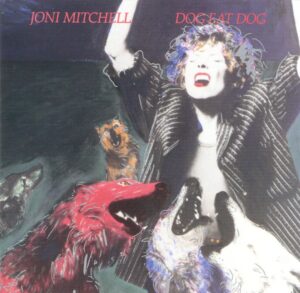
 The Joni Mitchell song was Tiffany’s anthem, and she recognized herself in the lyrics of “Dog Eat Dog.” Especially the part about slaves. Some were well-treated . . .
 Cindy knew she’s landed her pretty derriere in a tub of butter, but she knew her work has just started. Among other things, Cindy changed her name to a classier “Tish.”
 Tiffany says, “I thought I could sail smoothly into Cole’s sunset years and collect the cash when he went to his reward. But then that damn preacher showed up. The smarmy Reverend Joseph Starr, mega-millionaire pastor of Starr in the Heavens.”
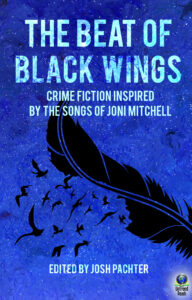 The Beat of Black Wings, edited by Josh Pachter, is an anthology of 28 crime writers who wrote short stories inspired by Joni Mitchell’s lyrics. The award-winning authors include Art Taylor and Tara Laskowski, Kathryn O’Sullivan, Stacy Woodson, and Donna Andrews. A third of the royalties will be donated to the Brain Aneurysm Foundation in Joni Mitchell’s name.
 By Elaine Viets
 “Hygge” and “ASMR” were used a lot in the past year, when we needed comfort. At least, that’s what Webster said. My friends used other comfort words, such as “Ben & Jerry’s” and “Johnnie Walker.”
 Any sports fan knows the new meaning of “bubble.” Sports Washington wrote:
 “To avoid COVID-19 infection, the NBA and NHL instituted strict ‘bubbles’ where players, coaches, media and staff are sequestered away from the general public. Major League Baseball . . . instead is asking its players to be responsible as they travel the country for games. It’s not working well, and in the case of the Miami Marlins, it’s been awful.”

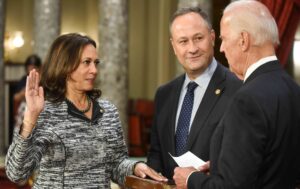 “Second Gentleman” has been around since 1976, but Webster finally made it official after the 2020 election, when Kamala Harris was elected Vice President and her husband, Douglas Craig Emhoff, became the first Second Gentleman of the United States.
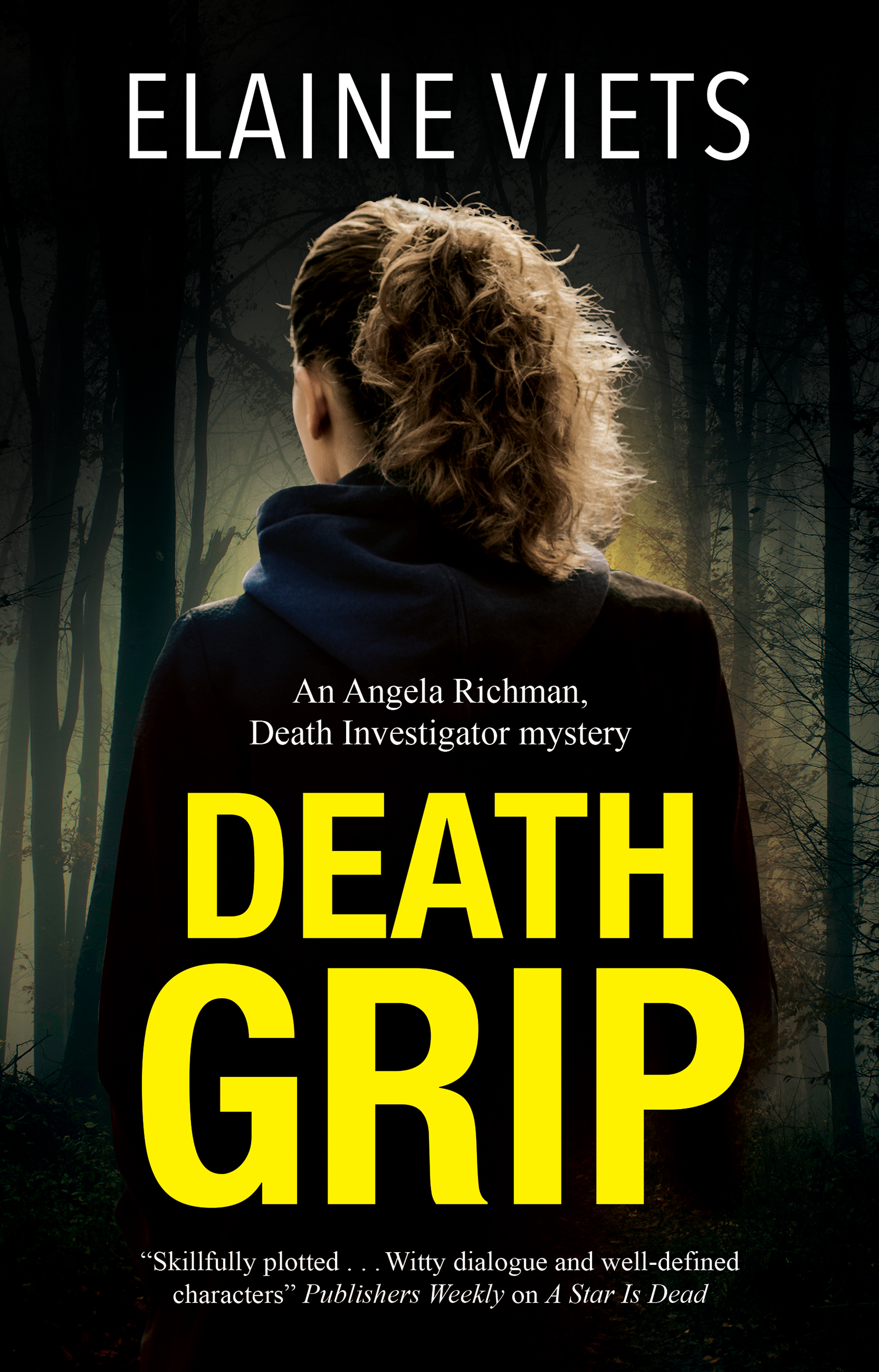
 Enjoy forensic mysteries? Kirkus says this about DEATH GRIP, my new Angela Richman mystery: “Viets produces chills with a murder hunt turned on its head.” Buy it here:
  By Elaine Viets






 LESS THAN. In mathematics it means smaller. Four is less than six. But the term is less than satisfactory when it strays in to everyday language. It’s wrong to make people feel “less than.” Less than what?
 NEW NORMAL. The new normal not only isn’t normal, it’s not even new. Wikipedia, for heaven’s sake, points out that every time we have a major crisis, we dig up that term and dust it off. It seems to have appeared the first time in 1918, right after World War I. Henry A. Wise Wood spelled it out for us: “How shall we pass from war to the new normal with the least jar, in the shortest time? In that respect should the new normal be shaped to differ from the old?”
 Now out! DEATH GRIP, my new Angela Richman, Death Investigator mystery. Kirkus magazine says, “Viets produces chills with a murder hunt turned on its head.” Buy it here:
  Gather ’round, readers, and make sure the lights are on. Today, we’re critiquing a “murder ghost story,” a first page critique by a brave anonymous author. Read it first, and then I’ll discuss it. Here goes:
 Death is the ultimate mystery, and we all wonder what will happen when we meet our end. Our Brave Author gave us an imaginative look at the other side. This first page is readable and well-written, but I’d like to suggest some changes.
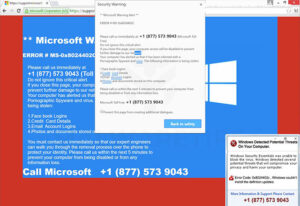
 Ransomware attacks are epidemic. Two weeks ago, a woman in my (socially distanced) gym class had her computer locked by ransomware. She refused to pay the ransom. Instead, she paid her IT guy $600 to free her computer. Yep. The poor woman ponied up 600 bucks. My IT guy said $50-100 was overcharging. He could do the job in under an hour.
 We both knew how expensive that help would be.

 Coming March 2, DEATH GRIP, my latest Angela Richman, Death Investigator mystery. Kirkus says,